
Reviewed · KATHMANDU TEMPLE AND MONASTERY TOURS
Kathmandu Spiritual Sites: Bodhnath & Pashupatinath Tour
At sunset, Kathmandu’s spiritual life comes into full view. Prayer wheels turn at Boudhanath, butter lamps flicker, sadhus gather near Pashupatinath, and worshippers line the Bagmati River for the evening Aarati ceremony. This tour connects those scenes in one compact outing, using local transport instead of keeping you inside a private vehicle.
I like the two-site format, which gives you a clear introduction to both Tibetan Buddhism and Hinduism without spending a full day in temples. I also like the small maximum group of 12, since a good guide can explain customs, keep everyone together in the crowds, and answer questions without turning the visit into a lecture.
The main consideration is the timing and pace. You will walk about 2 kilometers, use public transport, and spend part of the evening in dense crowds. Cremation ceremonies beside the Bagmati River also require care and restraint, so this is not a casual sightseeing stop.
Key points to know before booking
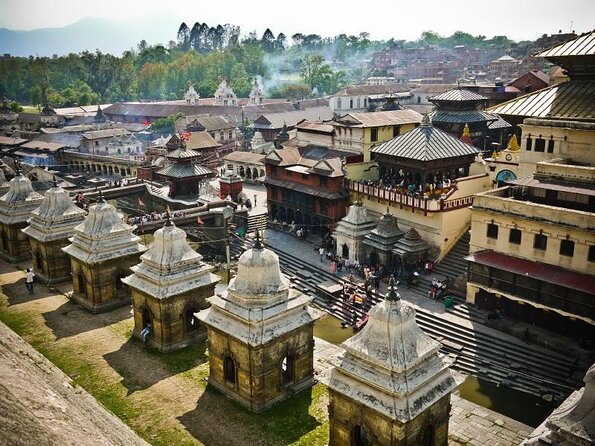
- Two UNESCO World Heritage sites in about four hours: Boudhanath Stupa and Pashupatinath Temple make a strong pairing for a first visit to Kathmandu.
- The Aarati ceremony is the emotional centerpiece: You watch an evening offering of lights to Lord Pashupatinath with local worshippers along the Bagmati River.
- Local transport is part of the experience: The tour includes transport from the meeting point to Boudhanath and from Pashupatinath back to the endpoint.
- Expect roughly 2 kilometers of walking: The main transfer between the two sites takes about 15 minutes on foot.
- Extra costs are easy to overlook: Palm reading, butter lamps, alms, and photographs or interactions with sadhus are not included.
- Guide quality matters here: Guides such as Rita, Rozit, Amit, Subash, Bipin, and Ramhavi have led this experience, but the assigned guide can vary.
Why these two sacred sites belong together
Boudhanath and Pashupatinath show two different religious traditions in one evening. Boudhanath is a center of Tibetan Buddhism, built around a large white dome and prayer wheels. Pashupatinath is one of Nepal’s most important Hindu shrines, dedicated to Shiva and closely tied to ideas of death, rebirth, and release from the cycle of life.
That contrast makes the route useful. At Boudhanath, you focus on movement, prayer, symbols, and the rhythm of walking around the stupa. At Pashupatinath, the mood becomes more intense and personal, with sadhus, temple activity, funerary rites, and the public Aarati ceremony.
I like this pairing because you are not simply checking off two monuments. You are seeing how religion works as part of daily life in Kathmandu. People come to pray, light lamps, turn wheels, consult palm readers, make offerings, and gather with family. The guide helps you understand what you are seeing rather than leaving you to guess.
More Nepal pilgrimage trips:
- From Kathmandu: 2 Stupas and Kopan Monastery Spiritual Tour
★ 4.8 · 115 reviews - Shamanism Tour in Nepal – One-to-one Consultation with Sharmans
★ 4.5 · 42 reviews - Buddhist Pilgrimage Tour In Nepal
★ 5.0 · 27 reviews
Starting in Thamel at 3 p.m.
The tour begins at Hotel Marshyangdi on Chaksibari Marg in Thamel at 3 p.m. Thamel is Kathmandu’s main tourist center, so it is a practical meeting point surrounded by hotels, restaurants, shops, spas, and nightlife.
The advertised duration is about four hours, taking you into the evening. Since the tour depends partly on public transport, allow some flexibility in your plans afterward. The route returns to the meeting point, and the transport costs between the listed points are included.
A small group is a real advantage here. Twelve people is still large enough to create delays if the group spreads out, but it is far easier to manage than a large coach tour. Keep close to your guide, especially at Pashupatinath, where the crowd grows as the Aarati begins.
The tour is also suitable for children, and children under six can join free of charge. Still, the walking, public transport, crowds, and cremation area may be tiring or confronting for very young children.
Boudhanath Stupa: prayer wheels and butter lamps
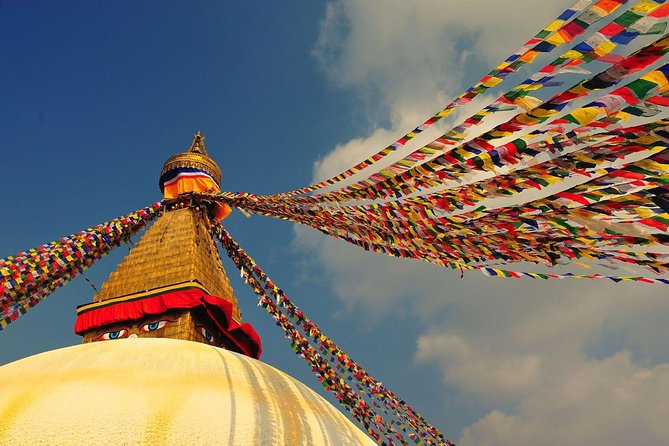
The first major stop is Boudhanath Stupa, where you spend about 1 hour and 25 minutes. This is the longer, calmer portion of the tour, and it gives you time to walk around the white dome, turn the prayer wheels, and watch local Buddhists perform their devotional rounds.
Your guide explains basic Buddhist practice as you move around the stupa. You can offer prayers by lighting a traditional butter lamp, though that is an optional extra rather than part of the tour price.
The value of having a guide here is not just architectural. The stupa is full of visual details, and a guide can point out how the site functions as a place of worship rather than merely a photogenic landmark. You will see people carrying out familiar rituals while daily life continues around them.
Boudhanath is often the easier site for taking in the atmosphere. You have room to walk, pause, and look closely at the prayer wheels. If the site is especially busy, the group may move more slowly, but that can also give you a better sense of how important the stupa is to local worshippers.
The optional butter lamp is a small extra cost, but it can make the visit more personal. The tour price includes entrance fees, while offerings do not. Ask your guide about the proper way to make the offering rather than treating it as a photo opportunity.
The 15-minute walk between the sites
After Boudhanath, you walk for about 15 minutes toward Pashupatinath Temple. The total walking distance for the tour is approximately 2 kilometers, so comfortable shoes are a sensible choice.
This short walk is part of what makes the experience feel local. You are not sealed inside a private vehicle from one entrance to the next. Public transport is used during the outing, and the movement between sites gives you a glimpse of ordinary Kathmandu outside the formal heritage grounds.
The tradeoff is comfort. Public transport can feel less predictable than a private car, and walking through city streets is not the same as following a polished sightseeing route. If you prefer a smooth, quiet transfer, this tour may feel rough around the edges. If you want a more direct look at how people move through Kathmandu, it adds real value.
More temples and monasteries in Kathmandu:
- Kathmandu: Nagarkot Sunrise and Hike Tour to Changu Narayan
★ 4.7 · 151 reviews - From Kathmandu: Everest View from Nagarkot & hike to Changu
★ 4.8 · 140 reviews - Kathmandu: Chandragiri Cable Car and Monkey Temple Tour
★ 4.8 · 139 reviews - Nagarkot Sunrise & Hike to Changu Narayan Day Tour from Kathmandu
★ 5.0 · 126 reviews
Pashupatinath Temple and the Bagmati River
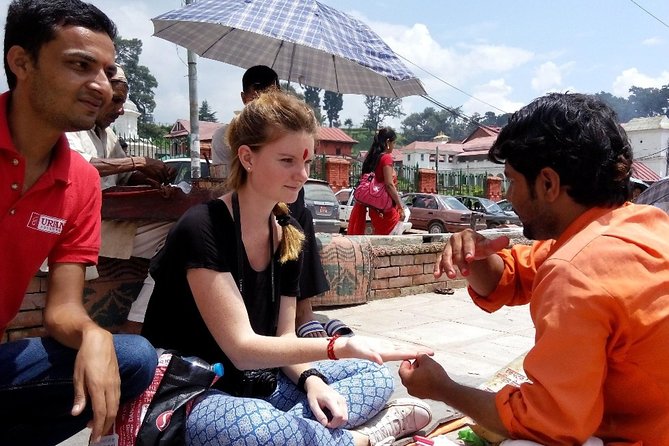
You spend about 2 hours and 20 minutes at Pashupatinath, making it the largest part of the itinerary. This is where the tour becomes more complex, both religiously and emotionally.
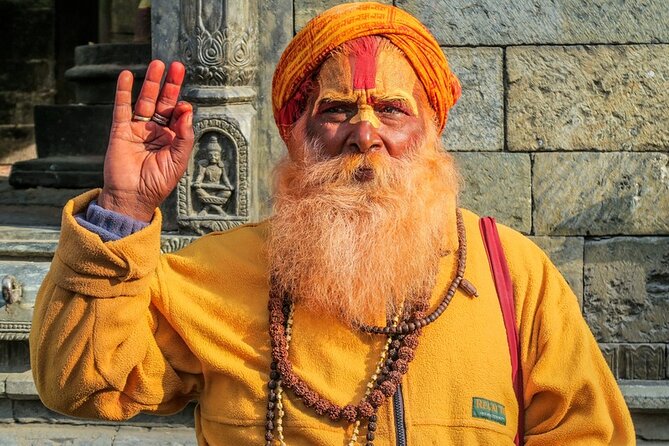
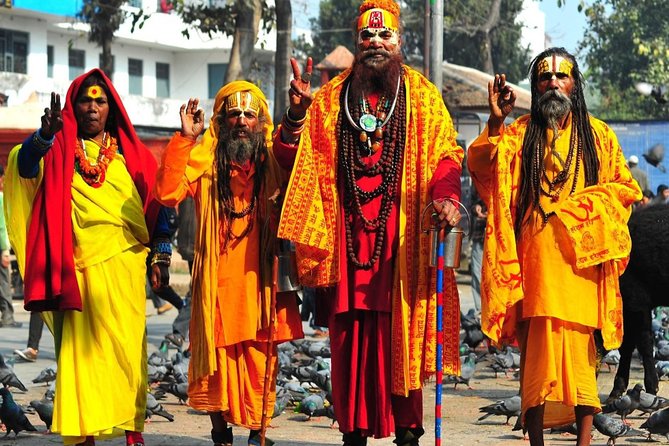
Pashupatinath is a 17th-century Hindu temple dedicated to Shiva and one of Nepal’s holiest sites. Your guide explains Hindu beliefs connected with birth, death, and rebirth, then points out the sadhus, or Hindu holy men, who are known for giving up material possessions as part of their religious devotion.
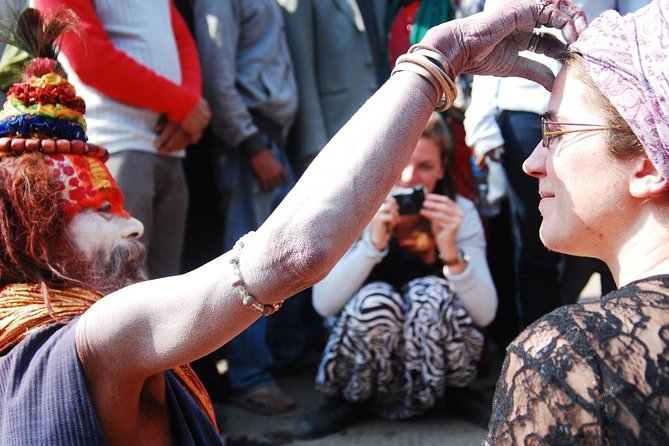
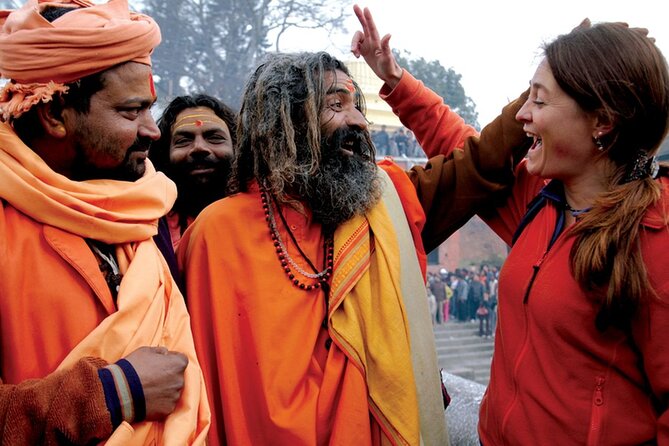
The sadhus may be dressed in striking colors and can attract attention from visitors. The tour allows you to interact with or photograph them for an additional payment, listed as about $7.50. Alms are also not included. If you choose to pay, let your guide help with the arrangement and price, since the fee can vary.
A local palm reader is another optional stop. The listed cost ranges from about $7.50 to $9 per person. This is best treated as a cultural add-on, not as a guaranteed part of the religious experience. Your guide can help you arrange it, but you pay the palm reader directly.
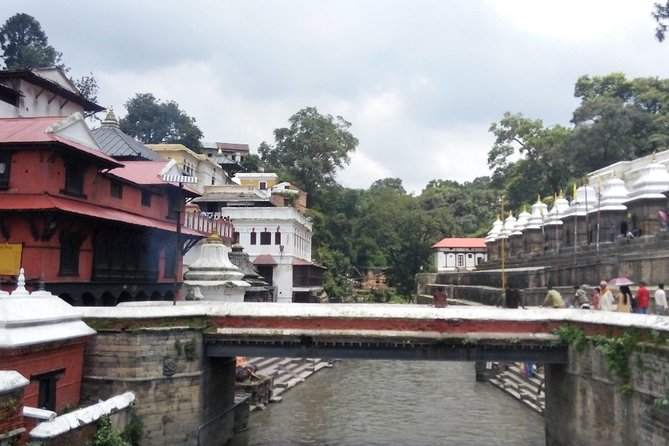
The Bagmati River is the most serious part of the visit. Cremation ceremonies take place along its banks, and you may see the setting from nearby. The tour information specifically asks you not to take photographs or watch the rituals out of respect for mourning families.
That guidance matters. You can learn about the role of cremation in Hindu practice without treating someone’s grief as a spectacle. A considerate guide should help you understand where to stand, what not to photograph, and how to move through the area quietly.
The Aarati ceremony after sunset
The evening Aarati is the main reason to choose this tour rather than visiting the sites separately at random. As daylight fades, local worshippers gather along the eastern side of Pashupatinath beside the Bagmati River. Priests offer lights to Lord Pashupatinath in a ceremony marked by movement, music, and devotional focus.
You watch from among the crowd, not from a private viewing platform. That makes the ceremony feel immediate, but it also means you need to stay alert. The crowd can become thick, and the guide will ask you to remain close to the group so nobody gets lost.
The experience is visually striking, but it is still a religious service. The best approach is to watch quietly, follow local cues, and avoid pushing toward the front for a better picture. Your guide can explain what is happening, but the ceremony itself should remain the focus.
This timing also explains why the tour starts at 3 p.m. Boudhanath comes first in the afternoon, Pashupatinath follows, and the group arrives in time for the evening ritual. You are not rushing in for a quick look at the temple and leaving before the most meaningful part begins.
What makes the guide important
This is a guide-dependent experience. The sites are famous, but their rituals, symbols, and customs are not always easy to read on your own. A good guide tells you when to pause, where to stand, and how to behave around worshippers and grieving families.
The guide roster can vary. Guides named for this experience include Rita, Rozit, Amit, Subash, Bipin, and Ramhavi. Their reported strengths include clear explanations, patience, careful crowd management, help with photography, and a willingness to answer questions.
That last point matters more than polished commentary. The best part of a guide’s job here is practical: keeping the group together, helping you handle public transport, explaining Hindu and Buddhist practices in plain English, and preventing awkward mistakes around offerings, sadhus, or cremations.
The maximum group size is 12, but the actual group may be smaller. On some departures, you could have much more individual attention. On others, the group dynamic will depend on the people who book that date.
Is $60.56 good value?
At $60.56 per person, this is not the cheapest way to look at two Kathmandu sights. The price makes more sense when you count what is included: entrance fees, an English-speaking Nepali guide, transport between the main points, and the help needed to attend the Aarati ceremony.
You also get a focused half-day rather than spending time arranging transport between two major sites. For a first visit, that convenience has value. A guide can save you from missing the ceremony, losing time in transit, or failing to understand what you are seeing.
The extras are modest but should be planned for. Food is not included, and the tour does not include lunch or dinner. Palm reading, butter lamps, alms, and paid interactions or photographs with sadhus cost extra.
I would book this for a short Kathmandu stay, especially if you want cultural context more than independent wandering. If you already know both sites well, the price may feel less attractive. If you have only one evening available, it is a practical way to cover a lot without reducing the visit to a quick photograph.
Who should book this outing?
This tour suits you if you want:
- An introduction to both Hindu and Buddhist traditions
- A guided visit that fits into one afternoon and evening
- A small group rather than a large coach
- Public transport and walking as part of the local experience
- A chance to attend the Pashupatinath Aarati ceremony
- Help understanding customs and behaving respectfully at sensitive sites
You should think twice if you dislike crowds, uneven pacing, or emotionally serious places. The cremation area is not a standard sightseeing stop, and the Aarati crowd can be intense. You should also be comfortable walking about 2 kilometers and using public transportation.
The tour is family-friendly on paper, but parents should decide if their children are ready for the river cremation setting and the late-afternoon crowd. Children under six are allowed free, but free admission does not mean the pace will be easy for very young children.
Practical details that affect the experience
Wear comfortable shoes and keep your belongings close in crowded areas. Stay near your guide during the Aarati, since the group may be surrounded by worshippers and it can be easy to lose sight of one another.
Photography requires judgment. The stupa and temple grounds offer plenty to see, but do not photograph cremation ceremonies or mourning families. If you want pictures with sadhus, ask first and expect a fee.
The sites visited have been renovated after earthquake damage, but some areas may still show the effects of past earthquakes. The tour includes entrance fees and contributes to the upkeep of the UNESCO-listed sites.
You receive confirmation when booking, and free cancellation is available up to 24 hours before the 3 p.m. start time. Changes or cancellations made less than 24 hours before the start are not accepted for a refund.
Should you book the Boudhanath and Pashupatinath tour?
I would book it if you want a well-organized first look at Kathmandu’s religious life and have only one evening to spare. The combination of prayer wheels at Boudhanath, sadhus and cremation ghats at Pashupatinath, and the Aarati ceremony gives you a fuller picture than either site alone.
The strongest reasons to book are the small group, included transport and entrance fees, and the guide’s role in handling complex customs. The main drawbacks are public transport, walking, crowding, and the need to approach the cremation area with care.
For most first-time visitors, the $60.56 price is fair because it covers the parts that are hardest to arrange well on your own. Book it for cultural understanding and local context, not simply for a checklist of monuments.
FAQ
How long does the tour last?
The tour lasts approximately four hours and begins at 3 p.m.
Where does the tour start?
It starts at Hotel Marshyangdi on Chaksibari Marg in Kathmandu.
Does the tour return to the starting point?
Yes. The activity ends back at the meeting point.
What sites are included?
The tour visits Boudhanath Stupa and Pashupatinath Temple, both UNESCO World Heritage sites.
Is transportation included?
Yes. Transportation costs from the meeting point to Boudhanath and from Pashupatinath Temple to the endpoint are included. Public transport is used as part of the experience.
Are palm reading and offerings included?
No. Palm reading, butter lamps, alms to sadhus and monks, and paid photographs or interactions with sadhus cost extra.
Can children join the tour?
Yes. The tour is child-friendly, and children under six may join free of charge.
Just added around Kathmandu
- Traditional Momo Making Class★ 5.0 · 10 reviews
- Wildlife Adventure in Chitwan Nepal★ 4.0 · 4 reviews
- Walking tour of real Kathmandu through back streets.★ 5.0 · 3 reviews
- Kathmandu 2 Nights 3 Days Chitwan Jungle Safari Tour★ 5.0 · 9 reviews
- Kathmandu Street Food Walking Tour – Eat Like a Local★ 5.0 · 3 reviews
- Walking tour of Kathmandu with awesome local guides★ 5.0 · 4 reviews
- Private Manaslu Circuit Trek at Himalayas★ 5.0 · 3 reviews
- Visit Swayambhunath and Bauddhanath Stupa with Guide★ 5.0 · 5 reviews
Kathmandu Temple and Monastery Tours, compared.
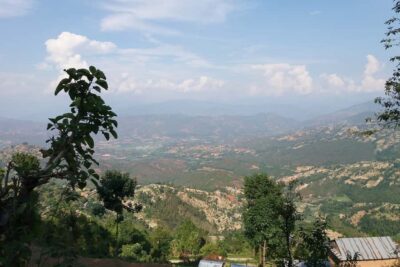
Nagarkot Sunrise and Hike Tour to Changu Narayan
Read our review →
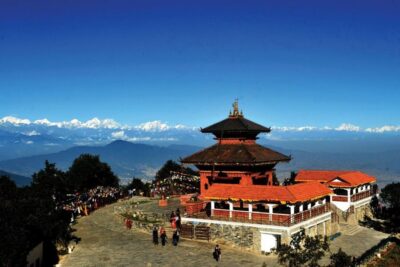
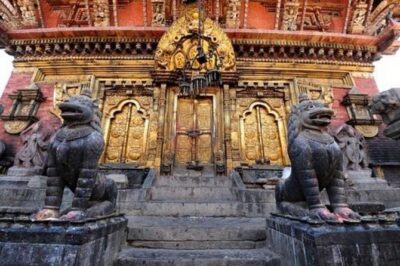
Nagarkot Sunrise & Hike to Changu Narayan Day Tour from Kathmandu
Read our review →
Mt Everest view from Nagarkot -hiking to Changu UNESCO site
Read our review →
Monkey Temple – Swayambhunath Tour – Private/Small Group
Read our review →Browse the lists this tour appears in