
Reviewed · KATHMANDU UNESCO WORLD HERITAGE TOURS
Kathmandu: Full Day 7 UNESCO Tour with Lunch – Private/Group
Kathmandu’s seven UNESCO sites tell very different stories, from Buddhist stupas and Hindu temples to royal squares filled with Newari art. This full-day tour links them by air-conditioned vehicle, with hotel pickup, a guide, and a simple lunch box included. The big advantage is coverage: you can see the city’s major heritage sights in one hard-working day instead of spending two days arranging separate rides.
I especially like the hotel-to-hotel transport, which saves you from bargaining for taxis in Kathmandu’s chaotic traffic. I also like the guides’ cultural focus. Guides such as Sumit, Anon, Sajina, and Suresh have been singled out for clear explanations of religion, architecture, and daily life. The trade-off is simple: seven sites require stamina. You will walk, sit in traffic, and sometimes move on just as you are getting comfortable.
Key points to know before booking
- Seven major heritage sites in one day: Swayambhunath, Kathmandu Durbar Square, Patan, Bhaktapur, Changu Narayan, Pashupatinath, and Boudhanath.
- A long but efficient schedule: Plan on 8 to 9 hours, though some days can stretch toward 10 or 11 hours.
- Entrance fees are usually extra: The standard group and private options require about 6,000 Nepalese rupees, or roughly $44, in cash.
- A practical lunch box is included: Expect water, juice, fruit, a banana, muffin, donut, and similar light items rather than a sit-down meal.
- Private and group choices are available: The private format lets you request changes, such as skipping a site you have already visited.
- Strong guide-and-driver combination: Sumit is frequently praised for his explanations, while drivers are valued for handling Kathmandu’s difficult traffic calmly.
Seven UNESCO sites, one ambitious day
This is an overview tour, not a slow archaeological study. You will get a useful explanation at each stop, see the key courtyards and monuments, and return to your hotel with a much clearer sense of how Kathmandu fits together.
The route covers three old royal cities and four major religious sites. That mix matters. Kathmandu is not simply a city of temples. Its identity comes from the meeting of Hindu and Buddhist practice, royal power, Newari craftsmanship, Tibetan Buddhist culture, and the daily life that continues around all of them.
The schedule gives about 30 minutes to an hour at each place. That is enough for orientation and photographs, but not enough to inspect every museum, shrine, carving, and courtyard. I would treat this as a first look. You can return later to the places that catch your interest.
More UNESCO heritage sites in Kathmandu:
- Private Kathmandu Sightseeing Tour | UNESCO World Heritage sites
★ 5.0 · 756 reviews - Kathmandu: Full Day Top 4 UNESCO Tour with Lunch – Private/Group
★ 5.0 · 269 reviews - UNESCO Seven World Heritage Tour in Kathmandu
★ 5.0 · 253 reviews
Swayambhunath and the first hilltop views
Swayambhunath, often called the Monkey Temple, sits on a hill above the Kathmandu Valley. The stupa is one of the city’s best-known symbols, and its elevated position gives you a useful visual introduction to Kathmandu.
The site is important to both Buddhist and Hindu worshippers. Prayer flags, shrines, religious images, and the white stupa create a setting that is more than a scenic viewpoint. Your guide can help explain the symbolism and the way different traditions share sacred space in Nepal.
The planned visit is about 40 minutes. That is enough to see the principal area, but the hill setting means you should expect steps and uneven walking. You will want practical shoes, especially if the ground is wet. The monkeys are part of the site’s nickname, but do not treat them as a reason to carry food openly.
Swayambhunath is a good opening stop because it gives you both a religious site and a view over the valley. It also sets the tone for the day: this is a tour about living faith, not only old buildings.
Kathmandu Durbar Square and the old royal center
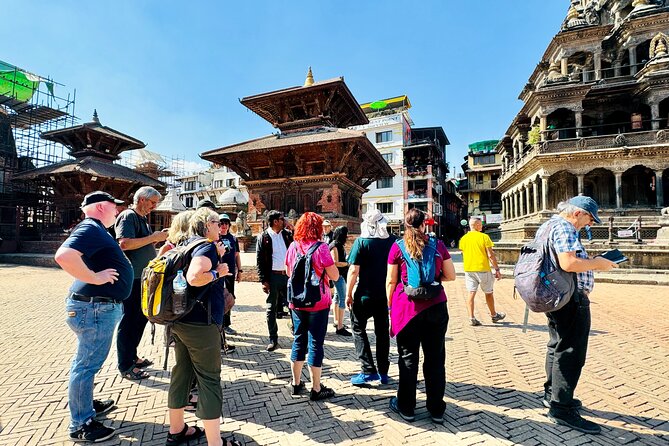
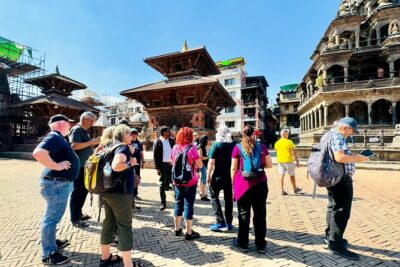
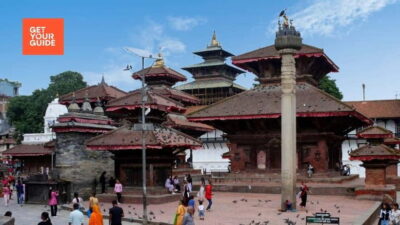
Kathmandu Durbar Square, also called Hanuman Dhoka Durbar Square, was the royal center of Kathmandu under the Malla and Shah dynasties. The square brings together palace buildings, courtyards, shrines, and detailed Newari woodwork.
You will spend about an hour here. That sounds generous, but the area contains enough to occupy much longer. Look up at the carved windows and doorways, then notice how ordinary city life continues around the historic buildings.
Your guide is especially useful here because the square can feel like a collection of monuments without context. The stories of kings, deities, festivals, and palace life make the layout easier to understand. The 2015 earthquake damaged many structures across the valley, and you may see signs of repair and reconstruction, although the supplied tour details do not promise a specific restoration visit.
The site is in the heart of the old city, so traffic and crowds can affect the timing. You will likely spend part of the visit walking between courtyards rather than moving through one enclosed museum.
Patan Durbar Square and Newari artistry
Patan Durbar Square lies in Lalitpur, the ancient city south of Kathmandu. It is one of the best places on this route to appreciate Newari architecture, with its brick buildings, carved timber, metalwork, courtyards, and temples.
The scheduled stop lasts about an hour. I would use that time to look closely at details rather than trying to photograph every building. Patan rewards attention to small things: roof supports, sculpted figures, temple proportions, and the way courtyards connect.
The square was once the palace center of Patan’s Malla kings, but it is also a religious and artistic center. A guide can explain why certain structures matter and how Hindu and Buddhist traditions appear side by side.
As with Kathmandu Durbar Square, entrance fees are not included in the standard private and group options. Keep cash ready, because the entrance payment is one of the day’s practical details that can slow the group if nobody has Nepalese rupees.
More tours with lunch included in Kathmandu:
- Kathmandu: Full-Day 7 UNESCO Tour with Lunch – Private/Group
★ 4.9 · 247 reviews - Kathmandu: Nagarkot Sunrise View & Morning Hike with Lunch
★ 4.9 · 188 reviews - Kathmandu: Top 4 UNESCO Tour with Lunch – Private/Group
★ 4.9 · 181 reviews - Kathmandu: Nagarkot Sunrise & Hike with Lunch -Private/Group
★ 4.9 · 122 reviews
Bhaktapur Durbar Square, the most atmospheric royal city
Bhaktapur is the third royal city on the route, and many people find its old center the most rewarding place for a slow walk. Bhaktapur Durbar Square has palace buildings, temples, courtyards, and a strong sense of its medieval urban design.
You get about an hour here. That is still a short visit, but Bhaktapur’s compact historic center gives you a chance to see more than a single monument. The square is also part of a living town, so you may notice local shops, craft activity, and residents moving through spaces that are also major heritage sites.
This is one of the stops where the schedule can feel tight. If you enjoy architecture or photography, you could easily spend several hours in Bhaktapur alone. On the full route, your guide will focus your attention on the most important buildings and stories.
Bhaktapur also shows why this tour works best as an introduction. You will learn what you want to revisit. If you have several days in Kathmandu, consider returning here without the pressure of reaching six other sites.
Changu Narayan and the quieter hilltop temple
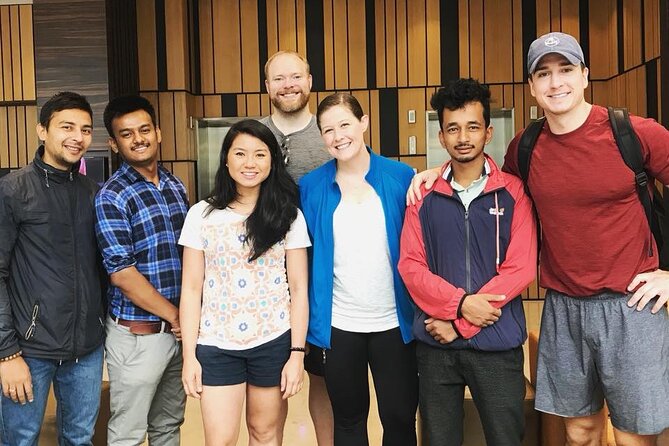
Changu Narayan sits on a hill northeast of Bhaktapur and is dedicated to Lord Vishnu. It is considered Nepal’s oldest Hindu temple, with origins dating to the fourth century.
The planned visit is about 30 minutes, making it the quickest stop of the day. That short time is useful for seeing the temple and hearing its basic story, but it will not allow for a lengthy exploration of the surrounding area.
Changu Narayan can feel calmer than the major squares, partly because it is outside the dense center of Kathmandu. The hilltop position adds a change of pace after the royal complexes. You will still need to watch your footing and allow for some walking.
This is a stop for context as much as for scale. It shows that the valley’s heritage is not limited to grand urban squares. Sacred places also sit on hills and along routes between old settlements.
Pashupatinath and the Bagmati River
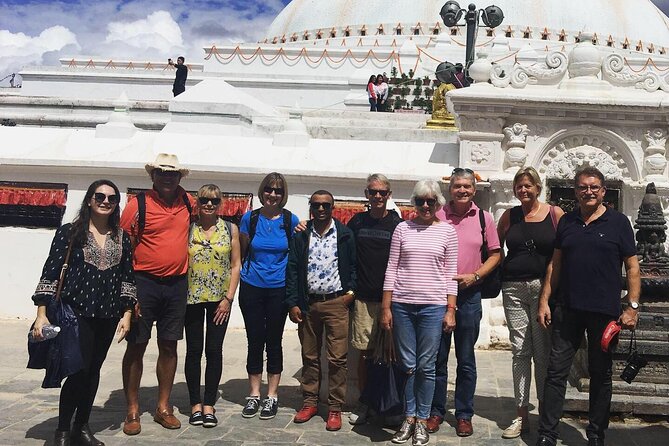
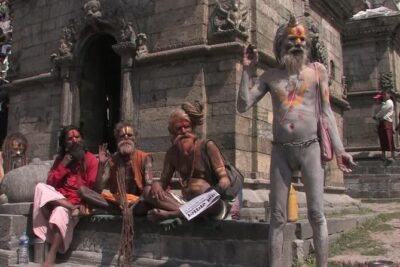
Pashupatinath is Nepal’s most important Hindu temple complex and one of the country’s major pilgrimage sites. It lies beside the Bagmati River and is dedicated to Lord Shiva.
You have about an hour here, which allows time to see the broader temple area and the riverbank. Access to the main inner temple is restricted to Hindu worshippers, so your experience depends on viewing the complex from permitted areas. The site is still powerful from the outside, with shrines, religious activity, and the river forming an important part of the setting.
Your guide’s explanation matters here. Pashupatinath can be difficult to understand if you are unfamiliar with Hindu practice, and respectful behavior is essential. Listen carefully about where you may stand, what you may photograph, and how to behave near worshippers.
The riverbank is one of the most memorable parts of the day for many people, but it can also feel emotionally intense. This is not just a photogenic temple stop. It is an active religious place with ceremonies and personal moments taking place around you.
Boudhanath and Kathmandu’s Tibetan Buddhist center
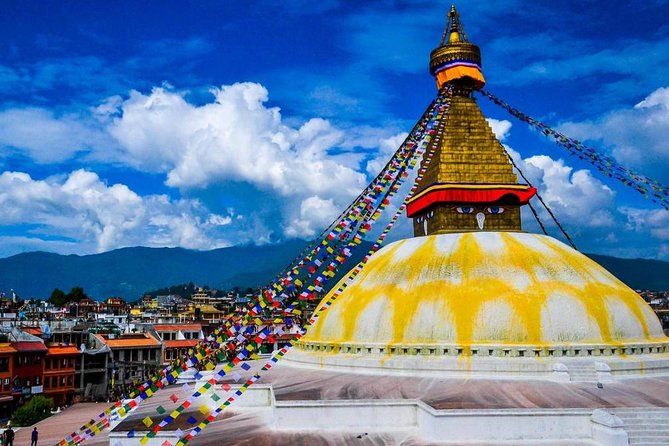
Boudhanath is one of the largest spherical stupas in the world and the heart of Kathmandu’s Tibetan Buddhist community. Its broad white dome and golden spire dominate the surrounding neighborhood.
The itinerary gives you about 30 minutes here. That is enough to walk around the stupa, observe pilgrims and prayer wheels, and take in the design. If you enjoy Buddhist art, ritual, or photography, you may wish the visit were longer.
Boudhanath often works well as the final major stop because it offers a different mood from Pashupatinath. The two sites are both deeply religious, but their traditions, symbols, and visual language are distinct. Your guide can help you compare them without reducing either one to a quick photo stop.
Again, the time limit is the main concern. You will see the central area, but you may not have time to explore every monastery or shop around the stupa.
Why the guide can make or break the day
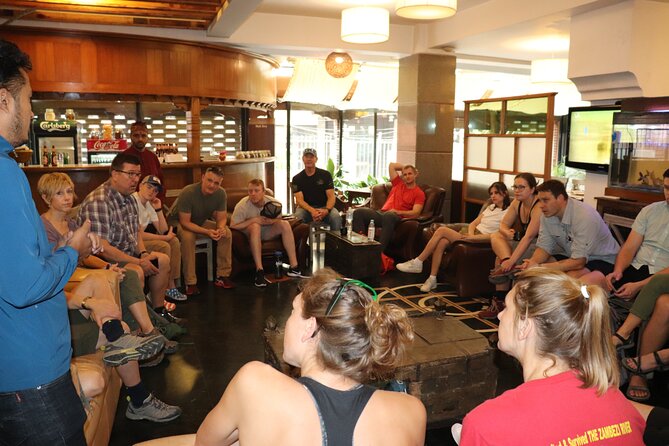
The sites are impressive on their own, but the guide is what turns seven stops into a connected story. The strongest guides on this tour explain Nepal’s religious traditions, royal history, architecture, and everyday customs in plain language.
Sumit is repeatedly praised for calm delivery, clear explanations, and an ability to pick out the most useful facts without talking endlessly. Anon is also noted for keeping the pace moving while still giving enough information at each stop. Sajina and Suresh have been praised for friendliness and strong site explanations.
Guide assignments can vary, so you should not assume a particular person is guaranteed unless the booking process confirms it. Still, the repeated attention to guides such as Sumit gives you a useful idea of what to value: clear communication, patience, cultural context, and good time management.
The driver matters just as much. Kathmandu traffic can make a short distance take a long time. A careful driver keeps the day from becoming more tiring than it needs to be, and several accounts specifically praise the drivers’ calm handling of the city’s crowded roads.
The lunch box is useful, but keep expectations modest
The included lunch is designed for efficiency. You receive bottled water, juice, a muffin, donut, banana, seasonal fruit, and similar light items. It lets you eat without adding a long restaurant stop to an already packed schedule.
I like this arrangement for a sightseeing day. You can have a quick bite in the vehicle or at a short pause and keep moving. The downside is that it is basic and carb-heavy. If you need a substantial meal, bring extra snacks or ask whether the private tour can make time for a restaurant stop.
The all-inclusive option includes food, soft drinks, entrance fees, and a khana set or choice of dishes. Check the exact option you are selecting, since the cheaper standard private and group formats do not include monument admission.
Price, entrance fees, and real value
The advertised starting price is $10 per person, which is unusually low for hotel pickup, a guide, private vehicle, transport, and lunch. That price becomes less striking once you add the entrance fees for the standard options.
Budget about 6,000 Nepalese rupees per person for admission to all seven sites, roughly $44 based on the supplied pricing. Bring Nepalese currency. One useful practical improvement would be paying the admission total in advance, since stopping for cash at several sites can interrupt the rhythm of the day.
Even with the added fees, the tour can be good value if you have only one or two days in Kathmandu. You would otherwise need to arrange transport and site explanations yourself, and fitting all seven places into one day would be difficult.
The value is strongest for solo visitors, first-time visitors, and anyone with limited time. If you have four or more relaxed days in the valley, the case is weaker. You could visit fewer sites each day and spend more time inside the squares and temple areas.
Private, group, or ticket-inclusive?
The private option gives you the most control. One group was able to skip Swayambhunath after having already visited it, which shows how the format can be adjusted when the guide and schedule allow. It is also the better choice if you want to request an early start, which can help reduce traffic delays.
The group format keeps the cost down but gives you less flexibility. You should expect to follow the planned route and timing rather than linger at one favorite site.
The ticket-inclusive option costs more but removes the need to carry and pay the admission fees at each location. If convenience matters more than the lowest starting price, this may be the cleanest choice.
Pickup and drop-off by private vehicle are included, and the vehicle is air-conditioned. The activity is described as suitable for most people, but you should still be ready for walking, steps, uneven surfaces, and a full day on the move.
Who should book this Kathmandu tour?
I would book this tour if you have one free day and want a guided introduction to Kathmandu’s main UNESCO sites. It is also a good fit after a trek, when you want cultural context without spending time organizing taxis and entrance tickets.
You should think twice if you dislike tight schedules, need long meal breaks, or prefer to study one monument in detail. The day can reach 10 or 11 hours depending on traffic, and one lower-rated experience found the pace exhausting.
Wear comfortable walking shoes, carry extra water and snacks, and keep cash in Nepalese rupees unless you choose the ticket-inclusive option. Do not schedule a flight or another demanding activity too close to the end of the tour.
Free cancellation is available up to 24 hours before the start time. Changes or cancellations inside that window are not refunded, and the operator may offer another date or a full refund if minimum participation is not reached.
Should you book the seven-site day?
Book it if coverage matters most. For $10 before optional entrance fees, the tour gives you transport, a guide, lunch, and a smart route through Kathmandu Valley’s major religious and royal sites. It is hard to match that convenience on your own in one day.
Choose a two-day plan if you value breathing room. You will see more detail, take longer meals, and have time to return to the places that interest you most.
My practical choice would be the private or ticket-inclusive option, an early start, comfortable shoes, and realistic expectations. You are not buying seven leisurely visits. You are buying a useful, well-guided overview of Kathmandu’s sacred and royal core, with enough substance to decide where you want to return.
FAQ
How long does the Kathmandu UNESCO tour last?
The tour lasts approximately 8 to 9 hours. Depending on traffic and the pace of the day, some tours may last around 10 or 11 hours.
Which UNESCO sites are included?
The route includes Swayambhunath, Kathmandu Durbar Square, Patan Durbar Square, Bhaktapur Durbar Square, Changu Narayan Temple, Pashupatinath Temple, and Boudhanath Stupa.
Are entrance fees included?
Entrance fees are not included in the standard group and private options. They total about 6,000 Nepalese rupees, or approximately $44, per person. The all-inclusive option includes entrance fees.
What does the lunch box contain?
The lunch box includes 500 milliliters of bottled water, a muffin, donut, banana, seasonal fruit, and juice. The all-inclusive option also includes food, soft drinks, and a khana set or choice of dishes.
Is hotel pickup and drop-off provided?
Yes. Pickup and drop-off at your hotel are included, along with air-conditioned private transportation.
Can I choose a private tour or a group tour?
Yes. The experience offers private and group formats, as well as a ticket-inclusive option. The private format may allow itinerary changes when the schedule permits.
Is the tour suitable for solo participants?
Yes. The experience is described as suitable for most participants, and the tour can work well for solo visitors who want guided transport between the sites.
What is the cancellation policy?
You can cancel up to 24 hours before the start time for a full refund. Cancellations and changes made less than 24 hours before the start time are not refunded.
More full-day trips in Kathmandu
- Kathmandu: Full Day 7 UNESCO Tour with Lunch – Private/Group
★ 5.0 · 101 reviews - Kathmandu: Full Day Private Top 4 UNESCO Heritage Tour W/Lunch.
★ 5.0 · 86 reviews - Kathmandu: Full Day Top 4 UNESCO Tour with Lunch – Private/Group
★ 5.0 · 67 reviews - Kathmandu Heritage Tour (Full Day)
★ 5.0 · 63 reviews
Just added around Kathmandu
- Traditional Momo Making Class★ 5.0 · 10 reviews
- Wildlife Adventure in Chitwan Nepal★ 4.0 · 4 reviews
- Walking tour of real Kathmandu through back streets.★ 5.0 · 3 reviews
- Kathmandu 2 Nights 3 Days Chitwan Jungle Safari Tour★ 5.0 · 9 reviews
- Kathmandu Street Food Walking Tour – Eat Like a Local★ 5.0 · 3 reviews
- Private Manaslu Circuit Trek at Himalayas★ 5.0 · 3 reviews
- Walking tour of Kathmandu with awesome local guides★ 5.0 · 4 reviews
- Visit Swayambhunath and Bauddhanath Stupa with Guide★ 5.0 · 5 reviews
Kathmandu UNESCO World Heritage Tours, compared.
Private Kathmandu Sightseeing Tour | UNESCO World Heritage sites
Read our review →
Full Day Top 4 UNESCO Tour with Lunch – Private/Group
Read our review →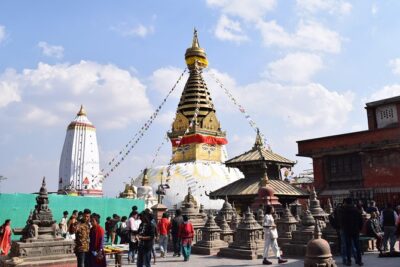
Full Day Private Top 4 UNESCO Heritage Tour W/Lunch.
Read our review →Browse the lists this tour appears in