
Reviewed · PASHUPATINATH AARATI EVENING TOURS
Kathmandu: Pashupatinath Temple Evening Aarati Tour
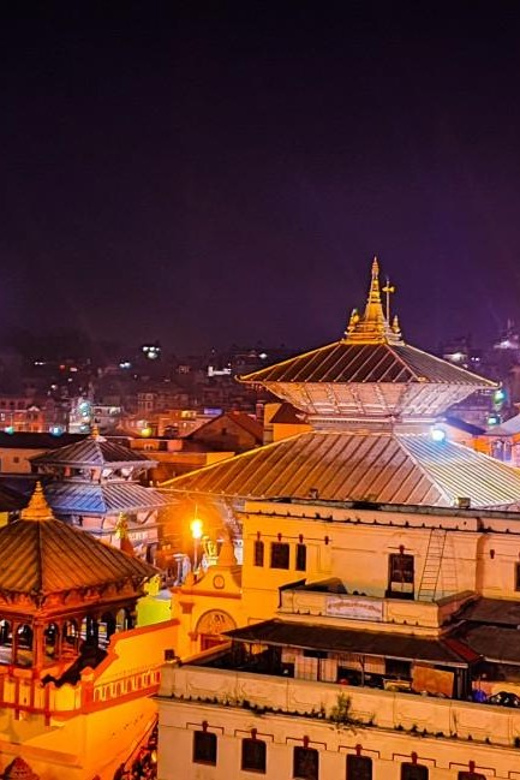
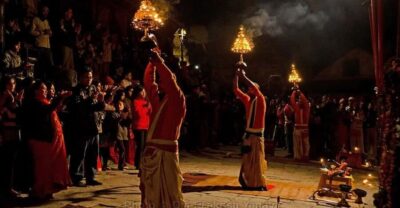
The most memorable part of this three-hour evening tour is the Aarati on the Bagmati River. As daylight fades, priests chant Vedic mantras, ring bells, burn incense, and raise oil lamps before Lord Shiva. The ceremony is public, devotional, and much more meaningful when someone explains what you are seeing.
I like two things here. First, your guide gives the ritual a cultural framework instead of leaving you to guess. Second, hotel pickup, private transport, entry, and drop-off are included, which makes an evening in busy Kathmandu much easier. The main consideration is that this is a religious ceremony, not a staged show, so the crowd, sound, and viewing position may vary.
Key points to know before booking
- The Aarati begins around 6 p.m. and takes place on the Bagmati River bank on the eastern side of the temple area.
- Priests, lamps, bells, incense, chants, and classical music create the ceremony’s distinctive sound and atmosphere.
- Ramesh, Rajat, and Anjan are among the guides praised for clear explanations and friendly conversation.
- Private groups give you room to ask questions and request time for photography where it is allowed.
- The $45 price includes transport, entry, guide, taxes, and service charges, but not food or drinks.
- The tour lasts about three hours, including hotel pickup and return in Kathmandu.
Why the Bagmati River Aarati Matters
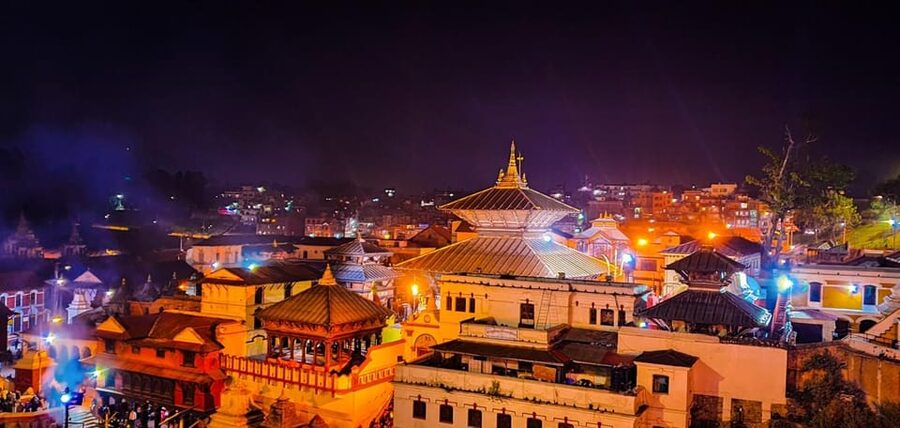
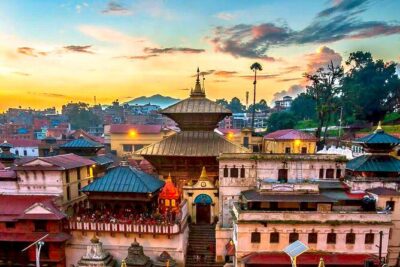
Pashupatinath is one of Nepal’s most important Hindu temple sites, and the evening Aarati gives you a direct look at living religious practice. You are not simply walking through old buildings and reading signs. You are watching prayers, music, light, and movement used in worship.
The ceremony takes place beside the Bagmati River, on the temple complex’s eastern side. Around the start of the evening, people gather for the performance. Priests recite prayers and wave oil lamps before an image of Lord Shiva, while bells ring and incense rises around the riverbank.
I like the way this experience brings together several parts of Nepalese culture at once. You see the temple setting, hear Sanskrit or Vedic chants, watch familiar religious symbols used in a Hindu setting, and observe how local people take part in the evening. A guide can help you understand the order and purpose of the actions without turning the ceremony into a lecture.
Keep your expectations in the right place. The Aarati is not performed for tourists, and the point is not to provide a perfectly controlled photo opportunity. It is a real devotional event, with people gathering, standing, sitting, praying, and trying to see the priests. That gives it weight, but it can also mean less control over your view.
More Pashupatinath evening aarati tours:
- Kathmandu: Pashupatinath Temple Aarti Night Tour
★ 4.8 · 29 reviews - Pashupatinath Temple, Hindu Crematorium and Aarati in-depth Tour
★ 5.0 · 25 reviews - Pashupatinath Evening Aarati: Few Divinely Hours in Kathmandu
★ 4.5 · 23 reviews
Hotel Pickup Makes the Evening Simple
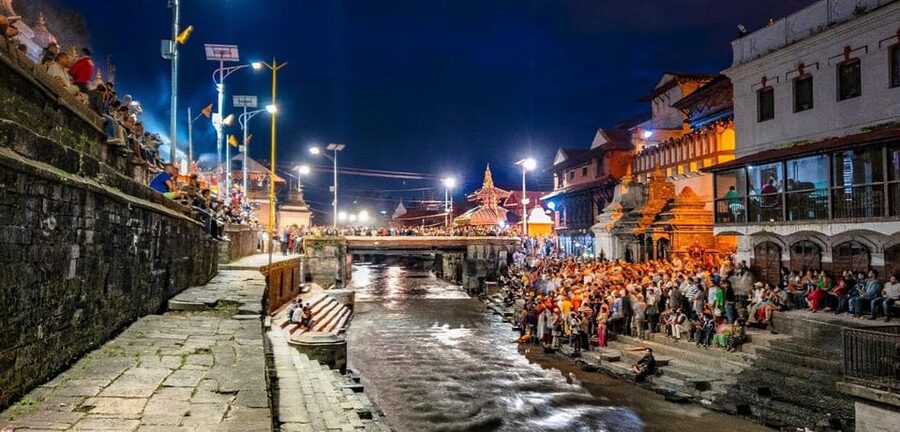
The tour begins with pickup in Kathmandu and ends with a drive back to your hotel. The total duration is listed as three hours, with the ceremony beginning around 6 p.m. Exact starting times can vary, so check the available departure time when you book.
This transport is a useful part of the price. Pashupatinath is easy to identify on a map, but getting there at the right time and finding the correct area beside the Bagmati River can be less simple than it looks. With a private vehicle and guide, you do not have to spend your evening sorting out directions or arranging a return ride after dark.
The private-group format also helps. You can ask your own questions, pause when the guide points out something important, and discuss what you have seen without trying to keep up with a large party. Several guides have been praised for being patient and conversational, which matters when the subject includes religious ideas and unfamiliar rituals.
The driver is part of the experience, too. The service includes transport both ways, and the driver is expected to handle the road while you focus on the visit. That is especially helpful if you have only one evening in Kathmandu and want a reliable plan.
Exploring Pashupatinath Before Sunset
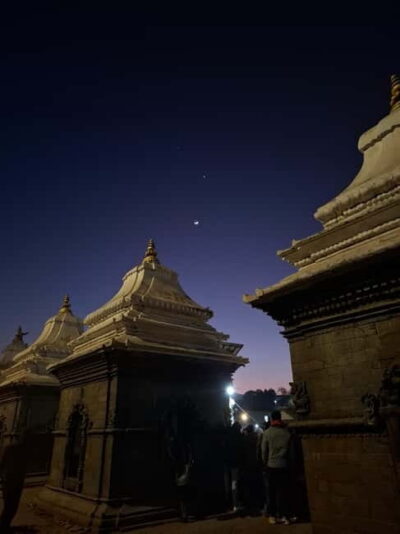
After arriving, your guide leads a tour of the temple complex. This gives you time to see the setting before the main ceremony begins. You can learn about the religious importance of Pashupatinath, look toward the temple structures, and take in views of the river and surrounding area.
The pre-Aarati visit is important because it gives the evening a clear shape. If you arrived only for the lamps and chanting, the ceremony could feel beautiful but hard to interpret. A guided walk first lets you ask basic questions and understand why this site matters to Hindu worshippers.
The guide can also help you identify what is appropriate during the visit. Religious sites require care with personal space, prayer, photography, and behavior. The supplied tour information allows photography in permitted areas, so do not assume that every angle or moment is available for pictures. Ask before taking photographs, especially during prayers.
You also have some time for independent exploration before the Aarati starts. That is a good balance. The guide provides the background, then you have a few moments to look around at your own pace rather than hearing nonstop commentary.
The word temple can be slightly misleading for some international visitors. This is a larger religious complex and riverfront setting, not just one room with a shrine. Your experience includes sightseeing, a guided visit, and a photo stop, but the main purpose is understanding the place and attending the evening ritual.
The 6 p.m. Ceremony: Light, Sound, and Prayer
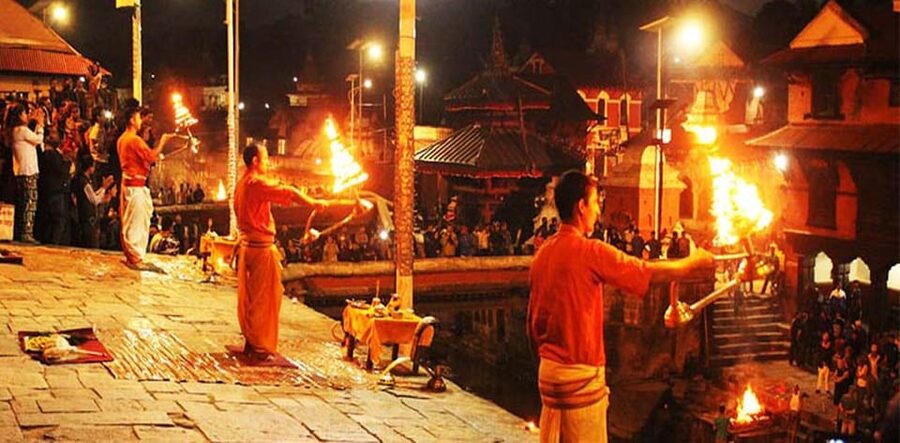
The Aarati is the heart of the tour. As evening arrives, priests chant prayers and move oil lamps before Lord Shiva. Bells ring, incense burns, and a band plays classical instruments while hymns are sung to the gods.
The effect comes from the combination of elements rather than any single part. Fire gives the ceremony its visual focus. The bells and music fill the space. The chanting gives the event a steady rhythm. Along the river, with the temple area nearby, the setting adds a strong sense of place.
Your guide can explain the meaning of the actions as they unfold. Ramesh has been singled out for explaining Hindu culture and rituals in detail, while Rajat has been praised for his clear answers and friendly manner. Anjan has also guided this experience and is described as speaking English well and helping visitors understand Hindu religion.
These details matter because a ceremony can be moving even when you do not understand it, but explanation lets you notice more. You may learn why lamps are used, how the prayers relate to worship, and why the riverbank is such an important setting for the evening gathering.
I would give yourself permission to watch quietly. You do not need to photograph every stage or understand every word. The ceremony is short enough to hold your attention, but layered enough that a guide adds real value.
More temples and monasteries in Kathmandu:
- Kathmandu Spiritual Sites: Bodhnath & Pashupatinath Tour
★ 5.0 · 185 reviews - Kathmandu: Nagarkot Sunrise and Hike Tour to Changu Narayan
★ 4.7 · 151 reviews - From Kathmandu: Everest View from Nagarkot & hike to Changu
★ 4.8 · 140 reviews - Kathmandu: Chandragiri Cable Car and Monkey Temple Tour
★ 4.8 · 139 reviews
Photography Without Losing the Moment
This tour suits photographers, but it is not built around unlimited shooting. Photography is allowed in permitted areas, and your guide can help you understand where you may stand and when it is better to put the camera away.
One person specifically chose the tour for travel photography and found the guide willing to accommodate requests and concerns. That suggests a useful advantage of a private group: you can explain what you hope to photograph instead of trying to negotiate with a large group schedule.
Still, the ceremony should come first. You may have a good view, but you may not control the crowd or lighting. The lamps, smoke, movement, and evening light can create striking images, yet they can also make exposure and focus tricky. Bring patience rather than expecting a polished, fixed scene.
A respectful approach will serve you well. Ask before photographing people closely, and follow the guide’s instructions around the ceremony. A good picture is not worth interrupting prayer.
How the Guides Add Value
The strongest feature of this tour is the guide’s role. The activity is not only transport to a ceremony. It is a guided introduction to a religious tradition that many people encounter for the first time in Kathmandu.
Ramesh is the most frequently praised name in the supplied information. He has been described as friendly, patient, and clear, with the ability to answer questions about Hindu culture, ritual, and local traditions. One account also notes that he speaks Spanish as well as English, which could be useful for Spanish-speaking participants.
Rajat has been praised for being informative and able to answer questions, while Anjan has helped explain the ceremony and Hindu religion in accessible English. The exact guide assigned to you can vary, so treat these names as examples of the guiding team rather than a guarantee of one particular person.
The best guides do more than recite dates. They help you understand what matters to people who come to the riverbank for worship. That distinction is important. You are not simply collecting a picture of a famous temple. You are being shown how a religious event fits into daily and spiritual life in Kathmandu.
Is $45 a Fair Price?
At $45 per person, the tour is not the cheapest way to reach Pashupatinath, but it includes several services that add practical value. You receive hotel pickup and drop-off, transportation, an English-speaking licensed guide, entry to Pashupatinath, taxes, and service charges.
The private-group format is the key point. If you prefer arranging everything yourself, you could likely spend less by finding your own transport and visiting independently. But you would then need to manage the timing, find the correct riverbank, understand the ceremony without help, and arrange your own return.
For a first visit to Kathmandu, I think the price is reasonable if you want context and convenience. It is especially useful if you are staying in the city for a short time or prefer not to navigate an evening religious gathering alone.
Food and drinks are not included, but that is not a major weakness for a three-hour activity. Plan to eat before or after the tour rather than expecting a meal during the visit.
The tour also includes free cancellation up to 24 hours before the start time and a reserve-now, pay-later option. Those terms make it easier to fit the experience into a changing Kathmandu schedule.
Who Should Book This Evening Visit?
You should consider booking if you want a cultural experience with explanation, not just a quick photo stop. It suits first-time visitors who want help understanding Hindu traditions and people who value private transport and a small, flexible format.
It is also a strong choice for photographers who want time to take pictures in permitted areas. Tell the guide about your priorities early, since the ceremony itself follows its own rhythm.
This may not suit you if you want a silent, empty temple or a tightly controlled performance. The riverbank can be busy with people, and the event is religious rather than theatrical. You should also be prepared to follow local customs and accept that some areas or moments may not be open to photography.
The tour works well at the end of a Kathmandu day. You arrive before the evening is fully dark, explore the complex, and then watch the lamps and chanting beside the river. Afterward, the included ride brings you back to your hotel rather than leaving you to arrange transport on your own.
Should You Book the Pashupatinath Aarati Tour?
I would book this tour if your goal is to understand what you are seeing. The Aarati itself supplies the atmosphere, but the guide turns a striking ritual into a more informed cultural experience.
The best reasons to choose it are the private format, included transport, strong guide support, and timing that combines a temple visit with the evening ceremony. The main caution is simple: come with respect and flexibility. You are joining a real religious gathering, not attending a show designed around visitors.
At $45, this is good value for a convenient and well-explained introduction to one of Kathmandu’s most important spiritual sites. If you want only a quick look at the temple, make your own way there. If you want to know what the lamps, chants, bells, and prayers mean, this guided evening is the better choice.
FAQ
How long does the Pashupatinath Aarati tour last?
The tour lasts three hours, including hotel pickup, the visit to Pashupatinath Temple, the Aarati ceremony, and transportation back to your hotel in Kathmandu.
What time does the Aarati ceremony begin?
The ceremony begins around 6 p.m. Check the available starting times when booking, since the tour departure is planned around the evening schedule.
Where does the Aarati take place?
The Aarati takes place on the bank of the Bagmati River, on the eastern side of the Pashupatinath Temple area.
What happens during the Aarati?
Priests chant prayers and wave oil lamps before Lord Shiva. The ceremony also includes Vedic mantras, bells, incense, classical instruments, and hymns to the gods.
Is transportation included?
Yes. Hotel pickup and drop-off, along with transportation to and from Pashupatinath Temple, are included.
Is a guide included?
Yes. The tour includes a licensed English-speaking guide. Guides who have led the activity include Ramesh, Rajat, and Anjan, though the assigned guide may vary.
Is photography allowed?
Photography is allowed in permitted areas. Ask your guide where and when you may take pictures, especially during the religious ceremony.
Are food and drinks included?
No. Food and drinks are not included in the $45 price.
Can I cancel the tour for a refund?
Yes. You can cancel up to 24 hours in advance for a full refund. The activity also offers a reserve-now, pay-later option.
More evening and night tours in Kathmandu
- Kathmandu Sunset Tour by Rickshaw Including Durbar Square Visit
★ 5.0 · 73 reviews - 3 Nights 4 Days Chitwan National Park with Tower Night Stay
★ 5.0 · 41 reviews - 3 night 4 Day Yoga & Ayurveda Retreat to Detox the Body & Mind, Nepal
★ 5.0 · 37 reviews - 2 Night 3 Days Pokhara City Tour
★ 5.0 · 22 reviews
Just added around Kathmandu
- Traditional Momo Making Class★ 5.0 · 10 reviews
- Wildlife Adventure in Chitwan Nepal★ 4.0 · 4 reviews
- Walking tour of real Kathmandu through back streets.★ 5.0 · 3 reviews
- Kathmandu 2 Nights 3 Days Chitwan Jungle Safari Tour★ 5.0 · 9 reviews
- Kathmandu Street Food Walking Tour – Eat Like a Local★ 5.0 · 3 reviews
- Private Manaslu Circuit Trek at Himalayas★ 5.0 · 3 reviews
- Walking tour of Kathmandu with awesome local guides★ 5.0 · 4 reviews
- Visit Swayambhunath and Bauddhanath Stupa with Guide★ 5.0 · 5 reviews
Pashupatinath Aarati Evening Tours, compared.
Pashupatinath Temple, Hindu Crematorium and Aarati in-depth Tour
Read our review →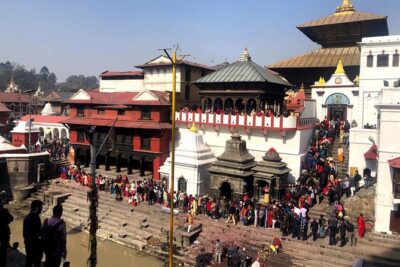
Pashupatinath Evening Aarati: Few Divinely Hours in Kathmandu
Read our review →
Sacred Pashupatinath: Aarati,Cremation Rites & Boudha Stupa
Read our review →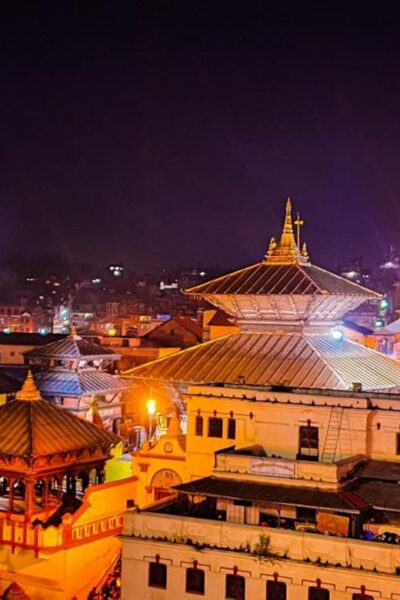
Katmandu: Pashupatinath Open Cremation & Evening Aarati
Read our review →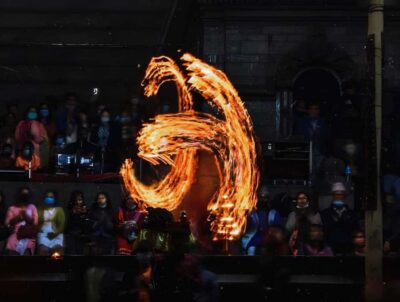
Browse the lists this tour appears in