
Reviewed · KATHMANDU UNESCO WORLD HERITAGE TOURS
UNESCO Seven World Heritage Tour in Kathmandu
Kathmandu’s seven UNESCO sites cover a wide patch of the valley, and seeing them all in one day takes careful driving and a very early start. This private tour handles the hard part: you ride between the sights with a driver while your guide explains the Hindu and Buddhist traditions that tie the valley together.
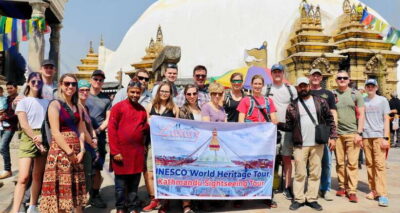
I like the private car and flexible pace, especially when traffic is heavy or you want time for photos, shopping, or a longer look at one temple. I also like the broad mix of places, from the hilltop prayer flags of Swayambhunath to the cremation ghats at Pashupatinath and the broad white dome of Boudhanath.
The tradeoff is simple: this is a long, information-heavy day. You will walk many steps, visit several major squares in short bursts, and have little time to linger at every site. If you have several days in Kathmandu, a slower plan may suit you better.
Key points to know before booking
- Seven UNESCO sites in roughly 12 hours: This is Kathmandu Valley’s greatest-hits day, built for a short stay.
- Private vehicle and private group: Your own car, driver, and English-speaking guide make it easier to adjust the pace.
- Guides make the difference: Shanti, Pankaj, Kabita, Sarita, Som, and other guides are praised for clear explanations and friendly help.
- Bhaktapur includes lunch time: Lunch is not included, but you can choose from several restaurants in the old city.
- Expect plenty of walking: Comfortable shoes, water, and sun protection matter more than fancy clothes.
- Entry fees are included: You do not need to manage separate tickets at the seven heritage sites.
Why this one-day Kathmandu plan works
I see this tour as an efficient introduction to Kathmandu rather than a complete study of its art and religion. You move from Buddhist shrine to Hindu temple, from royal courtyard to medieval Newar town, then back to the main city for two of Nepal’s most important sacred sites.
The private format matters. Kathmandu traffic can turn a short drive into a slow crawl, and the driver’s local skill affects how much time you have on foot. The itinerary is ambitious, but a private car lets your guide adjust the order or timing when possible.
The tour is also useful at the start of a Nepal trip. After one day, you will know where the main sites are and which places deserve a return visit. Several people who took the tour after arriving for an Everest Base Camp trip found it a useful way to get their bearings before heading into the mountains.
Guides are a major part of the experience. Shanti is often praised for explaining architecture, religion, and daily life while also helping with photos and small practical needs. Pankaj is noted for his understanding of both Hinduism and Buddhism. Kabita is praised for a relaxed manner and for letting couples adjust the schedule. Your assigned guide may be someone else, but the operator has several well-regarded guides in its team.
More UNESCO heritage sites in Kathmandu:
- Private Kathmandu Sightseeing Tour | UNESCO World Heritage sites
★ 5.0 · 756 reviews - Kathmandu: Full Day 7 UNESCO Tour with Lunch – Private/Group
★ 5.0 · 415 reviews - Kathmandu: Full Day Top 4 UNESCO Tour with Lunch – Private/Group
★ 5.0 · 269 reviews
Swayambhunath and the three Buddhas
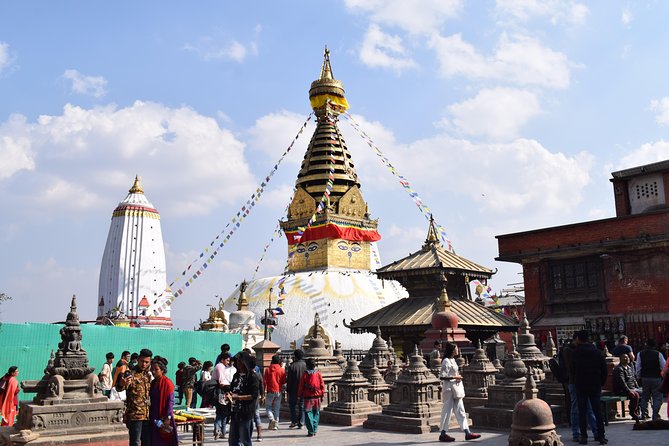
Your first major stop is Swayambhunath, often called the Monkey Temple. It sits on a hill above Kathmandu, reached by a stairway of about 365 steps. The climb gives you an immediate workout, but it also brings broad views across the city.
At the top, you can walk around the stupa, turn prayer wheels, and look closely at the shrines scattered around the hill. This is a Buddhist site with Hindu temples and images nearby, a useful early lesson in how the two faiths share sacred space in Kathmandu Valley.
The visit is listed as a short stop, so do not expect a long meditation session or an unhurried climb. Your guide can point out the religious symbols and explain the site, but the schedule still has to keep moving.
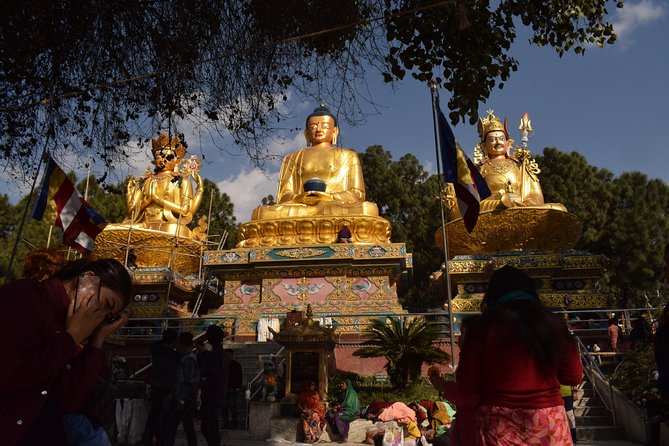
On the far side of the hill, Amideva Buddha Park offers a quick look at three large Buddha statues. It is easy to overlook if you visit Swayambhunath alone, so including it adds something worthwhile without requiring a separate trip.
Kathmandu Durbar Square and Kumari Chowk
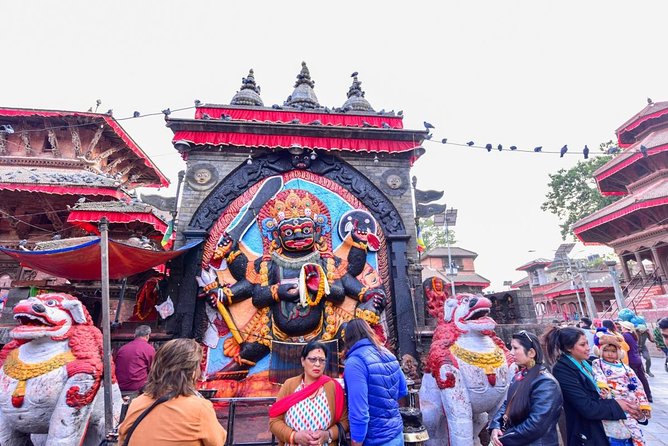
The route continues to Kathmandu Durbar Square, the old royal center in the heart of the city. Earthquake damage means some buildings are still being repaired or reconstructed, but there is plenty to see in the courtyards, temples, carved windows, and palace spaces.
Kumari Chowk is one of the most unusual stops. This red-brick courtyard was once home to the Kumari, a girl chosen to serve as the city’s living goddess until puberty. You may learn about the tradition and, if circumstances allow, see the courtyard and its decorated architecture.
The stop is brief, so treat it as an introduction rather than a full visit to the square. If you are especially interested in the Kumari tradition, tell your guide early. Private touring gives you a better chance of shaping the time around your interests, though the full schedule may limit how long you can stay.
Patan’s stone Krishna Temple and Golden Temple
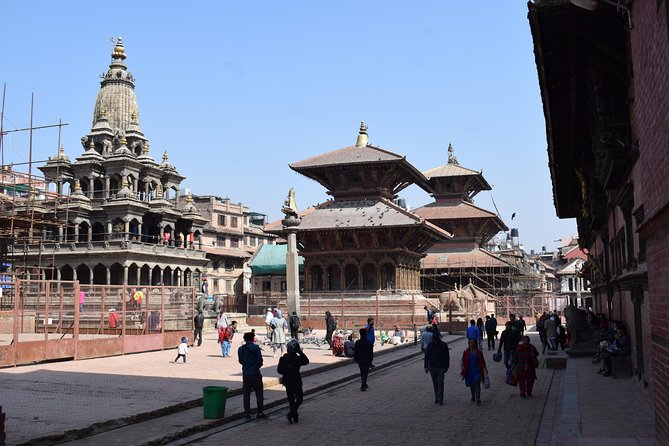
Patan Durbar Square, in Lalitpur, is one of the strongest parts of the day. The old palace courtyard is surrounded by Newar architecture, red brick, carved wood, and carefully worked stone. It feels different from Kathmandu Durbar Square, even though both were royal centers.
The Krishna Temple deserves close attention. It is built from stone and has 21 shrines, with detailed work that is easy to miss if you only take a quick photograph from the square.
You then visit the Golden Temple, formally Hiranya Varna Mahavihar. Despite its name, the temple is not simply a gold-covered monument. It is a traditional pagoda-style Buddhist courtyard with bronze figures, silver details, and a quieter scale than the large royal squares.
Patan Museum follows in Keshav Narayan Chowk. The museum gives useful context for the religious art and architecture you have already seen. It is one of the stops where a guide’s explanation adds real value, since the objects and symbols can be difficult to interpret on your own.
The listed visits here are short, often 10 to 25 minutes each. That keeps the full day possible, but art lovers may wish they had more time in the museum and around the square.
Same city, a completely different sort of day:
- Everest Base Camp Trek – 14 Days
★ 5.0 · 1,499 reviews - Everest Base Camp Helicopter Tour landing at Everest View Hotel
★ 5.0 · 668 reviews - Half day cooking class in Thamel kathmandu
★ 5.0 · 607 reviews - Everest Base Camp Trekking
★ 5.0 · 485 reviews
Bhaktapur’s Nyatapola and Fifty-Five Window Palace
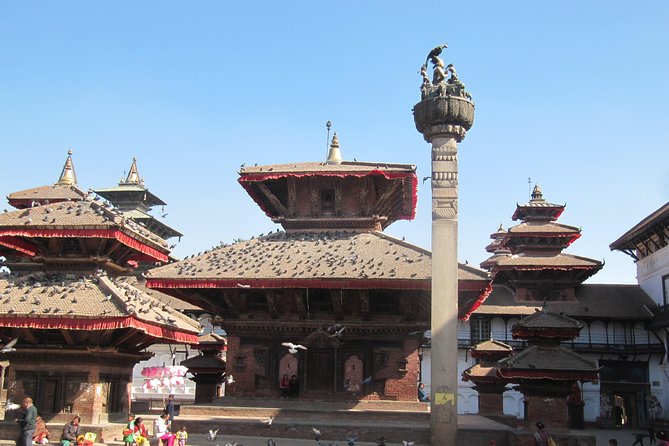
Bhaktapur is usually the most rewarding old-city stop for first-time visitors. Known as the City of Devotees, it retains many traditional houses and historic structures, and its pedestrian areas make it easier to focus on the architecture.
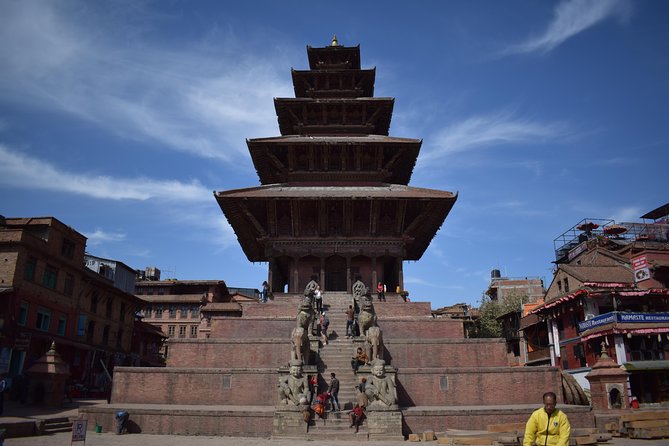
Nyatapola Temple is the visual centerpiece. This five-level pagoda is one of the tallest in the valley, and its broad stairway is lined with sculpted figures. The short visit lets you admire the design and hear the basic story of the temple, but you will still need to keep moving.
Dattatreya Temple gives you a different view of Bhaktapur’s religious life. It is said to have been made from the wood of a single tree, a detail that makes the structure especially interesting when you look at its timber construction.
The Palace of Fifty-Five Windows is another highlight of the old royal complex. Its carved windows are the feature to watch for, along with the surrounding courtyards and brickwork.
Siddha Pokhari is a small change of pace. This man-made pond near one of the old city gates is about 171 meters long and three meters deep. The stop is only a few minutes, but it gives you a glimpse of a local gathering place rather than another temple courtyard.
Lunch in Bhaktapur is not included in the $180 price. That is a fair arrangement because you can choose from several restaurants, including places overlooking a square. The meal adds time to an already long day, so tell your guide if you prefer a quick lunch or want to sit and enjoy the setting.
Changu Narayan, the remote hilltop temple
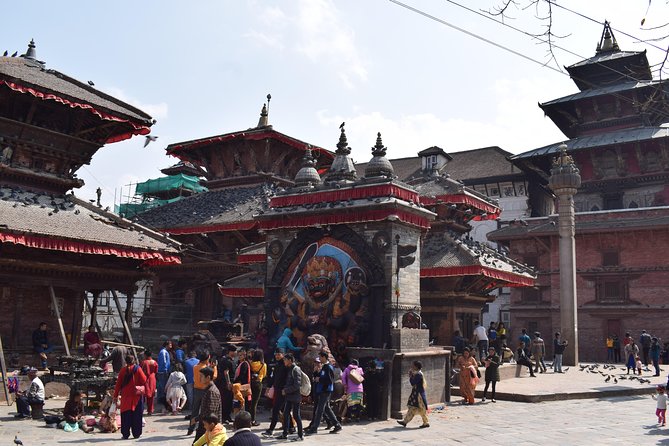
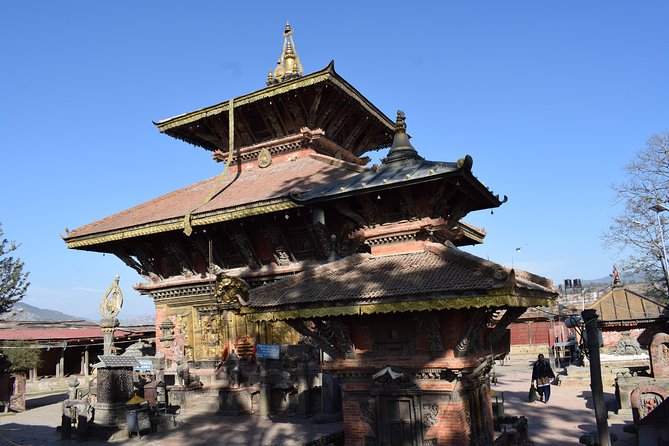
Changu Narayan is the day’s most outlying stop and one of its most important. The temple dates to the Licchavi period and is often described as the oldest temple in Kathmandu Valley.
The setting makes it feel removed from the city. Stone and wooden carvings reward a slower look, and the hilltop location gives the visit a different mood from the crowded royal squares.
This is one of the few stops scheduled for about an hour, which makes sense. The temple has enough detail to justify time on foot, and the longer visit gives you a chance to absorb the carvings instead of simply checking off another name.
The road and traffic make Changu Narayan a practical reason to book a private vehicle. Reaching it independently takes more planning, while this tour folds it into the same day as the central sights.
Pashupatinath and the Bagmati River
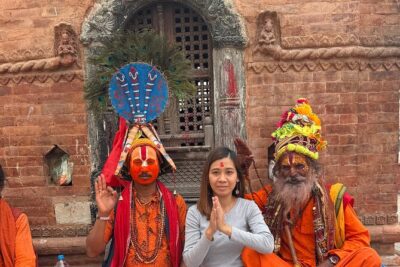
Pashupatinath is one of Nepal’s largest temple complexes, with more than 500 temples and shrines spread across the area. It is a major Hindu pilgrimage site and one of the places where the religious life of Kathmandu feels especially present.
You should approach this stop with respect. It is not only an architectural attraction. The complex is also associated with Hindu cremation ceremonies along the river, and you may see rituals taking place. Watch quietly, follow your guide’s advice, and avoid treating an active ceremony as a photo opportunity.
The scale can be confusing without help. Your guide can explain which buildings are accessible, how the complex is arranged, and why the site matters to Hindu worshippers. The scheduled hour gives you enough time to see the main areas without turning the visit into a rushed walk-through.
For some people, Pashupatinath is the most powerful stop of the day. For others, the religious practices and cremation areas may feel intense. This is a place to visit with an open mind, not a checklist mentality.
Boudhanath, prayer wheels, and Tibetan Buddhist life
Boudhanath closes the main sightseeing circuit with one of Kathmandu’s most recognizable monuments. The white stupa is about 36 meters tall, with more than 50 gompas around it.
The open space around the stupa makes it easier to understand the building’s circular design. You can walk around it, observe people turning prayer wheels, and look at the monasteries and shops around the perimeter.
After a full day, this final stop can feel demanding, but it is also a fitting ending. Swayambhunath introduces Buddhist worship from a hilltop, while Boudhanath presents a larger pilgrimage center with a strong Tibetan Buddhist presence.
The visit is scheduled for about an hour. Ask your guide to explain the symbols painted on the stupa and the meaning of the clockwise walk. This is the kind of detail that turns a striking monument into a place you can better understand.
What the $180 price includes
At $180 per person, this is not the cheapest way to see Kathmandu. It is also not a basic transport service. The price includes a private vehicle, hotel pickup and drop-off, an English-speaking guide, and entrance fees at all seven UNESCO heritage sites.
That matters because individual admission charges can add up, and buying tickets at each stop would slow an already packed schedule. You are also paying for a driver who knows the city and a guide who can connect the sites rather than leaving you to piece them together alone.
Lunch, drinks, and tips are extra. The tour has group discounts, though the activity itself is private, meaning only your own party takes part. For a couple or small family with one full day in Kathmandu, the cost can be reasonable when you value time and convenience.
If you have three or four days in the valley, I would consider splitting the sights across separate days. In that case, you could spend longer in Patan Museum, walk Bhaktapur at a slower pace, or return to Pashupatinath at a quieter time.
Timing, walking, and practical preparation
Plan for about 12 hours, with an early start. Some departures begin around 7 a.m., and that gives you the best chance of completing the full route before the day becomes too tiring.
Wear your most comfortable walking shoes. The steps at Swayambhunath, uneven paving in the old squares, and repeated temple visits add up. Bring water and sun protection, and dress smart casual as requested.
The tour is not physically extreme, but it is active. Most people can take part, yet anyone who has trouble with stairs or long periods on foot should discuss the pace with the operator before booking.
The day can also be adjusted in small ways. Guides such as Shanti and Kabita have helped with photography, shopping, and personal requests, while still keeping the main route on track. Do not assume you can add large detours, but it is reasonable to mention your priorities at the start.
Free cancellation is available up to 24 hours before the start time for a full refund. Changes or cancellations within 24 hours are not accepted for a refund, based on local time.
The kind of person who should book
Book this tour if you have one free day, are visiting Kathmandu for the first time, or want a clear introduction before a trek or longer Nepal trip. It is especially useful if you do not want to negotiate city transport or organize seven separate heritage visits.
It also suits solo visitors and small groups who value a private guide. The guide can answer questions about Buddhism, Hinduism, architecture, mythology, and present-day Nepal instead of delivering only a fixed script.
Skip it, or split it into two days, if your priority is slow photography, extended museum time, shopping, or quiet temple visits. The itinerary is ambitious by design, and even the best guide cannot turn 12 hours into a leisurely day.
Should you book the UNESCO Seven World Heritage Tour?
I would book it for a short stay. The combination of private transport, included entrance fees, hotel pickup, and strong guiding makes it a practical way to see the valley’s main sacred and royal sites without losing hours to planning.
Go in with the right expectations: this is a fast, full introduction, not a restful sightseeing day. Wear good shoes, bring water, tell your guide what matters most, and accept that some places will receive only a brief visit. If you do that, the tour gives you a useful first look at Kathmandu and a clear idea of where to return for more time.
FAQ
How long does the UNESCO Seven World Heritage Tour last?
The tour lasts approximately 12 hours. Some departures begin around 7 a.m. and continue into the evening.
What is included in the tour price?
The price includes a private vehicle, an English-speaking guide, hotel pickup and drop-off, and all required entrance fees at the seven heritage sites.
Is lunch included?
No. Lunch in Bhaktapur is not included, but you can choose from several eateries in the old city.
Is this a private tour?
Yes. Only your own group takes part in the activity, with a private car, driver, and guide.
How much walking is involved?
You should expect a lot of walking and many steps, including the stairway at Swayambhunath. Comfortable walking shoes, water, and sun protection are recommended.
What is the cancellation policy?
You can cancel up to 24 hours before the start time for a full refund. Cancellations or changes made less than 24 hours before the start time are not refunded or accepted.
Just added around Kathmandu
- Traditional Momo Making Class★ 5.0 · 10 reviews
- Wildlife Adventure in Chitwan Nepal★ 4.0 · 4 reviews
- Walking tour of real Kathmandu through back streets.★ 5.0 · 3 reviews
- Kathmandu 2 Nights 3 Days Chitwan Jungle Safari Tour★ 5.0 · 9 reviews
- Kathmandu Street Food Walking Tour – Eat Like a Local★ 5.0 · 3 reviews
- Private Manaslu Circuit Trek at Himalayas★ 5.0 · 3 reviews
- Walking tour of Kathmandu with awesome local guides★ 5.0 · 4 reviews
- Visit Swayambhunath and Bauddhanath Stupa with Guide★ 5.0 · 5 reviews
Kathmandu UNESCO World Heritage Tours, compared.
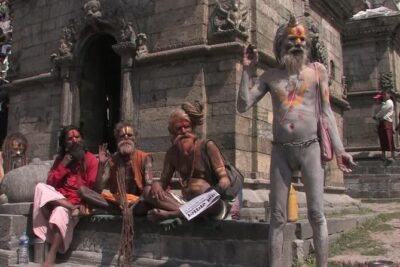
Private Kathmandu Sightseeing Tour | UNESCO World Heritage sites
Read our review →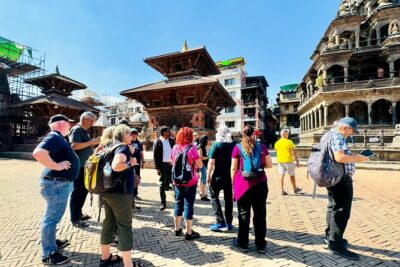
Full Day 7 UNESCO Tour with Lunch – Private/Group
Read our review →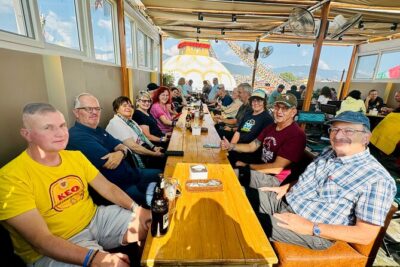
Full Day Top 4 UNESCO Tour with Lunch – Private/Group
Read our review →
Full Day Private Top 4 UNESCO Heritage Tour W/Lunch.
Read our review →Browse the lists this tour appears in