
Reviewed · KATHMANDU
Island Peak Climbing | Summit 6,189m with Expert Guides
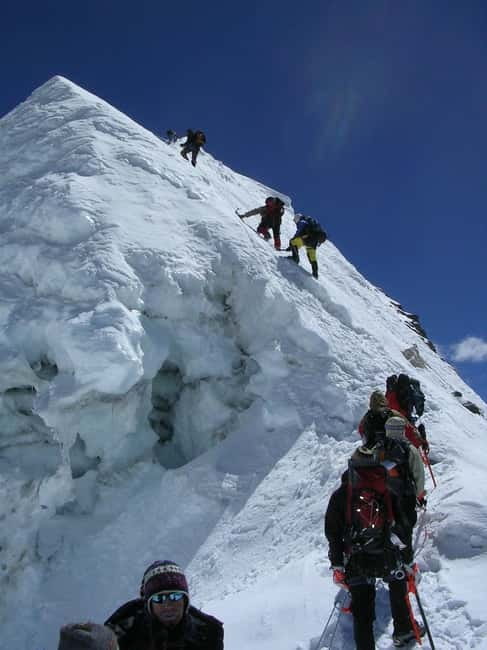
Island Peak is a serious Himalayan climb wrapped inside a classic Everest-region trek. You spend days walking through Sherpa villages and high valleys before tackling a glaciated summit at 6,189 meters, with views toward Everest, Lhotse, Ama Dablam, and Makalu.
I like the steady acclimatization plan and the practical support: an experienced climbing guide, one porter for every two clients, base-camp training, and a spare summit day. I also like that the route includes time at Tengboche and Namche rather than rushing straight to the mountain. The main drawback is cost creep. At $1,699, you still need to add Lukla flights, the Island Peak permit, insurance, tips, and personal spending.
Key points to know before booking
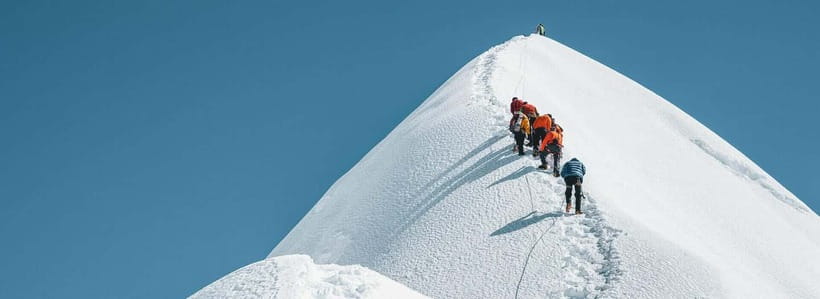
- The summit reaches 6,189 meters: This is a real mountaineering objective, not simply a high-altitude walk.
- Acclimatization is built into the route: You spend nights at Namche, Dingboche, Chhukung, and base camp before summit day.
- Base-camp instruction is included: You receive glacier-walking and climbing practice before the attempt.
- A private group gives the trip flexibility: You travel with your own group and an English-speaking guide.
- The package includes useful mountain support: Porters, meals, lodges, tents, climbing equipment, permits, and a duffle bag are covered in the stated inclusions.
- Extra costs matter: Lukla flights cost about $440 round trip, and the climbing permit is listed separately at $350 or $175, depending on the applicable rate.
Why Island Peak is a good first Himalayan summit
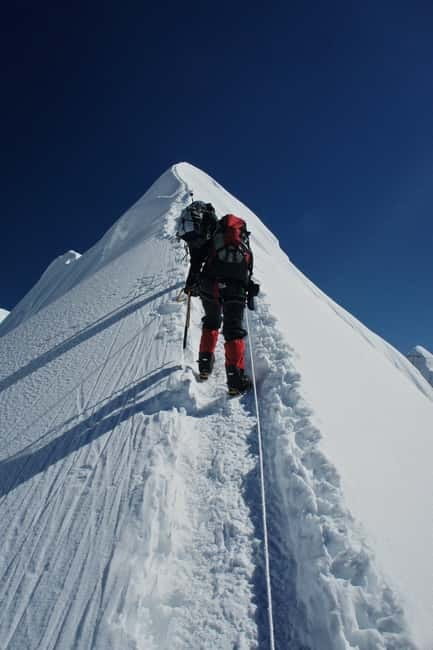
Island Peak, also called Imja Tse, gives you a taste of Himalayan mountaineering without requiring an expedition lasting many weeks. The approach follows the famous Everest route, so the walking is scenic and culturally rewarding before the technical work begins.
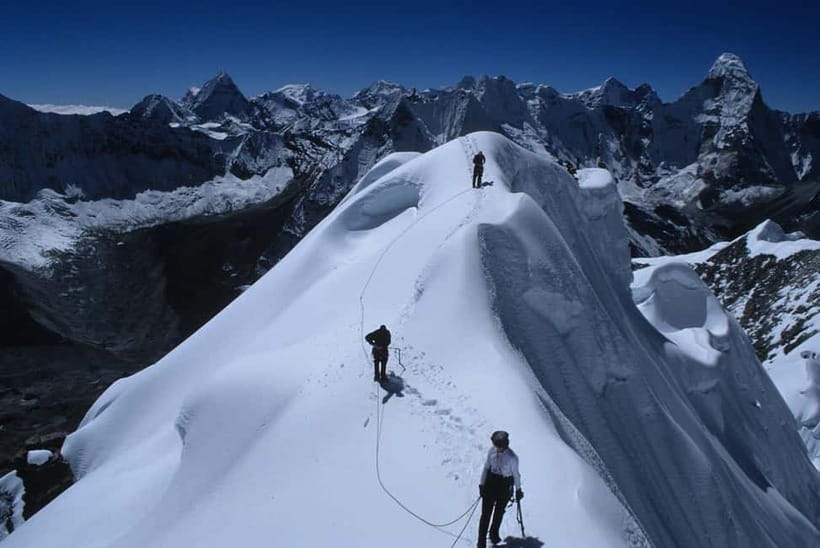
You will cross suspension bridges, pass Buddhist monasteries, sleep in local lodges, and walk through valleys framed by high peaks. Then the character of the trip changes. At base camp, you train with climbing equipment and prepare for a long summit day that may take eight to ten hours.
That mix is the main appeal. If you only want a high-altitude trek, Everest Base Camp may be a better match. If you want to learn how a rope, ice axe, crampons, and glacier travel fit together, Island Peak offers a more demanding challenge.
You should still take the mountain seriously. The summit reaches nearly 1,000 meters above base camp, and altitude affects people in unpredictable ways. A good fitness level is required, and your travel insurance must specifically cover high-altitude trekking and climbing.
Other Kathmandu days people book alongside this one:
- Everest Base Camp Trek – 14 Days
★ 5.0 · 1,499 reviews - Private Kathmandu Sightseeing Tour | UNESCO World Heritage sites
★ 5.0 · 756 reviews - Everest Base Camp Helicopter Tour landing at Everest View Hotel
★ 5.0 · 668 reviews
Kathmandu sets the tone on day one
Your trip begins in Kathmandu at about 1,338 meters. The first day is used for arrival, hotel transfer, and cultural exploration, giving you a useful cushion before heading into the mountains.
Two nights in Kathmandu are included at Kathmandu Suite Home or a similar deluxe hotel. That is helpful after an international flight, especially because the journey to Lukla can be affected by weather and airport operations.
The company provides airport and hotel transfers in a private vehicle. It also offers 24-hour support, which matters in Nepal because mountain flights and road connections can change quickly. The service includes help with a helicopter rescue request, but your insurance must pay for any rescue itself.
Use Kathmandu to check your gear, withdraw cash, and make sure your insurance documents are easy to reach. You should also expect to pay for some mountain extras in cash, including drinks, hot water, laundry, phone calls, and charging.
Lukla to Namche brings the first real test
On day two, a 35-minute flight takes you to Lukla, followed by a three to four-hour walk to Phakding. The walking distance is about eight kilometers, and the listed high point is 2,800 meters.
The flight is short, but it is an important part of the trip. During busy periods, flights may operate from Ramechhap Airport rather than Kathmandu, so you may need an additional transfer before takeoff. This is one reason not to plan a tight international connection at the end of the tour.
The walk to Phakding is a gentle introduction compared with what comes later. You begin to settle into the pace, meet the porters and local support team, and sleep in a mountain lodge rather than a hotel.
Day three is more demanding. You walk about ten kilometers for five to six hours to Namche Bazaar, gaining roughly 600 meters. Suspension bridges and the first views of Thamserku make the route memorable, and you may catch your first sight of Everest.
Namche sits at 3,438 meters and is the main trading center of the Khumbu region. It is a good place to slow down. The route plan gives you an acclimatization day here, which is more valuable than squeezing in another long walking day.
Namche and Tengboche provide more than scenery
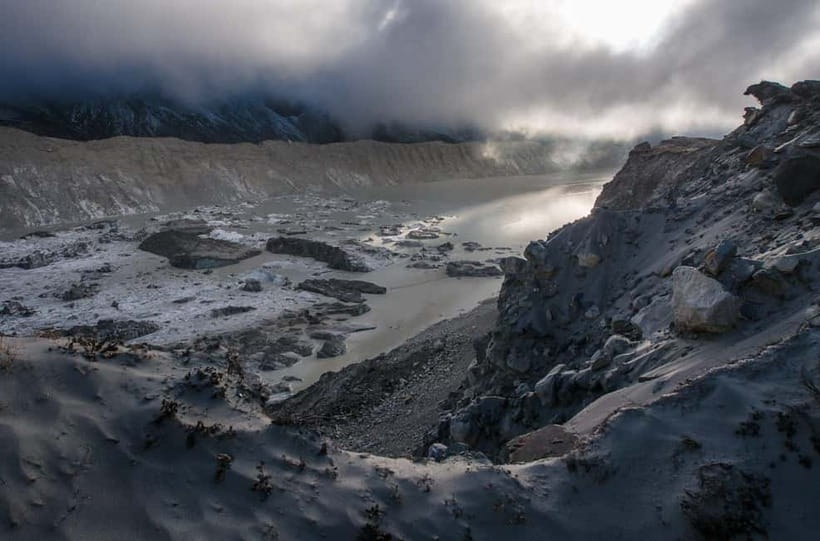
The Namche acclimatization day includes a two to three-hour optional hike, with about 3 to 5 kilometers of walking. The goal is not to exhaust yourself. You are getting used to thinner air while taking in views of Everest and Ama Dablam.
I like this part of the schedule because acclimatization is built around gradual exposure rather than a single rest day with no movement. Still, you should listen to your guide and body. A short hike is optional for a reason.
On day five, you walk nine kilometers to Tengboche, gaining about 430 meters over five to six hours. Tengboche Monastery is the main cultural stop, and the setting brings views of Everest, Lhotse, and Ama Dablam.
This is where the trip feels distinctly different from a standard mountain holiday. You are not only ticking off elevations. You are passing through Sherpa communities and visiting an important Buddhist center in the Khumbu.
The route also has a practical challenge: the walking time is moderate, but the increase in altitude continues every day. Sleep, hydration, and a measured pace matter more here than speed.
Same city, a completely different sort of day:
- Half day cooking class in Thamel kathmandu
★ 5.0 · 607 reviews - Everest Base Camp Trekking
★ 5.0 · 485 reviews - Nagarkot Sunrise View and Day Hiking from Kathmandu
★ 5.0 · 471 reviews - Kathmandu: Full Day 7 UNESCO Tour with Lunch – Private/Group
★ 5.0 · 415 reviews
Dingboche and Chhukung lead into high country
Day six takes you to Dingboche at 4,360 meters. The walk lasts five to six hours and covers about ten kilometers, with Lhotse and Ama Dablam dominating the views.
Dingboche is an important transition point. Below it, you are still on a popular trekking route with more settled facilities. Above it, the air becomes thinner, the nights colder, and the terrain more alpine.
The next day is shorter but higher. You walk three to four hours and about six kilometers to Chhukung at 4,730 meters. The route passes through alpine pastures and offers views of Lhotse and Island Peak.
Chhukung is where the summit begins to feel close. The shorter walking day is useful because you are gaining another 370 meters. Do not mistake the shorter distance for an easy day. Altitude can make a simple walk feel slow and heavy.
The route plan does not list a separate full rest day at Dingboche or Chhukung. That makes the gradual rise through Namche and the earlier stops especially important. If you have a history of altitude problems, discuss the schedule and possible adjustments with the operator before paying.
Base camp is where trekking becomes climbing
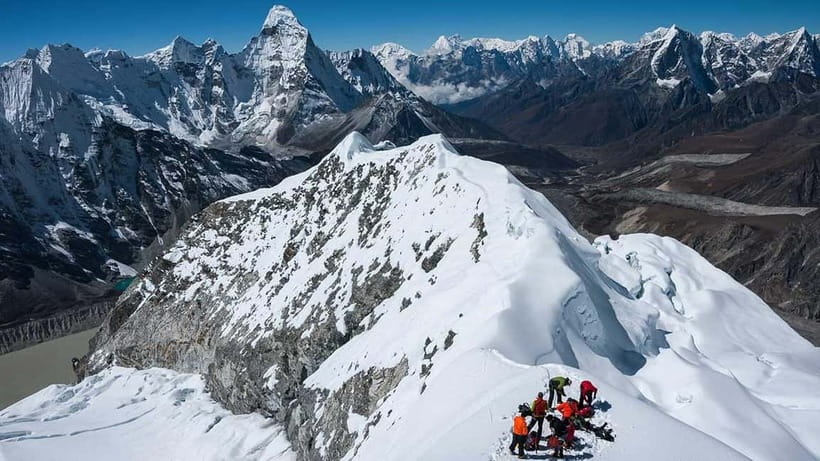
On day eight, you walk about five kilometers over three to four hours to Island Peak Base Camp at 5,200 meters. The main change is not just the altitude. You begin preparing for glacier travel and the summit itself.
Pre-climb training is included at base camp. The stated group equipment includes ropes, ice screws, snow bars, ice hammers, tents, and kitchen equipment. Your guide should use this time to make sure you understand the basic systems and feel comfortable with the equipment you will rely on higher up.
You are expected to bring personal climbing gear, though a duffle bag, sleeping bag, and down jacket are provided. The exact personal gear list is not detailed, so confirm what the operator supplies before departure. The instruction to bring climbing gear means you should not assume every personal item is included.
Base-camp accommodation is tented, while much of the approach uses the best available local lodges. That change is part of the appeal, but it also means fewer comforts. Hot showers, hot water, Wi-Fi, charging, drinks, and laundry cost extra where available.
Summit day demands patience and stamina
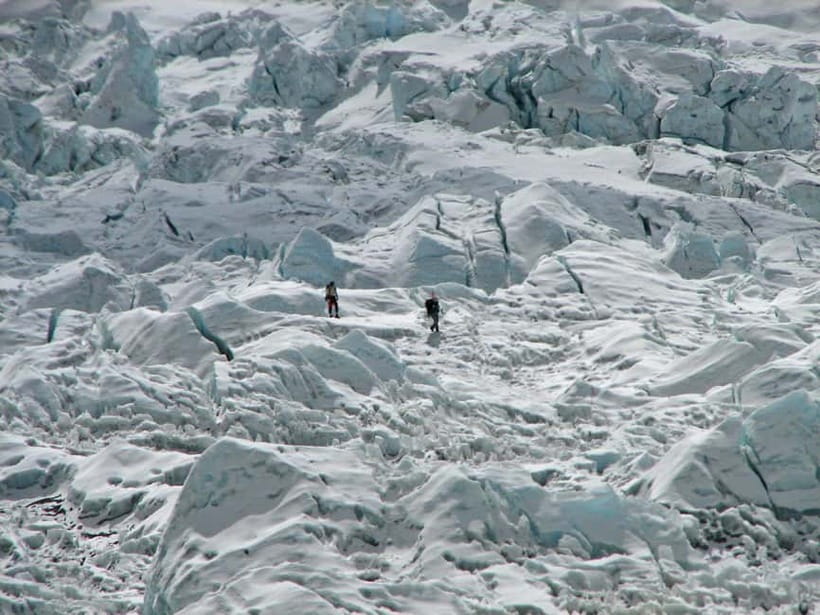
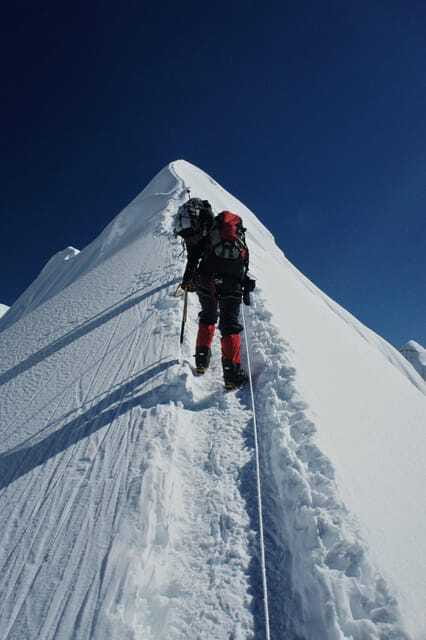
The summit attempt is scheduled for day nine, with a return to base camp after eight to ten hours. The listed vertical gain is 989 meters, followed by the same descent.
That is a long day at high altitude. You need to start prepared, move steadily, and accept that the schedule may change with conditions. The route plan includes a contingency day on day ten, which is one of the package’s strongest features. Mountain weather does not follow a booking calendar, and a spare day gives the guide a second chance to make a safe summit attempt.
From the summit area, the listed views include Island Peak, Everest, and Makalu. The exact visibility will depend on weather, but the setting is the reward for all those slow uphill hours.
The climbing guide is described as having at least 20 Island Peak summits. That kind of specific experience is useful, particularly for pacing, route decisions, and judging conditions. One guide associated with the wider service is also experienced on demanding peaks such as Ama Dablam, though you should confirm who will lead your group before departure.
Safety support is a clear priority. The package includes a government-licensed English-speaking guide and a climbing guide for the ascent, plus a porter for every two clients. Porter wages, food, accommodation, equipment, and insurance are included for the porters.
A small but telling detail from the service feedback is the mention of a porter named Mijan, who helped well beyond his formal duties. You may not have the same porter, but it reflects the value of a strong local team on a trip where practical help matters every day.
The return to Lukla is long but rewarding
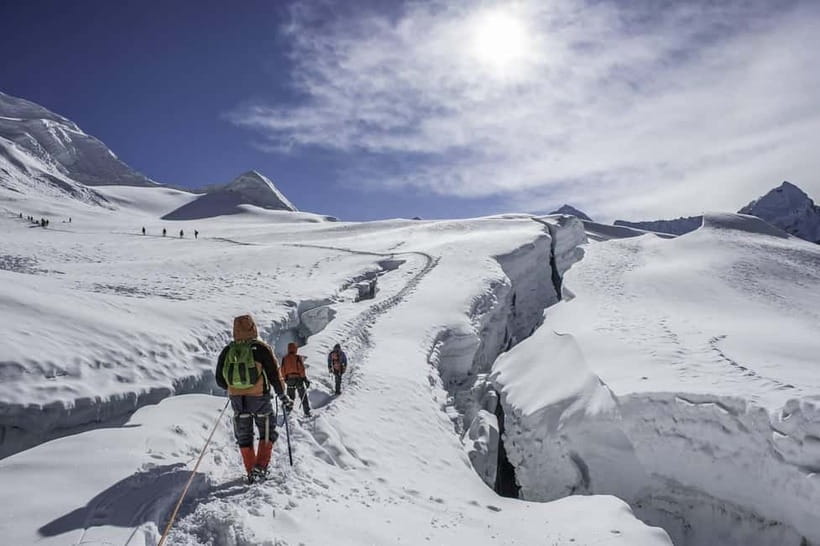
After the summit and possible buffer day, day eleven takes you from Chhukung back to Namche Bazaar. The listed distance is 18 kilometers and the descent is about 1,292 meters, with views of Ama Dablam and Everest.
Descending feels easier on the lungs, but the long distance can be hard on tired legs. This is why a private group can be useful. Your guide can help set a pace that suits the group instead of forcing everyone into a fixed public schedule.
Day twelve is the final walking day, from Namche to Lukla. It covers about 19 kilometers over six to seven hours, descending to 2,800 meters.
This is a substantial finish. You may feel ready for a shower and a soft bed, but the route still requires a full day of walking. The return journey also gives you a chance to notice how quickly the terrain changes as you lose altitude.
Day thirteen brings the flight back to Kathmandu, followed by departure on day fourteen. Keeping this final buffer in the plan is sensible because Lukla flights can be delayed by weather. I would not book an important same-day international connection unless you have checked the operator’s current flight advice.
What the $1,699 price really covers
The $1,699 starting price is reasonable for a 14-day private climbing package, but it is not the final amount you should budget.
Included items cover two Kathmandu hotel nights, airport transfers, three meals per day during the trek, local lodge and tent accommodation, guides, porters, climbing equipment for the group, permits and local fees, a free duffle bag, base-camp training, and government taxes.
The package also includes the Sagarmatha National Park entry permit, the Khumbu Pasang Lhamu Rural Municipality fee, the NMA service charge or royalty fee, the SPCC fee, and a $500 garbage deposit. Those costs can add up quickly if arranged separately.
You need to budget for:
- Round-trip Kathmandu to Lukla flights, listed at about $440 per person
- The Island Peak climbing permit, listed separately at $350 or $175
- Climbing guide insurance, listed at $100
- A porter supplement if you travel alone
- Travel insurance that covers climbing and rescue
- Tips for guides, porters, and drivers
- Wi-Fi, hot water, showers, charging, drinks, laundry, and phone calls
Because the permit amount appears in two forms, confirm the current charge before booking. Also ask whether a solo traveler receives a different porter arrangement, since the standard package assumes one porter for two clients.
Who should book this climb
I would recommend this trip to a fit trekker who wants a first Himalayan climbing objective and values logistical support. It suits you if you are comfortable with long walking days, basic mountain accommodation, cold conditions, and a summit attempt that may be postponed.
It is not a casual holiday. The minimum age is 14, children younger than that are not accepted, and the activity is not suitable for pregnant women or wheelchair users. The stated upper age limit is 95, but age alone does not determine readiness. Physical condition and previous high-altitude experience matter more.
The private-group format is useful if you want a more personal pace and direct contact with your guide. English is the listed operating language, and the company provides 24-hour support from Kathmandu through the mountain route.
The main caution is to clarify every extra cost and every piece of personal equipment before you go. Also confirm the identity and climbing background of your assigned guide, the current permit fee, the flight departure airport, and what happens if weather prevents the summit.
Should you book Island Peak with Accessible Adventure?
Book it if you want the full package: Sherpa culture, the Everest region, a serious 6,189-meter summit, climbing instruction, porters, and a spare weather day. The combination gives you more than a sightseeing trek, while keeping the logistics organized through a local Nepal-based company.
Think twice if you want comfort, a relaxed walking holiday, or a guaranteed summit. Island Peak is physically demanding, the summit day is long, and several important costs sit outside the advertised price.
For the right person, the value is strong. You get a carefully paced route, experienced mountain staff, practical training, and support from arrival in Kathmandu through the flight home. Just arrive fit, insured, properly equipped, and ready for the mountain to make the final decision.
FAQ
How high is Island Peak?
Island Peak reaches 6,189 meters, or about 20,306 feet.
How long does the trip last?
The full program lasts 14 days, including arrival in Kathmandu, the trek and climb, the return flight, and departure.
Are flights from Kathmandu to Lukla included?
No. Round-trip flights are listed separately at about $440 per person. During peak periods, flights may operate from Ramechhap Airport instead of Kathmandu.
Is climbing training included?
Yes. Pre-climb training and acclimatization are included at Island Peak Base Camp, including glacier-walking practice.
What accommodation is provided?
You receive two nights in a deluxe Kathmandu hotel or a similar property. During the trek, you stay in local lodges and tents at base camp.
Are meals included?
Breakfast, lunch, and dinner are included during the trek. Personal drinks, alcoholic beverages, hot water, and other purchases are not included.
Do I need travel insurance?
Yes. You need valid insurance that covers high-altitude trekking and climbing. The package can help contact your insurance for helicopter rescue, but the insurance must cover the cost.
Are climbing permits included?
The Island Peak climbing permit is listed separately, at $350 or $175 depending on the applicable rate. National park and local area fees are included.
Just added around Kathmandu
- Traditional Momo Making Class★ 5.0 · 10 reviews
- Wildlife Adventure in Chitwan Nepal★ 4.0 · 4 reviews
- Walking tour of real Kathmandu through back streets.★ 5.0 · 3 reviews
- Kathmandu 2 Nights 3 Days Chitwan Jungle Safari Tour★ 5.0 · 9 reviews
- Kathmandu Street Food Walking Tour – Eat Like a Local★ 5.0 · 3 reviews
- Private Manaslu Circuit Trek at Himalayas★ 5.0 · 3 reviews
- Walking tour of Kathmandu with awesome local guides★ 5.0 · 4 reviews
- Visit Swayambhunath and Bauddhanath Stupa with Guide★ 5.0 · 5 reviews