
Reviewed · KATHMANDU UNESCO WORLD HERITAGE TOURS
Kathmandu: Full-Day Tour of 5 World Heritage Sites
Kathmandu’s temples tell the story of Nepal better than any museum could. In one long day, you move from the royal courtyards of Durbar Square to the prayer flags and white dome of Boudhanath, then to the cremation ghats of Pashupatinath and the hilltop shrine of Swayambhunath. It is a packed introduction to a city shaped by both Hindu and Buddhist traditions.
I like the efficient route and the chance to see major religious sites with a guide who can explain what you are looking at. I also like the flexible pickup and drop-off choices, especially if you are arriving at or leaving from Tribhuvan International Airport. The main drawback is pace: six hours of touring cannot give every monument the time it deserves, and entrance fees, food, and drinks are extra.
Key points to know before booking
- Four major sites are named clearly: Durbar Square, Pashupatinath, Swayambhunath, and Boudhanath.
- The tour is sold as a five-site heritage visit, so confirm the exact fifth stop before paying.
- Guide Uddhab receives special praise for being patient and helpful.
- Pickup and drop-off are available in Thamel or at Tribhuvan International Airport.
- The $65 price covers transport, guide service, taxes, and service fees, but not monument tickets or meals.
- The day is best for first-time visitors who want a broad introduction rather than a slow, detailed study of one neighborhood.
Why one day in Kathmandu can be so revealing
Kathmandu sits at about 1,400 meters in a bowl-shaped valley surrounded by four major peaks: Shivapuri, Phulchowki, Nagarjun, and Chandragiri. The city and its sister towns, Patan and Bhaktapur, trace their oldest settlements to a period between 167 B.C. and A.D. 1.
That long timeline is not just a date on a sign. You see it in the way a modern street can open onto a carved shrine, an ancient courtyard, or a temple still used for daily worship. Kathmandu is often called the city of temples, and this tour gives you a fast, useful explanation of why.
The format works best if you are short on time. You will not become an expert in Newar architecture or Hindu and Buddhist ritual in a single day, but you will gain a clear sense of how these traditions overlap. A good guide can turn a row of statues, bells, and prayer wheels into something you can understand rather than simply photograph.
More UNESCO heritage sites in Kathmandu:
- Private Kathmandu Sightseeing Tour | UNESCO World Heritage sites
★ 5.0 · 756 reviews - Kathmandu: Full Day 7 UNESCO Tour with Lunch – Private/Group
★ 5.0 · 415 reviews - Kathmandu: Full Day Top 4 UNESCO Tour with Lunch – Private/Group
★ 5.0 · 269 reviews
Starting in Thamel or at the airport
You can begin from Thamel or Tribhuvan International Airport. Thamel is the old commercial heart of Kathmandu, with narrow streets lined with shops, restaurants, offices, and more shops. It is a handy starting point if you are staying in the city and want the tour to collect you near your accommodation.
Airport pickup makes the tour useful on a transfer day, though you should think carefully about timing. The activity includes a full day of touring, and the guided portion is listed as six hours. If you are connecting to a flight, leave plenty of extra time beyond the tour itself. Road conditions and city traffic can affect how smoothly the day runs, and no exact transfer time is given.
Transportation is included, which matters in Kathmandu. Moving between sites on your own can take time, and arranging separate rides for every stop would add work to an already busy day. The tour does not state the vehicle type or group size, so ask those questions if personal space or a private experience matters to you.
Durbar Square and the old royal city
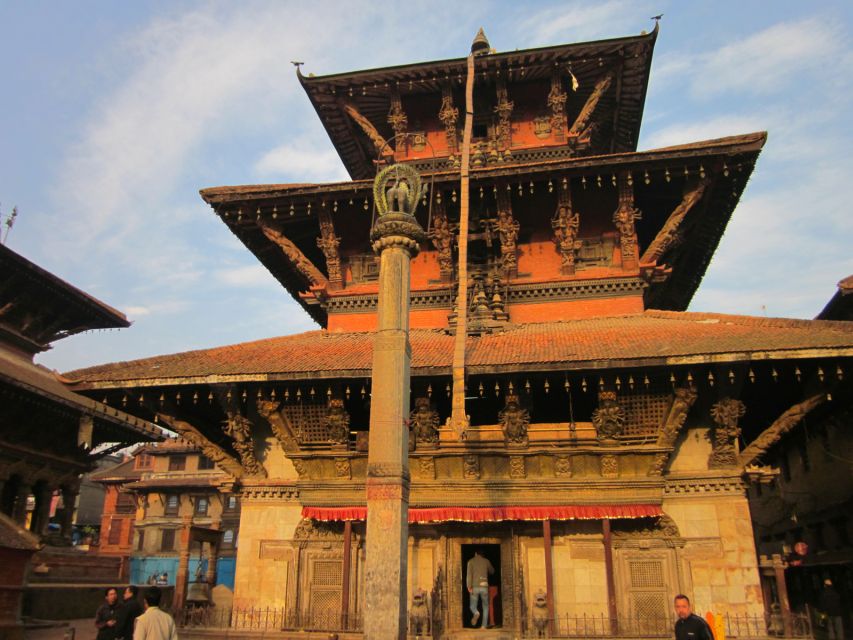
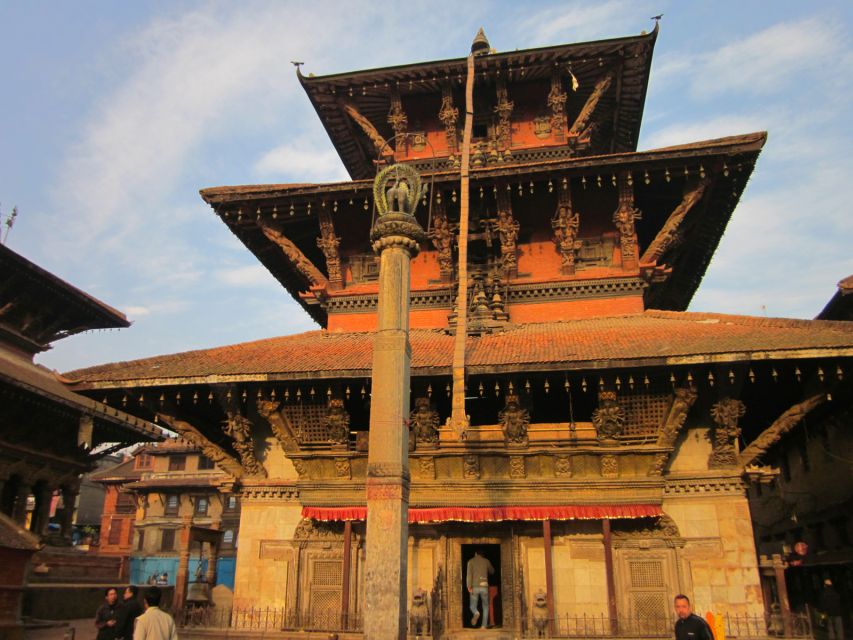
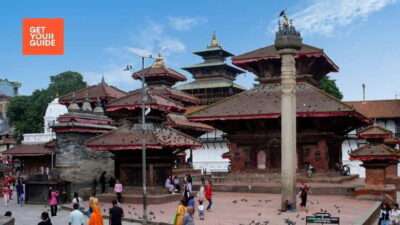
Durbar Square is the natural place to begin understanding Kathmandu. This former royal center gathers Hindu temples, carved figures of deities, courtyards, and the Palace of Kumari, home of the living goddess.
The appeal here is not one single building. It is the concentration of religious and royal life in a small area. You can look at the wood carving, then notice how the square still connects with present-day worship and local custom. Your guide should help separate the symbols and stories, since many figures can look alike if you do not know what to watch for.
The Kumari tradition is one of the most unusual parts of the visit. The Kumari is a living goddess selected according to longstanding religious customs. You may see the palace and learn about the tradition, but do not expect a guaranteed personal appearance.
Durbar Square also needs a little patience. The tour gives you an introduction, not unlimited time for every courtyard and temple. If you enjoy architecture, history, or photography, you may wish the schedule allowed you to linger. Still, as a first stop, it gives the rest of the day a useful foundation.
Pashupatinath beside the Bagmati River
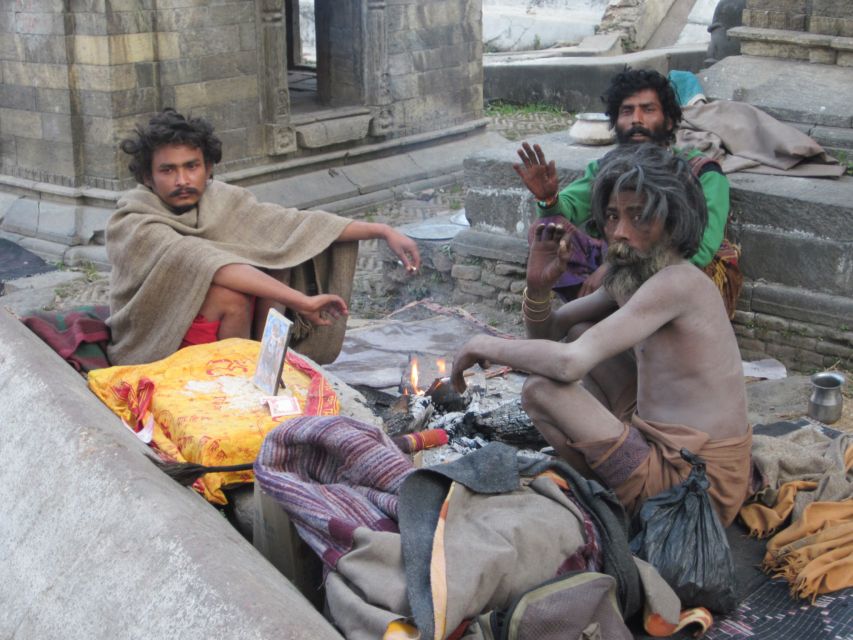
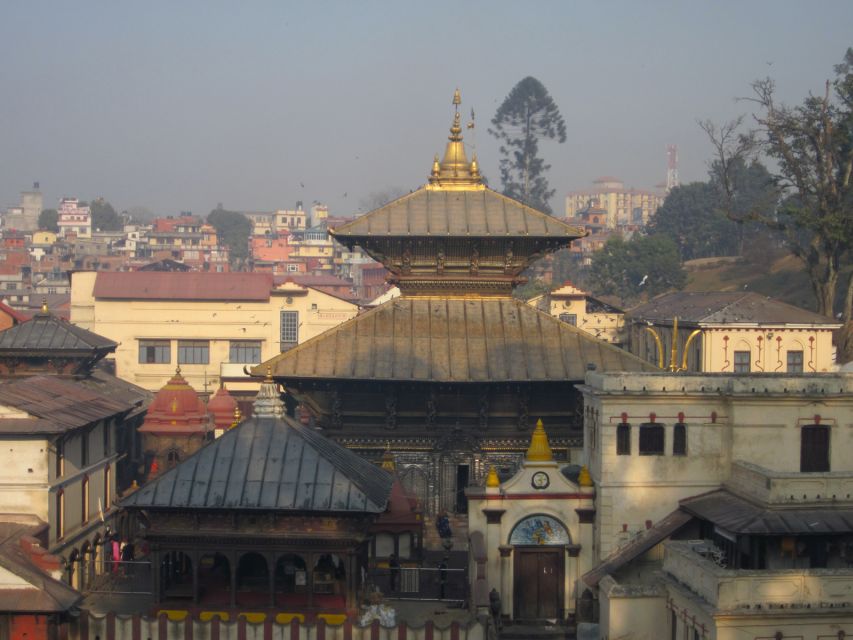
Pashupatinath is one of the most important Hindu temples in Nepal and is described as the world’s largest Hindu temple. It sits beside the Bagmati River and draws pilgrims as well as colorful sadhus, or Hindu holy men.
This is a place to approach with respect. The riverbanks are used for cremation, and many Hindus choose to be cremated here. That makes the visit more than a sightseeing stop. You may see religious practice unfolding in public, which can feel intense and unfamiliar. A thoughtful guide is especially valuable here, helping you understand what is happening without turning a sacred ceremony into a spectacle.
Non-Hindus may not be allowed into every part of the temple complex. The information provided does not specify access rules or the exact viewing areas, so ask your guide when you arrive. Even from permitted areas, the river, shrines, priests, and worshippers give you a direct look at Kathmandu’s religious life.
Pashupatinath can be one of the most moving stops of the day, but it may not suit someone who prefers only quiet monuments and polished historic interiors. The cremation activity is real and visible. Go with an open mind, follow local instructions, and keep your camera away when privacy is required.
Same city, a completely different sort of day:
- Everest Base Camp Trek – 14 Days
★ 5.0 · 1,499 reviews - Everest Base Camp Helicopter Tour landing at Everest View Hotel
★ 5.0 · 668 reviews - Half day cooking class in Thamel kathmandu
★ 5.0 · 607 reviews - Everest Base Camp Trekking
★ 5.0 · 485 reviews
Swayambhunath, the hilltop Buddhist shrine
Swayambhunath is one of Kathmandu’s two major Buddhist gompas named for this tour. It is commonly associated with its hilltop setting and broad views over the city and valley.
The stop gives the day a change of mood. After the royal buildings of Durbar Square and the solemn river setting at Pashupatinath, Swayambhunath brings you to Buddhist imagery, stupas, and religious details that reward a slower look. The site is also known for monkeys, though the provided tour details do not promise a particular encounter, so treat that as a possibility rather than a feature to plan around.
The hilltop setting can mean steps and uneven walking. The tour information does not give an accessibility rating, so anyone with mobility concerns should ask the provider for current details. Comfortable shoes are sensible for the whole day.
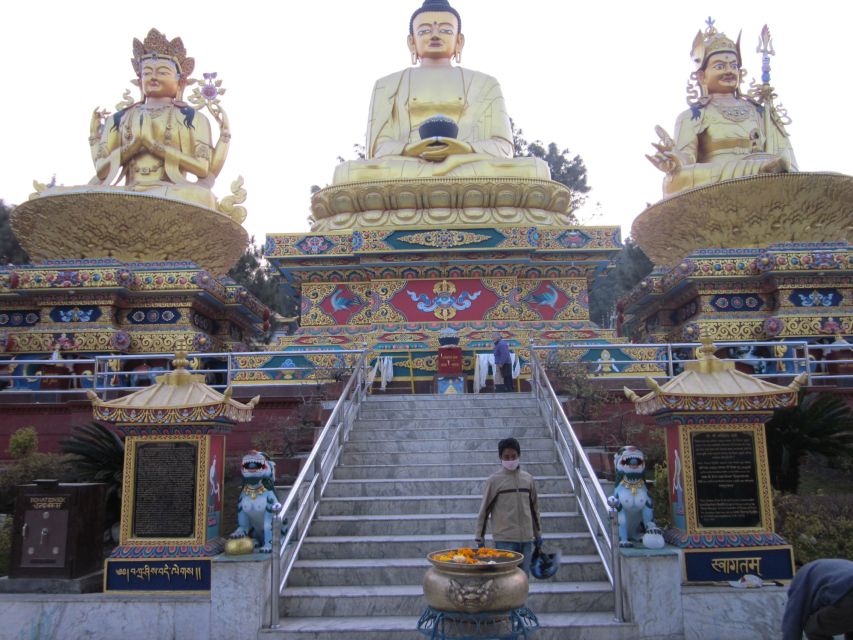
Swayambhunath is also a place where the guide’s explanations matter. Prayer wheels, painted eyes, shrines, and offerings each carry meaning. Without context, you can easily reduce the visit to a scenic viewpoint. With context, the site becomes an active place of prayer rather than just a monument.
Boudhanath and the great white stupa
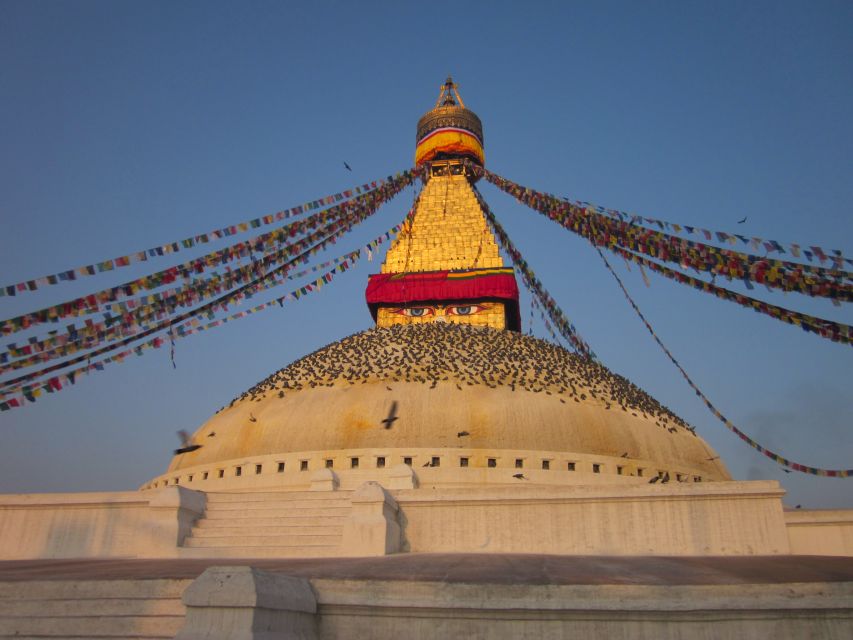
Boudhanath is the second major Buddhist gompa named in the tour details. Its large white stupa and ring of prayer flags make it one of the most recognizable religious sites in Kathmandu.
This is a good place to notice how worship works through movement. People may walk around the stupa, turn prayer wheels, and observe rituals in the surrounding area. Your guide can explain the basic customs and help you understand why the stupa matters to Buddhist communities.
Boudhanath often feels more spacious than the tight lanes of Thamel, but the day remains active and busy. The tour does not provide a set amount of time at each site, so you should not count on a long period for quiet reflection or detailed photography. The advantage is that you see it as part of a larger story, alongside Kathmandu’s Hindu sites.
For many people, Boudhanath becomes the visual highlight of the day. Its shape is easy to recognize, but the value lies in watching how people use the space. Look beyond the camera view and pay attention to the small acts of devotion around the central stupa.
The fifth site and Nagarkot question
The experience is described as a tour of five UNESCO World Heritage Sites. The named stops and descriptions clearly identify Durbar Square, Pashupatinath, Swayambhunath, and Boudhanath. Nagarkot is also mentioned as a high point about 35 kilometers from central Kathmandu, with views toward the Langtang range and distant peaks such as Annapurna, Manaslu, Cho Oyu, and Shishapangma.
However, the supplied schedule does not clearly identify Nagarkot as a guaranteed stop, and it does not name a separate fifth heritage monument. This is the one point I would clarify before booking. Ask the provider to list all five stops in the day’s actual route.
That question matters because a city heritage tour and a mountain viewpoint day are not the same experience. Nagarkot takes time to reach, and a scenic outing would leave less time for the temples. If mountain views are your main goal, confirm that the weather and route make the viewpoint practical. The description promises impressive Himalayan views, but mountain visibility can never be guaranteed.
What the six-hour guided format means
The guided portion lasts six hours, while the activity is presented as a full-day experience. That likely includes driving, pickups, drop-offs, and time between sites, though the exact schedule is not provided.
You should expect a brisk day. Four clearly named religious and historic areas already require movement, orientation, and explanation. If the fifth stop is included, the pace becomes faster still. This format is useful if your priority is coverage. It is less suitable if you prefer sitting quietly in one courtyard, stopping for long meals, or studying every carving.
The guide can make a major difference. English, French, German, and Italian language options are available. One guide named in the experience information is Uddhab, who is specifically described as wonderful and patient. Patience matters on a route like this, where questions can slow the schedule and where the customs may be unfamiliar.
The provider is Snowy Horizon Treks & Expedition. The tour includes transportation, an English-speaking guide, taxes, and service fees. The language information also lists French, German, and Italian, so confirm your preferred language when booking.
Is $65 a fair price?
At $65 per person, the tour offers reasonable value if you want transport and a guide arranged for one busy day. You are paying for convenience, historical explanation, and the ability to connect several major sites without planning every ride yourself.
The price does not include monument entrance fees, food, beverages, accommodation, or personal expenses. That means your final cost will be higher. You should also budget time and money for meals, since no food stop is specified.
The value is strongest for a first visit, a short stay, or an airport transfer day. If you are staying in Kathmandu for several days, you could visit some sites independently and spend more time at the places that interest you most. The organized tour earns its price by reducing planning and bringing a guide into the day.
Practical advice for making the day work
Wear shoes suitable for temples, courtyards, and possible steps. Dress respectfully for both Hindu and Buddhist religious sites, and follow your guide’s instructions about photography and access.
Start with a clear question about the fifth stop. Ask how much time is planned at each site, which entrance tickets you must pay directly, and whether your preferred guide language is available that day.
If you are using the airport pickup or drop-off, do not schedule a tight flight connection around the six-hour tour. The activity offers drop-off at Tribhuvan International Airport or Thamel, but no exact transfer guarantee is provided.
The booking terms are flexible: you can cancel up to 24 hours ahead for a full refund, and you can reserve now and pay later. Those terms help if your Nepal plans are still shifting, though the provider’s own conditions apply.
Who should book this Kathmandu tour?
I would choose this for a first-time visitor who wants the main religious and historic sights explained in one day. It also suits anyone with limited time, an airport-based schedule, or a preference for organized transport.
I would be more cautious if you want a quiet, slow visit or if you have already seen Kathmandu’s major sites. The route may feel rushed, especially if all five stops are included. It is also not the best choice for someone who wants a dedicated mountain-view excursion unless Nagarkot is confirmed as part of the route.
The strongest reason to book is the combination of coverage and guidance. The strongest reason to hesitate is the unclear fifth stop and the extra cost of entrance tickets and meals. Confirm those details, then decide if a broad six-hour introduction fits your style.
FAQ
What sites does the tour visit?
The tour information names Durbar Square, Pashupatinath, Swayambhunath, and Boudhanath. It is advertised as a visit to five World Heritage Sites, so confirm the exact fifth stop before booking.
How long does the guided tour last?
The guided tour lasts six hours. The overall activity is described as a full-day tour, including transportation and time between stops.
Where can pickup take place?
Pickup is available from Thamel or Tribhuvan International Airport.
Where can the tour end?
Drop-off is available at Tribhuvan International Airport or Thamel.
Is transportation included?
Yes. Transportation is included in the tour price.
Is a guide included?
Yes. A tour guide is included. Guide languages listed are English, French, German, and Italian.
Is the $65 price per person?
Yes. The stated price is $65 per person.
Are entrance fees included?
No. Monument entrance fees are not included.
Are meals and drinks included?
No. Food and beverages are not included.
Can I cancel the tour?
You can cancel up to 24 hours in advance for a full refund. The tour also offers a reserve-now, pay-later option.
More full-day trips in Kathmandu
- Kathmandu: Full-Day 7 UNESCO Tour with Lunch – Private/Group
★ 4.9 · 247 reviews - Kathmandu: Full Day 7 UNESCO Tour with Lunch – Private/Group
★ 5.0 · 101 reviews - Kathmandu: Full Day Top 4 UNESCO Tour with Lunch – Private/Group
★ 5.0 · 67 reviews - Kathmandu Heritage Tour (Full Day)
★ 5.0 · 63 reviews
Just added around Kathmandu
- Traditional Momo Making Class★ 5.0 · 10 reviews
- Wildlife Adventure in Chitwan Nepal★ 4.0 · 4 reviews
- Kathmandu 2 Nights 3 Days Chitwan Jungle Safari Tour★ 5.0 · 9 reviews
- Walking tour of real Kathmandu through back streets.★ 5.0 · 3 reviews
- Kathmandu Street Food Walking Tour – Eat Like a Local★ 5.0 · 3 reviews
- Private Manaslu Circuit Trek at Himalayas★ 5.0 · 3 reviews
- Walking tour of Kathmandu with awesome local guides★ 5.0 · 4 reviews
- Visit Swayambhunath and Bauddhanath Stupa with Guide★ 5.0 · 5 reviews
Kathmandu UNESCO World Heritage Tours, compared.
Private Kathmandu Sightseeing Tour | UNESCO World Heritage sites
Read our review →
Full Day 7 UNESCO Tour with Lunch – Private/Group
Read our review →
Full Day Top 4 UNESCO Tour with Lunch – Private/Group
Read our review →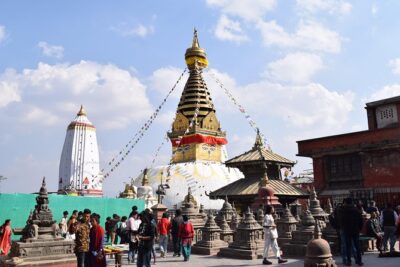
Browse the lists this tour appears in