
Reviewed · KATHMANDU UNESCO WORLD HERITAGE TOURS
Kathmandu Heritage Tour – Private Full-Day UNESCO Sites & Temples
Kathmandu’s sacred sites make the most sense when someone explains the symbols, rituals, and layers of history around them. This private day brings together Swayambhunath, Kathmandu Durbar Square, Pashupatinath, and Boudhanath, giving you a fast but meaningful introduction to the valley.
I like the private format, since your guide can adjust the pace, skip a stop if you are worn out, and answer questions about daily life in Nepal. I also like the chance to see both Hindu and Buddhist traditions in one day, from the Kumari’s window at Durbar Square to the funeral ghats beside the Bagmati River.
The main catch is cost clarity. The $60 price covers your guide, vehicle, hotel transfers, and bottled water, but entrance fees are extra, and you should plan for lunch and tips. A full day can also feel packed, especially after a long flight.
Key details before you book
- See Kathmandu’s main sacred sights in one private day: The route includes the Monkey Temple, Durbar Square, Pashupatinath, and Boudhanath.
- Expect a 5 to 8 hour outing: Traffic, time at each monument, and your own pace affect the total length.
- Guides make a major difference: Krishna, Jamuna, Janina, and SuJan are among the guides praised for patience, clear explanations, and flexibility.
- Entrance fees are not included: Budget extra money for several paid sites, with past costs often reported around $10 to $15 per person at major attractions.
- The 2015 earthquake is part of the story: Some monuments still show damage or ongoing repair, and your guide can explain what changed.
- This suits first-time visitors: A private car and hotel pickup save time in Kathmandu’s crowded streets, but the schedule covers a lot of ground.
Why this is a useful first day in Kathmandu
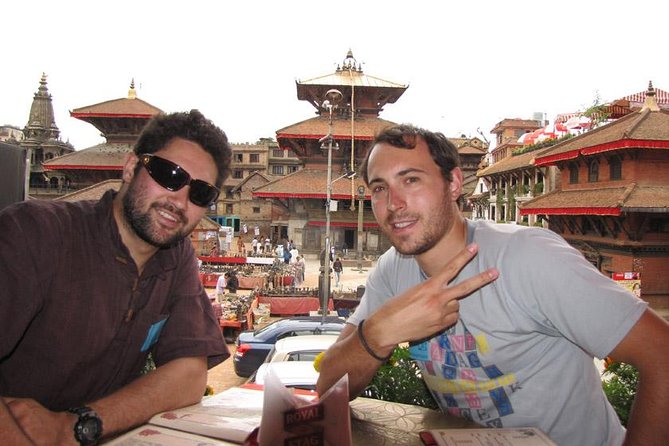
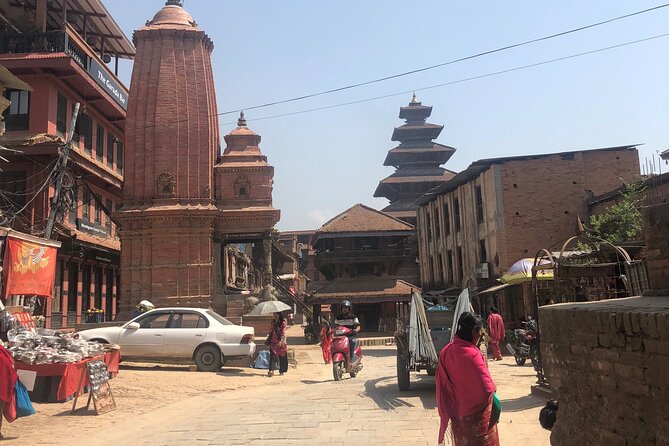
Kathmandu Valley is not one single historic center. Its major monuments are spread across busy streets, temple courtyards, hilltops, and riverbanks. Seeing the highlights independently is possible, but arranging transport between them takes time, and the meaning of what you see is not always obvious.
This tour gives you a framework. You move from a hilltop Buddhist shrine to a former royal square, then to one of Hinduism’s most important temples and one of the world’s great Buddhist stupas. That mix helps you understand Kathmandu as a living religious center, not simply an open-air museum.
The private arrangement is especially helpful if you have only one full day. You can ask to spend longer at a place that interests you, take time for photographs, or reduce the number of stops if the heat, traffic, or jet lag catches up with you.
The guides receive the strongest praise. Krishna is described as patient, polite, and well informed, though one person wished he would speak more slowly. Jamuna is noted for adapting the day to personal interests, while Janina and SuJan are praised for patience and strong knowledge of the sites. Your guide is not guaranteed to be one of these people, but the company has a number of experienced staff.
More UNESCO heritage sites in Kathmandu:
- Private Kathmandu Sightseeing Tour | UNESCO World Heritage sites
★ 5.0 · 756 reviews - Kathmandu: Full Day 7 UNESCO Tour with Lunch – Private/Group
★ 5.0 · 415 reviews - Kathmandu: Full Day Top 4 UNESCO Tour with Lunch – Private/Group
★ 5.0 · 269 reviews
Swayambhunath and Kathmandu from the hilltop
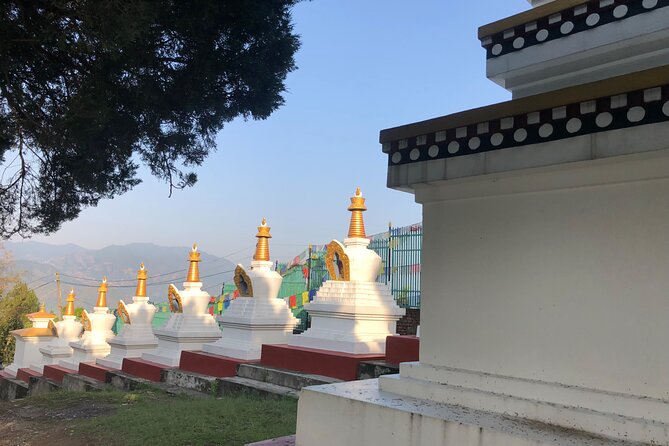
The day often begins at Swayambhunath, commonly called the Monkey Temple. Sitting on a hill above the city, it gives you an early view across Kathmandu and a chance to see one of Nepal’s best-known Buddhist sites.
The temple is associated with more than 3,000 years of history, according to the tour description. You can expect a religious complex rather than a single quiet shrine, with Buddhist imagery, prayer activity, and monkeys living around the grounds. The hilltop position is one of the main rewards, since it lets you see how closely packed Kathmandu is.
Plan for about an hour here. That is enough to take in the main area and hear an introduction from your guide, but not enough for a slow, detailed examination of every shrine. The admission fee is extra, so keep some Nepalese rupees or suitable payment ready.
Swayambhunath can also be a demanding first stop if you are tired or not used to Kathmandu’s walking conditions. The tour information does not give a precise stair count or accessibility plan, so ask your operator about the day’s walking needs if that matters to you.
Kathmandu Durbar Square and the Kumari
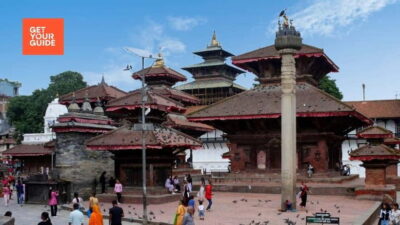
Kathmandu Durbar Square is the most concentrated display of royal and religious architecture on the route. You will see ornate courtyards, temples, and the former royal complex, including Hanuman Dhoka and Basantpur Dabali.
Your guide can help separate the different buildings and explain how the square worked as a royal and civic center. Without help, it is easy to admire the carved wood and brickwork while missing the role each courtyard played.
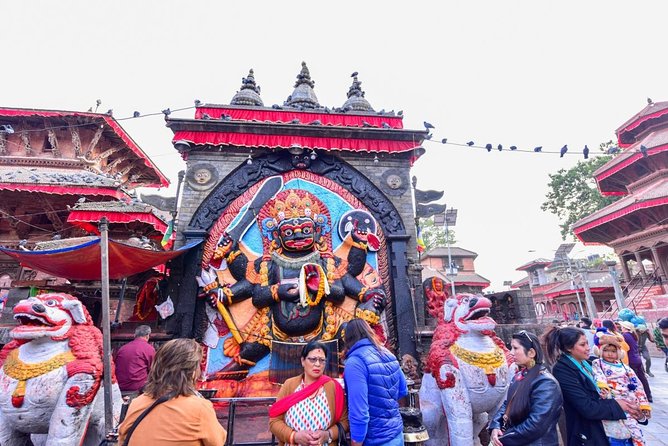
One of the most unusual parts of the visit is Kumari Chowk, the home of the Kumari, a young girl worshipped as the living form of the goddess Durga. She may appear briefly at a window. This is not a performance arranged for the tour, so you should treat any glimpse as uncertain and follow local instructions about photography and behavior.
Hanuman Dhoka adds another layer to the visit. The square includes images and references to Hanuman, the Hindu monkey god, and real monkeys may be present too. Basantpur Dabali, described as an old tourist center with a Hindu temple, is a short stop within this wider area.
The square suffered serious earthquake damage in 2015. Some structures have been repaired, while others may still show cracks, scaffolding, or altered surroundings. That damage is not a flaw in the tour, but it does change what you see. I find the earthquake context valuable because it connects the monuments to present-day Nepal and the work of protecting them.
Admission is extra here. Since the tour description groups several short stops under the Durbar Square visit, ask your guide what is included in the walking circuit and which buildings require separate tickets.
Pashupatinath and the Bagmati cremation ghats
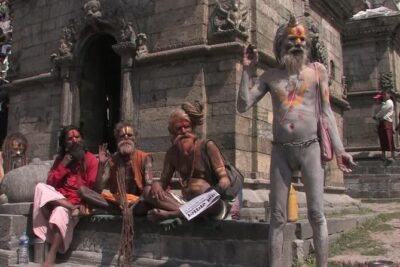
Pashupatinath is one of the most important Hindu pilgrimage sites in the region. The main temple is dedicated to Shiva and contains a sacred linga. Its pagoda design and detailed decoration are only part of the experience. The wider complex includes shrines, courtyards, the Bagmati River, and cremation ghats.
The tour allows about an hour at Pashupatinath and another 30 minutes around the cremation area. That timing gives you room to understand the site without treating it as a quick photo stop.
The cremation ghats require a respectful attitude. Funeral rites take place here, and you may see families caring for their dead. The atmosphere can feel solemn and confronting, but it is also an important part of how Pashupatinath functions as a sacred place. Listen to your guide, keep your distance, and do not treat ceremonies as entertainment.
The entry fee is extra. The supplied details list Pashupatinath twice, likely reflecting separate portions of the complex rather than two unrelated attractions. Use the day’s schedule as a guide, not a promise that every section will receive a full separate hour.
This is often the most emotionally powerful stop. It is also the place where a good guide matters most. You need context about Hindu funeral customs, the temple’s importance, and what you are seeing. A hurried or vague explanation would make this part much less useful.
More temples and monasteries in Kathmandu:
- Kathmandu Spiritual Sites: Bodhnath & Pashupatinath Tour
★ 5.0 · 185 reviews - Kathmandu: Nagarkot Sunrise and Hike Tour to Changu Narayan
★ 4.7 · 151 reviews - From Kathmandu: Everest View from Nagarkot & hike to Changu
★ 4.8 · 140 reviews - Kathmandu: Chandragiri Cable Car and Monkey Temple Tour
★ 4.8 · 139 reviews
Boudhanath and the great Buddhist stupa
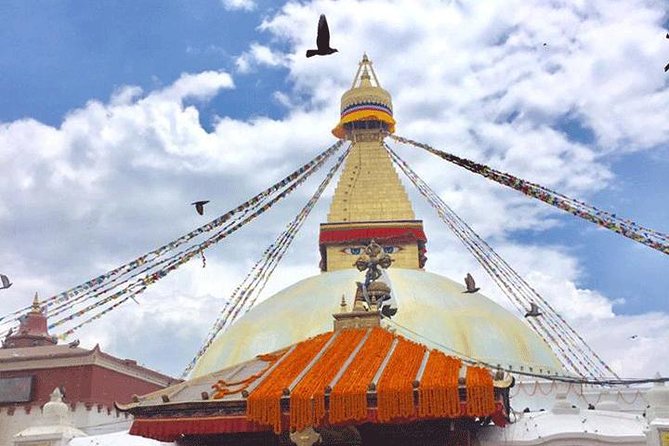
Boudhanath provides a different mood and visual language. The enormous white stupa has Buddha eyes facing the four cardinal directions, symbolizing an ever-watchful presence. The site is linked with about 2,500 years of history and is one of the Kathmandu Valley’s defining Buddhist landmarks.
You can expect time to walk around the stupa, observe people making religious circuits, and examine the surrounding Buddhist setting. Your guide can explain the meaning of the eyes, the structure, and the customs taking place around the monument.
The stop usually lasts about an hour, and admission is extra. Boudhanath is a good place to slow down after the denser royal squares and the intense atmosphere of Pashupatinath. If you enjoy photography, allow a little flexibility here, since the stupa gives you repeated views from different angles.
The itinerary also refers to the main tourist area and the Garden of Dreams, a neoclassical garden in central Kathmandu. These entries are not given clear durations, so do not assume they are guaranteed full stops. Confirm the final route with your guide, especially if Boudhanath and the main UNESCO sites are your priorities.
What the private vehicle adds
Kathmandu traffic can turn short distances into long drives. A private vehicle takes the pressure off finding taxis between several widely separated sites, and hotel pickup and drop-off make the day easier at the beginning and end.
The vehicle also gives you a place to rest between stops. That matters because the route combines walking, stairs, crowds, religious activity, and long periods in traffic. Bottled water is included, while food and other drinks are not.
One person reported a clutch problem that led to about a kilometer of walking. That appears to have been an isolated transport problem, not a stated feature of the tour, but it is a reminder that road conditions and vehicle issues can affect a Kathmandu day. The driver’s role is important here. Several comments praise the driver and guide for handling traffic and adjusting to the group.
This is a private activity for your group, with a maximum of 10 people per booking. The small format is a clear advantage over a large coach, especially at religious sites where you may want to ask questions or pause without holding up strangers.
The real cost: $60 plus site fees and lunch
At the listed price of $60 per person, the tour offers reasonable value if you want a guide and private transport for a full day. You are paying for convenience, interpretation, and the ability to cover several major sites without arranging separate rides.
The important qualification is that admission fees are not included. Exact charges can change, but past participants have described paying roughly $10 to $15 per person at several major sites, with at least one lower-cost entry around $2.50. That can add a noticeable amount to the day, particularly for two people or a family.
Plan for about $10 for a locally purchased lunch, as advised in the tour details. Food and drinks are otherwise your responsibility. You should also allow for tips and optional souvenir photographs.
The price is best judged against your available time. If you have several days in Kathmandu and enjoy planning your own transport, hiring a driver through your hotel may cost less or give you more control. If you have one day and want history explained as you go, the private tour is easier to justify.
Who will get the most from this day
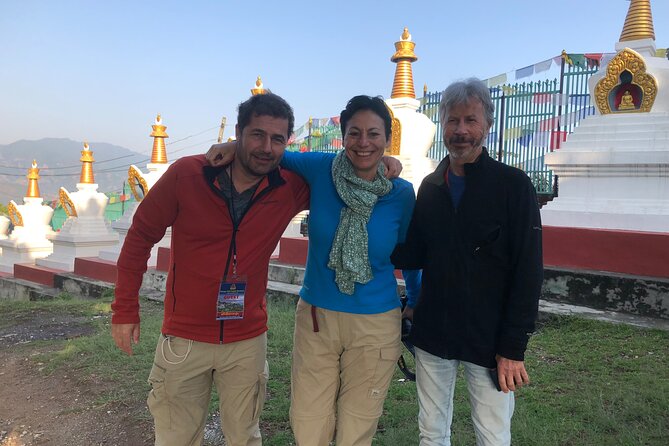
I would choose this tour for a first visit, a short stopover, or anyone who wants the major religious and royal sites explained in one sweep. It is also a good fit if you prefer a private guide to a fixed group schedule.
You should be ready for a full, active day. The route includes hilltop views, temple grounds, city walking, traffic, and solemn religious spaces. People who want a slow visit to one or two monuments may find the schedule too crowded.
The tour has no age limit, and most people can take part. Service animals are allowed. Still, the information does not promise step-free access or detail the physical demands at each site, so ask ahead if stairs or uneven ground are a concern.
You can change the date and time free of charge under the stated terms, and cancellation is free up to 24 hours before the start. Changes or cancellations inside that window are not accepted for a refund.
Should you book the Kathmandu Heritage Tour?
Book it if you want a well-organized first look at Kathmandu and value having a guide explain what you are seeing. The best parts are the range of sites, the private transport, and the chance to tailor the pace. Strong guides such as Krishna, Jamuna, Janina, and SuJan can turn a long sightseeing day into a much clearer introduction to Nepal.
Before paying, confirm the exact route, expected entrance fees, and which optional stops are included. If you are on a tight budget, add those costs first. If you want slow temple visits or already have a driver and good guidebook, build your own day instead.
For most first-time visitors with only one day in Kathmandu, I would book it, arrive rested, and ask the guide to protect enough time for Pashupatinath and Boudhanath. Those two sites give the day its strongest sense of living faith.
FAQ
How long does the Kathmandu Heritage Tour last?
The tour lasts approximately 5 to 8 hours. Traffic, the time spent at each site, and your preferred pace can affect the total length.
What sites are included?
The main listed stops are Swayambhunath, Kathmandu Durbar Square, Basantpur Dabali, Taleju Bhawani Temple, Kumari Chowk, Hanuman Dhoka, Pashupatinath, the cremation ghats, and Boudhanath Stupa. The description also refers to the main tourist area and the Garden of Dreams.
Is hotel pickup included?
Yes. Hotel pickup and drop-off from Kathmandu are included.
Is this a private tour?
Yes. Only your group participates, and bookings can include up to 10 people.
Are entrance fees included in the price?
No. Entrance fees are paid separately by you.
What else should I budget for?
Food and drinks are not included. The tour information suggests allowing around $10 for lunch purchased locally. You should also budget for entrance fees, tips, and optional souvenir photographs.
Is bottled water provided?
Yes. Bottled water is included.
Is lunch included?
No. Lunch is not included. You can expect to purchase it locally.
Can I change the date or time?
The tour information states that you can change the date and time free of charge. Changes made less than 24 hours before the start time are not accepted.
What is the cancellation policy?
You can cancel at least 24 hours before the start time for a full refund. Cancellations made less than 24 hours before the start time are not refunded.
More full-day trips in Kathmandu
- Kathmandu: Full-Day 7 UNESCO Tour with Lunch – Private/Group
★ 4.9 · 247 reviews - Kathmandu: Full Day 7 UNESCO Tour with Lunch – Private/Group
★ 5.0 · 101 reviews - Kathmandu: Full Day Private Top 4 UNESCO Heritage Tour W/Lunch.
★ 5.0 · 86 reviews - Kathmandu: Full Day Top 4 UNESCO Tour with Lunch – Private/Group
★ 5.0 · 67 reviews
Just added around Kathmandu
- Traditional Momo Making Class★ 5.0 · 10 reviews
- Wildlife Adventure in Chitwan Nepal★ 4.0 · 4 reviews
- Walking tour of real Kathmandu through back streets.★ 5.0 · 3 reviews
- Kathmandu 2 Nights 3 Days Chitwan Jungle Safari Tour★ 5.0 · 9 reviews
- Kathmandu Street Food Walking Tour – Eat Like a Local★ 5.0 · 3 reviews
- Private Manaslu Circuit Trek at Himalayas★ 5.0 · 3 reviews
- Walking tour of Kathmandu with awesome local guides★ 5.0 · 4 reviews
- Visit Swayambhunath and Bauddhanath Stupa with Guide★ 5.0 · 5 reviews
Kathmandu UNESCO World Heritage Tours, compared.
Private Kathmandu Sightseeing Tour | UNESCO World Heritage sites
Read our review →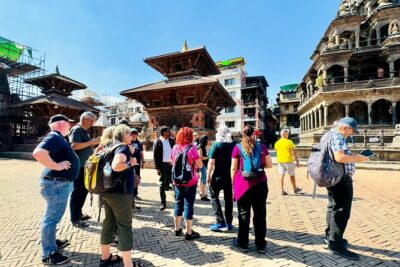
Full Day 7 UNESCO Tour with Lunch – Private/Group
Read our review →
Full Day Top 4 UNESCO Tour with Lunch – Private/Group
Read our review →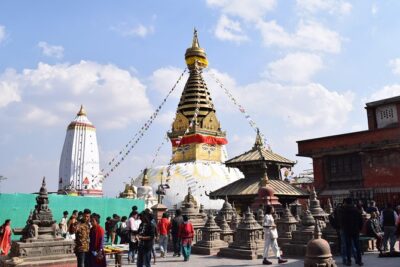
Browse the lists this tour appears in