
Reviewed · KATHMANDU
Mera Peak Climbing
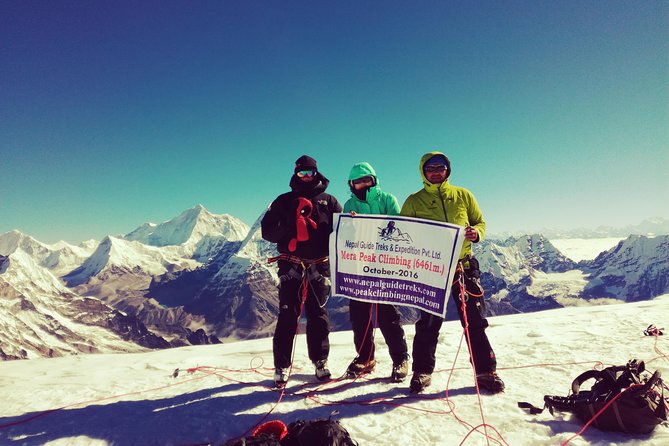
Mera Peak is a serious Himalayan climb wrapped in a long trek through the Hinku and Hongu valleys. At 6,476 meters, it gives you a high-altitude summit goal without the technical scale of an 8,000-meter mountain. The reward is a grand view toward Everest, Lhotse, Makalu, Cho Oyu, and Kanchenjunga.
I like two things here. First, the trip combines tea-house stays with camping, so you get both village contact and time in the wilder upper valleys. Second, the operator appears willing to adjust plans when weather, illness, or route closures interfere. The main drawback is clear: this is an 18-day, physically demanding trip for adults with strong fitness, not a casual trek with a summit tacked on.
Key points to know before booking
- Mera Peak reaches 6,476 meters, making altitude the main challenge rather than a minor side issue.
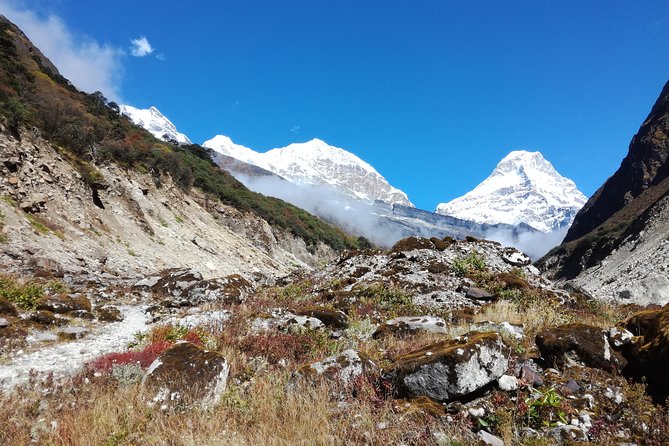
- The route passes through Hinku and Hongu valleys, areas described as wild, beautiful, and largely uninhabited.
- Six major Himalayan peaks are named in the views, including Everest, Cho Oyu, Makalu, Kanchenjunga, Lhotse, and the summit of Mera Peak itself.
- The package includes permits, guides, climbing gear, food, and accommodation, but not international flights, personal climbing gear, personal spending, or tips.
- The group can include up to 15 people, with pickup offered from Tribhuvan International Airport.
- Altitude care is built into the advice, with instructions on hydration, descent, medical help, and use of a Gamow bag if available.
Why Mera Peak is a serious but approachable Himalayan goal
Mera Peak is officially Nepal’s highest permitted trekking peak south of Mount Everest. That description can sound reassuring, but the altitude is no joke. You are still dealing with thin air at 6,476 meters, cold conditions, changing weather, and a summit attempt that requires proper climbing equipment.
The appeal is that you can reach a major Himalayan summit without signing up for an expedition to Everest or another 8,000-meter peak. You’ll trek for many days, acclimatize along the way, and then use the supplied climbing equipment with guidance from an experienced trekking and climbing team.
I would think of this as a bridge between high-altitude trekking and mountaineering. You need more preparation than you would for a standard tea-house trek, but the trip is designed for people whose goal is a first 6,000-meter summit.
The route also takes you away from the busiest sections of the Everest region. The Hinku and Hongu valleys are highlighted for their wild character and limited settlement. That means quieter scenery, but it may also mean fewer services when you need them. You should be comfortable with a more remote setting and with camping during part of the journey.
Other Kathmandu days people book alongside this one:
- Everest Base Camp Trek – 14 Days
★ 5.0 · 1,499 reviews - Private Kathmandu Sightseeing Tour | UNESCO World Heritage sites
★ 5.0 · 756 reviews - Everest Base Camp Helicopter Tour landing at Everest View Hotel
★ 5.0 · 668 reviews
The route from Kathmandu to the high valleys
The published plan begins at Nepal Guide Treks and Expedition, with pickup offered from Tribhuvan International Airport in Kathmandu. The stated duration is approximately 18 days, 2 hours, and 5 minutes, although the practical way to read that is an approximately 18-day climbing itinerary.
Four nights in Kathmandu are included on a bed-and-breakfast basis. This gives you time to arrive, meet the team, prepare equipment, and handle the practical work before heading toward the mountains. It also provides some breathing room if your international flight arrives late or your bags take time to appear.
The information supplied does not give a full day-by-day route with named villages, elevations, or camp locations. That matters. Before paying, I would ask the operator for the current walking schedule, the planned acclimatization days, the route to base camp, and the summit-day timing.
Still, the broad shape is easy to understand. You start in Kathmandu, move into the mountain region, walk through the Hinku and Hongu valleys, spend nights in tea houses and tents, and prepare for the summit with the help of your climbing guide.
That combination is useful. Tea houses give you a roof and a chance to experience highland Sherpa communities. Camping gives the group access to more remote sections where permanent lodging is not available. It also means that your comfort level will change during the trip. One night may be a simple lodge stay, while another may involve a tent, basic camp dining, and colder conditions.
Hinku and Hongu valleys: the quieter side of the Everest region
The Hinku and Hongu valleys are a major reason to choose this climb instead of a more familiar route. The area is described as wild, beautiful, and largely uninhabited. You will not be walking from one large settlement to the next with a full menu of services at every stop.
For me, this is one of the best parts of the plan. The trip is not only about reaching the top of Mera Peak. The approach lets you see a less developed side of the Khumbu area and learn about Sherpa traditions in highland communities.
The tradeoff is that remoteness makes planning more important. A small delay can affect food, camps, transport, and summit timing. Weather can also change the plan. One planned combination of Mera Peak, Amphu Laptsa Pass, and Island Peak had to be altered after heavy snow closed the pass in late October. The climbing team adjusted the route instead of treating the original plan as unchangeable.
That flexibility is valuable on a mountain trip. You should still ask what alternative routes are used if weather, snow, or a closed pass affects the schedule. A good climbing plan is not just a promise to reach the summit. It is also a clear method for making safe decisions when conditions change.
The Himalayan view from 6,476 meters
The summit reward is the lineup of famous peaks. The supplied description names Mount Everest at 8,848 meters, Cho Oyu at 8,201 meters, Makalu at 8,485 meters, Kanchenjunga at 8,586 meters, and Lhotse at 8,516 meters. It also mentions several other peaks in the Everest region.
One small detail is worth noting: the description says views of five mountains above 8,000 meters, then names six peaks when Mera Peak is included in the list. I would read the promise as views toward five other 8,000-meter giants, with Mera Peak providing your own summit position.
The scenery is not a quick viewpoint stop. You earn it over many days of walking, acclimatization, and cold-weather preparation. At this height, even simple tasks take more time. That is why the trip includes advice about water, food, rest, and descent rather than treating the summit as a normal hike.
You’ll also see the mountains in changing conditions. Clear skies may reveal a wide line of summits, while cloud or snowfall can hide the view. The team’s experience with weather changes is therefore just as important as the photographs used to sell the trip.
Same city, a completely different sort of day:
- Half day cooking class in Thamel kathmandu
★ 5.0 · 607 reviews - Everest Base Camp Trekking
★ 5.0 · 485 reviews - Nagarkot Sunrise View and Day Hiking from Kathmandu
★ 5.0 · 471 reviews - Kathmandu: Full Day 7 UNESCO Tour with Lunch – Private/Group
★ 5.0 · 415 reviews
Guides, Sherpa support, and the value of local decisions
The package includes an experienced trekking and climbing guide, along with all necessary climbing gear. Past bookings were handled by guides and Sherpa staff including Dandee, Ming-ma, Sonam Sherpa, Samdu, Dende, and Gelchen Sherpa. Your assigned guide may be different, so confirm the current team before departure.
The most useful role of a guide here is not simply pointing out the trail. It is helping you decide when to rest, when to eat, when to acclimatize, and when to stop climbing. One previous climb included a sick participant who still reached the summit after the guide had assessed the person’s condition and ability carefully. That is encouraging, but it should not be read as a reason to climb while seriously ill.
Another trip involved a decision to protect a climber whose health was worsening. That kind of judgment is exactly what you want in a high-altitude team. A successful summit is good. Returning safely when the body is not coping is better.
The operator has also been praised for communication before departure, including answering questions through WhatsApp and arranging travel before and after the climb. That can be especially useful for a first visit to Nepal, when flights, permits, equipment, and timing may feel like too many moving parts.
Altitude advice you should take seriously
The safety instructions are practical and worth following closely. You are advised to drink 2 to 3 liters of lukewarm water per day, avoid alcohol and smoking, eat light foods that are high in calories, and add ginger and garlic to meals.
If symptoms are mild, the guidance is to stay at the same place, rest, drink enough water, and avoid panic. You should speak with your guide and consult a doctor if one is available. If the condition does not improve after acclimatization, you should descend. If the case is serious, the advice is to descend immediately.
The plan also mentions Diamox and a Gamow bag. These are not substitutes for medical judgment. Ask your doctor about Diamox before the trip, and ask the operator if a Gamow bag and other altitude equipment will actually be available. The supplied advice specifically tells you to check what the trekking company provides.
This is also why I would not book Mera Peak on the strength of scenery alone. You need strong physical fitness, and the minimum age is 18. The package is designed for adults who understand that the summit is conditional on weather, health, and snow conditions.
What the $3,000 price includes
The listed price is $3,000 per person. That is a substantial amount, but the value depends on what you would otherwise need to arrange yourself.
Included are four nights in Kathmandu with breakfast, Mera Peak climbing permits, tea-house and camping accommodation, food during the trek, an experienced trekking and climbing guide, and necessary climbing gear. Those items cover much of the costly infrastructure of a high-altitude trip.
The price does not include international airfares or departure tax, personal climbing gear, personal expenses, or tips for guides and porters. You should ask for a current list of personal gear before departure. The phrase all necessary climbing gears does not necessarily mean every item you personally want, wear, or prefer.
The strongest value comes from the organization. A summit trip requires permits, food, camps, transport planning, local staff, and judgment when conditions shift. If the team handles those parts well, the price can be reasonable for an 18-day climb. If you already own personal climbing equipment and have experience arranging Nepal treks, you may compare the package more closely with a self-arranged plan.
The maximum group size is 15 people. That is large enough to provide company and shared support, but it is not a tiny private expedition. Ask how many people are currently booked and how many guides, climbing staff, and porters will accompany the group.
Food, accommodation, and daily comfort
The tea-house and camping mix gives the trip a practical shape. In villages, you can expect the social side of mountain travel and a chance to experience Sherpa culture. In remote sections, camping is the way to keep moving through areas without permanent lodging.
Food is included during the trek, but the published information does not give a menu. You are advised to eat light, calorie-rich food and stay well hydrated. I would ask whether dietary needs can be handled and what meals are provided on camping nights.
Four Kathmandu nights are included with breakfast rather than full board. That leaves you responsible for other meals in the capital and for personal spending throughout the trip. Bring a budget for food, drinks, tips, and any extra equipment.
Comfort will be basic at altitude. That is not a flaw in this kind of trip, but you should know what you are choosing. The reward is access to the valleys and the summit route, not resort-style accommodation.
Weather, route changes, and the summit decision
Weather is one of the biggest variables. Heavy snow has closed high passes before, and bad conditions have caused delays and forced climbers to return without summiting. The team has also found solutions that allowed some groups to continue safely and reach the summit.
You should treat the summit as a goal, not a guarantee. A responsible guide may change the route, delay the attempt, or turn around. That can be frustrating after weeks of effort, but the mountain controls the final decision.
Ask before booking how many spare days are built into the 18-day schedule. The supplied information does not state the number. That is a key question because weather delays and illness can consume time quickly.
The same point applies to flights and transport. The package offers airport pickup, but the full internal transport plan is not provided. Ask what happens if a flight or transfer is delayed and how the operator handles missed connections.
Who should book this climb
You should consider Mera Peak if you want a first 6,000-meter summit, have strong physical fitness, and are prepared for both tea-house trekking and camping. It suits adults who value local guides, Sherpa culture, remote valleys, and a properly supported climbing attempt.
It is less suitable if you want a short holiday, fixed sightseeing schedule, luxury lodging, or a guaranteed summit. The 18-day duration and altitude require patience. You also need to accept that the route may change.
The operator’s strongest qualities appear to be communication, guide support, and practical problem-solving. Individual guide assignments matter, so ask who will lead your group and how many climbing staff will be present. Names such as Dandee, Sonam Sherpa, Samdu, Dende, and Gelchen Sherpa have been associated with previous climbs, but you should not assume one of them will be assigned to you.
Pickup is offered, the meeting point is Tribhuvan Airport in Kathmandu, and confirmation is provided at booking. The listed operating period runs from November 21, 2022, through December 9, 2026, with hours shown as Monday through Sunday, 9:45 a.m. to 6:15 p.m. Since mountain conditions change by season, confirm the exact departure date and current arrangements.
Should you book Mera Peak Climbing?
Book this climb if the idea of earning a Himalayan summit appeals to you more than a polished holiday. The views toward Everest, Lhotse, Makalu, Cho Oyu, and Kanchenjunga are a strong reward, while the Hinku and Hongu valleys add a quieter and more cultural side to the journey.
I would book only after confirming the daily itinerary, assigned guide, personal gear list, altitude equipment, medical support, internal transport, and spare days for bad weather. At $3,000, the package offers meaningful value if those details are handled well.
Free cancellation is available if you cancel at least 24 hours before the experience begins. Changes or cancellations made within 24 hours are not accepted for a refund, so check the local start time carefully.
FAQ
How long does the Mera Peak climbing experience last?
The stated duration is approximately 18 days, 2 hours, and 5 minutes. It includes four nights in Kathmandu and the trekking and climbing period.
What is the price per person?
The listed price is $3,000 per person.
What is included in the price?
The package includes four nights in Kathmandu with breakfast, Mera Peak climbing permits, tea-house and camping food and accommodation during the trek, an experienced trekking and climbing guide, and necessary climbing gear.
What is not included?
International airfares and departure tax, personal climbing gear, personal expenses, and tips for guides and porters are not included.
Where does the experience begin?
The meeting point is Tribhuvan Airport in Kathmandu, Nepal. Pickup is offered.
Is there a minimum age?
Yes. The minimum age is 18, and participants should have a strong physical fitness level.
What is the cancellation policy?
You can cancel at least 24 hours before the experience begins for a full refund. Cancellations or changes made less than 24 hours before the start time are not accepted for a refund.
Just added around Kathmandu
- Traditional Momo Making Class★ 5.0 · 10 reviews
- Wildlife Adventure in Chitwan Nepal★ 4.0 · 4 reviews
- Walking tour of real Kathmandu through back streets.★ 5.0 · 3 reviews
- Kathmandu 2 Nights 3 Days Chitwan Jungle Safari Tour★ 5.0 · 9 reviews
- Kathmandu Street Food Walking Tour – Eat Like a Local★ 5.0 · 3 reviews
- Private Manaslu Circuit Trek at Himalayas★ 5.0 · 3 reviews
- Walking tour of Kathmandu with awesome local guides★ 5.0 · 4 reviews
- Visit Swayambhunath and Bauddhanath Stupa with Guide★ 5.0 · 5 reviews