
Reviewed · PASHUPATINATH AARATI EVENING TOURS
Pashupatinath: Evening tour of temple and Aarati ceremony
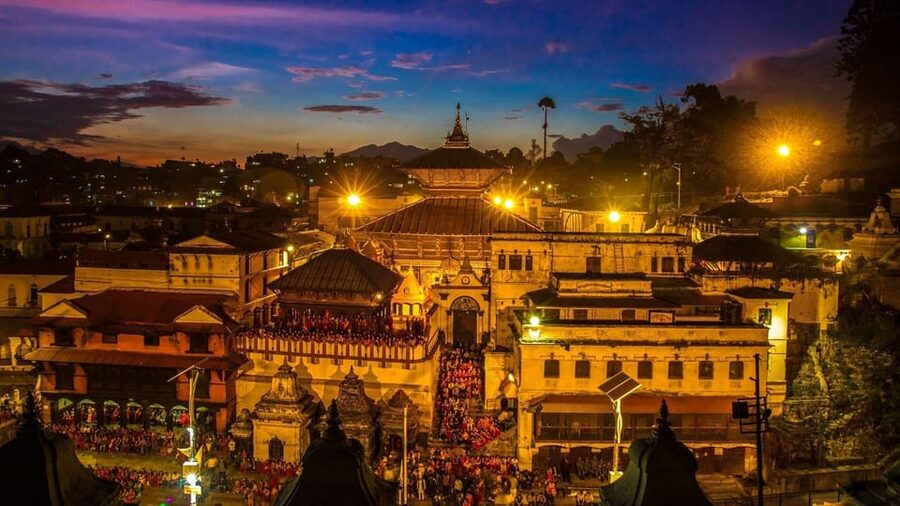
Pashupatinath is most powerful at sunset, when the Bagmati River, temple bells, cremation ghats, and the glowing Aarati ceremony come together in one place. This is not a quiet museum visit. It is a working Hindu pilgrimage site where worship, death, music, and daily life share the same riverbank.
I like the private group format, which gives you room to ask questions about the shrines and rituals. I also like that transportation, entry fees, and an English-speaking guide are included in the $57 price. The main consideration is that cremation ceremonies are part of the visit, so this may feel intense if you prefer lighter sightseeing. The complex is also not suitable for wheelchair users.
Key points to know before you go
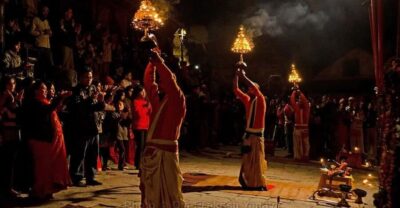
- The sunset Aarati is the evening centerpiece: Priests use oil lamps, chant mantras, and move to the beat of drums beside the Bagmati River.
- The temple complex is an active place of worship: You will see devotees, pilgrims, shrines, statues, incense, and ringing bells rather than a preserved site without daily religious use.
- Cremation ghats form part of the route: The rituals are solemn and culturally important, but they can be emotionally demanding.
- Your $57 includes the practical basics: Transportation, entry fees, an English-speaking guide, and a private group are covered.
- The visit lasts three hours: That is enough time for the main complex, riverbank, ghats, and evening ceremony without turning the outing into a full-day commitment.
- The experience has a 5.0 rating from three verified bookings: Praise centers on the spiritual quality, caring guiding, and the overall sense of connection to local life.
Entering Pashupatinath at the start of the evening
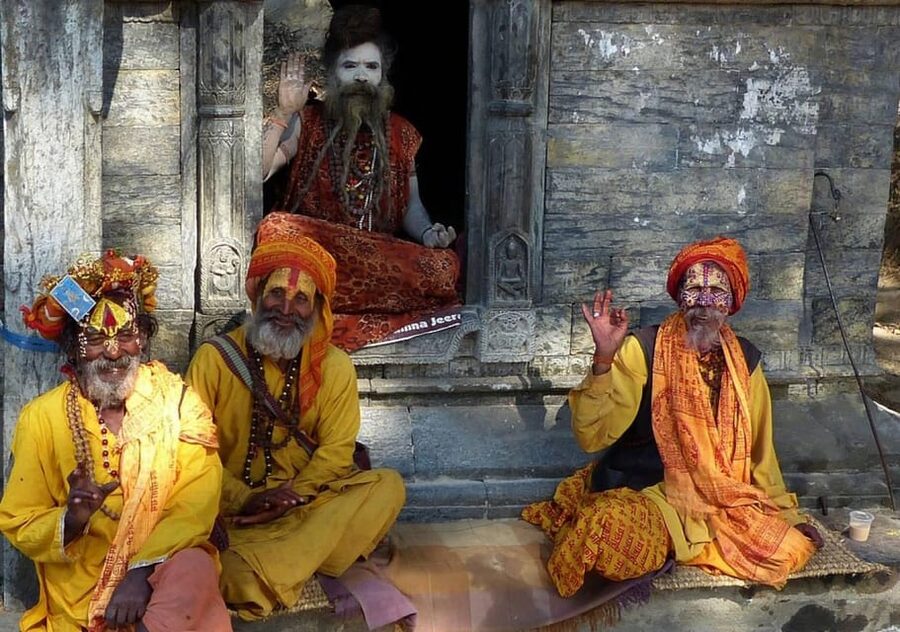
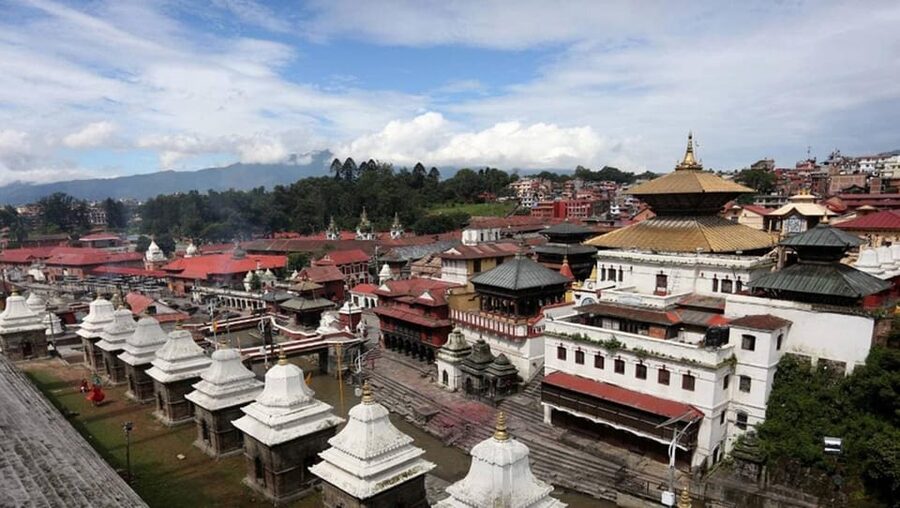
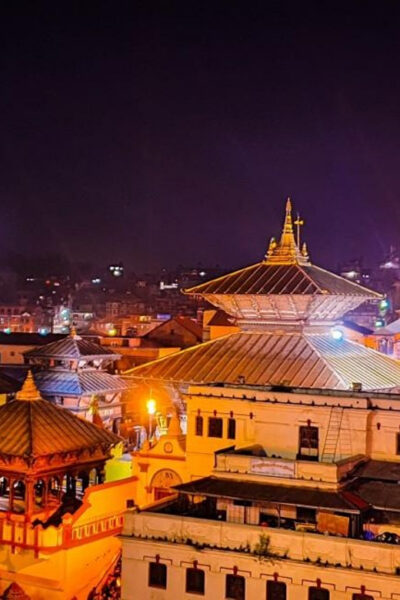
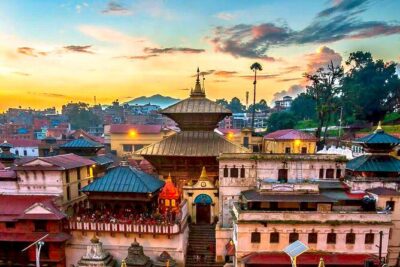
Your visit begins in the Pashupatinath Temple complex, one of Kathmandu’s most important Hindu sacred sites. The main temple is built in the pagoda style, with a golden spire and the revered lingam of Lord Pashupatinath, a form of Lord Shiva.
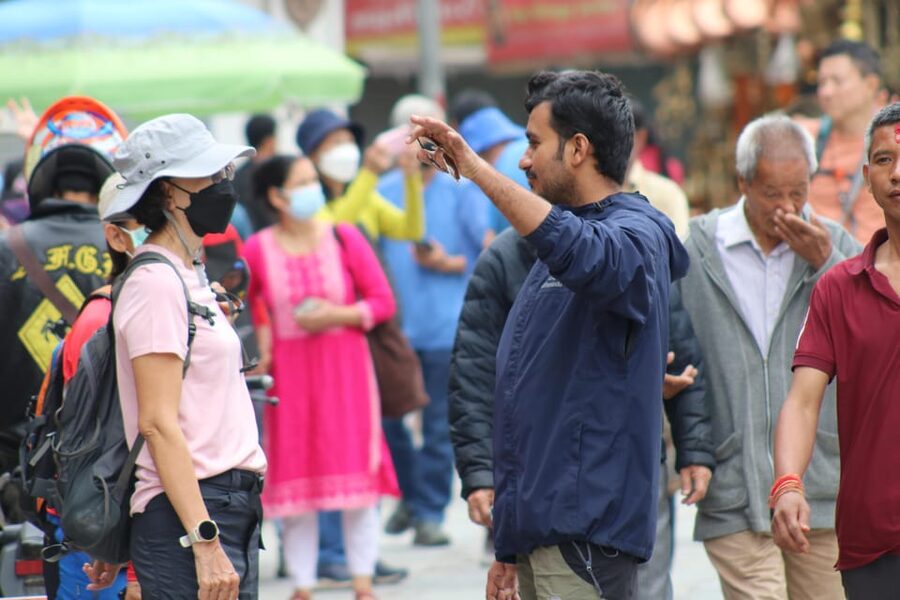
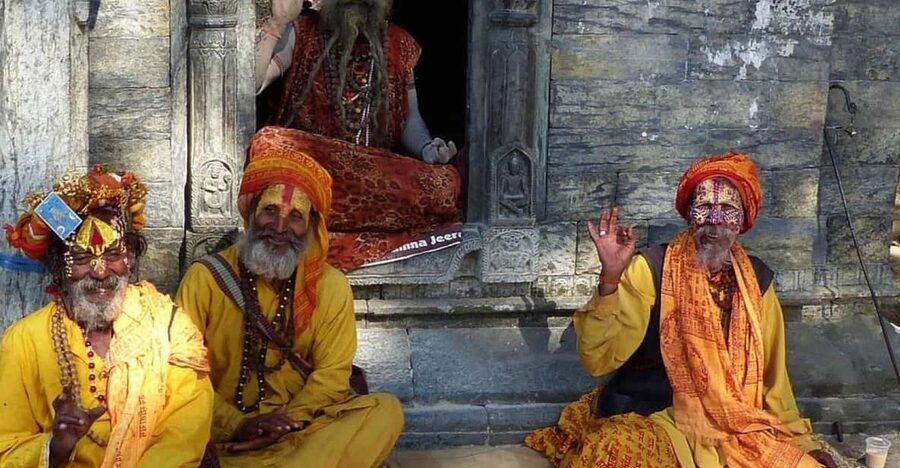
The first impression is sensory. Incense hangs in the air. Bells ring from different corners. Devotees move between shrines, and priests carry out rituals that have continued for centuries. You may also see small groups pausing before statues and murtis, each connected to Hindu stories and religious practice.
This is where a private guide earns his or her keep. The complex contains many shrines, and a quick walk can otherwise become a blur of roofs, carvings, offerings, and crowds. An English-speaking guide can explain what you are seeing and give the religious setting some shape.
The experience is not built around a single grand viewpoint. Its value comes from the way many small details fit together: a bell, a shrine, a priest preparing an offering, or a pilgrim stopping in prayer. Give yourself time to notice these details rather than treating the temple as a checklist stop.
The main temple is sacred to Hindus, and the visit centers on the wider complex and its surroundings. The supplied information does not state that non-Hindu visitors can enter the main inner temple, so you should expect the guide to focus on the accessible parts of the site and the religious life around it.
More Pashupatinath evening aarati tours:
- Kathmandu: Pashupatinath Temple Evening Aarati Tour
★ 5.0 · 36 reviews - Kathmandu: Pashupatinath Temple Aarti Night Tour
★ 4.8 · 29 reviews - Pashupatinath Temple, Hindu Crematorium and Aarati in-depth Tour
★ 5.0 · 25 reviews
Pagoda roofs, shrines, and living worship
Pashupatinath’s architecture is one of the clearest reasons to choose this outing. The pagoda roofs and golden details give the complex a distinctive Nepalese character, while the many shrines and murtis add layers of religious meaning.
You will not simply be looking at old buildings. Worship continues around you. That changes the way you read the site. A statue is not only an art object, and a bell is not only decoration. Each may be part of an active act of devotion.
I like this aspect because it keeps the visit grounded. You get architecture, but you also see the beliefs that give the architecture its purpose. For anyone interested in Nepalese traditions, this is more useful than a visit where the history has been separated from present-day practice.
The complex can feel busy and visually crowded. That is part of its character, but it may be tiring if you want a calm, orderly walk. A private group helps because you can stay with your guide without having to match the pace of a large party.
The tour description promises skip-the-ticket-line access. That matters most during busy periods, since three hours passes quickly and the evening ceremony has a fixed rhythm. It does not mean the complex itself will be empty. You should still expect other worshippers and people gathering for the rituals.
Walking beside the Bagmati River
From the temple grounds, the experience moves toward the Bagmati River. The river is central to Pashupatinath’s religious life, and the ghats along its banks bring the themes of worship, death, and renewal into the same view.
The riverbank is also where the visit becomes more serious. Cremation platforms are used for funeral ceremonies, and you may witness families saying goodbye to loved ones while priests chant and conduct the rites. These are not staged demonstrations for an audience. They are real ceremonies connected to Hindu beliefs about death and reincarnation.
That reality is important to understand before booking. The sight can be moving and instructive, but it can also be uncomfortable. You are not coming only for pretty temple roofs and evening lamps. The tour asks you to observe a major part of Nepalese religious life with restraint.
Your guide’s role is especially useful here. A good explanation can help you understand why the ghats matter without turning a private funeral into a sightseeing object. The experience is best approached quietly, with attention to the families and priests rather than with a hunt for dramatic photographs.
The Japanese guest whose January 2025 booking received a perfect rating described seeing a funeral and the ceremony by the holy river as a powerful experience that changed the way they thought about life, death, and reincarnation. That reaction gives you a fair sense of the tour’s emotional weight. It is not a casual evening stroll.
The Pashupati Aarati ceremony after sunset
The main event arrives as daylight fades and the Pashupati Aarati begins. You gather near the riverbank while priests in traditional clothing perform a sequence of movements with oil lamps, known as diyas.
The ceremony combines light, sound, and motion. Ancient mantras are chanted, drums set a steady rhythm, and the lamps move through the air as offerings to Lord Pashupatinath. The result is more than a visual show. It is a communal act of prayer, and the atmosphere changes as people focus on the ritual.
This is the strongest reason to choose an evening tour instead of a daytime visit. In daylight, you can study the carvings and roofs. At Aarati, the site becomes a place of sound and shared attention. The oil lamps give the riverbank a warm glow, while the chanting and drums create a steady ceremonial pulse.
You should not expect a short performance that starts and ends like a theater production. The value lies in watching the ritual unfold at its own pace. Your guide can help you understand what is happening, but no explanation replaces the simple experience of standing near the river as the lamps rise and fall.
The ceremony is also a good moment to remain present and avoid rushing. Since the whole tour lasts three hours, the schedule is likely designed around reaching the riverbank in time for the evening ritual. Check the available starting time when booking, because the exact departure time is not fixed in the supplied details.
More temples and monasteries in Kathmandu:
- Kathmandu Spiritual Sites: Bodhnath & Pashupatinath Tour
★ 5.0 · 185 reviews - Kathmandu: Nagarkot Sunrise and Hike Tour to Changu Narayan
★ 4.7 · 151 reviews - From Kathmandu: Everest View from Nagarkot & hike to Changu
★ 4.8 · 140 reviews - Kathmandu: Chandragiri Cable Car and Monkey Temple Tour
★ 4.8 · 139 reviews
What the private format adds for $57
At $57 per person, this tour is not the cheapest way to walk around Pashupatinath. Its value depends on how much you want the practical pieces handled for you.
The price includes all transportation, entry fees, and an English-speaking guide. You also join a private group rather than a shared large party. If you are visiting Kathmandu for a short time, that combination saves you from arranging separate transport and figuring out the complex on your own.
The private format is useful for sensitive questions. You can ask about the lingam, the shrines, the river ghats, funeral customs, or the Aarati without waiting for a large group to catch up. It also lets the guide adjust the level of explanation to your interests.
The three-hour length keeps the cost easier to judge. You are paying for a focused evening experience, not a full-day tour with meals and several distant stops. If Pashupatinath is high on your Kathmandu list, $57 is a reasonable package price for transport, admission, guiding, and a private setting.
If you already have easy transport and feel comfortable exploring religious sites without help, the value is less clear. You would be paying mainly for the guide and private organization. For a first visit, though, the cultural context is likely the part that makes the fee worthwhile.
One small personal touch received special praise in the booking feedback: tea was described as very tasty. It is a minor detail beside the temple and cremation ghats, but it suggests the outing may include a welcoming pause during the visit. The supplied details do not specify when or where tea is served, so treat it as a possible part of the experience rather than a guaranteed feature.
Who will appreciate this evening visit
I would recommend this tour most strongly to you if you want to see Nepalese religious practice as it is lived today. It suits people who enjoy sacred architecture, ritual music, cultural explanation, and places where history remains part of daily life.
It is also a good fit if you want a compact introduction to Kathmandu. Three hours gives you a clear look at one major site without taking an entire day away from the rest of the city.
You should think carefully before booking if you are uncomfortable seeing cremation ceremonies. The ghats are not an optional theme in the description of the experience. They form part of the riverbank visit and may be visible during the tour.
The outing is not suitable for wheelchair users. The supplied details do not provide further mobility information, so anyone with other access needs should ask the provider before reserving.
The English guide is the only stated language option. If you need another language, this experience may not fit your needs.
Practical details that shape the visit
The tour lasts three hours, with starting times depending on availability. Since the Aarati takes place in the evening, the timing matters more than it would on a standard daytime sightseeing walk. Choose a start time that allows you to reach the riverbank before the ceremony begins.
Transportation is included, which is useful in Kathmandu, where a short distance can take time depending on road conditions. The exact type of transport is not specified, so you should not assume a particular vehicle or pickup arrangement.
Entry fees are covered, and the tour includes skip-the-ticket-line access. Bring comfortable clothing for walking around a temple complex, though the supplied details do not state a formal dress code. Above all, approach the site as a place of worship rather than a simple attraction.
Cancellation is flexible: you can cancel up to 24 hours before the experience for a full refund. You can also reserve now and pay later, which helps if your Kathmandu schedule is still changing.
What the ratings tell you about the experience
The experience has a perfect 5.0 rating from three verified bookings. That is a small sample, so I would not treat it as proof that every departure will feel identical. Still, the praise is consistent in the areas that matter most here.
A French booking from June 2025 described the visit as a complete cultural experience and highlighted the pleasant guide. A Japanese booking from January 2025 praised the spiritual impact, the guide’s care, the funeral and river ceremony, and the tea. A Nepal-based booking from November 2024 simply called it fantastic.
The pattern is clear: the strongest part is not a single monument. It is the combination of a caring guide, the sacred river setting, the cremation rituals, and the Aarati. That makes this a better choice for cultural understanding than for casual sightseeing.
Should you book Pashupatinath at sunset?
Book it if you want an evening at one of Nepal’s most important religious sites and are prepared to witness both prayer and mourning. The private format, included transport, entry fees, English guiding, and focused three-hour schedule make $57 a fair price for a first visit.
Think twice if cremation rituals would be too difficult or if you need wheelchair access. Also look elsewhere if you want a relaxed temple walk with no fixed evening event.
For the right visitor, this is one of the more meaningful ways to meet Kathmandu. The glowing lamps and drums are memorable, but the lasting impression comes from seeing how temple worship, funeral rites, and ordinary devotion share the same riverbank.
FAQ
How long does the Pashupatinath evening tour last?
The tour lasts three hours.
What does the $57 price include?
The price includes all transportation, entry fees, and an English-speaking guide.
Is the tour private?
Yes. The experience is offered for a private group.
Is the guide available in English?
Yes. The tour includes a live English-speaking guide.
Will the tour include the Aarati ceremony?
Yes. The evening itinerary includes the Pashupati Aarati, with priests, oil lamps, chanting, and drums near the Bagmati River.
Can I cancel the booking for a refund?
Yes. You can cancel up to 24 hours in advance for a full refund. You can also reserve the experience and pay later.
More evening and night tours in Kathmandu
- Kathmandu Sunset Tour by Rickshaw Including Durbar Square Visit
★ 5.0 · 73 reviews - 3 Nights 4 Days Chitwan National Park with Tower Night Stay
★ 5.0 · 41 reviews - 3 night 4 Day Yoga & Ayurveda Retreat to Detox the Body & Mind, Nepal
★ 5.0 · 37 reviews - Pashupatinath Evening Aarati: Few Divinely Hours in Kathmandu
★ 4.5 · 23 reviews
Just added around Kathmandu
- Traditional Momo Making Class★ 5.0 · 10 reviews
- Wildlife Adventure in Chitwan Nepal★ 4.0 · 4 reviews
- Walking tour of real Kathmandu through back streets.★ 5.0 · 3 reviews
- Kathmandu 2 Nights 3 Days Chitwan Jungle Safari Tour★ 5.0 · 9 reviews
- Kathmandu Street Food Walking Tour – Eat Like a Local★ 5.0 · 3 reviews
- Private Manaslu Circuit Trek at Himalayas★ 5.0 · 3 reviews
- Walking tour of Kathmandu with awesome local guides★ 5.0 · 4 reviews
- Visit Swayambhunath and Bauddhanath Stupa with Guide★ 5.0 · 5 reviews
Pashupatinath Aarati Evening Tours, compared.
Pashupatinath Temple, Hindu Crematorium and Aarati in-depth Tour
Read our review →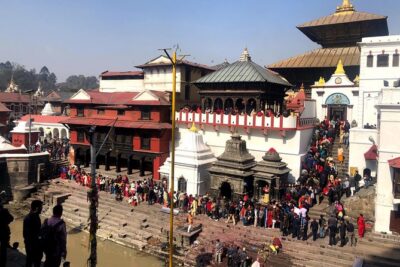
Pashupatinath Evening Aarati: Few Divinely Hours in Kathmandu
Read our review →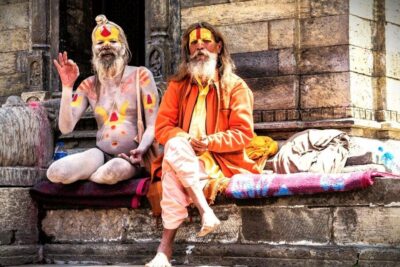
Sacred Pashupatinath: Aarati,Cremation Rites & Boudha Stupa
Read our review →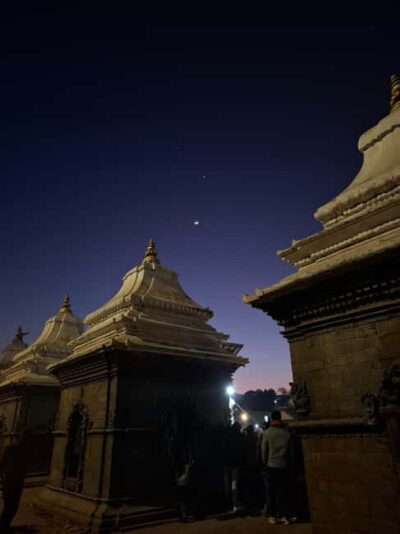
Katmandu: Pashupatinath Open Cremation & Evening Aarati
Read our review →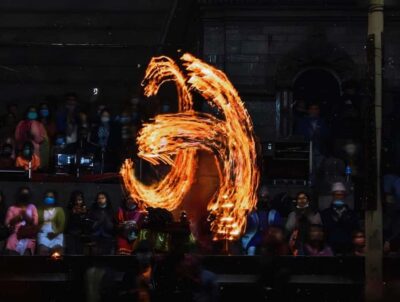
Browse the lists this tour appears in