
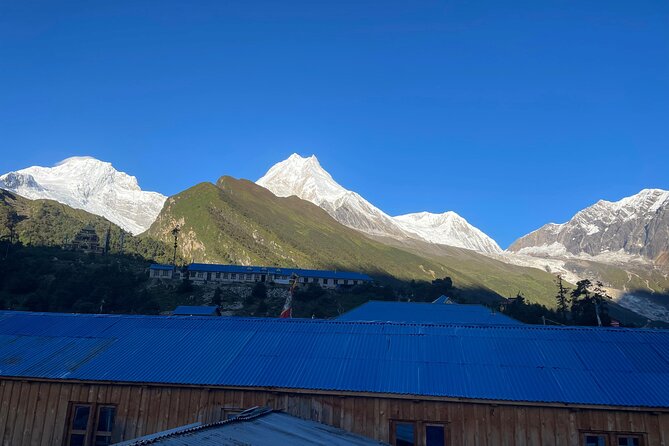
Reviewed · MANASLU CIRCUIT TREKS FROM KATHMANDU
Manaslu Circuit Trek – 14 days of Himalayan Adventure
The real prize here is the change in scenery: you start beside the Budhi Gandaki River, pass through subtropical forest and Tibetan-influenced villages, then reach high mountain country beneath Manaslu. The crossing of Larkya La Pass is the big test and the defining moment.
I like the careful acclimatization plan, especially the rest day at Sama Gaon with a short hike to Birendra Taal and a monastery visit. I also like the personal guide support, with Santosh praised for staying with slower walkers and Pradip singled out for making the trip smooth. The drawback is the rough, lengthy road travel at the start and end, plus the demanding high-altitude days.
Key points at a glance
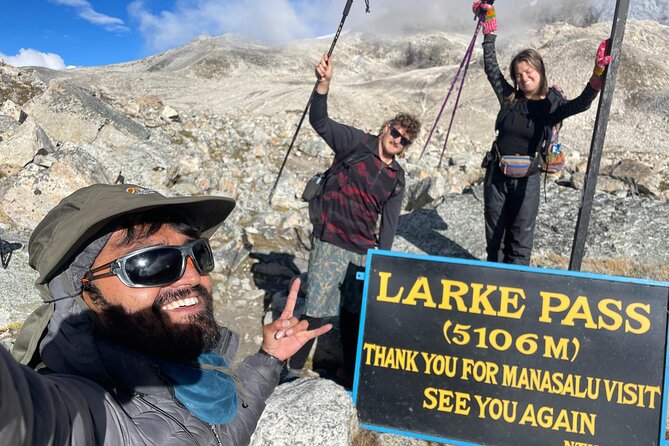
- Manaslu views from many angles: You see the 8,163-meter mountain from forests, ridges, alpine valleys, and villages.
- A real cultural route: Tibetan customs, Buddhist monasteries, mani walls, chortens, and prayer flags become more common as you climb.
- Larkya La is the hardest day: Expect two to three hours to reach the pass, followed by four to five hours descending toward Bhimtang.
- Private group format: Only your group takes part, with a government-registered guide and support crew.
- Useful trekking gear included: A down sleeping bag, walking poles, route map, and an oximeter are supplied.
- Good value at $1,099: Permits, transport, guide services, meals, and key equipment are included, but insurance, drinks, snacks, and charging cost extra.
Why the Manaslu Circuit feels different
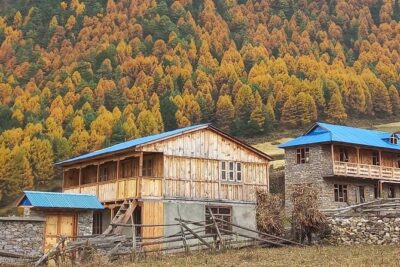
The Manaslu Circuit is a mountain route with a strong sense of progression. You do not begin among snow peaks. Instead, the trek starts low beside the Budhi Gandaki River, where the trail passes through warm forests, small settlements, suspension bridges, and steep-sided valleys.
As you gain height, the scenery changes in clear stages. Rhododendron and pine replace subtropical trees. Tibetan influence becomes more visible in village life, Buddhist structures, mani walls, chortens, and prayer flags. By Sama Gaon and Samdo, the route feels much more alpine, with Manaslu and nearby peaks filling the horizon.
You also enter the Manaslu Conservation Area, known for Himalayan tahrs, blue sheep, and snow leopards. Wildlife sightings are never promised, but the protected setting adds meaning to the route. This is not only a mountain-view trip. It is a walk through several cultural and natural zones.
The route is considered suitable for people with moderate physical fitness, but that should not be confused with easy. You will walk for many days, spend time at high elevation, and face a long pass-crossing day. A steady pace matters more than speed.
More Manaslu Circuit treks:
- Manaslu Circuit Trek (15 Days)
★ 5.0 · 50 reviews - 16 Day Private Manaslu Circuit Trek from Kathmandu
★ 5.0 · 42 reviews - Manaslu Circuit Trek 13 Days
★ 5.0 · 30 reviews
Days 1 and 2: Kathmandu to Maccha Khola
Your trip begins with an airport pickup at Tribhuvan International Airport. A Wonder Himalaya representative meets you with a name placard and transfers you into Kathmandu. The first day is mainly about arrival, settling in, and preparing for the road journey.
Day 2 starts early with a drive toward Maccha Khola. You see the Trishuli and Budhi Gandaki rivers along the way, and the road provides an early look at rural Nepal before the walking begins.
This is one of the less glamorous parts of the trip. Public transportation is included, and private transport costs extra. The road journey may feel tiring before you have taken your first trekking steps, so keep your daypack organized and your expectations practical. The reward is that you reach the trailhead without adding another costly transfer.
Days 3 and 4: Forests, bridges, and the Budhi Gandaki
From Maccha Khola, the official trek begins. The route to Jagat follows the Budhi Gandaki through lush subtropical forest. You walk beside rushing water and pass through terrain that feels far removed from Kathmandu.
The trail includes suspension bridges over rivers and streams. These crossings are part of the character of the route, not just a way to get from one point to another. They add variety and a little nervous energy to the walking day.
From Jagat, the trail continues through thick forest, with tall trees and rhododendrons. This early section is valuable because it gives you time to settle into the rhythm of trekking before the higher elevations arrive.
The trade-off is that the lower route can feel physically uneven. Forest paths, riverbanks, and bridge approaches do not offer the same steady walking surface you may find on a lowland hike. Your guide sets the pace, and the private format means your group is not tied to strangers.
Days 5 and 6: Tibetan influence around Namrung and Shyala
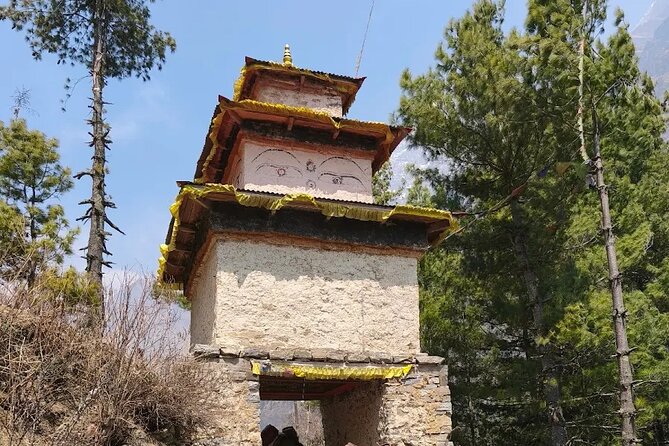
The walk from Deng to Namrung brings a noticeable cultural change. You pass through Bihi Phedi and Bihi, where Tibetan influence is more visible in the villages and local traditions.
The trail still runs through forest, but the mountain setting becomes more pronounced. Buddhist symbols and village architecture give the route a strong identity. This is a good point to slow down and pay attention to details around you rather than treating each settlement as a lunch stop.
From Namrung, you continue toward Shyala through rhododendron and pine forest. Mani walls and chortens appear along the way, marking the religious character of the region. These are not decorative extras. They show how Buddhist belief is woven into daily movement through the mountains.
I would treat Namrung and Shyala as important cultural stops, not simply overnight names. The route gives you time to see the transition from lower Nepalese villages to communities with a stronger Tibetan connection.
More day hikes and treks in Kathmandu:
- Everest Base Camp Trek – 14 Days
★ 5.0 · 1,499 reviews - Everest Base Camp Trekking
★ 5.0 · 485 reviews - Nagarkot Sunrise View and Day Hiking from Kathmandu
★ 5.0 · 471 reviews - Annapurna Circuit Trek with Tilicho Lake
★ 5.0 · 368 reviews
Day 7: Shyala to Sama Gaon
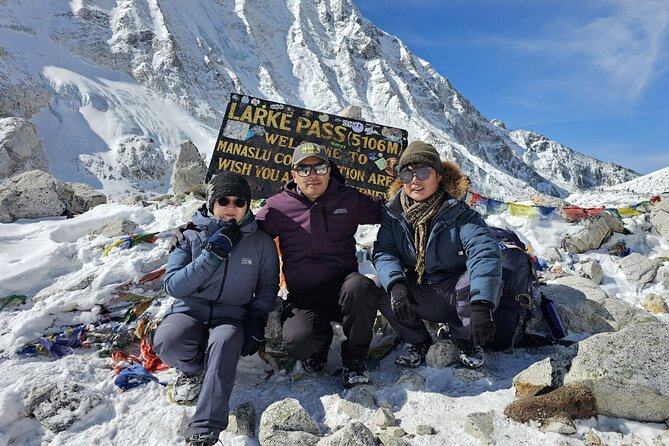
The walk from Shyala to Sama Gaon is one of the scenic highlights. The forest opens into wider alpine spaces, and ridges reveal close views of the Manaslu massif.
You pass traditional mani walls and continue through a setting that feels more exposed and remote. Manaslu becomes a constant visual companion, rather than a distant peak glimpsed between trees.
Sama Gaon is an important base for the next part of the trek. You have gained substantial elevation, and the following day is used for acclimatization. That pause is one of the strongest features of the plan. It gives your body time to adjust instead of treating the high country as a race.
Day 8: Birendra Taal and a proper acclimatization day
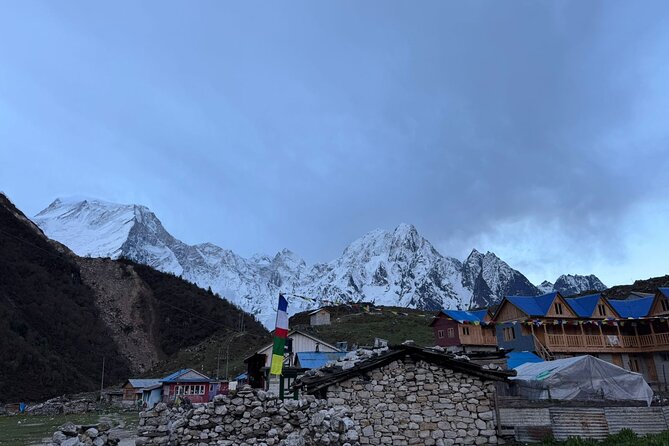
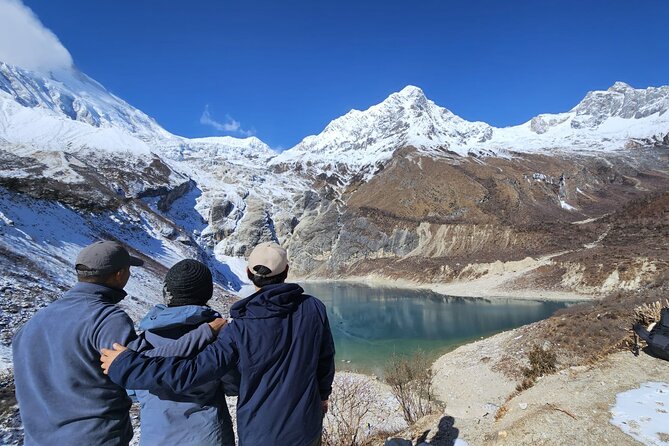
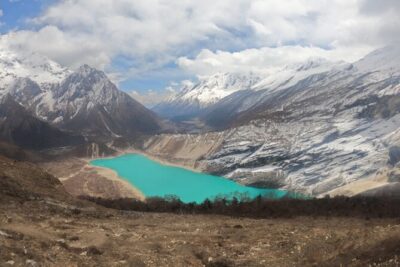
The rest day at Sama Gaon is not a day of doing nothing. You take a short hike to Birendra Taal, a lake named after the late King Birendra of Nepal. The listed visit takes about two hours, making it a sensible way to stay active without adding a full trekking day.
You also visit Labrang Gompa or Kargya Chholing monastery, where monks conduct blessing ceremonies. This adds a meaningful cultural element to the rest day. You get a closer look at Buddhist practice while keeping the physical schedule manageable.
I like this balance. Acclimatization works best when you rest enough but still move gently. The itinerary also gives you a chance to appreciate Sama Gaon rather than treating it as a bed for one night.
Days 9 and 10: Samdo and the high mountain route
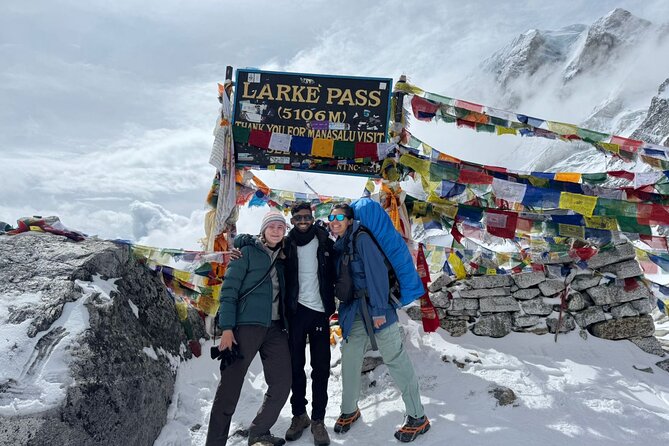
After the pause in Sama Gaon, you head toward Samdo. The trail climbs higher, and Manaslu remains a powerful presence above the route.
The surroundings become rockier as you continue. Prayer flags flutter along the way, adding color and spiritual symbolism to an otherwise spare setting. The higher you go, the more important it becomes to follow your guide’s pace and pay attention to how you feel.
Day 10 continues through rockier terrain with views of Manaslu and nearby peaks. This is the point where the trek feels most serious. The scenery is dramatic, but the air is thinner and the trail demands more effort.
The trip supplies an oximeter for checking oxygen saturation and heart rate. That is useful support, but it is not a substitute for a guide’s judgment or for travel insurance. Medical evacuation and insurance are not included, so you should arrange those before arriving in Nepal.
Day 11: Crossing Larkya La Pass
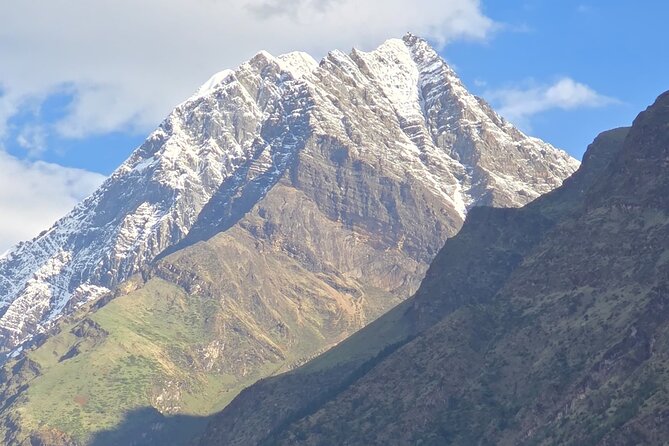
Larkya La is the central challenge of the Manaslu Circuit. You start early and walk for roughly two to three hours before reaching the pass. The route includes small streams and rocky ground, and the high elevation makes every climb feel slower.
At the pass, the reward is a wide mountain view and the satisfaction of crossing one of Nepal’s major trekking passes. The experience depends heavily on conditions and your own energy, so this is not a day to hurry for photographs.
After the pass, you descend for another four to five hours through rocky paths and open valleys to Bhimtang. The downhill section is long and can be hard on tired knees. Good walking poles matter here, and poles are included with the equipment.
Bhimtang provides a welcome overnight stop. You can look back toward snow-capped peaks and recover after the longest and most demanding day of the route.
Days 12 to 14: Forest descent and the return to Kathmandu
From Bhimtang, the route drops into lower elevations. Pine and rhododendron forests return, with occasional distant mountain views. After the stark high country, the trees feel like a change of climate as much as a change of scenery.
Day 13 brings another long travel day. You drive by jeep from Tilije to Besisahar on rough roads, then continue by public transportation to Kathmandu. The road journey is a practical necessity, but it can be tiring after nearly two weeks of walking.
The final day is reserved for your airport transfer. The company asks you to have your luggage ready and check that nothing has been left behind. Pickup and departure assistance are useful touches, especially if your flight schedule is tight.
What the $1,099 price really covers
At $1,099 per person, this trek offers solid value for a 14-day private Himalayan route. The price includes public transportation between Kathmandu, Maccha Khola, Tilche, Besisahar, and Kathmandu. It also covers the Manaslu Conservation Area Permit, Annapurna Conservation Area Permit, and Restricted Area Permit.
You receive a government-registered trekking guide, meals, a down sleeping bag, walking poles, an oximeter, and a route map. Breakfast is included for 13 days, with 11 lunches and 11 dinners. That removes many of the major costs that can otherwise build up during a long trek.
The price does not cover coffee, tea, alcohol, bottled water, snacks, electronic device charging, personal expenses, insurance, or medical evacuation. Private transport also costs extra. I would budget separately for these items, particularly insurance and evacuation cover.
The strongest value comes from the combination of permits, guide support, transport, meals, and equipment. The main limitation is that the listed inclusions do not provide a fully private vehicle for every road section. If comfort and flexible departure times matter more than price, ask about private transport before booking.
Guides, group style, and personal support
This is a private activity, so only your group participates. That is useful if you prefer to walk at your own pace, stop for photographs, or avoid being placed with a large mixed group.
The named guides connected with the experience include Santosh and Pradip. Santosh is especially noted for keeping track of the whole group, waiting for anyone who falls behind, and going back to look for someone who needs help. That kind of attention matters on a route with steep paths and changing altitude.
Pradip is another guide associated with the trek, while Niranjan handles trip arrangements and works to match the route with your preferences. The practical lesson is simple: ask who your guide will be and tell the company about your fitness, previous trekking experience, and transport preferences before departure.
Who should book this trek?
I would choose this trip if you want a serious Himalayan walk with a strong cultural side and fewer comforts than a city tour. It suits people who can manage repeated walking days, an early start for Larkya La, and long road transfers.
It is a good fit if you want:
- Close views of Manaslu and surrounding peaks
- Buddhist villages, monasteries, mani walls, and prayer flags
- A private group with guide support
- A planned acclimatization day at Sama Gaon
- A package that includes permits, meals, transport, and basic trekking gear
I would pause before booking if you dislike rough roads, simple trekking conditions, or long downhill days. You should also be ready to arrange your own insurance, medical evacuation cover, drinks, snacks, and charging costs.
The booking terms are flexible if your plans change early. You receive a full refund when canceling at least 24 hours before the start time. Cancellations within 24 hours are not refunded.
Final call: is the Manaslu Circuit Trek worth it?
Yes, this is a strong choice for a moderately fit trekker who wants mountain scenery with real village and Buddhist culture along the way. The best parts are the gradual shift from river valleys to high alpine country, the rest day at Sama Gaon, and the demanding but rewarding Larkya La crossing.
The price is attractive because major permits, meals, public transport, a guide, sleeping bag, poles, and an oximeter are included. Just remember that the route is not soft-edged. Road travel is rough, the high days are demanding, and insurance is your responsibility.
If you book, confirm your guide, ask about the transport arrangement, and prepare for the pass rather than judging the trek by its moderate fitness label. With those points clear, Wonder Himalaya’s 14-day plan gives you a practical way to experience one of Nepal’s most memorable mountain circuits.
FAQ
How long is the Manaslu Circuit Trek?
The trek lasts approximately 14 days, including arrival in Kathmandu, the walking route, return transportation, and the final airport transfer.
What price is listed for the trek?
The listed price is $1,099 per person.
Is airport pickup available?
Yes. Pickup is offered on arrival at Tribhuvan International Airport in Kathmandu, and an airport transfer is arranged on the final day.
What level of fitness do I need?
You should have a moderate level of physical fitness. The route includes multiple walking days, high-altitude sections, a pass crossing, and a long descent from Larkya La to Bhimtang.
What is included in the price?
Included items are public transportation, the Manaslu Conservation Area Permit, Annapurna Conservation Area Permit, Restricted Area Permit, a government-registered guide, meals listed in the program, a down sleeping bag, walking poles, a route map, and an oximeter.
Are insurance and medical evacuation included?
No. Travel insurance and medical evacuation are not included, so you need to arrange them separately.
Can I cancel for a full refund?
Yes, if you cancel at least 24 hours before the experience start time. Cancellations made within 24 hours are not refunded.
Just added around Kathmandu
- Traditional Momo Making Class★ 5.0 · 10 reviews
- Wildlife Adventure in Chitwan Nepal★ 4.0 · 4 reviews
- Walking tour of real Kathmandu through back streets.★ 5.0 · 3 reviews
- Kathmandu 2 Nights 3 Days Chitwan Jungle Safari Tour★ 5.0 · 9 reviews
- Kathmandu Street Food Walking Tour – Eat Like a Local★ 5.0 · 3 reviews
- Private Manaslu Circuit Trek at Himalayas★ 5.0 · 3 reviews
- Walking tour of Kathmandu with awesome local guides★ 5.0 · 4 reviews
- Visit Swayambhunath and Bauddhanath Stupa with Guide★ 5.0 · 5 reviews
Manaslu Circuit Treks from Kathmandu, compared.
16 Day Private Manaslu Circuit Trek from Kathmandu
Read our review →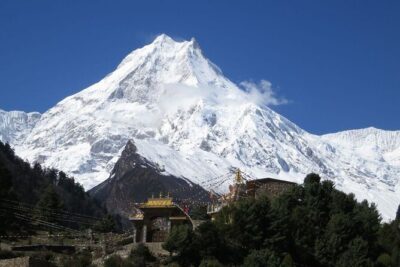
10 Days Manaslu Circuit Trek in Larke La Pass
Read our review →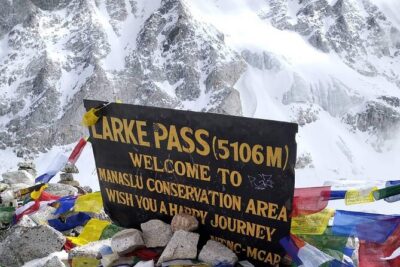
Manaslu Circuit Trek 8th Highest in the World
Read our review →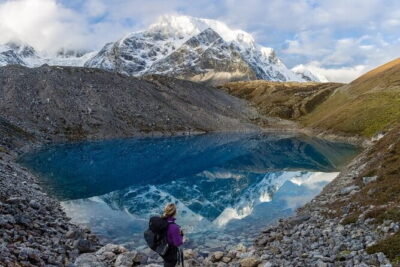
Manaslu Circuit Trek to the Beauty of 8th Highest Mountain
Read our review →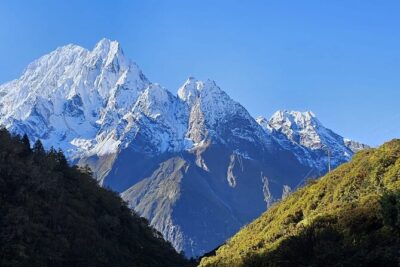
Browse the lists this tour appears in