
Reviewed · BHAKTAPUR TOURS FROM KATHMANDU
Patan and Bhaktapur City Full Day Tour
Bhaktapur and Patan show two very different sides of the Kathmandu Valley. Bhaktapur feels like a preserved medieval town, while Patan gives you royal courtyards, fine metalwork, Buddhist monasteries, and some of Nepal’s best Newari architecture. A private guide helps turn carved windows and temple statues into places with meaning.
I especially like the flexible pace and the chance to step beyond the main squares into side streets. Guides such as Siri and Rajendra have been praised for explaining history clearly, answering questions, and adjusting the day to suit the person in front of them. The main drawback is cost at the monuments: entrance fees are not included, and six hours can feel tight if you want a slow visit to both cities.
Key points at a glance
- Two UNESCO-listed city centers: Spend the day between Bhaktapur Durbar Square and Patan Durbar Square, two of the Kathmandu Valley’s major heritage sites.
- A strong private-tour format: Hotel pickup, air-conditioned transport, and a private group make it easy to adjust the pace.
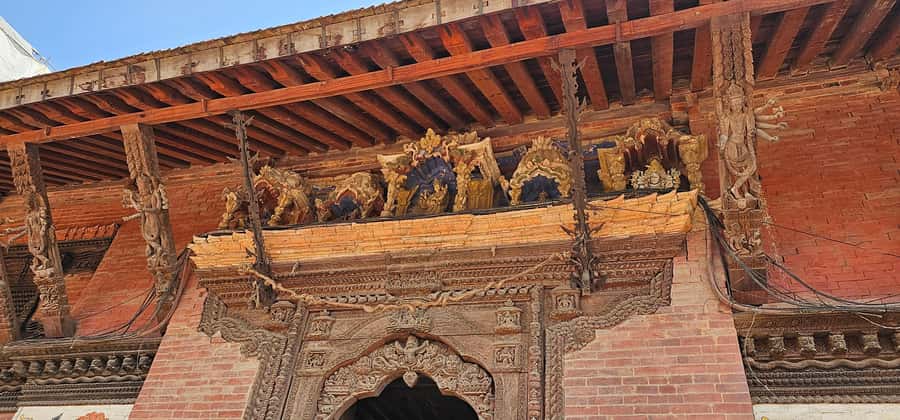
- Distinct local crafts: Look for Bhaktapur’s celebrated wood carving and Patan’s traditional metalwork.
- Important Patan courtyards: Sundari Chowk, Mul Chowk, and Keshav Narayan Chowk reveal how the old royal palace worked.
- More than the headline sights: The route can include side streets, Buddhist courtyards, shopping stops, photo breaks, and time for questions.
- Flexible language choice: Live guiding is available in English or Spanish, with Siri and Rajendra among the guides praised for their clear explanations.
Why these two cities make a smart day out
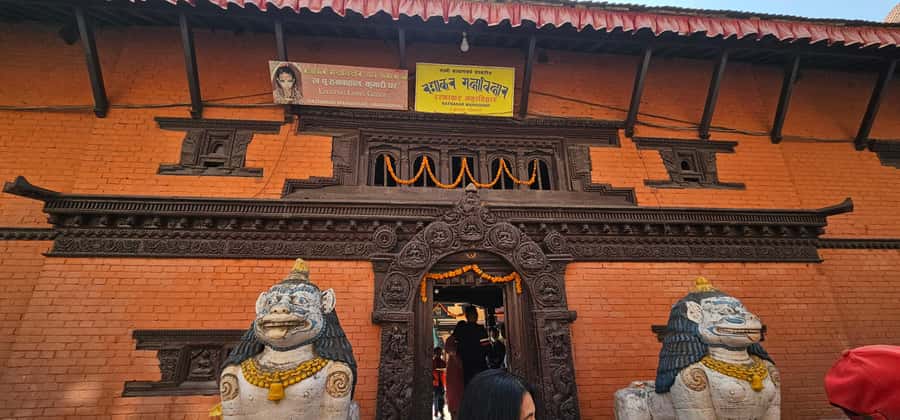
Patan and Bhaktapur sit within the Kathmandu Valley, but they do not feel interchangeable. Patan, also called Lalitpur, lies about 6 kilometers south of Kathmandu. Its name means beautiful city, a fitting title for a place known for temples, bahals, bahis, and finely worked buildings.
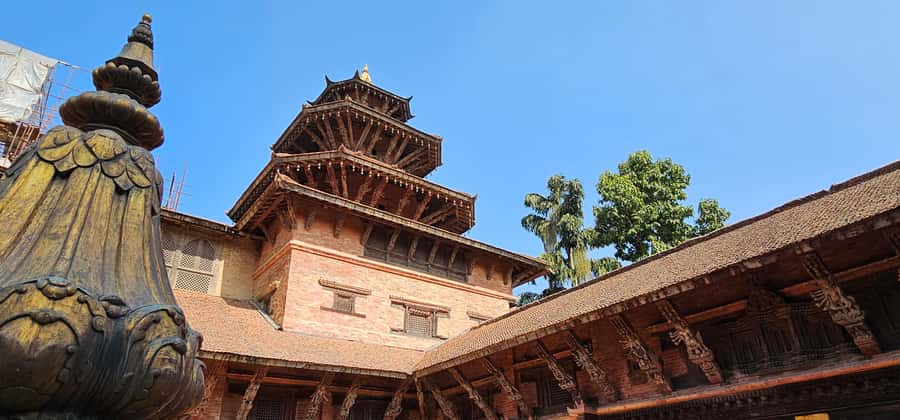
Bhaktapur has a more contained, old-town character. Its central squares, brick buildings, temples, and narrow lanes create the feeling of a medieval royal city. Patan has a more layered mix of palace architecture, active Buddhist monasteries, Hindu temples, workshops, and ordinary city life.
That contrast gives the tour its value. You are not simply checking off two similar monuments. You are seeing how Newari art and religion took different forms in neighboring cities.
The tour costs $50 per person and includes hotel pickup and drop-off in Kathmandu, an air-conditioned vehicle, and a live guide. At that price, the value depends on how much you want interpretation and transport rather than simply finding your own way around. The private format is a real advantage if you want to stop for photos, ask many questions, spend time shopping, or slow down at one site.
You still pay monument entrance fees separately. Keep that extra cost in mind when setting your budget.
More Patan day tours:
- Bhaktapur & Patan Durbar Square Day Tours
★ 5.0 · 122 reviews - Kathmandu: Private Patan and Bhaktapur Sightseeing Tour
★ 4.7 · 64 reviews - City tour of Bhaktapur and Patan Durbar Square
★ 4.5 · 20 reviews
Bhaktapur: a medieval town in full view
Bhaktapur is scheduled as one of the main stops, with roughly four hours listed for guided sightseeing, walking, and free time. That is enough to see the principal squares without sprinting, though the six-hour total means your guide will need to manage the clock carefully.
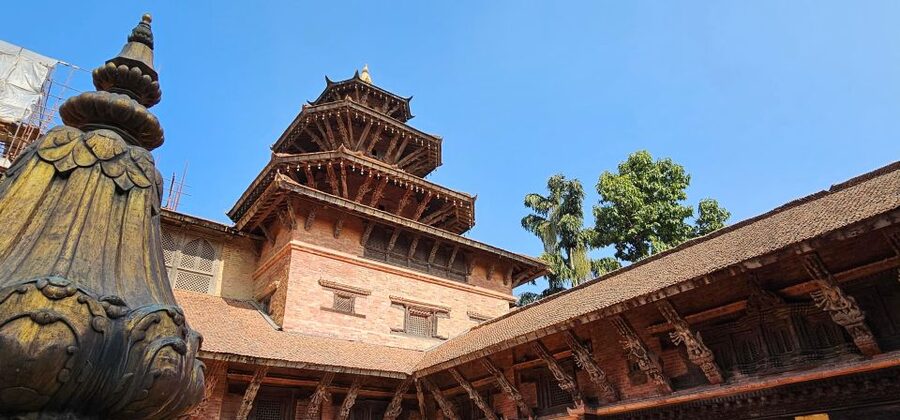
Start in Bhaktapur Durbar Square, where the former royal center gathers temples, palace buildings, carved details, and open public space into one memorable setting. The appeal is not only the grand monuments. Look closely at the doors, struts, windows, and rooflines. This is a place where small details reward a slower pace.
Taumadhi Square is another essential stop. The square is home to Nyatapola Temple, the tallest temple in town. Its rising form gives the space a strong vertical focus, and the approach helps you understand how temples shaped public life in the old city.
The name Nyatapola refers to the temple’s five stories. The tour description specifically highlights it as Bhaktapur’s tallest temple, so your guide can help place it within the city’s religious and architectural setting. You will get more from the visit if you ask about the figures and guardians along the approach rather than treating the building as a quick photo stop.
Dattatraya Square brings a different mood. It was the first square used by the royals, and it offers another way to read Bhaktapur’s past. Instead of seeing the city as a collection of isolated monuments, you begin to understand how squares worked as centers of power, worship, and public movement.
I would allow time to walk between the main sights rather than rushing from one entrance to the next. Side streets are part of the experience. One guide, Rajendra, is especially noted for taking visitors beyond the headline sites to see daily life, clothing traditions, and less obvious paths through the city.
Bhaktapur is also associated with wood carving, an important contrast with Patan’s metalwork. Your guide can point out how that craft appears in the buildings and explain why the two cities developed different artistic reputations.
The trade-off is that Bhaktapur can feel like a lot to absorb in one visit. You will see major squares, but you may not have time to linger at every temple or browse every lane. If you are fascinated by architecture, tell the guide early. A private group gives you a better chance of shaping the time around your interests.
Patan Durbar Square and the old royal center
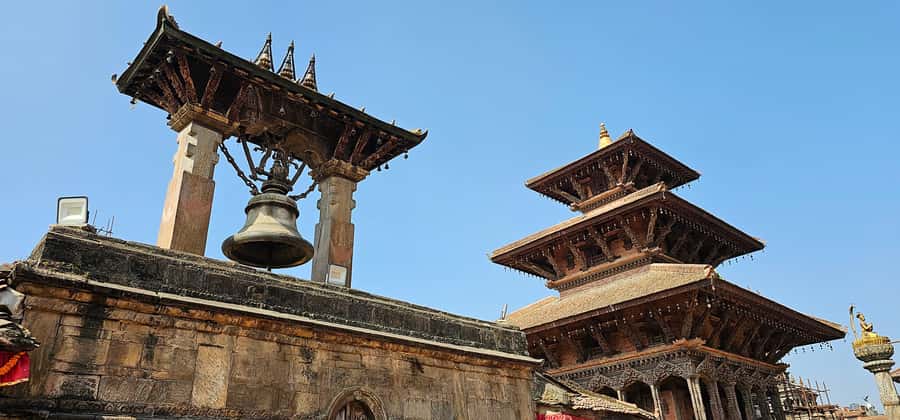
Patan is the other major stop, also listed with about four hours for walking, sightseeing, guided visits, and free time. Its palace complex is described as one of Nepal’s finest collections of Newari urban architecture, and it deserves more than a quick circuit.
Begin at Patan Durbar Square, where the royal palace and temples sit close together. The palace is organized around three courtyards, each with a different role and character.
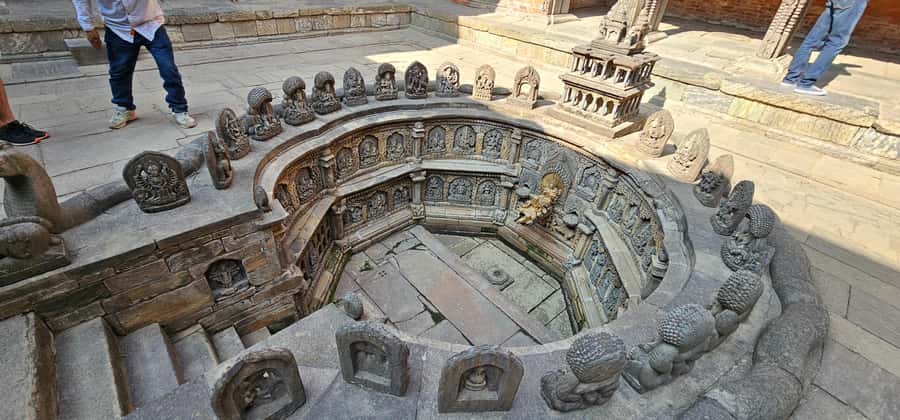
Sundari Chowk, the southernmost courtyard, means beautiful courtyard. It once served as a royal bath. Near its water fountain are carvings of 72 gods and goddesses, a detail worth seeking out with your guide. The space links royal routine, religious belief, and decorative art in a way that a quick walk past the palace cannot.
Mul Chowk was the main courtyard and a place for social and religious occasions. It also houses a temple to Taleju, the tutelary deity of the royal family. This is a useful stop for understanding that the palace was not simply a residence. It was also a ceremonial and religious center.
Keshav Narayan Chowk was the part of the palace where the king and queen lived. It contains a small Vishnu temple with images of Vishnu, Lakshmi, and Garuda. The courtyard now houses the best-preserved museum in Nepal, according to the tour information, giving you an indoor counterpoint to the open squares and active streets.
The palace museum is one of the tour’s strongest features for anyone who wants context rather than photographs alone. You can connect the objects and rooms inside with the courtyards outside. If you are visiting near the end of a longer Nepal trip, ask for a relaxed museum visit. Guide Siri has been praised for giving people time in each place and allowing the day to unfold at a comfortable pace.
Behind the palace is a former royal garden with a small restaurant. Nearby, Bhandarkhal Tank includes a water fountain that once served as a major water source for the palace. The tank was also connected with the royal treasury. These details show the practical side of palace life, including water supply, gardens, and daily administration.
The Golden Temple and Patan’s Buddhist side
After the palace complex, the tour continues to Hiranyavarna Mahabihar, better known as the Golden Temple. This is one of Patan’s most important Buddhist monasteries and one of the places where the city’s religious character becomes especially clear.
The Golden Temple is described as one of the richest monasteries in Patan and a fine example of Newari metalwork. That makes it a natural companion to the broader Patan visit. In Bhaktapur, you are encouraged to notice carved wood. In Patan, look closely at the metal decoration, shrine details, and layered ornament.
Patan has many small Buddhist monasteries, known locally as bahals and bahis. These courtyards are easy to miss if you only follow a major-road route. A private guide can help you recognize the entrances and explain how these spaces fit into the city.
The Golden Temple is not a giant complex, so the quality of the explanation matters more than the amount of time spent there. Ask your guide about the monastery’s design, its role in Patan, and the difference between the Buddhist and Hindu sites you have already seen.
More Bhaktapur day tours:
- Private Bhaktapur and Nagarkot Day Tour From Kathmandu
★ 5.0 · 305 reviews - Day Trip to Bhaktapur and Panauti from Kathmandu
★ 5.0 · 184 reviews - Nagarkot Sunrise & Bhaktapur UNESCO Heritage Private Tour
★ 5.0 · 66 reviews - Bhaktapur & Nagarkot Day Tour with Lunch – Private/Group
★ 4.9 · 62 reviews
Patan’s temples, symbols, and restored buildings
Patan Durbar Square offers several more stops that give the visit variety.
The three-story Bhimsen Temple is linked with bravery and is especially worshipped by the business community. Bhimsen is regarded as a patron of merchants. Household goods such as pots, pans, brooms, and wooden slippers hang from the temple, creating a memorable connection between worship and everyday work.
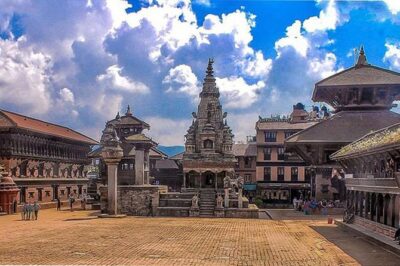
The Krishna Temple is a different architectural statement. It is a masterpiece of Shikhar architecture, dedicated to Krishna as an incarnation of Vishnu. A statue of Garuda, Vishnu’s transport, faces the temple. Nearby is another popular Vishnu temple, so your guide can help you compare the forms and religious associations rather than treating each building as a separate stop.
The statue of the Malla king Yoga Narendra Malla, which fell during the 2015 earthquake, has been restored. That detail adds an important modern layer to the visit. Patan is not a frozen museum. Its monuments have been damaged, repaired, and brought back into public life.
An octagonal temple, representing eight symbols of good luck for Hindus, is another notable sight. You do not need to know every religious reference before arriving. A guide can give you enough background to see why the shape matters and how it fits into the wider square.
A guide makes the difference here
The strongest reason to choose this tour is the private guide, not just the vehicle. The sites are visually powerful, but their details can blur together without help. A good explanation separates a royal courtyard from a monastery, a patron deity from a temple ornament, and a restored monument from an untouched one.
Siri has been praised for his English and Spanish, friendly manner, cultural explanations, and willingness to leave room for questions. Rajendra has been praised for connecting the monuments with present-day life, including side streets and ethnic clothing still worn in daily settings.
The private format also lets you make practical choices. You can ask for more time at the palace museum, stop for photographs, browse local crafts, or choose when to eat lunch. One useful feature is the ability to decide when lunch fits your day rather than following a rigid meal slot.
There is one limitation. Lunch may be arranged at a place aimed at international tourists rather than a local Nepali dining room. If food is important to you, say so clearly and ask what choices are possible. The tour information confirms flexibility around lunch timing, but it does not promise a specific restaurant or a traditional menu.
Timing, transport, and what to budget
The stated duration is six hours, with hotel pickup and drop-off in Kathmandu. The itinerary gives four hours to Bhaktapur and four hours to Lalitpur, so treat those stop times as an outline rather than a promise that the tour lasts eight hours. Traffic, monument entry, walking speed, lunch, and your own interests can affect the rhythm.
Air-conditioned transport matters in Kathmandu Valley, especially when you are moving between walking-heavy visits. The driver handles the city connections while you save your energy for the squares and courtyards.
The tour is a private group, not a large shared bus. That means the guide can adjust the route and explain details at your level. It also means the $50 price is easier to justify for solo visitors, couples, families, or small groups who value time and convenience.
Monument entrance fees are excluded. Ask about the current charges when you book or before setting out, since the supplied details do not give the amounts. The tour also offers free cancellation up to 24 hours in advance and a reserve-now, pay-later option, useful if your Kathmandu schedule is still shifting.
Who will enjoy this tour most?
I would choose this experience if you want the main heritage sites explained in one organized day without joining a large group. It suits first-time visitors who want a clear introduction to Newari architecture, Hindu and Buddhist traditions, royal history, and local craft.
It also works well for repeat visitors who have seen Kathmandu’s central sights but have not yet explored Patan and Bhaktapur properly. Rajendra’s side-street approach and Siri’s flexible pacing suggest that the day can be shaped around more than the standard photo stops.
You should be comfortable with substantial walking and outdoor sightseeing. The experience is built around squares, courtyards, temples, lanes, and museum visits, not a ride-by viewing of the monuments.
If you want an unhurried museum day, a long lunch, or extensive shopping in both cities, six hours may feel short. If you want a focused introduction with a guide who can explain what you are seeing, the timing is practical.
Should you book it?
Book this tour if you want to compare two UNESCO-listed city centers in one private outing and you value clear explanations, flexible stops, and hotel transport. The best parts are the contrast between Bhaktapur’s wood carving and Patan’s metalwork, the layered courtyards of Patan’s palace, and the chance to see more than the central squares.
Before booking, budget for monument entrance fees and decide how strongly you want local food or shopping included. Tell the guide whether your priority is architecture, religion, photography, museums, or daily life.
For $50 per person, it is a solid value when the guide and driver are used well. It is less suitable if you prefer to wander alone or spend an entire day in one city. For most first visits to the Kathmandu Valley, though, this is an efficient and thoughtful way to see Patan and Bhaktapur without flattening them into the same sightseeing stop.
FAQ
How long does the Patan and Bhaktapur tour last?
The stated duration is six hours, including hotel pickup and drop-off in Kathmandu. The schedule allows time for guided visits, walking, sightseeing, and free time in both cities.
Does the tour include hotel pickup?
Yes. Pickup and drop-off are included from the hotel where you are staying in Kathmandu.
Is transportation included?
Yes. The tour includes air-conditioned transport between Kathmandu, Bhaktapur, and Lalitpur.
Is the tour private?
Yes. The activity is arranged for a private group.
Which languages are available?
Live guiding is available in English and Spanish.
Are monument entrance fees included?
No. Monument entrance fees are excluded from the $50 tour price.
Which places are visited?
The tour includes Bhaktapur Durbar Square, Taumadhi Square and Nyatapola Temple, Dattatraya Square, Patan Durbar Square, and Hiranyavarna Mahabihar, also called the Golden Temple.
Can I cancel the booking?
You can cancel up to 24 hours in advance for a full refund. A reserve-now, pay-later option is also available.
More full-day trips in Kathmandu
- Kathmandu: Full Day 7 UNESCO Tour with Lunch – Private/Group
★ 5.0 · 415 reviews - Kathmandu: Full Day Top 4 UNESCO Tour with Lunch – Private/Group
★ 5.0 · 269 reviews - Kathmandu: Full-Day 7 UNESCO Tour with Lunch – Private/Group
★ 4.9 · 247 reviews - Kathmandu: Full Day 7 UNESCO Tour with Lunch – Private/Group
★ 5.0 · 101 reviews
Just added around Kathmandu
- Traditional Momo Making Class★ 5.0 · 10 reviews
- Wildlife Adventure in Chitwan Nepal★ 4.0 · 4 reviews
- Walking tour of real Kathmandu through back streets.★ 5.0 · 3 reviews
- Kathmandu 2 Nights 3 Days Chitwan Jungle Safari Tour★ 5.0 · 9 reviews
- Kathmandu Street Food Walking Tour – Eat Like a Local★ 5.0 · 3 reviews
- Private Manaslu Circuit Trek at Himalayas★ 5.0 · 3 reviews
- Walking tour of Kathmandu with awesome local guides★ 5.0 · 4 reviews
- Visit Swayambhunath and Bauddhanath Stupa with Guide★ 5.0 · 5 reviews
Bhaktapur Tours from Kathmandu, compared.
Private Bhaktapur and Nagarkot Day Tour From Kathmandu
Read our review →
Day Trip to Bhaktapur and Panauti from Kathmandu
Read our review →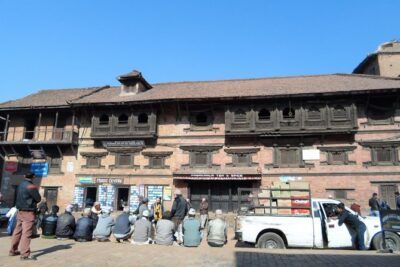
Nagarkot Sunrise & Bhaktapur UNESCO Heritage Private Tour
Read our review →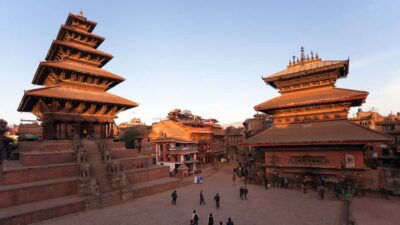
Nagarkot Sunrise & Bhaktapur Heritage Tour -Private Full Day Trip
Read our review →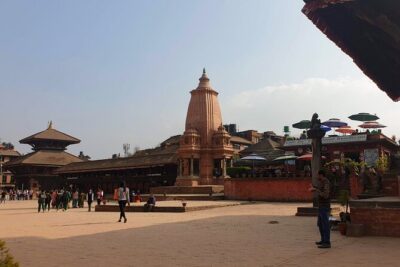
Browse the lists this tour appears in