
Reviewed · KATHMANDU CITY SIGHTSEEING TOURS
Full Day Ticket Access around Kathmandu Valley
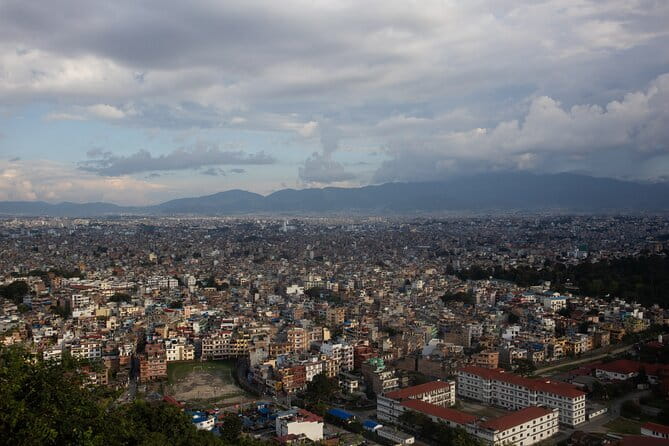
Kathmandu Valley packs an extraordinary range of belief and culture into one day. This tour links the hilltop stupa of Swayambhunath, old Patan, Boudhanath, and Pashupatinath, giving you Buddhist and Hindu landmarks without having to arrange separate rides.
I like the private transportation, which matters in a city where moving between major sights can eat up your day. I also like the cultural focus and the chance to work with an English-speaking guide such as Manish, whose clear enthusiasm for Nepal and its religions comes through in the tour description.
The main catch is cost clarity. The advertised price is $40 per person, but monument fees are listed separately at about $20 per person, so budget roughly $60 before any other personal spending. The four stops also leave little room for a relaxed pace.
Key points to know
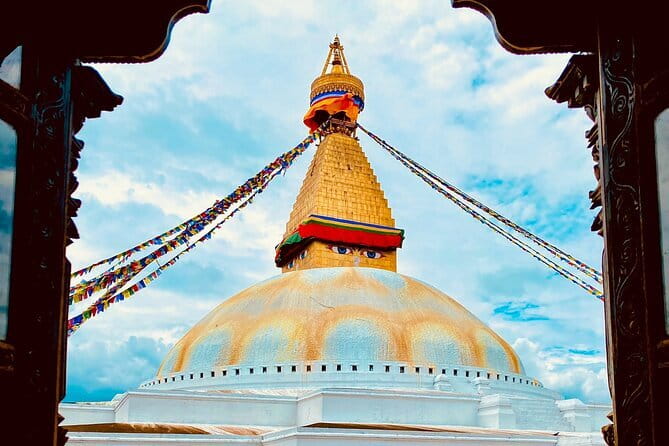
- Four major sites in about seven hours: Swayambhunath, Patan Durbar Square, Boudhanath, and Pashupatinath give you a broad introduction to Kathmandu Valley.
- Private transport is included: Pickup is offered, with a 9:30 am start and transport between the sights.
- A guide adds cultural context: English in-person guiding is provided, with audio English also listed.
- The day crosses religious traditions: You will see Buddhist stupas, Newar craftsmanship, Tibetan Buddhist practice, and Hindu sacred customs.
- Budget for extra entry fees: The tour price does not cover monument charges, listed as $20 per person.
- The schedule is full: Planned stop times total about seven hours, so this suits you if you want coverage more than long, unhurried visits.
What this Kathmandu day covers
This is a fast, well-planned introduction to the valley’s major religious and cultural sights. You are not simply ticking off temples. You are moving through several traditions that have shaped Kathmandu for centuries, with a guide to explain what you are seeing.
The route begins at 9:30 am and lasts about seven hours. Pickup is offered, and private transportation is included. That makes the day easier than piecing together taxis or local transport between four sites, especially since the stops are spread across different parts of the valley.
The listed stop times add up to seven hours: two hours at Swayambhunath, two at Patan Durbar Square, two at Boudhanath, and one at Pashupatinath. In practice, travel time has to fit into that day as well, so treat these as approximate allocations rather than a promise of four full, uninterrupted visits.
The guide is a key part of the value. The tour is designed around culture and tradition, not just photo stops. If Manish is assigned to your day, you can expect a guide who has been described as passionate about Nepal and its religions. The operator also refers to university lectures and local experts, though the exact guide may vary.
More sightseeing tours in Kathmandu:
- Private Kathmandu Sightseeing Tour | UNESCO World Heritage sites
★ 5.0 · 756 reviews - Kathmandu Private Sightseeing Tour | UNESCO World Heritage Sites
★ 5.0 · 109 reviews - Kathmandu: Private Patan and Bhaktapur Sightseeing Tour
★ 4.7 · 64 reviews
Swayambhunath, the hilltop Monkey Temple
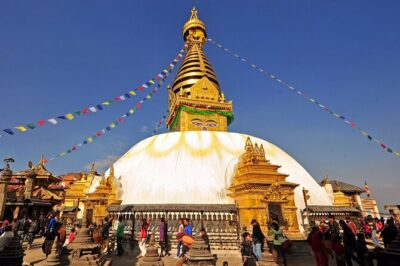
Your first stop is Swayambhunath, also called the Monkey Temple. The stupa sits on a forested hill and is described as more than 3,000 years old, making it one of Nepal’s most sacred Buddhist sites, especially within Nepali Buddhism.
The setting gives this visit a different feel from the city plazas later in the day. You are looking at a major religious monument from a hilltop, surrounded by trees and a sense of separation from the streets below. The site’s nickname points to the monkeys found around the area, but the main reason to visit is the stupa and its role in Buddhist practice.
Two hours gives your guide time to explain the monument rather than rush you straight to a viewpoint. Pay attention to how the stupa functions as a place of worship, not just a landmark. Your guide can help explain the customs and symbols that may otherwise seem unfamiliar.
Swayambhunath is also a useful opening stop because it introduces Nepali Buddhism before you reach Boudhanath. I like that progression. You first encounter an ancient hilltop shrine with strong local Buddhist ties, then later see a large stupa at the center of Kathmandu’s Tibetan Buddhist community.
The listing marks admission as free at this stop, but the general inclusion notes say monument entry fees are not included and place the total at $20 per person. Ask your operator how the fee applies before departure. That small check can prevent confusion once you arrive.
Patan Durbar Square and the Newar arts
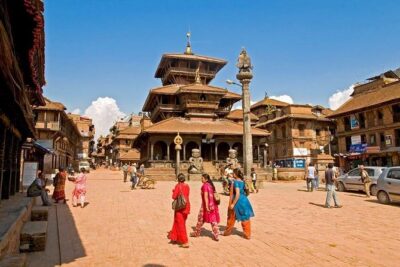
The tour then crosses the Bagmati River into Patan, an ancient Newar kingdom known for metal casting and wood carving. Patan Durbar Square is a UNESCO World Heritage Site and one of the day’s most rewarding stops if you care about architecture, craft, and the older urban culture of the valley.
The square gathers centuries of buildings and religious monuments into a compact area. That makes it easier to take in than a large district, but it also means the details come quickly. Look closely at carved wood, metal figures, and the way the buildings frame the public space.
This is where a guide can make a real difference. Without context, you may see attractive carvings and pagoda-style buildings. With explanation, you can connect the art to the Newar communities that developed Patan’s craft traditions. The tour’s emphasis on culture and local expertise fits this stop particularly well.
You have two hours scheduled here. That is enough time for a proper walk through the square, some explanation from the guide, and personal time to look around. Still, do not expect to inspect every corner of Patan at leisure if the day is running behind.
Patan is also the stop most likely to appeal to you if you prefer built heritage to large religious gatherings. Swayambhunath and Boudhanath are active Buddhist centers. Pashupatinath is a major Hindu sacred site. Patan connects those religious traditions with the artistic and civic identity of the Newar kingdom.
Entry charges may apply here under the overall $20 monument-fee estimate. Since the included and excluded details are not perfectly aligned, confirm exactly which tickets are covered and which you pay yourself.
Boudhanath and the Tibetan Buddhist center
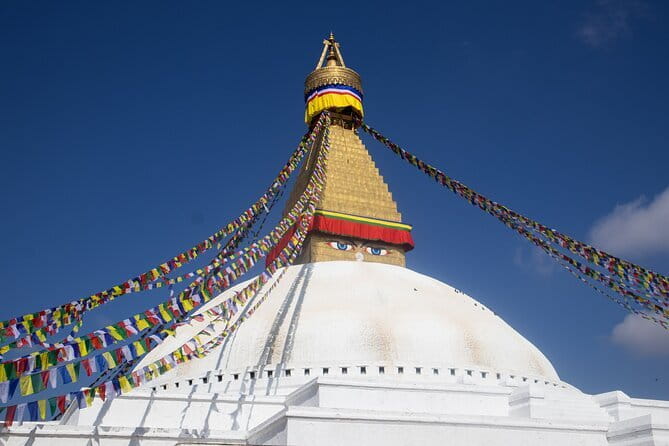
Boudhanath is one of the world’s largest spherical stupas and the spiritual center of Nepal’s Tibetan community. The scale changes the mood of the day. Swayambhunath feels like a hilltop shrine, while Boudhanath is a broad urban religious space built around a powerful circular form.
You will have about two hours here. That gives you time to walk around the stupa and take part in the traditional practice of circumambulation, known as kora. The route is not simply a way to circle a building. It is part of how people use the site as a place of devotion.
The description highlights crimson-robed monks, juniper incense, and rooftop monasteries. These details help you understand what makes Boudhanath special. It is not only a large monument for photographs. It is a living center for Tibetan Buddhist practice, with ritual movement, prayer, and monastic life shaping the space around the stupa.
I would use your guide here. Ask about the meaning of the kora, the purpose of the prayer activity you see, and the links between Boudhanath and Nepal’s Tibetan community. The guide’s role is most useful when you want to understand conduct and symbolism, not just names and dates.
Boudhanath is also a good place to slow down for a few minutes within a busy schedule. Two hours is generous compared with the one hour at Pashupatinath, but the full day still has a fixed end. If you enjoy observing religious life, this is the stop where you may wish you had more time.
The general entry-fee note applies here as well. Admission is listed separately from the $40 tour cost, with $20 per person given as the expected amount for monument fees. Confirm the current arrangement before booking if your budget is tight.
More full-day trips in Kathmandu:
- Kathmandu: Full Day 7 UNESCO Tour with Lunch – Private/Group
★ 5.0 · 415 reviews - Kathmandu: Full Day Top 4 UNESCO Tour with Lunch – Private/Group
★ 5.0 · 269 reviews - Kathmandu: Full-Day 7 UNESCO Tour with Lunch – Private/Group
★ 4.9 · 247 reviews - Kathmandu: Full Day 7 UNESCO Tour with Lunch – Private/Group
★ 5.0 · 101 reviews
Pashupatinath beside the Bagmati River
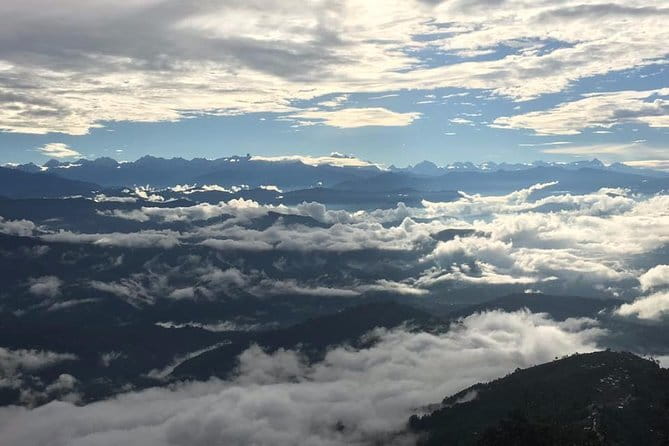
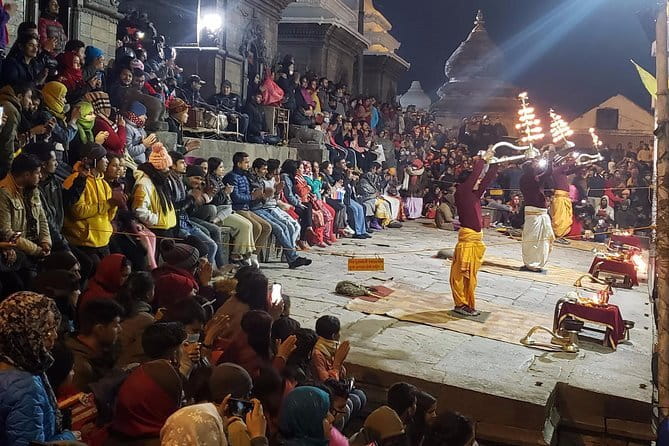
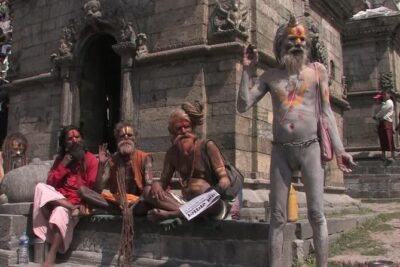
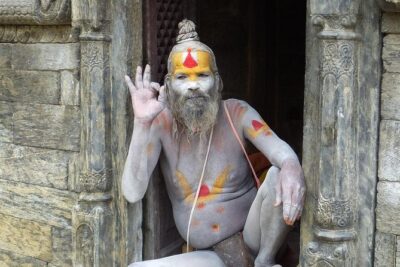
The final stop is Pashupatinath Temple, an ancient sacred site on the bank of the Bagmati River. It offers the day’s clearest look at Hindu religious practice and at Nepalese ideas about the relationship between the body and the soul.
The description presents Pashupatinath as a place where two states of life are considered together: life and what follows it, with body and soul understood as separate. That makes this more than another ornate temple visit. The setting carries serious religious meaning, and your guide can help you approach it with the right respect.
Only one hour is scheduled here, so expect an overview rather than a long exploration. This shorter visit may suit you if you want to see the site as part of a broad valley tour. If Pashupatinath is your main reason for visiting Kathmandu, you may prefer a tour built around more time at this complex.
The Bagmati River is central to the site’s meaning. The tour description specifically points to the temple’s location beside the holy river and to the customs connected with life and death. Listen carefully to the guide’s explanation, and follow any instructions about where you may go and how to behave.
This is not the place for a casual, noisy approach. Dress and act respectfully, and remember that religious activity is not staged for visitors. The value of a guided visit here is partly practical: you can learn what you are seeing without making an avoidable mistake.
Does the $40 price offer good value?
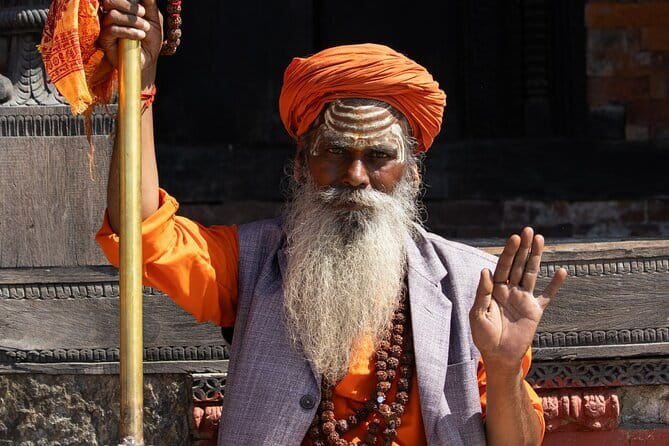
At $40 per person, the tour is priced as an economical way to cover four major sites with private transportation and a cultural guide. That is a reasonable starting price for a seven-hour day, especially if you value having one vehicle and one planned route.
The real budget figure is higher. The additional monument fees are listed at $20 per person, so plan on roughly $60 total for the tour and stated entry charges. Because the stop details mark admission as free while the general notes say entry fees are extra, I would confirm the exact fee arrangement before paying.
The strongest value comes from the combination of transport and interpretation. You are paying less for a luxury vehicle or a small-group perk, since no group size is provided, and more for an organized route with a person explaining Nepal’s culture and religions.
The tour also saves planning time. You do not have to work out how to connect a hilltop Buddhist site, Patan, Boudhanath, and Pashupatinath in one day. That convenience matters if you have limited time in Kathmandu.
The tradeoff is pace. Seven hours is enough to see all four places, but not enough to linger at every one. I would choose this tour early in a Kathmandu stay if I wanted orientation and broad coverage. I would not choose it as my only cultural day if I wanted long periods for photography, quiet observation, or detailed museum visits.
Who will get the most from this tour?
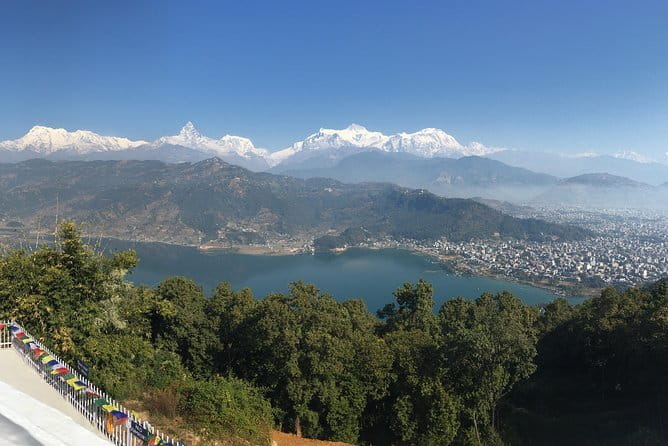
This day suits you if you want a strong first look at Kathmandu Valley and prefer explanations to independent wandering. It is especially useful if Nepal’s religions, architecture, and living customs are unfamiliar and you want a guide to connect the pieces.
It also suits you if you have only one free day. The route covers two major Buddhist sites, a Newar royal square, and a major Hindu temple. Few short outings offer that range.
You may want something slower if you dislike structured sightseeing or need long breaks. The schedule is full, and the four locations are important enough that you could easily spend more time at each.
The tour is also a practical choice for many types of participants. The information says most travelers can take part, service animals are allowed, and the route is near public transportation. Pickup is offered, but the exact pickup area is not stated, so confirm that detail when booking.
English support is listed as in-person guiding and English audio. If you need a particular language or a certain kind of accessibility help, ask before confirming, since the supplied details do not specify more.
Timing, cancellation, and useful planning notes
The stated start time is 9:30 am. Set aside about seven hours, but remember that traffic and time spent at each monument can affect the finish. Since the tour has four stops, avoid scheduling a tight flight, train, or other fixed appointment afterward.
Confirmation is received at booking. The activity requires good weather. If poor weather causes cancellation, you are offered another date or a full refund.
You can cancel for a full refund up to 24 hours before the experience start time. Cancellations or changes made within 24 hours are not refunded or accepted. The cut-off follows local time, so check the clock carefully if your plans change.
I would also confirm three things before departure: the pickup location, the exact monument-fee total, and which guide will lead the day. Manish is associated with particularly strong praise for his passion and command of Nepalese religion, but the assigned guide may not be guaranteed.
Should you book the Kathmandu Valley day tour?
Book it if you want the most ground covered in one organized day. The mix is excellent: ancient Swayambhunath, artistic Patan, Tibetan Boudhanath, and Hindu Pashupatinath. Private transport and an English-speaking cultural guide make the $40 base price attractive, even after allowing for the stated $20 in entry fees.
Skip it if your ideal day means lingering at one or two sites. The schedule is ambitious, and Pashupatinath receives only an hour. For a first introduction to Kathmandu Valley, though, this is a sensible and fairly priced choice. Confirm the extra charges and pickup details, then expect a busy day with plenty of religious and cultural context.
FAQ
What is included in the tour price?
Private transportation and a highly experienced cultural guide are included. English in-person guiding and English audio are listed.
How much does the tour cost?
The listed price is $40 per person. Monument entrance fees are not included and are listed as $20 per person.
How long does the experience last?
The tour lasts approximately seven hours.
What time does the tour start?
The stated start time is 9:30 am.
Is pickup available?
Yes. Pickup is offered, though the specific pickup location is not provided.
Which places does the tour visit?
The tour visits Swayambhunath, Patan Durbar Square, Boudhanath Stupa, and Pashupatinath Temple.
How much time is planned at each stop?
About two hours are planned at Swayambhunath, two hours at Patan Durbar Square, two hours at Boudhanath, and one hour at Pashupatinath.
Can most people participate?
Yes. The provided information says most travelers can participate. Service animals are also allowed.
What is the cancellation policy?
You can cancel at least 24 hours before the start time for a full refund. Cancellations or changes made within 24 hours are not accepted, and the amount paid is not refunded. If poor weather cancels the tour, you are offered another date or a full refund.
Just added around Kathmandu
- Traditional Momo Making Class★ 5.0 · 10 reviews
- Wildlife Adventure in Chitwan Nepal★ 4.0 · 4 reviews
- Walking tour of real Kathmandu through back streets.★ 5.0 · 3 reviews
- Kathmandu 2 Nights 3 Days Chitwan Jungle Safari Tour★ 5.0 · 9 reviews
- Kathmandu Street Food Walking Tour – Eat Like a Local★ 5.0 · 3 reviews
- Private Manaslu Circuit Trek at Himalayas★ 5.0 · 3 reviews
- Walking tour of Kathmandu with awesome local guides★ 5.0 · 4 reviews
- Regular Yoga for all levels of practitioners in Kathmandu★ 5.0 · 4 reviews
Kathmandu City Sightseeing Tours, compared.
Private Kathmandu Sightseeing Tour | UNESCO World Heritage sites
Read our review →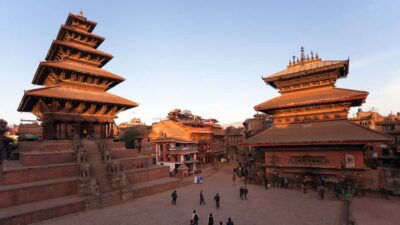
Full Day Kathmandu City Sightseeing Tour of UNESCO Heritage Sites
Read our review →
Browse the lists this tour appears in