
Reviewed · EVEREST BASE CAMP HELICOPTER TOURS FROM KATHMANDU
Everest Base Camp Helicopter Tour
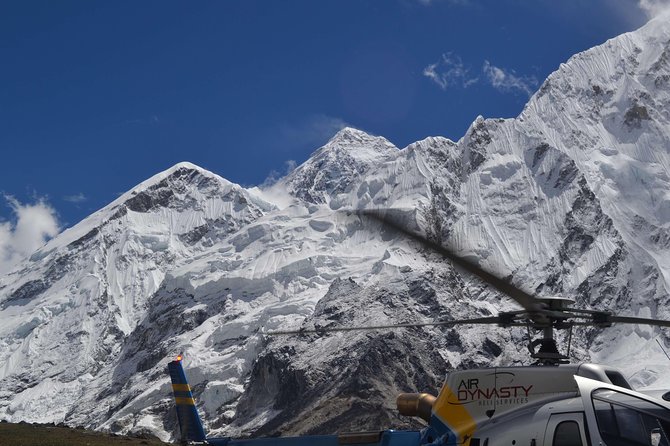
The great prize here is simple: you can see Everest in a single morning without spending two weeks on the trail. From Kathmandu, the helicopter heads toward Lukla, flies over the high country, and may land at Everest Base Camp or Kalapatthar, depending on the helipad and weather.
I like the chance to stop at Lukla, the famous gateway for Everest trekkers, and the planned landing at Hotel Everest View for breakfast. I also like the small group size, with a maximum of six people, and the option to choose a private flight instead of sharing.
The main caution is weather. Mountain flying is never a clockwork operation, and the landing point can change. The $1,700 price also requires careful checking, since park, airport, and local fees are extra, as is the optional $31 breakfast.
Key points to know before booking
- Everest without the trek: You fly from Kathmandu toward Base Camp and Kalapatthar in roughly four to six hours.
- Shared or private options: Shared flights carry five or six passengers plus the pilot, while private arrangements suit people who want more control over the schedule.
- Lukla fuel stop: The helicopter normally stops for about 10 minutes before continuing higher.
- Two high-altitude highlights: The flight may include a landing near Base Camp or Kalapatthar, followed by Hotel Everest View if weather allows.
- Window-seat planning: If more than three people fly together, the group may be split into smaller loads for the Base Camp section.
- Extra costs matter: Breakfast costs about $31, and national park, airport, and Khumbu village fees total around $50.
Flying from Kathmandu toward Everest
Your morning begins with hotel pickup and a meeting time around 7:15 a.m. The flight starts at Tribhuvan International Airport, so you should be ready early and keep your passport copy available. A photo of the passport on your phone is accepted, so you do not need to carry the original.
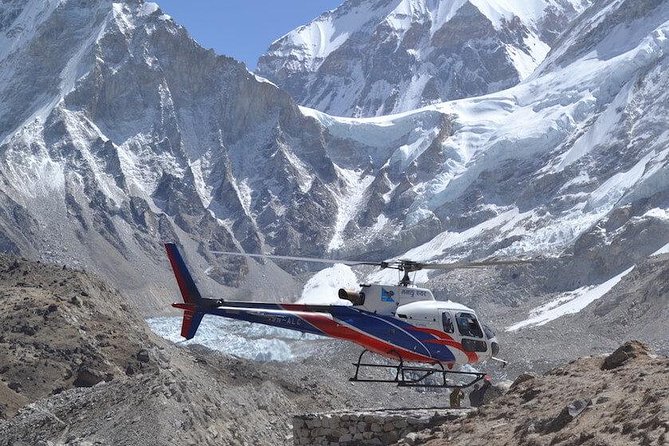
The helicopter used is an Airbus H125, also known as the Eurocopter 350 model. The aircraft carries a pilot and, on a shared trip, up to five or six passengers. That small capacity is important. You are not being packed into a large sightseeing aircraft, but you should still confirm the seating plan if a clear window view matters to you.
The tour is advertised as lasting about four to six hours. That is a useful range rather than a promise. Weather, fuel, airport procedures, passenger numbers, and the landing conditions around Base Camp can all affect the day.
The listed flight time says one to two minutes, which does not fit the route or the stated itinerary. Treat the overall four to six-hour schedule as the useful timing guide, and ask the operator to confirm the actual flight and ground times before you pay.
More Everest helicopter tours:
- Everest Base Camp Helicopter Tour landing at Everest View Hotel
★ 5.0 · 668 reviews - Everest Base Camp Helicopter Tour landing at Hotel Everest View
★ 5.0 · 218 reviews - Everest Base Camp helicopter tour with landing
★ 5.0 · 61 reviews
Lukla, the first pause in the Khumbu
The first major stop is Lukla, usually for fuel. You get about 10 minutes here, so this is not a sightseeing stop with time for a meal or a town walk.
Lukla matters because it is the air gateway for people trekking to Everest Base Camp. From here, walkers begin the long route toward the mountain. Seeing the airport from the air gives you a quick sense of how much ground a helicopter tour covers in one morning compared with a trek.
Do not expect a relaxed airport visit. The stop is functional, and your schedule depends on the helicopter being refueled and ready to continue. Keep your warm clothing close and follow the crew’s instructions.
The mountain views near Base Camp and Kalapatthar
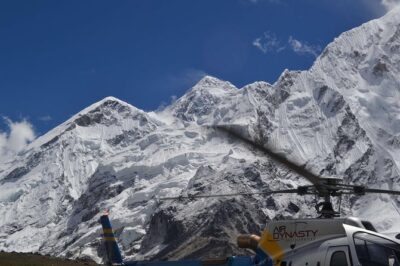
The main part of the trip is the flight over the high Everest area. From the helicopter, you should have views of Mount Everest, Lhotse, Nuptse, and Mount Pumori. The route is designed for photographs and video, so keep your phone or camera ready before the aircraft reaches the best viewpoints.
The tour aims to land at Base Camp or Kalapatthar, but the exact point depends on the helipad condition. This is a crucial distinction. You are not guaranteed a landing at both places, and the pilot may choose a different point for safety or operational reasons.
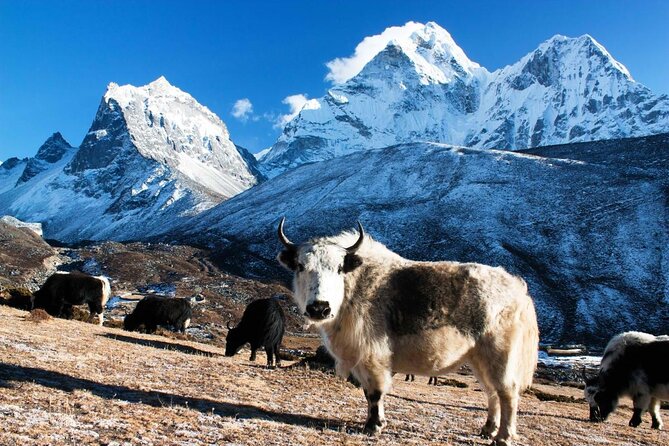
Kalapatthar is especially important for mountain views, while Base Camp has a different appeal as a staging point for Everest expeditions. A helicopter flight cannot reproduce the experience of walking through the Khumbu valley, arriving tired at a teahouse, or seeing the trail unfold day after day. What it gives you is access to the high country in a fraction of the time.
The air will be very cold at the highest point. The practical guidance is about minus 5 degrees Celsius in summer and minus 10 degrees Celsius in winter at the higher landing areas. Bring a proper warm layer, even if Kathmandu feels mild when you leave.
You should also understand that a high-altitude landing is brief and weather-sensitive. The itinerary emphasizes views, photography, and multiple landing points rather than a long stay beside Base Camp. Follow the pilot’s instructions about where you can stand and how long you can remain outside.
Why the group may split at Pheriche
Pheriche is described as the old splitting point when more than three people are flying together. The stated arrangement is to fly two people first, then three, so everyone receives a window seat for the Base Camp portion.
This is a clever solution to a common helicopter-tour problem. A shared flight can be cheaper than a private charter, but nobody wants to pay a high price and then spend the key section looking past someone else’s shoulder.
The tradeoff is timing. If your party is divided, some people may wait while the first group flies. The exact process can change under a newer group-splitting arrangement, so ask how your booking will operate if your party has more than three people.
The maximum group size is six. That keeps the aircraft relatively small, but it does not mean every booking will be private. Confirm if your $1,700 price applies to one person in a shared flight or to a private aircraft for your party.
Same city, a completely different sort of day:
- Everest Base Camp Trek – 14 Days
★ 5.0 · 1,499 reviews - Private Kathmandu Sightseeing Tour | UNESCO World Heritage sites
★ 5.0 · 756 reviews - Half day cooking class in Thamel kathmandu
★ 5.0 · 607 reviews - Everest Base Camp Trekking
★ 5.0 · 485 reviews
Breakfast at Hotel Everest View
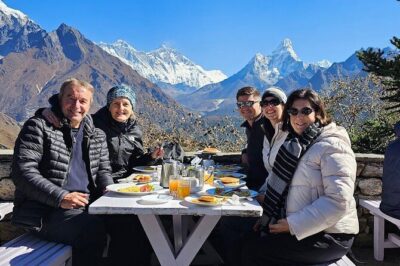
The planned breakfast landing is at Hotel Everest View in Syangboche, subject to weather. You usually get about one hour here, which makes this the most relaxed stop on the itinerary.
Breakfast is optional and costs about $31 per person. Food and drinks are not included in the stated tour price. If you want breakfast, carry the extra amount and confirm that the hotel is operating and accessible on your date.
The stop gives you a chance to pause after the high-country flight and enjoy views from a mountain hotel. It is also a useful contrast to the short fuel stop at Lukla and the more tightly controlled landing near Base Camp.
Do not treat breakfast as guaranteed. The aircraft may be unable to land at Syangboche because of weather, and the schedule may change. If the hotel stop is important to you, ask the operator what happens if it is skipped and whether the flight returns directly to Kathmandu.
The return route to Kathmandu
The return trip to Kathmandu takes about one hour from Hotel Everest View, with the helicopter normally going via Lukla. The captain may also fly directly, depending on fuel conditions.
This flexibility is practical, but it means the route is not fixed in the way a bus tour route would be. The aircraft needs enough fuel for the planned flight, possible delays, and safe operations. The pilot’s decision takes priority over sightseeing preferences.
You return to Tribhuvan International Airport, followed by hotel drop-off. Airport procedures and fees are separate from the tour price. The listed additional charges include national park, airport tax, and Khumbu village development fees of around $50.
Is $1,700 good value?
At $1,700, this is an expensive morning, even for a helicopter flight over Everest. The value depends on what you are comparing it with.
If your alternative is a two-week trek, the helicopter tour saves a large amount of time, walking, lodging, and planning. It lets you see Everest and several major Himalayan peaks during a single Kathmandu stay. For someone with limited holiday time or no interest in high-altitude trekking, that can make the price reasonable.
The value is weaker if you expect a long, leisurely visit at Base Camp or a fixed landing at every point. Weather may force changes, and the tour price does not cover everything. Add roughly $50 for required park, airport, and local fees, plus $31 if you choose breakfast.
You should also clarify whether the quoted price is for a shared seat or a private flight. The operator offers both. A private tour may be worthwhile for a family or small group that wants more control, while a shared flight is the logical choice if keeping the cost down matters most.
Ask for a written breakdown before booking. Confirm the shared or private format, the included landings, the added fees, the breakfast price, and the procedure if weather changes the route.
Cold, weight, and fitness rules
The tour requires a moderate level of physical fitness. You are not trekking to Base Camp, but you still need to manage airport movements, helicopter boarding, short walks on uneven or cold ground, and the effects of a high-altitude landing.
The stated passenger weight limit is 209 pounds, or about 95 kilograms. The information also says passengers over 100 kilograms must pay extra. Since those two figures are not identical, ask the operator to confirm the exact rule for your body weight before booking.
Children under 10 are not recommended for this activity. That advice matters because the flight is early, the cold can be severe, and the itinerary can change without much notice.
Wear warm clothing in every season. A jacket, gloves, and sturdy shoes are sensible choices for the higher landing points. You should also carry your passport copy on your phone, as requested by the operator.
What the guide and operator add
The helicopter pilot controls the route and landing decisions, so safety and weather rules matter more than a fixed sightseeing script. The operator also arranges hotel pickup and drop-off, provided you send the hotel name and address in advance.
The wider team connected with Travel Pinto includes guides named Bishal, Bashu, Devendra, Dipendra, and Mohan. Their previous work has included Everest treks and Kathmandu cultural tours. Bishal and Bashu were noted for careful support in the Everest area, while Devendra received praise for frequent communication and trip planning.
Those names are useful if you are arranging more than the helicopter flight, but the supplied tour details do not promise a particular guide for this aircraft trip. Ask who will meet you, who handles airport coordination, and whether a guide accompanies you during the flight or only the driver handles transfers.
Weather and cancellation realities
This is a weather-dependent experience. If poor weather forces cancellation, you are offered another date or a full refund. The same applies if the minimum number of passengers is not reached and the operator cancels the trip.
Your own cancellation rules are much stricter. The booking is non-refundable and cannot be changed for personal reasons. Do not book this as a casual placeholder while you decide your dates.
Send all possible dates to the operator. Flexible scheduling gives the company a better chance to place you on a clear day, and it gives you a better chance of seeing Everest rather than spending the morning waiting for an uncertain departure.
Who should book this Everest helicopter tour?
I would recommend it to you if you have limited time in Nepal, want to see Everest from above, and accept that mountain weather controls the day. It also suits people who cannot commit to a long trek but still want a close look at the Everest region.
It is a good fit for couples, families with older children, and small groups that value a private option. The six-person limit and possible window-seat planning are strong points for photographers.
I would hesitate if you need a guaranteed Base Camp landing, dislike cold or early starts, or want a relaxed cultural tour with plenty of time on the ground. The flight is about access and views, not a substitute for the walking experience.
Should you book it?
Book this tour if seeing Everest is a top priority and the cost fits your budget after the extra fees. The Lukla stop, possible Base Camp or Kalapatthar landing, and Hotel Everest View visit pack a great deal into one morning.
Before paying, get four details in writing: the shared or private arrangement, the exact price including required fees, the likely landing points, and the procedure for poor weather. If you can stay flexible and dress for serious cold, this is one of the fastest ways to see the high Everest region from Kathmandu.
FAQ
How long does the Everest Base Camp helicopter tour take?
The stated duration is approximately four to six hours. The exact schedule can change because of weather, fuel, airport procedures, passenger numbers, and landing conditions.
What time does the tour start?
The meeting time is around 7:15 a.m. Hotel pickup is offered, and you need to provide the hotel name and address so the pickup time can be arranged.
Is the helicopter tour shared or private?
Both options are available. The shared flight carries five or six passengers and a pilot. You should confirm the price and seating arrangement before booking if you prefer a private flight.
Where does the helicopter land?
The helicopter may land at Everest Base Camp or Kalapatthar, depending on helipad conditions. The itinerary also includes a possible landing at Hotel Everest View in Syangboche, subject to weather.
Is breakfast included?
No. Breakfast and drinks are optional. Breakfast at Hotel Everest View costs about $31 per person and is only available if weather permits the landing.
What extra fees must I pay?
National park fees, airport tax, and Khumbu village development fees are not included. These cost around $50 in total. Breakfast is also separate.
What happens if bad weather cancels the flight?
If the operator cancels because of poor weather, you are offered a different date or a full refund. If you cancel for your own reason or request an amendment, the experience is non-refundable.
Just added around Kathmandu
- Traditional Momo Making Class★ 5.0 · 10 reviews
- Wildlife Adventure in Chitwan Nepal★ 4.0 · 4 reviews
- Walking tour of real Kathmandu through back streets.★ 5.0 · 3 reviews
- Kathmandu 2 Nights 3 Days Chitwan Jungle Safari Tour★ 5.0 · 9 reviews
- Kathmandu Street Food Walking Tour – Eat Like a Local★ 5.0 · 3 reviews
- Private Manaslu Circuit Trek at Himalayas★ 5.0 · 3 reviews
- Walking tour of Kathmandu with awesome local guides★ 5.0 · 4 reviews
- Visit Swayambhunath and Bauddhanath Stupa with Guide★ 5.0 · 5 reviews
Everest Base Camp Helicopter Tours from Kathmandu, compared.
Everest Base Camp Helicopter Tour landing at Everest View Hotel
Read our review →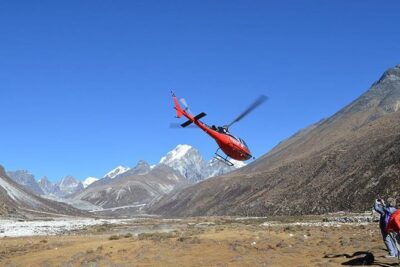
Everest Base Camp Helicopter Tour landing at Hotel Everest View
Read our review →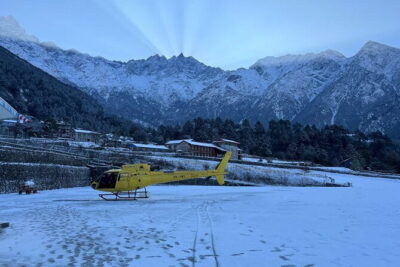
Everest Base Camp helicopter tour with landing
Read our review →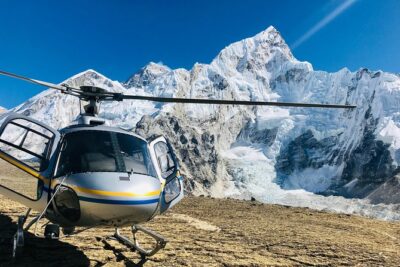
Everest Base Camp Helicopter Tour with Hotel Everest View Landing
Read our review →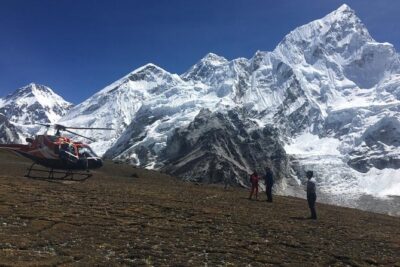
Guaranteed Landing at Everest Base Camp Kalapathar by Helicopter
Read our review →Everest Base Camp Helicopter Tour landing at Everest View Hotel.
Read our review →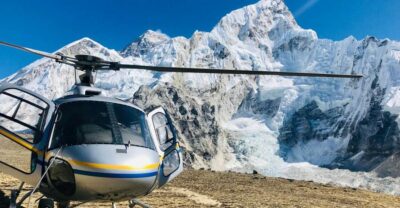
Browse the lists this tour appears in