
Reviewed · KATHMANDU CITY SIGHTSEEING TOURS
Kathmandu City Tour in 6 Hours – Discover the Cultural Highlights
Kathmandu packs an astonishing range of faith, architecture, and daily life into a small city tour. In about six to seven hours, you move from the hilltop shrines of Swayambhu to Newari palace courtyards, Hindu temples beside the Bagmati River, and the great Buddhist dome at Boudhanath.
I like the private vehicle and door-to-door service, especially if you have only one open day in Kathmandu. I also like the route itself: it covers four major cultural sites rather than spending the whole day at one palace square. The main catch is that this is primarily transport with a driver, not a fully guided sightseeing tour, so you must pay extra for entrance tickets and hire a guide separately if you want detailed explanations.
Key points to know before booking
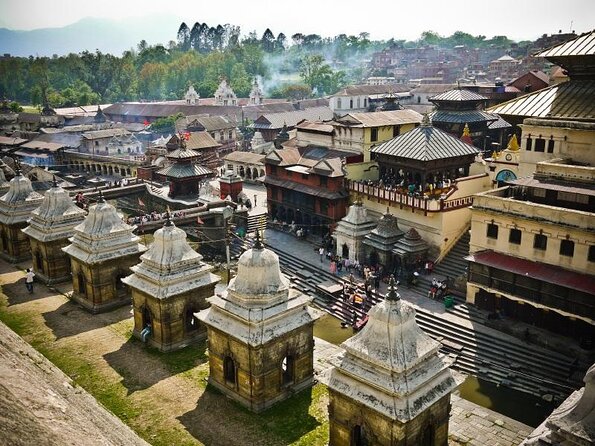
- Four major sites in one day: Swayambhu, Patan Durbar Square, Pashupatinath Temple, and Boudhanath Stupa form a broad introduction to Kathmandu’s Hindu and Buddhist traditions.
- Private transport for your group: You ride in a private vehicle with a driver, rather than joining a larger shared group.
- Plan on six to seven hours: The advertised duration is about five to six hours, but the practical plan is six to seven hours.
- Guiding costs extra: Your driver provides transport, but a sightseeing guide is not included.
- Entrance tickets are separate: Budget extra for admission at each monument or temple area.
- Best for a first look at Kathmandu: The route suits anyone with a limited schedule who wants to see several important places in one outing.
Four sacred and historic stops in one Kathmandu day
This tour gives you a quick but useful introduction to Kathmandu Valley culture. You will not study every temple or have unlimited time in each place, but you will see the main religious and architectural traditions that shape the city.
The route includes Swayambhu Mahachaitya, Patan Durbar Square, Pashupatinath Temple, and Boudhanath Stupa. Each stop has a different character. Together, they show why Kathmandu feels less like a city with a few monuments and more like a place where worship, courtyards, shrines, and ordinary streets overlap.
The private car matters here. You can travel between the four sites without arranging taxis or negotiating separate fares. The driver’s salary, fuel, parking, insurance, and vehicle expenses are covered in the price, which makes the arrangement easier to manage.
Still, I would treat this as a transport-based sightseeing day unless you add a guide. The driver may know the route and offer useful local conversation, but the experience does not promise formal commentary at every monument.
More sightseeing tours in Kathmandu:
- Private Kathmandu Sightseeing Tour | UNESCO World Heritage sites
★ 5.0 · 756 reviews - Kathmandu Private Sightseeing Tour | UNESCO World Heritage Sites
★ 5.0 · 109 reviews - Kathmandu: Private Patan and Bhaktapur Sightseeing Tour
★ 4.7 · 64 reviews
Swayambhu, the hilltop Monkey Temple
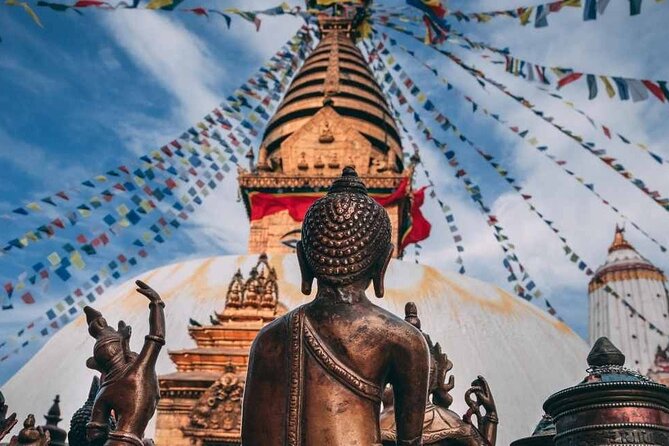
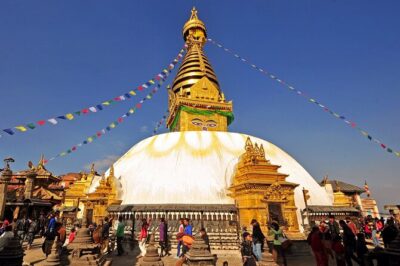
The first stop is Swayambhu Mahachaitya, often called the Monkey Temple because of the large monkey population around the site. The complex brings Hindu and Buddhist shrines together, making it a good opening stop for understanding Kathmandu’s overlapping religious traditions.
You have about one hour here. That is enough for a focused visit, though not a slow examination of every shrine. The site is especially useful if you want to see how several forms of worship share one sacred setting rather than existing in separate parts of the city.
Swayambhu also gives the day a strong visual beginning. You are visiting a place filled with stupas and shrines, not simply one isolated building. I would keep an eye on your belongings around the monkeys and avoid carrying food openly. The tour information specifically highlights the monkey population, so expect them to be part of the visit rather than a minor detail.
Admission is not included. If you hire a guide, this is a good place to ask for help distinguishing the Buddhist and Hindu features. Without one, you can still appreciate the setting, but the symbols and rituals may be harder to read.
Patan Durbar Square and Newari design
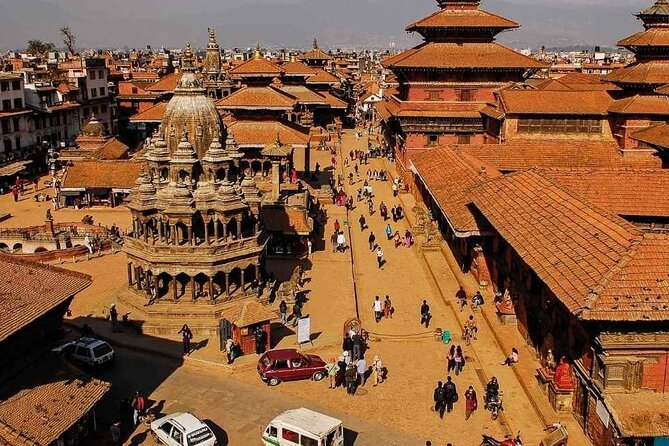
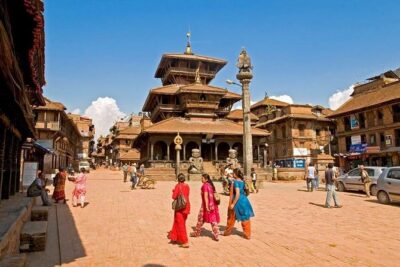
At Patan Durbar Square, the focus shifts toward Newari culture and architecture. The square’s red brick paving and old residential buildings create a different mood from Swayambhu’s religious hilltop setting.
You have about one hour to walk through the square and see its temples and historic buildings. The area represents the traditions of the Newar people, whose architectural style gives much of the Kathmandu Valley its distinctive appearance. Look closely at the arrangement of the buildings, courtyards, brickwork, and temple forms. A guide can add meaning to details that might otherwise blur into a series of attractive façades.
This is one of the places where the optional guide becomes especially valuable. Patan is not just a pretty square for photographs. Its design reflects local building traditions, religious practice, and the way urban life developed around palace and temple spaces. The supplied information describes old Newari residential buildings and numerous temples, so give yourself time to look beyond the central view.
One hour is practical for a highlight visit, but it is not generous if you want to explore every corner. If you are deeply interested in architecture, you may wish the schedule allowed more time here. For a first visit, however, Patan adds an important cultural layer that a route focused only on stupas and major temples would miss.
Pashupatinath Temple beside the Bagmati River
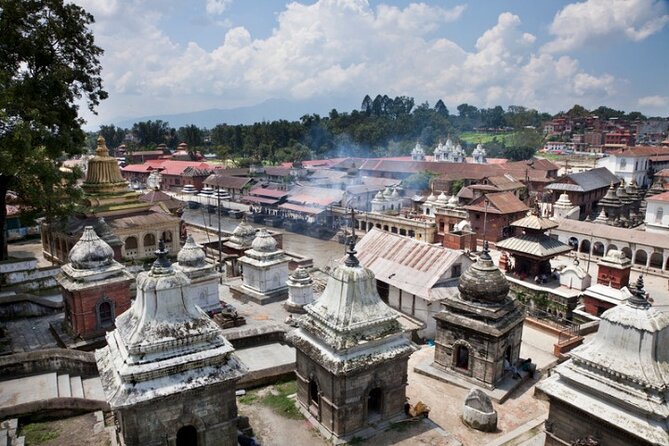
Pashupatinath receives the longest scheduled visit, about two hours, and that makes sense. This is one of the main temples dedicated to Lord Shiva and a major Hindu religious site on the banks of the Bagmati River.
The temple area includes smaller shrines devoted to several Hindu deities. That broad collection of sacred buildings gives the complex a more extensive feel than a single temple visit. You will have time to take in the setting, observe the religious atmosphere respectfully, and understand why this is one of Kathmandu’s central places of worship.
There is an important practical point here: access and sightseeing may not feel the same for every person. The information provided does not promise entry to every part of the temple complex, so you should follow local rules and your driver’s or guide’s instructions. Treat the site as an active religious place, not simply as a monument.
Two hours gives you the best chance to avoid a rushed visit. If you are interested in Hindu traditions, this may be the most meaningful stop of the day. The temple complex also received particular praise in the supplied feedback, so I would not try to shorten this section simply to spend more time shopping or sitting in the vehicle.
If you do not hire a guide, take a little time before the visit to learn the basic purpose of the site. The driver can get you there, but formal explanation is not included. A guide can help you understand the smaller shrines and the relationship between the temple grounds and the Bagmati River.
Same city, a completely different sort of day:
- Everest Base Camp Trek – 14 Days
★ 5.0 · 1,499 reviews - Everest Base Camp Helicopter Tour landing at Everest View Hotel
★ 5.0 · 668 reviews - Half day cooking class in Thamel kathmandu
★ 5.0 · 607 reviews - Everest Base Camp Trekking
★ 5.0 · 485 reviews
Boudhanath Stupa and the Tibetan trade route
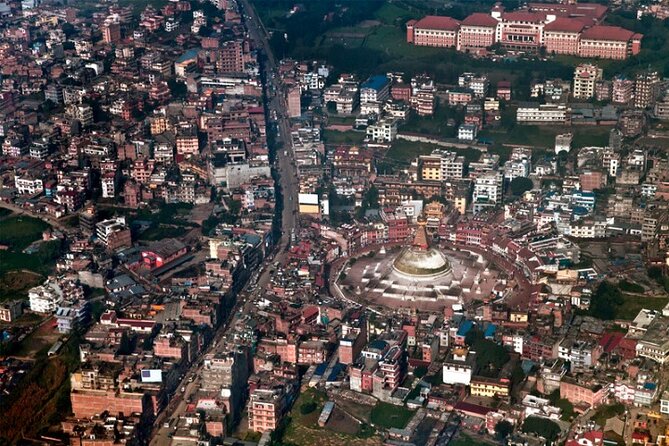
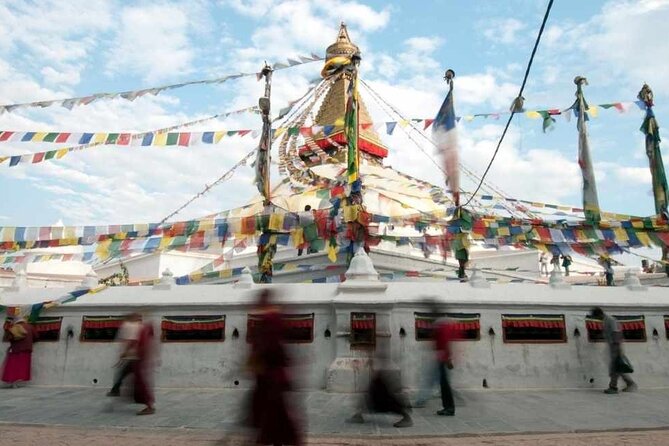
The final stop is Boudhanath Stupa, also called Buddha Stupa in the tour details. It is described as one of the largest stupas in South Asia and as a monument built along an ancient trade route to Tibet.
The visit lasts about one hour. The main stupa was built in a Nepali Buddhist style, and the surrounding area includes additional Buddhist features. This gives the day a clear closing point: you finish with one of the region’s major Buddhist centers after visiting both Hindu and Buddhist sites earlier.
Boudhanath is a strong place to reflect on how Kathmandu developed through religious and commercial connections. Its link to the old route toward Tibet adds useful context. You are not only looking at a large white dome. You are seeing a monument connected to travel, trade, and Buddhist practice across the Himalaya.
Again, a guide is optional but useful. The shape and decoration of a stupa carry religious meaning that is not always obvious at a glance. If you visit independently within the one-hour schedule, focus on the main structure and the surrounding Buddhist setting rather than trying to understand every detail.
What the $54.95 price really covers
At $54.95 per person, the value depends mainly on how much you want to pay for convenience. The price covers a private vehicle, driver, driver salary, fuel, parking, insurance, and door-to-door transport from your accommodation in Kathmandu. It does not cover entrance tickets, tips, or a tour guide.
That distinction matters. This is not a fully bundled admission-and-guiding package. You are paying for a private sightseeing vehicle and an organized route through four major sites. If you would otherwise need to arrange several taxis, compare fares, and manage the timing yourself, the service can be a sensible buy.
The value improves for a small group, since the activity is private and group discounts are available. Ask about the discount before booking if several people are going together. The price may feel less attractive to a solo visitor who is comfortable using local transport and arranging each stop independently.
I would also set aside money for the entrance fees. The exact amounts are not provided, so I would not assume the $54.95 is your final cost. Tips are also excluded, and a guide requires an additional payment.
Driver service, optional guide, and group size
Only your group participates, which gives the outing a more personal rhythm than a large bus tour. You have a private vehicle and door-to-door service, with the tour beginning at 9:15 a.m. at Mountain Hike Nepal’s office in Satghumti, Kathmandu.
The information also describes door-to-door service from your accommodation in Kathmandu. Confirm the pickup arrangement when you book, since the stated meeting point is the Mountain Hike Nepal office and the activity ends back there.
The driver handles transportation and the listed vehicle costs. Past feedback specifically praised friendly, experienced drivers and well-organized service. It also refers to organizers named Manis and Manesh, but the booking information does not identify a particular guide assigned to every departure.
That is why I would make the guide decision early. If you want explanations about Newari architecture, Hindu shrines, Buddhist symbols, and the background of each site, hire one and budget for the extra fee. If you mainly need reliable transport between major sights and prefer to explore at your own pace, the driver-only arrangement may be enough.
How to make the six-hour schedule work
The stated duration is about five to six hours, while the practical advice is to plan on six to seven hours. That longer estimate is the one I would use when arranging the rest of your day.
The scheduled visits add up to five hours: one hour at Swayambhu, one at Patan, two at Pashupatinath, and one at Boudhanath. The remaining time covers driving and transitions. You should not book a tight flight, bus, trek departure, or dinner reservation immediately after the tour.
The route gives every site a brief, useful visit, but it does not allow for endless wandering. Keep your expectations realistic. You are getting a city sampler with four substantial stops, not a slow archaeological study.
The tour is for people aged 10 and above. Most people can participate, according to the supplied information, and public transportation is nearby. Even so, the day involves walking around religious and historic areas, so younger participants should be comfortable with a fairly full sightseeing schedule.
The experience requires good weather and a minimum number of participants. If poor weather cancels the tour, you can choose another date or receive a full refund. The same options apply if the minimum number is not met.
Who will get the most from this tour
I would recommend this experience to you if you have one open day in Kathmandu and want a straightforward introduction to the city’s main cultural sites. It also suits families with children aged 10 or older, small groups, and people who prefer a private car to arranging transport stop by stop.
It is particularly useful at the start of a Nepal visit. The four stops give you enough context to recognize the importance of Buddhist stupas, Hindu temple complexes, and Newari urban design during the rest of your time in the country.
The tour is less suitable if you want a slow, highly detailed architectural tour or a fully guided experience with admission included. In that case, the added guide fee and entrance charges change the final price, and the one-hour stops at Swayambhu, Patan, and Boudhanath may feel short.
I also would not choose it for someone seeking a completely unstructured day. The route is set, the start time is fixed at 9:15 a.m., and four major stops keep the pace moving.
Should you book the Kathmandu City Tour?
Book it if you want private transport, a fixed route, and four major cultural sights in one day. The inclusion of fuel, parking, insurance, and driver expenses makes the $54.95 price easier to understand, particularly for a small group using the available discount.
Before booking, decide if you need a guide. That single choice has the biggest effect on the experience. With a guide, you can get more from Patan’s Newari details and the religious settings at Pashupatinath and Boudhanath. Without one, you still receive convenient transport and a well-chosen introduction, but you will need to interpret much of what you see yourself.
I would reserve this for a first Kathmandu visit, a short stay, or a spare day between larger Nepal plans. Add the cost of entrance tickets, allow seven hours, and keep your schedule open afterward. With those points clear, this is a practical way to meet Kathmandu’s Hindu, Buddhist, and Newari traditions in one well-packed outing.
FAQ
How long does the Kathmandu City Tour take?
The advertised duration is about five to six hours, but you should plan on six to seven hours for the full experience.
What time does the tour start?
The stated start time is 9:15 a.m.
Where does the tour start?
The meeting point is Mountain Hike Nepal, Satghumti, Kathmandu 44600, Nepal. Door-to-door service from accommodation in Kathmandu is also provided.
Where does the tour end?
The activity ends back at the meeting point.
Which sights are included?
The route includes Swayambhu Mahachaitya, Patan Durbar Square, Pashupatinath Temple, and Boudhanath Stupa.
Is a tour guide included?
No. A guide is not included, but you can hire one for an additional fee.
Are entrance fees included?
No. Entrance fees for sightseeing and monument visits are an additional cost.
Who can participate?
The experience is for people aged 10 and above. The additional information says most people can participate.
Can I cancel for a refund?
Yes. You can cancel at least 24 hours before the start time for a full refund. Cancellations or changes made less than 24 hours before the start time are not refunded or accepted.
Just added around Kathmandu
- Traditional Momo Making Class★ 5.0 · 10 reviews
- Wildlife Adventure in Chitwan Nepal★ 4.0 · 4 reviews
- Kathmandu 2 Nights 3 Days Chitwan Jungle Safari Tour★ 5.0 · 9 reviews
- Walking tour of real Kathmandu through back streets.★ 5.0 · 3 reviews
- Kathmandu Street Food Walking Tour – Eat Like a Local★ 5.0 · 3 reviews
- Private Manaslu Circuit Trek at Himalayas★ 5.0 · 3 reviews
- Walking tour of Kathmandu with awesome local guides★ 5.0 · 4 reviews
- Visit Swayambhunath and Bauddhanath Stupa with Guide★ 5.0 · 5 reviews
Kathmandu City Sightseeing Tours, compared.
Private Kathmandu Sightseeing Tour | UNESCO World Heritage sites
Read our review →
Full Day Kathmandu City Sightseeing Tour of UNESCO Heritage Sites
Read our review →
Browse the lists this tour appears in