
Reviewed · KATHMANDU UNESCO WORLD HERITAGE TOURS
Full Day Kathmandu City Sightseeing Tour of UNESCO Heritage Sites
Kathmandu’s best-known sacred sites are spread across the valley, and this full-day route saves you the trouble of arranging separate rides to each one. You’ll see the hilltop Swayambhunath Temple, the art-filled city of Patan, Pashupatinath’s Hindu shrine complex, and Boudhanath’s great Buddhist stupa.
I like the small group limit of 15, which gives you a better chance to ask questions than a large coach tour. I also like the way hotel pickup and an air-conditioned vehicle make a hot, traffic-heavy day easier. The main catch is cost planning: lunch is not included, and the published information about entrance fees is inconsistent, so you should budget to pay those separately.
Key points at a glance
- Four major UNESCO sites in one day: Swayambhunath, Patan, Pashupatinath, and Boudhanath form a strong introduction to Kathmandu Valley culture.
- Hotel pickup and drop-off: You do not need to find a taxi early in the morning or navigate the city between sites.
- Small group of up to 15: The size is practical for walking, listening, and asking questions.
- Guides named in past bookings: Rabina, Keshar, Ranjit Godar, and Rabee have led tours on this route.
- Plan for about eight hours: The advertised duration is seven hours, but the fuller guidance says to allow around eight.
- Extra costs matter: Food and drinks are excluded, and entrance fee details should be confirmed before departure.
Why this Kathmandu route works well
Kathmandu Valley can feel confusing at first. The major sights are not gathered in one compact old town, and traffic can turn a short drive into a slow one. This tour gives you a sensible first look at the valley’s religious and artistic landmarks without asking you to solve the transport puzzle yourself.
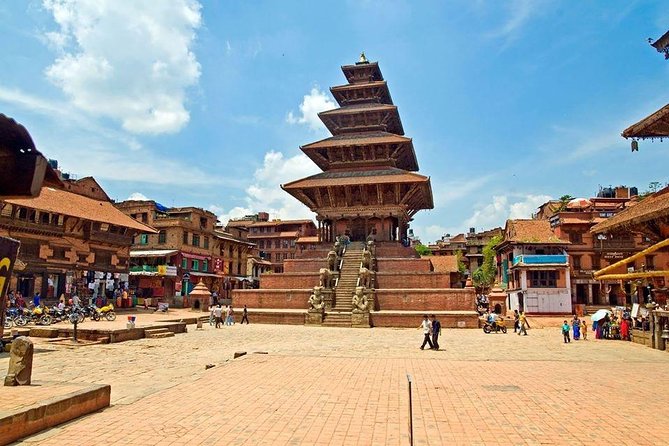
The route also shows Nepal’s cultural mix rather than presenting Kathmandu as only a Buddhist or only a Hindu destination. Swayambhunath and Boudhanath reveal important Buddhist traditions. Pashupatinath is one of the city’s key Hindu pilgrimage sites. Patan adds royal architecture, courtyards, carved temples, and the craft traditions for which the city is known.
You will spend much of the day moving between sites, but the plan is not just a drive-by checklist. The stated visits allow time to walk around each place, take photographs, and ask questions. Past tours have been led by guides including Rabina, Keshar, Ranjit Godar, and Rabee. The strongest praise has focused on guides who explained both historical details and present-day culture in a friendly, clear way.
This is a good choice if you have only a short stay in Kathmandu, or if you want a useful orientation before exploring on your own. If you prefer long, quiet visits at one or two monuments, the four-stop schedule may feel full.
More sightseeing tours in Kathmandu:
- Private Kathmandu Sightseeing Tour | UNESCO World Heritage sites
★ 5.0 · 756 reviews - Kathmandu Private Sightseeing Tour | UNESCO World Heritage Sites
★ 5.0 · 109 reviews - Kathmandu: Private Patan and Bhaktapur Sightseeing Tour
★ 4.7 · 64 reviews
Swayambhunath, the hilltop starting point
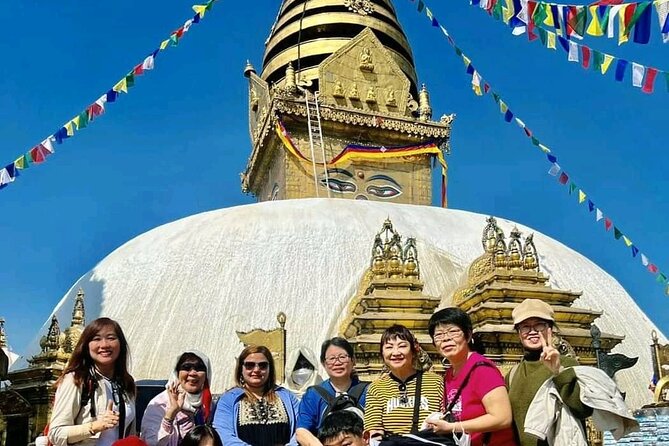
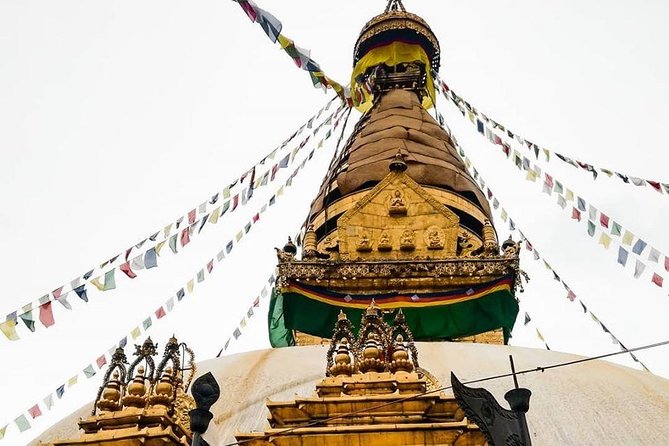
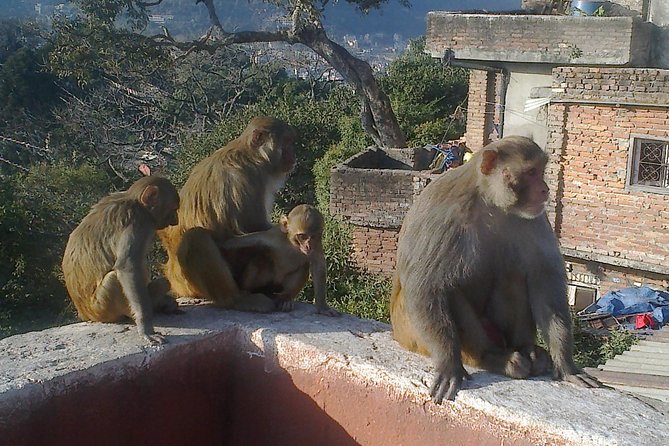
The day begins with a morning pickup, listed at either 8:00 or 8:45 depending on the booking information. Confirm the exact time when you book. The first stop is Swayambhunath Temple, often called the Monkey Temple, where you spend about an hour.
The site’s position on a hill gives you a broad view over Kathmandu. That outlook is one of the tour’s practical advantages: before the day gets away from you, you can see how large and crowded the capital is. The temple complex itself combines Buddhist shrines, prayer flags, religious images, and traditional architecture.
You should expect steps and uphill walking here. The tour information does not give a detailed mobility note, but Swayambhunath’s hilltop setting makes comfortable shoes a sensible choice. Take your time with the views, but listen closely as your guide explains the religious meaning of what you are seeing. Without context, the complex can look like a collection of colorful shrines. With a guide, the symbols and layout become easier to understand.
The one-hour visit is enough for a first look, though not for a slow photographic study of every corner. That is a recurring tradeoff on this day: you see four important places, but you do not get unlimited time at any one of them.
Patan, where architecture takes center stage
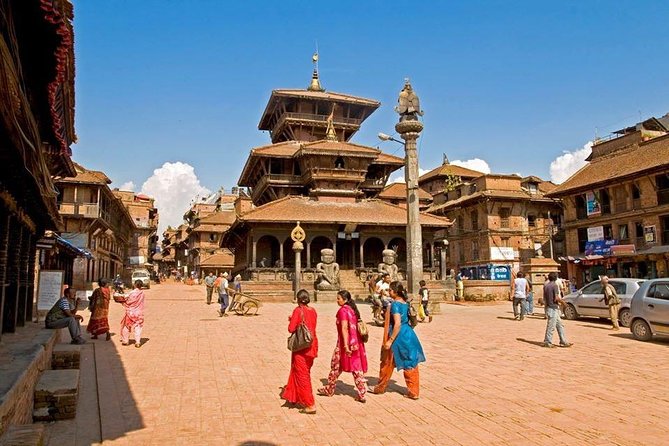
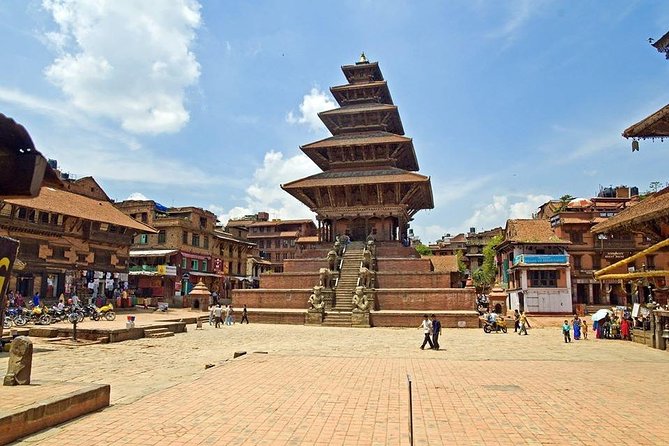
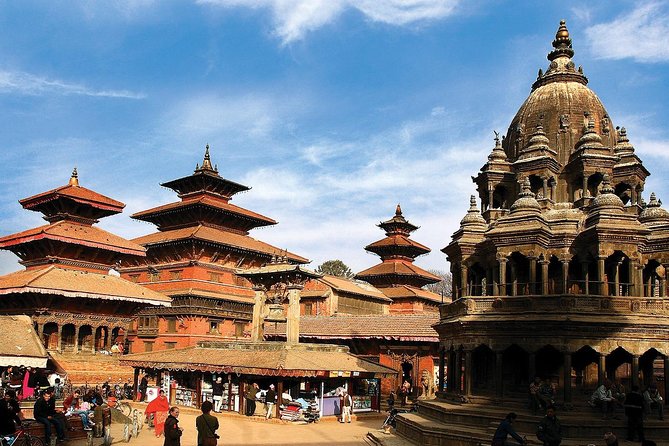
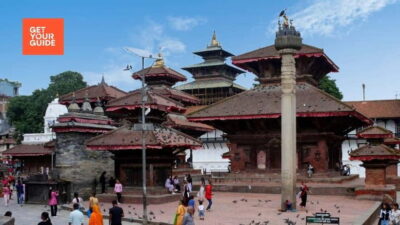
From the Kathmandu area, the vehicle continues to Patan, also known as the city of arts. The route description refers to Patan Durbar Square and temples such as Krishna Mandir, Bhimsen Temple, and Taleju Bhawani Temple. You also see the traditional houses and old architectural details around the square.
Patan is the stop for travelers who care most about buildings, carving, and urban design. Krishna Mandir is especially important to the visit, while Bhimsen Temple and Taleju Bhawani Temple add different religious and architectural details. Your guide’s role matters here because the square can reward close attention: look at rooflines, woodwork, stone figures, and the way temples sit within the surrounding city.
The tour information places lunch after the Patan visit. Lunch is not included, so bring money and allow for the meal to add time to the day. The exact restaurant and meal arrangements are not specified, so do not assume that food is part of the admission price or tour package.
Patan may be the most satisfying stop for anyone who enjoys art and historic city centers. It is also a place where the schedule can feel tight. You will want to pause for photographs and examine the courtyards, yet the tour still has two major religious sites ahead. If Patan is your main priority, consider returning independently for a longer visit.
Pashupatinath and the living side of Kathmandu
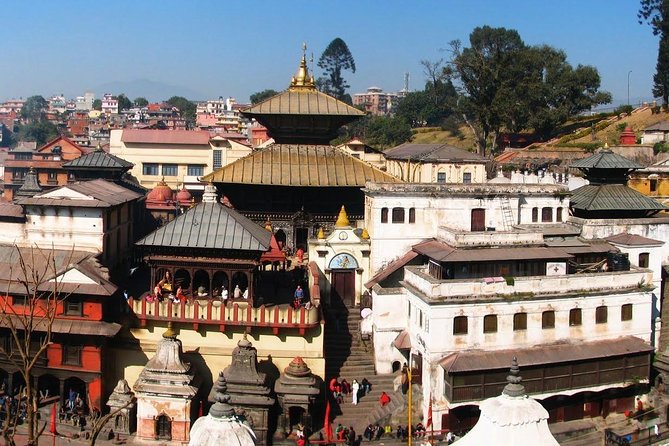
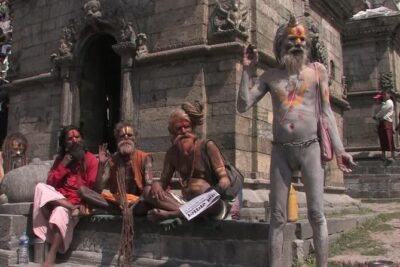
Pashupatinath Temple introduces a different religious tradition from the Buddhist sites. It is an important Hindu temple complex, and the visit gives you a chance to see a place that remains part of daily religious life rather than functioning only as a preserved monument.
This is where a guide can help you understand what you are seeing and how to behave respectfully. Religious sites require attention to local customs, photography rules, and boundaries. The supplied details do not specify individual entry restrictions, so follow your guide’s instructions and ask before photographing people or ceremonies.
Pashupatinath is not simply another architectural stop. The appeal lies in seeing a major sacred place in active use. The experience can feel more immediate and less tidy than a formal museum visit, which is precisely why it adds balance to the day.
You should also expect the atmosphere here to differ from the quiet, elevated feel of Swayambhunath or the decorative focus of Patan. The tour provides transport and explanation, but you remain responsible for showing the proper respect at the site. Wear practical clothing and keep your approach low-key.
More UNESCO heritage sites in Kathmandu:
- Kathmandu: Full Day 7 UNESCO Tour with Lunch – Private/Group
★ 5.0 · 415 reviews - Kathmandu: Full Day Top 4 UNESCO Tour with Lunch – Private/Group
★ 5.0 · 269 reviews - UNESCO Seven World Heritage Tour in Kathmandu
★ 5.0 · 253 reviews - Kathmandu: Full-Day 7 UNESCO Tour with Lunch – Private/Group
★ 4.9 · 247 reviews
Boudhanath, the day’s great Buddhist landmark
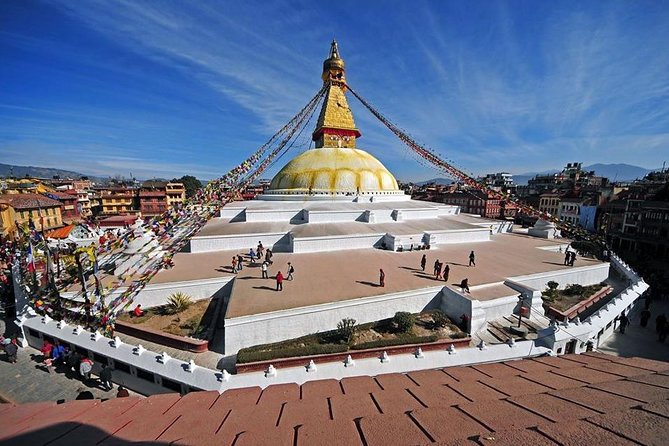
The final named stop is Boudhanath Stupa, one of Kathmandu’s most recognizable Buddhist monuments. Its large white dome and watchful eyes make it an easy symbol of the valley, but the visit is more worthwhile when you have time to walk around and observe the religious activity around it.
Boudhanath gives the day a strong finish because it returns you to Buddhist traditions after the Hindu focus at Pashupatinath. The contrast helps you understand that Kathmandu’s cultural identity is built from overlapping faiths and customs, not from a single story.
The route allows time for questions and photographs between the different stops. That is useful at Boudhanath, where your guide can explain what the stupa represents and point out details you might otherwise pass without noticing. The available information does not promise a specific amount of time here, so the actual visit may depend on traffic and how the group is moving.
If you want a peaceful, unhurried circuit around the stupa, ask your guide how much time is planned. The full itinerary covers four major sites, so the final stop may not be as long as you would choose on an independent visit.
What the guide and group size add
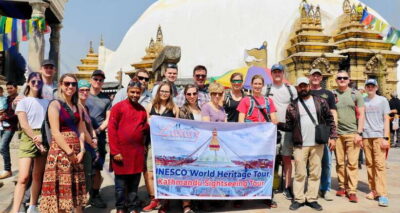
A group capped at 15 is a meaningful feature, not just a line in the booking details. You can usually hear the guide more easily than you would in a large coach group, and questions are less likely to disappear into the crowd. It also gives you a chance to meet other people while keeping the day organized.
Guide quality is central to this experience. Rabina has led tours praised for warmth and clear explanations. Keshar has guided the route with attention to Kathmandu’s past and present culture. Ranjit Godar has also led visitors through the city’s varied sites, and Rabee has been named as a careful organizer on a related day tour.
Those names do not guarantee who will lead your departure. Still, they show the kind of service the operator has provided on this route: friendly guidance, cultural explanation, and help keeping the schedule on track. A good guide is especially useful at religious sites, where the important details are not always visible from the outside.
The vehicle is air-conditioned, with pickup and drop-off in Kathmandu Valley. That matters in a city where road conditions and traffic can make independent sightseeing tiring. You still spend plenty of time getting in and out of the vehicle, so this is not a walking tour.
The real price, including what is not covered
The listed price is $50 per person. For that amount, you receive hotel transport, a professional guide, and the convenience of seeing four major sites in one day. For a solo visitor or a short-stay visitor, that can be fair value because you are paying for coordination as much as for transportation.
The price does not include food or drinks. Plan for lunch as an extra cost, and carry enough for water and any small purchases. The schedule is long enough that skipping lunch would make the afternoon less comfortable.
There is a contradiction in the supplied cost details. The overview and highlights say entrance fees are extra, while the included section appears to say that UNESCO site tickets are included. Treat entrance fees as extra until the operator confirms otherwise. This is the safest way to budget and avoids an awkward surprise at the first site.
The tour’s value is strongest if you want convenience and explanation. It is less attractive if you already know Kathmandu well, prefer public transport, or want to set your own pace at every monument. The day is designed for coverage, not a private, slow study of one neighborhood.
Timing, pickup, and practical preparation
The stated duration is about seven hours, but the fuller guidance says to plan on around eight hours. Use the longer estimate when arranging flights, business meetings, or evening plans. Kathmandu traffic can affect the day, and the route includes several separate stops.
Pickup is offered from your hotel in Kathmandu Valley, and the guide comes to the hotel. The published start times differ, with 8:00 and 8:45 both appearing in the details. Confirm the actual pickup time after booking rather than relying on the earlier or later listing.
Most people can participate, and the tour is near public transportation, though transport to and from your hotel is included. The activity is not suitable for pets. Wear shoes that can handle temple grounds and steps, carry water, and leave room in your schedule for lunch and entrance fees.
A mobile ticket is available, and confirmation is provided at booking. Free cancellation is allowed up to 24 hours before the start time for a full refund. Changes or cancellations made within 24 hours are not accepted for a refund, and the cut-off uses local time.
Who should book this day tour
I would choose this tour if you have one or two free days in Kathmandu and want a clear first introduction to the valley. It is also useful for solo visitors who would rather not arrange several taxi rides alone, and for families or small groups that value a vehicle and a fixed plan.
It suits you particularly well if you enjoy learning the meaning behind temples, religious symbols, and historic buildings. The strongest part of the experience is not just seeing four famous places. It is having someone connect Buddhist and Hindu traditions, explain the architecture, and answer questions as the day unfolds.
I would hesitate if your main goal is a slow photographic day. Four major stops, lunch, and city traffic leave less spare time than an independent visit to one or two sites. I would also confirm the start time and entrance fee policy before paying, since both points need clarification in the published details.
Should you book the Kathmandu UNESCO sites tour?
Book it if you want efficient coverage, hotel transport, and a guide-led introduction to Swayambhunath, Patan, Pashupatinath, and Boudhanath. The $50 price is reasonable for the transport and organization, especially when you have limited time.
Before you go, confirm the pickup time and ask whether entrance tickets are included. Bring money for lunch and admission fees, allow eight hours rather than seven, and expect a full but rewarding day. For a first look at Kathmandu’s major cultural sites, this is a practical choice.
FAQ
How long does the Kathmandu sightseeing tour take?
The advertised duration is about seven hours, but the tour information advises planning for around eight hours. Use the longer estimate when arranging your day.
What sites are included?
The route visits Swayambhunath Temple, Patan, Pashupatinath Temple, and Boudhanath Stupa. These represent major Buddhist, Hindu, artistic, and historic sites in Kathmandu Valley.
Is hotel pickup included?
Yes. Hotel pickup and drop-off are included for hotels in Kathmandu Valley, with the guide coming to your hotel.
Is lunch included?
No. Food and drinks are not included, and lunch is planned as an extra expense during the day.
Are entrance fees included?
The published details conflict. Some information says entrance fees are extra, while another section appears to include site tickets. Confirm this point with the provider and budget for admission fees to be safe.
How many people can join the tour?
The maximum group size is 15 people. The tour is described as a small group experience.
More full-day trips in Kathmandu
- Kathmandu: Full Day 7 UNESCO Tour with Lunch – Private/Group
★ 5.0 · 101 reviews - Kathmandu: Full Day Private Top 4 UNESCO Heritage Tour W/Lunch.
★ 5.0 · 86 reviews - Kathmandu: Full Day Top 4 UNESCO Tour with Lunch – Private/Group
★ 5.0 · 67 reviews - Kathmandu Heritage Tour (Full Day)
★ 5.0 · 63 reviews
Just added around Kathmandu
- Traditional Momo Making Class★ 5.0 · 10 reviews
- Wildlife Adventure in Chitwan Nepal★ 4.0 · 4 reviews
- Walking tour of real Kathmandu through back streets.★ 5.0 · 3 reviews
- Kathmandu 2 Nights 3 Days Chitwan Jungle Safari Tour★ 5.0 · 9 reviews
- Kathmandu Street Food Walking Tour – Eat Like a Local★ 5.0 · 3 reviews
- Private Manaslu Circuit Trek at Himalayas★ 5.0 · 3 reviews
- Walking tour of Kathmandu with awesome local guides★ 5.0 · 4 reviews
- Visit Swayambhunath and Bauddhanath Stupa with Guide★ 5.0 · 5 reviews
Kathmandu UNESCO World Heritage Tours, compared.
Private Kathmandu Sightseeing Tour | UNESCO World Heritage sites
Read our review →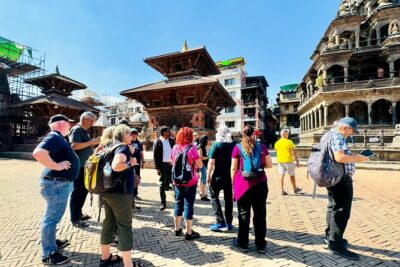
Full Day 7 UNESCO Tour with Lunch – Private/Group
Read our review →
Full Day Top 4 UNESCO Tour with Lunch – Private/Group
Read our review →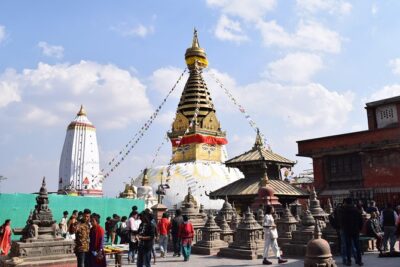
Browse the lists this tour appears in