
Reviewed · PATAN TOURS FROM KATHMANDU
Folklore and Everyday Life in Ancient Patan
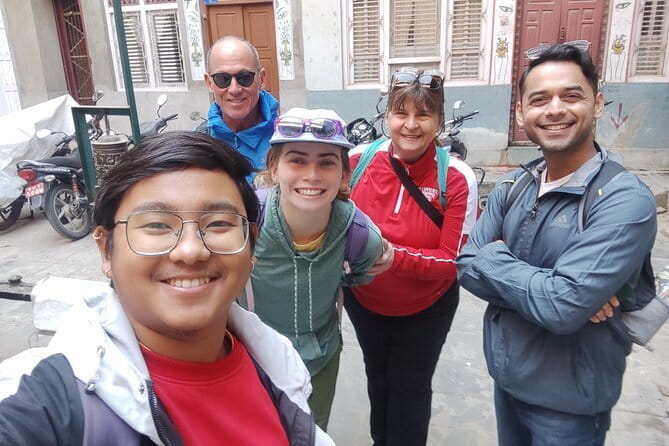
Patan’s best stories often sit just beyond the grand palace square. This two-hour walk through old Patan leads you into courtyards, monastery spaces, shrines, resting platforms, and ordinary residential lanes where Newar customs still shape daily life. Guide Sandip is praised for his humor, clear explanations, and eye for places you would likely pass without noticing.
I especially like two things here: the focus on living culture rather than only monuments, and the small group size of no more than 10 people. You’ll also hear about Newar Buddhism, Tantric Hinduism, folklore, old trade links, and the way young Nepalis balance tradition with modern life. The main drawback is clear: Patan Durbar Square is not part of the tour, and the walk includes narrow streets and courtyards rather than a long list of major sights.
Key points to know before booking
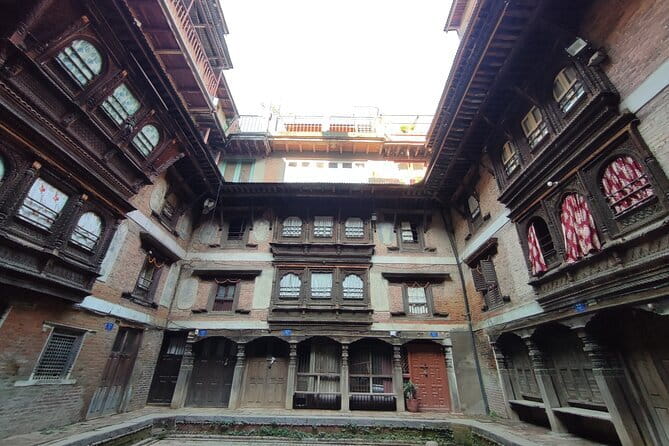
- Patan beyond the palace square: Explore the old town around Patan Durbar Square, not the ticketed palace complex itself.
- A courtyard-by-courtyard walk: Pimbahal, Nyakhachowk, Nag Bahal, and Swotha Square each show a different part of Patan’s social and religious life.
- Newar faith in daily practice: Learn how Newar Buddhism and Tantric Hinduism affect shrines, monasteries, festivals, homes, and neighborhood spaces.
- Local guides with personality: Sandip is known for an easygoing style, strong local knowledge, and a good sense of humor. Pinhua is also named in connection with the experience.
- Small and manageable: The group limit is 10, and the route lasts about two to two and a half hours.
- Easy add-on afterward: The walk ends at Swotha Square, only a few minutes from Patan Durbar Square and its museum.
Why this Patan walk takes a different route
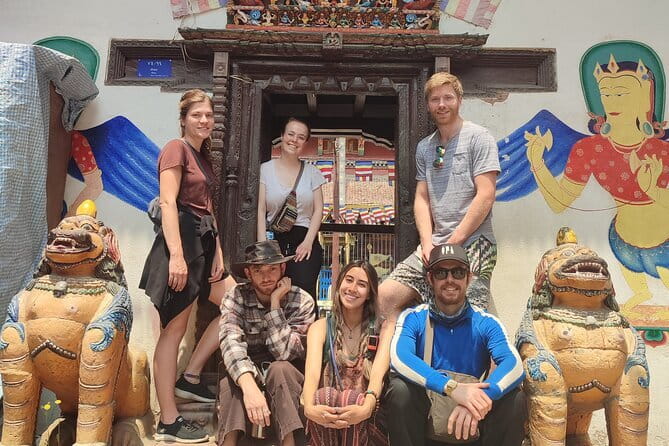
Many first visits to Patan center on Patan Durbar Square. That is sensible: the palace complex has temples, courtyards, woodcarving, and a museum worth your time. But the square can also become a quick checklist of famous buildings.
This experience takes a different approach. You begin at Patan Dhoka and move through the old town around the main square. The route uses smaller lanes and open courtyards to explain how people lived, worshiped, rested, traded, and maintained community ties.
That choice gives the walk a useful social angle. You are not only looking at a shrine and hearing its date. You are considering why a courtyard was built, who used it, how a monastery fits into neighborhood life, and how old beliefs remain part of present-day Patan.
The tour also connects local traditions to wider Asian history. At Nag Bahal, for example, the guide discusses Greek influence and Hellenistic features in Buddhist and Hindu art. That is an unusual subject for a short city walk, and it helps you see Patan’s art as part of a wider network of ideas rather than as an isolated local style.
More Patan day tours:
- Bhaktapur & Patan Durbar Square Day Tours
★ 5.0 · 122 reviews - Kathmandu: Private Patan and Bhaktapur Sightseeing Tour
★ 4.7 · 64 reviews - Patan and Bhaktapur City Full Day Tour
★ 5.0 · 24 reviews
Starting at Patan Dhoka and entering the old town
The meeting point is the entrance gate at Patan Dhoka, on Patandhoka Road in Lalitpur. The tour begins at 10:00 in the morning and finishes at Swotha Square.
Starting at the edge of the old town works well. You move quickly from a recognizable road into narrower lanes, then into the courtyards that give this part of Patan its character. The route is not built around grand views. Its rewards are smaller: a carved detail, an ancestral shrine, a monastery doorway, or a traditional resting place that makes more sense after the guide explains it.
Because the walk takes place in an active neighborhood, you should expect a lived-in setting rather than a museum atmosphere. Daily life continues around the religious sites. That is part of the point, but it also means you should listen closely and follow local etiquette around shrines and monastery spaces.
The tour is offered as a mobile-ticket experience, with confirmation at booking. Pickup and drop-off are not included, so you make your own way to Patan Dhoka. Public transportation is nearby.
Pimbahal: courtyards shaped by belief and practical knowledge
The first main stop is Pimbahal, reached through traditional courtyards. This section explains how Newar urban planning joined spiritual practice with practical local knowledge.
Courtyards in old Patan were not simply decorative spaces. They could connect homes, monasteries, shrines, water sources, and neighborhood activity. The walk uses Pimbahal to show how settlement design can reflect community life and religious beliefs at the same time.
Pimbahal is also home to a Newar Buddhist monastery dating back many centuries. The exact age is not given, but the site is presented as an important place for understanding the Buddhist traditions of the valley.
Plan on roughly 30 minutes here. That is enough time for context without turning the tour into a long lecture. Sandip’s role matters at a stop like this because the buildings alone cannot explain how Newar Buddhism operates within the town.
This is one of the strongest parts of the walk for visitors who want more than a photograph. You can begin to understand why a courtyard matters to its surrounding community, and why religious buildings in Patan are woven into ordinary streets instead of set apart from them.
Nyakhachowk: architecture at walking speed
From Pimbahal, the route follows a quieter path toward Nyakhachowk. Along the way, you see traditional architecture, falchaa, ancestral shrines, and vernacular houses.
A falchaa is a traditional resting area. It may seem like a modest feature, but it offers a useful clue about how older neighborhoods supported public life. These were spaces for pausing, meeting, and watching the street. On a walking tour, such features are easy to miss unless someone points them out.
Nyakhachowk contains one of the area’s important monasteries, and the stop lasts about 30 minutes. The emphasis is on how architecture, family memory, and religious practice overlap. Ancestral shrines help connect households and community identity to the physical streets around them.
I like this section because it slows your attention down. Instead of racing between major monuments, you look at the parts of Patan that make the old town function as a neighborhood. The guide may also explain details you would not know how to interpret on your own, from a house front to a small religious object.
The tradeoff is that this part requires patience. If you want only famous temples and large courtyards, some of the residential architecture may feel subtle. If you enjoy local detail, it is exactly the kind of stop that makes the route worthwhile.
Same city, a completely different sort of day:
- Everest Base Camp Trek – 14 Days
★ 5.0 · 1,499 reviews - Private Kathmandu Sightseeing Tour | UNESCO World Heritage sites
★ 5.0 · 756 reviews - Everest Base Camp Helicopter Tour landing at Everest View Hotel
★ 5.0 · 668 reviews - Half day cooking class in Thamel kathmandu
★ 5.0 · 607 reviews
Nag Bahal and the art links reaching beyond Nepal
Nag Bahal, also written Nagbahaa, is one of the largest courtyards in old Patan. The scheduled stop is about 15 minutes, but the subject matter gives it more weight than the short timing suggests.
Here the guide discusses how ancient globalization shaped local art. Greek influence and Hellenistic impressions can be seen in parts of Buddhist and Hindu iconography. That connection is a reminder that Patan’s artistic traditions developed through contact, exchange, and movement across regions.
You do not need an art-history background to benefit from this section. The value comes from learning what to look for in the figures, poses, and decorative forms around you. A detail that might otherwise seem purely local can point to a much wider history of artistic exchange.
Nag Bahal also reinforces the tour’s larger theme: Patan is not frozen in the past. Its traditions have changed through outside contact, internal adaptation, and modern life. The guide places old art beside current social questions, including how younger Nepalis relate to cultural expectations while taking on modern values.
Swotha Square: a useful finish near the main sights
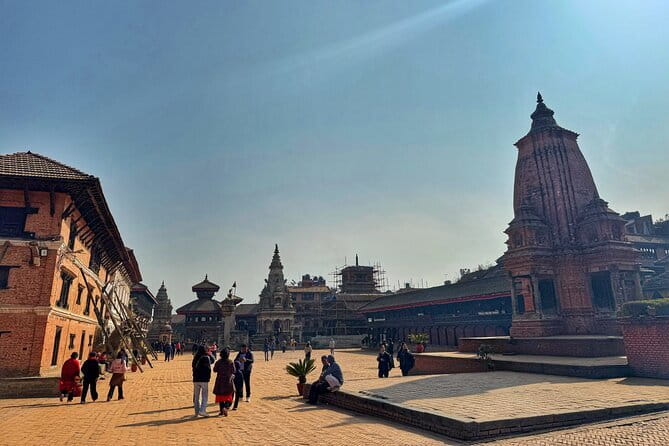
The walk ends at Swotha Square, another attractive area with temples, shrines, and tea shops. The scheduled visit lasts about 15 minutes.
Swotha is a practical ending point. You can stop for tea, continue looking around the old town, or walk a few minutes to Patan Durbar Square. That makes it easy to pair this tour with an independent visit to the palace complex on the same day.
The important planning detail is that the main square is not included. You will need to pay its separate admission fee if you choose to enter. The museum inside the old palace is specifically recommended, so allow extra time if you want to see it properly.
I see the omission as both a limitation and a benefit. It keeps the walking tour focused on local streets and courtyards rather than repeating the standard palace visit. But if this is your only time in Patan, you need to budget additional time and money for the square afterward.
A monastery visit with a very large religious community

Another point in the route describes one of Patan’s most respected and ornamented Buddhist monasteries. It is associated with more than 4,000 ordained monks in the monastic order.
That figure gives you a sense of the scale and importance of the institution, even if the walk itself remains focused on visual details and cultural explanation. The woodwork and metalwork are key reasons to pause. Patan is known for skilled craft traditions, and a monastery is a strong place to see how religious devotion and detailed workmanship meet.
Because the provided route information does not assign a separate time or fully identify the monastery by name, you should treat this as part of the wider walk rather than a guaranteed extended visit. The experience is designed as a connected old-town route, not as a single-monastery tour.
Still, this stop adds weight to the Buddhist side of the experience. Along with the Hindu traditions discussed elsewhere, it helps explain why Patan’s religious life cannot be reduced to one faith or one style of worship.
What Sandip adds to the walk
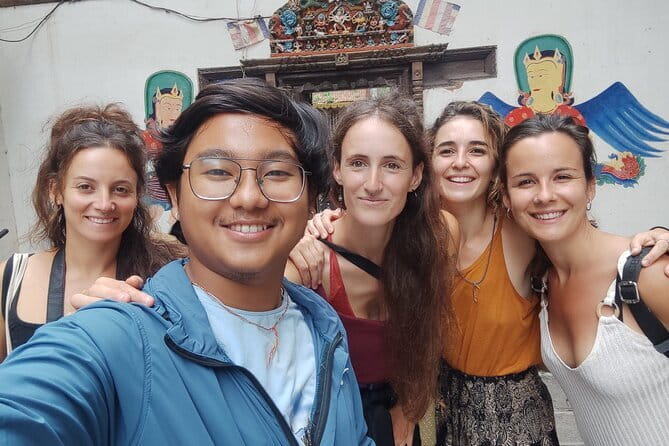
Sandip is the guide most directly associated with this experience. His approach is described as easygoing, attentive, humorous, and full of useful detail about local traditions and folklore.
That combination is important. Patan’s religious sites can raise sensitive or complicated questions, especially around Tantric Hinduism, Newar Buddhism, ritual objects, and local myths. You want a guide who can explain without making every stop sound like a formal classroom.
Sandip’s humor also helps during a route filled with architecture and belief systems. A two-hour walk can become tiring if every explanation is solemn. An approachable guide makes it easier to ask questions and stay engaged.
Pinhua is also named in connection with the experience. If both guides are present on your departure, the tone may feel more personal and conversational, but the available information does not specify when Pinhua leads or how guide assignments are made.
Price, timing, and practical value
At $65, this is not the cheapest way to spend two hours in Patan. You are paying for a local guide, a small group capped at 10 people, and interpretation that helps connect scattered courtyards and shrines into a clear story.
The value is strongest if you are curious about society, religion, folklore, and urban life. A self-guided walk can show you the same streets, but it may not explain why a falchaa matters, how Newar monastery culture works, or where Hellenistic influence appears in local art.
The price is less compelling if you mainly want entrance to Patan Durbar Square. That admission is not included, and the tour does not replace a visit to the palace museum. Think of the experience as a guided companion to the main square, not as an all-in-one Patan ticket.
The walk lasts approximately two to two and a half hours. The listed stops total about 90 minutes, with the remaining time used for moving through lanes, entering courtyards, and hearing explanations along the route. The 10:00 start gives you a useful morning activity, though you should plan your own food and transportation before or after the tour.
Good weather is required. If poor weather cancels the walk, you are offered another date or a full refund. You can also cancel for a full refund up to 24 hours before the start time. Service animals are allowed, and most people can participate, but the route’s narrow streets and courtyards may be worth considering if you have mobility concerns.
Who will enjoy this most
I would choose this walk if you want to understand Patan as a community rather than simply photograph its largest temples. It suits first-time visitors who want context and repeat visitors looking for a less familiar side of the city.
It is also a good match for anyone interested in:
- Newar Buddhist and Hindu traditions
- Folklore, myths, and local customs
- Courtyard-based urban design
- Religious art and architecture
- The connection between old practices and modern Nepali life
- Small-group walking tours with time for questions
Families and general sightseers can enjoy it too, especially if the guide’s humor keeps younger participants interested. Still, the tour’s main appeal is cultural explanation, not entertainment or a rapid list of attractions.
You should skip it if your priority is only Patan Durbar Square, since you will need to arrange that separately. You may also prefer a shorter sightseeing route if you do not enjoy residential lanes, religious discussion, or stops where the main feature is a small architectural detail.
Should you book Folklore and Everyday Life in Ancient Patan?
Book it if you want the context that a palace square cannot provide. The strongest reasons are the small group, the focus on local courtyards, and Sandip’s clear, good-humored guiding style. Pimbahal, Nyakhachowk, Nag Bahal, and Swotha Square create a useful sequence, moving from neighborhood design to faith, art, and present-day life.
The best plan is to take this tour in the morning, then continue to Patan Durbar Square and its museum afterward. That pairing gives you both sides of Patan: the grand royal and temple center, plus the quieter old town where traditions still fit into everyday streets.
At $65, it is a specialized purchase rather than a bargain sightseeing ticket. For a visitor who wants to understand why Patan feels the way it does, the added explanation can make the cost worthwhile.
FAQ
Where does the tour start?
The tour starts at Patan Dhoka on Patandhoka Road in Lalitpur, Nepal.
Where does the tour end?
The walk ends at Swotha Square, a few minutes from Patan Durbar Square.
What time does the tour begin?
The scheduled start time is 10:00 am.
Is Patan Durbar Square included?
No. Patan Durbar Square is not included, and its admission fee is separate. You can visit it independently after the walk.
How long does the experience last?
The tour takes approximately two hours to two hours and 30 minutes.
How large is the group?
The experience has a maximum of 10 travelers.
What happens if the weather is poor?
The experience requires good weather. If it is canceled because of poor weather, you can choose another date or receive a full refund.
Just added around Kathmandu
- Traditional Momo Making Class★ 5.0 · 10 reviews
- Wildlife Adventure in Chitwan Nepal★ 4.0 · 4 reviews
- Walking tour of real Kathmandu through back streets.★ 5.0 · 3 reviews
- Kathmandu 2 Nights 3 Days Chitwan Jungle Safari Tour★ 5.0 · 9 reviews
- Kathmandu Street Food Walking Tour – Eat Like a Local★ 5.0 · 3 reviews
- Private Manaslu Circuit Trek at Himalayas★ 5.0 · 3 reviews
- Walking tour of Kathmandu with awesome local guides★ 5.0 · 4 reviews
- Visit Swayambhunath and Bauddhanath Stupa with Guide★ 5.0 · 5 reviews
Patan Tours from Kathmandu, compared.
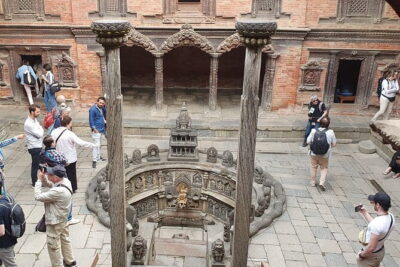
Kathmandu and Patan Heritage and Living Goddess Experience Tour
Read our review →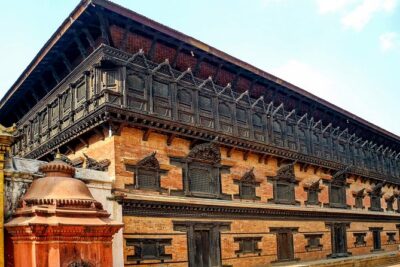
Patan & Bhaktapur Durbar Square Tour with Lunch – Private/Group
Read our review →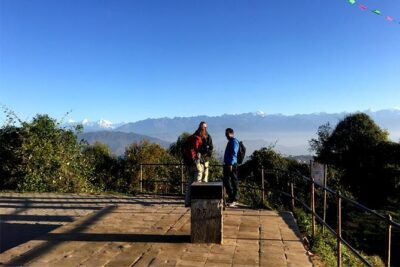
Nagarkot Sunrise, Bhaktapur and Patan Durbar Square Tour in Kathmandu
Read our review →Browse the lists this tour appears in