
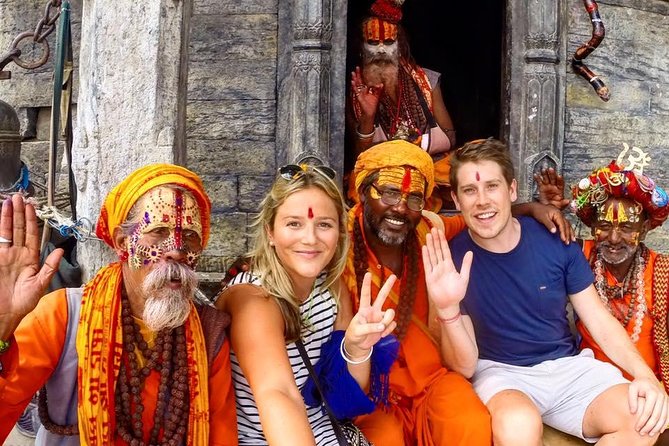
Reviewed · KATHMANDU CITY SIGHTSEEING TOURS
Full Day Private Kathmandu City Tour
Kathmandu’s most important sights are scattered across the valley, and this private tour brings them together in one long, purposeful day. You’ll see a Hindu temple complex with cremation ghats, two major Buddhist centers, and Patan’s superb old square without having to arrange separate taxis or guides.
I like the private format, which lets you ask questions and set the pace with your own guide. I also like the included hotel pickup, air-conditioned vehicle, and bottled water, practical comforts in a city where traffic can make simple journeys take time.
The main drawback is the schedule. Four major sights in 7 to 8 hours means a brisk day, and entry tickets, food, and drinks are not included. You’ll get a strong first look at Kathmandu, but not unlimited time at every temple.
Key Points to Know Before You Book
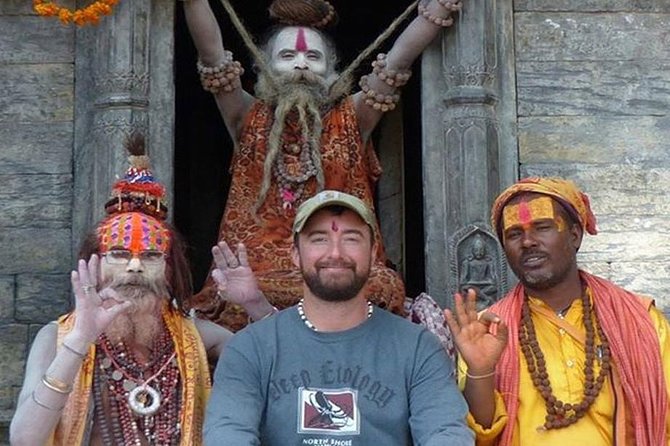
- Four major Kathmandu Valley sights in one day: Pashupatinath, Boudhanath, Swayambhunath, and Patan Durbar Square.
- Private door-to-door transport: Your group rides together in an air-conditioned vehicle, with hotel pickup and drop-off.
- A guide with an art and culture focus: Saraswati Ghimire is one named guide, praised for her friendliness, humor, and ability to explain the sites.
- A serious look at Hindu and Buddhist practice: Expect sacred spaces, pilgrimage activity, holy men, shrines, and cremation ghats.
- A 9:15 am start and 7 to 8 hour duration: The timing gives you a full city day, but the itinerary moves at a steady pace.
- Budget for admission fees and meals: The $95 per-person price covers the private tour services, but not entry permits or food and drinks.
Four Sacred and Historic Sights in One Kathmandu Day
This tour is built around Kathmandu’s four major attractions: Pashupatinath, Boudhanath, Swayambhunath, and Patan Durbar Square. Each place shows a different side of the valley.
Pashupatinath is Hindu Kathmandu at its most solemn. Boudhanath offers one of the valley’s great Buddhist gathering places. Swayambhunath combines pilgrimage, hilltop views, and legend. Patan adds royal architecture and traditional craftsmanship.
You begin at 9:15 am, with pickup in Kathmandu. Since the tour is private, you do not have to gather strangers from several hotels or wait for a large group to board. That matters here. Traffic can slow the day, and a private vehicle gives your guide more freedom to keep the route moving.
The day lasts approximately 7 to 8 hours. You should think of it as an introduction to Kathmandu rather than a slow study of each monument. Bring comfortable shoes, water-friendly patience, and enough attention for a lot of visual and cultural information.
More sightseeing tours in Kathmandu:
- Private Kathmandu Sightseeing Tour | UNESCO World Heritage sites
★ 5.0 · 756 reviews - Kathmandu Private Sightseeing Tour | UNESCO World Heritage Sites
★ 5.0 · 109 reviews - Kathmandu: Private Patan and Bhaktapur Sightseeing Tour
★ 4.7 · 64 reviews
Pashupatinath and the Bagmati River Ghats
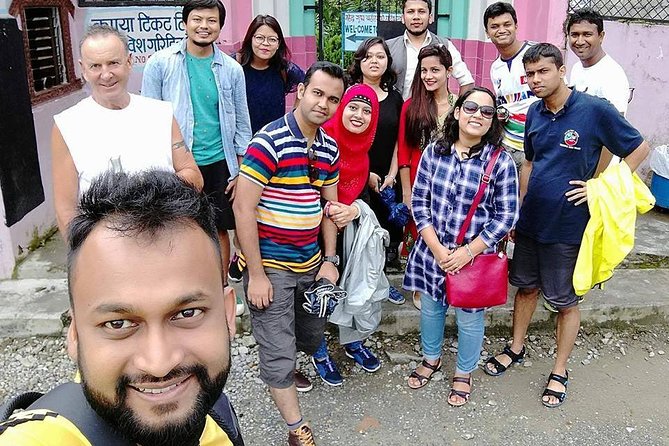
Pashupatinath Temple sits beside the Bagmati River, one of the most sacred Hindu sites in Nepal. The temple area is closely connected with death, cremation, prayer, and the Hindu idea of impermanence.
The burning ghats are an important part of the visit. You might see cremation activity, though the timing and view will depend on what is taking place that day. This is not a staged cultural show. It is a working religious site, so your guide’s explanation can help you understand what you are seeing while reminding you to behave with care.
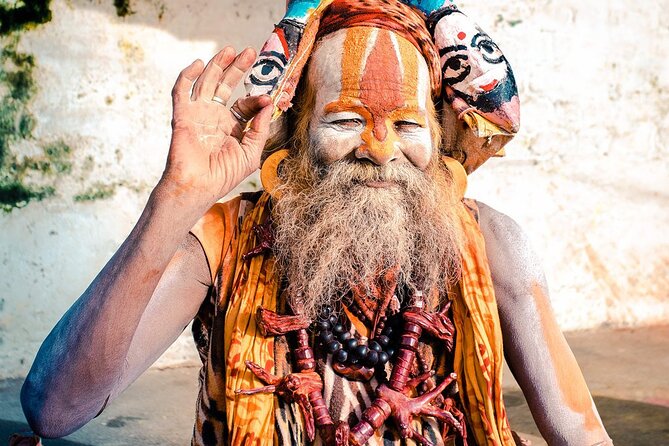
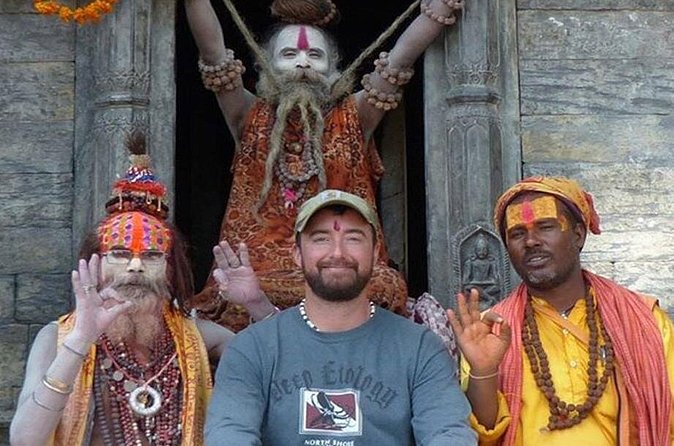
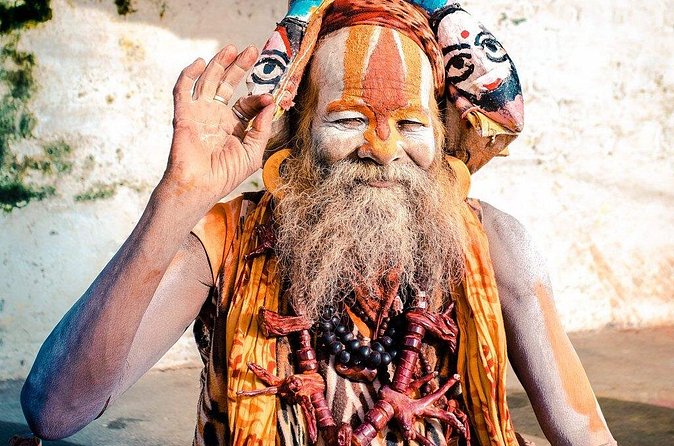
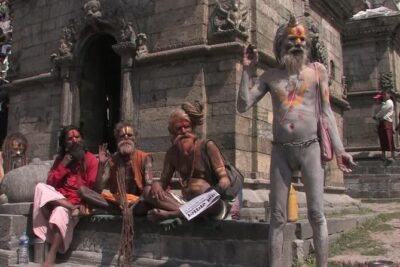
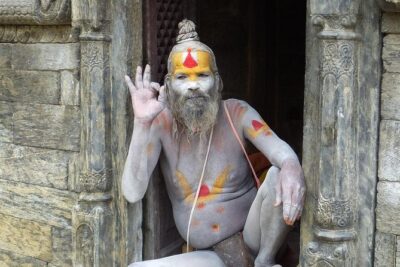
You may also encounter Hindu holy men around the temple complex. Their presence gives the visit a human dimension that a quick photo stop cannot provide. Still, Pashupatinath is a place for respect, not spectacle. Follow your guide’s advice about where to stand, what to photograph, and how close to approach religious activity.
The temple is especially valuable for showing that religion in Kathmandu is not confined to a museum or a monument. It remains part of daily life. You will see a sacred center shaped by prayer, ritual, family customs, and death.
The drawback is that the experience can feel intense. If you prefer only cheerful sightseeing, the cremation ghats may be difficult. If you want to understand Kathmandu beyond its architecture, this is one of the day’s most meaningful stops.
Boudhanath, the Great Buddhist Stupa
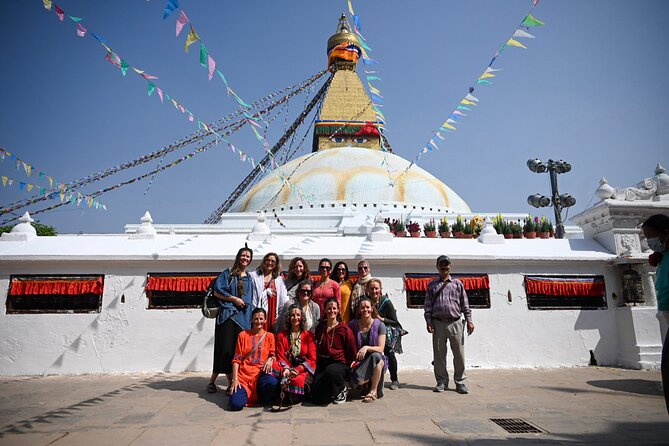
Boudhanath, also called Bouddhanath, is one of Nepal’s best-known Buddhist sites. The huge stupa rises east of central Kathmandu and is listed as a UNESCO World Heritage cultural site.
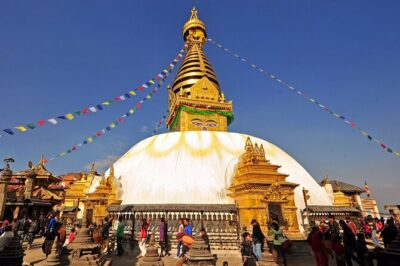
The stupa’s great white dome and watchful painted eyes make it instantly recognizable. The surrounding area is a major Buddhist pilgrimage center, and the shape of the place is designed for movement. You walk around the stupa, observe prayer practices, and take in the activity around the central monument.
Your private guide can explain the religious symbols and the role of the stupa in Buddhist practice. That context is useful because the structure is more than an impressive photo subject. Its form, decoration, and position all carry meaning.
I like Boudhanath as a counterpoint to Pashupatinath. The first stop centers on Hindu rites and the Bagmati River. Boudhanath gives you a Buddhist setting with a large communal focus. Seeing both in one day helps you understand that Kathmandu is shaped by several religious traditions living close together.
Allow yourself time to look upward and around, not only at the main dome. The surrounding buildings and religious activity are part of the place. Since the day includes three more major stops, your guide may keep you moving, so ask for a few minutes if you want to pause for photographs or observe the ritual circuit.
Entry fees are not included in the tour price. Keep that in mind when comparing the total cost of the day.
Swayambhunath on the Kathmandu Hilltop
Swayambhunath is one of the valley’s oldest and most sacred religious sites. It sits on a hilltop and is important to Buddhist pilgrims from Nepal and beyond.
The hilltop setting gives this stop a different mood from Boudhanath. At Boudhanath, the stupa sits within a major urban religious center. At Swayambhunath, the climb and elevated position add a sense of separation from the city below.
The site is often known as the Monkey Temple, but the religious importance comes first. The hill, shrines, and Buddhist traditions are the reason to visit. Your guide can connect the visible details with Nepalese religious practice and explain why the site matters to Buddhist pilgrims.
You’ll want to move carefully and give yourself time to take in the setting. The tour information does not specify the number of steps or the exact walking route, so anyone concerned about hills or stairs should ask the provider in advance. Most travelers can participate, but the day does involve moving through large religious complexes.
Swayambhunath is also one of the places where a private guide earns his or her keep. Without context, you might see a hilltop stupa, shrines, and religious figures. With an art historian guide, those details can become part of a larger story about Kathmandu’s faith, art, and architecture.
More full-day trips in Kathmandu:
- Kathmandu: Full Day 7 UNESCO Tour with Lunch – Private/Group
★ 5.0 · 415 reviews - Kathmandu: Full Day Top 4 UNESCO Tour with Lunch – Private/Group
★ 5.0 · 269 reviews - Kathmandu: Full-Day 7 UNESCO Tour with Lunch – Private/Group
★ 4.9 · 247 reviews - Kathmandu: Full Day 7 UNESCO Tour with Lunch – Private/Group
★ 5.0 · 101 reviews
Patan Durbar Square and Kathmandu Valley Craft
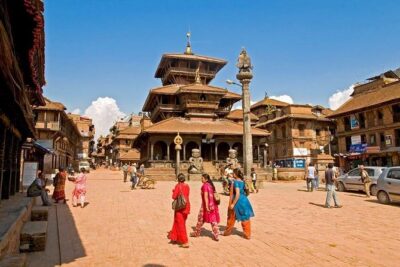
The final major stop is Patan Durbar Square, in the historic city of Patan. Patan is known for traditional crafts, fine architecture, and a strong artistic heritage.
This is where the tour shifts from sacred sites to royal urban design and historic craftsmanship. The square brings together temples, courtyards, carved details, and old city architecture. It is a useful place to see how art and religion overlap in Nepal, since many of the valley’s finest buildings serve both spiritual and civic purposes.
Patan is described as one of the oldest cities among the three cities in the Kathmandu Valley. That gives the stop a different character from the hilltop and stupa visits. You are not simply visiting another temple. You are looking at a historic city center shaped by artisans, rulers, religious traditions, and long-established local skills.
The square deserves close attention to its details. Look at wood carving, stone work, metal ornament, and the way buildings frame open courtyards. Your guide’s art background should be particularly helpful here. This is the stop where you may appreciate having someone point out details that are easy to walk past.
One practical concern is time. After Pashupatinath, Boudhanath, and Swayambhunath, you may be ready for a break. The tour does not include food or drinks, and the schedule does not promise a dedicated meal stop. Plan to eat before the tour or confirm with the provider how a lunch break will fit into your day.
What the Private Guide Adds
The strongest reason to choose this tour instead of arranging taxis between monuments is the guide. The experience includes a professional art historian guide, and the focus is not just transportation. You are meant to learn about Nepalese religion, history, and culture as you move through the sites.
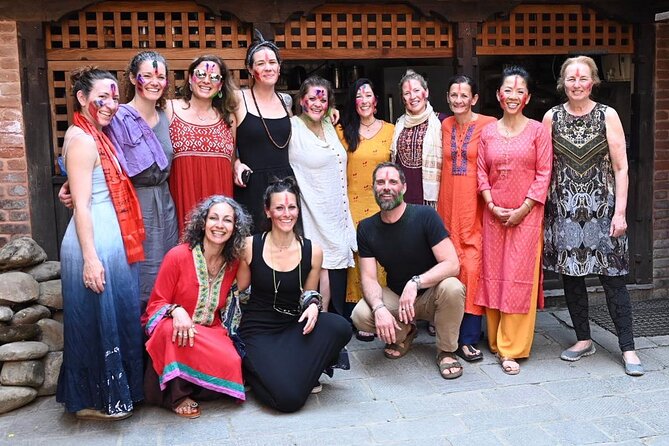
Saraswati Ghimire is one named guide associated with the experience. She is described as friendly, humorous, and especially good with a solo woman traveling alone. That matters if you are booking by yourself or prefer a guide who can make a long sightseeing day feel relaxed rather than formal.
Because the tour is private, you can ask direct questions. You can also tell the guide when you need a slower explanation, a photo pause, or a little less time at one location. The exact amount of flexibility will depend on traffic and the day’s conditions, but a private group has more room to communicate than a large shared tour.
The guide also helps with cultural judgment. Pashupatinath, in particular, calls for discretion. At Buddhist sites, a guide can help you understand the proper tone and meaning of what you see. That kind of help is more valuable than a list of dates.
Transport, Timing, and the $95 Price
The price is $95 per person. For a private 7 to 8 hour day, the value depends on how many people are in your group.
For one person, the cost is higher than joining a shared sightseeing bus, but you receive private transport, a dedicated guide, hotel pickup and drop-off, an air-conditioned vehicle, bottled water, and the convenience of visiting four major sites in one organized route. For two or more people, the price becomes easier to justify because the private service cost is spread across the group.
Door-to-door transport is especially useful in Kathmandu. You do not need to negotiate separate rides between Pashupatinath, Boudhanath, Swayambhunath, and Patan. You also avoid the mental work of navigating the city while trying to arrive at four important sights in one day.
The tour starts at 9:15 am and usually runs for 7 to 8 hours. That is a full sightseeing day, not a quick orientation. Traffic can affect the order and length of stops, so keep your evening plans flexible.
The price does not include entry permits or tickets. It also excludes food and drinks, apart from the bottled water provided. Ask about current admission costs before booking so the final budget does not surprise you.
Who Will Get the Most From This Tour
I would choose this tour if I had limited time in Kathmandu and wanted a clear introduction to the valley’s major religious and artistic sites. It is also a good fit if you prefer a private guide to a fixed group schedule.
The tour suits:
- First-time visitors who want the major sights covered in one day
- Solo travelers who want private transport and a personal guide
- Couples or families who prefer to move at their own pace
- Visitors interested in Hindu and Buddhist traditions
- People who care about architecture, art, and cultural explanation
- Anyone who would rather not arrange multiple taxis across Kathmandu
It may be less suitable if you want long, unhurried visits at only one or two sites. It is also not the best match for someone who wants a food-focused day or a strictly relaxed schedule.
Most travelers can participate, according to the provided tour information, but no detailed mobility information is given. If hills, stairs, or extended walking are concerns, ask the operator about the route before booking.
A Few Practical Ways to Prepare
Wear shoes that are comfortable for walking through temple and old-city areas. The day covers several large sites, and the pace is likely to feel active even when you are riding between stops.
Dress and behave respectfully at religious places. Your guide can give you site-specific advice, especially at Pashupatinath, where cremation activity may be visible.
Carry some extra money for admission fees and food. Tickets are not included, and meals and drinks are also separate from the tour price.
Keep your morning free before pickup and your evening flexible after drop-off. The stated duration is approximately 7 to 8 hours, and Kathmandu traffic can affect the timing.
Free cancellation is available if you cancel at least 24 hours before the 9:15 am start time. Changes or cancellations made within 24 hours are not accepted for a refund.
Should You Book the Full Day Kathmandu City Tour?
Book it if you want the four major Kathmandu Valley sights in one private day and value a guide who can explain religious meaning and artistic details. The combination of Pashupatinath, Boudhanath, Swayambhunath, and Patan gives you a strong sense of the city’s spiritual and cultural character.
The $95 price is reasonable for a private 7 to 8 hour outing with transport, hotel pickup, bottled water, and a professional guide, especially for a small group. Just add admission fees and your own meals to the budget.
Skip it if you want a slow day at one monument, or if the thought of cremation ghats and a packed sightseeing schedule does not appeal to you. For a first visit with limited time, though, this is a practical way to see Kathmandu’s essential sights while keeping the day personal and well explained.
FAQ
How long does the Kathmandu city tour last?
The tour lasts approximately 7 to 8 hours.
What time does the tour start?
The stated start time is 9:15 am.
Does the tour include hotel pickup and drop-off?
Yes. Hotel pickup and drop-off are included, along with private transport in an air-conditioned vehicle.
Which sites are included?
The tour includes Pashupatinath Temple, Boudhanath Stupa, Swayambhunath, and Patan Durbar Square.
Are entry tickets and meals included?
No. Entry permits or tickets, food, and drinks are not included. Bottled water is provided.
Is this a private tour?
Yes. Only your group participates, and the tour includes a professional art historian guide.
Just added around Kathmandu
- Traditional Momo Making Class★ 5.0 · 10 reviews
- Wildlife Adventure in Chitwan Nepal★ 4.0 · 4 reviews
- Walking tour of real Kathmandu through back streets.★ 5.0 · 3 reviews
- Kathmandu 2 Nights 3 Days Chitwan Jungle Safari Tour★ 5.0 · 9 reviews
- Kathmandu Street Food Walking Tour – Eat Like a Local★ 5.0 · 3 reviews
- Private Manaslu Circuit Trek at Himalayas★ 5.0 · 3 reviews
- Walking tour of Kathmandu with awesome local guides★ 5.0 · 4 reviews
- Visit Swayambhunath and Bauddhanath Stupa with Guide★ 5.0 · 5 reviews
Kathmandu City Sightseeing Tours, compared.
Private Kathmandu Sightseeing Tour | UNESCO World Heritage sites
Read our review →
Full Day Kathmandu City Sightseeing Tour of UNESCO Heritage Sites
Read our review →
Browse the lists this tour appears in