
Reviewed · KATHMANDU CRAFT WORKSHOPS
Gurkha Knife Making
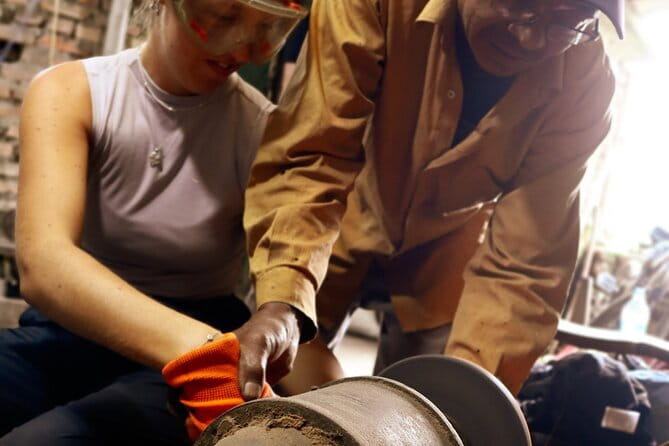
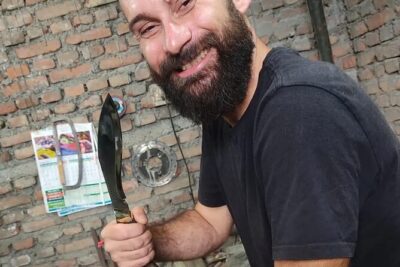
A hot forge, a skilled local smith, and your own Gurkha knife: this is a hands-on Kathmandu morning rather than a show-and-tell. You work alongside blacksmith Indra, with Aayam helping guide and translate, then stamp your initials on the finished blade. The small group limit of four keeps the session personal.
I like the mix of craft and cultural context. You learn about the Gurkha knife and the warriors linked to it while doing real work, and you leave with a useful souvenir instead of another mass-produced trinket. I also like the relaxed touches, including tea and cookies, plus the choice of Indian rosewood for the handle.
The main consideration is that this is a working forge, not a polished museum workshop. Expect heat, metalwork, and a small setting. The four-hour session may feel long if you want only a quick demonstration, and the advertised morning hours should be checked carefully when you book.
Key points before you book
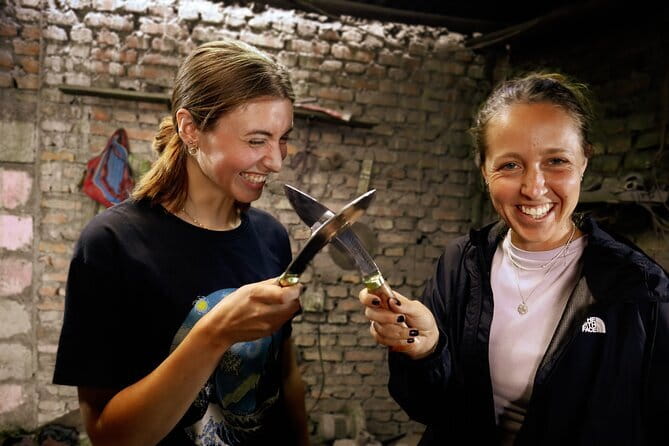
- Make your own kukri: You take part in shaping a Gurkha knife rather than simply watching a craftsman work.
- Work with blacksmith Indra: Aayam provides guidance and translation, while Indra and his apprentice handle the specialist teaching.
- Very small group: A maximum of four people makes it easier to ask questions and get direct help.
- Personalize the blade: You can stamp your initials onto the knife.
- A substantial souvenir: The finished knife uses an Indian rosewood handle and comes with a stated 100-year guarantee.
- Support a welcoming local business: The activity is offered by Queermandu, also known as Gay Tours Nepal.
A Kathmandu morning that begins with metal and fire
The meeting point is Garden of Dreams on Tridevi Sadak, a handy central location in Kathmandu. The published start window is 7:15 AM to 10:15 AM, Monday through Sunday, for dates listed from March 22, 2024, through December 15, 2026.
That time range deserves a quick check before you set your plans. The activity itself lasts about four hours, so the start time you receive at booking matters. Pickup is offered, but the stated meeting point is Garden of Dreams. Ask in advance if you want pickup rather than meeting there.
From the garden, you move into the practical side of the morning. The focus is the Gurkha knife, commonly known as a kukri, a curved blade associated with Gurkha warriors and Nepal. The session uses the knife as a starting point for stories about strength, resistance, and local craft.
I like this approach because the history is not separated from the object. You are not just hearing a short talk and then buying a souvenir. The blade in front of you gives the stories a physical connection, and the work helps you understand the skill involved.
More craft workshops in Kathmandu:
- Knife (Khukuri) Making Workshop- Forge of the Gurkhas
★ 5.0 · 143 reviews - Knife Khukuri Making Workshop
★ 4.9 · 38 reviews - Handmade Jewellery Workshop with Nepali Women
★ 5.0 · 6 reviews
Meeting Aayam and blacksmith Indra
Aayam acts as the host and guide, helping you follow the process and communicating with the blacksmith. The hands-on teaching comes from Indra, a long-time knife maker, along with his apprentice.
The division of roles matters. Metalwork can be hard to follow if instructions are rushed or language gets in the way. Aayam’s presence gives you someone to explain the steps, answer questions, and keep the session moving. Several details point to a friendly, informal atmosphere, with plenty of conversation and humor along the way.
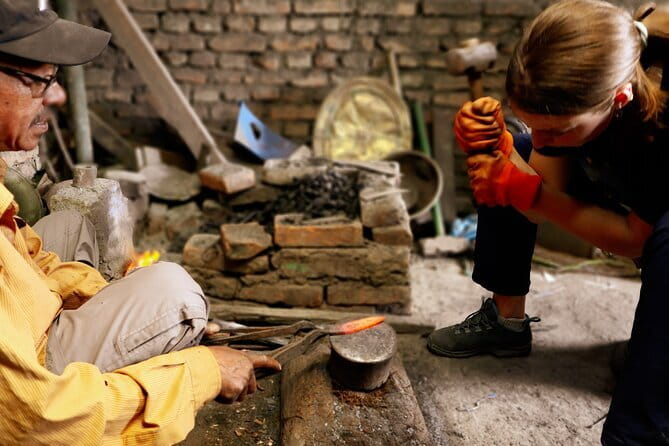
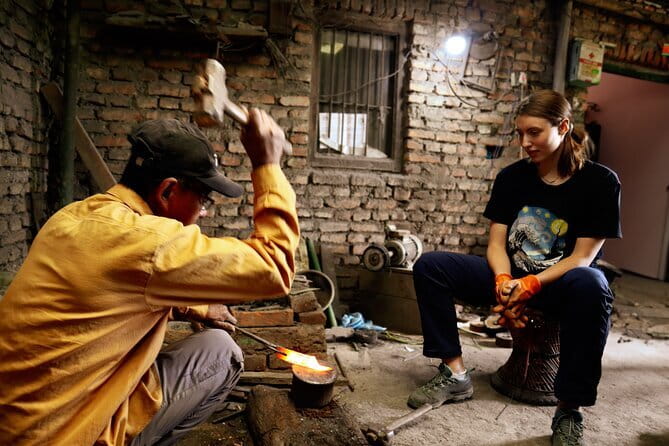
You should still expect a real craft lesson, not a scripted performance. The forge is described as small, and the setting is part of the appeal. You get close to the making process and see how a local smith works, rather than standing behind a barrier in a large workshop.
The small group size is another major advantage. With no more than four people, you should have room to ask for help and take your turn without waiting behind a crowd. If you are booking alone, the activity is also designed to work for an individual participant.
The knife-making process, from scrap metal to blade
The most unusual part is the chance to help create the knife from the beginning. The process has been described as using scrap metal, which gives the work a satisfying before-and-after quality. A piece of discarded material becomes a finished blade through heat, force, shaping, and careful attention.
The exact amount of work you do at each stage can vary, so keep your expectations sensible. Indra is the trained smith. He will guide the difficult parts, correct your technique, and take over when a task requires specialist control. Your role is active, but you are not expected to become a professional blacksmith in one morning.
That balance is important for safety and quality. A knife made entirely by an inexperienced visitor would not carry the same meaning or finish. Here, your participation adds a personal mark while the smith’s skill protects the final result.
You can expect the work to involve hot metal and physical activity. The listing does not give a detailed equipment list or clothing requirement, so ask what to wear before you go. Choose practical clothes and shoes rather than dressing for a formal sightseeing stop.
Choosing the rosewood handle and stamping your initials
The handle is made with Indian rosewood, adding a warm, natural finish to the dark metal blade. This is one of the details that makes the final object feel personal. You are not leaving with a generic knife pulled from a shelf. The materials and your involvement give it a clear connection to the morning.
A particularly nice touch comes near the end, when you stamp your initials onto the blade. It is a small detail, but it changes the knife from a purchased object into a record of your time in Kathmandu.
The initials also provide a simple way to identify your piece if several people are making knives together. If you are giving the knife as a gift, the mark can make it more meaningful, though the activity information does not specify gift packaging or shipping.
The finished knife is backed by a stated 100-year guarantee. That is a striking promise, but you should ask what the guarantee covers before booking if this matters to your purchase. The supplied information gives the length of the guarantee, but not its terms, repairs process, or international support.
Same city, a completely different sort of day:
- Everest Base Camp Trek – 14 Days
★ 5.0 · 1,499 reviews - Private Kathmandu Sightseeing Tour | UNESCO World Heritage sites
★ 5.0 · 756 reviews - Everest Base Camp Helicopter Tour landing at Everest View Hotel
★ 5.0 · 668 reviews - Half day cooking class in Thamel kathmandu
★ 5.0 · 607 reviews
Tea, cookies, and a relaxed pace
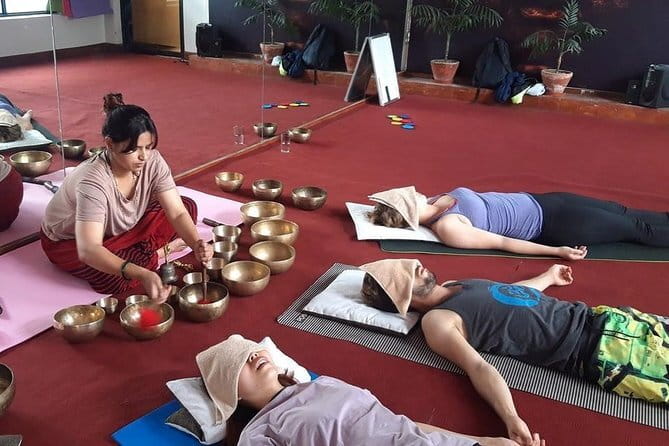
Tea and cookies are included while you work. This sounds minor, but it suits the pace of a four-hour forge session. You have time to pause, talk, and watch the smith handle the more technical stages.
The food is not the reason to book, of course. It simply helps keep the morning comfortable and social. The session seems designed to feel welcoming rather than stern or formal, which can make a big difference if you have never worked with metal before.
The atmosphere also helps explain why this suits a small group. You can ask questions without feeling that you are holding up a tour bus. You may find the pace more conversational than a standard sightseeing activity, with time for humor and personal interaction.
That relaxed style will appeal to you if you enjoy learning by doing. If you prefer a tightly timed itinerary with constant movement, the slower workshop format may require a little patience.
What makes the cultural side worthwhile
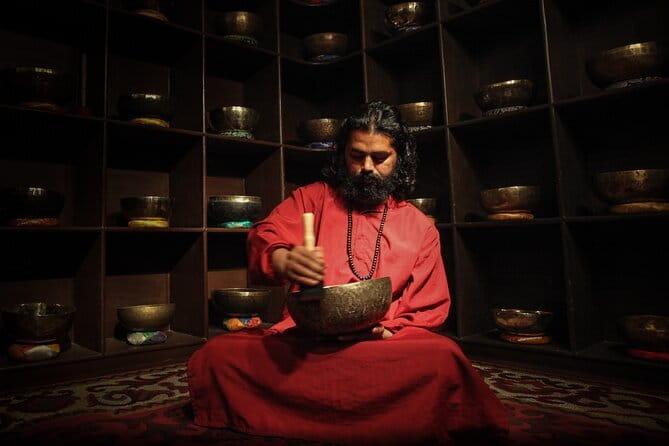
The kukri is not treated simply as a sharp souvenir. The session connects it with the Gurkha story and with the qualities often associated with Gurkha warriors, including strength and resistance.
That context gives the craft more weight. A curved knife can be attractive on its own, but understanding why it matters in Nepal makes the finished piece easier to appreciate. You get a link between an object, a trade, and a set of stories that have shaped its reputation.
The experience provider, Queermandu, also gives the activity a clear local identity. It is presented as a welcoming space for everyone and as a way to support Nepal’s queer community. If you value activities that connect cultural learning with local community support, this is an important part of the choice.
The information does not promise a full museum-style lecture or a detailed military history course. Think of the historical material as part of the working session, woven around the knife-making rather than delivered as a separate academic presentation.
Is $66 good value?
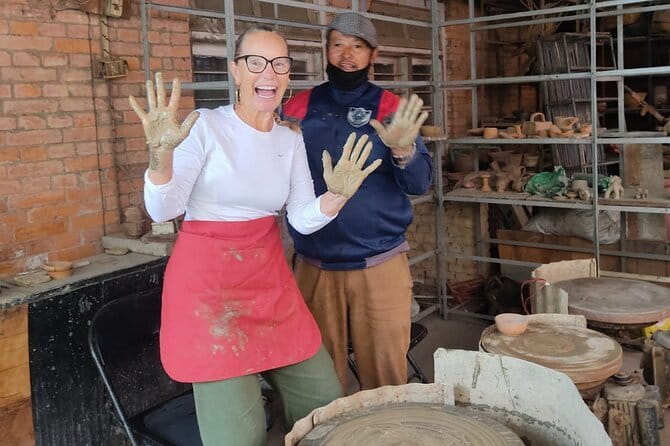
At $66 per person, the activity costs more than a simple Kathmandu craft demonstration. The price includes about four hours, instruction, the use of materials, tea and cookies, and the finished knife with its rosewood handle and initials.
That makes the value easier to judge. You are paying for time with a specialist, personal instruction, and an object you help create. If you would otherwise buy a kukri as a souvenir, the extra cost buys an experience and a stronger connection to the piece.
The price is especially reasonable for a group of one to four people. A large workshop could offer a lower rate, but it would not provide the same close contact with Indra, his apprentice, and Aayam. The small group setup is a real part of what you are buying.
You should still confirm exactly what is included if you have questions about pickup, shipping, packaging, or the guarantee. Those details are not explained. For most people, though, the central value is clear: you spend a morning learning a craft and return with a knife made in that setting.
Who will enjoy this most?
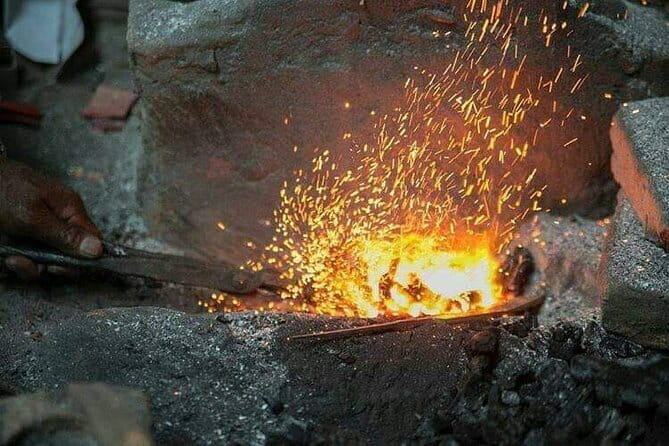
I would choose this for someone who wants an unusual Kathmandu activity and likes to bring home a story, not just a photograph. It fits couples, friends, solo participants, and small families with older children who can take part in a forge setting.
It is also a good match for anyone interested in blacksmithing, knives, Nepalese culture, or hands-on workshops. You do not need previous metalworking experience. Most people can participate, and the teaching is built around guidance from an experienced smith.
This is less suitable if you want a quick, passive activity. Four hours is a serious block of time, and the work may include waiting while the smith completes technical steps. You should also be comfortable with a working forge and with taking responsibility for following instructions.
The activity may appeal in a special way to people seeking inclusive local businesses. Queermandu presents the workshop as open and welcoming, and one of the hosts has been praised for making the day comfortable and fun.
Timing, group size, and cancellation
The activity is listed for every day of the week, with morning start times between 7:15 AM and 10:15 AM. Since the session lasts roughly four hours, confirm your exact start time and meeting arrangements before you build the rest of your day around it.
Confirmation is provided at booking. The group has a maximum of four participants, which is one of the strongest practical reasons to reserve ahead. It is booked, on average, nine days in advance, so last-minute spaces cannot be assumed, even though a last-minute booking has been accommodated before.
Free cancellation is available up to 24 hours before the start time for a full refund. Cancellations or changes made less than 24 hours before the activity are not accepted for a refund, and the cut-off follows Kathmandu local time.
Should you book the Gurkha knife workshop?
Book it if you want a personal, hands-on morning and the idea of making a real kukri appeals to you. The combination of a small forge, direct help from Indra, translation and hosting by Aayam, a rosewood handle, and your initials on the blade gives the experience a clear sense of place.
I would be more cautious if you are short on time, dislike heat or physical craft work, or want a polished sightseeing tour with every detail fixed in advance. Check the start time, pickup arrangement, clothing guidance, and guarantee terms before paying.
For most visitors who enjoy practical cultural experiences, $66 is a fair price for four hours of instruction and a substantial handmade souvenir. The knife is the keepsake, but the real value is understanding how much work goes into making it.
FAQ
Where does the Gurkha knife-making experience begin?
It begins at Garden of Dreams, Tridevi Sadak, Kathmandu 44600, Nepal.
Where does the activity finish?
The activity ends back at the meeting point.
How long does the experience last?
The session lasts approximately four hours.
What time is the activity available?
It is listed Monday through Sunday with opening hours from 7:15 AM to 10:15 AM. Confirm your exact start time when booking.
How many people can join?
The group has a maximum of four participants.
Who teaches the knife-making session?
Blacksmith Indra and his apprentice handle the knife-making instruction. Aayam acts as the guide and helps with communication.
What will I make during the workshop?
You will make your own Gurkha knife, also called a kukri, with an Indian rosewood handle.
Can I personalize the knife?
Yes. You can stamp your initials onto the blade.
Can I cancel for a full refund?
Yes, if you cancel at least 24 hours before the experience starts. Cancellations and changes made less than 24 hours before the start time are not accepted for a refund.
Just added around Kathmandu
- Traditional Momo Making Class★ 5.0 · 10 reviews
- Wildlife Adventure in Chitwan Nepal★ 4.0 · 4 reviews
- Walking tour of real Kathmandu through back streets.★ 5.0 · 3 reviews
- Kathmandu 2 Nights 3 Days Chitwan Jungle Safari Tour★ 5.0 · 9 reviews
- Kathmandu Street Food Walking Tour – Eat Like a Local★ 5.0 · 3 reviews
- Private Manaslu Circuit Trek at Himalayas★ 5.0 · 3 reviews
- Walking tour of Kathmandu with awesome local guides★ 5.0 · 4 reviews
- Visit Swayambhunath and Bauddhanath Stupa with Guide★ 5.0 · 5 reviews
Kathmandu Craft Workshops, compared.
Knife (Khukuri) Making Workshop- Forge of the Gurkhas
Read our review →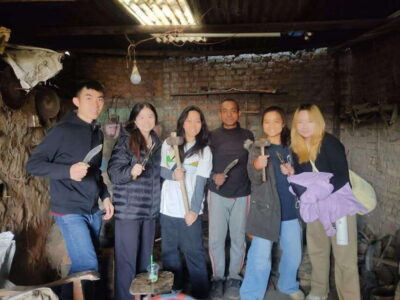
Browse the lists this tour appears in