
Reviewed · KATHMANDU RICKSHAW TOURS
Kathmandu at Sunset: Explore the City on Rickshaw
Kathmandu is at its most atmospheric when the light softens and the streets fill with chai drinkers, shoppers, worshippers, and pigeons. This tour puts you in the middle of it all, riding by rickshaw from Thamel through old lanes to Asan market and Kathmandu Durbar Square.
I like the local-style transport and the chance to pause at Sigal, a quiet Buddhist shrine tucked inside an alley. I also like that your entrance fee helps support the upkeep of Kathmandu Durbar Square, rather than leaving you to admire the monuments from outside.
The main caution is timing. The advertised experience lasts 2.5 to 3 hours, but the route details do not add up neatly, and one booking lasted about 1.5 hours while another lasted about two. If you need a firmly timed tour, confirm the schedule before paying.
Key points to know before you book
- Rickshaw through Thamel: Spend about an hour on a traditional pedicab ride through Kathmandu’s busy streets and back lanes.
- Sigal Buddhist shrine: Step off the rickshaw for a short visit to a peaceful shrine hidden just inside an alley.
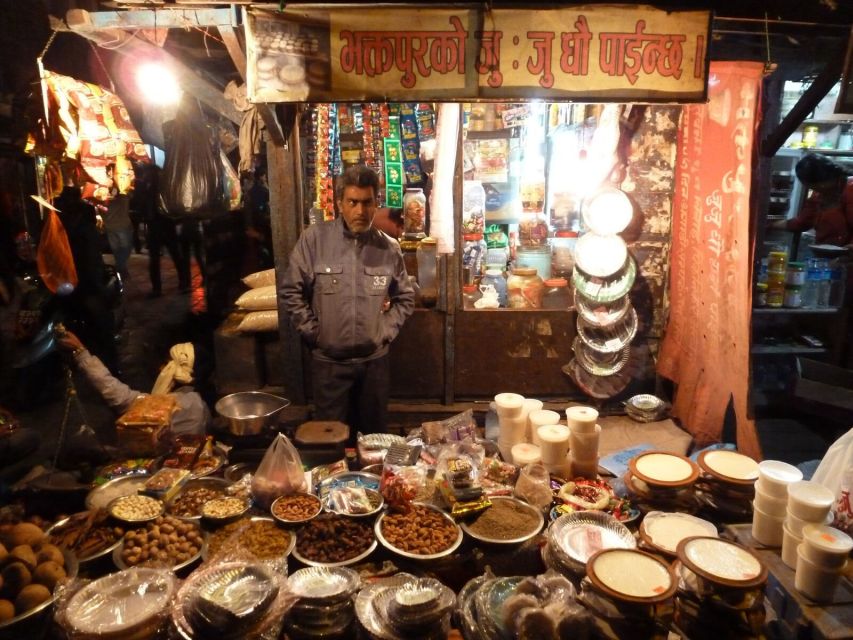
- Asan market: Allow about an hour for the spice and vegetable market, with Annapurna Temple looking over the activity.
- Kathmandu Durbar Square: Watch evening city life in a UNESCO-listed historic setting, with admission included.
- Small-group attention: The group size is limited to 12 people, and a private option is available.
- Practical value: The $49 price covers the rickshaw, English-speaking Nepali guide, shrine visit, and Durbar Square entrance, but not food or drinks.
Why sunset is the right time for Kathmandu by rickshaw
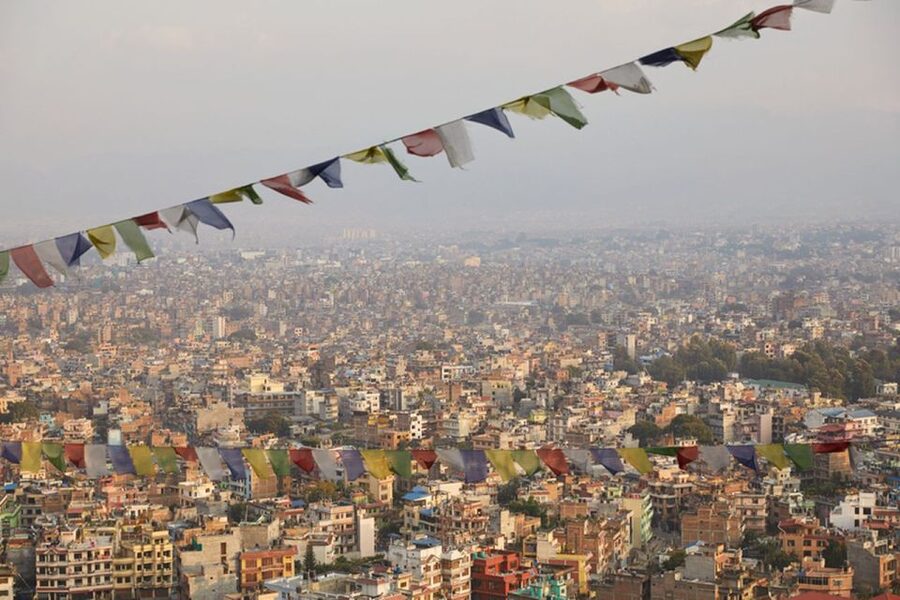
This is not a monument checklist. It is a short city ride built around the way Kathmandu feels at the end of the day.
As the sun drops, the route brings together several sides of the city. Thamel shows you the tourist center, Asan gives you a working market, and Durbar Square offers a historic setting where ordinary evening routines continue around temples and courtyards.
I like this timing because you are not simply looking at buildings. You can watch people stopping for hot chai, devotees praying, pigeons moving through the square, and shopkeepers handling the last part of the day. The city’s character comes from these small scenes.
A rickshaw also changes your view of the streets. You are low to the ground and moving slowly enough to notice alleys, shrines, shopfronts, and passing activity. Cars and motorbikes have largely replaced rickshaws in Kathmandu, so this ride has both a nostalgic and practical side. The company hires directly from the drivers, giving them paid work while offering you a less common way to get around.
More rickshaw tours in Kathmandu:
- Kathmandu Sunset Tour by Rickshaw Including Durbar Square Visit
★ 5.0 · 73 reviews - Kathmandu Food & Drink and Shopping Rickshaw Tour
★ 5.0 · 48 reviews - Kathmandu: Food, Drink and Shopping Rickshaw Tour
★ 4.7 · 7 reviews
Starting at Hotel Marshyangdi in Thamel
The tour begins at Hotel Marshyangdi on Chaksibari Marg in Thamel. This is a useful meeting point because Thamel is easy to recognize as Kathmandu’s tourist center, with hotels, restaurants, shops, and narrow streets packed into a small area.
From here, you board the rickshaw for roughly an hour. The ride takes you through Thamel’s backstreets and busier lanes before the walking stops begin.
You should expect a street-level experience rather than a quiet scenic ride. Thamel can be crowded and noisy, and the rickshaw shares space with other traffic. That is part of the point, but it may feel less comfortable if you prefer polished sightseeing vehicles or wide, open roads.
The guide is an English-speaking Nepali guide, and the small group size is capped at 12 people. That gives you a better chance to hear explanations and ask questions than you would on a large coach outing. A private group can also be arranged if you want a more personal pace.
The rickshaw ride through Thamel
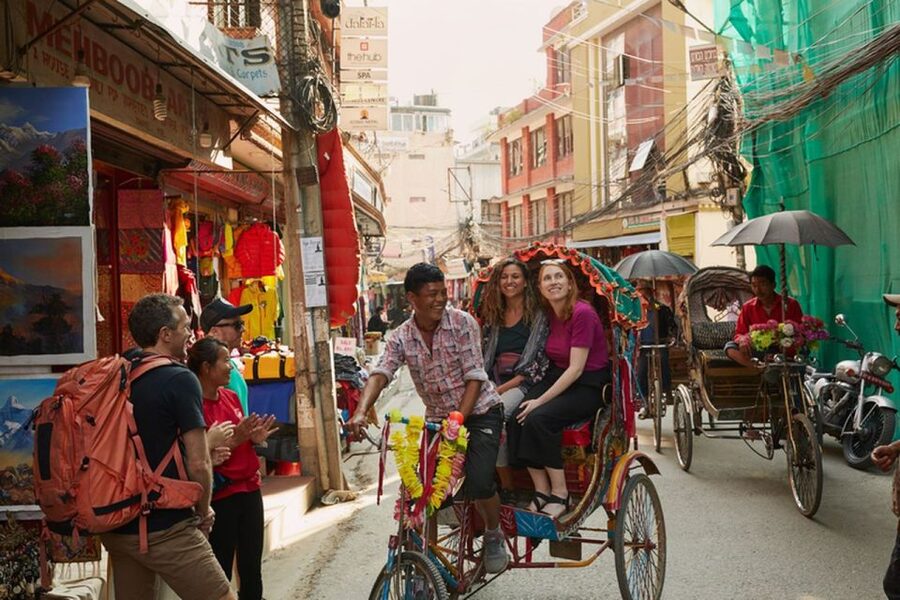
The first hour is the tour’s most unusual feature. Instead of walking every street, you sit in a pedicab and let the route carry you through the changing rhythm of central Kathmandu.
You will pass through the popular Thamel area and its less obvious side streets. The description emphasizes backstreets and laneways, so the ride is designed to show more than the main tourist strip. Look around rather than only ahead. The most interesting moments may be a shrine at the edge of an alley, a shop preparing for the evening, or a sudden opening onto a small square.
I would treat the rickshaw as a slow moving introduction to the city, not as a sightseeing bus. You will not cover a huge part of Kathmandu, and the ride may be affected by traffic or street activity. Still, the slower pace suits this route. You have time to see how the city works at close range.
There is also a useful social reason to choose this transport. Since the drivers are hired directly, your fare supports people still working in a vehicle type that has been pushed aside by motorbikes and cars. That does not make the ride a charity project, but it adds purpose to an enjoyable part of the outing.
A quiet stop at Sigal shrine
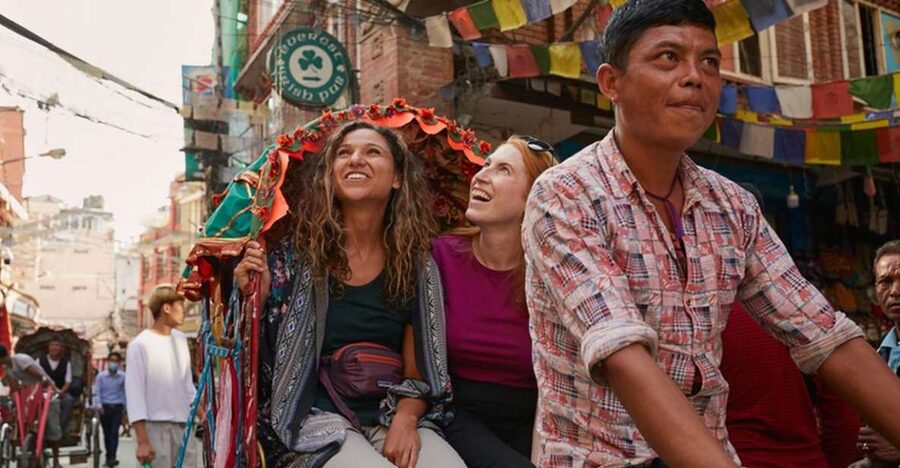
The rickshaw pauses at Sigal, described as a tranquil Buddhist shrine just inside an alley. This is a sharp contrast with Thamel’s noise and activity.
The stop is brief, but it gives the tour some breathing room. You can step away from the traffic, see a smaller place of worship, and hear the guide explain its role. The supplied route does not give a fixed duration for this stop, so expect a short visit rather than a long religious tour.
I especially like this kind of stop because it shows how spiritual places fit into everyday Kathmandu. You do not need a grand monument for a meaningful pause. A shrine tucked beside an ordinary lane can tell you as much about the city’s daily life as a famous temple.
Please approach the stop with care. This is a place of worship, not simply a photo backdrop. Follow your guide’s instructions and be mindful of people who are there to pray.
More evening and night tours in Kathmandu:
- 3 Nights 4 Days Chitwan National Park with Tower Night Stay
★ 5.0 · 41 reviews - 3 night 4 Day Yoga & Ayurveda Retreat to Detox the Body & Mind, Nepal
★ 5.0 · 37 reviews - Kathmandu: Pashupatinath Temple Evening Aarati Tour
★ 5.0 · 36 reviews - Kathmandu: Pashupatinath Temple Aarti Night Tour
★ 4.8 · 29 reviews
Asan market and Annapurna Temple
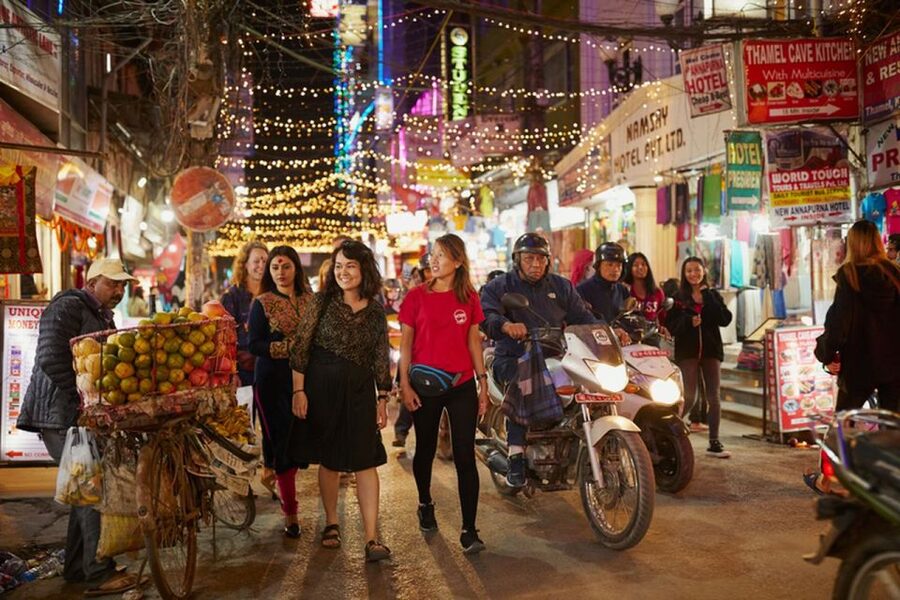
The next major stop is Asan, one of central Kathmandu’s best places to see trade and daily shopping at close quarters. The market is known for vegetables and spices, so expect strong colors, fresh smells, and plenty of movement as goods are bought and sold.
You have about an hour here. That is enough time to look beyond a quick pass through the market. Watch the details: the arrangement of produce, the sacks of spices, the narrow routes between stalls, and the way people move through the space with purpose.
Annapurna Temple overlooks the market, adding a religious focus to what might otherwise seem like a purely commercial stop. The pairing matters. In Kathmandu, worship, shopping, food, and neighborhood life often sit close together, and Asan gives you a compact view of that connection.
This is not a food tour, and food and drinks are not included. You might find opportunities to buy something on your own, but the activity does not promise tastings or a meal. Bring small purchases only if you want them, and do not count on a scheduled restaurant stop.
The market can also be the most demanding part of the tour for anyone who dislikes crowds or uneven movement. Stay close enough to hear the guide and keep your belongings secure. The value here is observation, not a relaxed shopping session.
Sitting in Kathmandu Durbar Square at dusk
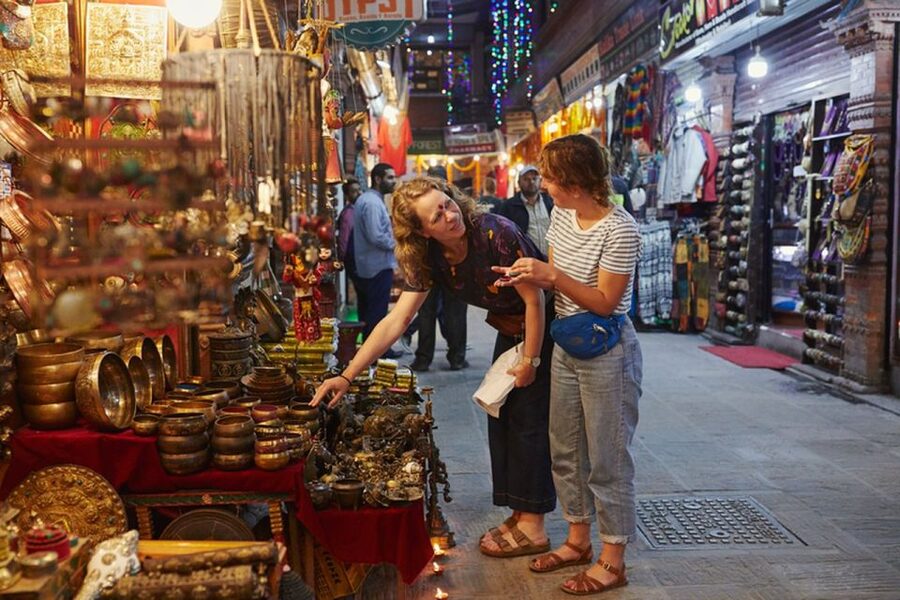
The final main stop is Kathmandu Durbar Square, where the tour spends about 1.5 hours. Your entrance fee is included, which makes this more than a quick exterior viewing.
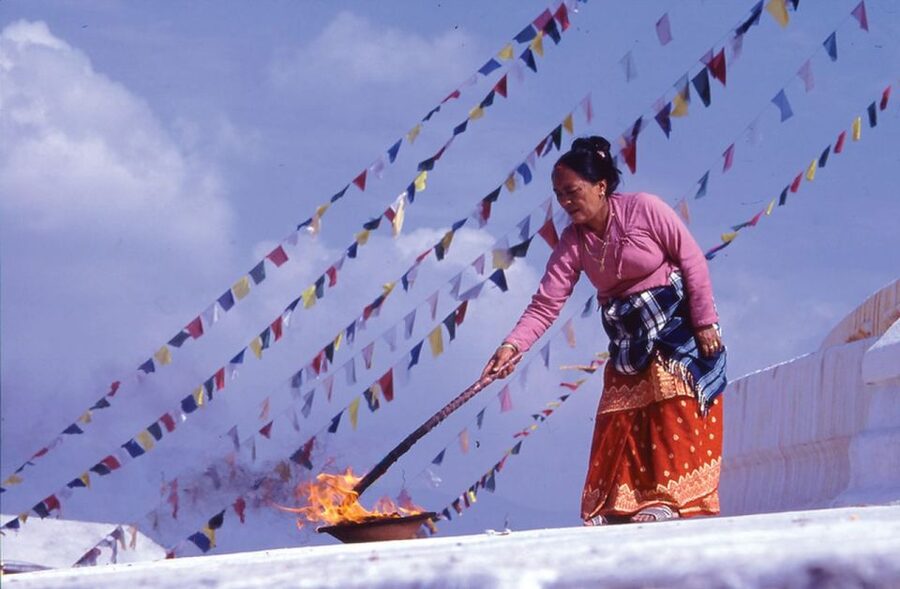
The square is a UNESCO World Heritage site filled with temples, courtyards, and historic buildings. At sunset, the setting becomes especially rewarding because the focus shifts from individual structures to the people using the space.
Find a place to sit and watch the evening unfold. Locals may pause with hot chai, devotees may pray, and pigeons may flutter across the square while ordinary chores continue around them. This is the kind of sightseeing I prefer after a busy day: a famous place, but with enough time to simply observe it.
The tour description refers to palaces and atmospheric temples, though the exact monuments visited can depend on the guide and the conditions that evening. Ask questions as you walk. The English-speaking guide is there to connect the buildings and rituals with the city around them.
The entrance fee also supports the preservation of the site. That gives the included admission a practical benefit beyond convenience. You are paying to enter an important cultural place, while part of the cost helps maintain it.
What the $49 price really covers
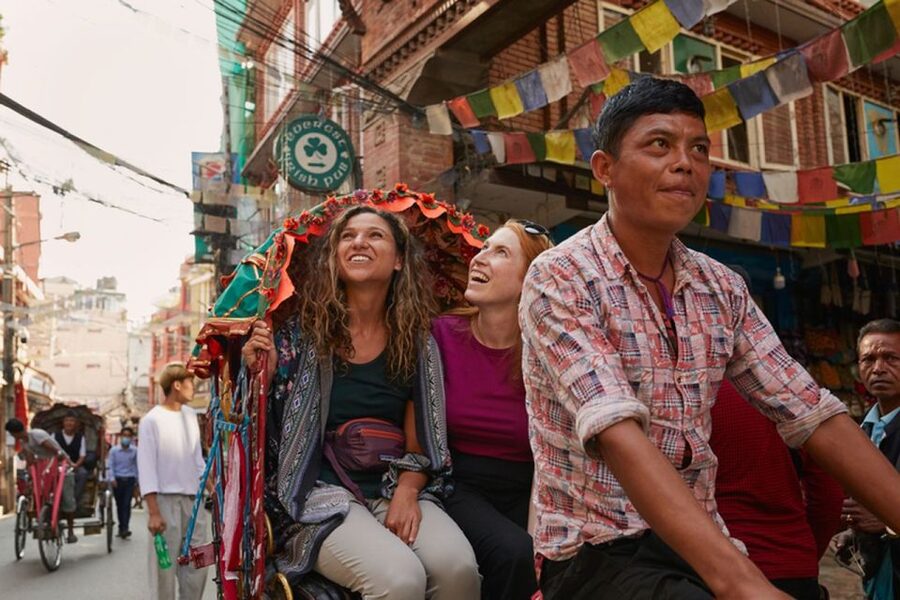
At $49 per person, this is not the cheapest way to see Kathmandu. You are paying for a guided experience, rickshaw hire, access to Durbar Square, and a carefully linked route through several parts of central Kathmandu.
The value is strongest if you want context and a local form of transport. Hiring a rickshaw independently may not give you the same route, explanations, shrine stop, or market orientation. A self-guided visit could cost less, especially if you only want to walk around Thamel and Asan.
The included Durbar Square admission improves the comparison. You do not need to budget separately for that fee, although food and drinks remain your responsibility.
I would consider the price fair for a first evening in Kathmandu, especially if you are short on time and want a guided introduction rather than a list of isolated sights. It is less appealing if you already know the old city well, prefer to explore slowly on your own, or expect a full three-hour tour without any timing variation.
The timing needs a little care
The stated duration is 2.5 to 3 hours. The route lists one hour by rickshaw, 15 minutes in Thamel, one hour at Asan, and 1.5 hours at Kathmandu Durbar Square. Those individual figures total longer than the advertised overall duration, so they should not be treated as a strict timetable.
There is also a clear difference in past tour lengths. One booking lasted about two hours, with the guide providing detailed explanations about the temples and market. Another lasted only about 1.5 hours, despite the earlier three-hour expectation.
That does not automatically make the tour poor, but it does make timing the main weakness. If you have a dinner reservation, airport transfer, or another fixed plan, allow extra space. Ask for the current start time and expected finish when you book.
The positive side is that the route is compact and flexible. You are not spending the evening crossing the city. You are moving between nearby areas and spending your time where the street life is most useful to see.
Who will enjoy this most
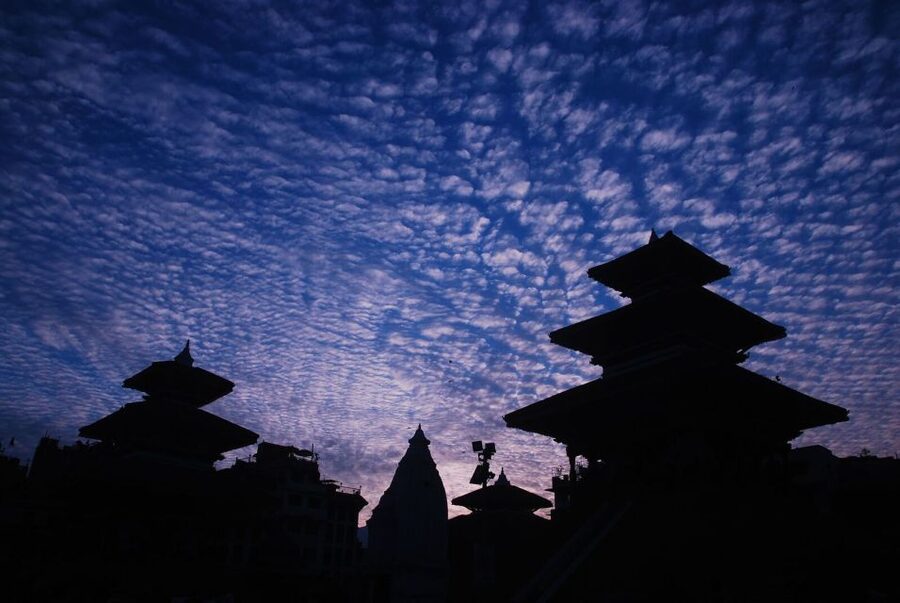
I would recommend this tour to first-time visitors who want an easy introduction to Kathmandu’s old center without spending the whole evening walking. The rickshaw ride adds fun, while the shrine, market, and square provide enough variety to keep the outing from feeling repetitive.
It also suits people who enjoy watching daily life. You get more than architecture. The best moments are likely to come from chai, prayer, market trade, pigeons, and the movement of people around historic places.
Families can consider it too, with the stated child categories covering ages 6 through 11 and children below 6 also permitted according to the activity information. Since the wording is unusual, confirm the age rules when booking if you are traveling with children.
I would be more cautious about recommending it to anyone who needs a guaranteed three-hour program, wants a food-focused market tour, or has limited mobility and needs detailed information about the rickshaw and walking portions. The supplied information does not provide accessibility details, so ask the operator before booking.
The tour is also a good fit if responsible travel matters to you. It is carbon neutral, operated by a B Corp certified company, and uses local rickshaw drivers. Those points do not replace the need for a good route and guide, but they add value to the way the tour is run.
Book it or skip it?
Book this tour if you want a relaxed, people-focused introduction to Kathmandu, especially during your first evening in the city. The combination of rickshaw travel, Sigal shrine, Asan market, and Durbar Square gives you a useful first look at both tourist Kathmandu and everyday Kathmandu.
Skip it if exact timing is essential or if you would rather spend several hours exploring Durbar Square and the market at your own pace. Before booking, confirm the current duration and starting time, then leave room for the possibility that the tour finishes earlier than advertised.
For most visitors, the strongest reason to go is not any single monument. It is the way the route links transport, worship, trade, and public life in a short stretch of the city. At $49, that makes sense when you want orientation with a human guide and a memorable ride, not simply a transfer from one attraction to another.
FAQ
Where does the tour begin?
The meeting point is Hotel Marshyangdi on Chaksibari Marg in Thamel, Kathmandu.
How long does the activity last?
The stated duration is 2.5 to 3 hours. Past bookings have lasted about two hours and about 1.5 hours, so confirm the current timing before booking.
What places does the tour visit?
The route includes Thamel, Sigal Buddhist shrine, Asan market, and Kathmandu Durbar Square.
Is the Kathmandu Durbar Square entrance fee included?
Yes. Admission to Kathmandu Durbar Square is included in the price.
Is food included?
No. Food and drinks are not included.
What language does the guide speak?
The live guide speaks English.
Is a private tour possible?
Yes. A private group option is available.
Can I cancel the booking?
You can cancel up to 24 hours in advance for a full refund. A reserve-now-and-pay-later option is also available.
Just added around Kathmandu
- Traditional Momo Making Class★ 5.0 · 10 reviews
- Wildlife Adventure in Chitwan Nepal★ 4.0 · 4 reviews
- Walking tour of real Kathmandu through back streets.★ 5.0 · 3 reviews
- Kathmandu 2 Nights 3 Days Chitwan Jungle Safari Tour★ 5.0 · 9 reviews
- Kathmandu Street Food Walking Tour – Eat Like a Local★ 5.0 · 3 reviews
- Private Manaslu Circuit Trek at Himalayas★ 5.0 · 3 reviews
- Walking tour of Kathmandu with awesome local guides★ 5.0 · 4 reviews
- Visit Swayambhunath and Bauddhanath Stupa with Guide★ 5.0 · 5 reviews
Kathmandu Rickshaw Tours, compared.
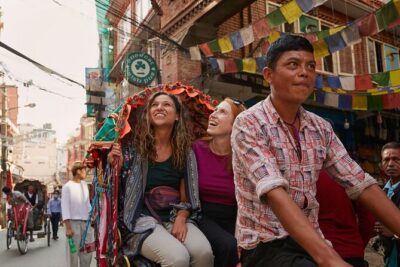
Kathmandu Sunset Tour by Rickshaw Including Durbar Square Visit
Read our review →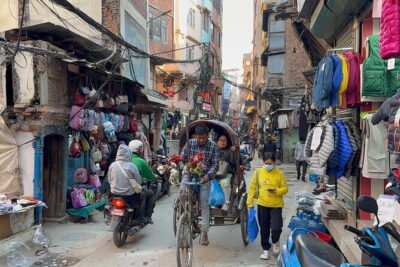
Kathmandu Food & Drink and Shopping Rickshaw Tour
Read our review →
Browse the lists this tour appears in