
Reviewed · UPPER MUSTANG TREKS FROM KATHMANDU
Upper Mustang Trekking
Upper Mustang feels like Nepal turned toward Tibet: dry red cliffs, wind-carved valleys, white peaks far off, and villages built around old monasteries. The trek’s great prize is Lo Manthang, a walled Himalayan city reached after days on foot through a stark and beautiful corner of the country.
I like two things especially. First, this route gives you a close look at Tibetan Buddhist life, with monasteries, prayer spaces, old villages, and local farms along the way. Second, the trip is well supported, with a licensed guide, porters, domestic flights, lodge stays, and the costly Upper Mustang permit included in the package price.
The main caution is the physical demand. You need strong fitness for repeated uphill and downhill days, dusty trails, thin air, and afternoon wind in the Kali Gandaki Valley. The long bus rides between Kathmandu and Pokhara also require patience.
Key points to know before booking
- The Upper Mustang permit costs $500 per person and covers 10 days inside the restricted region.
- Lo Manthang gets a full exploration day, allowing time for its monasteries and former royal palace.
- The route reaches roughly 4,000 meters, but it is not a technical mountaineering trip.
- Afternoon winds matter, especially near Kagbeni, Chhusang, and the Kali Gandaki River.
- A private group travels with a licensed guide and one porter for every two people.
- The $2,400 price includes flights, buses, permits, hotels, trekking lodges, and most meals.
Why Upper Mustang feels different from other Nepal treks
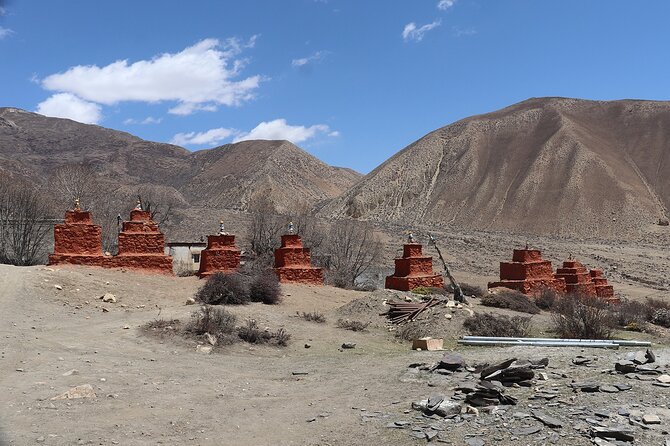
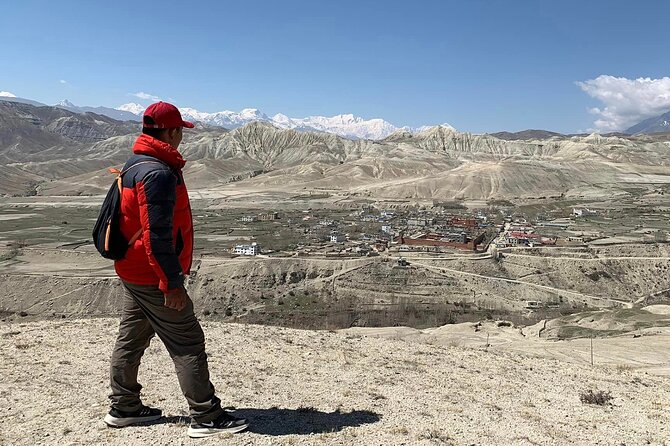
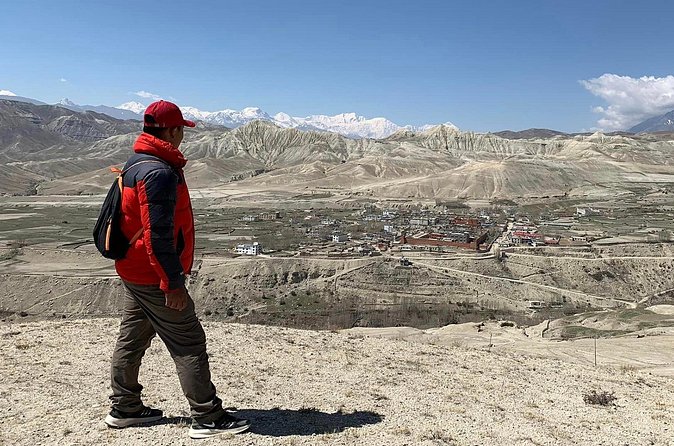
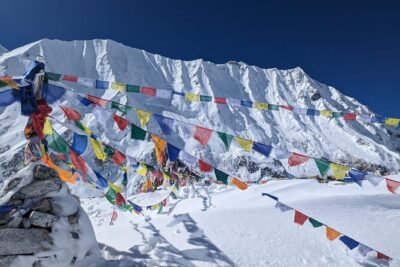
Upper Mustang is not the classic green Himalayan trail. Its upper valleys are dry, open, and sharply carved, with bare hills in shades of brown, gray, orange, and red. Snowy mountains often sit in the distance rather than directly above you, giving the route a wide, almost desert-like feel.
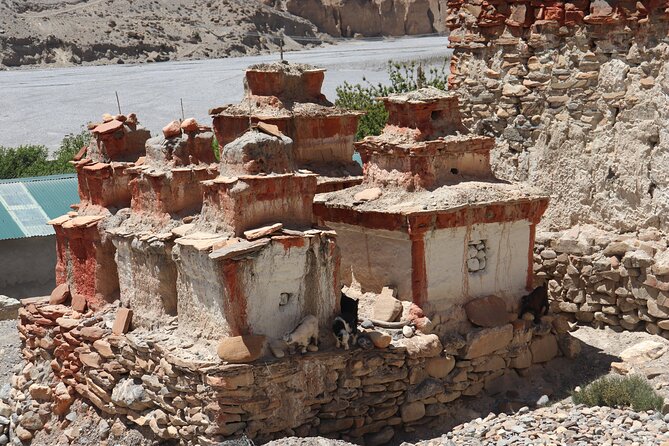
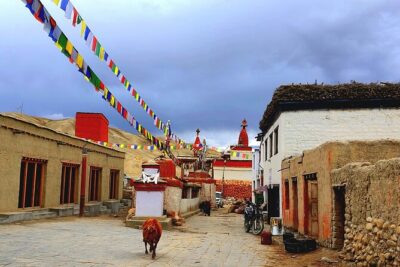
That setting shapes the culture. The villages reflect Tibetan Buddhist traditions, with monasteries, old walls, prayer spaces, and homes grouped close together for shelter. You pass apple gardens and small farms, but much of the region is spare and exposed.
The restricted-area permit limits access and helps preserve the character of the route. You are not simply walking from one lodge town to another. You are moving through a region where the old way of life remains a central part of the experience.
The route is also less crowded than many of Nepal’s best-known trekking corridors, according to the supplied trip feedback. That does not mean you walk alone at all times, but it does suggest a quieter feel. You should also expect dust. Dry trails, passing vehicles, and strong wind can make a scarf or face covering useful.
More Upper Mustang treks:
- Jeep Trip to Upper Mustang
★ 5.0 · 10 reviews - 12 Days Overland Tour to Upper Mustang
★ 5.0 · 4 reviews - Upper Mustang Trek 14 Days
★ 5.0 · 3 reviews
Days 1 and 2: Kathmandu, permits, and preparation
Your trip begins with pickup at Tribhuvan International Airport. A representative from Everest Trekking Routes takes you to your Kathmandu hotel, where you have three nights of included three-star accommodation during the wider trip.
Day 2 is partly for preparation. If you wish, you can visit sightseeing points in Kathmandu Valley after breakfast. More importantly, the operator arranges the Upper Mustang special permit, which requires your original passport and a valid Nepal visa.
This is a practical day, not a wasted one. The permit costs $500 per person for 10 days and is a major part of the total price. Keep your passport available and make sure your visa details are in order. The trip information says confirmation is provided at booking and pickup is available, but you should still clarify the exact hotel and pickup time before arrival.
Day 3: The long road from Kathmandu to Pokhara
You walk about 10 minutes from the hotel to the tourist bus station and depart around 7:00 in the morning. The drive follows the Prithvi Rajmarg highway, with a breakfast stop after about two hours.
This is a long road day, and it is less comfortable than flying. Still, it connects the capital with Pokhara without adding another domestic flight. The trip includes tourist bus service in both directions, so you should treat these rides as part of the price and not as a minor detail.
Pokhara provides a useful change of pace before the trek. The package includes two nights there with breakfast, although the itinerary later uses one of those nights around the return from Jomsom.
Day 4: Jomsom to Kagbeni on foot
After breakfast, you transfer to the domestic airport and fly to Jomsom at about 2,715 meters. The flight places you directly in the lower Mustang region, saving several days of road travel.
From Jomsom, you trek for four to five hours to Kagbeni. The route follows the popular Jomsom and Muktinath area, with broad Himalayan views and the Kali Gandaki Valley setting the tone for the days ahead.
Kagbeni matters because it is the main gateway to restricted Upper Mustang. You may spend time here while permits are checked. This is where the trip changes from a general Mustang journey to the more controlled Upper Mustang route.
More day hikes and treks in Kathmandu:
- Everest Base Camp Trek – 14 Days
★ 5.0 · 1,499 reviews - Everest Base Camp Trekking
★ 5.0 · 485 reviews - Nagarkot Sunrise View and Day Hiking from Kathmandu
★ 5.0 · 471 reviews - Annapurna Circuit Trek with Tilicho Lake
★ 5.0 · 368 reviews
Days 5 to 7: Chhusang, Chele, and Syangboche
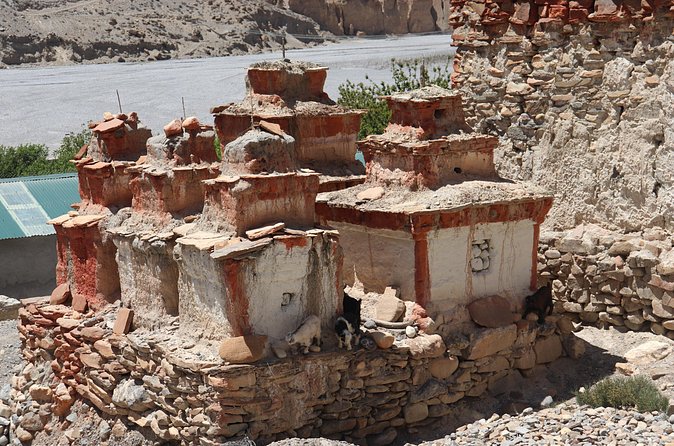
Day 5 takes you toward Chhusang. The route descends from Kagbeni before entering the special permit area. Chhusang is a useful early stop because it gives you a first look at the drier, more remote character of Upper Mustang without immediately forcing the longest climb.
The next stretch to Somare and Syangboche includes flat sections, steeper trails, and the major climb after Chele. The itinerary describes five to six hours of walking, with apple gardens and mountain views along the way.
Day 7 brings more uphill walking toward Syangboche, followed by a lunch break and rest. On clear days, you may see Dhaulagiri at 8,167 meters and Annapurna I at 8,097 meters. These peaks are not beside the trail, but their distant white summits make a striking contrast with the dry hills around you.
You need to pace yourself here. The route may not reach the extreme elevations associated with some Himalayan treks, but successive climbs can still be tiring. Strong fitness is listed as a requirement, and that is worth taking seriously.
Day 8: Ghiling, monasteries, and Tsarang
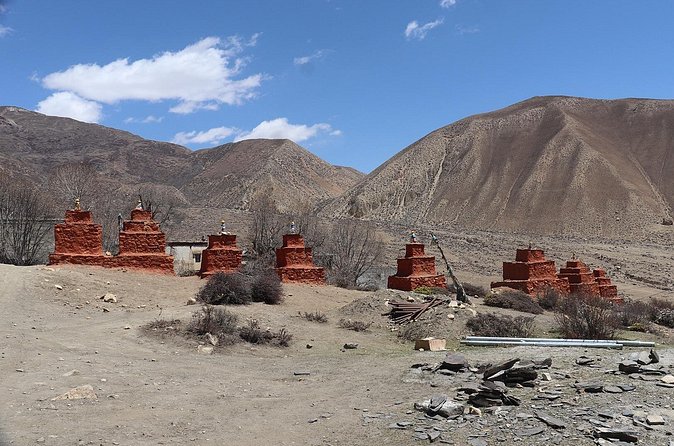
The route continues through farms and toward Ghiling, a village with old monasteries. If the weather is clear, you get a better sense of how much open ground surrounds these settlements.
You then continue toward Tsarang, described as one of the larger villages in the region. Its position along the route makes it a natural place to pause and look at the way houses, fields, and religious buildings fit into the dry valley.
This section rewards curiosity. Rather than rushing from one overnight stop to the next, take time to notice the village layout and the contrast between cultivated patches and bare slopes. The trip is strongest when you treat the villages as living communities, not simply photo stops.
Days 9 and 10: Walking into Lo Manthang
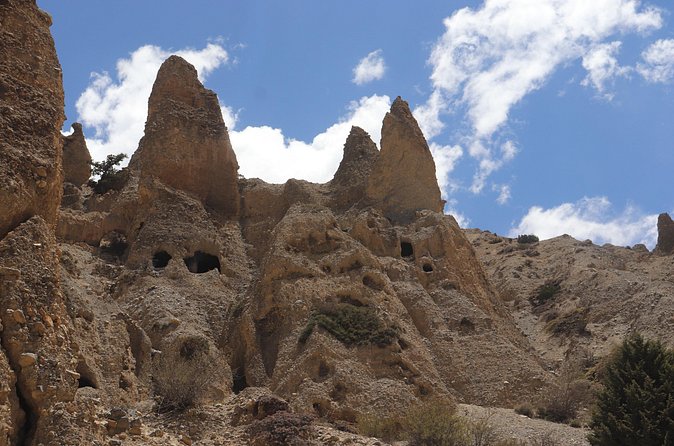
The trek to Lo Manthang takes about five to six hours. You cross rivers and bridges, pass through open desert-like scenery, and gradually approach the old walled city.
Lo Manthang is the center of the trip. It is often described as the Himalayan kingdom of Nepal because of its former royal connection, compact walls, old buildings, and strong Tibetan Buddhist identity. The city has a very different scale from Kathmandu or Pokhara. It feels enclosed, historic, and closely tied to its surrounding valley.
Day 10 is reserved for exploration. You visit monasteries and the former King’s Palace, while the guide helps explain the religious and local importance of the places you see. This rest day is one of the best planning choices in the itinerary. After several walking days, you get time to look around without carrying your full trekking schedule.
Do not expect a museum-style visit with polished displays. The appeal is the setting, the buildings, the artwork, and the chance to see how the city still functions as a community. Respectful clothing and behavior are important around monasteries and religious sites.
Days 11 and 12: Dhakmar and Ghami
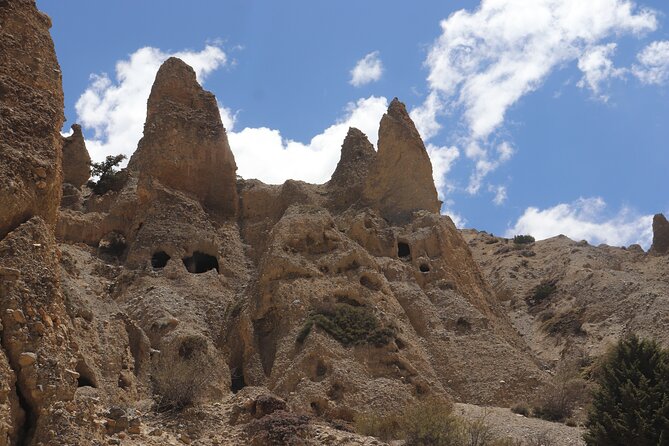
The return route begins with a walk toward Dhakmar. The first part is uphill toward a gompa, followed by views across the upper valleys. You encounter more monasteries and religious sites, so this section is especially rewarding if the cultural side of trekking interests you.
From Dhakmar, you continue toward Ghami. Ghami is one of the larger villages and has its own monastery. The route also passes farms and apple gardens, showing that the region is not only bare rock and wind.
The pace here can feel demanding because the route is not simply downhill after Lo Manthang. You still have climbs, exposed trail, and changing weather. The guide and porter arrangement is useful on these days, since you can walk with a lighter pack while the porter carries the main load.
Days 13 and 14: The descent to Kagbeni
From Syangboche, the route drops steeply toward Chhusang, passing through Samar, Bhena, and Chele. The descent loses about 1,000 meters before reaching the Kali Gandaki River.
Downhill walking can be harder on knees than uphill walking is on lungs. Trekking poles, if you use them, would be helpful, though they are not specifically listed as provided. This is also one of the windier parts of the journey.
The next morning, you leave Chhusang early for Kagbeni. The reason is simple: strong wind often arrives after noon in the Kali Gandaki Valley. An early breakfast and early start make the day more comfortable and reduce the chance of walking into the worst gusts.
This is a good example of the practical value of a local guide. Timing is not just about reaching the lodge. It is about working with the valley’s daily weather pattern.
Days 15 to 17: Jomsom, Pokhara, and Kathmandu
The walk from Kagbeni to Jomsom is shorter and easier than the main Upper Mustang stages. In Jomsom, you check the flight schedule for the following day and have time to explore the town.
The itinerary specifically mentions local apple brandy and other apple products. These are regional specialties, but personal purchases are not included, so budget separately if you want to take something home. Jomsom is also a sensible place to confirm luggage arrangements and flight timing.
On Day 16, you fly from Jomsom to Pokhara, a journey listed at about 25 minutes. Domestic mountain flights can depend on weather and scheduling, so keep your morning flexible. The package includes the flight and a transfer to your Pokhara hotel.
Day 17 brings a roughly seven-hour tourist bus ride from Pokhara to Kathmandu. It is another long road day, but the transport is included and avoids the cost of an additional flight. On Day 18, you are transferred to Tribhuvan International Airport for your departure.
What the $2,400 price really covers
At $2,400 per person, this is not a budget trek. The price makes more sense when you separate the expensive permit from the rest of the arrangements.
Included costs cover:
- The $500 Upper Mustang special permit for 10 days
- Annapurna Conservation Area permit
- Domestic flights between Pokhara and Jomsom
- Tourist buses between Kathmandu and Pokhara
- Three nights in a three-star Kathmandu hotel with breakfast
- Two nights in Pokhara with breakfast
- Lodge and tea-house accommodation during the trek
- A licensed trekking guide
- One porter for every two people
- Airport, hotel, and airport transfers
- Breakfast each day, listed as 17 breakfasts
- 16 lunches and dinners
- Government taxes and service charges
That is a substantial bundle. The biggest value comes from having the permit, flights, guide, porter, and transport arranged together. You also avoid handling the restricted-area paperwork on your own.
Personal spending, extra hotel nights, and tips are not included. The meal wording deserves a quick check before booking, since the summary lists 16 lunches and dinners while the detailed meal count could be read differently. Ask the operator exactly which meals are covered on travel days.
Who should book this trek?
You should consider it if you want a private, culturally focused trek with unusual scenery and fewer crowds than Nepal’s best-known routes. It suits people who enjoy walking through villages, visiting monasteries, and accepting basic lodge accommodation in exchange for access to a special region.
It is a good fit if you can manage five to six hours of walking, repeated climbs and descents, dusty paths, cold or windy conditions, and long bus journeys. You do not need technical climbing skills based on the information provided, but you do need strong physical fitness.
It is less suitable if you want comfortable roads, a soft daily schedule, or a luxury hotel every night. It also may not suit you if permit paperwork, domestic flight uncertainty, or basic tea-house rooms would cause stress.
The private format is useful for couples, families with suitable fitness, or friends who want some control over the pace. Only your group participates, so you can discuss walking speed, rest stops, and requests with the guide.
Should you book Upper Mustang Trekking?
I would book this trek if your priority is a quieter Himalayan route with old Buddhist villages, striking dry valleys, and a full day in Lo Manthang. The combination of a licensed guide, porter support, flights, permits, and most meals makes the $2,400 price defensible, especially because the Upper Mustang permit alone costs $500.
Before paying, confirm the exact hotel names, meal coverage, baggage arrangements, flight timing, and how the 10 permit days line up with your schedule. If you are fit, patient with long transfers, and interested in culture as much as mountain views, this is one of the more distinctive trekking choices in Nepal.
FAQ
How long is the Upper Mustang trek?
The full experience lasts approximately 18 days, including Kathmandu, Pokhara, domestic flights, trekking days, and return transfers.
Is the Upper Mustang permit included?
Yes. The package includes the special Upper Mustang permit, listed at $500 per person for 10 days. An Annapurna Conservation Area permit is also included.
What level of fitness do I need?
The tour requires strong physical fitness. The route includes five to six hour trekking days, uphill sections, steep descents, dusty trails, and walking at elevations that can approach 4,000 meters.
Are flights between Pokhara and Jomsom included?
Yes. The package includes domestic flights from Pokhara to Jomsom and from Jomsom back to Pokhara. The Jomsom to Pokhara flight is listed at about 25 minutes.
What accommodation is provided?
You receive three-star hotel accommodation in Kathmandu, two nights in Pokhara with breakfast, and lodge or tea-house accommodation during the trek.
What is the cancellation policy?
You receive a full refund if you cancel at least six full days before the local start time. Cancellation two to six full days before the start receives a 50 percent refund. Less than two full days before the start is nonrefundable.
Just added around Kathmandu
- Traditional Momo Making Class★ 5.0 · 10 reviews
- Wildlife Adventure in Chitwan Nepal★ 4.0 · 4 reviews
- Walking tour of real Kathmandu through back streets.★ 5.0 · 3 reviews
- Kathmandu 2 Nights 3 Days Chitwan Jungle Safari Tour★ 5.0 · 9 reviews
- Kathmandu Street Food Walking Tour – Eat Like a Local★ 5.0 · 3 reviews
- Private Manaslu Circuit Trek at Himalayas★ 5.0 · 3 reviews
- Walking tour of Kathmandu with awesome local guides★ 5.0 · 4 reviews
- Visit Swayambhunath and Bauddhanath Stupa with Guide★ 5.0 · 5 reviews
Upper Mustang Treks from Kathmandu, compared.
Browse the lists this tour appears in