
Reviewed · KATHMANDU WALKING TOURS
Smells of Kathmandu Walking Day Tour
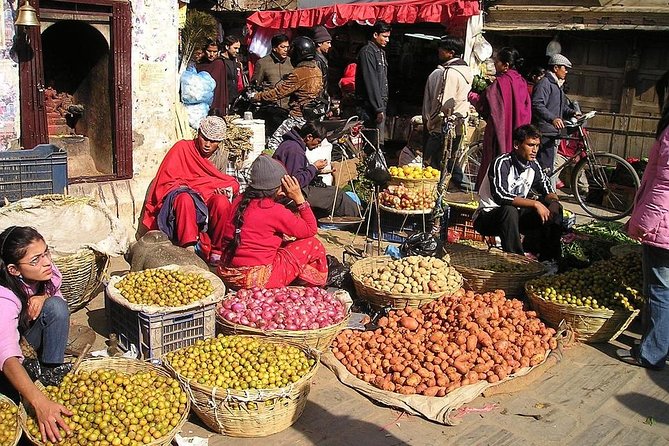
Kathmandu’s best street scenes are often found away from the big monuments. This walk takes you into Asan’s market lanes, where spices, grains, vegetables, meat, fish, and daily household goods are sold for local kitchens. You also pass through Indrachowk, the bead bazaar, Bangemudha, and Nardevi, with a guide explaining what you are seeing.
I like the small group limit of 10, which gives the guide room to answer questions. I also like the focus on ordinary shopping streets rather than a quick parade of famous sights. The main drawback is the setting itself: narrow lanes, pedestrians, scooters, and crowded market activity can feel intense, and the tour is not designed for a quiet or leisurely stroll.
Key points
- Asan market is the main event: See the ingredients and goods that local Kathmandu residents buy every day.
- Old Kathmandu beyond the monuments: Visit Indrachowk, the bead bazaar, Bangemudha, and Nardevi.
- Small group of up to 10: The size should make it easier to hear the guide and ask questions.
- Sunil and Rajendra are named guides: Sunil is especially noted for taking people into lanes they might miss alone, while Rajendra has led tours in fluent German.
- About 2.5 hours: The route is compact but full of detail, with another itinerary reference suggesting it may run closer to three hours.
- Hotel pickup can be arranged: The standard meeting point is the Karmachari Sanchaya Kosh Building on Tridevi Sadak.
Asan, where Kathmandu shops for dinner
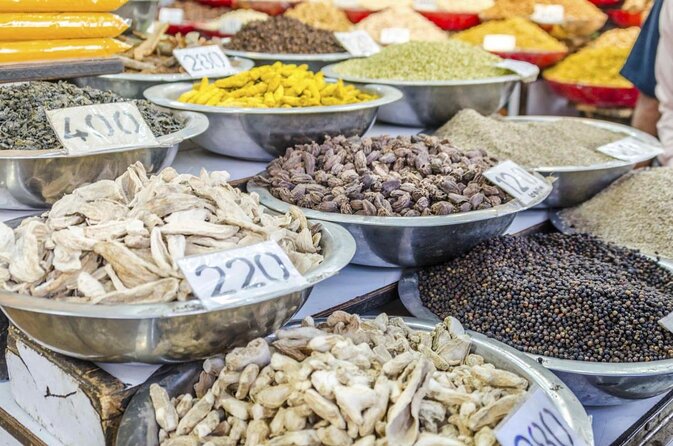
The strongest part of this tour is its attention to Asan. Located between Kathmandu Durbar Square and Thamel, Asan is not simply a market added to a sightseeing route. It is a working shopping district, packed with the ingredients and supplies used in daily life.
You can expect to see spices, fruit and vegetables, fish, meat, grains, pulses, and other foodstuffs. The guide’s role matters here. Without help, you might see sacks, baskets, trays, and stalls but miss the meaning of what is being sold. A good guide can point out local ingredients, explain how they are used, and connect the market to Kathmandu homes and cooking.
I like this approach because it gives you a better sense of the city than another round of monument photographs. You are looking at food choices, shopping habits, and street commerce. Those details tell you how people live now.
The market is also sensory. The tour’s name is well chosen: you will be walking through a mix of spice scents, produce, meat, incense, dust, and city traffic. That can be rewarding, but it is not polished sightseeing. Keep your expectations practical. You are entering a place where people are shopping and working, not performing for visitors.
More walking tours in Kathmandu:
- Kathmandu Food and Drink Walking Tour
★ 5.0 · 266 reviews - Kathmandu: Food and Drink Walking Tour
★ 4.9 · 119 reviews - Walking Street Food Tour in Kathmandu
★ 5.0 · 111 reviews
Narrow lanes and old Kathmandu neighborhoods
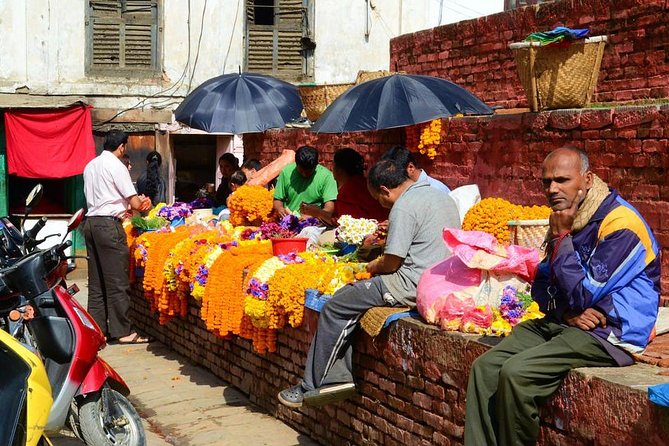
The route continues through several parts of old Kathmandu, including Indrachowk, the bead bazaar, Bangemudha, and Nardevi. These stops create a useful link between the market and the wider street life of the historic city.
Indrachowk is one of the key local areas on the route. The bead bazaar adds a different layer, with small shops and displays tied to jewelry and craft buying. Bangemudha and Nardevi bring you into the network of lanes where daily errands continue amid old urban surroundings.
The value here is not that each place receives a long formal visit. This is a walking route, not a series of museum stops. The guide helps you read the streets as you move through them.
Sunil is one of the named guides associated with the experience. His route takes people into narrow lanes that can be hard to find alone. That is an important advantage in Kathmandu, where a map may show the general area but not make the lane system easy to understand.
You should expect pedestrians and scooters sharing tight spaces. Some sections may feel crowded. Stay close to the guide, watch where you step, and keep bags and phones secure without becoming so cautious that you miss the scene around you.
What the guide adds to the walk
This tour depends heavily on the person leading it. The streets are interesting on their own, but the guide turns a market walk into a cultural lesson.
Sunil is described as a guide who shares plenty of information and takes people to places they would not easily find on their own. That suggests the best use of your time is to ask direct questions. Ask what an ingredient is used for, how the market changes during the day, or why a particular lane has its present trade.
Rajendra has also led the walk and can provide the tour in German. If you need German-language guiding, it is worth requesting Rajendra when arranging the booking, though guide assignment should be confirmed rather than assumed.
A guide has also taken participants to try local tea during the walk. Tea is not listed as an included feature, and food and drinks are not included in the price, so treat any tasting as something that may require your own payment or guide arrangement.
The group limit is 10 people. That is small enough for a personal feel without making the tour private. A smaller group also helps in the market, where a large cluster would be harder to manage and more disruptive to people shopping.
A compact route with plenty to notice
The listed duration is approximately 2 hours and 30 minutes. The stop information also gives the route a three-hour estimate, so I would leave room for a slightly longer outing. This is useful if the guide pauses to explain a market item or if the group moves slowly through crowded lanes.
The start time is 2:45 pm. That places the walk in the afternoon, when the market may still be active and the light can be pleasant for street photography. The supplied information does not promise a particular sunset view or market closing time, so do not book it for a specific photographic moment.
The tour begins and ends at the Karmachari Sanchaya Kosh Building on Tridevi Sadak, Kathmandu 44600. Hotel pickup can be arranged, but it is not automatic for every booking. Confirm the pickup details before the day of the tour.
Returning to the same point is convenient if you are staying near Thamel or planning another activity nearby. It also means you do not have to work out a new transfer at the end.
Same city, a completely different sort of day:
- Everest Base Camp Trek – 14 Days
★ 5.0 · 1,499 reviews - Private Kathmandu Sightseeing Tour | UNESCO World Heritage sites
★ 5.0 · 756 reviews - Everest Base Camp Helicopter Tour landing at Everest View Hotel
★ 5.0 · 668 reviews - Half day cooking class in Thamel kathmandu
★ 5.0 · 607 reviews
The value of paying $28
At $28 per person, this is a reasonable price for a guided small-group walk in central Kathmandu. You are paying for a local guide, route knowledge, interpretation, and the confidence to enter streets that can be confusing on your own.
The value is strongest if you want context. If you only want to wander through Asan and take photographs, you can explore parts of the area without booking a tour. The fee becomes more worthwhile when the guide explains unfamiliar ingredients, points out trades you might miss, and helps you understand how the market fits into everyday life.
Admission is included, though this is primarily a street experience rather than a ticketed attraction. Food, drinks, shopping, and gratuities are not included. Bring extra money if you might buy tea, snacks, beads, spices, or other goods.
You should also be realistic about shopping. The walk is not presented as a dedicated shopping tour, and the guide’s main role is explanation. If you find something you want, ask about it, but do not assume there will be time for extended bargaining at every stall.
What the experience feels like on foot
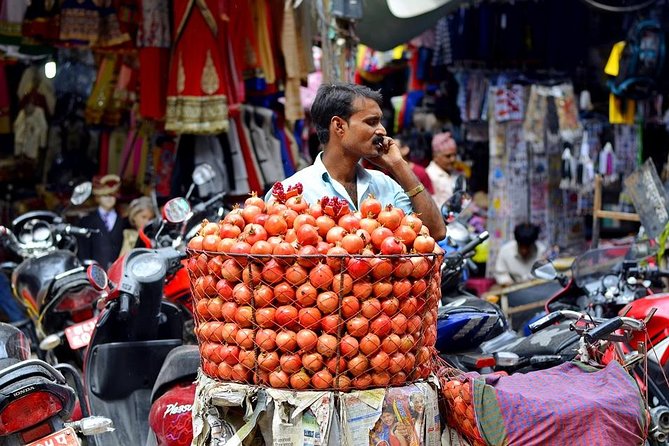
This is an active city walk through streets that may be crowded with pedestrians and scooters. The information says most people can participate, but it gives no detailed accessibility description. If you use a wheelchair, have serious mobility limits, or need a consistently smooth surface, ask the operator for current route conditions before booking.
Comfortable walking shoes are sensible. The supplied details do not specify the exact street surfaces, but narrow market lanes and old urban areas often require attention to footing. Keep your hands free when possible so you can move easily through the crowd.
A small bag is better than bulky luggage. The guide needs to keep the group together, and you will enjoy the market more if you are not trying to maneuver a large suitcase through the lanes.
Because the walk focuses on working markets, your senses may get a workout. Strong smells, close traffic, and crowded passages are part of the setting, not a sign that the tour has gone wrong. If you prefer calm streets and long pauses, this may not be your best Kathmandu outing.
Why this is useful early in a Kathmandu visit
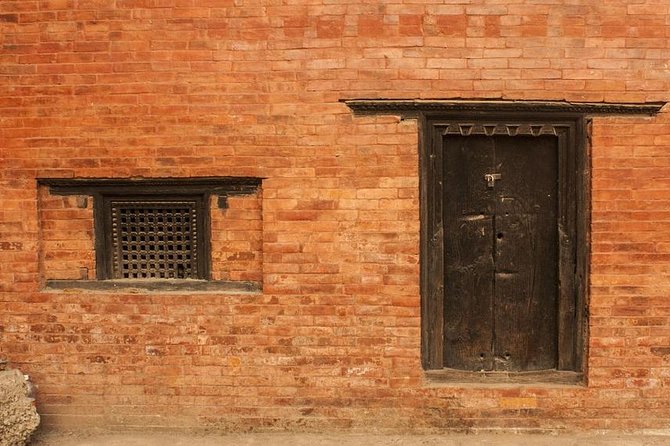
I would consider this walk early in a stay, especially if you want to understand the city before exploring on your own. The route can help you get your bearings between Durbar Square and Thamel while showing you how the central neighborhoods connect.
It also gives you a better foundation for later visits. After seeing local ingredients and market lanes with a guide, you may notice more when you return independently. A spice stall becomes more than a colorful display, and a crowded junction becomes part of the city’s daily pattern.
This is not a substitute for Kathmandu’s major heritage sights. You will not get a full tour of Durbar Square’s monuments, and the focus is not on long architectural explanations. Instead, it adds the street-level side of the city that a monument-focused itinerary can miss.
Who should book this walk
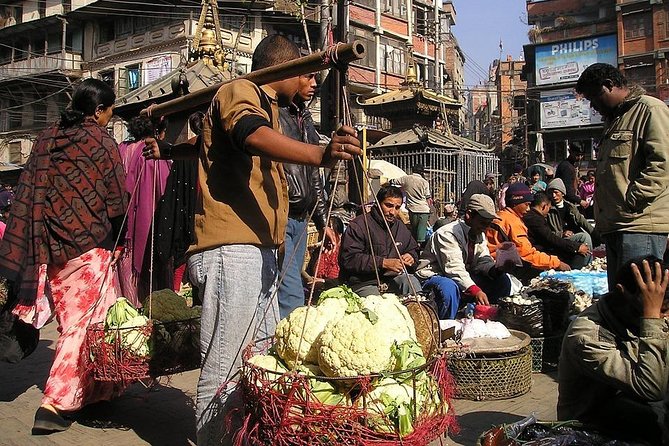
This experience suits you if you want ordinary Kathmandu life, food markets, local shopping streets, and a guide who can explain what is happening around you. It is a particularly good fit for first-time visitors who feel unsure about entering the old lanes alone.
It also works well for repeat visitors who have already seen the headline sights and want a different view of the city. Photographers may enjoy the colors and movement, though the crowds and tight lanes can make careful composition difficult.
The tour is less suitable if you want a private experience, a quiet walk, or a deep focus on temples and monuments. The maximum group size is 10, not one-on-one. Also, since it runs in the afternoon and lasts only a few hours, it is best seen as a focused introduction rather than a full-day Kathmandu tour.
Booking details worth knowing
The tour starts at 2:45 pm and normally returns to the same Karmachari Sanchaya Kosh Building. Hotel pickup can be arranged, but confirm the exact meeting plan.
Confirmation is provided at booking. The activity has a maximum of 10 participants, and most people can take part. Gratuities, food, drinks, and purchases are extra.
Free cancellation is available if you cancel at least 24 hours before the local start time. Cancellations or changes made less than 24 hours before the start are not refunded or accepted. The tour requires good weather, and if poor weather causes cancellation, you can choose another date or receive a full refund.
Should you book the Smells of Kathmandu Walking Day Tour?
Book it if you want to see where Kathmandu shops, eats, and moves through its daily routine. The strongest reasons are the Asan market focus, the access to old lanes around Indrachowk and Nardevi, and the chance to ask a local guide about things you would otherwise pass without understanding.
At $28, it offers good value for a short, guided introduction, especially with a group capped at 10. I would skip it only if crowded streets make you uncomfortable or if your priority is monuments rather than markets.
For the best experience, arrive ready to walk, keep your schedule flexible until about 5:30 pm, and bring a little cash for possible tea or shopping. This is Kathmandu as a working city, not a staged display, and that is exactly why the walk can be memorable.
FAQ
How long does the Smells of Kathmandu Walking Day Tour last?
The tour lasts approximately 2 hours and 30 minutes. The route details also give a three-hour duration, so allow some extra time.
What time does the tour start?
The scheduled start time is 2:45 pm.
Where does the tour begin?
It begins at the Karmachari Sanchaya Kosh Building on Tridevi Sadak, Kathmandu 44600, Nepal.
Where does the tour end?
The walk returns to the same Karmachari Sanchaya Kosh Building where it starts.
Is hotel pickup available?
Hotel pickup can be arranged. Confirm the pickup details when booking.
What places does the tour visit?
The route includes Asan, Indrachowk, the bead bazaar, Bangemudha, and Nardevi, along with surrounding old Kathmandu streets.
How many people can join the tour?
The maximum group size is 10 people.
Are food and drinks included?
No. Food, drinks, shopping, and gratuities are not included.
Is admission included?
The tour information lists admission as included. The experience mainly takes place in public markets and streets.
Can I cancel for a refund?
Yes. You can cancel at least 24 hours before the local start time for a full refund. If poor weather causes the operator to cancel, you will be offered another date or a full refund.
Just added around Kathmandu
- Traditional Momo Making Class★ 5.0 · 10 reviews
- Wildlife Adventure in Chitwan Nepal★ 4.0 · 4 reviews
- Kathmandu 2 Nights 3 Days Chitwan Jungle Safari Tour★ 5.0 · 9 reviews
- Walking tour of real Kathmandu through back streets.★ 5.0 · 3 reviews
- Kathmandu Street Food Walking Tour – Eat Like a Local★ 5.0 · 3 reviews
- Private Manaslu Circuit Trek at Himalayas★ 5.0 · 3 reviews
- Walking tour of Kathmandu with awesome local guides★ 5.0 · 4 reviews
- Visit Swayambhunath and Bauddhanath Stupa with Guide★ 5.0 · 5 reviews
Kathmandu Walking Tours, compared.

Walking Food Tour in Hidden Local Eateries of Kathmandu
Read our review →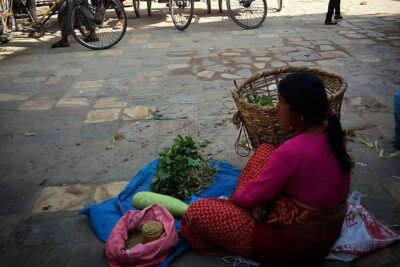
Old Kathmandu Walking Tour, Historic World Heritage Durbar Square
Read our review →
Browse the lists this tour appears in