
Reviewed · UPPER MUSTANG TREKS FROM KATHMANDU
Upper Mustang Trek 14 Days
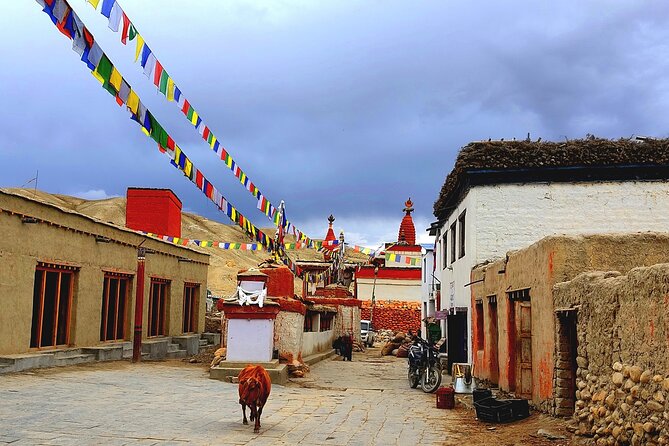
Upper Mustang is Nepal’s high-altitude desert country, a place of mud-brick villages, cliff caves, old monasteries, and a walled capital that still feels far removed from modern Nepal. The route reaches Lo Manthang, Chhoser Cave, Ghami, Tsarang, Kagbeni, and other remarkable villages over 14 days.
I like the careful route design, which gives you time in Kathmandu and Pokhara before the trek and includes a return day in Lo Manthang for Thubchen Gompa and Chhoser. I also like that this is a private trip, with a licensed English-speaking guide and the Upper Mustang Restricted Area Permit arranged for you.
The main drawback is cost clarity. The listed price is $1,212 per person, but trek accommodation, porters, meals, drinks, insurance, and rescue costs are not included. Ask for a full written breakdown before paying, especially since the inclusions mention dinner while the exclusions say meals are not included.
Key points to know before booking
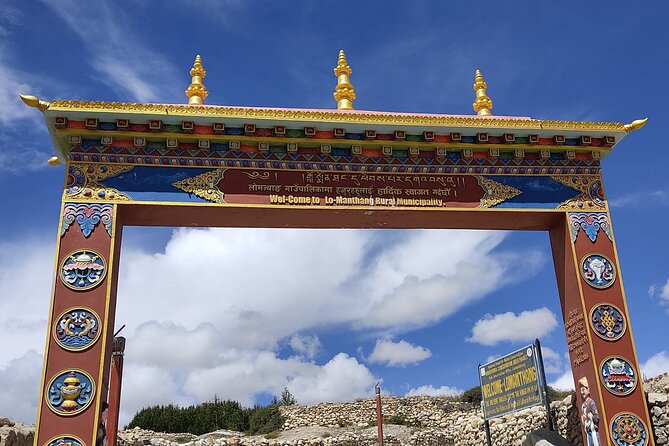
- Upper Mustang Restricted Area Permit: The 10-day permit is included, along with the Annapurna Conservation Area Permit.
- Lo Manthang gets a full exploration day: You visit Thubchen Gompa, Chhoser Cave, and the walled town itself.
- Private group format: Only your party takes part, with a licensed English-speaking guide.
- Flights reduce road time: The itinerary includes flights between Pokhara and Jomsom, followed by trekking through Mustang.
- Trek costs are only partly covered: Accommodation during the trek, porters, meals, drinks, insurance, and rescue are extra.
- Moderate fitness is needed: The route includes several full days through dry, high-altitude terrain, with many itinerary days listed at about 12 hours.
Why Upper Mustang feels unlike other Nepal treks
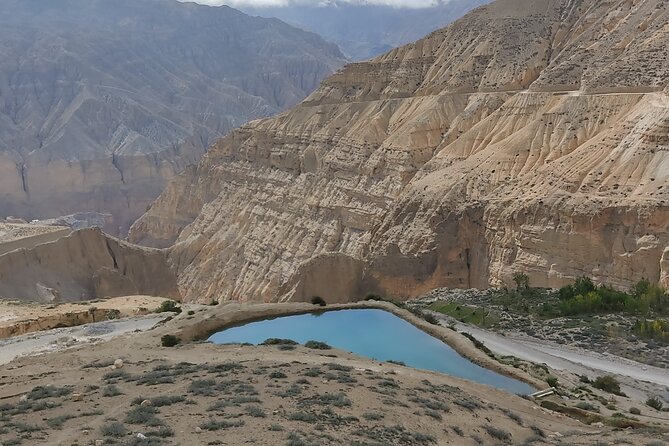
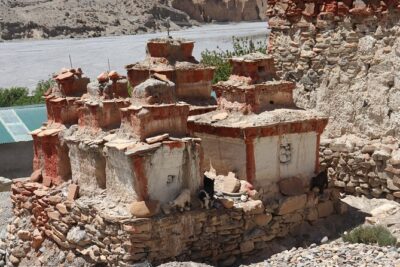
The appeal here is not just mountain views. Upper Mustang has a dry, open setting of eroded cliffs, broad valleys, old trails, and villages built from earth-colored walls. The Tibetan influence shows in the architecture, monasteries, narrow lanes, and local religious traditions.
This is a former restricted region, and the route still feels remote. You are not moving from one famous viewpoint to the next. You are walking between settlements where the buildings, caves, forts, and monasteries give the trip its meaning.
I especially like the contrast between the busy start in Kathmandu and the quiet of places such as Ghami, Tsarang, and Lo Manthang. The early city days may feel like a slow beginning, but they help create a sensible transition before the high-altitude portion.
The trek is not designed for a soft adventure holiday. The tour requires a moderate level of fitness, and the itinerary repeatedly lists days of about 12 hours. That does not necessarily mean 12 hours of walking, but you should be ready for long travel days, uneven trails, altitude, and basic conditions.
More Upper Mustang treks:
- Jeep Trip to Upper Mustang
★ 5.0 · 10 reviews - 12 Days Overland Tour to Upper Mustang
★ 5.0 · 4 reviews - Upper Mustang Trekking
★ 5.0 · 4 reviews
Days 1 and 2: Kathmandu, Pokhara, and Phewa Lake
Your trip begins with airport pickup and a stay at Hotel Chhimeki in Kathmandu. The first day is deliberately light. You can rest, adjust to Nepal, and walk around Thamel, an easy place to get your first taste of Kathmandu.
The schedule gives you about 12 hours in the city, but there is no paid admission listed for the Thamel stop. Think of it as free time rather than a guided sightseeing program. If you want major Kathmandu sights, confirm in advance whether they can be added.
On day two, you drive from Kathmandu to Pokhara. The route passes countryside, rivers, and terraced fields. The drive is scenic, but it is also a long road day, listed at about 12 hours. That is an important practical point. Pokhara is not reached by a quick transfer in this plan.
Once in Pokhara, you visit Phewa Tal and Tal Barahi Temple. Phewa Lake gives you a calm change of pace before the trek. The short boat ride to Tal Barahi Temple adds a small cultural stop rather than another strenuous activity.
Pokhara is also the place to prepare for the mountain section. Use this time to check your pack, confirm flight arrangements, and ask your guide about the next day’s conditions.
Day 3: Flying to Jomsom and walking to Kagbeni
The flight from Pokhara to Jomsom is listed at about 15 minutes. It saves a long road journey and puts you directly in the Kali Gandaki Valley, the gateway to Upper Mustang.
Jomsom is known for dramatic mountain surroundings and strong winds. Flight schedules in mountain regions can be sensitive to conditions, so keep your plans flexible. The tour includes transportation according to the itinerary, but it is sensible to ask what happens if a flight is delayed and an extra night is needed.
From Jomsom, you begin walking toward Kagbeni. The village is one of the most atmospheric stops on the route, with mud-brick houses, narrow lanes, and old Buddhist monasteries. It feels like a proper entrance into Mustang, not just a place to sleep.
This day combines air travel and trekking, so it may feel fuller than the short flight time suggests. Pack anything you need during the day in your own small bag, even if you later hire a porter separately.
Days 4 to 7: Chele, Syanboche, Ghami, and Tsarang
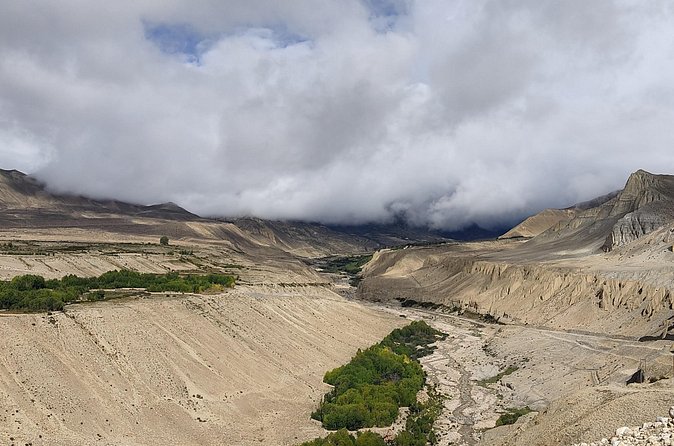
The route from Kagbeni to Chele takes you into increasingly dry country. You pass ancient caves, traditional villages, and open stretches where the bare setting becomes part of the experience.
Chele is a useful first trekking stop because it shifts the trip away from the larger gateway settlements. The appeal is the changing scenery and the feeling that you are moving deeper into Upper Mustang. The trade-off is simple: facilities become more basic, and you should not expect city-style comfort.
Day five takes you toward Syanboche through high-altitude desert and rough, open terrain. The scenery is stark rather than lush. If you prefer dramatic cliffs, earth tones, and wide empty views to green valleys, this section will likely be a highlight.
The itinerary does not provide walking distances, elevation gains, or overnight accommodation names for these days. That matters because those details help you judge the physical challenge. Ask the operator for the daily walking hours and highest points before booking.
From Syanboche, you continue to Ghami. Ghami is a larger village with monasteries and a strong local character. It gives you a chance to see how settlement life works in this dry region, rather than simply passing through empty terrain.
Day seven leads to Tsarang, another important village. Its old monastery and Tsarang Fort give the stop a clear historical focus. The fort adds variety to the trek, while the village setting lets you see how Mustang’s traditional buildings fit together.
These four days are the heart of the walking portion. The route is not just a string of mountain camps. It links villages, religious sites, caves, and old buildings, which makes the experience more rewarding for anyone interested in culture and architecture.
More day hikes and treks in Kathmandu:
- Everest Base Camp Trek – 14 Days
★ 5.0 · 1,499 reviews - Everest Base Camp Trekking
★ 5.0 · 485 reviews - Nagarkot Sunrise View and Day Hiking from Kathmandu
★ 5.0 · 471 reviews - Annapurna Circuit Trek with Tilicho Lake
★ 5.0 · 368 reviews
Day 8: Reaching the walled city of Lo Manthang
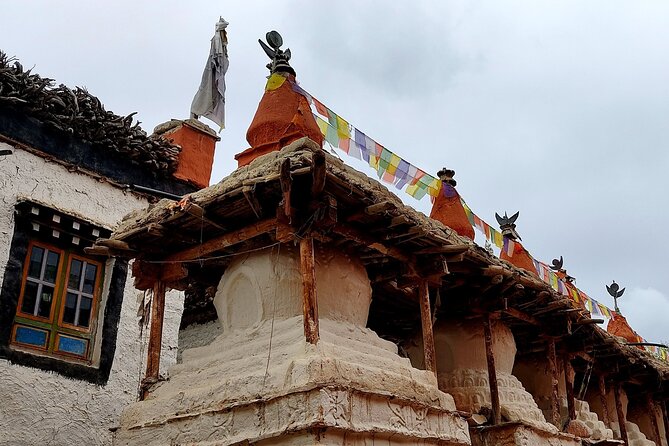
The trail from Tsarang to Lo Manthang is one of the trip’s major moments. Lo Manthang is the former capital of Upper Mustang, enclosed by walls and filled with narrow lanes and traditional mud-brick homes.
The town’s appeal is its sense of place. You are not arriving at a modern resort built for trekking. You are entering a historic settlement shaped by Tibetan-influenced culture, local religious life, and the demanding climate of the region.
The route lists about 12 hours for the day, so do not treat arrival in Lo Manthang as a quick afternoon stroll. Your guide can help you pace the day, but you should still prepare for a long schedule.
I like that the itinerary does not rush straight out of Lo Manthang the next morning. You get a full day to look around, which is important because the town deserves more than a brief arrival and dinner.
Day 9: Thubchen Gompa, Chhoser Cave, and more time in town
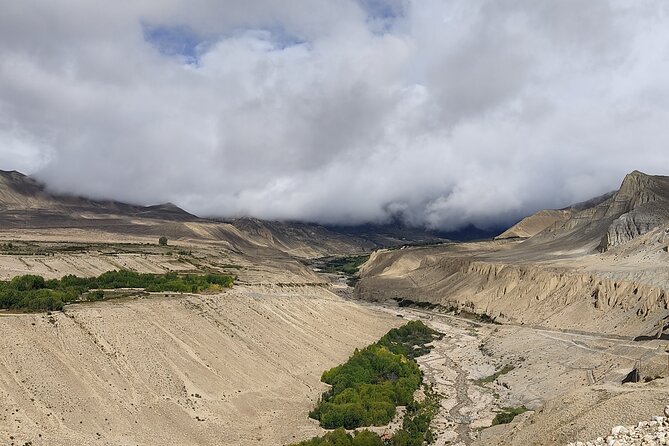
Day nine is the cultural center of the trip. You visit Thubchen Gompa, one of the oldest and most significant monasteries in Lo Manthang. The stop is scheduled for about 30 minutes, which is enough for a focused visit but may feel short if you want extended time for architecture, artwork, or quiet reflection.
Chhoser Cave is another distinctive stop. The cave complex has been used for centuries and is set among the unusual cliffs near Lo Manthang. The scheduled visit lasts about 45 minutes.
Caves can be physically awkward places, so wear shoes with a firm grip and keep your hands free. The supplied information does not state the exact access conditions, so ask your guide what the visit involves before setting out.
You then have more time in Lo Manthang. Use it for a slow walk through the lanes, a closer look at traditional homes, and time to notice details you may have missed on arrival. This is the day when the tour’s cultural focus really pays off.
The schedule also gives you a break from moving every morning. That makes the trip more manageable and gives you time to adjust to the altitude and the dry climate.
Days 10 and 11: Returning through Dhakmar to Kagbeni
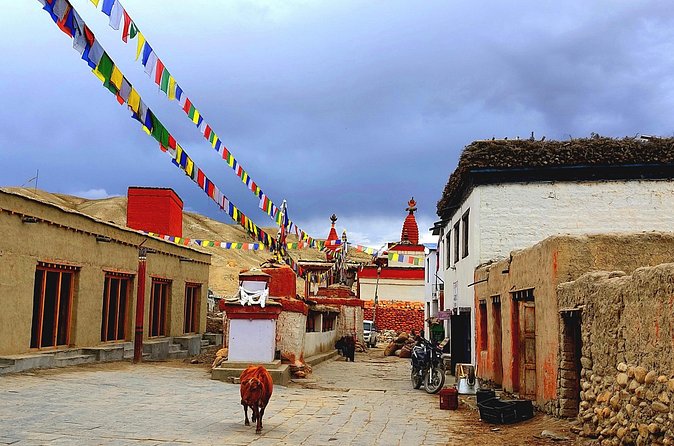
The return begins with a trek from Lo Manthang to Dhakmar. Retracing part of a route may sound less exciting, but the views change when you see the valleys and rock formations from the opposite direction.
Dhakmar is known for its unusual red cliffs and broad surroundings. The return route gives you another chance to study the rock colors, village shapes, and changes in light across the Mustang terrain.
Day 11 continues from Dhakmar back to Kagbeni. This is another full travel day, listed at about 12 hours. You will have already seen parts of this route, but the second pass can help you notice places that went by quickly on the way north.
The schedule is efficient. It does not add a separate rest day here, so plan your energy carefully. If you find the first part of the trek tiring, speak with your guide early rather than waiting until the return journey.
Days 12 to 14: Jomsom, Pokhara, and departure
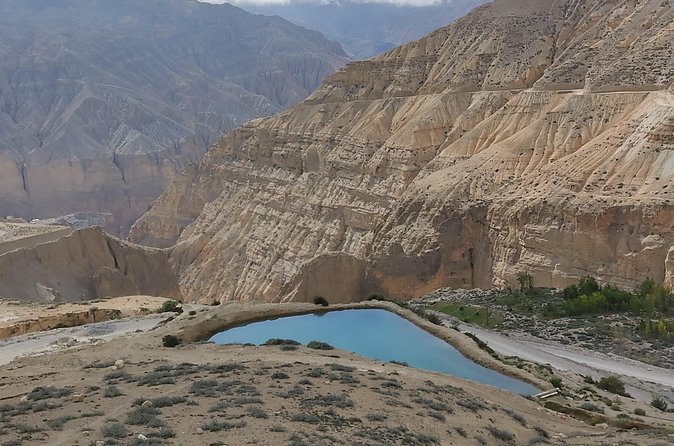
From Kagbeni, you return to Jomsom and fly to Pokhara. The flight is listed at about 30 minutes on this day, giving you a quick change from the dry Mustang region to Pokhara’s lakeside setting.
You have the rest of the day in Pokhara to relax and think back over the trek. This buffer is useful after several long walking days, though it is not a guaranteed extra day if flights or roads change.
Day 13 is the drive from Pokhara back to Kathmandu. Like the outward journey, it is listed at about 12 hours. If you dislike long road transfers, ask whether an alternative flight is possible and whether it changes the cost.
The final day includes transfer to Tribhuvan International Airport. Airport pickup and drop-off are included, and the tour ends back at the original meeting point at Hotel Chhimeki unless the departure transfer takes you directly to the airport.
What the $1,212 price really covers
At $1,212 per person, the price has real value if the included permits, guide service, airport transfers, transportation, and Kathmandu lodging match your plans. The Upper Mustang Restricted Area Permit alone is a major part of arranging this trip, and the Annapurna Conservation Area Permit is also included.
The package includes two nights in Kathmandu at Hotel Chhimeki, transportation listed in the schedule, a licensed English-speaking trekking guide, a first aid medical box, taxes, and a company T-shirt, duffel bag, and trekking map.
But the headline price is not the full trip budget. You must pay separately for:
- Accommodation during the trek
- Porters
- Meals, despite dinner appearing among the inclusions
- Drinks
- Travel insurance
- Rescue operations
- Personal expenses
- Tips
- Nepal visa fees
- International flights
- Extra Kathmandu nights caused by itinerary changes
The meal wording needs clarification. One section includes dinner, while another says all meals are excluded. Get the answer in writing. The same applies to domestic flights and trekking accommodation, since the itinerary depends on both.
Who should book this private trek?
I would choose this trip if you want Upper Mustang’s villages, monasteries, caves, and architecture more than a fast checklist of mountain viewpoints. The route suits you if you can handle long days, basic trekking accommodation, dry high-altitude terrain, and changing transport conditions.
The private format is useful for couples, families with suitable fitness, or friends who want their own pace. It also means you should speak up if a day feels too long. You are not locked into the rhythm of a large group.
The tour is less suitable if you want an all-inclusive package, hotel comfort every night, porters included, or a short and easy trek. It is also not ideal if you need precise daily walking distances before booking and the operator cannot provide them.
Communication with Devaraj and his daughter was described as fast and professional before departure, and Devaraj is identified as a guide for the Upper Mustang trip. That is encouraging, but I would still confirm who will lead your specific departure and what happens if the guide or flight plan changes.
Should you book the Upper Mustang Trek?
Book it if the idea of walking through a former restricted kingdom, seeing Lo Manthang, and visiting Chhoser Cave excites you more than polished facilities do. The route has a strong cultural focus, sensible acclimatization through Kathmandu and Pokhara, and a useful full day in Lo Manthang.
Before booking, confirm the daily walking hours, trek lodgings, meal arrangements, domestic flights, porter rates, and rescue coverage. If those costs fit your budget, the $1,212 starting price can be a fair base for a private Upper Mustang journey.
FAQ
How long is the Upper Mustang Trek?
The experience lasts approximately 14 days, beginning and ending in Kathmandu.
Where does the tour start?
The meeting point is Hotel Chhimeki at 17 Purano Dhalko Marga, Kathmandu 44600, Nepal.
Is airport pickup included?
Yes. Airport pickup and drop-off are included.
Is the tour private?
Yes. Only your group participates in the activity.
Is a guide included?
Yes. A government-licensed, English-speaking trekking guide is included.
Are Upper Mustang permits included?
Yes. The Upper Mustang Restricted Area Permit for 10 days and the Annapurna Conservation Area Permit are included.
Is accommodation included during the trek?
No. Accommodation during the trek is listed as an extra cost. Two nights in Kathmandu at Hotel Chhimeki are included.
Are meals included?
The inclusions list mentions dinner, but the exclusions state that all meals are not included. Confirm the exact meal arrangement before booking.
Are porters included?
No. Porter services are not included.
What level of fitness is required?
A moderate level of physical fitness is required. Several itinerary days are listed at about 12 hours.
Can I cancel for a full refund?
Yes, if you cancel at least three full days before the experience start time. Cancellations made less than three full days in advance are not refunded.
Just added around Kathmandu
- Traditional Momo Making Class★ 5.0 · 10 reviews
- Wildlife Adventure in Chitwan Nepal★ 4.0 · 4 reviews
- Walking tour of real Kathmandu through back streets.★ 5.0 · 3 reviews
- Kathmandu 2 Nights 3 Days Chitwan Jungle Safari Tour★ 5.0 · 9 reviews
- Kathmandu Street Food Walking Tour – Eat Like a Local★ 5.0 · 3 reviews
- Private Manaslu Circuit Trek at Himalayas★ 5.0 · 3 reviews
- Walking tour of Kathmandu with awesome local guides★ 5.0 · 4 reviews
- Visit Swayambhunath and Bauddhanath Stupa with Guide★ 5.0 · 5 reviews
Upper Mustang Treks from Kathmandu, compared.
Browse the lists this tour appears in