
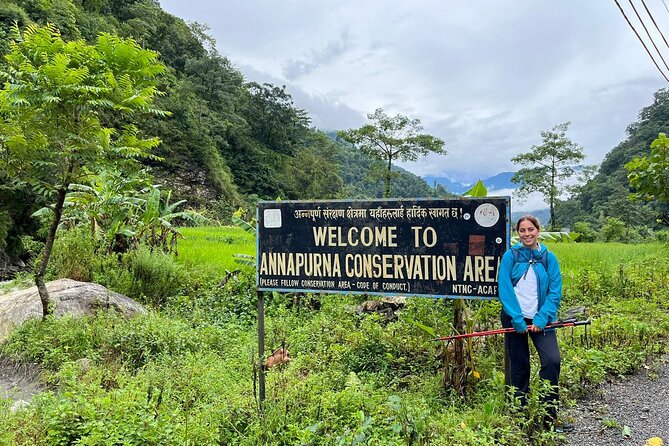
Reviewed · ANNAPURNA TREKS FROM KATHMANDU
Annapurna Base Camp Trek 12 Days
Annapurna Base Camp is the prize here, but the route earns its keep long before you reach it. You start with Kathmandu and Pokhara, climb through mountain villages, rise early for Poon Hill sunrise, then enter a dramatic high mountain bowl beneath Annapurna and Machhapuchhre. I like the route’s variety, and I like that the price includes permits, meals on trek, accommodation, and transport.
The personal guide service is another strong point. Guides named Bhairas Tamang, Prajil, Somnath Tripathi, Deepak, Uttar, and Buddha have received especially warm praise for keeping a steady pace, answering questions, solving problems, and stopping when someone felt tired. The main drawback is the schedule: 12 days is fairly tight, with long road transfers and several demanding walking days packed into one trip.
Key points to know before booking
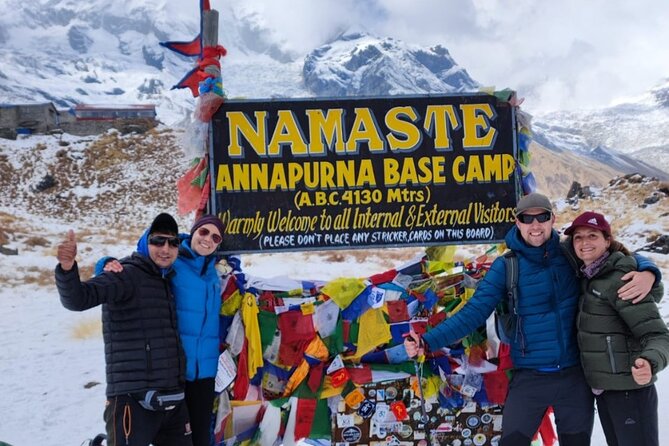
- Poon Hill adds a superb sunrise viewpoint before the route turns toward Annapurna Base Camp.
- An experienced private guide leads your group, so the pace and daily support are more personal than on a large group departure.
- The $800 price includes major trek costs, including 11 nights of accommodation, eight breakfasts, eight lunches, eight dinners, permits, and transport.
- Kathmandu to Pokhara uses a tourist bus, not a domestic flight, making the journey less expensive but slower.
- The trek reaches Annapurna Base Camp and Machhapuchhre Base Camp, with mountain views throughout the upper route.
- Insurance and emergency evacuation are not included, so you must arrange suitable travel and health cover before departure.
Why this Annapurna route works so well
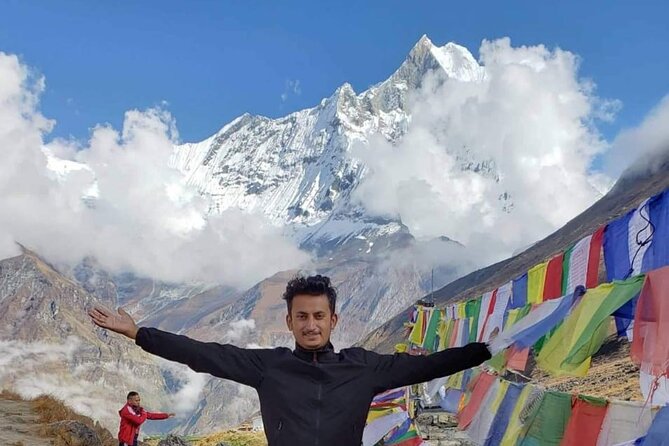
The Annapurna Base Camp Trek is a good choice if you want a major Himalayan destination without committing to a very long expedition. The route combines village paths, forested hills, stone steps, high mountain scenery, and teahouse nights in a single 12-day plan.
I especially like the way Poon Hill is built into the journey. You do not simply walk straight to base camp and back. You get an early mountain viewpoint first, then continue through Tadapani, Chhomrong, Sinuwa, Bamboo, Deurali, and Machhapuchhre Base Camp before reaching Annapurna Base Camp.
That variety matters. The upper section is famous, but the lower villages and ridges give you a better sense of daily life in the region. You see farmland, hear goats, donkeys, hens, and dogs in the morning, and stop in small settlements where the teahouse is part of the experience.
This is a private activity, so only your own group participates. That gives the guide more room to adjust walking breaks and deal with tired legs. Still, the route is not a casual sightseeing trip. You need a moderate level of fitness, and the company itself warns that Himalayan trekking brings risks that require sensible decisions along the way.
More Annapurna treks:
- Annapurna Circuit Trek with Tilicho Lake
★ 5.0 · 368 reviews - Annapurna base camp trek 5 Days
★ 5.0 · 252 reviews - Annapurna Base Camp Trek
★ 5.0 · 111 reviews
Day 1: Arriving in Kathmandu and getting ready
Your airport pickup begins the trip in a practical way. A member of the team meets you at Tribhuvan International Airport and escorts you to your hotel.
The first day is best used for rest and preparation. You may have only part of the day available, so do not plan a packed Kathmandu sightseeing program around it. Use the time to check your equipment, organize your walking clothes, and meet the guide or team if arrangements allow.
This is also the point to ask clear questions about the next morning. The early start on Day 2 means that a quiet evening is more useful than a late dinner and extra sightseeing.
Day 2: The long road to Pokhara
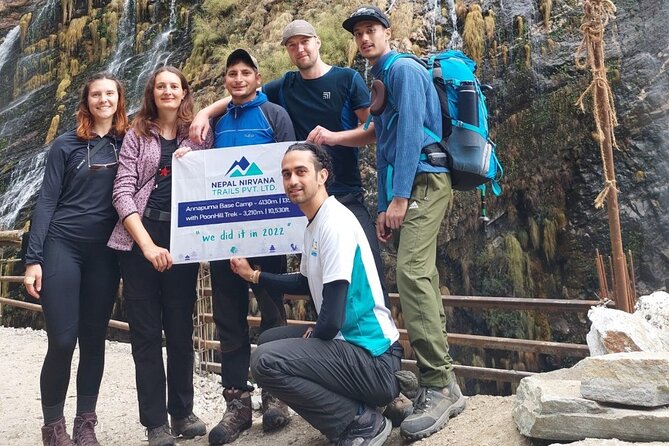
The guide meets you around 6:30 a.m. at your hotel or hostel. You walk a short distance to the Sorakhutte tourist bus station and board the 7:00 a.m. bus.
The route passes through Malekhu before continuing toward Pokhara. The bus is included in the price, which helps keep the package affordable. The trade-off is time. A bus journey is slower and less predictable than flying, so you should expect this day to feel like a transport day rather than a trek.
I see this as a reasonable bargain at $800, but it is worth knowing what you are choosing. The package spends money on a full support system and the mountain route instead of a quicker domestic flight.
Day 3: Pokhara to Nayapul and the first mountain walk
After breakfast in Pokhara, the guide arranges transport to the bus park. From there, you take a shared local bus or jeep to Nayapul, the trekking start area. The drive takes about an hour and a half.
This transfer is part of the local character of the trip. It is not polished private touring from start to finish, and shared road transport can be less comfortable. In return, you get a more ordinary look at how people move around the region.
From the trailhead, the walking portion begins. Your pace on this first day matters. A good guide will help you avoid the common mistake of pushing too hard at the start, especially when you still have many days ahead.
More day hikes and treks in Kathmandu:
- Everest Base Camp Trek – 14 Days
★ 5.0 · 1,499 reviews - Everest Base Camp Trekking
★ 5.0 · 485 reviews - Nagarkot Sunrise View and Day Hiking from Kathmandu
★ 5.0 · 471 reviews - Everest Base Camp Trekking – 13 Day
★ 5.0 · 365 reviews
Day 4: First mountain morning and village life
The first full mountain morning brings the sounds of local animals before breakfast. Donkeys, goats, hens, and dogs may provide the alarm clock, a reminder that you are staying in working villages rather than an isolated resort.
The morning views toward Annapurna are one of the pleasant rewards of this stage. You are beginning to trade road noise for mountain paths and village routines.
Accommodation during the trek is included, along with breakfast, lunch, dinner, and tea or coffee. The practical value is clear: you do not have to arrange each night and meal separately. Personal drinks, snacks, beer, soft drinks, juice, bottled water, Wi-Fi, and other extras are your responsibility, so keep some spending money available.
Day 5: Poon Hill before sunrise
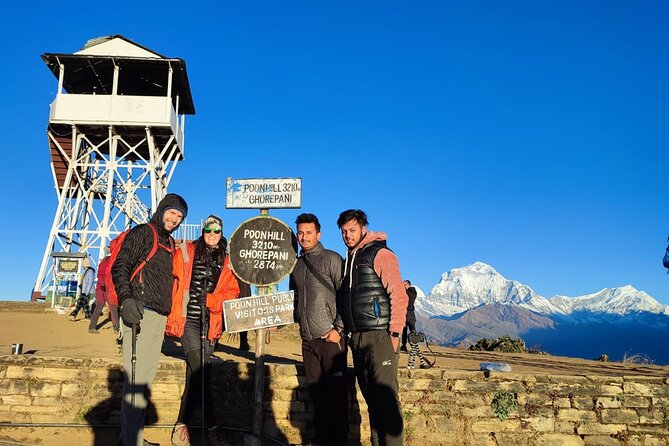
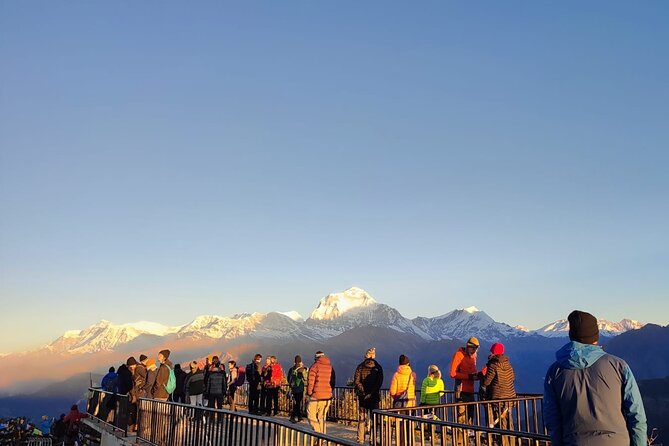
This is the early-bird day. You wake before sunrise and walk for roughly 45 minutes to an hour to Poon Hill Viewpoint.
Poon Hill is one of the finest short climbs on this route because the reward arrives quickly. From the viewpoint, you can see a broad line of Himalayan peaks, with 18 peaks described as countable in clear conditions. Weather controls the show, so do not treat the sunrise view as guaranteed. Cloud and haze can change the scene in minutes.
The cold is part of the deal. Bring warm layers for this short morning walk, even if the lower villages felt mild. After returning for breakfast, the route continues through the mountain settlements and onward toward the Annapurna Base Camp section.
Day 6: Tadapani, Chhomrong, and the descent to Sinuwa
The path from Tadapani toward Sinuwa is described as an enjoyable downhill walk. You pass through Chhomrong, a major village on the route, with views toward Modi Khola and Chhomrong Khola.
Downhill sounds easy, but long descents can work hard on your knees. Trekking poles can be useful, though the tour information does not state that they are supplied, so you should ask before departure if you want to use them.
Chhomrong is an important transition point. The route begins to feel more focused on the base camp approach, and you move deeper into the valley system. Sinuwa is smaller, with a quieter mountain setting and a striking view of the rising sun over the Himalayas.
Day 7: Sinuwa to Bamboo and Deurali
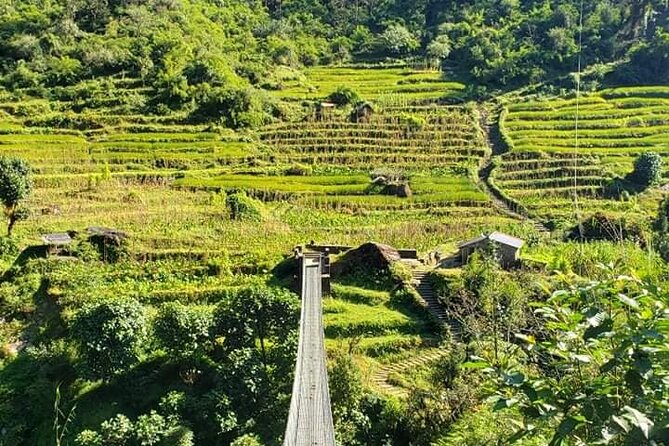
After breakfast in Sinuwa, you begin the climb toward Deurali. The first section takes about an hour and a half to Bamboo, then the path continues toward Deurali.
This is one of the days when steady pacing matters more than speed. The route rises through sparsely forested sections and brings you closer to the high mountain zone. The scenery changes as the trail moves away from the warmer lower hills.
Your guide is a major part of the value here. Several guides have been praised for watching the group’s condition, setting a sensible pace, and stopping when someone feels tired. That kind of attention is more useful than a guide who simply walks ahead and points toward the peaks.
Day 8: Machhapuchhre Base Camp to Annapurna Base Camp
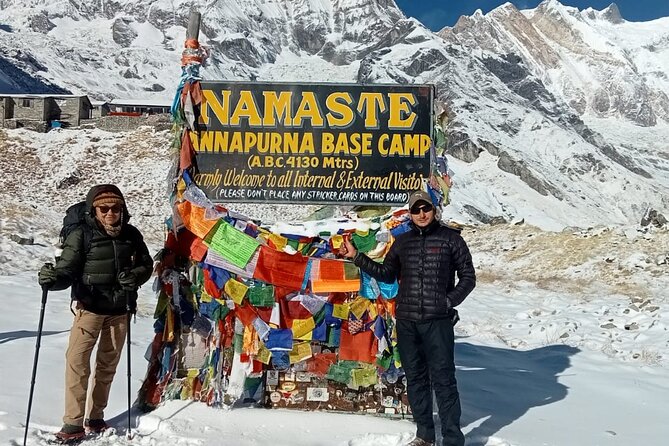
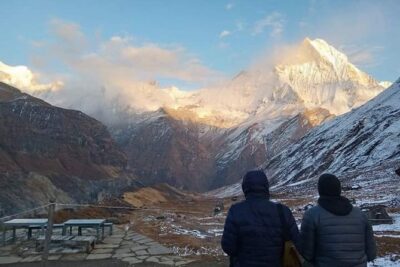
This is the emotional center of the trip. You walk toward Machhapuchhre Base Camp, then continue to Annapurna Base Camp, surrounded by high mountains.
The approach is not just a final photo stop. You are moving into a large mountain bowl, with the views closing in around the trail. The scenery becomes more dramatic as you reach the destination, and the sense of arrival is strong because the earlier village and forest sections have built toward it.
Weather and altitude can affect this day. The information provided does not give exact walking hours or altitude figures, so you should ask the company for the current day-by-day distances before booking. You should also take the guide’s advice seriously if conditions change. The company emphasizes that trekkers must make careful decisions in the Himalayas, and base camp is not worth ignoring signs of trouble.
Day 9: Sunrise at base camp and the return to Sinuwa
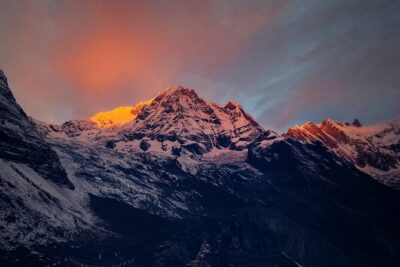
If the weather is clear, you can watch sunrise from Annapurna Base Camp before breakfast. This is likely to be one of the quietest and most memorable moments of the trip.
After breakfast, you retrace the route toward Sinuwa. The return passes over rugged trails and through sparsely forested areas, with high hills covered in plants and mountain scenery. Going down is often faster than going up, but the uneven path still requires care.
The schedule puts a full return after the base camp morning, so this can be a tiring day. The private format helps here because your group can discuss the pace directly with the guide instead of being tied to a large party’s timetable.
Day 10: Sinuwa to Siwai and back toward Pokhara
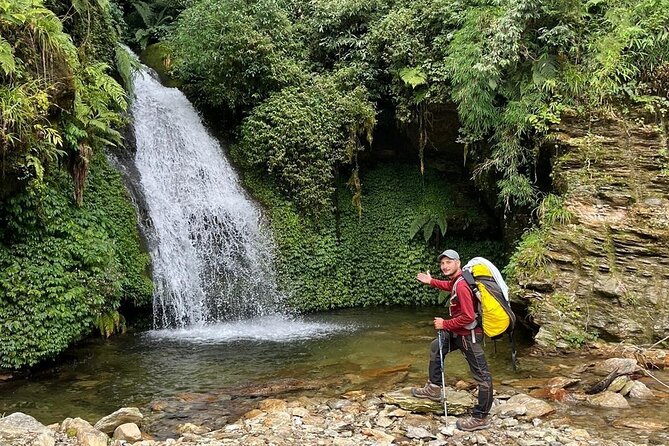
The final trekking day takes about two hours to reach Siwai from Sinuwa. The route includes Chhomrong, with views of mountains, cascades, and farmland.
At Siwai, a private vehicle takes you back toward Pokhara. This is a useful inclusion. After several days on foot, having the road transfer arranged is far easier than finding your own transport at the end of the trail.
The day is a reminder that this is not a loop entirely on foot. Road and trail travel work together, and the private vehicle at the end gives the itinerary a clean finish to the walking section.
Day 11: Pokhara to Kathmandu
After breakfast, you leave Pokhara, often called the city of lakes, and return to Kathmandu by tourist bus.
The rest of the day is free for rest or shopping. A farewell dinner is planned in the evening, giving you a final shared meal before departure.
Again, allow patience for the bus. The return journey may take much of the day, and the exact experience depends on road conditions. If you want to spend more time in Pokhara, this schedule will feel short. If your main goal is Annapurna Base Camp, it keeps the trip moving.
Day 12: Airport transfer and departure
The final day is simple. The team takes you to the airport for your onward flight.
Airport transfers are included on arrival and departure, which is helpful after a demanding trek. You should still confirm the pickup timing with the company, especially if your flight is early or your plans change.
What the $800 price really covers
At $800 per person, this package offers solid value for a private 12-day trek. The price includes:
- Airport pickup and departure transfer
- Tourist bus transport between Kathmandu and Pokhara
- Private vehicle between Pokhara and the trek start and finish points
- 11 nights of accommodation
- An experienced guide
- Breakfast, lunch, and dinner during the trekking section
- Tea and coffee with trekking meals
- Annapurna Conservation Area, TIMS, and local permits
- Trekking map
- Water purification drops or tablets
- Government fees, tax, and VAT
The meal count is listed as eight breakfasts, eight lunches, and eight dinners during the trek, while 11 breakfasts are included across the full trip. Lunch and dinner in Kathmandu and Pokhara are not covered.
You also pay extra for personal snacks, drinks, bottled water, Wi-Fi, and similar items. A porter is optional and not included, and tips for the guide are expected. Most important, travel and health insurance with emergency rescue and evacuation cover is your responsibility.
That last point should influence your decision. A low tour price is less attractive if you travel without proper protection for a Himalayan trek.
The guides are a major part of the experience
The most consistent strength of this trip is personal care from the guides. Bhairas Tamang is praised for humor, clear explanations, a good walking pace, and checking on tired group members. Prajil is noted for helping with practical needs and making the journey feel relaxed. Somnath Tripathi is described as well prepared and able to handle problems and arrange the daily schedule.
Deepak, Uttar, and Buddha are also names connected with warm, helpful support. The details matter because a guide in the mountains does much more than point out peaks. Your guide helps manage time, meals, fatigue, route decisions, and communication with accommodation providers.
The company has more than two decades of Himalayan guiding experience, and it says its team has mapped the Annapurna Base Camp route many times. That experience does not remove mountain risk, but it is a useful reason to choose an organized trek rather than attempting the route without local support.
Who should book this trek
I would recommend this trip to you if you want a serious but relatively compact Himalayan trek, appreciate having a private guide, and like the idea of mixing villages, viewpoints, teahouses, and a famous base camp.
It also suits people who value a package price with many major costs handled in advance. The included permits, meals, accommodation, road transport, and airport transfers reduce the number of details you must arrange yourself.
I would hesitate if you dislike early mornings, shared bus travel, basic mountain accommodation, or several consecutive walking days. The itinerary also leaves little spare time for delays, so you should not treat the 12-day plan as completely flexible.
Free cancellation is available if you cancel at least 24 hours before the experience begins. Changes or cancellations inside that window are not accepted for a refund.
Should you book the Annapurna Base Camp Trek?
Book it if your priority is reaching Annapurna Base Camp with a guide and a useful route that adds Poon Hill along the way. The combination of included meals, permits, accommodation, transport, and personal guiding makes $800 a sensible price, provided you budget separately for insurance, drinks, tips, and any porter.
Before paying, confirm the exact walking hours, accommodation names, porter costs, guide assignment, and current transport arrangements. If the answers suit your fitness and comfort level, this is a practical way to experience one of Nepal’s best-known mountain routes without arranging every piece yourself.
FAQ
How long is the Annapurna Base Camp Trek?
The experience lasts approximately 12 days, from airport pickup in Kathmandu to airport transfer at the end.
What is the price per person?
The listed price is $800 per person.
Is this a private tour?
Yes. Only your own group participates in the activity.
Is airport pickup included?
Yes. Arrival and departure airport transfer services are included.
How do I travel from Kathmandu to Pokhara?
You travel by tourist bus. The bus leaves Kathmandu at 7:00 a.m. on Day 2 after meeting the guide around 6:30 a.m.
Is transport from Pokhara to the trail included?
Yes. Transport from Pokhara to the trekking start point and from the trek ending point back to Pokhara is included by private vehicle.
Are meals included?
Breakfast, lunch, dinner, and tea or coffee are included during the trekking portion. The package lists eight breakfasts, eight lunches, and eight dinners for the trek, plus 11 breakfasts overall. Lunch and dinner in Kathmandu and Pokhara are not included.
Are permits included?
Yes. Annapurna Conservation Area, TIMS, local permits, applicable fees, government tax, and VAT are included.
Is travel insurance included?
No. You must arrange travel and health insurance that covers emergency rescue and evacuation.
Can I cancel for a full refund?
Yes, if you cancel at least 24 hours before the experience start time. Cancellations or changes made less than 24 hours before the start are not eligible for a refund.
Just added around Kathmandu
- Traditional Momo Making Class★ 5.0 · 10 reviews
- Wildlife Adventure in Chitwan Nepal★ 4.0 · 4 reviews
- Walking tour of real Kathmandu through back streets.★ 5.0 · 3 reviews
- Kathmandu 2 Nights 3 Days Chitwan Jungle Safari Tour★ 5.0 · 9 reviews
- Kathmandu Street Food Walking Tour – Eat Like a Local★ 5.0 · 3 reviews
- Private Manaslu Circuit Trek at Himalayas★ 5.0 · 3 reviews
- Walking tour of Kathmandu with awesome local guides★ 5.0 · 4 reviews
- Visit Swayambhunath and Bauddhanath Stupa with Guide★ 5.0 · 5 reviews
Annapurna Treks from Kathmandu, compared.
Kathmandu to Annapurna Base Camp (ABC) 5-Day Trek
Read our review →
11-Day Hike Tour to Annapurna Base Camp Bliss in Kathmandu
Read our review →Browse the lists this tour appears in