
Reviewed · ANNAPURNA TREKS FROM KATHMANDU
Annapurna Base Camp Trek
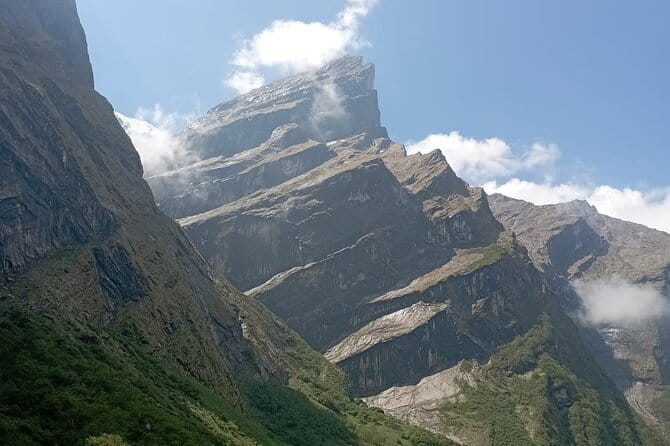
Annapurna Base Camp is reached the old-fashioned way: on foot, one stone step and one mountain view at a time. This 14-day route adds Poon Hill’s sunrise to the main trek, then carries you through Gurung villages, forest trails, suspension bridges, and the high bowl below Annapurna and Machhapuchhre.
I like the small maximum group of 10, which gives your guide room to adjust the pace and keep an eye on everyone. I also like that teahouse lodging, most meals, airport pickup, and road transfers are built into the $925 price. The catch is simple: this is a real high-altitude hike, with days of 4 to 7 hours and plenty of stone steps, so it is not a sightseeing tour with a little walking added.
What makes this Annapurna trek worth considering
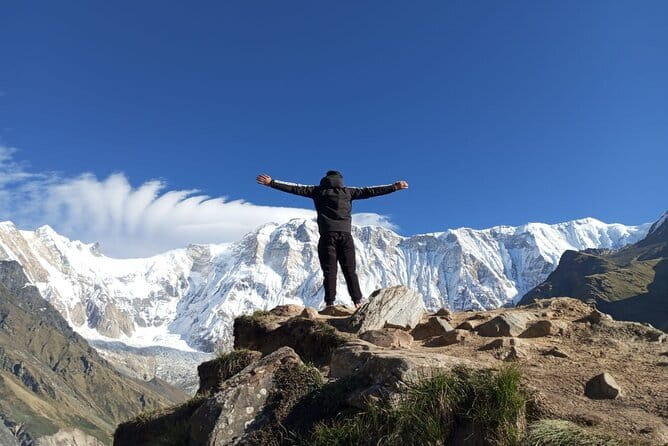
- Poon Hill is included: You get a 3,210-meter sunrise viewpoint before reaching Annapurna Base Camp.
- A small group keeps things personal: The group is limited to 10 people, with a professional guide handling the route and daily logistics.
- Your main costs are covered: Teahouse stays, Kathmandu and Pokhara hotels, trek meals, permits and handling fees, and shared transfers are included.
- The route has variety: Expect villages, oak and rhododendron forests, river crossings, suspension bridges, and high mountain viewpoints.
- The final goal is dramatic: Machhapuchhre Base Camp and Annapurna Base Camp sit among some of Nepal’s most famous peaks.
- The finish includes a hot spring stop: At Jhinu Danda, you can walk to natural hot-spring pools beside the Modi River.
The big picture: 14 days from Kathmandu to the high Himalaya
This trip is designed to remove much of the guesswork from a Himalayan trek. You are met at Tribhuvan International Airport, taken to your hotel, moved by road to Pokhara, and guided along the mountain trail. That matters in Nepal, where transport, weather, lodging, and trail conditions can make independent planning more demanding.
The group size is capped at 10. That is small enough for a guide to notice when you are struggling, feeling unwell, or need a slower pace. The supplied experiences also show that guide assignments can vary. Names associated with this operator include Krishna, Tulsi, Suvi, Anil, and others, so you should confirm your guide’s name before departure if that matters to you.
The trek is described as moderate, but that word needs a little translation. You will not be climbing technical rock or using ropes, yet you will walk uphill and downhill for several hours a day at increasing altitude. A reasonable fitness base is important. You should be comfortable with long walks and uneven ground before you arrive.
More Annapurna treks:
- Annapurna Circuit Trek with Tilicho Lake
★ 5.0 · 368 reviews - Annapurna base camp trek 5 Days
★ 5.0 · 252 reviews - Annapurna Base Camp Trek
★ 5.0 · 111 reviews
Days 1 and 2: Kathmandu welcome, then the long road to Pokhara
Your first day begins with airport pickup in Kathmandu. A representative meets you at Tribhuvan International Airport and takes you by private tourist vehicle to your hotel in the Thamel area. You can rest after your flight or visit the office for a detailed briefing.
That briefing is useful. This is the time to clarify the daily walking plan, what your guide carries, what you carry, and how the included meals and lodging work. Children must be accompanied by an adult, and the activity requires moderate physical fitness.
Day 2 takes you from Kathmandu to Pokhara by tourist bus. The distance is about 200 kilometers, but the ride is scheduled for roughly six hours, with lunch along the way. Road travel in Nepal can feel slow, so do not treat the timetable like a Swiss train schedule.
You spend the night in a Pokhara guesthouse. Lunch and dinner in Kathmandu and Pokhara are not included, so set aside extra money for those meals. This is a small detail, but it prevents confusion when you compare the price with other trekking packages.
Days 3 and 4: From Nayapool to Ghorepani
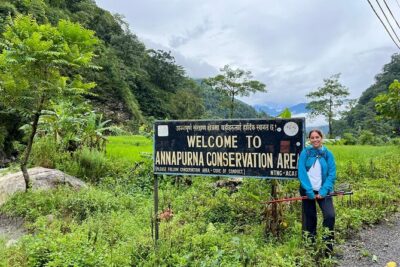
The trek begins after about an hour’s drive from Pokhara to Nayapool. From there, you walk beside the Modi River and reach Birethanti, a village with plenty of small teahouses along the route.
This opening section eases you into the trek with village paths and river scenery. You are not dropped straight into a harsh alpine setting. Instead, the route builds slowly, giving you time to settle into your boots, backpack, and walking rhythm.
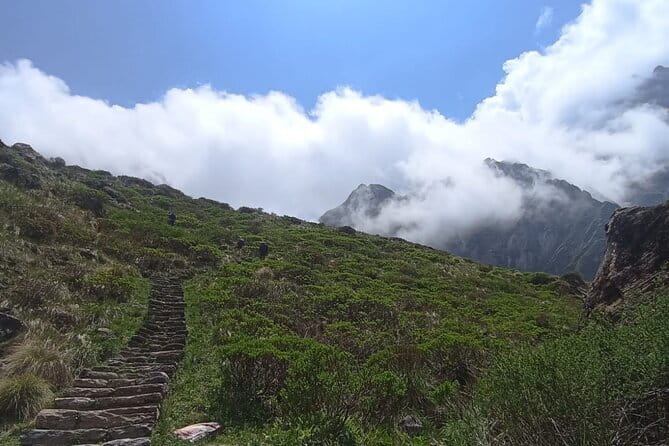
The next stage climbs from Ulleri through oak and rhododendron forest toward Banthanti and Ghorepani. The trees are a major part of the appeal here, especially when the rhododendrons are flowering. The trail also includes many stone steps, so the distance alone does not tell you how hard the day will feel.
Ghorepani is a practical overnight stop and the gateway to Poon Hill. It is popular for good reason, but that also means it can feel busier than smaller villages along the route. The reward comes early the next morning.
Day 5: Poon Hill delivers the sunrise moment

The walk to Poon Hill takes about 45 minutes and reaches 3,210 meters. You get up early, climb to the viewpoint, and watch the first light touch Dhaulagiri, Annapurna, Machhapuchhre, and nearby peaks.
This is one of the most valuable additions to the itinerary. Annapurna Base Camp is the main target, but Poon Hill gives you a wide mountain panorama before the trail turns deeper into the sanctuary. It is also an excellent place for photographs, provided the weather cooperates.
The climb is short, but the early start and altitude still matter. Bring warm layers and keep your camera or phone ready. After returning for breakfast, you continue toward Tadapani, where the route remains wooded and mountain views open through the trees.
More day hikes and treks in Kathmandu:
- Everest Base Camp Trek – 14 Days
★ 5.0 · 1,499 reviews - Everest Base Camp Trekking
★ 5.0 · 485 reviews - Nagarkot Sunrise View and Day Hiking from Kathmandu
★ 5.0 · 471 reviews - Everest Base Camp Trekking – 13 Day
★ 5.0 · 365 reviews
Days 6 and 7: Gurung villages, bridges, and stairways
From Tadapani, the trail descends through rhododendron forest, crosses the Kimsung River, and climbs to Gurjung, a Gurung village. From there, a steady ascent takes you to Chhomrong.
Chhomrong is one of the memorable settlements on the route. It spreads across a hillside with views toward the Annapurna peaks and Machhapuchhre. The village also marks an important shift in the trek, as the trail begins to feel more remote and the high mountains become a stronger presence.
Day 7 starts with stone steps dropping from Chhomrong to the Chhomrong Khola. You cross a suspension bridge, then climb steeply to Sinuwa. From there, the path continues through jungle before an easier downhill section leads toward Bamboo.
This is a day when pacing matters. Descending first and then climbing again can surprise your legs. I would keep your backpack light, drink regularly, and resist the temptation to race downhill simply because the trail points that way.
Days 8 and 9: The quiet approach to Machhapuchhre Base Camp
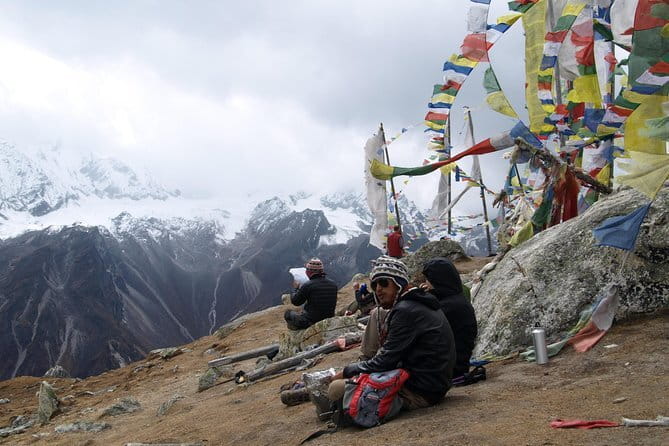
From Dovan to Himalaya, the trail passes through bamboo and rhododendron forest. The route is described as quiet, with loud noises discouraged near a temple. That small detail gives this part of the walk a different feel from the more social village sections.
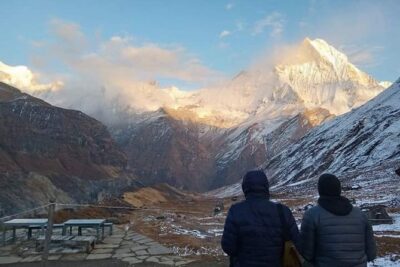
From Himalaya, you continue toward Deurali. The trail then follows a river bed before a tiring climb to Machhapuchhre Base Camp, often shortened to MBC. Here the surrounding peaks close in, with Annapurna, Machhapuchhre, Gangapurna, and Himchuli among the mountains visible around you.
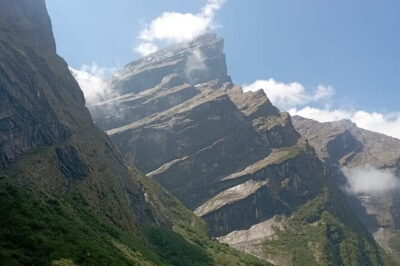
MBC is a major visual turning point. Earlier sections give you forests and distant summits. Here, the mountain walls feel much closer. The altitude also becomes more serious, so the guide’s role matters. Pay attention to how you feel, and tell your guide promptly if you become unwell.
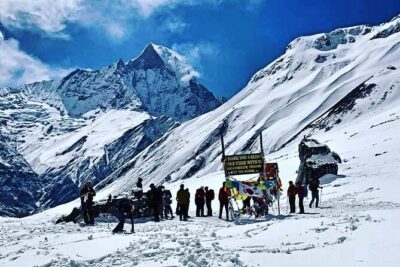
The next stretch reaches Annapurna Base Camp. The destination sits inside a dramatic mountain bowl, surrounded by peaks. You are not simply checking a named point off a map. The setting is the payoff for several days of climbing through forests, villages, and narrow high-country trails.
Day 10: Sunrise at Annapurna Base Camp, then a long descent
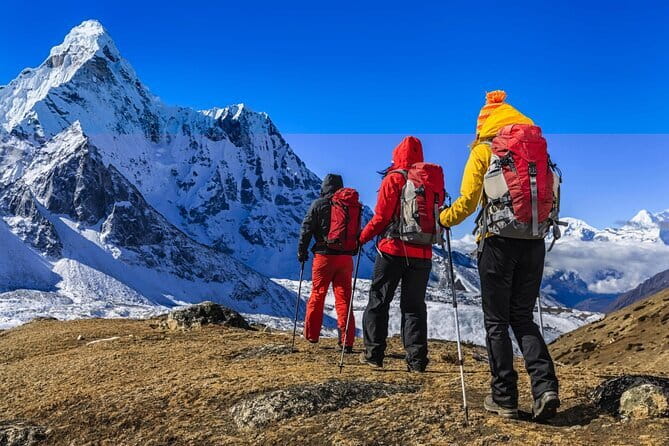
The morning at ABC is the emotional high point of the trek. You watch sunrise over the surrounding mountains, then retrace the trail through MBC, Deurali, Himalaya, and Bamboo before reaching Sinuwa.
The return is mostly downhill and is described as easier, but do not mistake downhill for effortless. Descending stone steps can be hard on knees and feet, especially after the early start. Trekking poles, if you use them, would be useful here, though the supplied details do not state that equipment is provided.
Retracing the trail has one advantage: you see familiar places from a different angle and know what lies ahead. It also means the return is less varied than a loop route. You are trading novelty for a direct, practical way back.
Days 11 and 12: Chhomrong lunch and Jhinu Danda hot springs
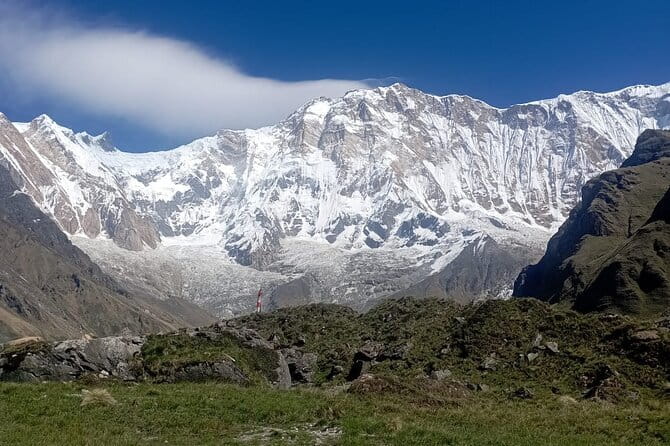
Day 11 brings you back to Chhomrong. The village’s hillside position gives you another chance to enjoy views of the Annapurnas and Machhapuchhare. Lunch is scheduled here, and the stop provides a welcome break after the previous day’s long descent.
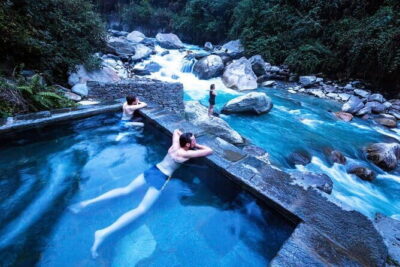
Day 12 continues to Jhinu Danda. The highlight is a natural hot spring beside the Modi River, about a 20-minute walk from the hotel. You can bathe in the pools, making this more than just another overnight stop.
This is a smart ending to the walking section. After days of climbing and descending, a hot spring offers a pleasant change of pace. Bring whatever swimwear and small towel arrangement you prefer, but the supplied details do not confirm that towels or other bathing items are provided.
Days 13 and 14: Road travel, Malekhu, and a final temple stop
The return journey includes a lunch stop at Malekhu, known for fish and fish products. The stop lasts about 30 minutes, so think of it as a practical roadside break rather than a full cultural visit.
On the final day, the vehicle passes by Pashupatinath Temple in Kathmandu. You can stop for a few minutes to take photographs, but admission is not included. The brief stop is useful if you have not seen the temple area, though it is not a guided temple tour.
The itinerary ends with transportation rather than another day on the trail. That makes the trip feel organized from airport arrival to departure, but you should check the precise final drop-off and departure timing before booking flights.
What the $925 price really covers
At $925 per person, the package offers solid value if you want a guided trek with the main logistics bundled together. Included are accommodation according to the plan, a professional guide, round-trip shared transfers, taxes and handling fees, 10 dinners, 13 breakfasts, and 10 lunches.
Accommodation is split between hotels or guesthouses in Kathmandu and Pokhara, and teahouses during the trek. Teahouses are simple mountain lodging, not resort accommodation. You are paying for a bed, a convenient trail location, and access to basic services rather than luxury.
The price does not include lunch and dinner in Kathmandu and Pokhara. It also does not include admission to Pashupatinath Temple. You should budget separately for those items, along with personal spending not listed in the package.
A useful value point is that you do not need to arrange the airport pickup, Pokhara transfer, route logistics, or mountain lodging yourself. For a first Himalayan trek, that coordination can be worth a lot. The tradeoff is less independence and a fixed schedule.
The guide and group size matter more than the price
The strongest part of this setup is the human support. Previous departures have been associated with guides named Krishna, Tulsi, Suvi, and Anil, with Arjun handling communication for at least one group. The exact person assigned to you may differ, but the guide is central to the experience.
You should expect help with route finding, daily pacing, accommodation, and general trek organization. One useful point from the supplied accounts is that a participant who felt unwell after arriving was able to request a porter shortly before departure. That suggests some flexibility, but porter service is not listed as included, so confirm the cost and arrangement before relying on it.
A group of no more than 10 is a good middle ground. You get company on the trail without the feel of a large procession. Still, group walking means your pace may not always be your own. Ask how the guide handles different fitness levels before you leave.
Who should book this trek
I would recommend this trip to an active first-time Himalayan hiker who wants a clear plan and professional support. It suits people who value mountain scenery, village stays, and a gradual route more than high-end comfort.
It is also a good fit if you want both Poon Hill and ABC in one journey. Poon Hill adds a famous sunrise viewpoint, while the base camp section provides the close mountain setting that makes the route special.
I would think twice if you dislike early starts, shared teahouse accommodation, long bus rides, or repeated uphill and downhill walking. The route is described as moderate, but altitude and stone steps can make it demanding. You should also be comfortable with the possibility that weather affects the plan.
Free cancellation is available up to 24 hours before the start time. Inside that window, refunds are not offered. If poor weather causes the experience to be canceled, you are offered another date or a full refund.
Should you book the Annapurna Base Camp Trek?
Book it if you want a well-supported, small-group route that combines Poon Hill, Annapurna Base Camp, and a Jhinu Danda hot spring without arranging every hotel, meal, and transfer yourself. The $925 cost is sensible for the amount of transport, lodging, food, and guiding included.
Do not book it expecting an easy holiday. You will walk for hours, climb many steps, sleep simply, and spend a long day on the road to Pokhara. For the right person, those are not flaws. They are the price of reaching one of Nepal’s great mountain viewpoints with a guide, a planned route, and fewer logistical headaches.
FAQ
How long is the Annapurna Base Camp trek?
The experience lasts approximately 14 days, including airport arrival, travel between Kathmandu and Pokhara, the mountain trek, the return journey, and the final stop near Pashupatinath Temple.
Where does the trek begin?
The experience begins with pickup at Tribhuvan International Airport in Kathmandu. The walking portion begins after a drive from Pokhara to Nayapool.
How many people can join the group?
The maximum group size is 10 people.
Are meals included?
Breakfast is included for 13 days, lunch for 10 days, and dinner for 10 days. Lunch and dinner in Kathmandu and Pokhara are not included.
What accommodation is provided?
Accommodation in Kathmandu and Pokhara is provided in hotels or guesthouses according to the itinerary. During the trek, you stay in teahouses.
Is the trek suitable for children?
Children must be accompanied by an adult. The activity also requires a moderate level of physical fitness.
What happens if bad weather cancels the trek?
If poor weather causes cancellation, you are offered a different date or a full refund. You can also cancel for a full refund if you do so at least 24 hours before the experience starts.
Just added around Kathmandu
- Traditional Momo Making Class★ 5.0 · 10 reviews
- Wildlife Adventure in Chitwan Nepal★ 4.0 · 4 reviews
- Walking tour of real Kathmandu through back streets.★ 5.0 · 3 reviews
- Kathmandu 2 Nights 3 Days Chitwan Jungle Safari Tour★ 5.0 · 9 reviews
- Kathmandu Street Food Walking Tour – Eat Like a Local★ 5.0 · 3 reviews
- Private Manaslu Circuit Trek at Himalayas★ 5.0 · 3 reviews
- Walking tour of Kathmandu with awesome local guides★ 5.0 · 4 reviews
- Visit Swayambhunath and Bauddhanath Stupa with Guide★ 5.0 · 5 reviews
Annapurna Treks from Kathmandu, compared.
Kathmandu to Annapurna Base Camp (ABC) 5-Day Trek
Read our review →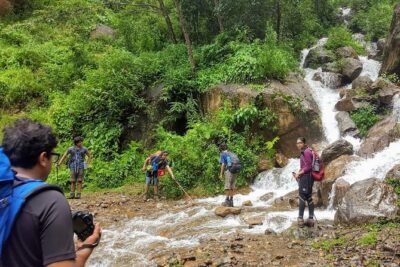
11-Day Hike Tour to Annapurna Base Camp Bliss in Kathmandu
Read our review →Browse the lists this tour appears in