
Reviewed · KATHMANDU WALKING TOURS
Kathmandu: Taste Nepali Food & Drink- Walking Tour in Thamel
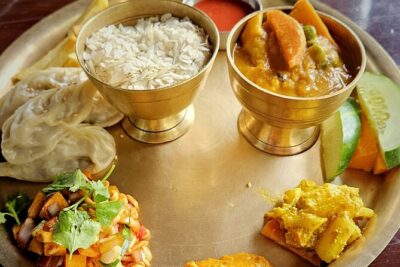
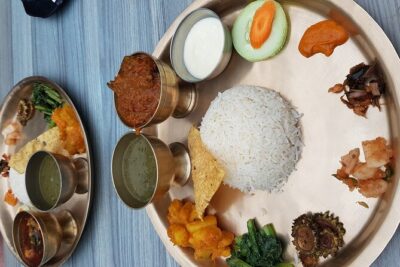
Kathmandu’s best introduction may come on a plate, especially when that plate holds momo, choila, chatamari, and sel roti. This small-group walk takes you through Thamel and nearby market streets to try local dishes, snacks, drinks, and sweets that you might not order on your own.
I like the limited group of six, which makes it easier to ask questions and follow your guide through crowded streets. I also like the range of food: you get more than one famous dish, from Newari specialties to pani puri and jalebi. The main consideration is the schedule. The activity is advertised as two hours, while the food-tasting itinerary lists three hours, so confirm the exact timing before you go.
Key points at a glance
- Guide Suresh adds a personal touch: He can adapt the food stops, including requests for vegetarian food, and answers questions about Kathmandu beyond the menu.
- More than momo: The tasting may include chatamari, sel roti, bara, choila, laphing, samosas, pani puri, chow chow sadheko, lassi, tea, coffee, and jalebi.
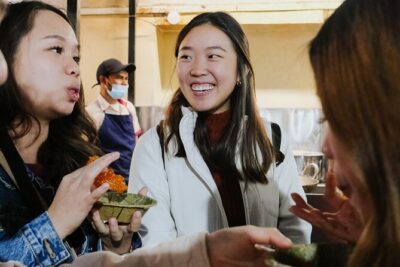
- A small group of six: This is a better setup for a street-food walk than a large tour, especially in narrow market lanes.
- The route links Thamel with old market areas: You may pass through secret streets toward Ason Bazaar, Indra Chowk, and Basantapur.
- Good value at $10: The price includes nine or more local tastings, an English or Hindi-speaking guide, taxes, and the walking tour.
- Come prepared for walking and spice: Wear comfortable shoes, carry water, and tell the guide about dietary restrictions before eating.
Why this food walk works in Kathmandu
Thamel is Kathmandu’s easiest place to begin. It has hotels, restaurants, travel offices, cafés, and shops, but the food experience becomes more interesting when you move beyond the main tourist lanes. This tour uses Thamel as a starting point and takes you toward local food streets and market areas.
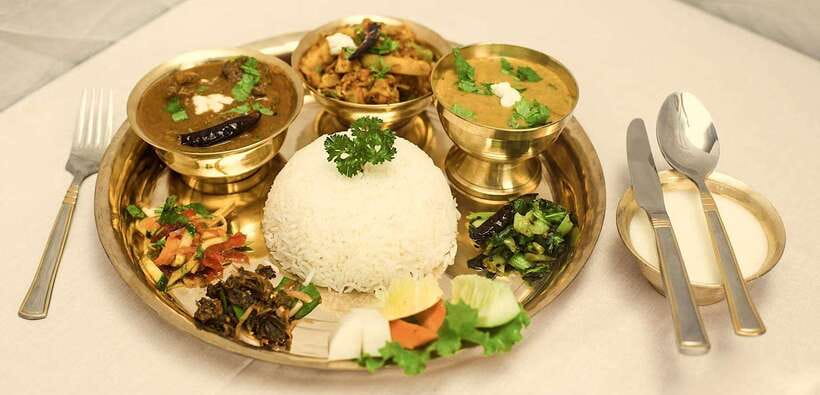
The appeal is not simply eating several dishes in a row. Food gives you a quick way to understand Kathmandu’s mixed culture. Newari cooking brings dishes such as bara, choila, and chatamari. Indian influence appears in samosas, pani puri, jalebi, and lassi. Tibetan and Himalayan connections show up in dumplings, noodles, and spicy snacks such as laphing.
You are not seated in one restaurant for the whole experience. You walk between food stops, so the city itself remains part of the tour. Streets, shopfronts, shrines, produce stalls, and spice sellers help explain why these foods belong in Kathmandu.
The group is limited to six people. That matters here. Food walks can become frustrating when a large crowd blocks a narrow lane or everyone has to wait for one person to order. A small group also gives you a better chance to ask Suresh about ingredients, customs, and places to eat later.
More walking tours in Kathmandu:
- Kathmandu Food and Drink Walking Tour
★ 5.0 · 266 reviews - Kathmandu: Food and Drink Walking Tour
★ 4.9 · 119 reviews - Walking Street Food Tour in Kathmandu
★ 5.0 · 111 reviews
Starting from Thamel and the four pickup points
You can arrange pickup from Pakanajol, Bhagwati Marg, Chhetrapati, or Z Street. These points sit around the Thamel area, so you should choose the one closest to your accommodation rather than assume hotel pickup is included.
Hotel pickup and drop-off are not part of the tour. The guide picks you up from the selected meeting point and returns you to one of four listed locations: Chhetrapati, Bhagwati Marg, Pakanajol, or Z Street. This is simple enough if you are staying nearby, but it is worth checking the map before you book.
The walk is the right format for Kathmandu’s central food districts. Traffic can make short vehicle trips slow, while market lanes are best explored on foot. Bring comfortable shoes, a hat, sunscreen, and water. Kathmandu weather can change, and the tour does not provide a way to avoid heat, dust, or rain between food stops.
Thamel to Ason Bazaar and Indra Chowk
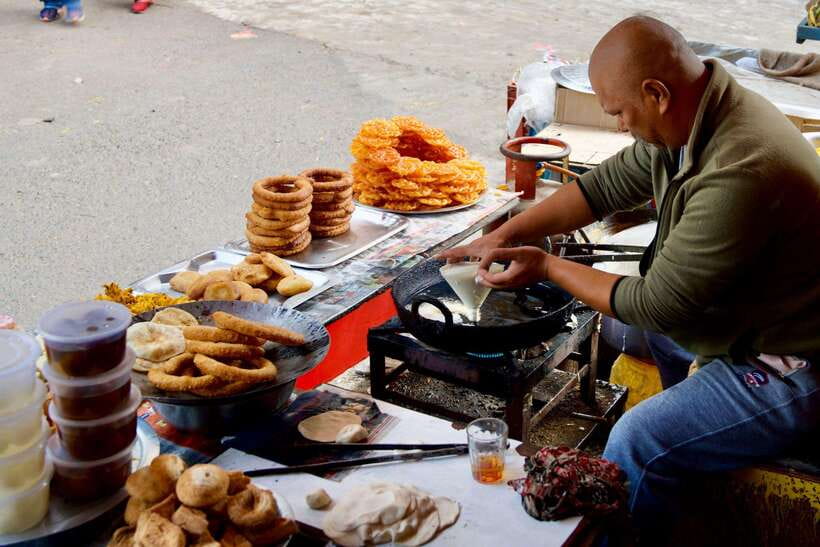
The route centers on Thamel and nearby old market streets, including Ason Bazaar and Indra Chowk. These markets are useful stops because food here is tied to daily shopping. You may see produce, spices, snacks, and household goods rather than only restaurants built for visitors.
Ason Bazaar is especially useful for seeing how ingredients move through the city. The food stalls and shops help put dishes into context. A snack such as chatpate is not an isolated specialty. It belongs to the quick, affordable food culture found in busy market districts.
Indra Chowk adds another layer. The area connects commerce, religious sites, and older city streets. As you walk, Suresh can explain how Kathmandu’s food traditions connect to local communities and the city’s past. The experience is strongest when you treat the walk as both a meal and an introduction to the neighborhoods.
Basantapur is also included among the areas associated with the route. The exact order of the stops may vary, so do not expect a strict restaurant-by-restaurant schedule. This flexibility can be useful if a food stall is closed or if you have a special request.
The main tasting: momo, chatamari, and sel roti
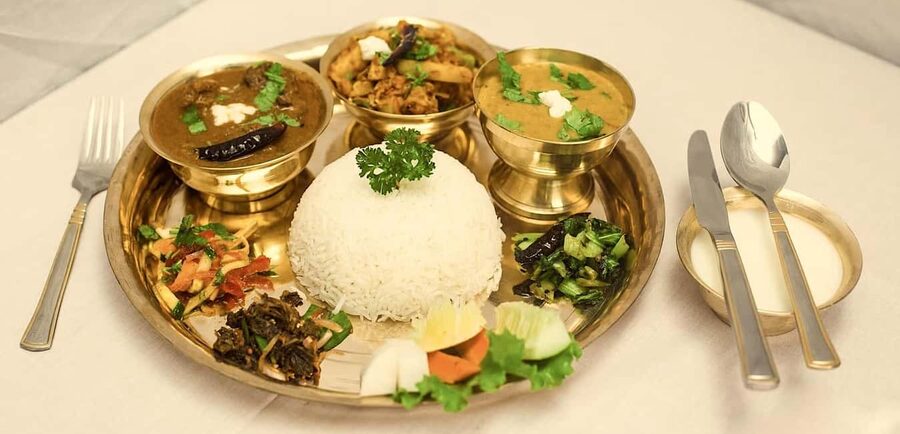
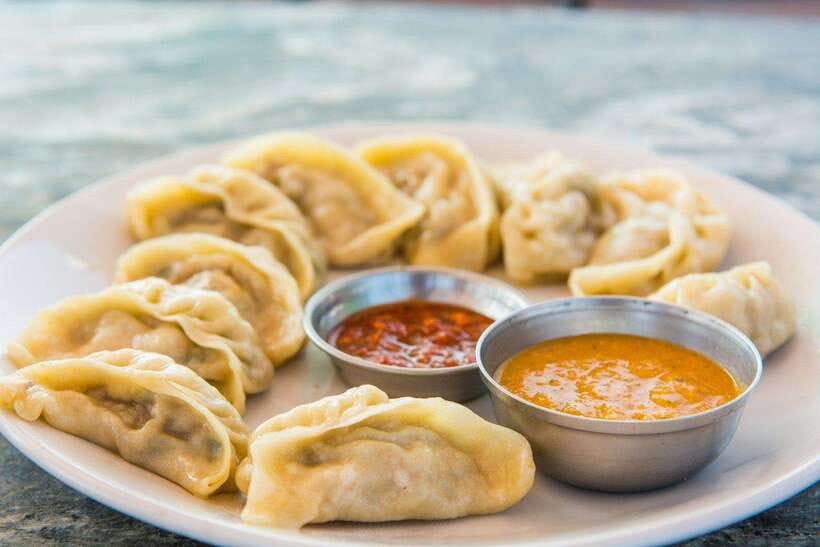
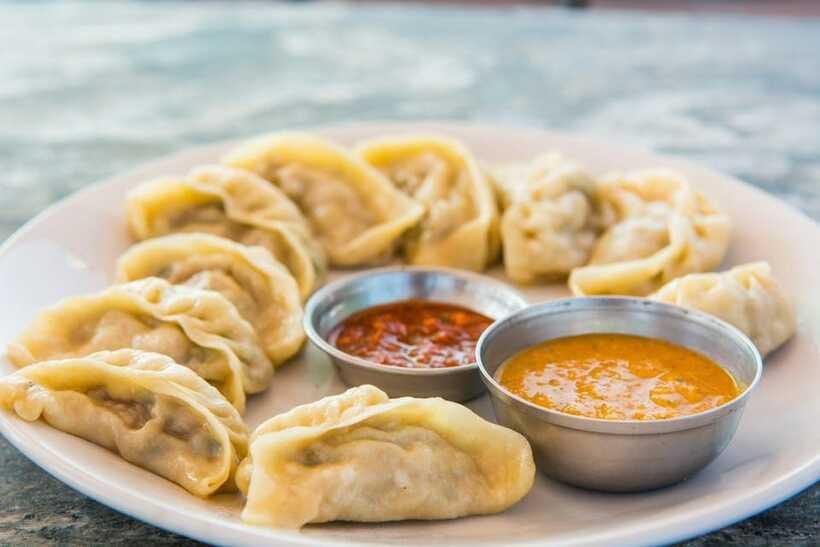
Momo is the obvious star for many people. These dumplings are a familiar Nepalese favorite, but tasting them as part of a wider meal helps you compare them with other local foods rather than treating them as the whole story. The portion size and filling may vary by stop, so the point is sampling, not ordering a large standalone meal.
Chatamari gives you a chance to try a Newari specialty. It is often described as a rice-based flatbread, and it can be a useful bridge between familiar pizza-like forms and Kathmandu’s own cooking traditions. You get a sense of how local cooks use rice in ways that differ from standard breads.
Sel roti brings a different texture. This ring-shaped rice bread is crisp on the outside and is commonly associated with festivals and home cooking. It is one of the more memorable tastings because it does not resemble the usual tourist food found in international restaurants.
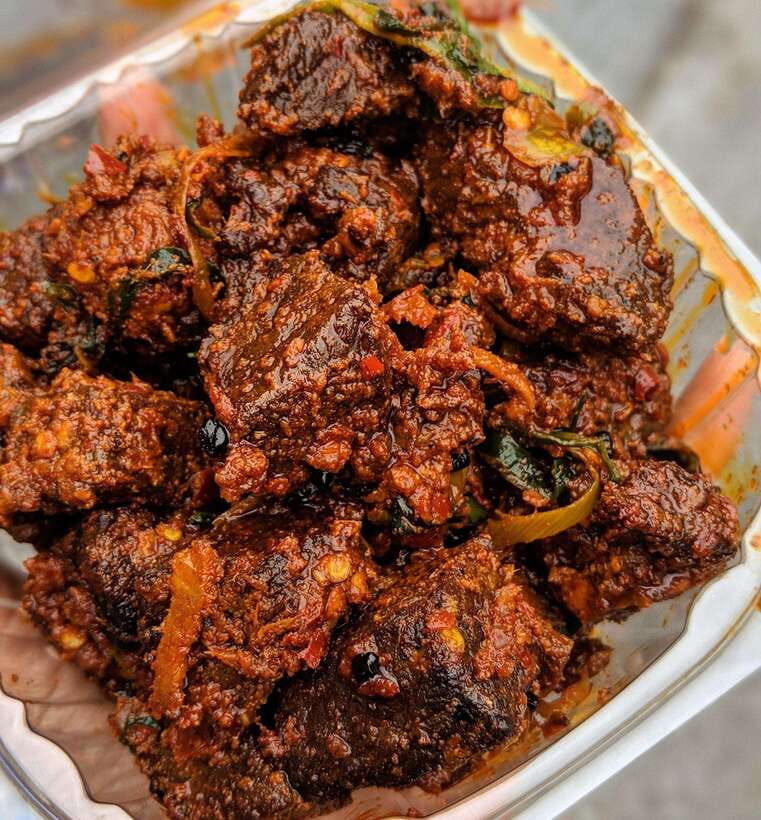
You may also try bara, a savory lentil pancake, and choila, a strongly seasoned Newari meat dish. Choila is often one of the bolder foods on the route. If you prefer mild food, ask about the spice level before taking a full bite.
More food tours in Kathmandu:
- Secret Food Tour – Food Bites and Sights Kathmandu 14+ Testings
★ 5.0 · 82 reviews - Kathmandu Secret Food Crawl & Local Market Tour
★ 4.7 · 54 reviews - Kathmandu Food & Drink and Shopping Rickshaw Tour
★ 5.0 · 48 reviews - Walking Food Tour in Hidden Local Eateries of Kathmandu
★ 5.0 · 40 reviews
Street snacks: pani puri, chatpate, and laphing
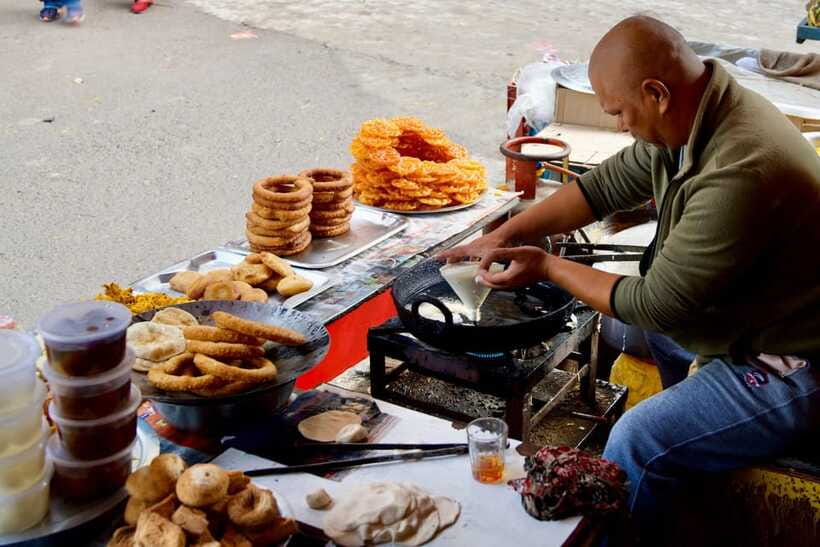
The street-food portion adds speed and edge to the tour. Pani puri combines crisp shells with flavored liquid and fillings, while chatpate brings a sharp mix of textures and seasoning. These are quick foods, often eaten standing near the stall, which makes them feel connected to the rhythm of the market.
Laphing is another useful inclusion. Its slippery texture and chili-heavy flavor can surprise anyone expecting mild noodles or dumplings. Chow chow sadheko, a seasoned noodle snack, offers a similar lesson: Nepalese street food is not one single style, and spice, sourness, crunch, and heat often appear together.
Samosas provide a more familiar point of reference. Comparing them with local snacks shows the Indian influence on Kathmandu’s food culture without suggesting that every dish comes from the same tradition.
Food hygiene is a fair concern on any street-food walk. You should follow your guide’s lead and tell Suresh about any dietary restrictions before tasting. The experience is specifically marked as unsuitable for people with food allergies, so anyone with a serious allergy should not treat the tour as a safe way to experiment.
Newari dishes and Kathmandu’s food story
Newari food is one of the strongest reasons to choose this walk. Kathmandu’s Newar community has its own cooking traditions, and dishes such as bara, choila, and chatamari give you a better sense of that local identity than a generic restaurant meal.
I like that the tour places these foods next to Tibetan, Indian, and other indigenous influences. Kathmandu has long been a meeting point, and its menus reflect that. A single walk can move from dumplings to lentil pancakes, rice breads, spicy noodles, fried snacks, and syrup-soaked sweets.
Suresh is also part of the value. He speaks English and Hindi, and he can discuss food as well as general questions about Kathmandu. One particularly useful detail is his flexibility with special requests. Vegetarian food was accommodated for one booking, which suggests that you should raise the issue early instead of waiting until you are standing at a food stall.
Still, flexibility is not the same as a guaranteed vegetarian or allergy-free menu. If you have strict dietary needs, ask before booking. The tour is built around tasting local foods, not around a controlled kitchen or fixed dietary plan.
Local drinks and the sweet finish
The drinks help break up the meal. Lassi brings a cool, yogurt-based option after spicy snacks. Masala tea offers warmth and fragrance, while locally brewed coffee may appeal if you prefer something more familiar.
Water is not listed as an included drink, so carry your own bottle. You can also ask about each drink before ordering, especially if you are sensitive to dairy, caffeine, or sugar. Alcoholic drinks are not included.
The final sweet is jalebi, served warm and soaked in syrup. It is a fitting finish after savory food, though it is very sweet. If you have a small appetite, pace yourself early. Nine or more tastings can add up even when each serving is modest.
The food count deserves a practical note. The tour advertises nine or more local foods, but one booking described tasting about five or six types of food. That may reflect portion sizes, substitutions, or the difference between a full tasting list and what is served on a particular day. Book it for variety and guidance, not for a giant meal.
How much value do you get for $10?
At $10 per person, this is inexpensive for a two-hour guided food walk, particularly because the price includes the tastings, guide, taxes, and access to places you may not find alone. If you are new to Kathmandu, the orientation alone can make the cost worthwhile.
The value depends on how much food is served and how long the walk lasts. The published duration says two hours, while the detailed route lists food tasting for three hours. Clarify this before setting up another activity, dinner reservation, or airport transfer.
You are also paying for interpretation. A plate of momo costs less on its own, but finding several foods, understanding what you are eating, and moving through the markets with a local guide can save you time and uncertainty. The small group improves that value.
Do not expect a luxury dining experience. This is a street-food walk, and the setting may be simple. The reward is range, local context, and a chance to ask questions while you eat.
Who should book this Kathmandu food tour?
I would choose this for a first visit to Kathmandu, especially if you are staying near Thamel and want a quick introduction to local food. It also suits people who enjoy trying several small portions rather than sitting down to one long meal.
It is a good match for curious eaters who want more than momo. You can sample Newari dishes, Indian-influenced snacks, local drinks, and sweets in one outing. The tour also works well for a small group of friends or couples who prefer a relaxed walk over a formal food class.
It is less suitable if you need guaranteed allergen control, use a wheelchair, dislike walking, or want a fixed restaurant menu. Smoking is not allowed. Comfortable shoes are essential, and you should be ready for changing weather and crowded market streets.
The guide is a major part of the experience. Suresh received especially strong praise for friendliness, patience, flexibility, and getting the group back on time. Those qualities matter on a food walk because the best moments often come from questions and small changes to the route.
Should you book it?
Book this tour if you want a low-cost, small-group introduction to Kathmandu’s food culture, with a guide who can adjust the experience and explain what you are eating. The combination of Thamel, old market streets, Newari dishes, street snacks, local drinks, and jalebi gives you a useful first taste of the city.
Before booking, confirm the actual duration and tell the guide about vegetarian needs or other restrictions. If you are comfortable eating street food and walking for two to three hours, $10 is a strong value. If you need strict food controls or step-free access, choose another activity.
FAQ
How long does the food tour last?
The activity information gives a duration of two hours, while the food-tasting itinerary lists three hours. Confirm the exact schedule when booking.
Where can I meet the guide?
Pickup is available from Pakanajol, Bhagwati Marg, Chhetrapati, or Z Street. Hotel pickup and drop-off are not included.
Where does the tour finish?
Drop-off is available at Chhetrapati, Bhagwati Marg, Pakanajol, or Z Street.
Which languages does the guide speak?
The live guide speaks English and Hindi.
Is vegetarian food available?
Vegetarian food can be accommodated if you notify the guide. You should mention dietary restrictions before the tour.
Are drinks and food included?
Nine or more local food tastings, along with items such as lassi, tea, or coffee, are included. Alcoholic drinks are not included.
Just added around Kathmandu
- Traditional Momo Making Class★ 5.0 · 10 reviews
- Wildlife Adventure in Chitwan Nepal★ 4.0 · 4 reviews
- Walking tour of real Kathmandu through back streets.★ 5.0 · 3 reviews
- Kathmandu 2 Nights 3 Days Chitwan Jungle Safari Tour★ 5.0 · 9 reviews
- Kathmandu Street Food Walking Tour – Eat Like a Local★ 5.0 · 3 reviews
- Private Manaslu Circuit Trek at Himalayas★ 5.0 · 3 reviews
- Walking tour of Kathmandu with awesome local guides★ 5.0 · 4 reviews
- Visit Swayambhunath and Bauddhanath Stupa with Guide★ 5.0 · 5 reviews
Kathmandu Walking Tours, compared.
Walking Food Tour in Hidden Local Eateries of Kathmandu
Read our review →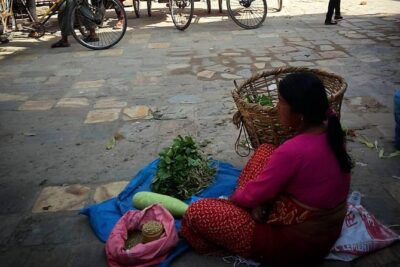
Old Kathmandu Walking Tour, Historic World Heritage Durbar Square
Read our review →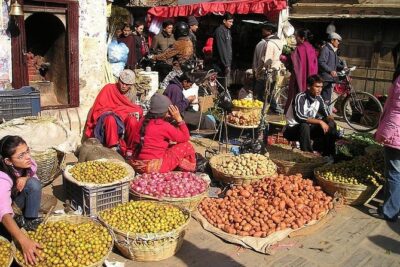
Browse the lists this tour appears in