
Reviewed · KATHMANDU UNESCO WORLD HERITAGE TOURS
Kathmandu UNESCO Heritage Tour with Local Food Tasting
Kathmandu’s best introduction may be found in the contrast between Swayambhunath’s quiet hilltop shrine and the packed lanes of Asan Market. In five hours, you move from prayer flags and valley views to spice stalls, old temples, and a generous tasting session that can feel more like lunch than a snack stop. I especially like the chance to see the Kumari’s window and the focus on foods you might otherwise miss.
I also like that this is a private group tour, with transport, entrance fees, water, and an English-speaking guide included in the $64 price. The main point to consider is pace: three major areas, a lot of walking, shopping time, and many food samples fill the half-day. If you prefer slow museum visits, this may feel busy.
Key points to know before you book
- Swayambhunath offers a calm start and wide views: The hilltop stupa gives you a peaceful break from Kathmandu’s traffic and noise.
- Rajan has guided recent tours: His explanations of the Kumari, Kal Bhairav, Swet Bhairav, and local customs add depth to the monuments.
- The food portion is substantial: Expect momo, bara, chatamari, yomari, gwaramari, Newari samaybaji, and Indrachowk lassi.
- Asan Market shows ordinary Kathmandu life: Spices, grains, brassware, saris, jewelry, and seasonal goods make this more than a quick photo stop.
- The $64 fee covers the main extras: Transport, entrance fees, food, water, tax, and a private English-speaking guide are included.
- The tour begins and ends in Kathmandu: Pickup and drop-off options are available in Thamel and Kathmandu.
A five-hour route through Kathmandu’s old core
This tour works because it links three different sides of the city. Swayambhunath gives you religion and views. Kathmandu Durbar Square supplies royal history and living traditions. Asan Market brings you into the practical, noisy business of daily life.
You begin with pickup in Kathmandu, with Thamel listed as an option. From there, the route heads to Swayambhunath, then Kathmandu Durbar Square, and finally Asan Street. The stated time at each main stop is about one hour, with transport connecting the areas and food tasting built into the market section.
That schedule gives you a useful first look at central Kathmandu, but it is not designed for long, unhurried visits. You will see a lot in a short period. If your goal is to cover the city’s classic sights while letting a local guide handle the route, the timing works well.
More UNESCO heritage sites in Kathmandu:
- Private Kathmandu Sightseeing Tour | UNESCO World Heritage sites
★ 5.0 · 756 reviews - Kathmandu: Full Day 7 UNESCO Tour with Lunch – Private/Group
★ 5.0 · 415 reviews - Kathmandu: Full Day Top 4 UNESCO Tour with Lunch – Private/Group
★ 5.0 · 269 reviews
Swayambhunath, prayer flags, monkeys, and valley views
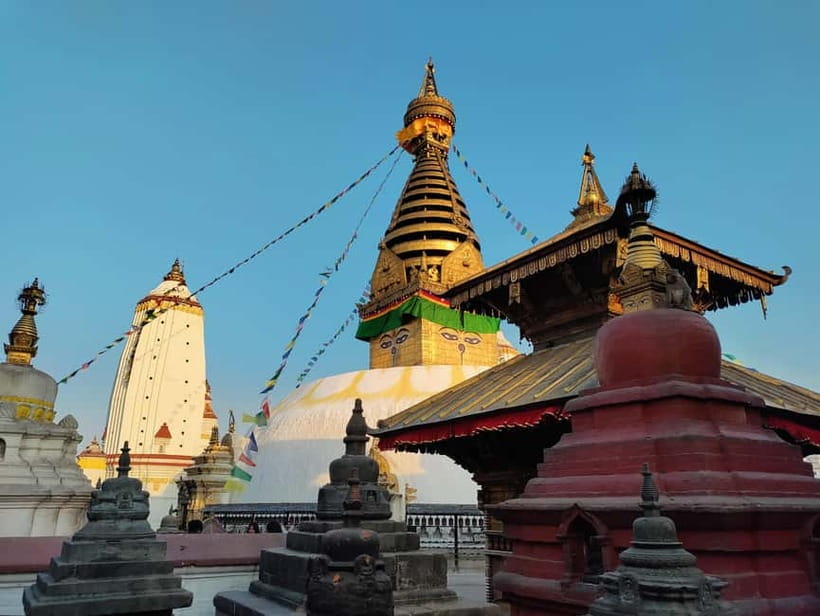
Swayambhunath is also known as the Monkey Temple, a name that points to one of the first things you may notice around the hilltop complex. The stupa sits above the city, with prayer flags, Buddhist imagery, and views across the Kathmandu Valley.
Your guide can help you understand the religious details rather than leaving you to simply circle the monument. The gentle sound of chanting and the setting above the city create a calmer mood than you will find below. This is a good first stop because it gives you a sense of Kathmandu as a spiritual center before the tour returns to its crowded streets.
The planned guided visit lasts about an hour. That is enough to take in the main setting, hear about Buddhist culture, and enjoy the view, but not enough for a long personal exploration of every corner. You should also expect steps and an uphill setting, since the stupa is on a hilltop. The supplied details do not specify accessibility arrangements, so anyone who needs them should ask before booking.
I like the contrast here. Kathmandu can feel loud and compressed at street level, while Swayambhunath opens the view and slows the mood. Bring your camera, but give yourself time to look beyond the city panorama. The prayer flags and ritual activity are part of a living place of worship, not just decoration.
Kathmandu Durbar Square and the Kumari’s window
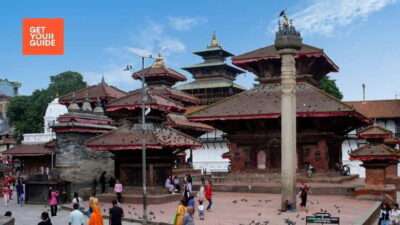
The next major stop is Kathmandu Durbar Square, a UNESCO World Heritage Site filled with temples, palaces, carved woodwork, and public religious spaces. The square is not just an old monument zone. It remains tied to local traditions, which is why a guide matters.
A key possibility here is seeing the Kumari, Nepal’s Living Goddess, appear at her window. The timing of any appearance is not guaranteed by the tour details, so you should treat this as a fortunate possibility rather than a promised performance. Even if you do not see her, your guide can explain why the Kumari holds such an important place in Kathmandu’s culture.
The tour also points out Kal Bhairav and Swet Bhairav. These sacred figures have their own place in the religious life of the square, and a guide can explain what you are looking at and why it matters. Without that context, the carved figures and temple facades can blur into a long series of impressive sights.
You have about one hour here for a guided visit and sightseeing. That is a sensible introduction, especially if Kathmandu Durbar Square is your first major historic site in Nepal. It is less suitable if you want to inspect every carving, enter every building, or spend a full afternoon with a museum collection.
The square can also be active and crowded. Keep your attention on the guide and your surroundings. The tour’s private format should make it easier to ask questions and adjust the pace within reason, and one recent booking described Rajan as flexible with the schedule.
Asan Market, where the city gets practical
Asan Market is the most everyday part of the route. Traders sell spices, grains, traditional goods, seasonal produce, saris, handmade jewelry, and brass utensils. This is where Kathmandu feels less like a collection of monuments and more like a working city.
The market section includes guided walking, free time, shopping, sightseeing, local snacks, and food tasting. That combination is useful because your guide can point out what you are seeing while still giving you room to browse. You do not have to treat the market as a fast photo stop.
The lanes are likely to feel crowded and full of competing sights and smells. That is part of the appeal, but it can also be tiring. If you dislike tight streets or prefer a quiet setting, this may be the least comfortable portion of the tour. The advantage of a private guide is that you can ask questions about products and local habits instead of simply moving through the crowd.
Asan is also where the tour’s food focus comes into its own. Rather than stopping for one standard meal, you sample several foods associated with Kathmandu and Newari cooking. The exact order and portion sizes can vary, but you should arrive hungry.
More food tours in Kathmandu:
- Kathmandu Food and Drink Walking Tour
★ 5.0 · 266 reviews - Kathmandu: Food and Drink Walking Tour
★ 4.9 · 119 reviews - Walking Street Food Tour in Kathmandu
★ 5.0 · 111 reviews - Secret Food Tour – Food Bites and Sights Kathmandu 14+ Testings
★ 5.0 · 82 reviews
What you will taste, from momo to Indrachowk lassi
The food is one of the strongest reasons to choose this tour. The list is unusually broad for a five-hour city walk, and one booking described the amount of food as more than expected. Plan for a full tasting experience, not a token bite.
Here is what may appear during the food portion:
- Momo: Nepali dumplings, a familiar favorite and an easy first taste of local street food.
- Newari samaybaji: A platter that may include beaten rice, marinated meat, fried eggs, and pickles. It gives you a sense of the variety in a traditional Newari spread.
- Yomari: A sweet steamed dumpling filled with jaggery, useful for ending the savory part of the tasting.
- Bara: A savory lentil pancake with a firm, satisfying texture.
- Chatamari: A rice flour crepe often called Nepali pizza, though that comparison only goes so far.
- Gwaramari: Crisp fried bread with a simple, snackable character.
- Indrachowk lassi: A refreshing yogurt drink that balances the spices and fried foods.
The tour says you can eat as much as you like, but it is sensible to pace yourself. With this many dishes, you may fill up before reaching the final tasting. If you have food allergies, dietary restrictions, or simply cannot eat certain ingredients, ask the provider before booking. The supplied details do not give a separate vegetarian, vegan, halal, or allergy menu.
I like the way the food is tied to the market walk. You are not just being handed a plate in a restaurant. You are seeing where local ingredients and goods are sold, then sampling dishes that connect to the city’s food culture. That makes the tasting more memorable and more useful for anyone who plans to eat independently in Kathmandu afterward.
Rajan and the value of a private guide
The guide can make or break a compact cultural tour. Recent bookings identify Rajan as the guide, and the descriptions of his work emphasize clear explanations, courtesy, care, and flexibility. He is also described as someone who helped make the history and culture of the sites easier to understand.
That matters most at Kathmandu Durbar Square and Swayambhunath. A guide who can explain the meaning of a figure, ritual, or carved detail gives you a better visit than a quick walk past the same object. Rajan’s role also appears to include helping you navigate the market and introducing the food rather than leaving you to guess what is on the plate.
The tour is sold as a private group experience, not a large shared coach outing. That usually gives you more room to ask questions and discuss what interests you, though the exact group size is not stated. Transportation is included, as is a bottle of drinking water.
The driver also received specific praise for being warm and skillful. That is a small but useful detail in Kathmandu, where getting between hilltop sites, old squares, and market streets is part of the experience. You are not expected to arrange each transfer yourself.
Is $64 a fair price?
At $64 per person, this tour offers solid value if you want several costs bundled together. The fee includes entrance fees, transportation, local food, an English-speaking guide, drinking water, and government taxes. You are paying for a private, guided half-day rather than simply hiring transport between sights.
The food component helps justify the price. A single meal might cost less, but this experience combines many tastings with a market visit and cultural explanation. Entrance fees and transport also remove small expenses that can add up during an independent morning.
The value is weaker if you already know Kathmandu well, prefer to eat on your own, or want to spend long periods at one site. You may also buy personal items at Asan Market, and those purchases are not included. Think of the $64 as payment for structure, interpretation, and convenience, not as a shopping budget.
The tour offers free cancellation up to 24 hours before departure and lets you reserve now and pay later. Starting times depend on availability. Those policies are useful if your Kathmandu schedule is still changing.
Who should choose this Kathmandu tour?
I would recommend it most strongly to first-time visitors with limited time. You get three different types of Kathmandu in one outing: a Buddhist shrine, a royal square, and a working market. The food tasting adds something that a standard monument tour often lacks.
It also suits people who want a private setting and direct access to a guide. If you are curious about local customs, want help ordering or identifying food, or prefer not to manage city transfers yourself, the format is practical.
Families and small groups may also appreciate the variety, though the route includes walking, steps, crowds, and a full food schedule. Anyone who needs a slow pace or specific dietary planning should confirm details before paying.
You should skip it if your main aim is a long museum visit, a relaxed café morning, or a serious shopping expedition. The five-hour schedule is packed. You will gain range rather than complete depth.
My call: book it for a first taste of Kathmandu
Book this tour if you want a well-rounded introduction and you like the idea of learning through food. The strongest parts are the calm views from Swayambhunath, the cultural context at Durbar Square, and the chance to see Kathmandu life unfold in Asan Market.
The food list is generous, and Rajan’s reported flexibility is useful when a city presents an unexpected opportunity or a slower moment. Just keep your expectations clear: seeing the Kumari is a possibility, not a guarantee, and five hours will give you a lively overview rather than a thorough study of each site.
For $64, the combination of private transport, entrance fees, a guide, and extensive tastings makes this a sensible choice for a first Kathmandu visit. Arrive ready to walk, keep room for the food, and accept that the city’s best lesson may come from a crowded market lane rather than a polished monument.
FAQ
How long does the Kathmandu heritage tour last?
The tour lasts five hours.
Where can I be picked up?
Pickup options are listed in Kathmandu and Thamel.
Where does the tour end?
Drop-off options are listed for Thamel and Kathmandu.
Which sites are included?
The tour visits Swayambhunath Stupa, Kathmandu Durbar Square, and Asan Street Market.
Is the tour private?
Yes. It is offered as a private group experience.
What language does the guide speak?
The live tour guide speaks English.
Is food included?
Yes. Local food is included, with tastings such as momo, Newari samaybaji, yomari, bara, chatamari, gwaramari, and Indrachowk lassi.
Are entrance fees included?
Yes. Entrance fees for the visiting sites are included.
Can I cancel for a refund?
You can cancel up to 24 hours in advance for a full refund.
Just added around Kathmandu
- Traditional Momo Making Class★ 5.0 · 10 reviews
- Wildlife Adventure in Chitwan Nepal★ 4.0 · 4 reviews
- Walking tour of real Kathmandu through back streets.★ 5.0 · 3 reviews
- Kathmandu 2 Nights 3 Days Chitwan Jungle Safari Tour★ 5.0 · 9 reviews
- Kathmandu Street Food Walking Tour – Eat Like a Local★ 5.0 · 3 reviews
- Walking tour of Kathmandu with awesome local guides★ 5.0 · 4 reviews
- Private Manaslu Circuit Trek at Himalayas★ 5.0 · 3 reviews
- Visit Swayambhunath and Bauddhanath Stupa with Guide★ 5.0 · 5 reviews
Kathmandu UNESCO World Heritage Tours, compared.
Private Kathmandu Sightseeing Tour | UNESCO World Heritage sites
Read our review →
Full Day 7 UNESCO Tour with Lunch – Private/Group
Read our review →
Full Day Top 4 UNESCO Tour with Lunch – Private/Group
Read our review →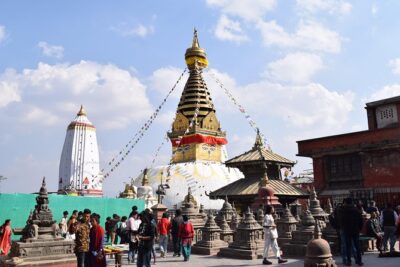
Browse the lists this tour appears in