
Reviewed · KATHMANDU TEMPLE AND MONASTERY TOURS
Oldest Local Market Walking Tour with Living Goddess Kumari
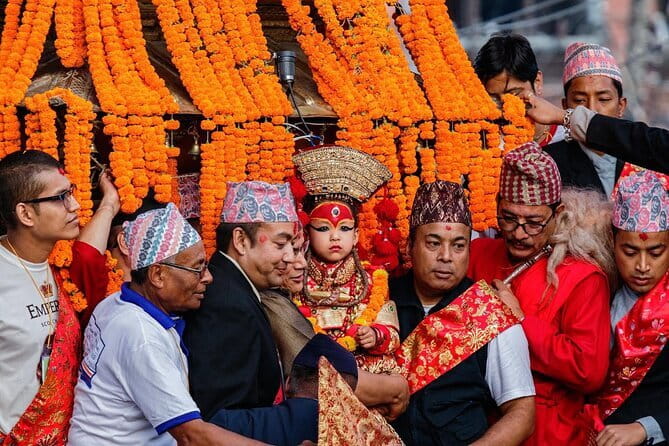
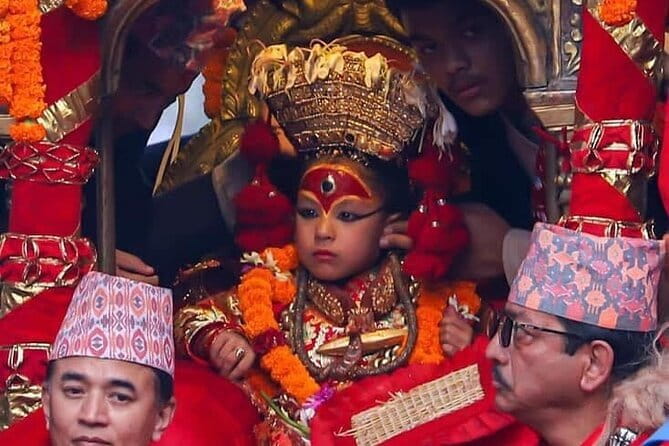
The most unusual part of this Kathmandu walk is the chance to see the Kumari, a pre-pubescent girl regarded in Nepali tradition as the living form of the goddess Taleju. The visit takes place at Kumari Chowk, after you pass through old market lanes and the courtyards of Kathmandu Durbar Square.
I like the route for two reasons: it gives you a quick, practical introduction to Kathmandu, and it links ordinary daily shopping with major religious and royal landmarks. The guide also leads you through Ason Bazaar, where spices, clothes, food, instruments, and other local goods make the walk feel connected to present-day life.
The main consideration is time. Two hours is enough for an orientation, but not enough for a slow market visit, extended shopping, or a careful look at every temple. You also pay the NPR 1,000 monument entrance fee separately from the $40 tour price.
Key points
- See Kumari Chowk: The tour includes a short opportunity to witness Kathmandu’s living goddess.
- Walk through Ason Bazaar: Explore one of Kathmandu’s oldest local markets, with shops selling food, clothing, spices, instruments, and everyday goods.
- Visit Durbar Square: Spend about an hour among historic temples, palaces, courtyards, and the Kumari House.
- Start in Thamel: Meet at Chhaya Devi Complex and walk through Thamel Market before reaching Ason.
- Small-to-medium group size: The maximum is 20 people, with group discounts available.
- Simple two-hour format: This is a useful first look at central Kathmandu, not a full-day cultural tour.
From Chhaya Devi Complex into old Kathmandu
The walk begins at the main gate of Chhaya Devi Complex on Amrit Marg. This is a practical starting point near Thamel, one of Kathmandu’s main areas for hotels, restaurants, shops, and tour services.
From there, you walk through Thamel Market before reaching Ason Bazaar. That opening stretch matters because it shows you the change from a district shaped heavily by tourism to a market area used for everyday local shopping.
You do not need transport between the stops. The route is on foot, and the tour ends back at the starting point. Since the activity lasts about two hours, wear comfortable shoes and keep your plans afterward flexible enough for a little walking time.
The company provides an English-speaking guide, along with its service charge and tax. A guide is especially useful here because Ason and the older parts of Kathmandu can feel confusing at first. The value is less about covering a large distance and more about helping you understand what you are seeing as the streets change around you.
More walking tours in Kathmandu:
- Kathmandu Food and Drink Walking Tour
★ 5.0 · 266 reviews - Kathmandu: Food and Drink Walking Tour
★ 4.9 · 119 reviews - Walking Street Food Tour in Kathmandu
★ 5.0 · 111 reviews
Ason Bazaar, where Kathmandu shops for daily life
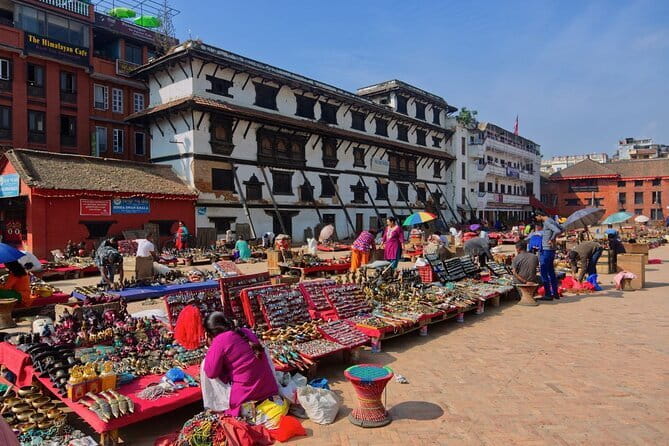
The first main stop is Ason Bazaar, with about 30 minutes set aside for the area. It is described as one of Kathmandu’s oldest and most popular local markets, and the range of goods is broad: food, clothing, spices, instruments, and other merchandise.
I like this part of the walk because it gives the tour a grounded start. You are not beginning with a grand monument and then trying to imagine how people live around it. You first see the working market, where shopping and religious life overlap in the older center of the city.
Ason is also a useful place to get your bearings. The narrow streets, shop fronts, stalls, and traditional buildings give you a quick sense of central Kathmandu’s pace. The tour does not promise a dedicated shopping session, so you should think of this as a guided look rather than time set aside for serious buying.
Thirty minutes passes quickly. If you want to compare spices, inspect instruments, or stop for food, you may find the schedule tight. The guide can help you focus on the parts of the market that best suit your interests, but the tour is designed to keep moving toward Durbar Square.
Food and drinks are not included in the price. That keeps the booking simple, but you should budget separately if you want to purchase anything during the walk.
Kathmandu Durbar Square and its royal courtyards
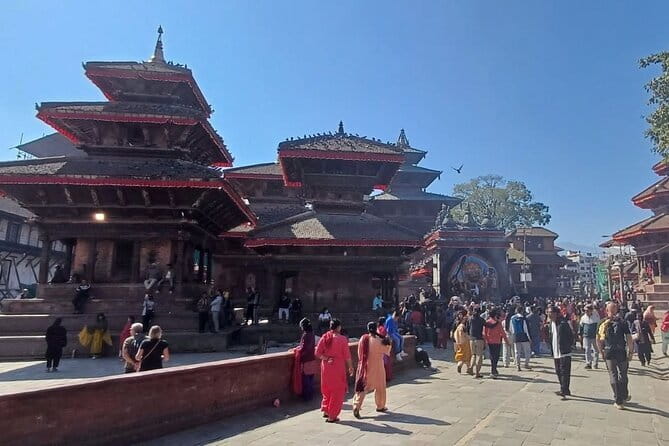
The route continues to Kathmandu Durbar Square, with about one hour planned here. This is the longest stop, and rightly so. The square contains palaces, temples, courtyards, and the Kumari House, all within a compact historic center.
The site is a UNESCO World Heritage site, and its appeal is not limited to one building. You move through a collection of spaces that show how religious practice, royal power, and city life once came together in Kathmandu.
I would use this hour as the main history portion of the walk. A good guide can give the buildings context while you look at the carved details and temple forms around the square. The tour description specifically highlights intricate architecture, temples, courtyards, and the Kumari House, so this is where the experience shifts from market observation to heritage sightseeing.
The monument entrance fee is not included. You should expect to pay NPR 1,000 per person in addition to the $40 tour price. That extra charge is important when comparing this walk with other short Kathmandu activities. The tour fee covers the guide and company service costs, but not the principal monument admission.
One hour is a reasonable introduction. It gives you time to see the main setting without turning a short walking tour into a full afternoon. If you enjoy architecture, religious art, or palace history, you may want to return to Durbar Square later with more time. This experience gives you a useful first look rather than an exhaustive visit.
The Kumari House and a brief meeting with tradition
The Kumari visit is the emotional center of the walk. At Kumari Chowk, you can witness the living goddess, known as the Kathmandu Kumari.
In Nepali culture, the Kumari is a pre-pubescent girl regarded as the living incarnation of Taleju. She lives in the Kumari Ghar, and her role is tied to longstanding religious beliefs and traditions. The visit is brief, listed at about 10 minutes, so it is best approached with patience and respect rather than as a long presentation.
The short timing is not necessarily a weakness. It keeps the visit focused and recognizes that this is a religious tradition, not a staged performance built around a tour schedule. You may see the Kumari from the designated area, but the experience should remain quiet and attentive.
The strongest praise connected with this tour centers on the Kumari’s powerful gaze and the sense that seeing her is a special moment. That makes this more than a standard market walk. Still, expectations matter. The tour cannot promise a long interaction, a private audience, or extensive explanation inside the Kumari House. You are there to witness a brief part of a living tradition.
The guide can help you understand the setting and the customs around it. Follow the guide’s instructions, keep the visit respectful, and avoid treating the Kumari as a photo opportunity. The value comes from the cultural meaning of the place, not from the length of the stop.
More temples and monasteries in Kathmandu:
- Kathmandu Spiritual Sites: Bodhnath & Pashupatinath Tour
★ 5.0 · 185 reviews - Kathmandu: Nagarkot Sunrise and Hike Tour to Changu Narayan
★ 4.7 · 151 reviews - From Kathmandu: Everest View from Nagarkot & hike to Changu
★ 4.8 · 140 reviews - Kathmandu: Chandragiri Cable Car and Monkey Temple Tour
★ 4.8 · 139 reviews
Why the market and Kumari visit work well together
These two parts of Kathmandu can feel very different at first. Ason Bazaar is practical and commercial, while Kumari Chowk is tied to religious belief and formal tradition. Putting them on the same route gives you a fuller picture of the old center.
I like that the tour does not isolate the Kumari from the city around her. You first walk through streets where people shop for daily needs, then enter the historic square and see how older religious and royal institutions fit into the same urban setting.
That combination also makes this a useful first activity in Kathmandu. The walk helps you connect Thamel with Ason and Durbar Square, rather than treating each place as a separate point on a map. After the tour, you will have a better idea of where the old center begins and how the market and monument areas relate to one another.
The experience is not designed for deep study. The Ason stop lasts 30 minutes, the square receives one hour, and the Kumari visit lasts about 10 minutes. Those limits make the tour easy to fit into a first day, but they also mean you will need another visit if you want time for detailed shopping, photographs, or a long architectural inspection.
What $40 buys you
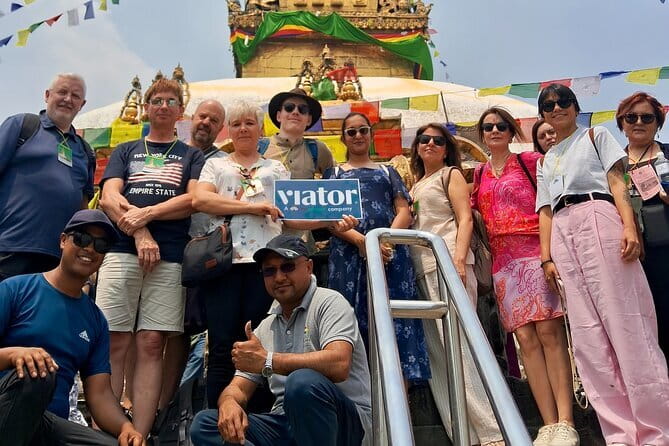
At $40 per person, this is not the cheapest way to walk through central Kathmandu. The separate NPR 1,000 monument fee raises the total cost, and food, drinks, and guide tips are extra.
The price makes more sense if you value having an English-speaking guide connect the stops for you. You are paying for a planned route, local explanation, company service charges, and a chance to visit three very different parts of the city within two hours.
For someone staying in Thamel, the convenience is useful. The tour starts and ends at Chhaya Devi Complex, so you do not need to arrange a taxi between the market and Durbar Square. You also avoid spending your first morning working out the route on your own.
The value is strongest for first-time visitors who want orientation and cultural context. It is weaker for confident walkers who only want to enter Durbar Square or shop independently in Ason. Those visitors may prefer to arrange their own visit and pay only the monument fee.
Group discounts may improve the price for families or parties booking together. The maximum group size is 20 people. That is not an intimate private walk, but it is still limited enough to keep the route organized compared with a large city tour.
Timing, group size, and practical details

The tour is advertised at approximately two hours. The planned stops add up to about 100 minutes, leaving the rest for walking between locations, gathering the group, and moving through the market streets.
That schedule is compact. You will want comfortable footwear and a small bag that does not get in the way in crowded streets. The activity is mobile-ticket friendly, and confirmation is provided when you book.
Most people can take part, according to the activity information. No special physical requirements are listed, but this is a walking tour through market streets and an old historic district. If you need a specific accessibility arrangement, ask the provider before booking because no detailed accessibility information is supplied.
The tour accepts up to 20 people. If you prefer a private or very quiet experience, confirm the group arrangement before you pay. If you are happy with a shared walk, the group format can be a practical way to keep the cost below a private guide.
Free cancellation is available if you cancel at least 24 hours before the start time. A cancellation within 24 hours is not refunded, and changes made inside that period are not accepted. The cut-off follows Kathmandu local time.
Who will get the most from this walk
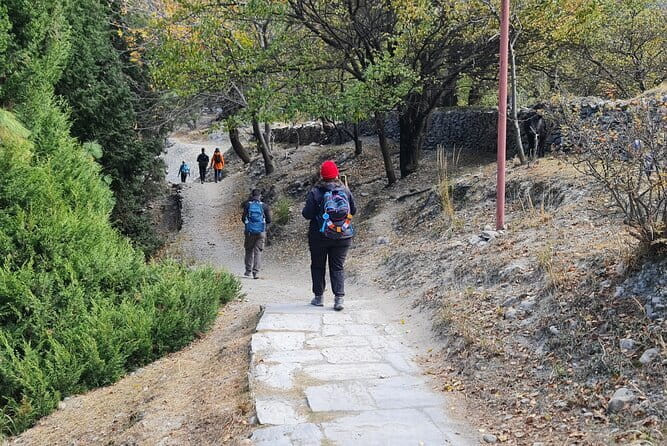
I would recommend this experience to a first-time visitor staying near Thamel who wants a short introduction to Kathmandu’s older center. It is also a good fit if the Kumari is a major reason you want to visit the city and you prefer to approach the visit with a guide.
Families and small groups may appreciate the fixed route, the short duration, and the possibility of group discounts. The two-hour format also works well when you have other plans later in the day.
You may want a different plan if your priority is shopping. Thirty minutes in Ason is enough to look around, but not enough for a relaxed market session. You may also want more time if historic architecture is your main interest, since Kathmandu Durbar Square receives only one hour.
This is not the right choice if you want a private audience with the Kumari, a food tour, or a full-day survey of Kathmandu. None of those are part of the activity.
Should you book the Oldest Local Market Walking Tour?
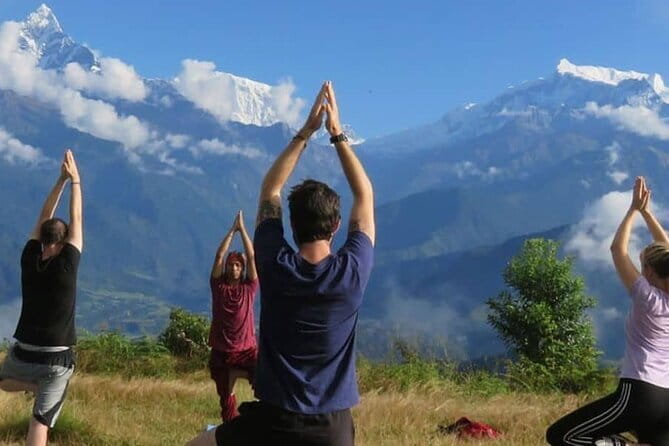
Book it if you want three things in one short outing: a local market, Kathmandu Durbar Square, and a chance to see the Kumari. The strongest feature is the route itself. It connects everyday commerce with the city’s religious and royal center, giving you useful context instead of a single isolated sight.
The tour is also a sensible first-day choice for someone based in Thamel. Just remember to add the NPR 1,000 monument fee to the $40 price, and keep your expectations realistic about the brief Kumari visit and the limited shopping time.
If you want a slow, detailed exploration, choose a longer or private tour. If you want a well-organized introduction with a distinctive cultural moment, this two-hour walk is worth considering.
FAQ
How long does the tour last?
The tour lasts approximately two hours.
Where does the tour begin?
It begins at the main gate of Chhaya Devi Complex, also called Chhaya Center, on Amrit Marg in Kathmandu.
Where does the tour end?
The activity ends back at the meeting point.
What places does the walking tour visit?
The route goes through Thamel Market, Ason Bazaar, Kathmandu Durbar Square, and Kumari Chowk.
Is the monument entrance fee included?
No. The monument entrance fee is NPR 1,000 per person and is paid separately.
Is food included in the tour?
No. Food and beverages are not included.
How many people can join the tour?
The maximum group size is 20 people. Group discounts are available.
Can I cancel for a full refund?
Yes. You can receive a full refund if you cancel at least 24 hours before the experience start time. Cancellations within 24 hours are not refunded.
More market and shopping tours in Kathmandu
- Kathmandu Secret Food Crawl & Local Market Tour
★ 4.7 · 54 reviews - Kathmandu Food Crawl & Market Tour
★ 5.0 · 26 reviews - Best Nepali Cooking Class in Thamel with Local Market Trip
★ 5.0 · 26 reviews - Oldest Local Market Walking Tour With Living Goddess Kumari
★ 5.0 · 8 reviews
Just added around Kathmandu
- Traditional Momo Making Class★ 5.0 · 10 reviews
- Wildlife Adventure in Chitwan Nepal★ 4.0 · 4 reviews
- Walking tour of real Kathmandu through back streets.★ 5.0 · 3 reviews
- Kathmandu 2 Nights 3 Days Chitwan Jungle Safari Tour★ 5.0 · 9 reviews
- Kathmandu Street Food Walking Tour – Eat Like a Local★ 5.0 · 3 reviews
- Private Manaslu Circuit Trek at Himalayas★ 5.0 · 3 reviews
- Walking tour of Kathmandu with awesome local guides★ 5.0 · 4 reviews
- Visit Swayambhunath and Bauddhanath Stupa with Guide★ 5.0 · 5 reviews
Kathmandu Temple and Monastery Tours, compared.
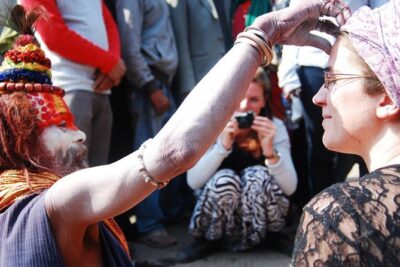
Kathmandu Spiritual Sites: Bodhnath & Pashupatinath Tour
Read our review →
Nagarkot Sunrise and Hike Tour to Changu Narayan
Read our review →
Nagarkot Sunrise & Hike to Changu Narayan Day Tour from Kathmandu
Read our review →

Mt Everest view from Nagarkot -hiking to Changu UNESCO site
Read our review →Browse the lists this tour appears in