
Reviewed · KATHMANDU TEMPLE AND MONASTERY TOURS
Oldest Local Market Walking Tour With Living Goddess Kumari
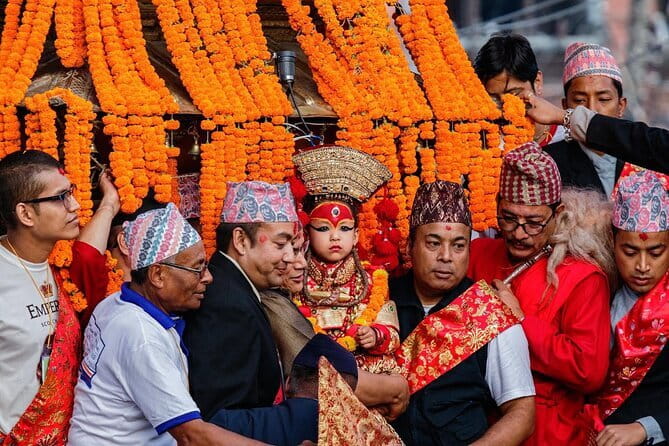
The most unusual part of this two-hour walk is the chance to see Kumari, Kathmandu’s Living Goddess, a prepubescent girl regarded as the earthly form of the goddess Taleju. Her appearance is brief and subject to tradition, but even the possibility gives this visit a special sense of place.
I like the way the tour links Ason Market’s everyday commerce with the grand courtyards of Kathmandu Durbar Square. I also like the English-speaking guidance, especially if you’re curious about the overlap of Hindu and Buddhist beliefs rather than simply looking at old buildings.
The main consideration is cost. At $39, you still pay the Kathmandu Durbar Square entrance fee separately, listed as 1,000 Nepalese rupees, and the tour does not include food or drinks. That makes this a short cultural orientation, not an all-day bargain excursion.
Key points at a glance
- See Ason Market: Walk through one of Kathmandu’s oldest local market areas, with shops, stalls, spices, textiles, souvenirs, and traditional buildings.
- Visit the Kumari: Learn about the young girl who represents the goddess Taleju and resides at Kumari Ghar.
- Explore Durbar Square: Spend guided time among historic palaces, temples, and courtyards in central Kathmandu.
- Connect two faiths: The tour explains Hindu and Buddhist traditions as they appear in Kathmandu’s religious life.
- Meet in Thamel: The walk begins at the main gate side of Chhaya Devi Complex and returns there.
- Keep the booking flexible: You can cancel up to 24 hours before departure for a full refund, or reserve now and pay later.
Why the Kumari visit makes this walk different
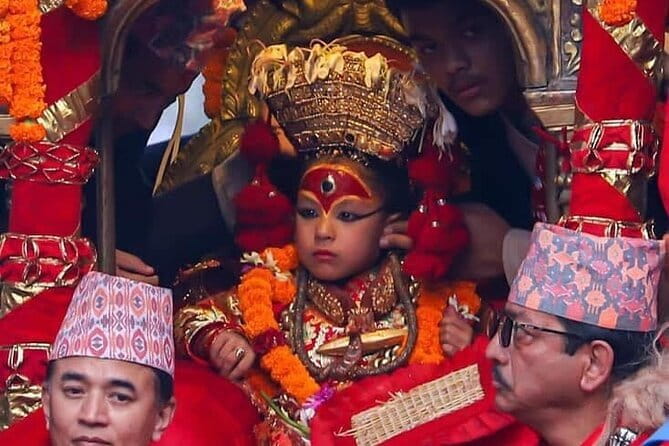
Many sightseeing walks in Kathmandu focus on buildings. This one adds a living religious tradition. The Kumari is not simply a historical figure or a statue. She is a young girl believed to embody Taleju, and she lives in the Kumari Ghar near Kathmandu Durbar Square.
That distinction matters. You are not visiting a museum exhibit designed for tourists. You are approaching a tradition that remains part of Nepalese religious culture. The experience calls for patience and respect, since seeing the Kumari is tied to custom and circumstance rather than a guaranteed performance.
One published rating specifically praised the Kumari’s striking gaze and described the visit as an honor. That gives you a useful sense of the moment: it may be short, but the personal impact can be strong. You should not expect a long meeting, a staged explanation from the Kumari, or a photo opportunity whenever you wish. The value is in understanding what the Kumari represents and seeing the setting where this tradition continues.
Your guide helps provide that context. Without explanation, it can be difficult to understand why a child holds such a central religious role, how Taleju fits into local belief, or why the Kumari Ghar matters. The tour is at its best when the guide explains these connections clearly and lets the setting speak for itself.
More walking tours in Kathmandu:
- Kathmandu Food and Drink Walking Tour
★ 5.0 · 266 reviews - Kathmandu: Food and Drink Walking Tour
★ 4.9 · 119 reviews - Walking Street Food Tour in Kathmandu
★ 5.0 · 111 reviews
Starting at Chhaya Devi Complex in Thamel
The meeting point is the main gate side of Chhaya Devi Complex in Thamel. Thamel is one of Kathmandu’s best-known visitor districts, so this starting point is practical if you are staying nearby or already spending time in central Kathmandu.
You should arrive with comfortable walking shoes and a little patience for city streets. The tour lasts two hours, and the route includes a local market and a historic square rather than a single indoor attraction. A bottle of mineral water is included, but meals and other drinks are not.
The activity returns to Chhaya Center after the guided walk. That makes it easy to plan before lunch, after breakfast, or alongside other activities in Thamel. Since the tour is short, you can fit it into a day without giving up an entire morning or afternoon.
The tour is conducted in English. That is important here because the religious background is more complicated than the route might first suggest. Hindu and Buddhist practices often appear side by side in Kathmandu, and a good explanation helps you notice the difference between a sacred place, a historic building, and a working local market.
Ason Market: Kathmandu seen at street level
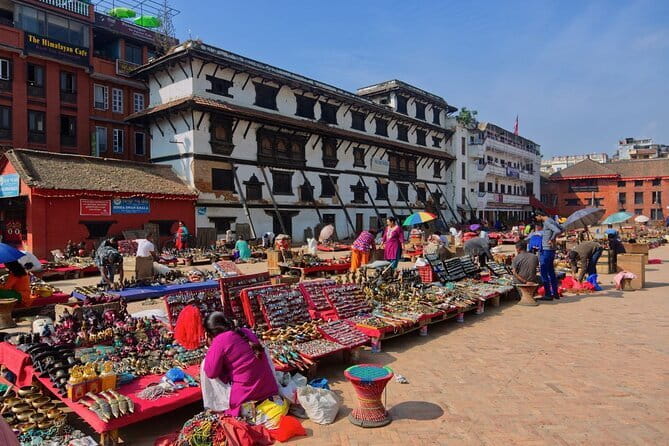
Ason is the most grounded part of the experience. Instead of beginning with palace courtyards, you start among the daily trade of Kathmandu. The area is known for shops, stalls, spices, textiles, souvenirs, and older architecture.
I like this stop because it gives you a useful counterpoint to Durbar Square. A palace courtyard can look impressive, but Ason shows how the city functions in ordinary life. The market is not presented as a polished attraction. Its value comes from the goods, movement, shopfronts, and local character you encounter along the way.
The market can also help you understand Kathmandu as a trading center. Spices point to food and household life. Textiles connect with clothing and craft traditions. Souvenirs show how local culture is presented to visitors. The tour does not promise a shopping session, so you should see the market mainly as a place to observe and learn.
If you want to buy something, personal expenses are your responsibility. The price does not include purchases, meals, or beverages. That is a small but important point, since a market walk can encourage spontaneous spending.
A guide is particularly useful in Ason because the area may feel like a mass of shops and narrow streets at first. The tour gives you a route and a purpose. Rather than wandering without context, you can ask about what you are seeing and connect the market to Kathmandu’s wider religious and cultural life.
Kathmandu Durbar Square and the Kumari Ghar
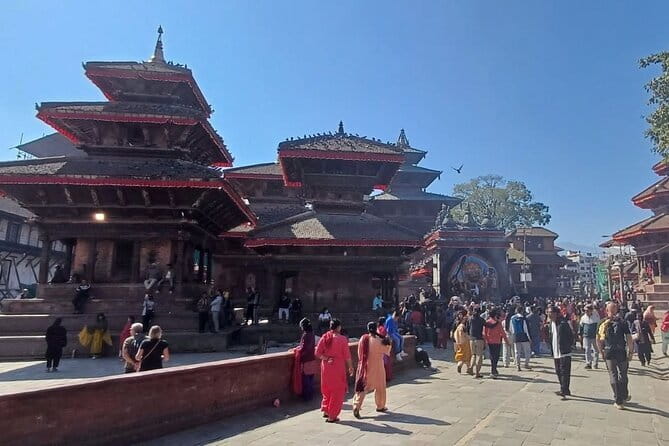
The main historic stop is Kathmandu Durbar Square, a central collection of palaces, temples, and courtyards. It reflects the long political and religious importance of the Kathmandu Valley, with architecture that brings royal history and active worship into the same setting.
The square is not just one building. It is a group of spaces, and the guide’s role is to help you understand how they fit together. You’ll hear about the buildings and the traditions connected to them, while also learning why the square remains important to both Hindu and Buddhist communities.
The Kumari Ghar is the key point for this particular tour. It is the residence associated with the Kumari of Kathmandu. The visit gives the historic square a human and present-day focus. You are not only looking backward at Nepal’s past. You are also learning about a religious role that continues today.
The entrance fee for Kathmandu Durbar Square is not included. The listed charge is 1,000 Nepalese rupees. You should add this to the $39 tour price when working out the real cost. Government taxes and VAT are included in the tour price, as is bottled mineral water.
The square can be visually impressive, but the experience may feel more meaningful if you listen closely to the guide. One rating called the tour very informative, while another praised guide Santos for being an excellent communicator and explaining things in detail. Those comments point to the most important feature here: the quality of interpretation.
More temples and monasteries in Kathmandu:
- Kathmandu Spiritual Sites: Bodhnath & Pashupatinath Tour
★ 5.0 · 185 reviews - Kathmandu: Nagarkot Sunrise and Hike Tour to Changu Narayan
★ 4.7 · 151 reviews - From Kathmandu: Everest View from Nagarkot & hike to Changu
★ 4.8 · 140 reviews - Kathmandu: Chandragiri Cable Car and Monkey Temple Tour
★ 4.8 · 139 reviews
Hinduism, Buddhism, and shared sacred space
Kathmandu is a useful place to learn that religious boundaries are not always as separate as an outsider might expect. The tour specifically addresses Hinduism and Buddhism, using Ason and Durbar Square as its setting.
You may see religious ideas expressed through buildings, courtyards, objects, and local customs. The information provided for the tour does not promise a formal religious class, so you should think of this as an introduction rather than an exhaustive study. Still, two hours can give you a better framework for the rest of your time in Nepal.
The Kumari tradition is especially helpful for understanding this overlap. The Kumari is associated with Taleju, a Hindu goddess, yet the wider cultural setting of Kathmandu includes both Hindu and Buddhist traditions. A guide can explain these links in a way that is easier to follow than a guidebook paragraph read while walking.
This is also where respectful behavior matters. The Kumari is a child and a religious figure, not an attraction created for casual entertainment. You should follow the guide’s instructions, avoid treating the visit like a show, and remember that local worship comes before sightseeing.
What the guide adds in two hours
The tour includes an English-speaking guide, and the guide is the main reason to choose this experience over exploring the same general area alone. You can walk through Ason and Durbar Square independently, but you may miss the meaning behind what you see.
Santos is the only guide named in the available information. A published rating describes him as an excellent communicator and praises his detailed explanations. Other ratings describe the tour as very informative, kind, and well explained. The overall published rating is 5 out of 5 from eight ratings.
That is a strong record, though it is still a small sample. I would treat it as a good sign rather than a guarantee that every tour will feel identical. The guide’s ability to explain the Kumari tradition, point out meaningful details, and keep the walk focused will shape your experience.
Two hours is enough for an introduction, but not enough for a slow, exhaustive study of every temple and courtyard. You should choose this tour if you value clear orientation and cultural background. If you want hours of shopping, extensive photography time, or a private academic lecture on Nepalese religion, this walk may feel limited.
Is $39 good value?
The $39 price is easiest to justify if you want a short guided introduction to several major themes at once: local trade, historic architecture, Hinduism, Buddhism, and the Kumari tradition.
The package includes an English-speaking guide, government taxes and VAT, and bottled mineral water. It does not include food, drinks beyond the water, personal expenses, or the 1,000 Nepalese rupee entrance fee for Kathmandu Durbar Square.
That extra admission charge means the final cost is higher than the headline price. You should also budget for anything you buy in Ason. Still, the tour can offer reasonable value if you prefer structure and explanation instead of finding the area on your own.
I would not call it a bargain for a simple two-hour walk. Its value depends on the guide and on your interest in the Kumari. If seeing the Living Goddess is one of your main reasons for visiting Kathmandu, the price may feel worthwhile. If you mainly want to browse the market, you can likely get more time in Ason by visiting independently.
The reserve-now-and-pay-later option is useful if your schedule is still changing. You can also cancel up to 24 hours in advance for a full refund. Those terms reduce the risk of booking a short activity before your Kathmandu plans are settled.
Who will enjoy this walk most?
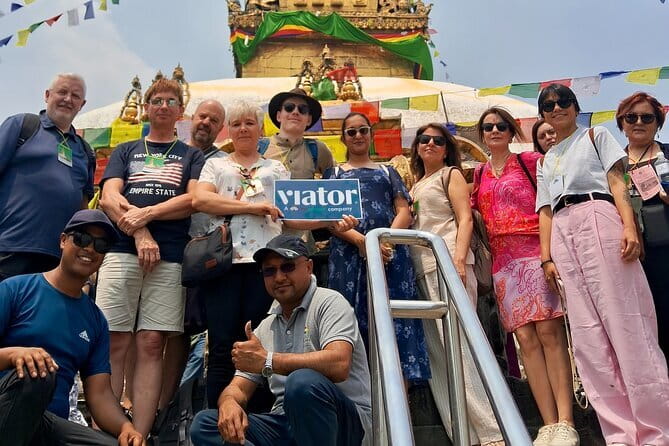
I would recommend this experience to first-time visitors who want a focused introduction to central Kathmandu. It suits people who like cultural context, historic sites, and local streets more than long transport rides or elaborate meals.
It is also a good fit if you are curious about the Kumari but do not want to arrange a visit to the Kumari Ghar on your own. The guide can place the visit within the setting of Durbar Square and explain the tradition in plain English.
Families and mixed-interest groups may also find the route useful. Ason gives you street life and shopping, while Durbar Square offers architecture and history. The Kumari adds a distinctive cultural element that you are unlikely to find in a standard market walk.
You may want to skip it if you are looking for a food tour, a full-day Kathmandu itinerary, or guaranteed extended time with the Kumari. Meals and drinks are not included, and the experience is limited to two hours. The tour also does not promise that the Kumari will appear for a long period or interact directly with the group.
Practical tips before you go
Wear shoes suitable for walking and bring a little spending money if you plan to shop in Ason. The tour includes bottled water, but it does not include other beverages.
Plan for the separate Durbar Square entrance fee of 1,000 Nepalese rupees. Since the tour begins and ends at Chhaya Devi Complex, you can arrange your day around Thamel without needing a separate transfer as part of the activity.
Keep your expectations respectful and realistic at the Kumari Ghar. The central experience is seeing and learning about the Kumari tradition, not taking part in a staged attraction. Listen carefully to the guide, especially when the group reaches the religious sites.
If you are booking because of the Kumari, remember that the visit is the heart of the tour but not the whole tour. Ason and Durbar Square are important parts of the experience, and they give you the setting needed to understand why the Kumari matters.
Should you book the Oldest Local Market Walking Tour?
Book this tour if you want two compact hours of guided culture in central Kathmandu, with Ason Market, Kathmandu Durbar Square, and the Kumari tradition in one route. The English-language guidance, clear explanations, and strong published ratings make it a sensible choice for a first look at the area.
I would especially choose it if you are staying in Thamel, have limited time, and want more than a quick photo stop. Add the separate entrance fee to your budget, and do not expect meals, a long market visit, or guaranteed extended contact with the Kumari.
For a short introduction to Kathmandu’s markets, sacred traditions, and royal past, this is a well-focused option. Its greatest strength is the link between ordinary city life in Ason and the unusual religious tradition of the Living Goddess.
FAQ
Where does the tour begin?
The meeting point is at the main gate side of Chhaya Devi Complex in Thamel, Kathmandu.
Where does the tour end?
The tour returns to Chhaya Center.
How long does the tour last?
The duration is two hours.
What language is the tour conducted in?
The tour is conducted in English with a live English-speaking guide.
Does the tour visit Ason Market?
Yes. The experience includes a visit to Ason, described as one of Kathmandu’s oldest local market areas.
Does the tour visit Kathmandu Durbar Square?
Yes. The guided walk includes Kathmandu Durbar Square, with its palaces, temples, and courtyards.
Will I see the Living Goddess Kumari?
The tour includes witnessing the Living Goddess Kumari and learning about her role. The provided information does not guarantee how long the viewing will last.
Is the Kathmandu Durbar Square entrance fee included?
No. The entrance fee is listed separately as 1,000 Nepalese rupees.
Are meals and drinks included?
No. Meals and beverages are not included. One bottle of mineral water is included.
Can I cancel the booking?
Yes. You can cancel up to 24 hours in advance for a full refund. You can also reserve now and pay later.
More market and shopping tours in Kathmandu
- Kathmandu Secret Food Crawl & Local Market Tour
★ 4.7 · 54 reviews - Kathmandu Food Crawl & Market Tour
★ 5.0 · 26 reviews - Best Nepali Cooking Class in Thamel with Local Market Trip
★ 5.0 · 26 reviews - Oldest Local Market Walking Tour with Living Goddess Kumari
★ 5.0 · 8 reviews
Just added around Kathmandu
- Traditional Momo Making Class★ 5.0 · 10 reviews
- Wildlife Adventure in Chitwan Nepal★ 4.0 · 4 reviews
- Walking tour of real Kathmandu through back streets.★ 5.0 · 3 reviews
- Kathmandu 2 Nights 3 Days Chitwan Jungle Safari Tour★ 5.0 · 9 reviews
- Kathmandu Street Food Walking Tour – Eat Like a Local★ 5.0 · 3 reviews
- Private Manaslu Circuit Trek at Himalayas★ 5.0 · 3 reviews
- Walking tour of Kathmandu with awesome local guides★ 5.0 · 4 reviews
- Visit Swayambhunath and Bauddhanath Stupa with Guide★ 5.0 · 5 reviews
Kathmandu Temple and Monastery Tours, compared.
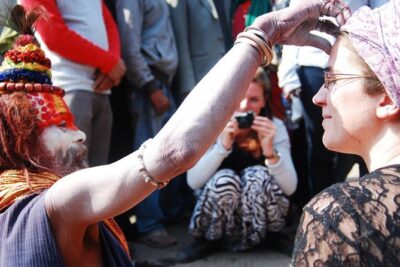
Kathmandu Spiritual Sites: Bodhnath & Pashupatinath Tour
Read our review →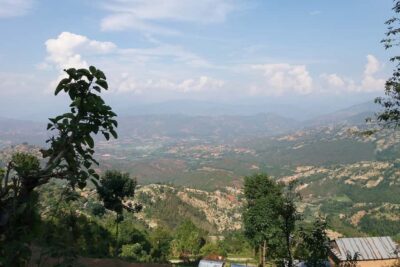
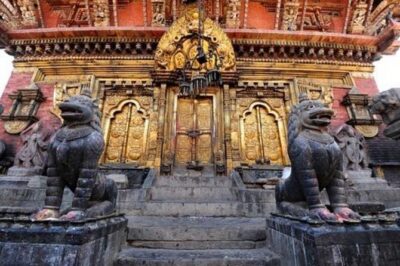
Nagarkot Sunrise and Hike Tour to Changu Narayan
Read our review →
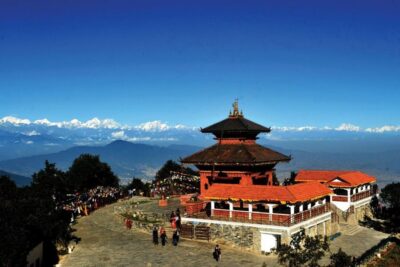
Nagarkot Sunrise & Hike to Changu Narayan Day Tour from Kathmandu
Read our review →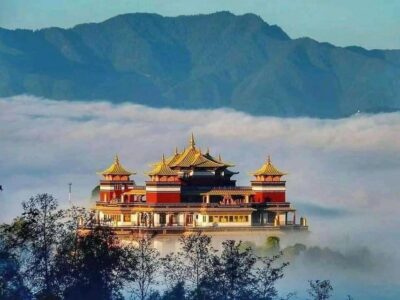
Mt Everest view from Nagarkot -hiking to Changu UNESCO site
Read our review →Browse the lists this tour appears in