
Reviewed · ANNAPURNA TREKS FROM KATHMANDU
12 days Annapurna Circuit Trek
The big draw here is the full Annapurna Circuit in 12 days, including the hard crossing of Thorong La Pass and the sunrise climb to Poon Hill. I like the way the route mixes high mountain scenery with Manang villages, Mustang, Muktinath, Thakali settlements, and a soak at Tatopani. I also like that meals, teahouse lodging, permits, and main transport are bundled into one price.
The main catch is the pace. Thorong La reaches 5,416 metres, and several days involve 10 to 12 hours of travel or trekking. You need moderate fitness, a sensible approach to altitude, and patience with rough road travel. This is an efficient circuit, not a slow, leisurely walk.
Key points at a glance
- Thorong La is the physical high point: You leave Thorung Phedi around 3 a.m. to cross the 5,416-metre pass and reach Muktinath.
- Manang gets proper time: Day five is set aside for acclimatisation, with an optional walk toward Ice Lake.
- The route changes character fast: You move from the Marshyangdi Valley and rhododendron forests to dry Manang, Mustang, Kali Gandaki villages, and the lower foothills.
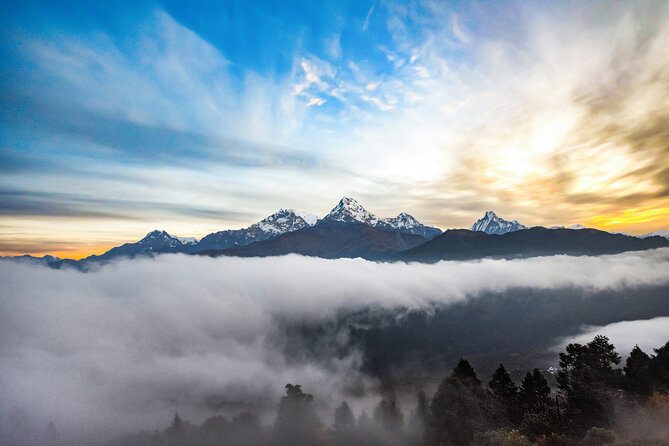
- Poon Hill adds a famous sunrise: At 3,210 metres, it gives broad views toward Dhaulagiri, Annapurna, Machhapuchhre, and nearby peaks.
- The $1,100 price covers the basics that add up: Teahouse lodging, three meals during the trek, permits, guides, local transport, and one Pokhara night with breakfast are included.
- Porters and insurance cost extra: A porter is available for $20 per day, while personal travel insurance is not included.
What the $1,100 Annapurna package really covers
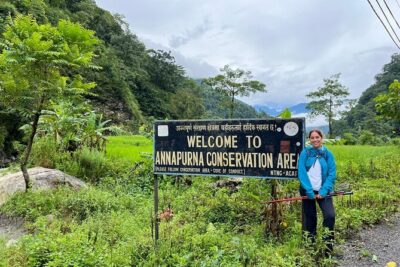
At $1,100 per person, this trek offers solid value if you want the main arrangements handled for you. The fee includes tea house or lodge accommodation during the trek, breakfast, lunch, and dinner, the Annapurna Conservation Area Permit, the TIMS card, local and government taxes, and the guide’s salary, meals, insurance, lodging, and transport.
That matters in Nepal. A long mountain trek has many small costs, and permits, road transfers, meals, and beds can be awkward to arrange separately. Here, the price also covers transport from Kathmandu to Dharapani, Muktinath to Tatopani, Nayapul to Pokhara, and Pokhara back to Kathmandu by tourist bus.
You also get one night in Pokhara with breakfast and a farewell dinner in Kathmandu. Drinks are not included, and neither are tips, laundry, phone calls, camera fees, personal purchases, insurance, or a Nepal visa. A porter costs $20 per day and carries up to 20 kilograms, which is worth considering because the high-altitude days are demanding.
The package is private, meaning only your group participates. The company says the itinerary can be adjusted, and group discounts are available. That gives you more control than a large fixed departure, though you should confirm any changes before booking, especially if you want extra days for acclimatisation or an extension such as Tilicho Lake.
More Annapurna treks:
- Annapurna Circuit Trek with Tilicho Lake
★ 5.0 · 368 reviews - Annapurna base camp trek 5 Days
★ 5.0 · 252 reviews - Annapurna Base Camp Trek
★ 5.0 · 111 reviews
Day 1: A long road to Dharapani
The first day is mostly transport. You leave Kathmandu at about 12:15 a.m., drive toward Besishahar along the Trishuli River, then continue by jeep to Dharapani. The full day can take around 12 hours.
This is not a gentle start, but it gets you well into the circuit. You avoid spending an extra night at a lower roadhead and begin the walking section near the Marsyangdi Valley. The tradeoff is clear: a very early departure, long hours in public transport, and a road journey that may feel more tiring than the mileage suggests.
Keep your day bag close, with water, snacks, warm clothing, and any medication you need. Your larger bag can go with a porter if you arrange one. Since the first day is so long, do not expect much sightseeing in Dharapani beyond settling into the lodge.
Day 2: Rhododendron forests and Chame
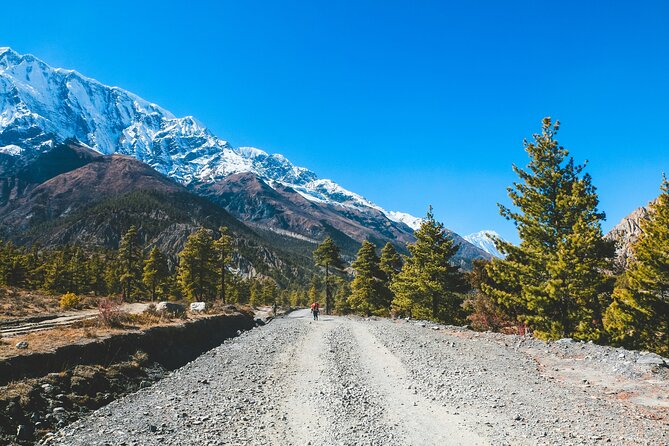
The route continues toward Chame, headquarters of Manang District. As you gain height, the scenery begins to change. Rhododendron forests appear, and the mountain views become more present.
The stated duration is about 12 hours, so this is another serious day. The reward is that you begin to feel the circuit shift from road-access country into a more recognisable mountain trek. Chame is an important overnight stop before the route moves higher toward Pisang and Manang.
You should treat this day as part of your altitude preparation, not as a warm-up that can be rushed. Walk steadily, drink regularly, and tell your guide if you feel unwell. The package includes an English-speaking, government-licensed guide, which gives you a direct person to consult as the air gets thinner.
Days 3 and 4: Upper Pisang to Manang
Day three takes you to Upper Pisang at about 3,300 metres. The route offers views of Lamjung Himal, including morning light on the peak. The stated travel time is about 10 hours, and the altitude now becomes a real concern.
Day four continues through Upper Pisang toward Geru and Manang. From this part of the route, you can see the north face of Annapurna II, Annapurna III, Annapurna IV, Gangapurna, Tilicho, and Pisang Peak. The air becomes colder and drier, and the vegetation changes as you leave lower valleys behind.
I like these two days because they show why the Annapurna Circuit is more than a pass-crossing challenge. You are moving through different climate zones and settlement patterns, with the scenery changing as quickly as the altitude. The drawback is the schedule. A 10-hour day at this height is not minor, and your body may need more time than the printed itinerary allows.
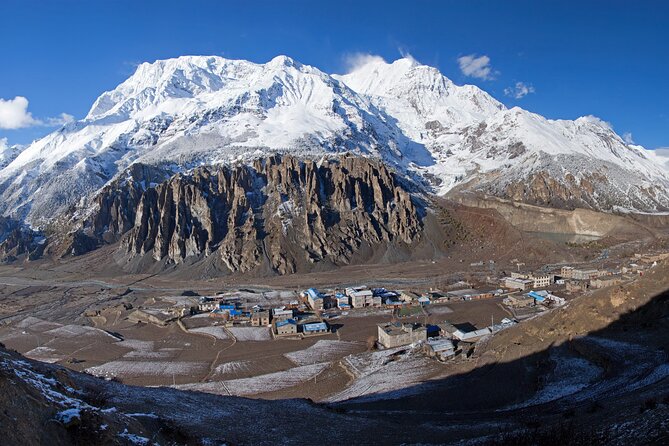
Manang itself is a valuable pause in the route. It gives you a base at the foot of Annapurna III and offers close views toward Annapurna and Gangapurna. The village is also where you should take altitude symptoms seriously rather than trying to prove anything.
More day hikes and treks in Kathmandu:
- Everest Base Camp Trek – 14 Days
★ 5.0 · 1,499 reviews - Everest Base Camp Trekking
★ 5.0 · 485 reviews - Nagarkot Sunrise View and Day Hiking from Kathmandu
★ 5.0 · 471 reviews - Everest Base Camp Trekking – 13 Day
★ 5.0 · 365 reviews
Day 5: Acclimatisation in Manang
The fifth day is set aside for acclimatisation in Manang. You can take a walk toward Ice Lake, an outing intended to help your body adjust before the higher stages.
This is one of the best features of the schedule. A rest day does not have to mean sitting indoors, but it should not become a race. The Ice Lake walk can be useful, yet the day is listed as up to 12 hours, so the optional outing may be strenuous. Ask your guide how hard to push based on your condition.
Manang is also a good place to slow down and notice the local setting. The itinerary includes traditional villages and local markets as part of the broader experience, so this pause gives you more room for cultural contact than a route made only of mountain viewpoints.
Days 6 and 7: Yak Kharka and Thorung Phedi
On day six, you leave Manang and climb toward Yak Kharka. The trail passes Tenki, crosses a stream, and follows the Jarsang Khola valley after leaving the Marshyangdi Valley. The stated time is about 12 hours.
At this point, the walking can feel more exposed and demanding. You are moving toward the pass, and the itinerary leaves little spare time. Yak Kharka is not a sightseeing stop in the usual sense. It is a strategic overnight point that helps break up the climb.
Day seven leads to Thorung Phedi, at the foot of Thorong La. The route climbs to a ridge, drops toward the Marsyangdi River, crosses a wooden bridge, and then climbs again. This is another 12-hour day on paper.
The wording of the schedule makes the key point clear: you need to be ready for sustained uphill walking and an early night. Thorung Phedi is where you prepare clothing, water, snacks, and headlamp for the pass morning. Since breakfast and dinner are included, your main extra costs here are drinks and personal items.
Day 8: Crossing Thorong La to Muktinath
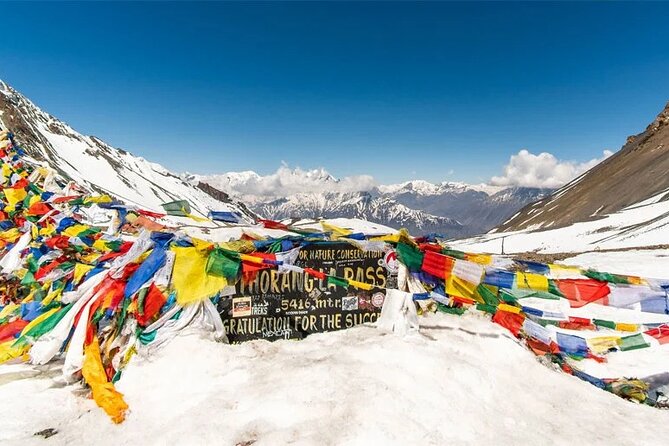
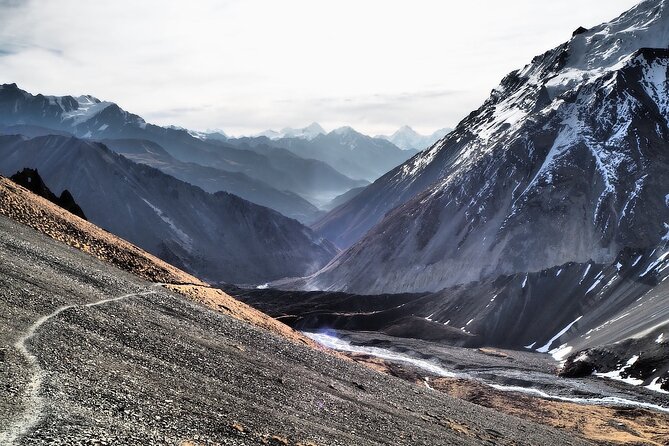
The pass day begins around 3 a.m. You climb from Thorung Phedi toward Thorong La, which reaches 5,416 metres, then descend to Muktinath. The total day is listed at about 10 hours.
This is the defining day of the trip. The climb is slow and the early start is cold, but reaching the pass gives you a powerful sense of progress. The descent toward Muktinath changes the surroundings again, bringing you into the Mustang area and a different side of the Annapurna region.
You should not treat the pass as a guaranteed finish simply because it is printed on the schedule. Fitness helps, but altitude affects people differently. A guide can watch the group, but you still need to report headaches, nausea, unusual fatigue, or breathing trouble. Travel insurance is not included, so arrange your own cover before leaving home.
Muktinath also adds a cultural layer to the route. The stop is not only a bed after a hard climb. It is a significant destination in the Mustang region and a clear transition from the high pass to the lower Kali Gandaki route.
Day 9: Muktinath to Tatopani
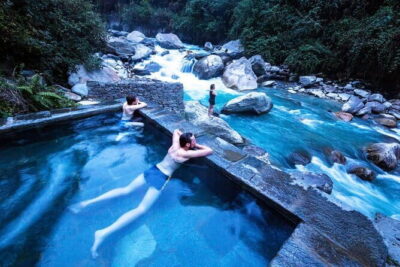
After the pass, you take a jeep for roughly three hours from Muktinath to Tatopani. Once there, you can rest at the lodge or visit the hot springs.
This is a welcome change of pace. The drive saves your legs after Thorong La, and the hot springs offer a simple way to relax. The itinerary does not promise a luxury spa, so think of this as a practical mountain stop with a warm-water break.
The road transfer is also a reminder that the Annapurna Circuit is not a fully walking-only route in this version. Public transport and jeeps are part of the modern circuit. That may disappoint purists, but it keeps a 12-day schedule possible and reduces the amount of road walking.
Day 10: Thakali villages and Ghorepani
From Tatopani, you climb through the Thakali settlements of Sikha and Chitre toward Ghorepani. The route reaches the east bank of the Kali Gandaki River before turning upward.
This is one of the most appealing cultural sections. The villages help connect the mountain views with daily life, and the route gives you a sense of how the circuit changes as it drops into lower country. The day is again listed at about 12 hours, so the climb to Ghorepani should not be underestimated.
Ghorepani is a busy trekking stop in the itinerary, mainly because it positions you for Poon Hill. You may arrive tired, but the next morning starts early. Pack your warm layer and camera before bed rather than searching through your bag in the dark.
Day 11: Poon Hill and Pokhara
The Poon Hill climb begins early, reaching 3,210 metres for sunrise. From the viewpoint, you can see across the Dhaulagiri and Annapurna ranges, with Machhapuchhre, also called Fishtail, among the major peaks.
The climb itself is listed as about one hour, but the full morning includes returning to Ghorepani, breakfast, and continuing down to Birethani. From Birethani, you take a bus to Pokhara. The entire day is listed at about 12 hours.
Poon Hill is a smart final viewpoint because it gives you a broad mountain panorama after the more enclosed high-valley sections. It also provides a different kind of reward from Thorong La. The pass is about effort and altitude; Poon Hill is about light, distance, and the sweep of the ranges.
In Pokhara, one night with breakfast is included. This is a useful buffer before the return to Kathmandu and gives you a chance to rest beside the lake city. The itinerary does not include a detailed Pokhara sightseeing program, so do not assume a full city tour is part of the package.
Day 12: Returning to Kathmandu
After breakfast, you return to Kathmandu by tourist bus. The alternative is a 25-minute flight, but that flight costs extra and is not included.
The bus keeps the package price down, though it will take far longer than flying. If you have an international departure soon after the trek, confirm your timing carefully. The included bus is better suited to someone with a flexible final day.
Guides, group style, and practical fit
The company provides an English-speaking, government-licensed guide and covers the guide’s salary, insurance, food, lodging, and transport. The named people connected with the company include Bhim Panta, Manit, and Kumar. Manit is described as responsive during trip planning, while Kumar is connected with guiding support on the trek.
That personal contact may be useful if you have questions about equipment, route changes, or an extension. The experience is private, so your group is not combined with a larger departure. Group discounts are available, and the route can be adjusted, but confirm the details in writing.
The trek suits you best if you have moderate physical fitness, accept long days, and want a planned route with local support. It is less suited to anyone seeking short walking days, private hotel rooms throughout, or a fully road-free circuit.
The company has a five-out-of-five rating from five submitted ratings, and the strongest praise focuses on friendly support, good planning, accommodation, transport, meals, and the quality of the hikes. One group extended the route to Tilicho Lake, adding three days. That option is not part of this 12-day price, but it shows why you should ask about custom plans if you have extra time.
Should you book this Annapurna Circuit trek?
Book it if you want the classic Annapurna route compressed into 12 days, with the major logistics arranged and the cost kept reasonably clear. The inclusion of meals, permits, lodging, a private group, and key transport makes $1,100 a fair package price.
Think twice if you dislike very early starts, long road journeys, basic teahouse accommodation, or high-altitude days. The Thorong La crossing is serious, and the itinerary leaves little room for delays or a slow pace.
For the best fit, ask three questions before paying: can the schedule be adjusted for your group, is a porter reserved for you, and what happens if your group needs an extra acclimatisation day? If the answers suit your plans, this is a practical way to experience Manang, Mustang, Muktinath, Tatopani, Ghorepani, and Poon Hill in one tightly planned mountain journey.
FAQ
How long is the Annapurna Circuit trek?
The experience lasts approximately 12 days, beginning and ending in Kathmandu.
Is transportation included?
Yes. The package includes public transportation from Kathmandu to Dharapani, jeep transport from Muktinath to Tatopani, transport from Nayapul to Pokhara, and a tourist bus from Pokhara to Kathmandu. A 25-minute flight from Pokhara to Kathmandu is available at an additional cost.
Are meals included during the trek?
Yes. Breakfast, lunch, and dinner are included during the trek, with accommodation in teahouses or lodges. Drinks are not included.
Is a porter included?
No. Porters are available for $20 per day and can carry up to 20 kilograms.
Are permits included?
Yes. The Annapurna Conservation Area Permit and Trekkers Information Management System card fee are included.
What level of fitness do I need?
The experience states that you should have a moderate level of physical fitness. The route includes several days listed at 10 to 12 hours, a 3 a.m. start for Thorong La, and a pass crossing at 5,416 metres.
Just added around Kathmandu
- Traditional Momo Making Class★ 5.0 · 10 reviews
- Wildlife Adventure in Chitwan Nepal★ 4.0 · 4 reviews
- Walking tour of real Kathmandu through back streets.★ 5.0 · 3 reviews
- Kathmandu 2 Nights 3 Days Chitwan Jungle Safari Tour★ 5.0 · 9 reviews
- Kathmandu Street Food Walking Tour – Eat Like a Local★ 5.0 · 3 reviews
- Private Manaslu Circuit Trek at Himalayas★ 5.0 · 3 reviews
- Walking tour of Kathmandu with awesome local guides★ 5.0 · 4 reviews
- Visit Swayambhunath and Bauddhanath Stupa with Guide★ 5.0 · 5 reviews
Annapurna Treks from Kathmandu, compared.
Kathmandu to Annapurna Base Camp (ABC) 5-Day Trek
Read our review →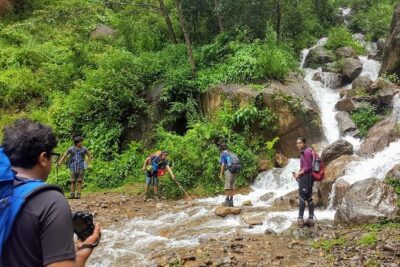
Browse the lists this tour appears in