
Reviewed · EVEREST BASE CAMP TREKS FROM KATHMANDU
12 Days Everest Base Camp Trek
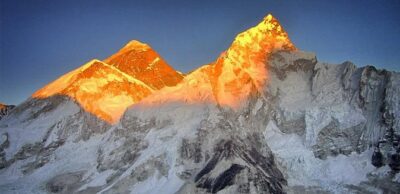
The big prize here is not just reaching Everest Base Camp at 5,364 meters. It is the slow approach through Sherpa villages, suspension bridges, rhododendron woods, and the wide Khumbu valley, followed by sunrise over Everest from Kala Patthar at 5,545 meters. I like the sensible acclimatization stops in Namche and Dingboche, and I like that meals, permits, flights, a licensed guide, and a porter for every two trekkers are built into the $605 price.
I also like the human side of the trip. Guides such as Rajesh Magar, Narayan Ntc, Gopal, Bikram, and Naresh have been singled out for care, flexibility, and good judgment. The main caution is simple: this is still a serious high-altitude trek. The itinerary calls itself suitable for beginners and seniors, but you need moderate fitness, patience, and a willingness to walk for up to eight hours on rough, steep trails.
Key points before you book
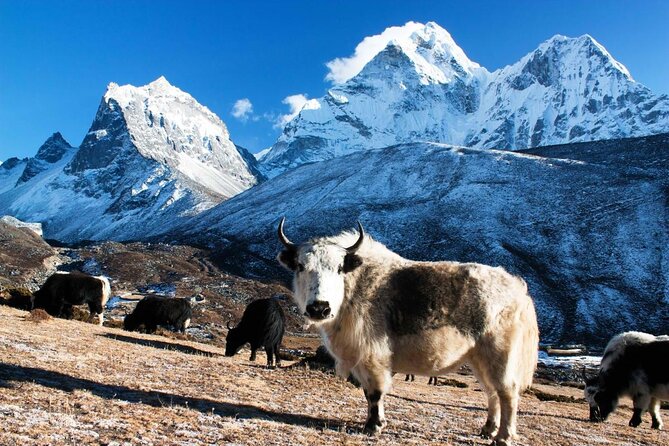
- Kala Patthar is the visual high point: The steep early hike reaches 5,545 meters for sunrise views over Mount Everest.
- Acclimatization is planned, not optional: You get a full rest day in Namche and another in Dingboche, with short hikes to help your body adjust.
- The price covers the costly basics: Domestic flights, 11 breakfasts, 11 lunches, 11 dinners, lodge rooms, permits, guide service, and porter support are included.
- The trek follows the classic Khumbu route: You pass Phakding, Namche Bazaar, Tengboche, Dingboche, Lobuche, Gorakshep, and Base Camp.
- Staff support is a strong feature: A government-licensed, high-altitude-trained guide carries first-aid gear and an oximeter, while a porter is provided for every two trekkers.
- Lukla flights add real adventure: The short flights from Kathmandu are essential to the route, but flight plans can be affected by mountain conditions.
What the 12 days really involve
This is a point-to-point Himalayan trek with a flight at each end. You begin at Tribhuvan Airport in Kathmandu, fly to Lukla, walk uphill through the Khumbu region, then return by the same broad route before flying back to Kathmandu.
The walking days range from about two hours to eight hours. That spread matters. Some days are gentle and scenic, while others demand steady effort at high altitude. The trek is not a technical climb, and no mountaineering skill is listed as necessary, but the thin air makes ordinary walking much harder than it would be at home.
You stay in the best available twin-sharing lodge rooms during the trek. Three meals a day are included, but snacks, drinks, and personal purchases are not. That makes the package easier to budget, though you should still bring money for items outside the meal plan and for tips.
More Everest Base Camp treks:
- Everest Base Camp Trek – 14 Days
★ 5.0 · 1,499 reviews - Everest Base Camp Trekking
★ 5.0 · 485 reviews - Everest Base Camp Trekking – 13 Day
★ 5.0 · 365 reviews
Day 1: Lukla to Phakding beside the Dudhkoshi
Your day begins with roughly a 45-minute flight from Kathmandu to Lukla and its Tenzing-Hillary Airport. The flight gives you an immediate sense of the terrain ahead, with steep mountain country replacing the city in a short span of time.
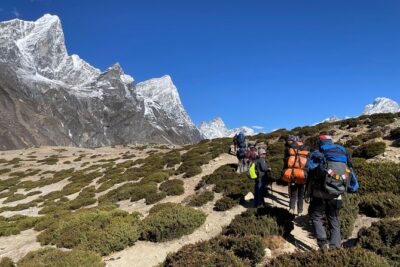
From Lukla, the first walk takes about four hours. The route descends toward Phakding and follows the Dudhkoshi, also called the Milk River. You pass through villages and begin to see how daily life in the Khumbu depends on footpaths, bridges, and local mountain communities.
This is a good opening day because the walking distance is modest. Still, do not treat it as a free warm-up. Your body is adjusting to the route, the changing elevation, and the basic rhythm of walking with a pack or day bag.
Day 2: The long climb to Namche Bazaar
The second day lasts about seven hours and brings the first major test. You follow the Dudhkoshi, crossing several steel suspension bridges and moving through the Sagarmatha National Park area before climbing toward Namche Bazaar.
Namche is one of the most important stops on the route. It is a trading center and a natural place to pause before the trail rises much higher. The approach is demanding, especially because the climb comes after a full walking day.
I like the timing here. Instead of pushing straight onward, the itinerary gives you the next day for acclimatization. That pause is not wasted time. It gives your body a chance to respond before Dingboche, Lobuche, and the high trail to Base Camp.
Day 3: Acclimatization and the Everest View Hotel
You spend the day around Namche rather than moving to a new lodge. After breakfast, you hike toward the Everest View Hotel by way of the Syangboche airstrip. The outing takes about two hours and is designed to let you walk higher before sleeping lower.
That pattern is useful at altitude. You get movement, mountain views, and a chance to test how you feel without adding another major gain in sleeping elevation. The stop also prevents the common mistake of racing upward simply because you feel strong on the first few days.
Do not assume an acclimatization day means a day on the sofa. You still hike, and the air is already thin. Use the time to notice your energy, appetite, and breathing. The guide carries an oximeter for checking pulse, oxygen saturation, and heart rate at higher elevations, which adds a practical safety tool.
More day hikes and treks in Kathmandu:
- Nagarkot Sunrise View and Day Hiking from Kathmandu
★ 5.0 · 471 reviews - Annapurna Circuit Trek with Tilicho Lake
★ 5.0 · 368 reviews - Everest Base Camp Trek -14 Days
★ 5.0 · 321 reviews - Annapurna base camp trek 5 Days
★ 5.0 · 252 reviews
Day 4: Tengboche and its famous monastery
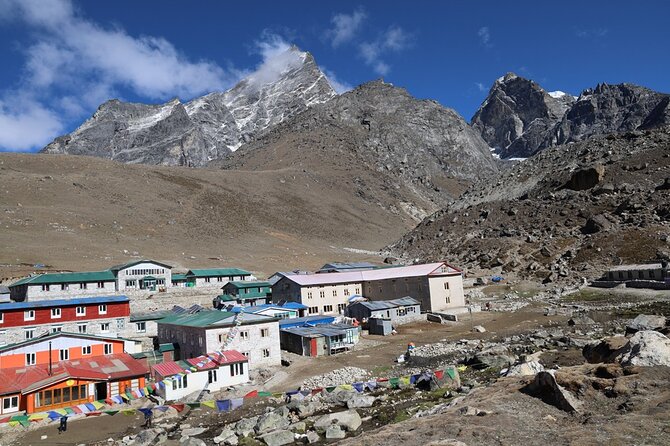
The trail leaves Namche after roughly a day and a half of recovery. The walk to Tengboche takes about five hours, beginning with a steep climb and then settling into a more moderate pace.
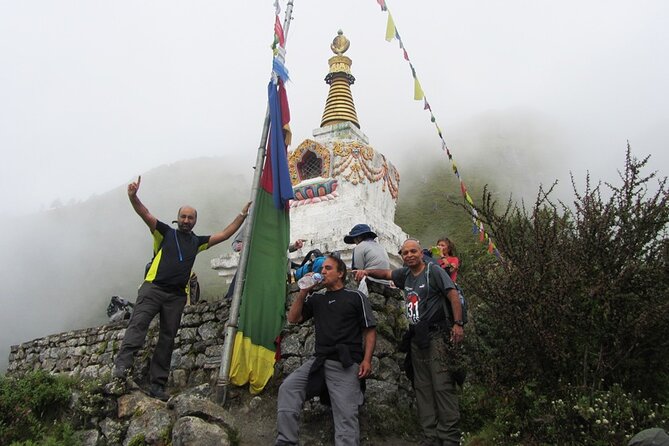
Tengboche is one of the memorable cultural stops on the route. The monastery gives the day more meaning than a simple march from one lodge to another, and the sunrise from the monastery is worth an early start if conditions allow. The surrounding mountain views also open up as you move deeper into the Khumbu.
The route is not uniformly hard. Some sections rise sharply, while others let you regain a steady rhythm. Your guide’s pacing matters here. Guides named in the trip’s feedback, including Gopal and Bikram, have been praised for adjusting plans to individual walking speeds and needs. That kind of flexibility is more useful than a rigid schedule.
Day 5: Through Deboche to Dingboche
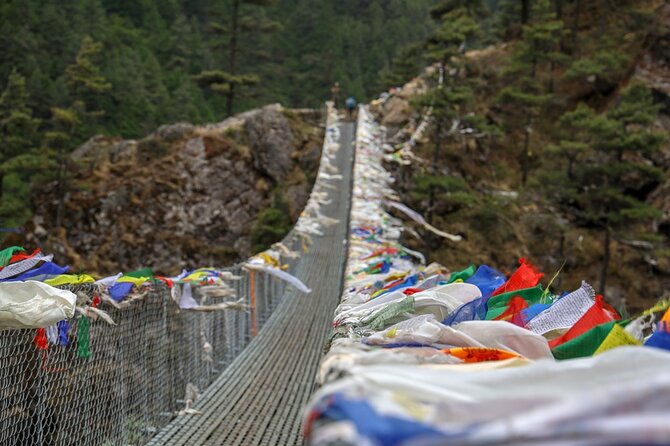
You begin with a descent through rhododendron forest to Deboche, at about 3,320 meters. From there, the trail continues toward Dingboche, with about six hours of walking for the day.
This is a pleasant contrast to the more exposed high trail ahead. The forest section gives you shade and a softer setting before the valley becomes more open and severe. You are also gaining altitude in measured steps, which is exactly what you want on a trek like this.
Dingboche is a key staging point. By now, the route feels more remote and the walking feels less like a simple village hike. You should keep your pace controlled. A fast start can make the next acclimatization day harder, not easier.
Day 6: A second acclimatization day at Dingboche
The second rest day includes a short hike to Nagarjuna, a nearby hill. The outing lasts about three hours and gives you views of the surrounding peaks while helping your body adjust to more than 4,400 meters.
This is one of the best-planned parts of the schedule. You are not asked to gain a full day’s distance, yet you are still active. At this elevation, even a short climb can feel like work, so the morning should be treated as training for the days ahead.
Listen to the guide on this day. The company’s guides have been praised for suggesting sensible ways to use acclimatization time and for changing plans when someone struggles above 5,000 meters. That is important because reaching Base Camp is never more important than managing altitude symptoms.
Day 7: Dingboche to Lobuche under high peaks
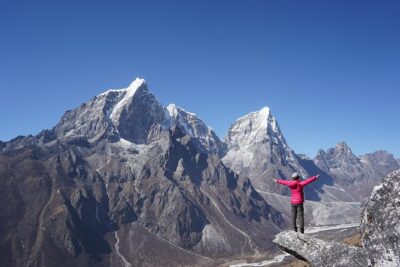
After the rest day, you head toward Lobuche for about six hours. The route follows a broad valley beneath Cholatse and Tawache, with increasingly rocky ground and a more exposed feel.
This section marks a real change in the trek. The villages become less frequent, the air feels thinner, and each climb takes longer. You should expect a slower walking pace than you might manage at sea level, even if you are fit.
Lobuche is not the place to prove anything. Eat what you can, drink regularly, and prepare for an early start. The next day includes both Gorakshep and Everest Base Camp, so conserving energy here pays off.
Day 8: Gorakshep and Everest Base Camp
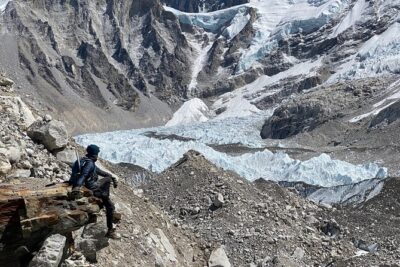
The route from Lobuche to Gorakshep takes about three hours. You climb beside the Khumbu Glacier on rocky ground, passing the International Pyramid Laboratory before reaching the high settlement.
From Gorakshep, the walk to Everest Base Camp takes another four hours. The trail runs alongside the glacier and includes rocky downhill and uphill sections. The distance may not look extreme on paper, but altitude makes this a slow and tiring day.
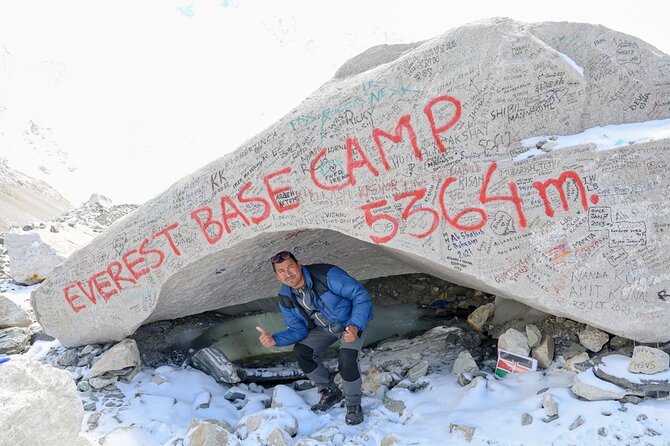
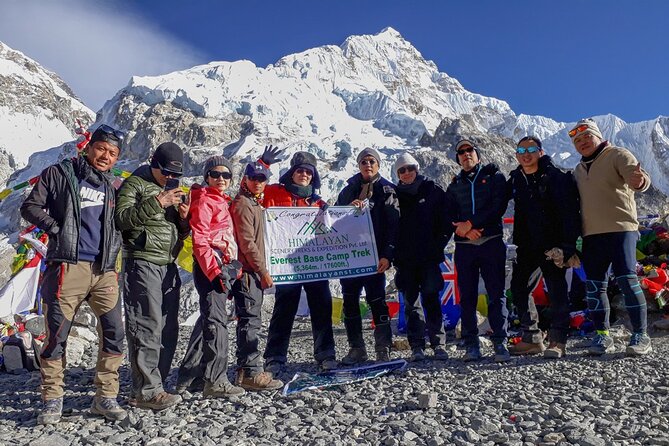
Base Camp itself sits at 5,364 meters. You reach the point used by climbers preparing for Everest, take time for photographs, and then return toward Gorakshep. The camp is not a permanent city or a polished attraction. Its value is the setting, the glacier, and the sense of arriving at the end of the classic approach route.
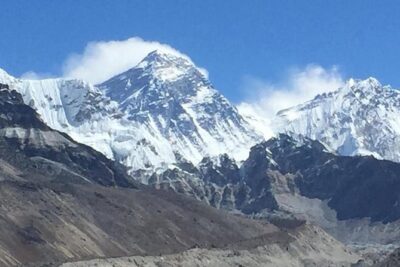
A practical point: Base Camp is not the best viewpoint for Mount Everest itself. The next morning’s Kala Patthar hike is where the wide Everest view and sunrise become the visual reward.
Day 9: Kala Patthar at sunrise, then the long return
The early hike to Kala Patthar is steep and rocky, and the full day is listed at about eight hours. You climb before sunrise to reach the viewpoint at 5,545 meters, the highest point on this itinerary.
This is the toughest and most memorable day for many people. The climb is short in distance compared with a full trekking day, but the altitude and early hour make it demanding. The reward is the chance to watch the first light reach Everest and the surrounding peaks.
After Kala Patthar, you begin the descent. Lower elevation usually makes walking easier, but do not underestimate the length of the day. Your legs have already worked hard before the return begins.
Day 10: The long descent to Namche Bazaar
You leave the high country and walk back to Namche for about six hours. The trail follows the route toward Pan, with the lower elevation making this day comparatively easier than the climb in.
The return route gives you a different view of familiar ground. You notice the direction of the river, the shape of the bridges, and the way the valley opens as you lose altitude. It is also a good test of your knees, especially after the rocky sections near Base Camp.
This is where porter support becomes especially valuable. A porter is provided for every two trekkers, so you can keep your personal day pack manageable while the main load moves with the group.
Day 11: Namche to Lukla through the villages
The final walking day takes about seven hours. You descend through forest, cross bridges and streams, pass remote villages, and retrace the trail through Monjo and Phakding before reaching Lukla.
The day is long, but the direction is favorable. You are losing altitude, and the route feels more familiar. Still, tired legs and uneven surfaces can cause problems, so keep your pace steady rather than racing for the airport town.
Lukla is the practical end of the trek, but it can also feel emotional. You have gone from a short flight and a first village walk to the highest point of the journey and back again.
Day 12: Lukla to Kathmandu
The final flight from Lukla to Kathmandu takes about 35 minutes. It is another memorable part of the trip, with last views of the Himalayas before the city returns.
Once you reach Kathmandu, a vehicle takes you to your hotel, and the rest of the day is free. The airport pickup and drop-off arrangement covers the domestic transfer side of the trip, though you should confirm the exact vehicle arrangement for your booking.
What the $605 price includes
At $605 per person, this trek offers strong value if the inclusions match your needs. Domestic flights alone are a major part of the logistics, and the package also covers:
- Airport pickup and drop-off by private or shared vehicle
- Kathmandu to Lukla and Lukla to Kathmandu flights
- Twin-sharing lodge accommodation
- Breakfast, lunch, and dinner for 11 days
- A government-licensed, high-altitude-trained guide
- One porter for every two trekkers
- Sagarmatha National Park entry permit and TIMS fee
- Local government tax
- Accident insurance for staff
- Trekking map, hat, duffel bag, and trekking pole
- First-aid kit and oximeter
- Walkie-talkie for group treks
- Trip achievement certificate
The package does not include personal travel insurance, snacks, drinks, personal gear, or tips. You need your own travel insurance, and you should not confuse staff accident insurance with coverage for your own medical care or evacuation.
The maximum group size is 20, though the actual group may be smaller. If you prefer a more personal pace, ask in advance about the expected group size and guide assignment. Named guides such as Rajesh Magar, Narayan Ntc, Gopal, and Bikram have received strong praise for kindness, responsibility, and adapting the pace, but a specific guide cannot be assumed unless confirmed.
Who should choose this trek?
I would recommend it to someone who wants the classic Everest Base Camp route with the major practical costs bundled together. It suits people who value a structured schedule, lodge accommodation, guide support, porter assistance, and planned acclimatization.
It can also suit a fit beginner. You do not need previous Himalayan trekking experience according to the tour description, but you do need moderate physical fitness and a realistic view of the effort. Eight-hour days, steep trails, rocky ground, and very high altitude are part of the deal.
I would be more cautious about recommending it to anyone seeking a relaxed holiday, private bathrooms, a fixed city-style timetable, or a trip with little physical strain. This is an adventure first. The Sherpa villages and river valleys are rewarding, but you earn them one uphill step at a time.
Small details that matter
The trek includes mobile ticketing and pickup, and booking confirmation is provided at the time of booking. It begins at Tribhuvan Airport in Kathmandu and runs for about 12 days.
The cancellation terms are simple: cancel at least 24 hours before the start time for a full refund. Cancellations within 24 hours are not refunded, and changes inside that period are not accepted.
The best part of the itinerary is its rhythm. You walk, pause, climb, pause again, then tackle Base Camp and Kala Patthar before descending. That structure gives you a better chance of enjoying the mountains instead of spending the whole trip trying to catch your breath.
Should you book the Everest Base Camp Trek?
Book it if you want a fairly priced, fully supported route to Everest Base Camp and you are ready for genuine physical work. The included flights, meals, permits, guide, porter, gear items, and acclimatization days make $605 attractive, especially for a first Himalayan trek.
Before paying, confirm the expected group size, the name of your guide, the lodge arrangement, and how flight changes are handled. Choose this trip for the complete mountain journey, not just the photograph at Base Camp. The river, monasteries, villages, bridges, and two carefully placed acclimatization days are what make the 12 days work.
FAQ
How long is the Everest Base Camp Trek?
The trek lasts approximately 12 days, including flights between Kathmandu and Lukla.
Where does the trek begin?
The experience begins at Tribhuvan Airport in Kathmandu, with a domestic flight to Lukla.
How high is Everest Base Camp?
Everest Base Camp is at approximately 5,364 meters.
How high is Kala Patthar?
Kala Patthar reaches approximately 5,545 meters and is the highest point on this itinerary.
Are domestic flights included?
Yes. Flights between Kathmandu and Lukla in both directions are included.
Are meals included during the trek?
Yes. Breakfast, lunch, and dinner are included for 11 days during the trek.
Is accommodation included?
Yes. The package includes the best available twin-sharing lodge accommodation during the trek.
Is a guide included?
Yes. One government-licensed, high-altitude-trained guide is included.
Is porter support included?
Yes. One porter is provided for every two trekkers.
What fitness level is required?
The tour requires a moderate level of physical fitness. Walking days range from about two to eight hours and include steep, rocky, high-altitude sections.
Just added around Kathmandu
- Traditional Momo Making Class★ 5.0 · 10 reviews
- Wildlife Adventure in Chitwan Nepal★ 4.0 · 4 reviews
- Walking tour of real Kathmandu through back streets.★ 5.0 · 3 reviews
- Kathmandu 2 Nights 3 Days Chitwan Jungle Safari Tour★ 5.0 · 9 reviews
- Kathmandu Street Food Walking Tour – Eat Like a Local★ 5.0 · 3 reviews
- Private Manaslu Circuit Trek at Himalayas★ 5.0 · 3 reviews
- Walking tour of Kathmandu with awesome local guides★ 5.0 · 4 reviews
- Visit Swayambhunath and Bauddhanath Stupa with Guide★ 5.0 · 5 reviews
Everest Base Camp Treks from Kathmandu, compared.
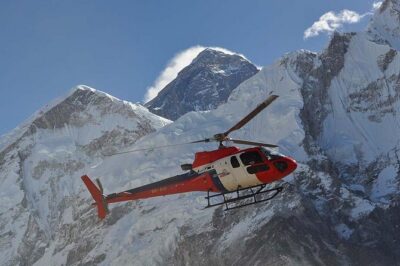
Everest Base Camp Trek with Helicopter Return from Gorakshep to Lukla
Read our review →Browse the lists this tour appears in