
Reviewed · EVEREST BASE CAMP TREKS FROM KATHMANDU
14 Days Everest Base Camp Trekking
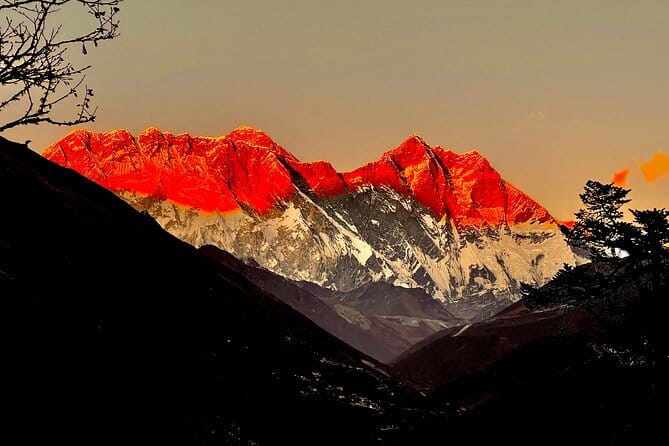
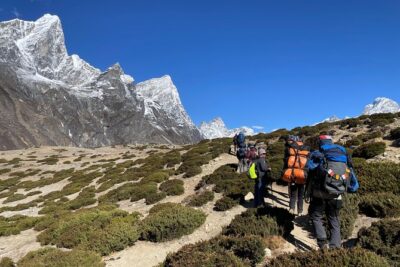
The real prize here is not only reaching Everest Base Camp at 5,364 meters. It is the slow change from green hills and rhododendron forest to the stark ice and rock of the Khumbu. You cross suspension bridges, pass mani walls and monasteries, sleep in Sherpa villages, and watch Ama Dablam, Lhotse, Nuptse, and Everest grow larger each day.
I like the two planned acclimatization days, one in Namche and one in Dingboche. I also like that the $1,420 price covers the Lukla flights, permits, guide, porter support, tea-house lodging, meals on trek, and ground transfers. The main caution is simple: this is a demanding high-altitude walk, not a sightseeing holiday. Strong fitness is required, and the long days can reach about 10 hours.
Key points at a glance
- Kala Patthar at 5,565 meters: The sunrise viewpoint gives you one of the finest angles on Everest, Nuptse, Pumori, Ama Dablam, and nearby peaks.
- Two acclimatization stops: You spend a rest day in Namche and another in Dingboche, with optional higher walks to help your body adjust.
- Private group format: Only your group takes part, with one certified English-speaking guide and one porter for every two trekkers.
- Sherpa village stays: Tea-house accommodation brings you close to daily life in Phakding, Namche, Tengboche, Dingboche, Lobuche, and Gorakshep.
- Good logistical coverage: Round-trip Kathmandu to Lukla flights, permits, meals during the trek, medical kit, and airport transfers are included.
- Guides with a personal touch: Guides named Hari, Kapil, and Namo have been praised for calm support, careful pacing, and friendly care, though your assigned guide may differ.
What the $1,420 price really covers
At first glance, $1,420 may seem like a lot for a walking trip. I think the value is quite good once you separate the included costs from the expenses you still need to pay.
The package includes private ground transport between your hotel and the domestic airport, then back again. It also includes round-trip flights between Kathmandu and Lukla, which are essential to this route. Trekking permits, government taxes, office charges, a trekking map, a trip certificate, and a first-aid kit are included as well.
Your guide’s food, lodging, insurance, and transport are covered. The same applies to the porter arrangement, based on one porter for every two trekkers. That matters because carrying your own equipment at altitude can make already long days much harder.
During the trek, you receive the best available twin-sharing lodge accommodation. Breakfast is included for 13 days, lunch for 11 days, and dinner for 11 days. Seasonal fruit is also provided. The package does not cover food or accommodation in Kathmandu, which is listed at $45 per day, so allow about $90 for the first and last nights if you stay two days in the city.
You also pay separately for international flights, travel insurance, the Nepal entry visa, drinks, snacks, hot showers, personal equipment, and tips. The visa can be obtained at the airport on arrival for $40 for 30 days. Hot showers cost $5 per person during the trek, so you may decide to save them for the lower villages or especially cold evenings.
More Everest Base Camp treks:
- Everest Base Camp Trek – 14 Days
★ 5.0 · 1,499 reviews - Everest Base Camp Trekking
★ 5.0 · 485 reviews - Everest Base Camp Trekking – 13 Day
★ 5.0 · 365 reviews
Kathmandu to Lukla, the sharp start
Day one begins with arrival in Kathmandu. The flight into Nepal can offer sweeping mountain views on a clear day, though the city itself is your practical base for permits, packing, and the final start.
On day two, you fly to Lukla and land on the steep mountain runway at 2,850 meters. This is a memorable beginning, but it also sets the tone: mountain flights and weather can affect the schedule. From Lukla, you meet the trekking crew and follow the Dudh Koshi Valley to Phakding at 2,656 meters.
The day is listed as lasting about 10 hours, though the flight and walking portions are separate parts of the day. Phakding is your first tea-house night and a useful introduction to the simple rhythm ahead: walk, eat, rest, and repeat.
Namche Bazaar and your first acclimatization day
From Phakding, you cross and recross the river on high suspension bridges. Beyond Monjo, at 2,845 meters, you enter Sagarmatha National Park, created to protect the fragile mountain environment.
The climb toward Namche Bazaar is one of the first serious tests. Namche sits at about 3,440 meters between ridges, with tea shops, lodges, and souvenir stores. It is not a quiet hamlet, but it is an important place to rest, gather supplies, and adjust to the altitude.
Day four is set aside for acclimatization. You can walk to the Everest View Point and look across the Khumbu peaks. I like this pause because it gives you a chance to move higher without changing sleeping altitude. Do not treat it as a wasted day. At this height, rest is part of the route.
Guides Hari, Kapil, and Namo are names connected with this company’s guiding team. Feedback about them emphasizes calm pacing, attention to physical and mental condition, and friendly care. That is exactly what you want here. A good guide should notice when you are struggling before you try to hide it.
Tengboche and the first big mountain views
From Namche, the trail contours above the Dudh Kosi. You pass several villages before reaching Tengboche, also written as Tyangboche, at about 3,860 meters.
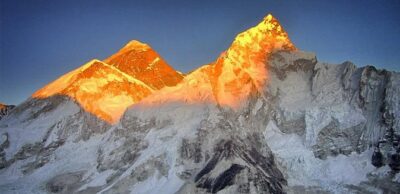
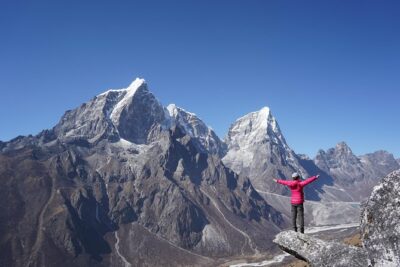
This is where the mountain scenery becomes especially dramatic. You get strong views of Everest, Lhotse, Nuptse, and Ama Dablam. Tengboche is also known for its monastery setting, making it more than a place to sleep. The combination of high peaks, religious buildings, and open mountain air gives this section a strong sense of place.
The day is listed at about 10 hours, so do not underestimate it simply because the trail follows a contour for part of the way. High altitude makes every uphill section feel longer. Good boots and a steady pace matter more than speed.
More day hikes and treks in Kathmandu:
- Nagarkot Sunrise View and Day Hiking from Kathmandu
★ 5.0 · 471 reviews - Annapurna Circuit Trek with Tilicho Lake
★ 5.0 · 368 reviews - Everest Base Camp Trek -14 Days
★ 5.0 · 321 reviews - Annapurna base camp trek 5 Days
★ 5.0 · 252 reviews
Pangboche and Dingboche at 4,410 meters
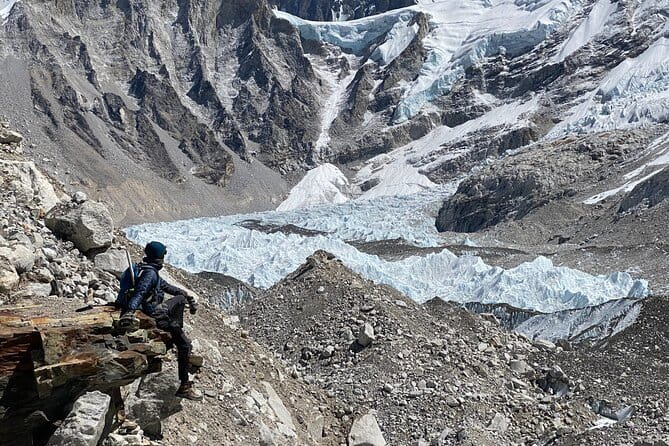
The route descends through forest, crosses the Imja Khola, and climbs to Pangboche at 3,985 meters. The village faces Ama Dablam, with a gompa, mani walls, and scattered mountain views.
From there, you continue toward Dingboche, which sits at about 4,410 meters. Dingboche is a key stop because the air is thinner and the route begins to feel properly alpine. You are also spending the night at a high elevation, so hydration, sleep, and a measured pace become increasingly important.
Day seven is another acclimatization day. The plan includes a walk toward Tshola Tsho at 4,510 meters, with views of the steep walls of Cholatse and Taboche. You may also climb to Nagarjun at about 5,100 meters.
The important detail is that this is not a day to sleep late and stay indoors. The higher walk gives you a controlled chance to gain elevation before returning to Dingboche. At the same time, the optional climb may feel strenuous. Your guide should help you decide how far to go based on your condition.
Lobuche and the approach to the glacier
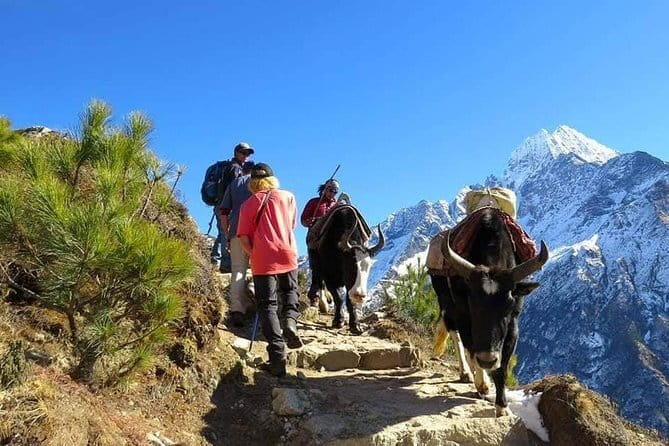
The route continues up a broad valley below Cholatse and Tawache. At Duglha, 4,620 meters, you climb steeply toward the foot of the Khumbu Glacier. This is a good place to stop for lunch before continuing to Lobuche.
Lobuche is one of the higher overnight settlements on the route. The day is listed at about 10 hours, and the cold, altitude, and exposed terrain can make it feel longer. The scenery is impressive, but comfort becomes more basic as you move higher.
This is where the included tea-house lodging should be viewed realistically. You receive the best available twin-sharing lodge, but you are not booking a hotel with full city comforts. Hot showers cost extra, and you may want to limit your expectations about warmth and privacy.
Gorakshep and Everest Base Camp
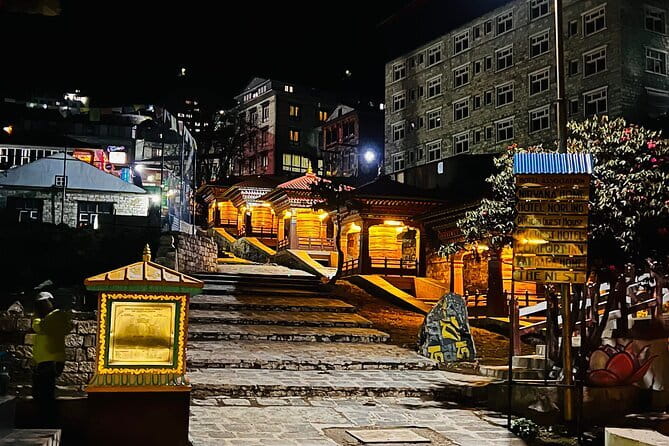
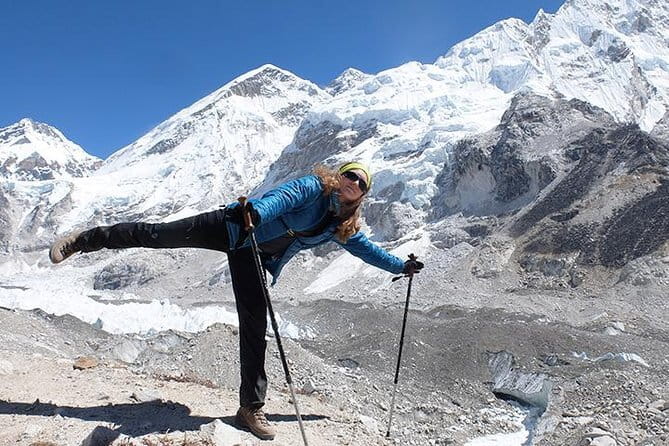
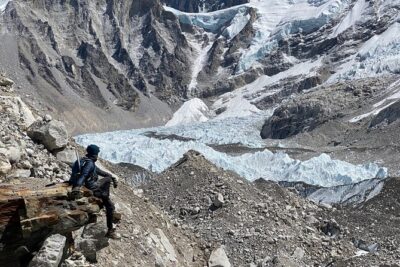
From Lobuche, you follow the Khumbu Glacier toward Gorakshep at 5,164 meters. The route offers views of the surrounding peaks and crosses rough glacier terrain where the path rises over a tributary glacier.
The schedule lists about one hour to Gorakshep, followed by lunch, then a longer afternoon outing to Everest Base Camp. The Base Camp walk is listed at about seven hours and takes you past ice pinnacles and crevasses of the Khumbu Glacier. Timing can vary with trail conditions, group pace, and the exact route used by the guide.
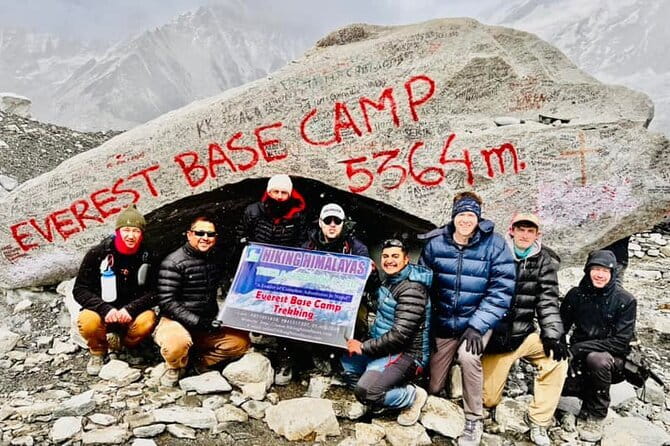
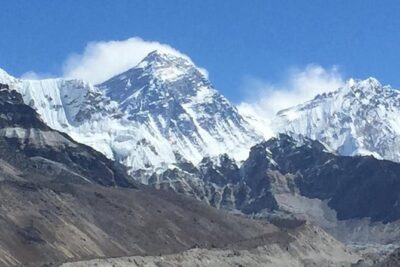
Everest Base Camp itself is not a summit viewpoint. From here, you are at the foot of the climbing route and among the glacier scenery, but the classic broad view of Everest is usually associated with Kala Patthar. That distinction helps you set the right expectations.
Still, reaching Base Camp is a major personal milestone. You have walked from Lukla through Sherpa settlements and high passes of effort, and now you are standing at one of the world’s most famous mountaineering staging points.
Kala Patthar and the long descent to Pheriche
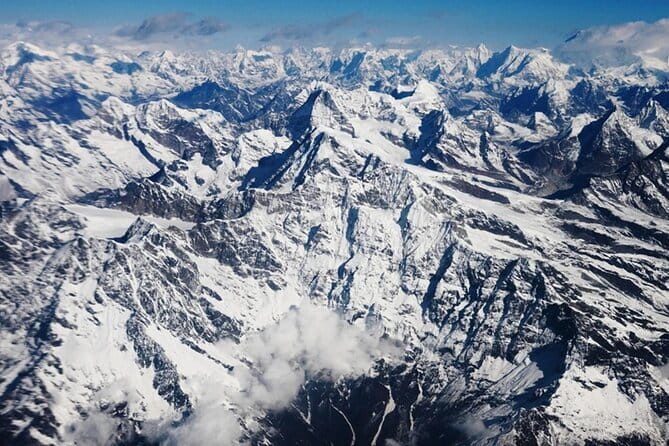
Day ten begins early with the climb to Kala Patthar at 5,565 meters. This is the visual high point of the trek, with views toward Everest, Nuptse, Ama Dablam, Pumori, Lola, and Lhumbute.
The early start is worthwhile if the weather cooperates, but this is also one of the hardest moments physically. You are climbing to the highest point of the trip after the Base Camp outing, and the thin air makes the ascent slow. Take small steps and let the guide set the pace.
After Kala Patthar, the route is mostly downhill as you retrace your steps to Duglha and descend to Pheriche. Downhill does not mean effortless. Your knees may notice the change, and loose trail surfaces can make the descent tiring.
Returning through Tengboche and Namche
Day eleven follows the river, crosses it, and climbs through birch and rhododendron forest to Tengboche. This return offers a different feel from the ascent. You already know the route, but the lower altitude makes breathing easier and the vegetation returns.
From Tengboche, the trail continues toward Namche Bazaar. The route includes views of Kwangde, Tawache, Everest, Nuptse, Lhotse, Ama Dablam, Kantega, and Thamserku. It is a strong mountain-view day, though the listed walking time is again about 10 hours.
Namche gives you a welcome change of pace. You can use the shops and tea houses, reconnect with the familiar setting, and enjoy a more comfortable night before the final walk to Lukla.
Lukla celebration and the flight back
The final trekking day follows the Dudh Kosi downhill to Lukla at about 2,800 meters. You finish among the same mountain villages and river valleys that introduced the trek, but now with the satisfaction of having reached Base Camp and Kala Patthar.
The evening includes a celebration with the Sherpa guides and crew. This is a fitting touch because porters and guides carry much of the practical burden of the journey. Tips are not included, so prepare gratuities separately and ask the company for current guidance on appropriate amounts.
Day thirteen starts early with the flight from Lukla to Kathmandu. The rest of the day is free for shopping, packing, postcards, or simply recovering. Day fourteen provides airport transport for your departure, though you can also stay longer for options such as national park drives, white-water rafting, a Tibet trip, or mountain biking.
How the private format affects your experience
This is a private tour, so only your group participates. That gives you more control than a large fixed group, especially on acclimatization days and during the long high-altitude sections.
You still follow a set route, and the flight schedule, lodge availability, weather, and trail conditions limit flexibility. But a private group can usually discuss pace and rest more directly with the guide. That is especially useful if one person in your group walks slower than the others.
The guide is an English-speaking certified professional, and the company provides insurance and accommodation for the guide and porter. The porter ratio is one porter for two trekkers, which is a practical middle ground between carrying everything yourself and using a large support team.
Who should book this trek
I would recommend this trip to someone who wants the classic Everest Base Camp route but prefers a private group and a package with major logistics already handled. It suits people who value structured acclimatization, local guides, tea-house lodging, and a clear 14-day plan.
You need strong physical fitness. The program includes repeated days of about 10 hours, high sleeping elevations, a walk to 5,100 meters near Dingboche, Base Camp at 5,364 meters, and Kala Patthar at 5,565 meters.
This is less suitable if you want luxury lodging, short walking days, or a relaxed holiday with no strenuous preparation. You also need travel insurance and personal trekking equipment, neither of which is included.
The cancellation terms are straightforward: cancel at least 24 hours before the local start time for a full refund. Cancellations or changes made within 24 hours are not accepted for a refund.
Should you book the 14-day Everest Base Camp trek?
I would book this trek if you want a well-supported classic route at a price that covers the expensive essentials, especially Lukla flights, permits, guide services, porter support, meals, and tea-house accommodation. The two acclimatization days make the schedule more sensible than a rushed ascent.
Before paying, confirm the current flight arrangements, the exact guide assigned to your group, the Kathmandu hotel plan, porter baggage limits, and what equipment you need to bring. Ask about food preferences and the likely daily walking pace as well.
The route is demanding, but the reward is unusually clear: Sherpa villages, glacier valleys, Everest views from Kala Patthar, and the unmistakable moment of arriving at Base Camp. If you are fit, prepared, and comfortable with basic mountain lodging, this is a strong-value way to take on the Khumbu.
FAQ
How long is the Everest Base Camp trek?
The experience lasts approximately 14 days, including arrival in Kathmandu, the trek from Lukla, the return to Kathmandu, and airport departure transport.
Where does the trek start?
The meeting point is Tribhuvan International Airport in Kathmandu, Nepal. The listed start time is 6:15 am.
Is airport pickup included?
Yes. Private ground transport is included from the hotel to the domestic airport and from the domestic airport back to the hotel.
Are flights to Lukla included?
Yes. Round-trip flights between Kathmandu and Lukla, including departure taxes, are included.
What type of accommodation is provided?
The trek includes the best available twin-sharing lodge-to-lodge accommodation. Accommodation and food in Kathmandu are not included and are listed at $45 per day.
Are meals included?
Breakfast is included for 13 days, lunch for 11 days, and dinner for 11 days. Drinks, snacks, and personal expenses are not included.
Is a guide included?
Yes. The trip includes one certified English-speaking professional guide, including the guide’s food, accommodation, and insurance.
Is porter support included?
Yes. The arrangement includes one porter for every two trekkers, including the porter’s food, accommodation, and insurance.
What fitness level is required?
The tour states that you should have a strong physical fitness level. The route includes high-altitude walking and days listed at about 10 hours.
Is travel insurance included?
No. You must arrange your own travel insurance. Personal trekking equipment, tips, international airfare, the Nepal entry visa, drinks, snacks, and hot showers are also excluded.
Just added around Kathmandu
- Traditional Momo Making Class★ 5.0 · 10 reviews
- Wildlife Adventure in Chitwan Nepal★ 4.0 · 4 reviews
- Walking tour of real Kathmandu through back streets.★ 5.0 · 3 reviews
- Kathmandu 2 Nights 3 Days Chitwan Jungle Safari Tour★ 5.0 · 9 reviews
- Kathmandu Street Food Walking Tour – Eat Like a Local★ 5.0 · 3 reviews
- Private Manaslu Circuit Trek at Himalayas★ 5.0 · 3 reviews
- Walking tour of Kathmandu with awesome local guides★ 5.0 · 4 reviews
- Visit Swayambhunath and Bauddhanath Stupa with Guide★ 5.0 · 5 reviews
Everest Base Camp Treks from Kathmandu, compared.
Everest Base Camp Trek with Helicopter Return from Gorakshep to Lukla
Read our review →Browse the lists this tour appears in