
Reviewed · HISTORICAL TOURS
Kathmandu Heritage Walk | Heritage Walk of Kathmandu
Kathmandu’s best street-level moments often come between the famous sights. This private 3.5-hour walk takes you from Thamel into courtyards, shrines, market lanes, and working city streets, with stops at Shanti Bihar Stupa, Akash Bhairab Temple, Gold Souq, Sankata Temple, and Annapurna Temple.
I like two things here: the route gives you a look at ordinary Kathmandu life, not only major monuments, and the private format lets the guide adjust the pace. Guides Madan and Martin are named in the booking information, and both are praised for clear explanations, good timing, and a friendly manner.
The main caution is physical and practical. You will walk through crowded streets and uneven urban areas, and the tour is listed as unsuitable for people over 70, wheelchair users, pregnant women, and babies under one. That age limit is worth confirming before booking, especially since one past guest described the pace as comfortable for seniors.
Key points to know before you book
- A private route beyond UNESCO sites: You visit lesser-known temples and market districts instead of Kathmandu’s headline World Heritage monuments.
- Thamel is both starting point and finish: Meet at Breakfree Adventures, in front of Everest Bank Limited, and return to Thamel at the end.
- Several religious stops in one short walk: Shanti Bihar Stupa, Akash Bhairab, Sankata, Mahankal Bhairab, and Annapurna Temple each offer a different setting.
- Markets are part of the experience: Tahiti, Gold Souq, Bhotahiti, and a local market bring shopping, street activity, and daily commerce into the route.
- Private English guidance: A government-certified guide leads the walk, with Madan and Martin among the guides named for this experience.
- Bring water and sensible shoes: One 1,000 ml bottle is included, but meals, drinks, transport, and personal purchases are not.
Starting in Thamel, then leaving the tourist center behind
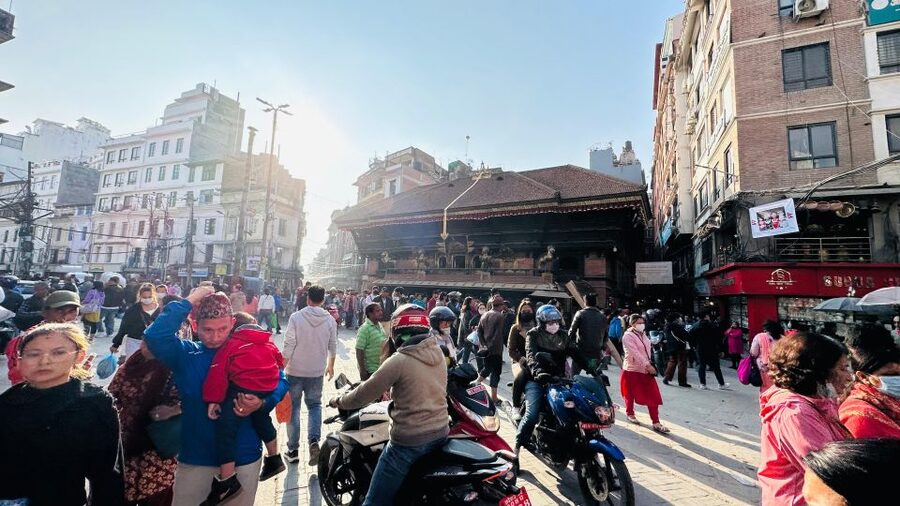
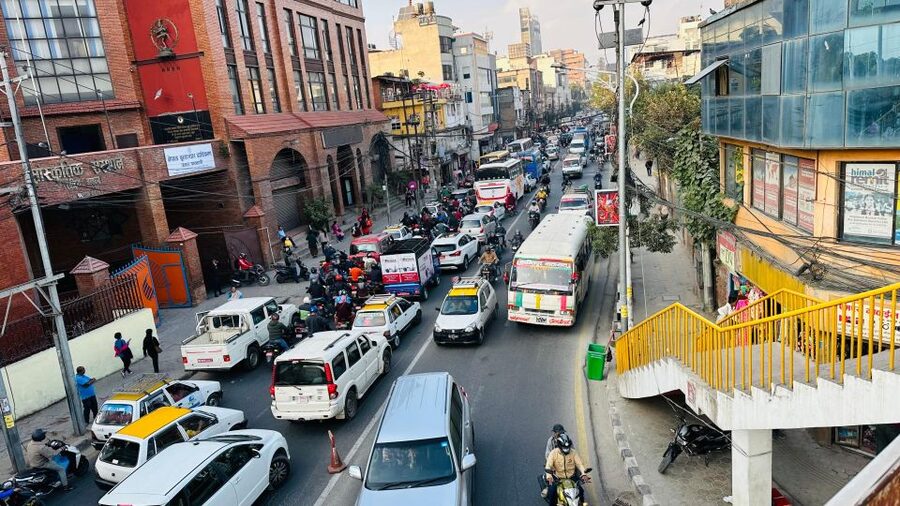
The tour begins at the entrance to Breakfree Adventures in Thamel, in front of Everest Bank Limited. This is a practical meeting point because Thamel is easy to find within central Kathmandu, but the streets around it can be busy, so allow a little time to locate the exact entrance.
Thamel is a useful starting place for a city walk. It is packed with shops, restaurants, trekking businesses, cafés, and small lanes, giving you an immediate sense of Kathmandu’s visitor economy. The point is not to spend the whole tour shopping here. Instead, you begin amid the noise and movement of Thamel, then gradually move toward areas where local trade and worship shape the streets.
I like that the walk starts with a familiar part of Kathmandu before heading into less obvious districts. If this is your first day in Nepal, the route can help you get your bearings. You see where visitors gather, then compare it with the markets and temples used by residents.
The tour ends back in Thamel, which makes the timing convenient. You can arrange lunch, shopping, or a rest nearby without planning a separate ride across the city.
More walking tours in Kathmandu:
- Kathmandu Food and Drink Walking Tour
★ 5.0 · 266 reviews - Kathmandu: Food and Drink Walking Tour
★ 4.9 · 119 reviews - Walking Street Food Tour in Kathmandu
★ 5.0 · 111 reviews
Tahiti brings old streets and modern Kathmandu together
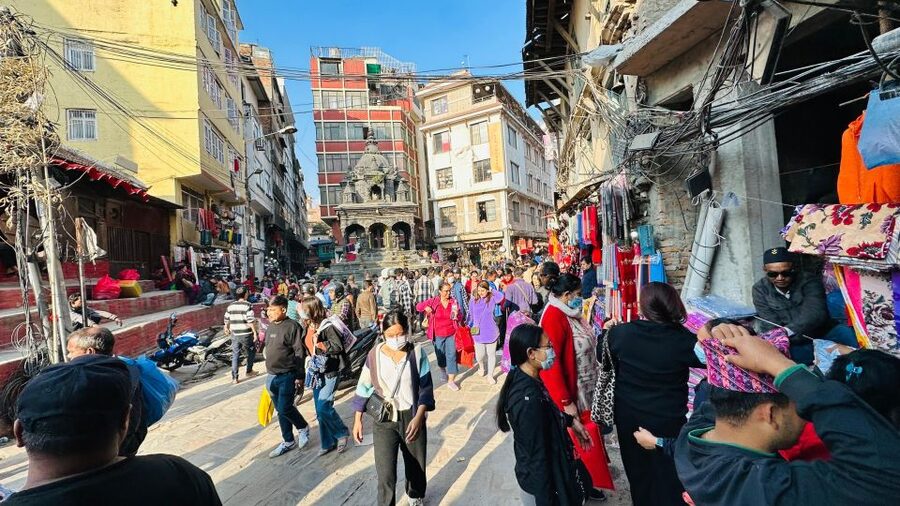
From Thamel, the route continues to Tahiti. The area is described as a place where traditional architecture meets present-day city life, and that contrast is central to the walk.
Tahiti is not presented as a single grand monument. Its appeal is the street view: old buildings, local movement, shops, and the constant overlap of religious and commercial life. Your guide can provide the context that is easy to miss when you walk through on your own.
This part of the route also sets the tone for the rest of the morning. You are not moving from one polished attraction to another. You are walking through an active city, where a shrine or temple may appear beside a shop or market lane.
You should keep your camera ready, but remain respectful around religious places. Comfortable clothing is listed among the recommended items, and it makes sense here. You may want shoulders and knees covered when entering or viewing sacred spaces, even though a specific dress code is not provided.
Shanti Bihar Stupa offers a quiet pause
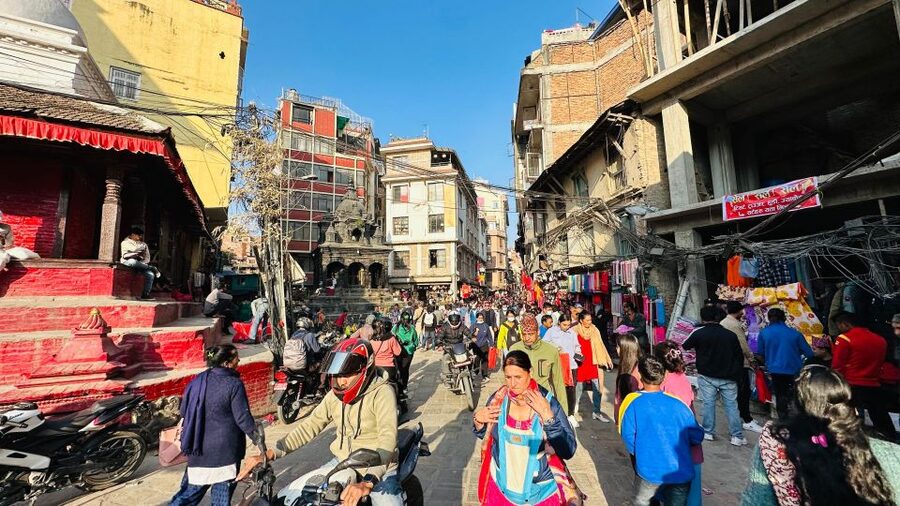
The Shanti Bihar Stupa provides a change of mood. After the traffic, shops, and close-packed streets, this Buddhist site offers a calmer setting within the city.
The stop matters because it gives the walk some rhythm. Kathmandu can feel intense when you experience it only as a stream of horns, pedestrians, signs, and shopfronts. A peaceful religious site helps you notice a different side of the city, one shaped by stillness and reflection.
The information supplied does not specify the size of the stupa, the time spent there, or whether there is a formal interior visit. You should think of it as a guided cultural stop rather than a long sightseeing session. The guide’s explanation is likely to be more useful than expecting a large monument with extensive visitor facilities.
For photographers, this may be one of the more composed stops on the route. Bring a camera, but ask before photographing worshippers or ceremonies. An umbrella is also recommended, which is sensible for Kathmandu’s changeable conditions.
Akash Bhairab Temple and the force of Indrachowk
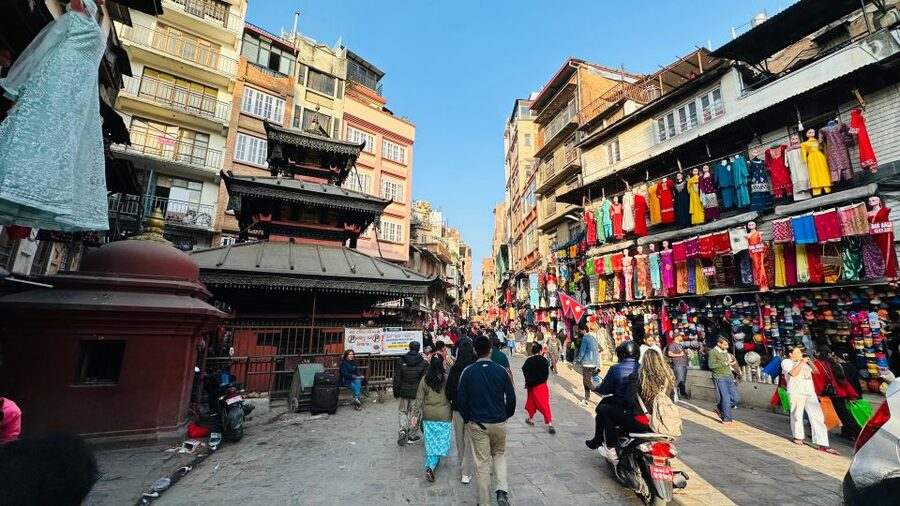
The walk then reaches Akash Bhairab Temple in Indrachowk. This is one of the more important religious stops on the route and one of the places where the city’s sacred life is especially close to its commercial life.
Akash Bhairab is a historic sacred site, and the atmosphere around it is described as devout. That means you should expect an active place of worship rather than a quiet museum. The value of a guide here is practical as well as historical. A local guide can explain what you are seeing and help you behave appropriately around people who have come to pray.
Indrachowk is also a useful stop for understanding Kathmandu as a trading city. The tour does not isolate the temple from its surroundings. You see the religious site within the movement of the neighborhood, with shops, pedestrians, and daily business continuing nearby.
The drawback is that this sort of setting can be crowded and close-packed. If you prefer spacious courtyards and carefully labeled displays, this walk may feel rough around the edges. If you want to see a working city rather than a staged attraction, that is part of its appeal.
More UNESCO heritage sites in Kathmandu:
- Private Kathmandu Sightseeing Tour | UNESCO World Heritage sites
★ 5.0 · 756 reviews - UNESCO Seven World Heritage Tour in Kathmandu
★ 5.0 · 253 reviews - Kathmandu Private Sightseeing Tour | UNESCO World Heritage Sites
★ 5.0 · 109 reviews - Kathmandu: Full Day Private Top 4 UNESCO Heritage Tour W/Lunch.
★ 5.0 · 86 reviews
The Gold Souq shows Kathmandu’s craft and commerce
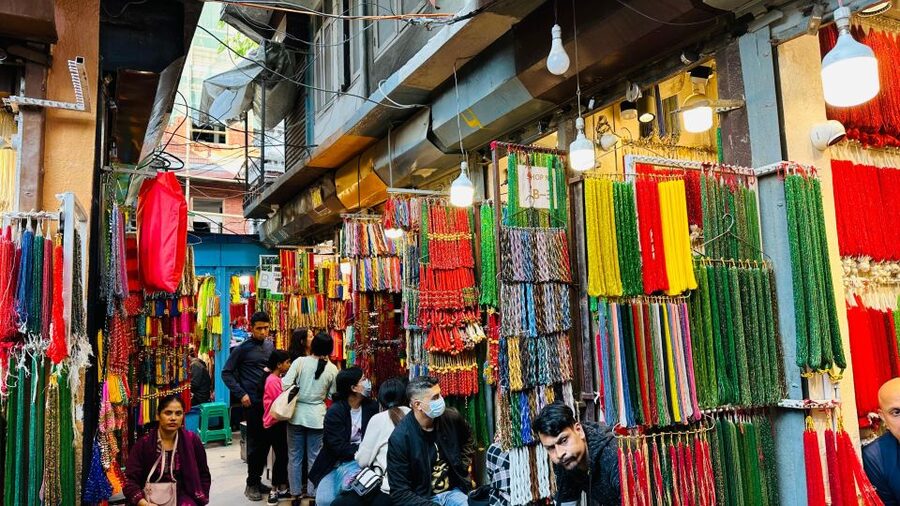
The Gold Souq adds a shopping and craft element to the tour. You can explore jewelry and the workmanship associated with Kathmandu’s gold trade while moving through a commercial part of the city.
The name may suggest a large, formal market, but the available details do not provide its size, exact shops, or whether purchases are expected. Treat this as an opportunity to observe local commerce, not as a guaranteed shopping event or a place where you must buy something.
If you are interested in jewelry, ask the guide questions about what you are seeing. If you are not shopping, you can still appreciate the role of skilled metalwork in the city. Personal expenses are not included, so any purchase is entirely up to you.
This stop also shows why the tour works best for curious walkers. The focus is not only on old temples. You are also looking at how people earn a living, shop, and move through central Kathmandu.
Sankata Temple and Mahankal Bhairab add religious depth
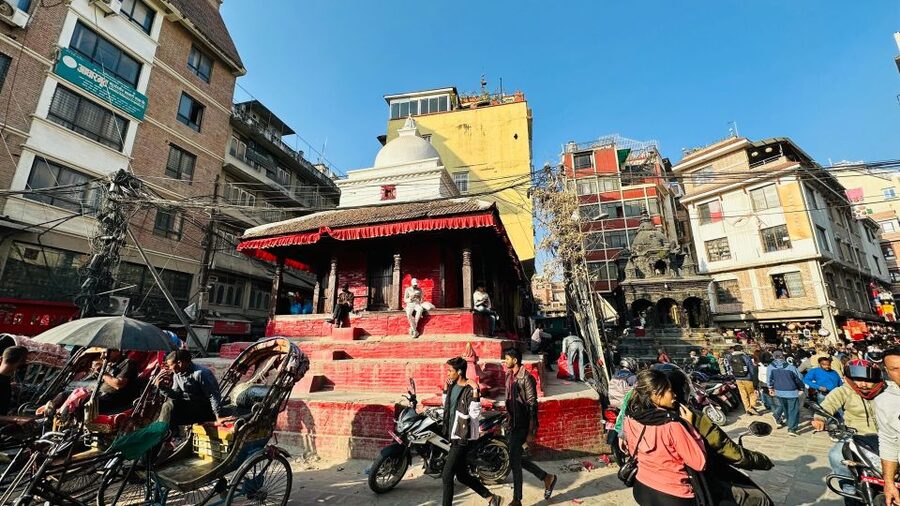
The route continues to Sankata Temple and Mahankal Bhairab. These sites carry strong cultural meaning and broaden the religious picture beyond the Buddhist stupa and Akash Bhairab Temple.
A short city walk can easily reduce Kathmandu’s sacred places to names and photographs. Here, the sequence of stops gives you a chance to compare different settings and traditions. The guide can connect the places as part of the city’s religious life, rather than treating each temple as an isolated photo stop.
The available information does not give detailed architectural descriptions or a fixed schedule for each temple. That is important to keep in mind. The tour is a compact overview, not a specialist temple study. You will see several important places, but you should not expect a long lecture or extended time at every one.
Respect matters at each stop. Follow your guide’s instructions, keep your voice low when appropriate, and ask before taking photographs. The tour is designed for cultural discovery, not simply for collecting pictures.
Bhotahiti puts you close to daily local trade
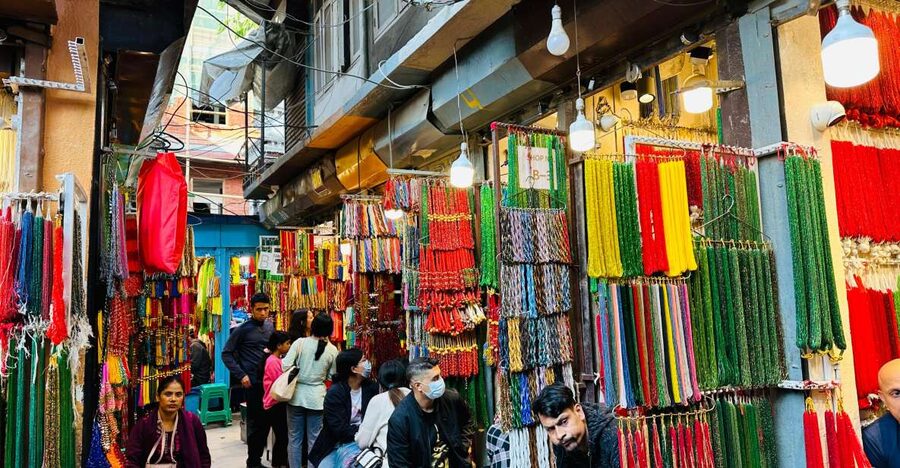
Bhotahiti brings the walk back into the city’s commercial life. The area is described as full of local character, and it helps connect the religious stops with the practical business of Kathmandu.
This is where the route feels especially different from a standard monument tour. You are not only looking at buildings from the outside. You are walking through a district where people shop, work, and pass through as part of their regular day.
I would pay attention to the small details here: the pace of pedestrians, the arrangement of goods, the narrow routes between shops, and the way old structures fit into a modern city. Those details are often what you remember after the major sights blur together.
The trade-off is that street markets are not always easy to navigate. You may encounter crowds, noise, and uneven walking surfaces. Good shoes are more important than stylish ones, and you should keep your belongings secure in busy areas.
Annapurna Temple gives the route a strong final landmark
Annapurna Temple is one of the final major stops. Its architectural beauty provides a clear focal point after the more street-based sections of the walk.
The temple is associated with Annapurna, a revered figure connected with nourishment and abundance. The supplied tour details do not specify the temple’s precise design, access rules, or the amount of time spent there, so I would expect a guided exterior and cultural visit rather than a full architectural tour.
This stop works well in the sequence because it brings together the main themes of the morning: worship, craftsmanship, local streets, and central Kathmandu. You have moved from Thamel’s visitor district through quieter religious spaces and active markets, then reached another important city-center shrine.
Keep your camera available, but let the setting guide your behavior. A beautiful temple is still a place of worship. Your guide can help you understand when photography is suitable and where you should stand.
The final local market keeps the ending informal
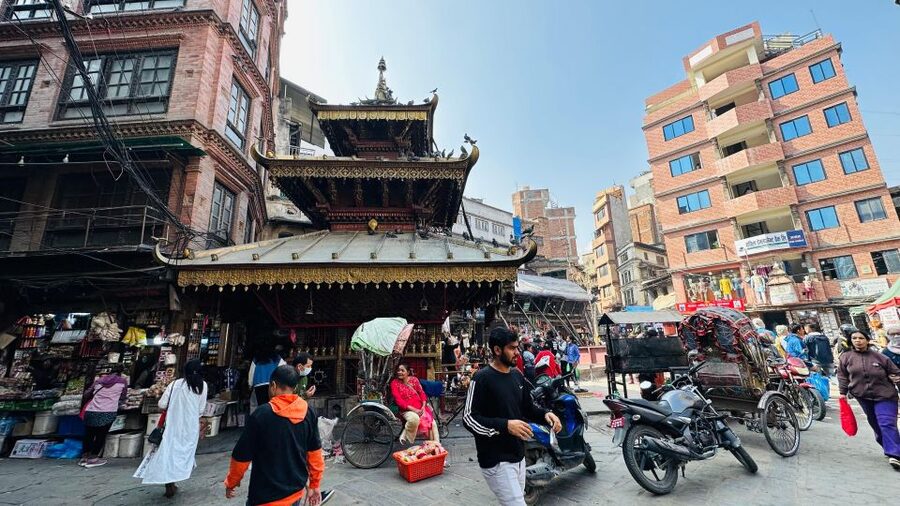
Before returning to Thamel, the walk includes a lively local market. The details do not identify the market by name or list specific goods, so you should expect a general market experience rather than a guaranteed specialty-food or souvenir stop.
That uncertainty is not necessarily a weakness. It keeps the final part of the tour connected to ordinary Kathmandu. You may find fresh goods, household items, clothing, or other local trade, but the exact scene can change.
Meals and drinks are not included. If you want to eat during the walk, ask about timing and location before setting out. The tour lasts 3.5 hours, so it is best to arrive fed and carry any extra drink or snack you need. One 1,000 ml bottle of mineral water is included.
The route finishes back in Thamel. Since no transport is included or required for the walking portion, you can continue your day from the same central district.
What the $40 price gets you
At $40 per person, this is not the cheapest way to wander Kathmandu. You can walk through many central streets without paying anything. The value comes from the private guide, the structured route, cultural explanation, and the chance to cover several locations efficiently in a limited time.
A private group matters here. You are not tied to a large crowd, and the guide can adjust the pace or explain points that interest you. David from Canada specifically appreciated being able to select places the pair had not seen before. That flexibility is one of the strongest reasons to choose this tour over a general group walk.
The price includes a government-certified guide, 1,000 ml of mineral water, and the service charge. It does not include transportation, meals, drinks beyond the provided water, or personal spending. Since the walk starts and ends in Thamel, most visitors will not need transport unless they are staying farther away.
The tour has a five out of five rating from four verified bookings, with special praise for guides Madan and Martin. The most consistent strengths are guide quality, clear knowledge of the sites, friendly service, efficient use of time, and a pace that can be adjusted for the group.
Still, do not treat a short rating record as proof that the tour suits everyone. The experience is best for people who enjoy walking, markets, active streets, and religious sites without the polished presentation of a major museum.
Pace, clothing, and practical planning
Wear comfortable walking shoes and clothes suitable for warm or changeable weather. The provider also suggests an umbrella, camera, passport, and face mask or protective covering.
The request to bring a passport is part of the tour instructions, but the supplied details do not explain why it is needed. Carry it securely rather than loosely in a pocket. You should also keep personal belongings close in busy market areas.
There is no transportation included. That is not a major issue because the route begins and ends in Thamel, but you should plan your own way to the meeting point if you are staying elsewhere.
The walk is listed as unsuitable for wheelchair users, pregnant women, babies under one, and people over 70. It also lists people over 95, which is already covered by the over-70 limit. One past guest described the pace as manageable for seniors, so if you are near the stated age limit, contact the provider before booking rather than relying on that individual experience.
English is the listed tour language. The group is private, and the duration is 3.5 hours. You can cancel up to 24 hours ahead for a full refund, and the reserve-now, pay-later option lets you hold a place without paying at the time of booking.
Should you book the Kathmandu Heritage Walk?
Book this walk if you want a guided introduction to central Kathmandu that goes beyond the UNESCO monuments. It suits first-time visitors who want context, independent-minded repeat visitors who have already seen the major sights, and anyone who enjoys combining temples with markets and ordinary streets.
The best reason to choose it is the private format. Guides such as Madan and Martin have been praised for friendly service, strong site explanations, and sensible pacing. You also get a route that links Thamel, Tahiti, several temples, Gold Souq, Bhotahiti, and a local market in one morning.
Skip it if you want a relaxed vehicle tour, extensive time inside each monument, a food-focused walk, or a route built around UNESCO World Heritage sites. At $40, the tour earns its price through personal guiding and efficient coverage, not through included meals, transport, or entrance-heavy attractions.
For most able walkers who want to see how Kathmandu’s sacred places and markets fit into daily city life, it is a useful first-day orientation. Confirm the age and mobility rules, wear good shoes, and arrive ready for a real city walk rather than a polished sightseeing circuit.
FAQ
Where does the Kathmandu Heritage Walk start?
It starts at the entrance of Breakfree Adventures in Thamel, in front of Everest Bank Limited.
Where does the tour finish?
The walk ends back in Thamel.
How long does the tour last?
The tour lasts 3.5 hours.
Is the tour private?
Yes. The group type is private.
What language does the guide speak?
The listed tour language is English.
Are UNESCO World Heritage sites included?
No. UNESCO World Heritage sites are specifically excluded from this route.
What is included in the price?
The price includes a government-certified guide, 1,000 ml of mineral water, and the service charge.
Are meals and transportation included?
No. Transportation, meals, drinks, and personal expenses are not included.
Just added around Kathmandu
- Traditional Momo Making Class★ 5.0 · 10 reviews
- Wildlife Adventure in Chitwan Nepal★ 4.0 · 4 reviews
- Walking tour of real Kathmandu through back streets.★ 5.0 · 3 reviews
- Kathmandu 2 Nights 3 Days Chitwan Jungle Safari Tour★ 5.0 · 9 reviews
- Kathmandu Street Food Walking Tour – Eat Like a Local★ 5.0 · 3 reviews
- Private Manaslu Circuit Trek at Himalayas★ 5.0 · 3 reviews
- Walking tour of Kathmandu with awesome local guides★ 5.0 · 4 reviews
- Visit Swayambhunath and Bauddhanath Stupa with Guide★ 5.0 · 5 reviews
Historical Tours, compared.
Private Kathmandu Sightseeing Tour | UNESCO World Heritage sites
Read our review →
Full Day Private Top 4 UNESCO Heritage Tour W/Lunch.
Read our review →
Nagarkot Sunrise & Bhaktapur UNESCO Heritage Private Tour
Read our review →
Kathmandu Top 4 or 2 UNESCO World Heritage Sites Day Tour
Read our review →
Kathmandu Highlights: Private UNESCO World Heritage Sites Tour
Read our review →Browse the lists this tour appears in