
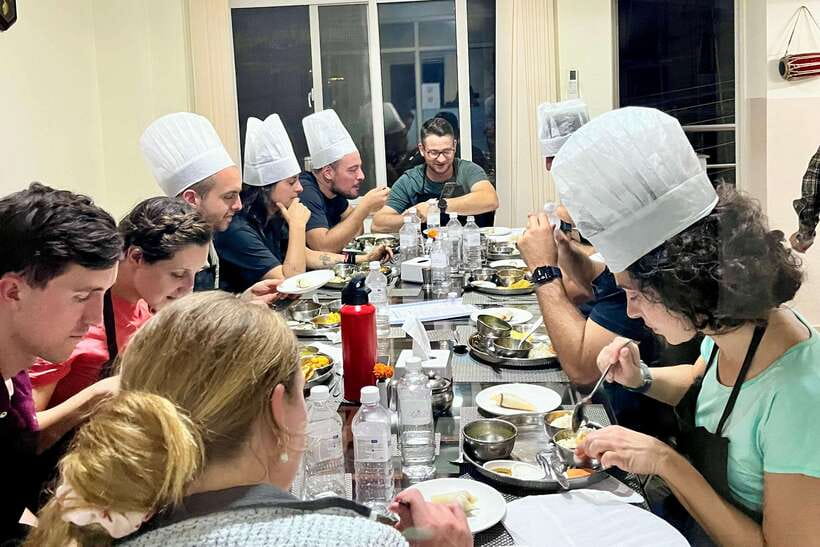
Reviewed · KATHMANDU COOKING CLASSES
Kathmandu: Local Women-Lead Nepali Cooking & Momo Class
Kathmandu’s best food lesson may begin with a shopping bag, not a recipe book. In this small-group cooking class in Thamel, you visit a nearby market, choose ingredients, then learn to fold momos and prepare dal bhat with a local chef. You finish by eating the meal you made, which is both practical and satisfying.
I like the hands-on format: you are not just watching a demonstration. I also like the choice of dishes, since the group can select a starter, main course, and dessert, with vegetarian and spice-level adjustments available. The main thing to know is that momo is not always guaranteed unless the group chooses it, so speak up early if those dumplings are your priority.
Key points
- Shop before you cook: Visit a nearby market to choose fresh ingredients for the meal.
- Momo and dal bhat: Learn two of Nepal’s most important dishes, plus a starter or dessert selected by the group.
- Local instruction: Chefs such as Nishma and Nish explain the food clearly in English and work patiently with beginners.
- Small class size: Groups are limited to 10, and solo participants may sometimes receive a nearly private lesson.
- A filling afternoon: The class lasts about 3 hours, sometimes closer to 4, and includes tasting everything you prepare.
- Very low price: At $5 per person, this is one of Kathmandu’s strongest food experiences for the money, though pickup and specialty drinks cost extra.
Why This Thamel Cooking Class Works
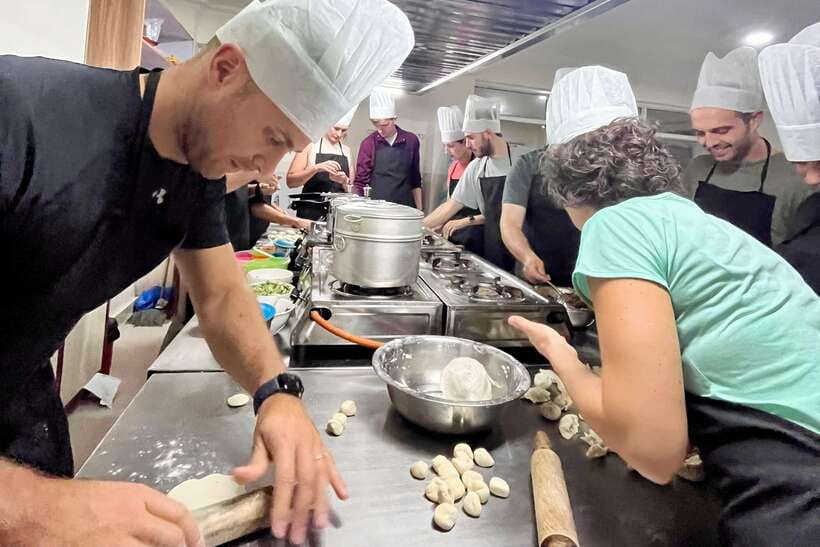
This is not a polished restaurant show where you sit at a counter and watch someone else do the work. You chop, mix, shape, season, and cook. The class gives you a useful introduction to Nepali food while also showing how a local kitchen turns ordinary ingredients into a generous meal.
You begin with a short market or shop visit near the cooking school. That first step matters because it connects the finished dishes to the ingredients in front of you. You can see what the chef is buying and understand which items are central to the recipes rather than treating Nepali food as a list of unfamiliar names.
The school is in Thamel, which makes it easy to reach if you are staying in central Kathmandu. The meeting point is Kathmandu Cooking Academy, and you should arrive at least 15 minutes early. If you select the transport option, pickup and drop-off are available within Kathmandu Valley, but transport is not included automatically.
The Market Visit Comes First
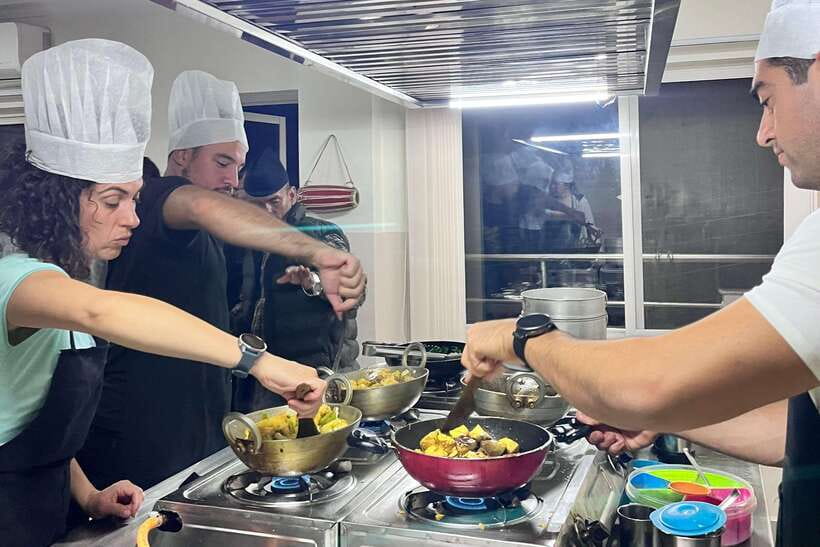
The market stop is brief but useful. You go out with the instructor to buy the important ingredients for the cooking session. This gives you a little contact with everyday Kathmandu before you return to the work surfaces and begin preparing food.
The experience does not promise a full market tour with a long cultural lecture. Think of it as a practical shopping trip tied to your lunch or dinner. That is a good fit for you if you want to know what goes into a dish and how the chef chooses ingredients, but less suitable if your main goal is a lengthy guided tour of local markets.
The exact dishes can depend on the group. You may choose among several starters, mains, and desserts. Options mentioned in the class include chicken momo, aloo chop, mushroom choila, barra, dal bhat, and other Nepali preparations. Since the group makes the final selection, tell the instructor at the start if you want momo, vegetarian food, or milder seasoning.
More cooking classes in Kathmandu:
- Half day cooking class in Thamel kathmandu
★ 5.0 · 607 reviews - Kathmandu: Local Women-Led Nepali Cooking & Momo Class
★ 4.9 · 360 reviews - Kathmandu: Local Lead Nepali Cooking & Momo-Making Class
★ 5.0 · 212 reviews
Making Momos, One Fold at a Time
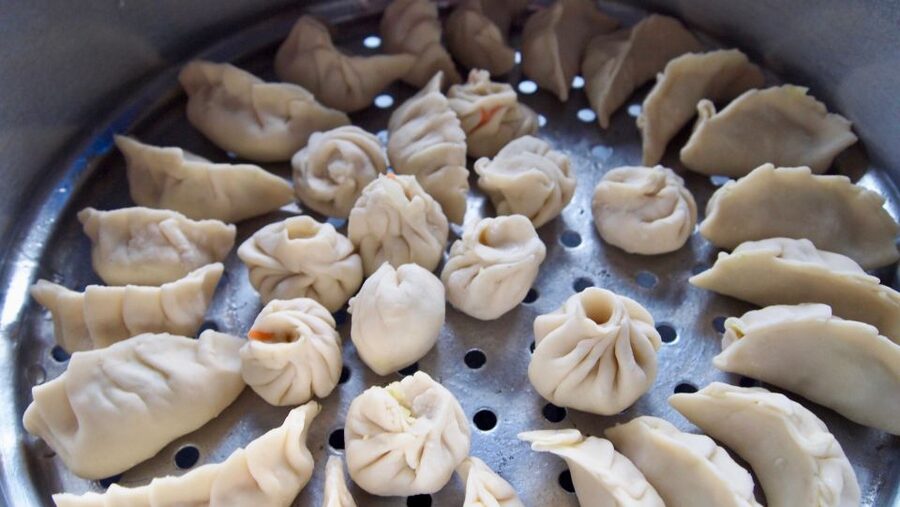
Momo making is the likely star of the class. These Nepali dumplings look simple until you try to fill and fold them. The chef shows you how to prepare them step by step, then gives you time to shape them yourself.
This is where the class feels most social. You work beside other participants, compare your first uneven folds with later attempts, and get help when the wrapper refuses to cooperate. The instructors are used to beginners, so you do not need good kitchen skills to take part.
One practical point deserves attention: momo is part of the advertised focus, but the class menu is selected by the group. If you are alone, you may have more control. If you join a larger party, ask directly for momo before everyone settles on the menu. A small group makes that conversation easier, but it is still worth being clear.
The class can use meat or vegetarian fillings, and spice levels can be adjusted. You should share allergies and dietary restrictions in advance rather than waiting until the cooking starts. That gives the chef time to plan suitable ingredients.
Dal Bhat Gives the Class Its Nepalese Center
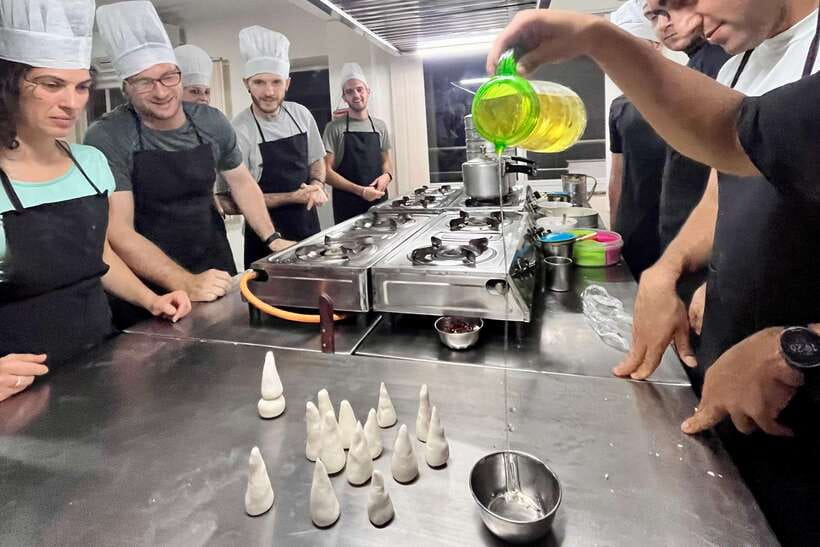
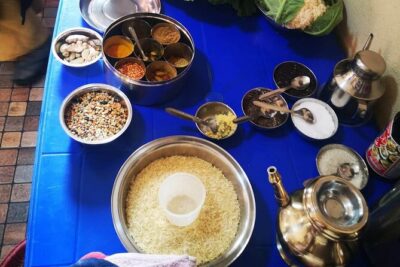
Dal bhat is Nepal’s staple meal, and learning it gives you more than one recipe. You get a better sense of how lentils, rice, vegetables, and seasoning fit together in everyday Nepali cooking.
The dish is also a good counterpoint to momo. Momos are the fun, recognizable dumplings that many visitors want to try. Dal bhat is the dependable meal that tells you more about the country’s daily table. Together, they make the class feel broader than a single snack lesson.
The food portions are generous. You should arrive hungry, because the final tasting can be a substantial meal rather than a polite sample. The class includes the food you prepare, but specialty drinks and alcohol are not included.
Choosing a Starter and Dessert
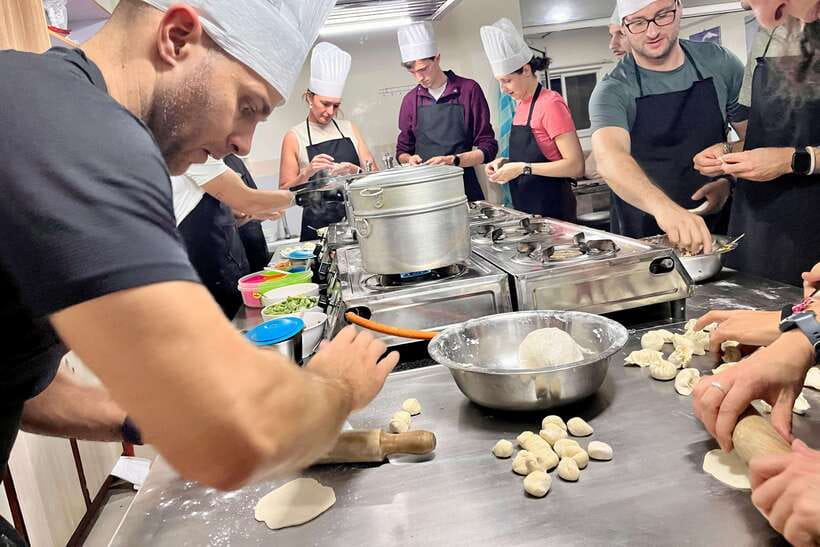
Alongside the main course, you can usually select a starter and a dessert with the group. This is one of the class’s strongest features because it lets you try more than the two headline dishes.
Past menu choices have included aloo chop, spiced mashed potato patties, mushroom choila, and barra. The exact selection can change, so you should not treat every named dish as guaranteed. Ask what is available on the day and make your preferences known.
The extra courses also help if one person in your party dislikes momo or wants a vegetarian meal. The instructor can adjust the food to suit vegetarian preferences and different levels of heat. That flexibility is useful, especially for children over seven or anyone still getting used to Nepali spices.
Same city, a completely different sort of day:
- Everest Base Camp Trek – 14 Days
★ 5.0 · 1,499 reviews - Private Kathmandu Sightseeing Tour | UNESCO World Heritage sites
★ 5.0 · 756 reviews - Everest Base Camp Helicopter Tour landing at Everest View Hotel
★ 5.0 · 668 reviews - Everest Base Camp Trekking
★ 5.0 · 485 reviews
Meeting the Local Chefs
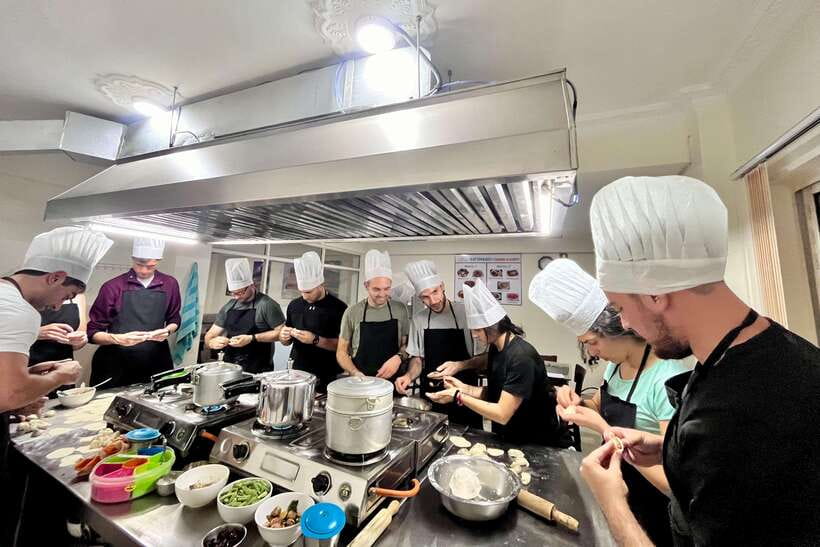
The instructors are a major part of the experience. Nishma has been praised for her patience, clear English, and friendly manner. Nish has also received strong marks for careful explanations and a calm approach with people who have little kitchen experience.
The teaching style is practical rather than formal. You get step-by-step instructions, then work through the preparation with help close by. Along the way, the chefs explain the food and share some background about Kathmandu and Nepali cooking.
The class is conducted in English. If you are a beginner, that matters. You are not expected to know cooking terms in Nepali, and the small class limit gives the instructor a fair chance to help each person.
Class size is capped at 10, but the actual group may be smaller. Solo participants have sometimes found themselves in a class of four or even in a one-person lesson. That can be excellent for learning, though one solo participant felt slightly separate from the staff during the meal. If you are booking alone, expect the teaching to be personal, but understand that the social side may depend on who else has booked.
Masala Tea and the Finished Meal
Nepali masala tea is served during the lesson. It is a small inclusion, but a welcome one, especially during a class that runs for three to four hours.
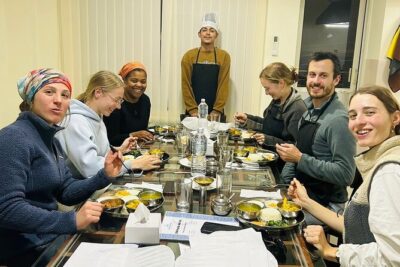
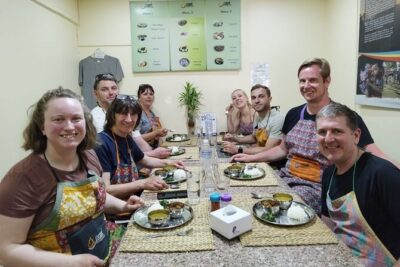
The final tasting is the payoff. You sit down with the dishes you helped make and eat them while they are fresh. That gives the meal a different feel from ordering the same food in a restaurant, because you understand the work behind each plate.
You also leave with more than a full stomach. A PDF of the recipes may be sent afterward, and the school has also sold a cookbook for 400 Nepalese rupees. If you want to repeat the food at home, save the recipes carefully and take notes during the class.
Timing, Transport, and the Thamel Location
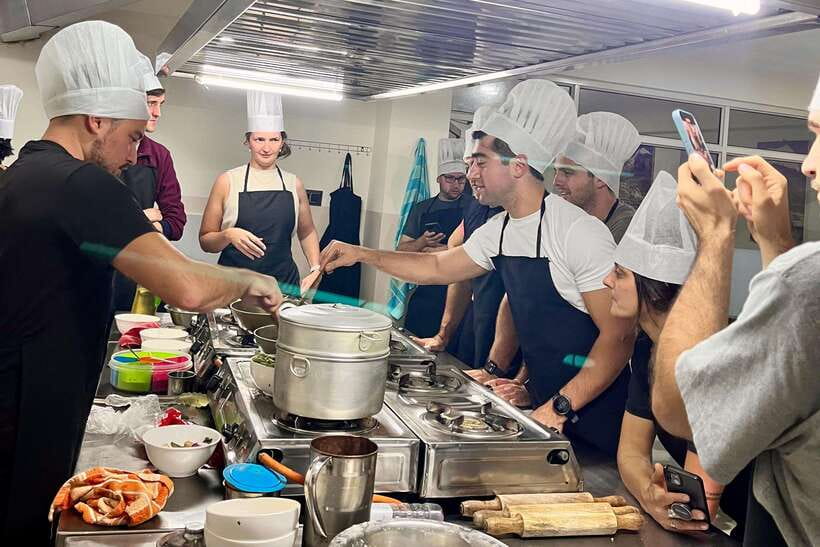
Plan on about three hours, though the full experience can run closer to four depending on the market visit, menu, and pace of the group. Arrive 15 minutes before the scheduled start so the class can begin without waiting for late arrivals.
The school is in Thamel and is described as easy to find on Google Maps. If you do not choose pickup, you are responsible for getting there yourself. That is usually simple for people already staying in Thamel, but allow extra time if you are coming from another part of Kathmandu.
Pickup and drop-off are optional and available from locations within Kathmandu Valley when selected during booking. Traffic can be slow, and one person experienced late transport on both ends of the class. Kathmandu traffic is a real factor, so do not schedule an important airport transfer or timed sightseeing stop immediately afterward.
The class is wheelchair accessible. Children over seven can participate with adult supervision, while children under five and people over 95 are not considered suitable for the activity.
Is $5 Really Good Value?
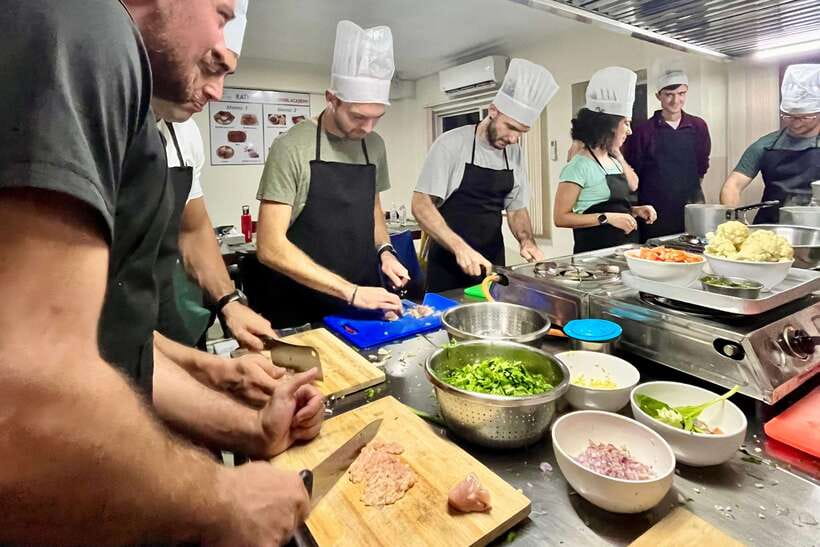
At $5 per person, this is unusually inexpensive for a three to four hour experience that includes instruction, ingredients, equipment, a market visit, masala tea, and a full tasting session. Even after allowing for the fact that specialty drinks and transport may cost extra, the price is hard to beat.
The value is strongest if you care about participation. You are paying for a skill you can use later, not only for a meal. A restaurant meal may be easier, but it will not teach you how to fold momo or balance the flavors in dal bhat.
The low price should not lead you to expect a luxury culinary studio. This is a working cooking school with local instructors and a small-group format. The appeal is direct contact, useful instruction, and plenty of food, not elaborate presentation.
The school also supports a local charity, which adds a worthwhile community angle. That detail may matter to you if you prefer spending some of your sightseeing budget with a local operation.
Who Should Book This Experience?
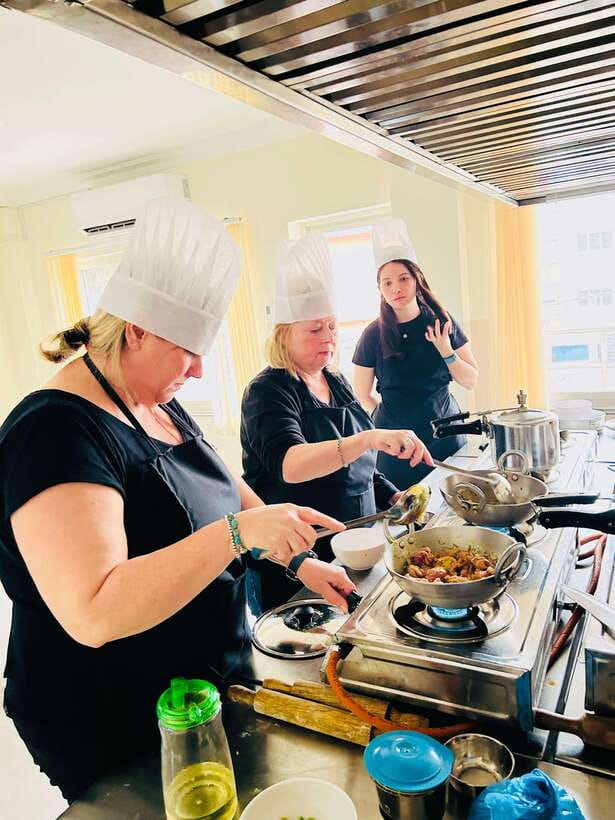
I would recommend it to food lovers, first-time visitors who want a cultural activity, solo visitors looking for an easy way to meet people, and families with older children. It works particularly well on a free afternoon in Kathmandu because the class fills a half day without requiring a long ride outside the city.
It is also a good choice if you have already eaten momos and dal bhat and want to understand them better. The class gives context to familiar dishes and helps you notice ingredients and techniques you might otherwise overlook.
You may want to skip it if you dislike group decisions, want a guaranteed fixed menu, or are looking for a high-end chef’s demonstration. You should also reconsider if you need a very strict schedule, since the class and transport can run late.
Before booking, decide what matters most. If it is momo, make that request at the start. If it is a particular allergy, tell the school ahead of time. If convenience matters, add hotel transport and leave a cushion around Kathmandu traffic.
Should You Book the Kathmandu Cooking Class?
Yes, if you want an inexpensive, hands-on introduction to Nepali food. The combination of a short market visit, local instruction, flexible menu, generous meal, and recipe follow-up gives you real value for $5.
Book with two expectations in mind: the group chooses the dishes, and the schedule may stretch beyond three hours. Accept those small uncertainties, speak up about your food preferences, and arrive hungry. You are likely to leave with new recipes, a better feel for Nepali cuisine, and enough food to count the class as a proper meal.
FAQ
Where does the cooking class take place?
The class takes place at Kathmandu Cooking Academy in Thamel. You can use the provided Google Maps location to find the meeting point.
How long does the experience last?
The class typically lasts about three hours, including the market visit, preparation, and cooking. The stated duration is three to four hours.
What dishes will I cook?
The class focuses on momo and dal bhat. You can also choose an additional starter, main course, or dessert with the group, depending on the available menu.
Is momo guaranteed?
No. The group generally chooses the dishes, so momo may not be selected unless you request it. If momo is your priority, say so at the beginning of the class.
Is hotel pickup included?
Pickup and drop-off are available only if you select that option when booking. The service is available from locations within Kathmandu Valley.
Is the class suitable for vegetarians?
Yes. Vegetarian preferences can be accommodated, and the spice level can also be adjusted. Tell the school about dietary restrictions or allergies in advance.
Is the class taught in English?
Yes. The instructor language is English.
Can children join the class?
Children over seven can participate with adult supervision. Children under five are not considered suitable for the experience.
Just added around Kathmandu
- Traditional Momo Making Class★ 5.0 · 10 reviews
- Wildlife Adventure in Chitwan Nepal★ 4.0 · 4 reviews
- Walking tour of real Kathmandu through back streets.★ 5.0 · 3 reviews
- Kathmandu 2 Nights 3 Days Chitwan Jungle Safari Tour★ 5.0 · 9 reviews
- Kathmandu Street Food Walking Tour – Eat Like a Local★ 5.0 · 3 reviews
- Private Manaslu Circuit Trek at Himalayas★ 5.0 · 3 reviews
- Walking tour of Kathmandu with awesome local guides★ 5.0 · 4 reviews
- Visit Swayambhunath and Bauddhanath Stupa with Guide★ 5.0 · 5 reviews
Kathmandu Cooking Classes, compared.
The best Private Nepali Cooking Class in Kathmandu
Read our review →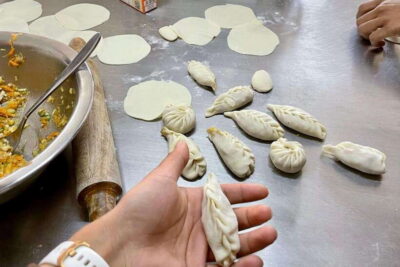
Best Nepali Cooking Class in Thamel with Local Market Trip
Read our review →Browse the lists this tour appears in