
Reviewed · KATHMANDU COOKING CLASSES
Kathmandu: Women-Led Cooking Class & Momo Making-Local Taste
Kathmandu’s best cooking lesson may be the one that starts before the stove is lit. You’ll visit a local market for vegetables, spices, and meat, then bring those ingredients into a working Nepali kitchen to make dishes such as momo and dal bhat. The meal at the end is yours, from the first chop to the last bite.
I like the small group size, capped at eight, and the broad menu choices, which include meat and vegetarian dishes. I also like the price: at $11 per person, this gives you a useful cultural activity and a substantial meal without taking half a day.
The main caution is that this is a hands-on class, not a polished cooking demonstration. Momo folding can take practice, and one participant found the instruction a little tense when the technique proved difficult. Ask for another demonstration if you need it, and expect to learn by doing.
Key points at a glance
- Market shopping comes first: Help select vegetables, spices, and meat before cooking begins.
- Three Nepali menu sets: Options include bara with dal bhat and yomari, chatamari with momo and kheer, or aloo chop with thukpa and carrot halwa.
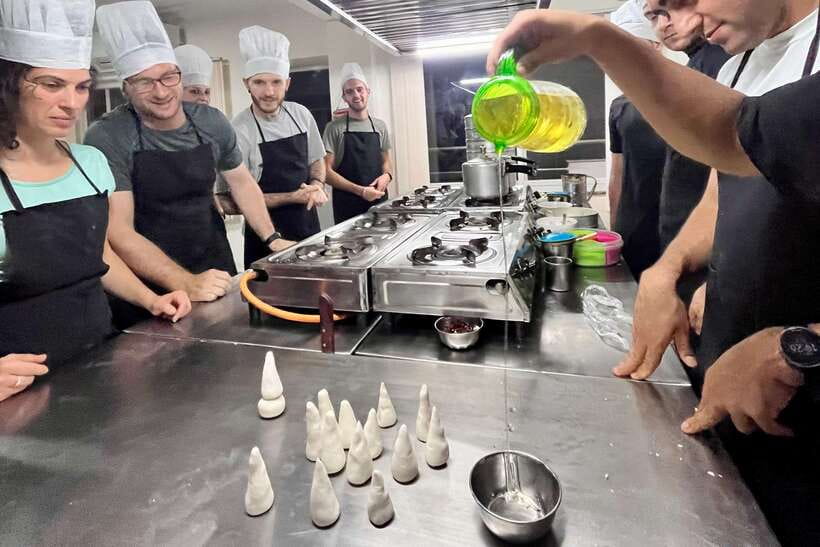
- Momo folding is hands-on: You shape the dumplings yourself, with guidance from an English-speaking chef.
- A full meal is included: Eat the food you prepare, along with Nepali masala tea during the lesson.
- Small and budget-friendly: The class lasts two to three hours, costs $11 per person, and limits participation to eight people.
- Suitable for children over eight: The class welcomes anyone aged eight or older who wants to learn new dishes.
Why this Kathmandu cooking class is worth your time
Food is one of the quickest ways to understand daily life in Nepal. A temple visit can show you architecture and ritual, but a plate of dal bhat tells you how people eat day after day. This class gives you a practical look at both the ingredients and the cooking methods behind familiar Nepali food.
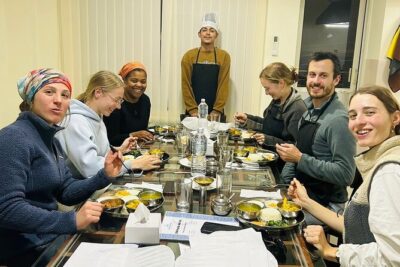
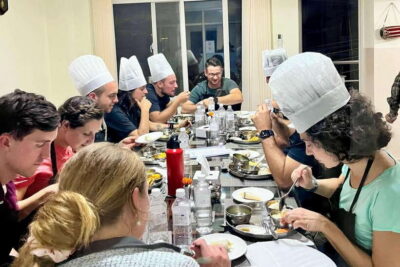
The lesson takes place in a modern Nepali kitchen that is accessible from Thamel and other parts of the Kathmandu Valley. You are not simply watching a chef prepare lunch. You are handling ingredients, learning how spices are used, shaping dough, and sitting down to eat the result.
I especially like the balance between instruction and participation. The chef explains the dishes and their cultural meaning, then gives you work to do. That format suits beginners, but it also gives experienced home cooks enough room to ask about ingredients and technique.
The English-speaking instruction is useful for a class built around small details. Nepali cooking often depends on timing, texture, and the way spices are combined, so being able to ask questions matters. The chef is described as professional, friendly, and patient, although the pace may feel less relaxed if you struggle with the momo folding method.
More cooking classes in Kathmandu:
- Half day cooking class in Thamel kathmandu
★ 5.0 · 607 reviews - Kathmandu: Local Women-Led Nepali Cooking & Momo Class
★ 4.9 · 360 reviews - Kathmandu: Local Lead Nepali Cooking & Momo-Making Class
★ 5.0 · 212 reviews
The market stop puts the meal in context
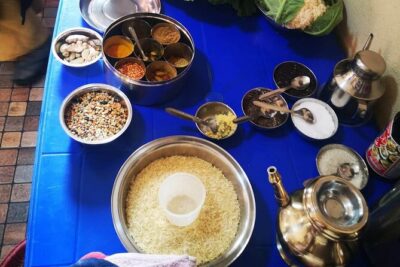
Before cooking, you visit a local market or shop to buy important ingredients. This is a short but valuable part of the outing because it shows you what goes into the dishes before everything has been cleaned, chopped, and placed in bowls.
You may help choose vegetables, spices, and meat for the class. That makes the food feel less like a fixed restaurant menu and more like a meal built from ordinary ingredients used in Nepali homes and kitchens.
The market visit also helps you recognize ingredients later in Nepal. You will see the spices and produce before they are transformed by heat, seasoning, and dough. If you are interested in food beyond this one meal, pay close attention to the names and uses of ingredients as the chef explains them.
The exact market route and shopping time are not specified, so do not expect a long guided food tour. Think of it as an ingredient-shopping introduction attached to the cooking lesson. Its value comes from connecting the raw products with the dishes you prepare afterward.
Three menus cover several sides of Nepali cooking
The class offers three menu sets, each showing a different part of Nepali food culture. The options include savory snacks, main dishes, dumplings, noodles, rice, and sweets.
Menu 1: Bara, dal bhat, and yomari
Bara is a Newari lentil pancake made from ground black gram batter and spices. It can be served plain or topped with egg, minced meat, or vegetables. This is a good choice if you want to learn about Newari food from the Kathmandu Valley.
Dal bhat is the everyday classic: steamed rice paired with lentil soup, vegetables, pickles, and curry. It is filling, balanced, and central to Nepali meals. Making it in class gives you a better sense of how separate components come together as one plate.
Yomari finishes this menu with a sweet Newari dumpling. The rice flour dough is filled with molasses, known as chaku, and sesame seeds, with coconut sometimes added. It is a fine example of how dumplings are not limited to savory fillings.
Menu 2: Chatamari, momo, and kheer
Chatamari is sometimes called Nepali pizza, though the comparison only goes so far. It is a thin rice flour crepe topped with ingredients such as egg, minced meat, vegetables, and spices.
Momo is the star attraction for many people. The dumplings may be filled with chicken, buff, pork, or vegetables, then seasoned before being shaped and cooked. The work is in the folding, and the finished shape improves with practice.
Kheer is a creamy rice pudding made with milk, sugar, and cardamom. Nuts and raisins may be used as a garnish. This menu gives you a useful contrast between a crisp or thin rice-based dish, steamed dumplings, and a soft dessert.
Menu 3: Aloo chop, thukpa, and carrot halwa
Aloo chop is a fried potato snack mixed with spices. It is straightforward food, but it teaches you how a few seasoned ingredients can become a satisfying street-style bite.
Thukpa is a Tibetan-Nepali noodle soup made with wheat or hand-pulled noodles, broth, vegetables, meat, and aromatic spices. Meat options may include chicken, buff, or mutton, while vegetables provide a meat-free alternative.
Carrot halwa is prepared by slowly cooking grated carrots with milk, sugar, ghee, and cardamom. It takes a different approach from kheer, with a denser texture and a strong cardamom aroma.
The menu selection is the one detail you should clarify when booking or arriving. The experience offers three sets, but the available choice for your particular session is not specified.
Making momo is the most practical lesson
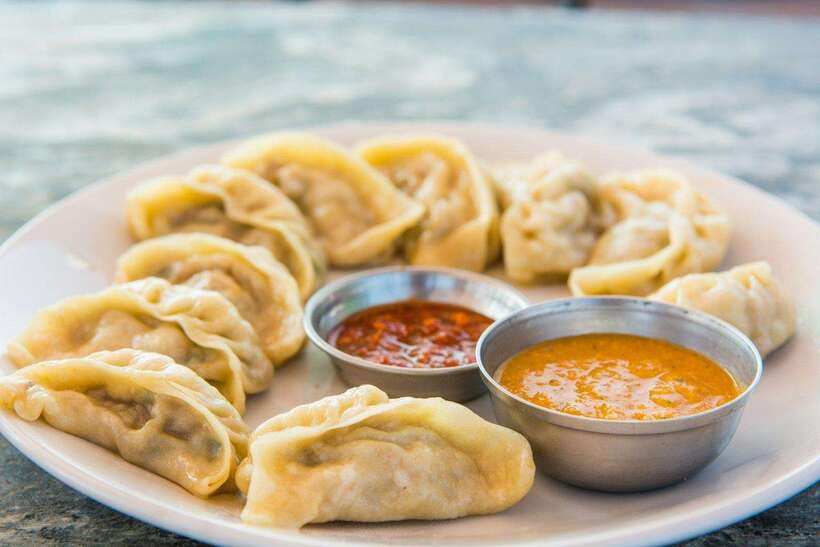
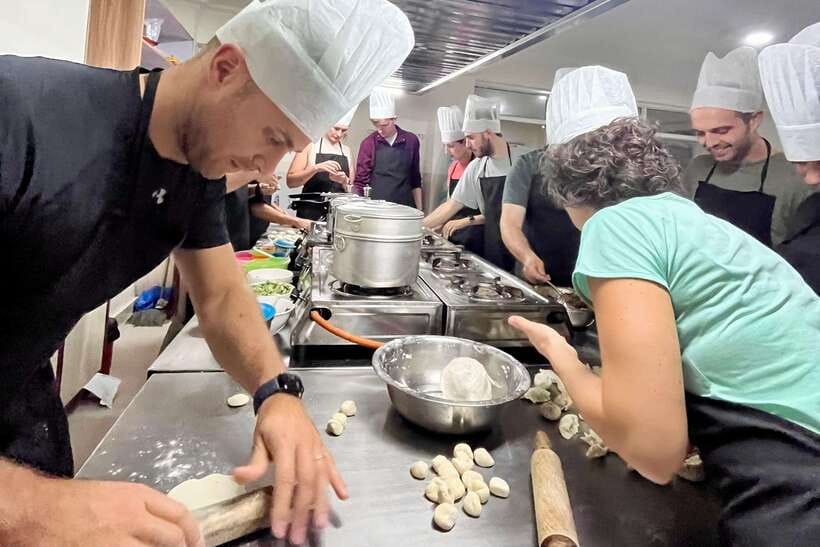
Momo preparation is likely to be the most memorable part for many people because it requires direct practice. You will work with thinly rolled dough and a seasoned filling, then fold the edges into a dumpling shape.
Do not worry if your first few dumplings look uneven. The folding technique takes hand control, and the goal is to learn a repeatable method rather than produce restaurant-perfect parcels immediately. If the chef moves too quickly, ask for the fold to be shown again before you make a large batch.
The class appears to allow you to prepare as many momos as you can eat, based on one participant’s experience. That makes the lesson generous, but it also means you should pace yourself. Dumplings are more filling than they look, particularly when served with other dishes.
The one negative point to keep in mind is the teaching style. One participant felt the chef seemed irritated when the folding technique was difficult to grasp. I would treat that as a possible communication issue rather than a reason to avoid the class, but it is fair to expect a busy, practical lesson rather than a completely carefree one.
Same city, a completely different sort of day:
- Everest Base Camp Trek – 14 Days
★ 5.0 · 1,499 reviews - Private Kathmandu Sightseeing Tour | UNESCO World Heritage sites
★ 5.0 · 756 reviews - Everest Base Camp Helicopter Tour landing at Everest View Hotel
★ 5.0 · 668 reviews - Everest Base Camp Trekking
★ 5.0 · 485 reviews
Dal bhat explains the rhythm of Nepali meals
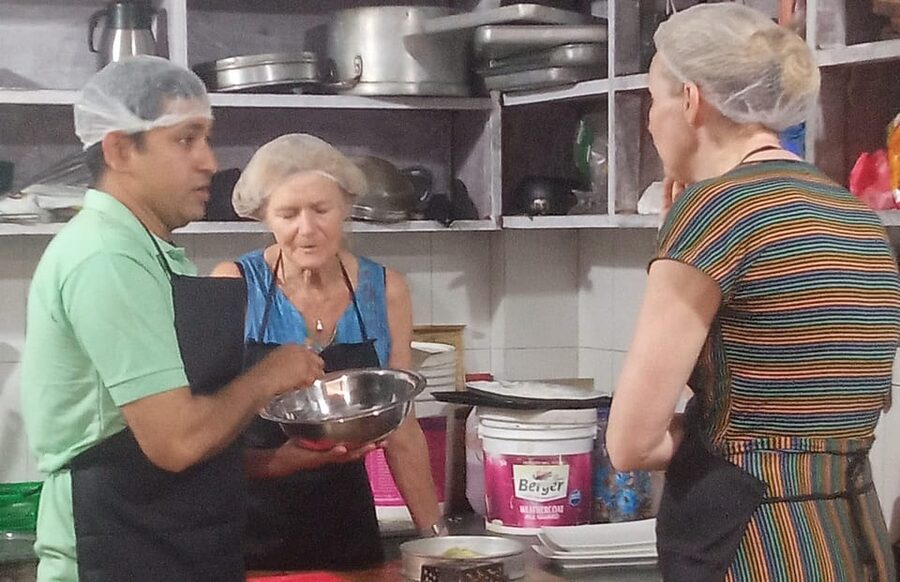
Dal bhat is more than a popular dish. It is a useful introduction to the way a Nepali meal can combine rice, lentils, vegetables, pickles, and curry in one sitting.
You will learn how the dal and other components are prepared, then serve them with steamed rice. The dish is nutritious and flexible, and it can be adapted to vegetarian preferences. If you want one recipe from the class that is easiest to repeat at home, dal bhat is a strong choice.
The meal also gives you a chance to compare flavors. Lentils provide a soft, mild base, while pickles, vegetables, and curry add sharper or warmer notes. The lesson can help you understand why Nepali food should not be judged by one spice or one dish alone.
Tea, desserts, and snacks make the class feel complete
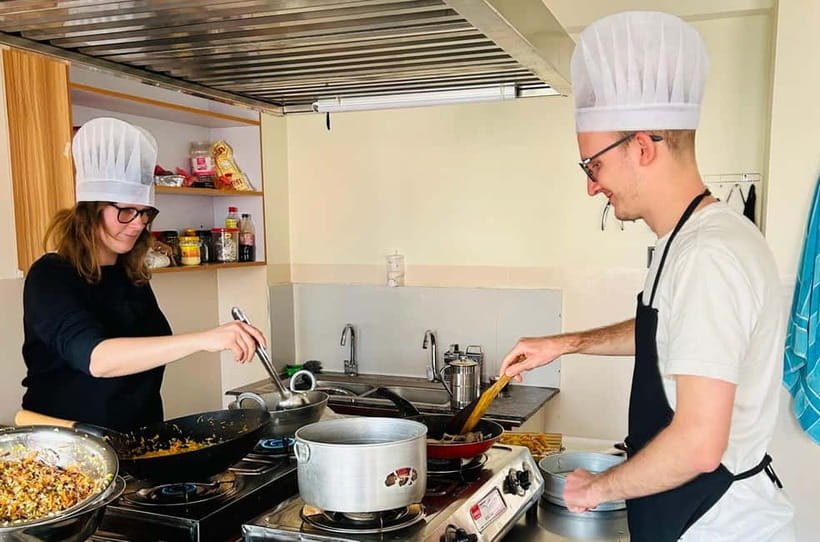
Nepali masala tea is served during the lesson. It combines black tea with aromatic spices and gives you a warm drink to enjoy while the cooking continues.
The sweet dishes are not filler. Yomari, kheer, and carrot halwa each show a different technique. Yomari uses a rice flour wrapper and a molasses filling. Kheer relies on slow simmering to thicken rice and milk. Carrot halwa transforms grated carrots through gradual cooking with milk, sugar, ghee, and cardamom.
Bara and aloo chop add another useful lesson: Nepali food includes plenty of snacks and small dishes, not only large rice meals. For someone planning to cook at home after the trip, these recipes may be easier to repeat in small batches.
What the two to three hours feel like
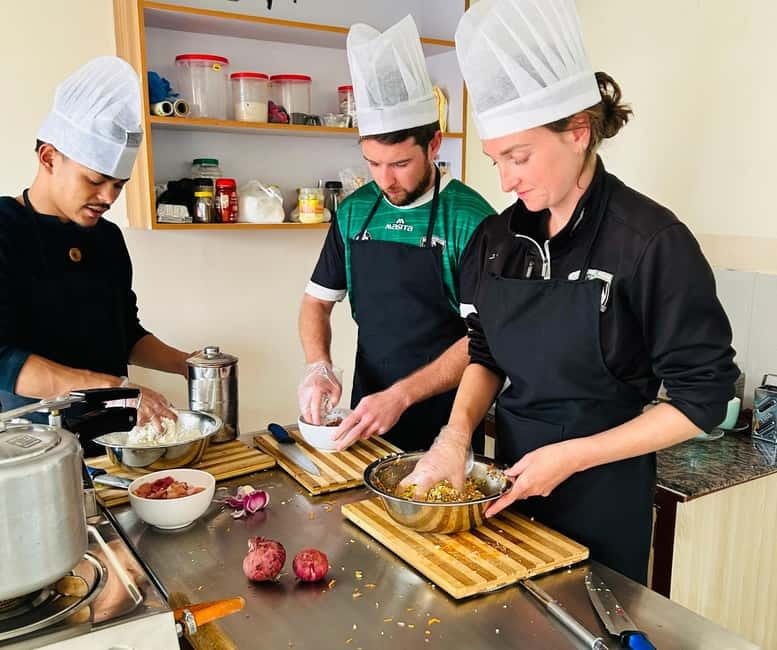
The stated duration is two to three hours, which is enough time for a market visit, instruction, cooking, and eating without taking over your whole day. The exact length will depend on the menu and the pace of the group.
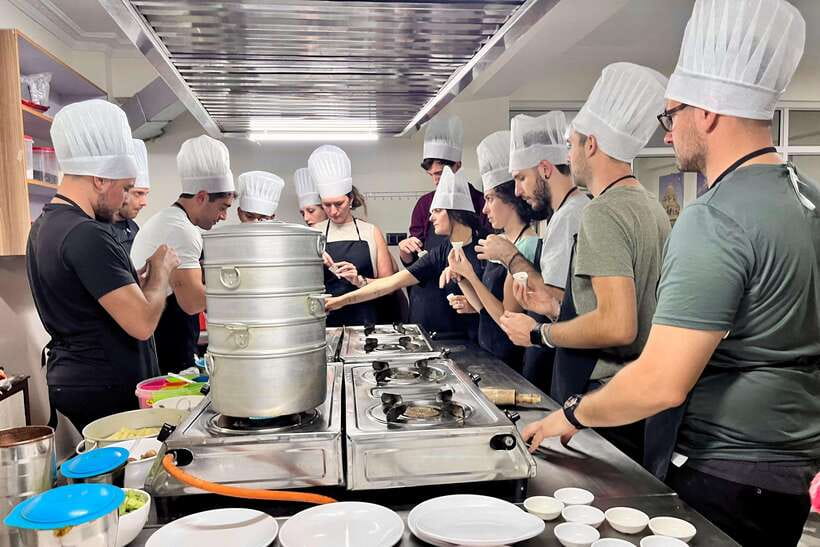
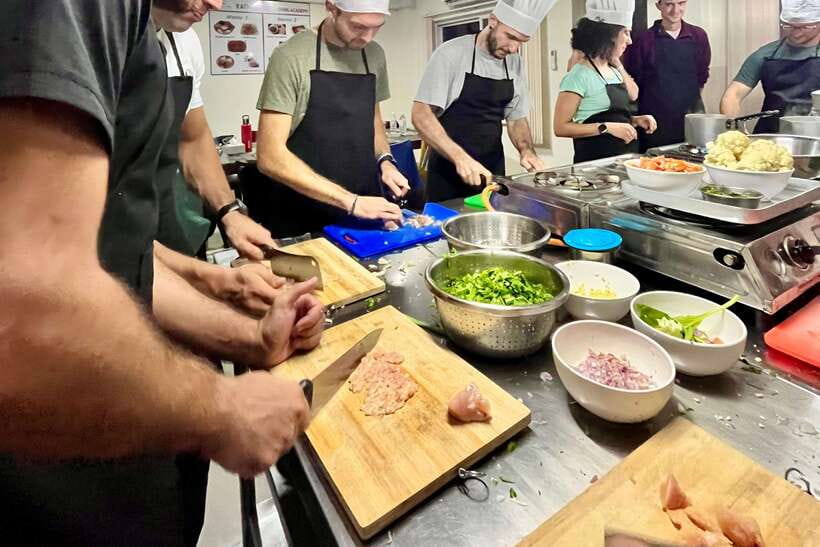
A likely flow begins with meeting the chef and shopping for ingredients. You then move into the kitchen for an explanation of the recipes, prepare the ingredients, cook the dishes, and sit down for the tasting session.
Because the group is limited to eight, you should have a better chance to handle the food yourself than in a large demonstration class. Still, eight people can create a little waiting time around a stove or work surface, especially when everyone is learning a new technique.
The workshop welcomes people aged eight and older. It suits families, couples, solo visitors, and anyone who wants an indoor activity during a busy Kathmandu sightseeing schedule. Children should be interested in cooking, since this is not a passive show.
Price, group size, and what is included
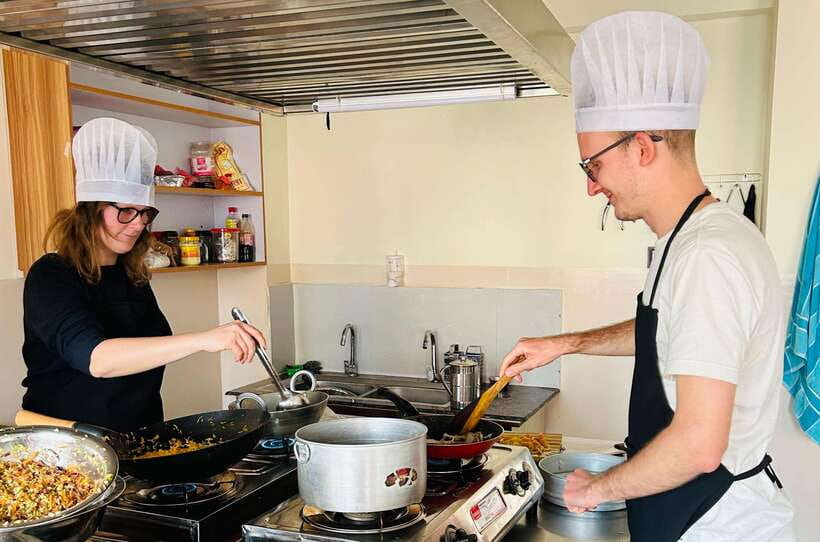
At $11 per person, the value is strong. You receive instruction from a local chef, a market or shop visit, ingredients for the class, cooking equipment, masala tea, hands-on practice, and the meal you prepare.
The low price does not mean every extra is covered. Specialty drinks and alcohol are not included. Professional photographs and video are also available only for an additional fee.
The small group limit matters more than the headline price. A cheap class is less useful if you only watch from the back, but a group of up to eight should give you a reasonable role in the preparation. I would book this for the activity and the food, not for a luxury kitchen setting or formal restaurant service.
The meeting point is easy to reach from Thamel and other parts of the Kathmandu Valley, though the exact address is not provided here. Check the starting time and meeting instructions before setting out.
You can cancel up to 24 hours before the class for a full refund, and the reserve-now, pay-later option gives you some flexibility while planning your Kathmandu days.
Who should book this class?
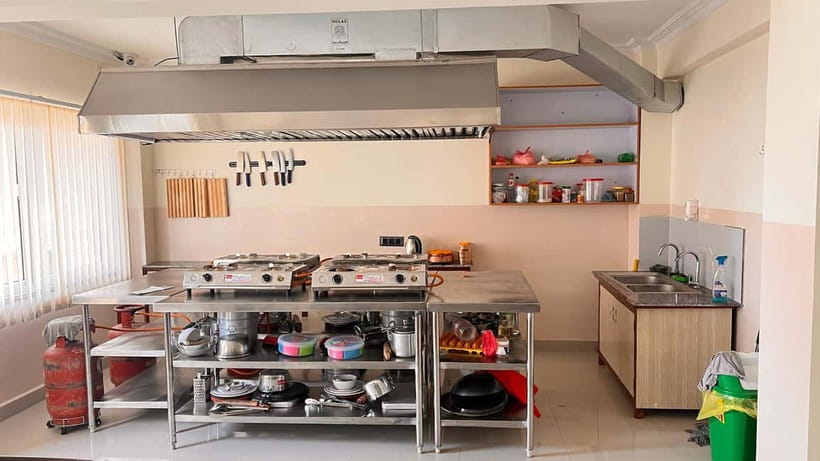
I would choose this class if you want to eat something you helped prepare rather than simply order a Nepali meal. It is especially good for first-time visitors who want an introduction to momo, dal bhat, Newari dishes, and Tibetan-influenced food in one sitting.
It also suits people who enjoy practical souvenirs. Recipes, folding techniques, and an understanding of spice combinations can stay with you long after a museum ticket is forgotten.
Vegetarians have useful choices, including vegetable momo, vegetable toppings, and meat-free versions of some dishes. If you have a strict dietary restriction, ask about ingredients before cooking, since the available menu details do not cover every possible allergy or substitution.
I would be more cautious if you want a quiet, highly polished demonstration with no pressure to participate. You will be chopping, shaping, stirring, and learning as you go. That is the point, but it requires patience from both you and the chef.
Should you book the Kathmandu cooking class?
Book it if you want a low-cost, hands-on introduction to Nepali food with a local market stop and a meal at the end. The combination of momo, dal bhat, Newari dishes, noodles, snacks, and desserts gives you more range than a class focused on one recipe.
The best reason to go is the chance to connect food with daily culture. The main reason to hesitate is that the class may feel a little rushed or serious when a technique proves difficult. Go ready to ask questions, accept imperfect dumplings, and enjoy the process. At $11, this is an easy choice for most food-minded visitors in Kathmandu.
FAQ
How much does the Kathmandu cooking class cost?
The price is $11 per person.
How long does the cooking class last?
The class lasts between two and three hours.
What dishes can I learn to prepare?
The three menu sets include bara, dal bhat, yomari, chatamari, momo, kheer, aloo chop, thukpa, and carrot halwa.
Is the class suitable for vegetarians?
Vegetarian options are available. Momo can be made with vegetables, and some menu dishes also offer meat-free choices.
What is included in the price?
The price includes an English-speaking local chef and instructor, a market or shop tour for ingredients, cooking equipment, hands-on preparation, tasting of the food you make, and Nepali masala tea.
How many people can join the class?
The class is limited to eight participants.
Can I cancel or pay later?
You can cancel up to 24 hours in advance for a full refund. You can also reserve your place and pay later, keeping your travel plans flexible.
Just added around Kathmandu
- Traditional Momo Making Class★ 5.0 · 10 reviews
- Wildlife Adventure in Chitwan Nepal★ 4.0 · 4 reviews
- Kathmandu 2 Nights 3 Days Chitwan Jungle Safari Tour★ 5.0 · 9 reviews
- Walking tour of real Kathmandu through back streets.★ 5.0 · 3 reviews
- Kathmandu Street Food Walking Tour – Eat Like a Local★ 5.0 · 3 reviews
- Private Manaslu Circuit Trek at Himalayas★ 5.0 · 3 reviews
- Walking tour of Kathmandu with awesome local guides★ 5.0 · 4 reviews
- Visit Swayambhunath and Bauddhanath Stupa with Guide★ 5.0 · 5 reviews
Kathmandu Cooking Classes, compared.
The best Private Nepali Cooking Class in Kathmandu
Read our review →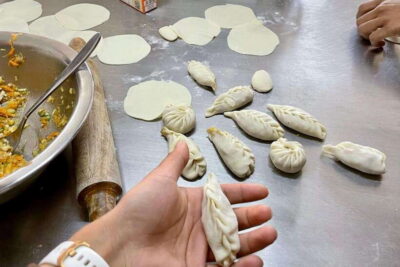
Browse the lists this tour appears in