
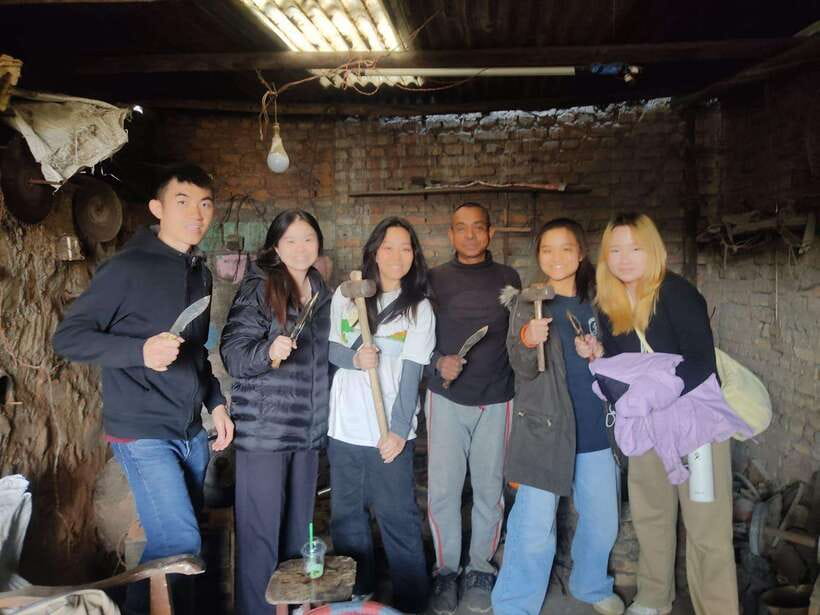
Reviewed · KATHMANDU CRAFT WORKSHOPS
Knife Khukuri Making Workshop
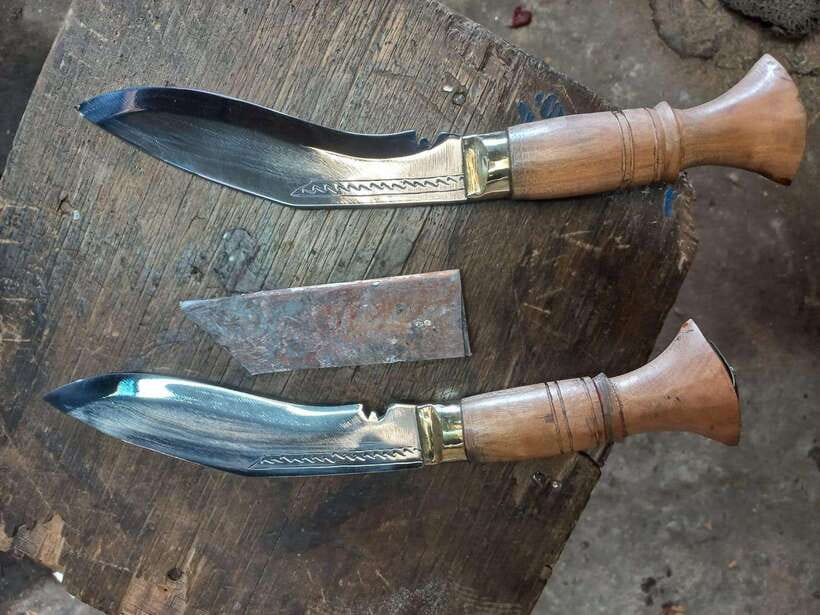
The most memorable part of this four-hour experience is watching a rough piece of metal become a six-inch khukuri in a local blacksmith’s home. You will hammer the iron yourself, help with the first grinding, and see the skilled work that must be left to the professional.
I like the small-group setting, limited to five people, and the warm contact with the blacksmith’s family. I also like the practical value: you take home a real knife, its cover, and a story far better than a market purchase. The main consideration is safety. You will not do every step, and the host handles the most dangerous grinding and sharpening work.
Key points to know before you book
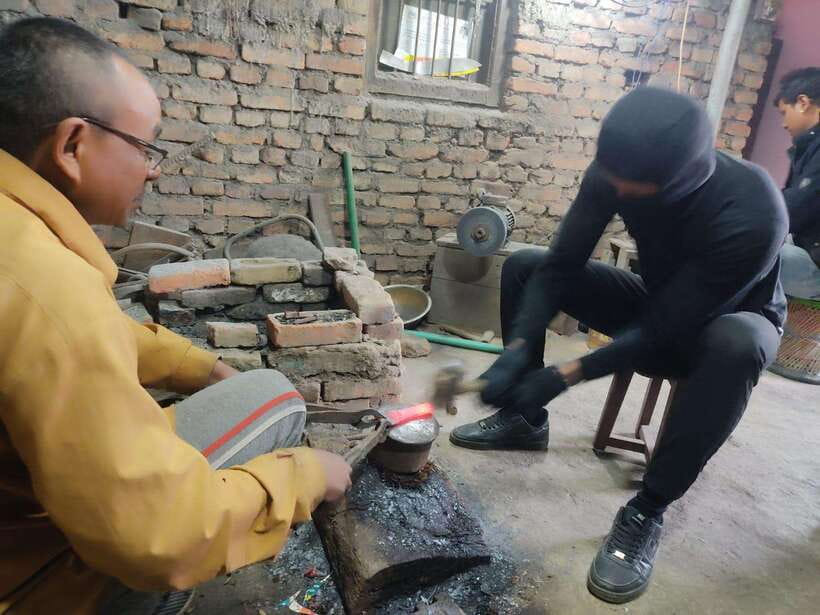
- Over 40 years of blacksmithing: The maker, Indra, has spent more than four decades shaping khukuris by hand.
- Hands-on but carefully controlled: You hammer the iron and help with the first grinding, while the host handles the high-risk work.
- A six-inch blade to take home: Your finished souvenir comes with a knife cover.
- Local family hospitality: Tea, water, snacks, and, in some cases, fruit from the family garden are part of the welcome.
- Hotel pickup and drop-off: An English or Hindi-speaking guide collects you from your hotel lobby and returns you afterward.
- Small groups only: With no more than five participants, you get more direct help at the forge.
Why the khukuri matters in Nepal
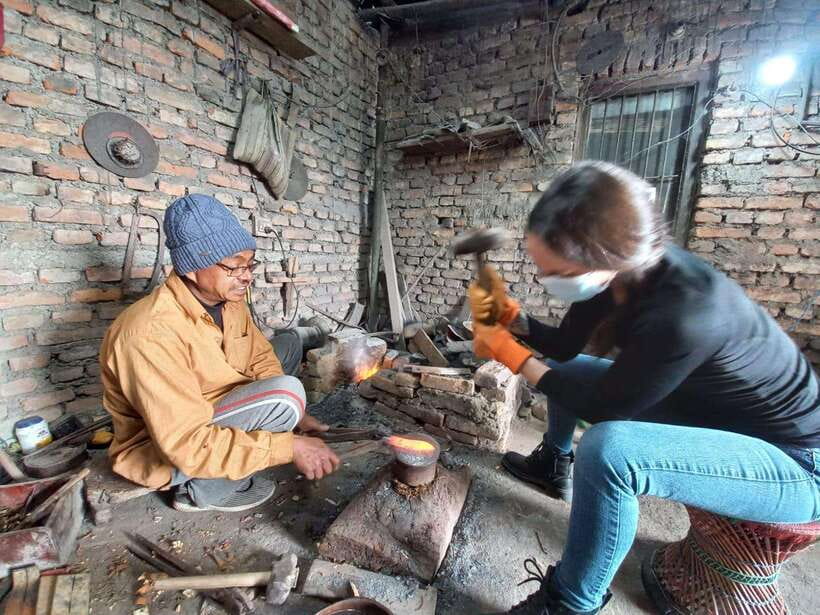
The khukuri is not simply a large curved knife. It is tied to the identity of Nepal and to the loyalty and courage associated with Gurkha warriors. It is also traditional among Nepal’s hill communities, where a sturdy blade has long been useful for everyday work.
You will learn that the khukuri can be used for shaping timber, chopping meat, and preparing vegetables. Its blade is slightly curved, tempered, and very sharp. The familiar shape is practical rather than decorative, with the broad part of the blade giving it weight for chopping.
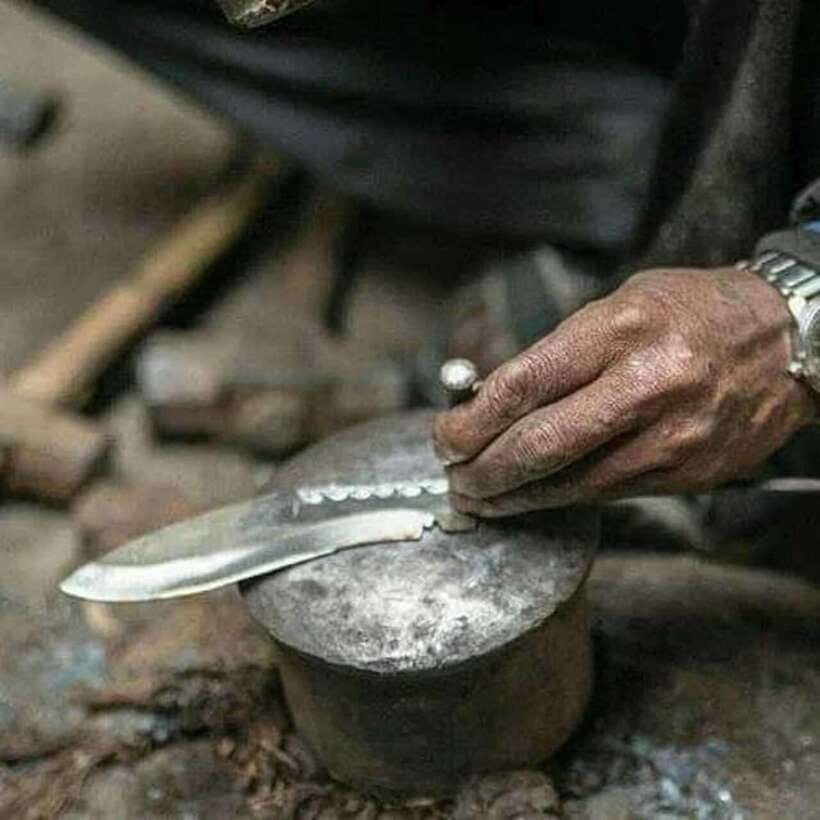
The small notch near the handle has both a practical and symbolic role. It helps stop blood from running toward the handle, and it represents the Hindu Trinity of Brahma, Vishnu, and Shiva. The handle is traditionally made from wood or buffalo horn, while the blade sits in a scabbard made from wood and leather.
That background makes the workshop more than a souvenir-making session. You are learning why the object looks the way it does and how it fits into Nepalese culture. The final knife is small enough to be manageable, but it still carries the main features of a traditional khukuri.
More craft workshops in Kathmandu:
- Knife (Khukuri) Making Workshop- Forge of the Gurkhas
★ 5.0 · 143 reviews - Gurkha Knife Making
★ 5.0 · 19 reviews - Handmade Jewellery Workshop with Nepali Women
★ 5.0 · 6 reviews
From hotel lobby to a family blacksmith workshop
Your guide picks you up from the lobby of your hotel and takes you to the blacksmith’s home. The transfer is included, which matters in Nepal, where finding a specialist workshop on your own could be awkward.
The guide is an important part of the experience. Guides named in the experience include Namrata, Sajeena, and Swayam. They explain the process in English or Hindi, translate questions, and give context about the knife and local customs. Sajeena has been praised for her clear explanations and kind manner, while Namrata has arranged thoughtful hospitality for individual bookings and families.
The workshop is a working family space, not a polished museum display. That is part of its appeal. You meet the person who actually makes the knives and watch him work in a setting connected to his daily life. Several people have especially valued the chance to speak with local people rather than simply buy a finished blade from a shop.
The group limit of five keeps this personal. You are not pushed through a large production line, and the guide can spend time translating and helping you understand each stage. If you are booking with family or friends, the small size also makes it easier for everyone to take a turn.
Hammering the iron into a blade
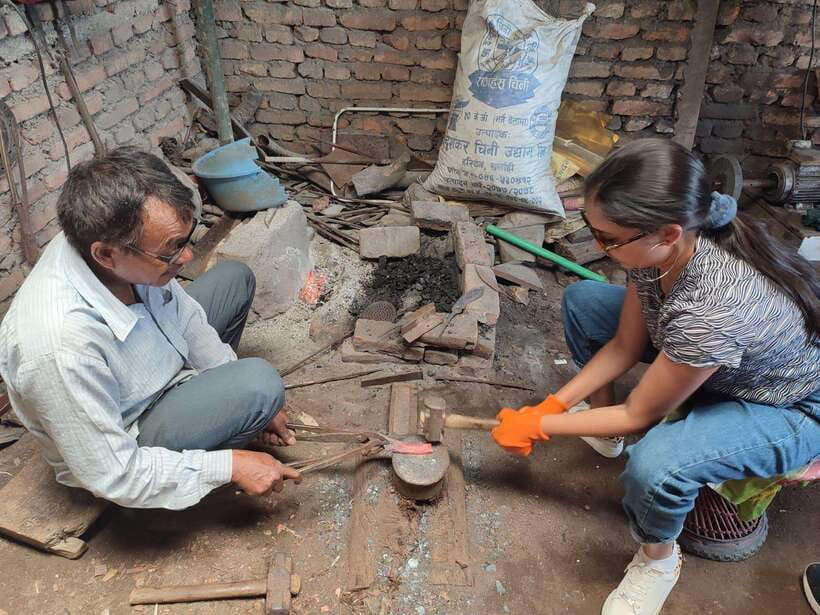
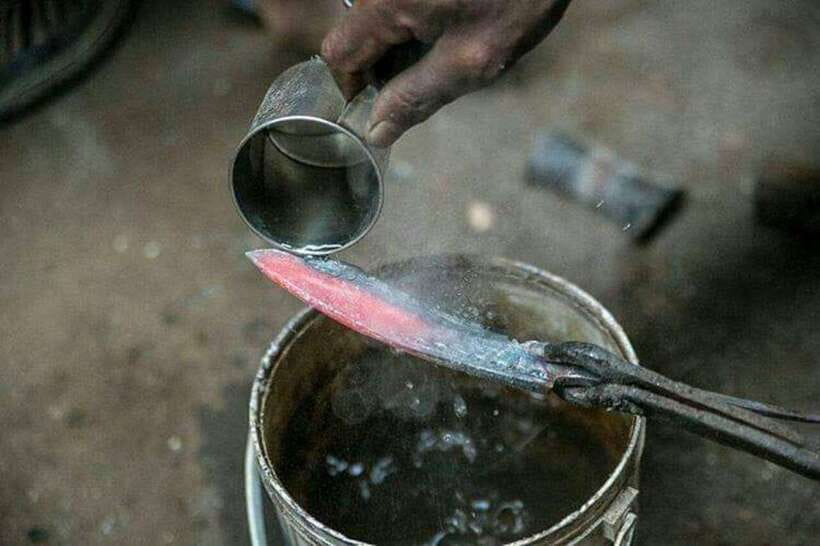
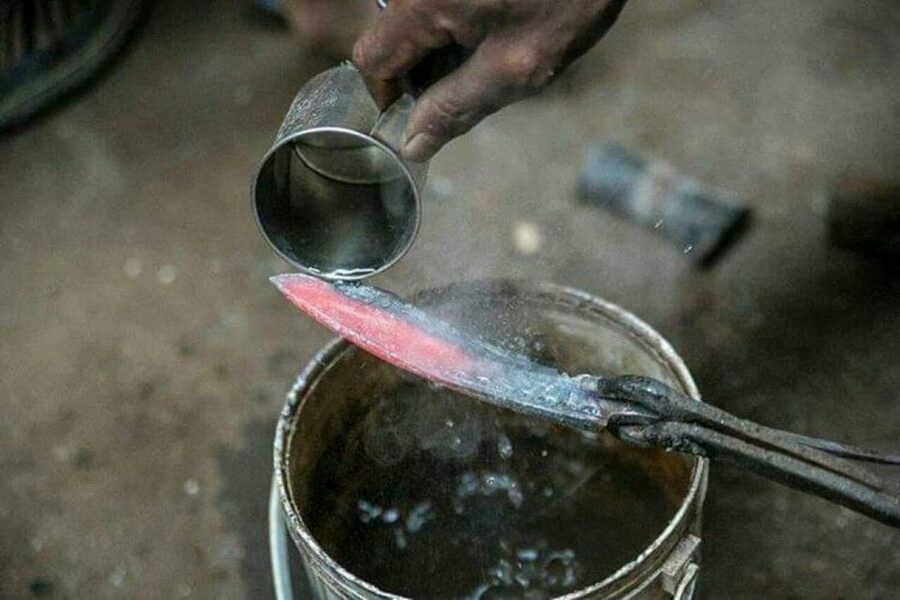
The hands-on work begins with a raw piece of iron or steel. Under the blacksmith’s direction, you help hammer it into the rough form of a khukuri. This is the part most people remember because it gives you a real sense of the force, timing, and control needed in traditional metalwork.
Do not expect to become a blacksmith in one afternoon. The curved form of a khukuri takes years of practice, and the host has more than 40 years of experience. Your part is limited to safer stages, with the professional controlling the process that requires the greatest skill.
Still, the hammering is not a token gesture. You take part in changing the metal’s shape, and you can see the result develop under repeated blows. The transformation from a plain piece of metal into a recognizable blade is quick enough to hold your attention but substantial enough to feel like real work.
Wear long pants. Closed clothing is a sensible choice around a forge, even though the only stated clothing requirement is long pants. Children under 10 cannot take part, and younger children may find the noise, heat, and safety rules difficult in any case.
Grinding, sparks, and the limits of your role
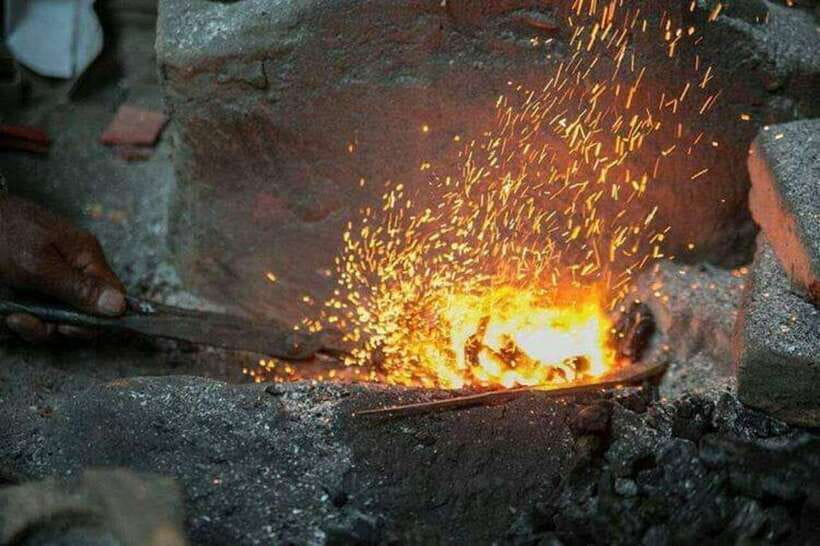
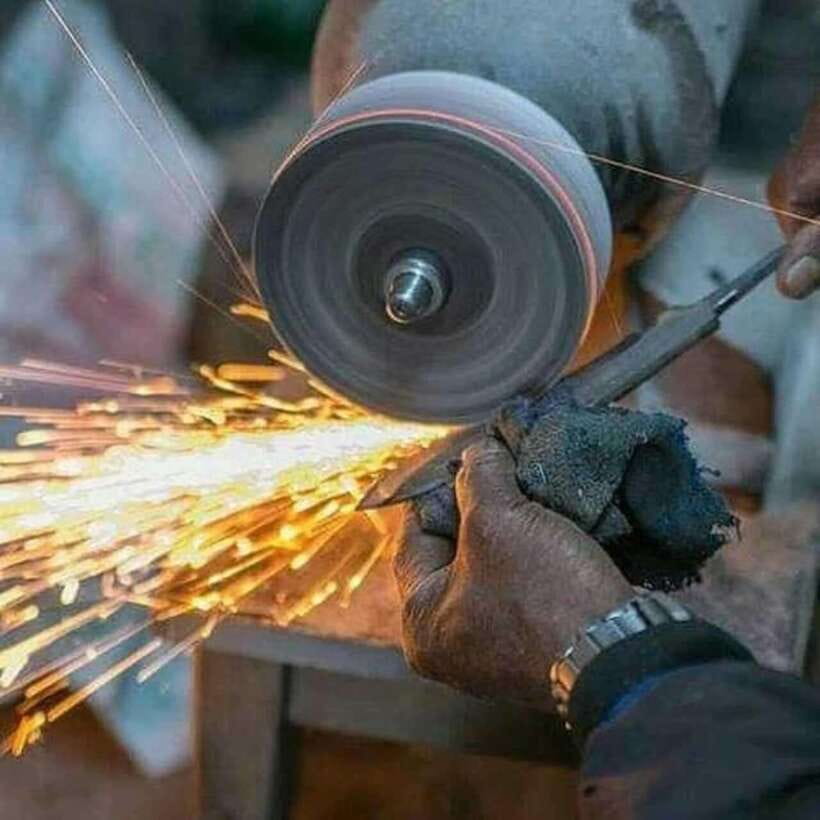
Grinding gives the blade its cleaner shape and helps prepare the cutting edge. You can take part in the first grinding stage, but the host handles the more dangerous blade grinding and sharpening. The safety instruction is simple: stay clear of the sparks.
This division of labor is one of the most important details to understand before booking. The activity is hands-on, but it is not a class in which you operate every machine. You help with the parts that can be supervised safely, then watch Indra complete the work that calls for experience and control.
That arrangement makes sense. A badly handled grinder can injure someone, and an improperly sharpened blade would spoil the knife. You still get the satisfaction of helping shape your own khukuri, while the final quality remains in the hands of a professional.
You may also watch the handle and cover take form as the blade is completed. The traditional khukuri includes a handle and a protective scabbard, and the standard booking includes a knife cover. A horn or bone cover is available for an extra cost, so ask about that if the cover is an important part of your purchase.
More cooking classes in Kathmandu:
- Half day cooking class in Thamel kathmandu
★ 5.0 · 607 reviews - Kathmandu: Local Women-Led Nepali Cooking & Momo Class
★ 4.9 · 360 reviews - Kathmandu: Local Lead Nepali Cooking & Momo-Making Class
★ 5.0 · 212 reviews - The best Private Nepali Cooking Class in Kathmandu
★ 5.0 · 83 reviews
Tea, snacks, and a closer look at local life
Tea, water, and snacks are included, giving the workshop a relaxed rhythm between the noisy stages of metalwork. The welcome can be especially personal because the blacksmith works from his family home. One family was offered tea and guava from the garden, which gives you an idea of the informal hospitality you may receive.
I like this part because it gives the visit some breathing room. You are not only watching sparks and swinging a hammer. You have time to ask about the craft, the meaning of the khukuri, and the family’s connection to the work.
The guide helps turn those moments into a conversation. With English and Hindi available, you can ask questions as the knife takes shape instead of trying to guess what is happening. For many people, that human contact is as valuable as the finished blade.
Do keep expectations sensible. This is a craft visit with refreshments, not a full cultural tour of the area. The information provided focuses on the khukuri, the blacksmith, and the family welcome. If you want a broader sightseeing program, you would need to arrange that separately.
What you take home after four hours
The finished item is a small khukuri with a blade of about six inches. It comes with a knife cover, and all the tools needed for the workshop are provided. You leave with an object made during your visit rather than a generic souvenir selected from a shelf.
The quality depends on the maker’s work, but the experience places that work in front of you. You see the raw metal, take part in hammering, help with an early grinding stage, and watch the difficult shaping and sharpening handled by someone who has spent decades at the forge.
Several participants have described the completed knife as sturdy, attractive, and suitable for keeping as a long-term souvenir. One person took the khukuri back to the United Kingdom, where it drew plenty of attention. Another family saw the knife as something that could become a keepsake passed down through the family.
Remember that the optional horn or bone cover costs extra. The standard cover is included, so the extra charge is only relevant if you want a more distinctive finish.
Is $73 a fair price?
At $73 per person, this is not the cheapest way to buy a Nepalese knife. It can be good value if you care about the making process, the personal setting, and the included transport.
Your price covers four hours, hotel pickup and drop-off, the guide, the blacksmith’s time, use of the tools, tea, water, snacks, the knife, and its cover. You also receive an experience that connects the object to the person who made it.
A market purchase may cost less, but it will not give you the same chance to hammer the metal or ask questions through a guide. On the other hand, if you only want a decorative khukuri and have no interest in craft, the price may feel high.
The small group helps the value. With a maximum of five participants, your turn at the work is less likely to feel rushed. Families have also found that children old enough to participate can do as much as their ability allows, while the professional handles the difficult stages.
Who will enjoy this workshop most?
This suits you if you like local craft, practical souvenirs, and activities with a clear connection to place. It is also a strong choice if you have already seen Nepal’s temples and mountain viewpoints and want something more personal and hands-on.
It works well for couples, small groups of friends, and families with children aged 10 or older. The guide can adjust how much each person does, so you do not need to be strong or experienced with tools to take part.
You should think twice if you dislike heat, noise, sparks, or workshop settings. You also need to accept that the host will do some of the most important parts. The experience gives you genuine participation, but it does not hand you full control of the knife-making process.
The four-hour length is enough to make the activity feel substantial without taking an entire day. Pickup and drop-off also make it easy to fit into a Kathmandu visit, though the exact start time should be checked when booking.
Booking details worth knowing
You can cancel up to 24 hours before the activity for a full refund. You can also reserve now and pay later, which helps if your Nepal plans are still changing.
The host or guide speaks English or Hindi. Pickup is included from your hotel lobby, followed by drop-off after the workshop. Bring long pants, and remember that children under 10 are not suitable for this activity.
The experience has a 4.9 rating from 38 bookings, and transport has received a perfect score from 86 percent of participants. Those figures point to two of the strongest parts of the arrangement: the personal guiding and the ease of getting to and from the workshop.
Should you book the Knife Khukuri Making Workshop?
I would book it if you want a souvenir with a story and enjoy meeting the maker behind it. The combination of an experienced blacksmith, a small group, hotel transport, and real participation makes this more rewarding than simply shopping for a knife.
Book with the right expectations. You will hammer the iron and help with an early grinding stage, but the host will shape, sharpen, and complete the dangerous work. If that balance suits you, the workshop offers a rare look at a Nepalese craft and leaves you with a useful six-inch khukuri to take home.
FAQ
How long does the khukuri workshop last?
The activity lasts four hours. You can check the available starting times when booking.
How much does the experience cost?
The price is $73 per person.
What parts of the knife-making process can I do?
You can take part in hammering the iron and the first grinding stage. The host handles the more dangerous blade grinding and sharpening for safety reasons.
What size knife will I make?
You will make a small khukuri with a blade of about six inches.
Is hotel transportation included?
Yes. Pickup from your hotel lobby and drop-off afterward are included.
What languages are available?
The host or guide speaks English or Hindi.
Can children join the activity?
Children under 10 are not suitable for this experience. Children aged 10 or older may participate according to their abilities, with the host assisting where needed.
Just added around Kathmandu
- Traditional Momo Making Class★ 5.0 · 10 reviews
- Wildlife Adventure in Chitwan Nepal★ 4.0 · 4 reviews
- Walking tour of real Kathmandu through back streets.★ 5.0 · 3 reviews
- Kathmandu 2 Nights 3 Days Chitwan Jungle Safari Tour★ 5.0 · 9 reviews
- Kathmandu Street Food Walking Tour – Eat Like a Local★ 5.0 · 3 reviews
- Private Manaslu Circuit Trek at Himalayas★ 5.0 · 3 reviews
- Walking tour of Kathmandu with awesome local guides★ 5.0 · 4 reviews
- Visit Swayambhunath and Bauddhanath Stupa with Guide★ 5.0 · 5 reviews
Kathmandu Craft Workshops, compared.
Knife (Khukuri) Making Workshop- Forge of the Gurkhas
Read our review →
Browse the lists this tour appears in