
Reviewed · EVEREST BASE CAMP TREKS FROM KATHMANDU
Everest Base Camp Trek
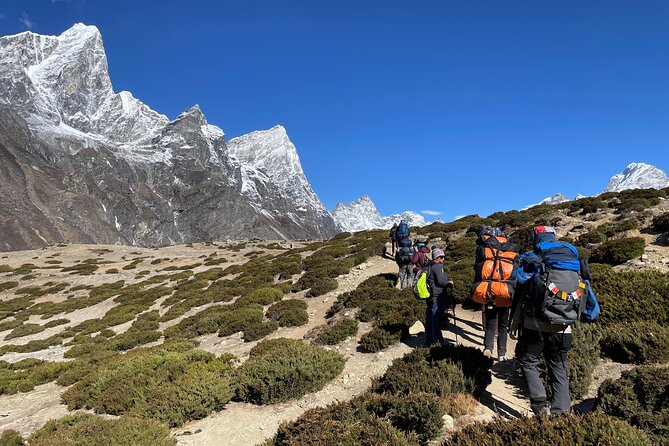
Everest Base Camp is the headline, but the real reward comes mile by mile: the footpaths through Namche Bazaar, the monastery at Tengboche, the Khumbu Glacier, and the high mountain villages that make this trek feel like a journey rather than a quick photo stop. You fly from Kathmandu to Lukla, then walk for days through the Khumbu region with a licensed guide.
I like the included Lukla flights and tea-house lodging, which remove two large planning chores. I also like the private format, with up to eight people in your own group, and the practical support of airport pickup, a first-aid kit, and a guide trained to help in the mountains. The catch is that the published details contain a few conflicts about Kathmandu nights, meals, and trekking nights, so you should confirm those points before paying.
Key points to know before you book
- Lukla flights are included: Round-trip domestic airfare from Kathmandu, including airport tax, is part of the package.
- Acclimatization is built in: A full day in Namche and another day based in Dingboche help break up the climb.
- High altitude is serious: Everest Base Camp sits at about 5,364 meters, or 17,598 feet.
- Tea houses keep the trek local: You sleep in simple mountain lodges for most of the walking days.
- Private groups stay small: The maximum is eight people per booking, and only your group participates.
- The price needs unpacking: At $999, the headline rate is attractive, but food and suggested gratuities add about $500 per person.
What the 14-day Everest Base Camp route feels like
This is a classic out-and-back trek from Lukla, with a few Kathmandu stops at the beginning and end. You start in the capital, fly to the mountain airstrip at Lukla, walk uphill through the Khumbu, reach Base Camp and Kala Patthar, then return by foot to Lukla before flying back.
The walking days are long on paper, often listed as 12 hours. That does not necessarily mean 12 hours of continuous hiking, but it does signal full mountain days with early starts, breaks, lodge stops, and changing conditions. You need strong physical fitness, and you should be comfortable carrying your own bag, ideally under 22 pounds, or 10 kilograms.
The tour is private rather than a large mixed group. That matters on a demanding route. You can move at your group’s pace within reason, ask your guide for help, and avoid being tied to a large bus-like walking party. Still, a private trek does not make the route easy. Altitude, cold, wind, steep steps, and Lukla flight delays remain part of the deal.
More Everest Base Camp treks:
- Everest Base Camp Trek – 14 Days
★ 5.0 · 1,499 reviews - Everest Base Camp Trekking
★ 5.0 · 485 reviews - Everest Base Camp Trekking – 13 Day
★ 5.0 · 365 reviews
Kathmandu, Thamel, and the flight to Lukla
Your trip begins with airport pickup at Tribhuvan International Airport. A private car and guide assistance are included for arrival and departure, which is useful after a long international flight and gives you a direct point of contact from the start.
The first day includes time in Kathmandu and Thamel. Thamel is the practical base for trekking gear, restaurants, money exchange, and last-minute supplies. The company says its guide can help arrange gear rental or purchases, so you do not need to arrive with every piece of equipment already packed.
Day two combines a flight toward Lukla with several Kathmandu sights, including Swayambhunath, Boudhanath Stupa, and the Garden of Dreams. The schedule as written is not perfectly clear, since it also places you in Phakding on that day. Treat this section as a rough plan rather than a minute-by-minute promise.
Swayambhunath gives you a hilltop introduction to Kathmandu, while Boudhanath offers a very different setting around one of the city’s major Buddhist stupas. These stops are worthwhile if your flight timing allows, but the Lukla sector must come first. Mountain flights can be delayed or canceled by weather, and the operator advises adding one or two spare days to your wider Nepal schedule.
The flight to Lukla is short, listed at about one hour, but it is the gateway to the whole trek. Once you land, the trail begins in earnest. Phakding is the first overnight mountain stop, with the Dudh Koshi River setting the tone for the days ahead.
Phakding to Namche Bazaar and the first altitude test
The walk from Phakding to Namche Bazaar follows the Dudh Koshi valley and leads toward Sagarmatha National Park. Namche is not just a place to sleep. It is the main mountain town on this route, with a compact cluster of tea houses and services before the trail climbs higher.
This day is listed as a 12-hour stop, which tells you to expect a demanding hike. The route includes river crossings and steady uphill sections, but the main challenge is the shift from ordinary trekking altitude to a much higher mountain environment.
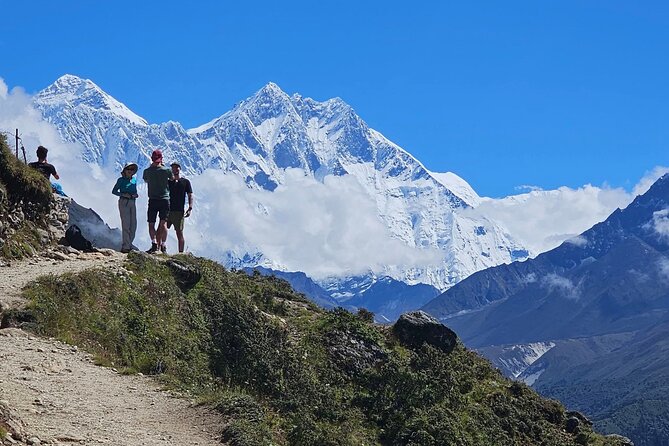
Namche is where the schedule wisely slows down. You spend a full day here, with a hike to an Everest View Point listed at about two hours. This outing gives you a first chance to look across the peaks without pushing on to a higher overnight stop.
I like this pause because it has a real purpose. Acclimatization is not wasted time, and the short hike lets you stretch your legs while returning to Namche to sleep at the same altitude. Your guide’s role matters here: tell the guide honestly how you feel, even if your symptoms seem minor.
Tengboche and the mountain monasteries
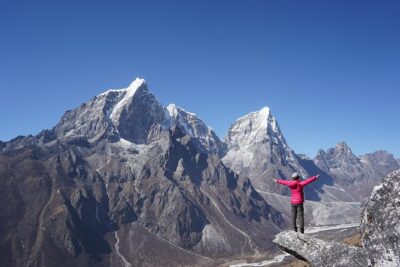
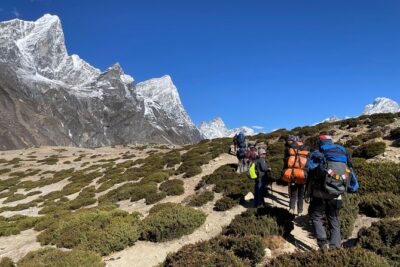
From Namche, the trail continues toward Tengboche. This is one of the most memorable sections of the route, with views toward Ama Dablam and Taboche and a visit to Tengboche Gompa.
The gompa, or monastery, gives the trek a cultural center as well as a scenic one. You are not simply walking from lodge to lodge. The route passes through places shaped by Sherpa life and Tibetan Buddhist practice, and Tengboche is one of the clearest points where those two parts of the journey meet.
The day is again shown as a 12-hour stop, so do not picture a casual afternoon stroll. The trail can feel tiring after the previous days, and the combination of elevation and uneven ground makes a steady pace more valuable than speed.
Accommodation is in tea houses rather than conventional hotels. That means simple rooms and basic mountain facilities, with comfort shaped by altitude, weather, and supply limits. The advantage is that you sleep along the actual route and remain close to the communities that support the trek. The tradeoff is that this is not a luxury walking holiday.
More day hikes and treks in Kathmandu:
- Nagarkot Sunrise View and Day Hiking from Kathmandu
★ 5.0 · 471 reviews - Annapurna Circuit Trek with Tilicho Lake
★ 5.0 · 368 reviews - Everest Base Camp Trek -14 Days
★ 5.0 · 321 reviews - Annapurna base camp trek 5 Days
★ 5.0 · 252 reviews
Dingboche and a second acclimatization pause
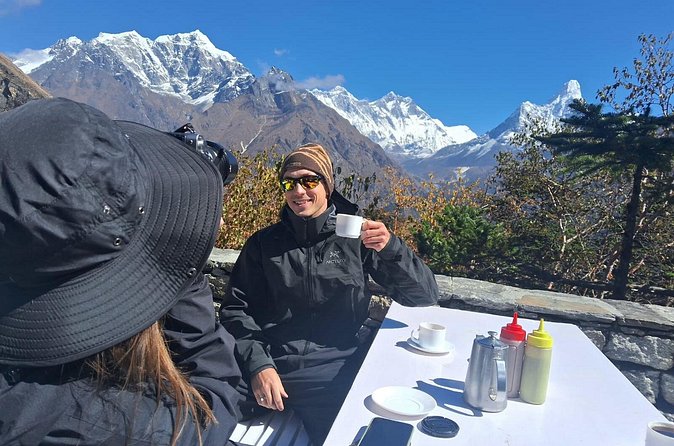
Dingboche is the next major base. The trek reaches it on day six, then uses another day in the area before continuing toward Lobuche.
The second Dingboche day is listed with a route toward Chukhung and a reference to Island Peak. The supplied plan does not clearly state that you climb Island Peak, so do not book this trek expecting a technical peak ascent. Read it as an acclimatization or local walking day unless the operator confirms something more specific.
This pause is important because the route now moves well above the lower Khumbu villages. You are gaining altitude faster than you gain scenery, and that is exactly when patience matters. A sensible guide will watch the group, keep the pace controlled, and know the nearest medical facilities. The company says its leaders have basic first-aid training.
You should still carry your own personal medication and rely on proper insurance. Medical expenses and emergency repatriation must be covered by your travel insurance, and proof is required on the first day.
Lobuche, the Khumbu Glacier, and Gorak Shep
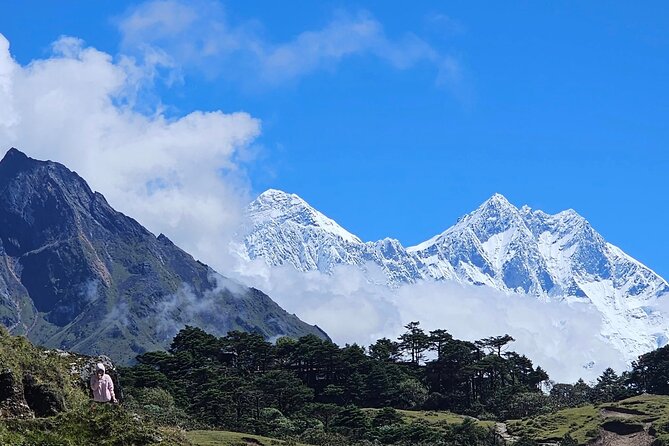
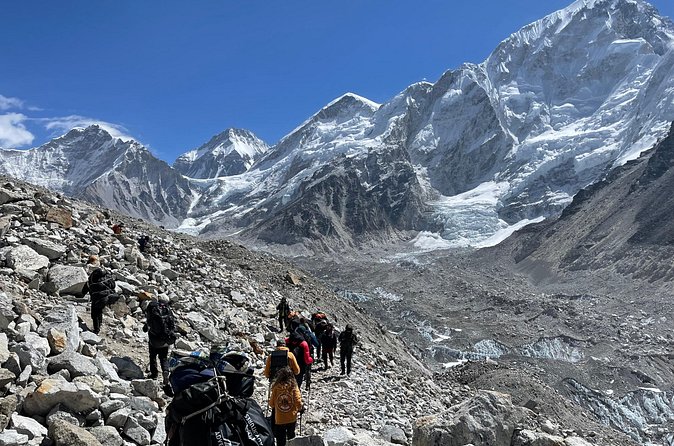
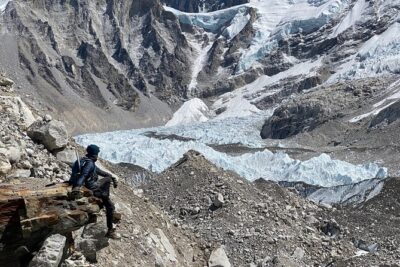
From Dingboche, you walk to Lobuche. The route includes the Khumbu Glacier, one of the defining features of the high valley. At this stage, the surrounding peaks and ice make the walk feel increasingly remote, but the physical demands rise too.
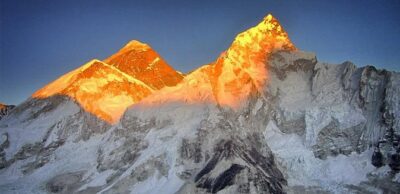
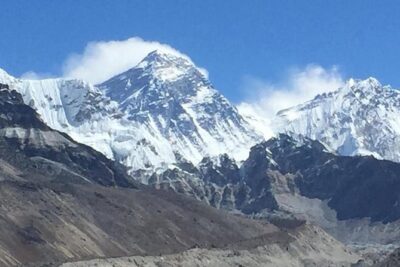
The next major stop is Gorak Shep, with Mount Everest listed as part of the day’s sights. It is important to understand the geography here: the trek takes you into the Everest region, but the mountain views are not the same as standing on Everest itself. The point is access to Base Camp and the high viewpoints around it.
Gorak Shep is the last major lodging point before the Base Camp outing and the climb to Kala Patthar. The plan gives it a full 12-hour stop, which is a reminder that you are operating at extreme altitude. Even simple tasks feel slower at this height.
The route to Everest Base Camp is one of the emotional high points of the trek. You walk beside the Khumbu Glacier and reach the famous base area at about 5,364 meters. The date, weather, and season affect what you see, so expect a stark high-altitude setting rather than a fixed postcard scene.
Kala Patthar and the long return toward Lukla
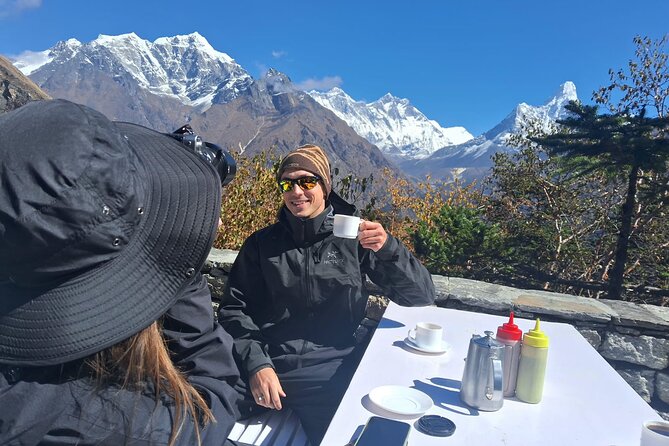
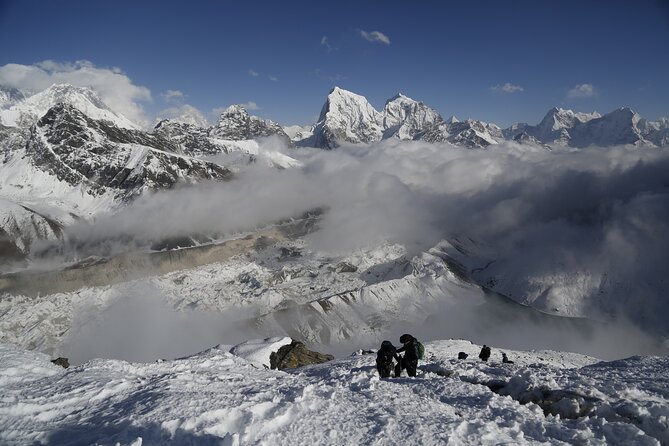
Kala Patthar is often treated as the great viewpoint of the trek. The stop is listed as about one hour, but the time needed depends on the pace of your group and the conditions. The climb is short compared with the full expedition, yet it is a serious effort at high altitude.
After Kala Patthar, the route turns back toward Pheriche and the Dughlha road, then continues to Pangboche. This is not a quick victory lap. Descending can be hard on tired knees, and the long day comes after the highest point of the trip.
The return continues to Namche Bazaar, then Lukla. Walking back through familiar villages gives you a different view of the route. Downhill sections may feel easier for your breathing, but the total distance and accumulated fatigue still demand care.
You spend the final trekking night in Lukla before flying to Kathmandu. Keep your schedule flexible here. The operator specifically warns about Lukla flight delays and cancellations, so an international connection immediately after the planned return is a risky choice.
What the $999 price really covers
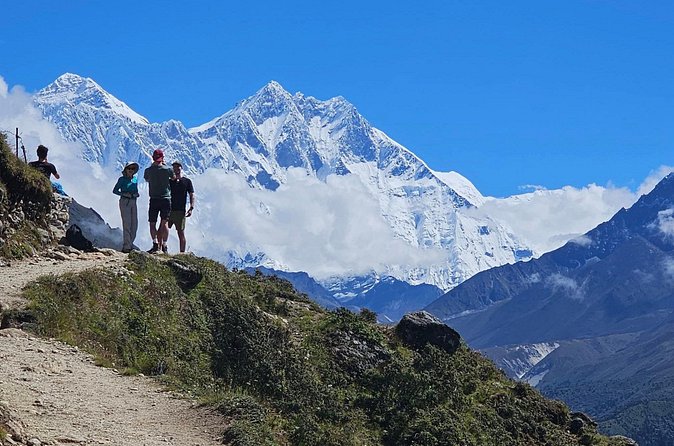
The advertised cost is $999 per person, which is a strong starting price for a private 14-day package that includes domestic flights, a licensed guide, tea-house accommodation, airport transfers, taxes, and Kathmandu hotel accommodation.
The included services listed are:
- Round-trip Kathmandu to Lukla airfare and airport tax
- Three-star Kathmandu hotel accommodation, with the paperwork specifying two nights
- Eleven nights in tea houses during the trek
- Guide support from a government license holder
- Arrival and departure pickup by private car
- Dinner, although the wording about meals needs clarification
- First-aid kit and a Himalayan Recreation T-shirt
- Government taxes, VAT, and service charges
The additional estimates are $350 per person for food and drinks and $150 per person for gratuities. That brings the practical stated cost to about $1,499 before gear, insurance, personal expenses, and any extra nights caused by flight delays.
There is a mismatch worth addressing before booking. The overview says three nights in a Kathmandu hotel and ten tea-house nights, while the included section says two Kathmandu nights and eleven tea-house nights. The itinerary also lists breakfast twice and says dinner is included, but the exclusions say food and drinks are not included. Ask for a written breakdown of exactly which meals and hotel nights are covered.
At $999, the package can still be good value, especially if the flight fare and guide services are confirmed. You just need to compare the final cost, not the headline number.
Who should book this trek
This experience fits you if you want a guided Everest Base Camp route without arranging flights, lodges, permits, and airport transfers on your own. It is also a good match for a small family or friend group that wants a private guide rather than a large shared departure.
You need strong fitness and a realistic attitude toward altitude. The company permits a minimum age of eight, but the altitude warning applies regardless of age, gender, or fitness. Speak with your doctor before departure, and do not confuse a low price with a low-risk trip.
Pack lightly. You are expected to carry your own luggage, with a suggested maximum of 10 kilograms. Extra luggage can be stored at the company office or hotel and collected after the trek. Trekking gear can be bought or rented in Kathmandu, with guide assistance.
Bishnu is identified with the operating team, and Basu is named as a guide associated with the experience. If having a particular guide matters to you, request confirmation before booking rather than assuming availability.
The cancellation terms are simple: cancel at least 24 hours before the start for a full refund. Inside 24 hours, the payment is not refunded, and changes are not accepted.
Should you book the Everest Base Camp trek?
Book it if you want a compact, guided package with Lukla flights and tea houses arranged for you, and if you can handle the physical and medical demands of high-altitude trekking. The 4.9 rating from 97 reviews and 100 percent recommendation mark suggest very strong customer satisfaction, especially with the organization and guide support.
I would not book until the operator confirms the number of Kathmandu nights, the exact meal plan, the tea-house count, and what happens if a Lukla flight is delayed. Build one or two spare days into your Nepal plans, buy the required insurance, and budget closer to $1,500 before extras.
For a fit hiker who values practical support over luxury, this looks like a sensible Everest Base Camp package. For anyone seeking flexible dates, private rooms, or a relaxed pace, the long walking days and simple lodging may be a poor match.
FAQ
Is the flight from Kathmandu to Lukla included?
Yes. Round-trip domestic airfare from Kathmandu to Lukla and back is included, along with airport tax.
How high does the trek go?
Everest Base Camp is listed at approximately 5,364 meters, or 17,598 feet, above sea level.
How many people can join one booking?
The maximum is eight people per booking, and the activity is private to your group.
Is accommodation included?
Yes. Tea-house accommodation during the trek and Kathmandu hotel accommodation are included. The supplied details differ on the exact number of Kathmandu and tea-house nights, so confirm the final count before booking.
Is travel insurance required?
Yes. You must have insurance covering medical expenses and emergency repatriation, and you must show proof to the tour leader on the first day.
What happens if the Lukla flight is delayed or canceled?
The operator warns that Lukla flights can be delayed or canceled and recommends allowing one or two extra days in your schedule.
Just added around Kathmandu
- Traditional Momo Making Class★ 5.0 · 10 reviews
- Wildlife Adventure in Chitwan Nepal★ 4.0 · 4 reviews
- Kathmandu 2 Nights 3 Days Chitwan Jungle Safari Tour★ 5.0 · 9 reviews
- Walking tour of real Kathmandu through back streets.★ 5.0 · 3 reviews
- Kathmandu Street Food Walking Tour – Eat Like a Local★ 5.0 · 3 reviews
- Private Manaslu Circuit Trek at Himalayas★ 5.0 · 3 reviews
- Walking tour of Kathmandu with awesome local guides★ 5.0 · 4 reviews
- Visit Swayambhunath and Bauddhanath Stupa with Guide★ 5.0 · 5 reviews
Everest Base Camp Treks from Kathmandu, compared.
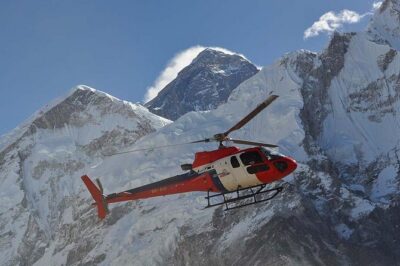
Everest Base Camp Trek with Helicopter Return from Gorakshep to Lukla
Read our review →Browse the lists this tour appears in