
Reviewed · EVEREST BASE CAMP TREKS FROM KATHMANDU
Everest Base Camp Trek
Everest Base Camp is less about reaching one famous sign than earning your way through the Khumbu, one steady day at a time. You’ll fly into tiny Lukla, walk through Sherpa villages, pause at Tengboche’s monastery, and climb to Kala Patthar for the trip’s grandest mountain view. The altitude is the real challenge.
I like the built-in acclimatization days at Namche Bazaar and Dingboche, which give your body a better chance to adjust before the high trail. I also like the practical setup: porters carry the main bags, meals and tea house lodging are included, and airport transfers simplify the first and last days.
The catch is that this is a demanding trek, not a sightseeing holiday. Flight delays at Lukla can disrupt the schedule, rooms become increasingly basic at high altitude, and a helicopter backup can cost at least $500 per person if you choose it.
Key points at a glance
- 14 days from Kathmandu: The route includes arrival and departure days, two acclimatization stops, and the return to Kathmandu.
- 5,545 meters at Kala Patthar: This viewpoint is higher than Everest Base Camp and is the trek’s highest planned point.
- Lukla flights set the pace: The early flights from Kathmandu are weather dependent, so flexibility matters.
- Sherpa culture along the trail: Namche Bazaar, Tengboche, and the mountain villages give the trek a strong local character.
- Porter support included: One porter is provided for every two people, while you carry only a day pack.
- Guides are a major part of the experience: Pradip is repeatedly named as a friendly, experienced guide who helped with route finding, wildlife spotting, safety, and mountain knowledge.
Why this Everest trek feels like a real expedition
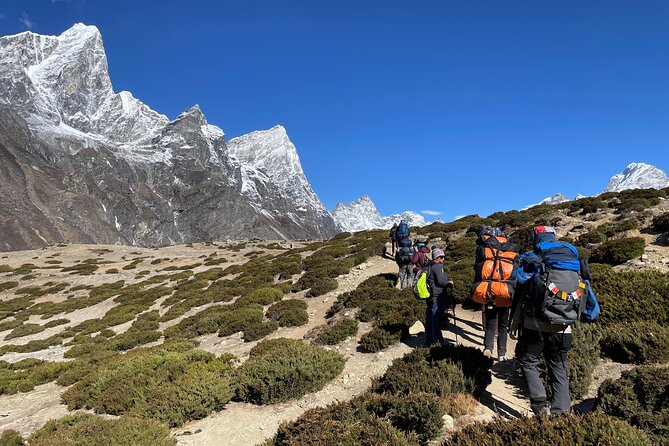
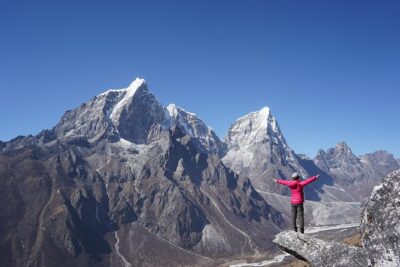
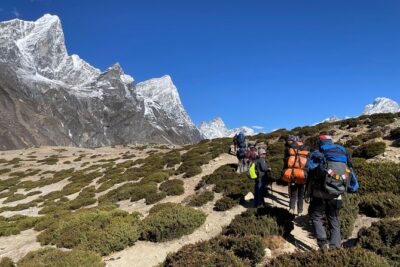
The route follows a famous mountain trail, but the days are not built around rushing from one photo stop to another. You walk for about six hours on most trekking days, gain height gradually, sleep in local tea houses, and learn quickly that a short distance can take much of the day at altitude.
The trip begins at $1,500 per person. That price covers more than a guide and a walking route. You receive airport pickup and drop-off, two nights in a standard three-star Kathmandu hotel, tea house lodging during the trek, domestic flights to and from Lukla, guide and porter wages, food and insurance for the support crew, a TIMS card, a first aid kit, a duffle bag if needed, and most listed government charges.
That is a solid package for a supported Everest Base Camp trek. You still need to budget for drinks, snacks, hot showers, charging batteries, tips, Kathmandu meals outside breakfast, and possible flight disruption. The price makes the most sense if you value having the practical pieces handled for you rather than arranging each transfer, room, porter, and permit on your own.
The group can include up to 15 people. That is large enough to offer company but small enough for a guide to keep track of the group on a narrow mountain trail. If you prefer a private pace or a single room, ask before booking. Twin-share lodging is the standard, and a single supplement is listed at $200.
More Everest Base Camp treks:
- Everest Base Camp Trek – 14 Days
★ 5.0 · 1,499 reviews - Everest Base Camp Trekking
★ 5.0 · 485 reviews - Everest Base Camp Trekking – 13 Day
★ 5.0 · 365 reviews
Kathmandu arrival and the early Lukla flight
Day one is deliberately simple. A representative meets you at Tribhuvan International Airport, then takes you to your hotel in Kathmandu. The transfer is listed at about an hour, depending on traffic and your arrival arrangements.
You need to send your international flight details after booking so the airport representative can meet you outside customs with your name displayed. If you arrange your own Kathmandu hotel, provide that address instead. This is a small administrative step, but it matters after a long international flight.
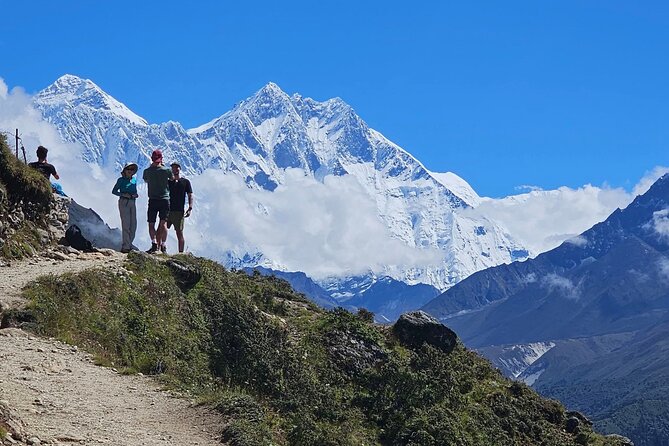
The trek proper begins early on day two with the flight from Kathmandu to Lukla at 2,886 meters. From Lukla, you begin walking toward Phakding at 2,640 meters. The first walking section takes about four hours.
Lukla is not a place to linger on this schedule. It is your trailhead, and the short first day gives you a manageable introduction to the rhythm of walking, eating, and sleeping at altitude. Keep your day pack ready with water, sunscreen, a spare jacket, and your camera. Your main luggage goes with the porters.
The flight is one of the trip’s practical weak spots. If it is canceled or delayed, the operator plans to reschedule for the following day when seats are available. A helicopter may be arranged for a group, but that is your expense, with a stated minimum of $500 per person depending on group size. Travel insurance that covers flight cancellation is not optional in spirit, even though it is not included in the package.
Phakding to Namche Bazaar, the first serious climb
Day three takes you from Phakding to Namche Bazaar at 3,440 meters. The walking day lasts about six hours, and this is where the trek begins to feel like a proper mountain journey rather than a gentle approach.
Namche is the main commercial center of the Khumbu and the best place on the route to pause before the higher villages. The town’s importance is not just practical. It is closely tied to Sherpa life and to the trade and trekking networks that support the region.
Day four is set aside for acclimatization in Namche. You do not simply lose a day here. The pause lets your body adjust before the trail climbs toward Tengboche, and it gives you time to explore the town at a slower pace.
The program lists about six hours for this acclimatization day, suggesting an active rest day rather than staying in bed. Follow your guide’s advice and keep the pace controlled. At high altitude, an easy day can be more useful than an ambitious side trip.
One detail worth clarifying before departure is the stop label for several days. Some entries show Irish Pub, which appears to be a meal or meeting stop rather than a major sightseeing attraction. Do not book this trek expecting a pub-focused experience. The real draw is the mountain route and the villages along it.
Tengboche and the turn toward the high country
On day five, you walk from Namche to Tengboche, also written as Tyangboche, at 3,867 meters. The day takes around six hours and brings you to one of the route’s most meaningful stops.
Tengboche is known for its monastery. The visit gives the trek a spiritual pause before the trail becomes more severe. You can take in the mountain setting, observe the monastery from the outside or inside when permitted, and let the day feel different from a simple march uphill.
From Tengboche, the trail continues to Dingboche at 4,260 meters on day six. The six-hour walk brings you into thinner air, and the rhythm changes. You will likely notice that the same walking pace now requires more patience. Your guide’s judgment becomes increasingly important here.
Day seven is another acclimatization day in Dingboche. The plan refers to the Chhukhung Path and a return to Dingboche, with about six hours listed. This is another active pause designed to prepare you for the higher camps ahead.
I like the placement of this rest day. The route does not push straight from Tengboche to the upper Khumbu, and that makes the schedule more sensible than a nonstop climb. Still, acclimatization does not guarantee that you will feel well. Strong fitness is required, and you should take symptoms of altitude illness seriously.
More day hikes and treks in Kathmandu:
- Nagarkot Sunrise View and Day Hiking from Kathmandu
★ 5.0 · 471 reviews - Annapurna Circuit Trek with Tilicho Lake
★ 5.0 · 368 reviews - Everest Base Camp Trek -14 Days
★ 5.0 · 321 reviews - Annapurna base camp trek 5 Days
★ 5.0 · 252 reviews
Lobuche, Gorakshep, and the road to Base Camp
Day eight takes you from Dingboche to Lobuche at 4,930 meters. The planned walking time is about six hours, with lunch at Dugla, at 4,595 meters, before continuing upward.
This is one of the days when the numbers become more meaningful. You are sleeping almost 5,000 meters above sea level, and the combination of cold, thin air, and a long walking day can test even fit hikers. Keep your day pack light, drink regularly, and avoid wasting energy on unnecessary gear.
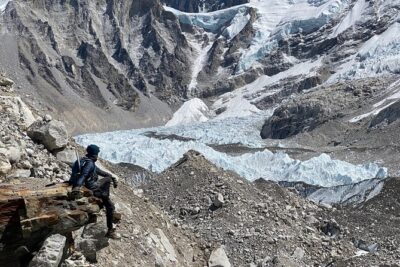
On day nine, you walk from Lobuche to Everest Base Camp through Gorakshep at 5,140 meters. The route to Base Camp reaches 5,364 meters and is described as the most rewarding section of the trek.
Gorakshep is a staging point for the final push. The trail becomes rocky, and the high altitude makes every rise feel larger than it looks. You may spend several hours walking out to Base Camp and back, so your day pack should contain the basics you need for warmth, water, sun protection, and personal medication.
Everest Base Camp is an emotional destination because it connects the ordinary act of walking with the extraordinary work of climbers. You are seeing the place from which expeditions prepare for the summit, and your guide can help explain the mountain culture, the risks, and the sacrifices tied to Everest climbing.
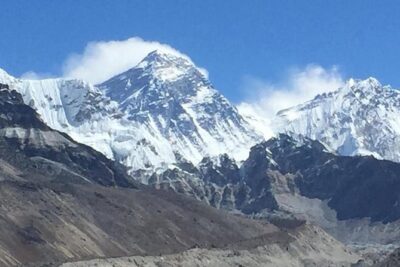
The trip description says you can see Mount Everest from its foothill. Keep your expectations specific: Base Camp is the destination and the symbolic high point, but the clearest broad view of Everest on this route comes from Kala Patthar the next morning.
Kala Patthar at 5,545 meters
Day ten starts at Gorakshep and climbs to Kala Patthar at 5,545 meters before descending to Pheriche at 4,243 meters. The full day is listed at about six hours.
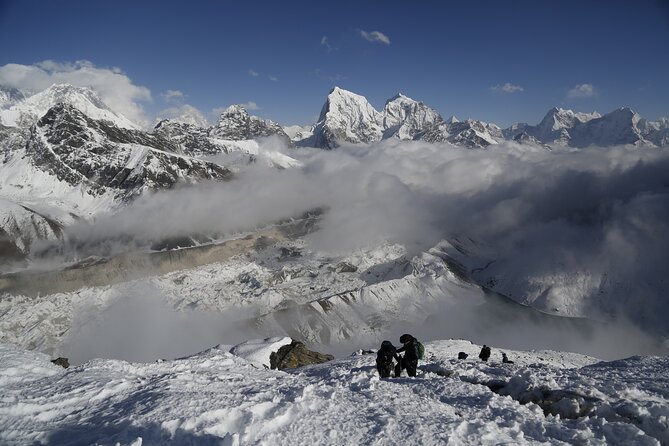
Kala Patthar is the highest point on the scheduled route. It is also the classic viewpoint for the Everest range, making it one of the trek’s best rewards. The early start is important because mountain visibility can change as the day warms, though the precise departure time should be confirmed with your guide.
This is a demanding morning. You gain more height after reaching Base Camp, then descend a long way to Pheriche. The drop is welcome, but tired legs and thin air still make the day serious. Do not treat Kala Patthar as an optional quick photo stop. It is the summit-style effort of the trek, even though you are not climbing Everest itself.
Pheriche gives your body some relief. The descent also changes the feel of the journey. You are no longer pushing toward the highest point, and the trail back toward Namche allows you to notice details you may have missed while climbing.
The long return through Namche and Lukla
Day eleven takes you from Pheriche back toward Namche Bazaar, with the program listing about six hours. The day description refers to the Tengboche to Namche section, so confirm the exact overnight sequence with the company before departure. Either way, you are descending through the Khumbu rather than following a new route.
Day twelve continues from Namche to Lukla, again taking about six hours. The return is not merely a formality. You will still be walking on uneven mountain paths, and fatigue can make the descent harder than expected.
At Lukla, you have time to refresh and rest before the flight back to Kathmandu on day thirteen. The early flight is subject to the same weather and operational limits as the flight in. If the plane cannot operate, your schedule can change, and a helicopter may cost extra.
Day fourteen ends with a private transfer to Tribhuvan International Airport. The listed transfer takes about an hour. Keep some flexibility around your international departure, since a delayed Lukla flight can affect the final days.
Tea houses, meals, bags, and daily comfort
Accommodation in Kathmandu is in a standard three-star hotel with attached bathroom, air conditioning, and hot and cold showers. On the trail, you stay in local lodges and tea houses. These are described as clean and comfortable, but comfort becomes more basic as you gain altitude.
Rooms are normally twin share. A single supplement is available for $200, which may suit you if privacy matters, but availability in remote mountain lodges can vary. Hot showers are available in some places for an extra charge, and electricity is available in some villages through local or solar power systems.
Breakfast, lunch, and dinner are included during the trek, with 14 breakfasts, 11 lunches, and 11 dinners listed. Kathmandu lunches and dinners are not included. Drinks are also separate, including alcoholic and nonalcoholic options.
Bring water purification tablets. Ordinary water is available, and you can also buy bottled or boiled water along the route. Charging phones and cameras costs extra where electricity is available, so spare batteries are sensible.
The porter arrangement is useful: one porter carries the main load for two people. You carry a smaller day pack with water, sunscreen, a camera, a spare jacket, and other immediate needs. The domestic flight allowance is 15 kilograms, including your hand luggage. Excess baggage costs extra, so pack with restraint.
Guides, support, and what the strong feedback tells you
The most consistent praise centers on the guide. Pradip is named several times, often under the nickname Master Zi, and is described as funny, helpful, experienced, and attentive to safety. He is also singled out for spotting wildlife and explaining the mountains and local area.
Guide assignments can vary, and another account names Pradam or Laxman, so you should confirm who will lead your departure. The important point is that the guide is not just someone walking in front. At altitude, you need a person who can judge pace, notice problems, communicate with lodges, and keep the group moving sensibly.
The company also receives strong praise for pre-trip and post-trip organization. One account specifically highlights Niti for handling questions and keeping the schedule and lodging organized. Another describes support with a last-minute helicopter return, which shows the operator can respond when plans go wrong, though that kind of rescue remains an extra cost.
Tips are not included. The suggested amount is 10 to 15 percent of the total tour cost for the staff if you feel the service deserves it. That is a substantial sum, so decide in advance how you want to divide tips among your guide and porters.
Who should book this trek
You should consider this trip if you want a supported Himalayan trek with a clear route, local tea house stays, porter help, and two planned acclimatization days. It suits people who can handle repeated six-hour walking days and who are comfortable with basic lodging and changing flight plans.
You should think twice if you need guaranteed departure times, private rooms every night, polished hotel standards, or an easy mountain holiday. This trek demands strong physical fitness, and the highest days are serious even with guide support.
I would also book travel insurance that covers high-altitude trekking and Lukla flight disruption. The operator specifically advises coverage of at least $500 per day for a canceled flight, and the insurance itself is not included.
Should you book the Everest Base Camp Trek?
I would book this trek if you want the classic Everest route and value practical support more than luxury. The $1,500 price covers the costly basics, including Lukla flights, staff, meals on the trail, lodging, transfers, and permits, while the two rest days make the schedule more responsible.
Go in with realistic expectations. You may face a delayed flight, basic tea houses, extra charges for showers and charging, and a hard climb to Kala Patthar. If you accept those limits, this is a well-structured way to reach Everest Base Camp, experience Sherpa communities, visit Tengboche, and share the trail with a guide such as Pradip who can make the long days safer and more rewarding.
FAQ
How long is the Everest Base Camp Trek?
The full program lasts approximately 14 days, including arrival and departure days in Kathmandu, the trek to Base Camp, the return to Lukla, and the flights between Kathmandu and Lukla.
What is the highest point on the route?
Kala Patthar is the highest scheduled point at 5,545 meters. Everest Base Camp is listed at 5,364 meters.
Are flights between Kathmandu and Lukla included?
Yes. The package includes flights from Kathmandu to Lukla and back. The flights are scheduled early and may be delayed or canceled, so flexibility and suitable travel insurance are important.
Are meals included during the trek?
Breakfast, lunch, and dinner during the trekking portion are included. The package lists 14 breakfasts, 11 lunches, and 11 dinners. Lunch and dinner in Kathmandu are not included, and drinks cost extra.
What accommodation is provided?
You receive two nights in a standard three-star hotel in Kathmandu. During the trek, you stay in lodges and local tea houses, normally in twin-share rooms. A single supplement is available for $200.
How much luggage can I take?
Nepal’s domestic airline allowance is 15 kilograms, including your hand luggage. Porters carry the main luggage on the trail, while you carry a smaller day pack. Excess airline weight costs extra.
What happens if a Lukla flight is canceled?
The flight may be rescheduled for the following day, subject to availability. A helicopter can be arranged for a group when possible, but it costs extra, with a stated minimum of $500 per person depending on group size.
Just added around Kathmandu
- Traditional Momo Making Class★ 5.0 · 10 reviews
- Wildlife Adventure in Chitwan Nepal★ 4.0 · 4 reviews
- Walking tour of real Kathmandu through back streets.★ 5.0 · 3 reviews
- Kathmandu 2 Nights 3 Days Chitwan Jungle Safari Tour★ 5.0 · 9 reviews
- Kathmandu Street Food Walking Tour – Eat Like a Local★ 5.0 · 3 reviews
- Private Manaslu Circuit Trek at Himalayas★ 5.0 · 3 reviews
- Walking tour of Kathmandu with awesome local guides★ 5.0 · 4 reviews
- Visit Swayambhunath and Bauddhanath Stupa with Guide★ 5.0 · 5 reviews
Everest Base Camp Treks from Kathmandu, compared.
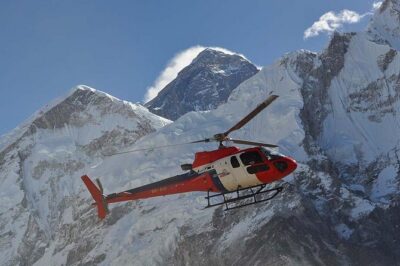
Everest Base Camp Trek with Helicopter Return from Gorakshep to Lukla
Read our review →Browse the lists this tour appears in