
Reviewed · ANNAPURNA TREKS FROM KATHMANDU
Annapurna Base Camp, Nepal 10 days
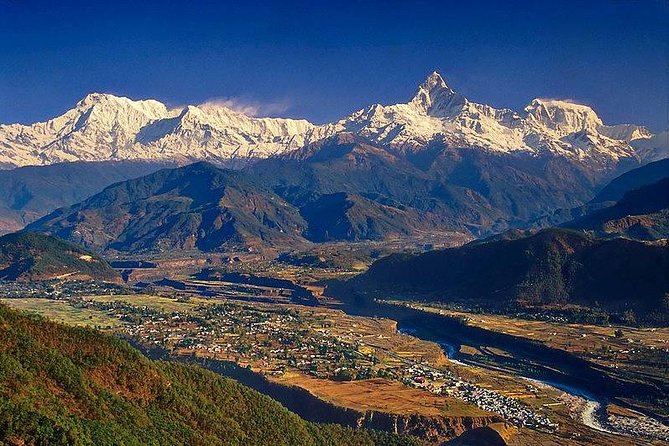
Annapurna Base Camp is a proper mountain trek, not a scenic bus tour with a short walk attached. You’ll spend up to eight hours on foot in a day, passing Gurung villages, stone stairways, suspension bridges, bamboo forest, and high mountain valleys before reaching the sanctuary beneath Annapurna.
I like the private format, which lets your group set a sensible pace, and I like the mix of simple teahouse nights and spectacular views of Annapurna South, Hiunchuli, Machhapuchhre, and Gangapurna. The main drawback is the physical demand: long uphill sections, 2,500 stone steps out of Chhomrong, and basic facilities where hot water, showers, Wi-Fi, and battery charging cost extra.
Key points to know
- Annapurna Base Camp is reached on foot over several steady days, with daily walks lasting roughly three to eight hours.
- The route begins with a seven-hour bus ride from Kathmandu to Pokhara, then continues by road and trail through Ghandruk.
- Private trekking gives you more control over the pace, a useful advantage on steep steps and high-altitude paths.
- Gurung culture is part of the route, especially in Ghandruk, a village largely inhabited by the Gurung community.
- Teahouse accommodation keeps the cost reasonable, but facilities are simple and several comforts are not included.
- Guide assignments can vary, with Sandip, Resham GC, Nitesh, and Raju among the guides associated with this operator.
The mountain route begins with a long ride to Pokhara
The first day is mostly about getting into position. You leave Kathmandu at about 6:15 a.m. and take a tourist bus west to Pokhara, roughly 200 kilometers away. The ride takes around seven hours, so you should treat this as a full transport day rather than a gentle introduction to trekking.
Pokhara sits at about 820 meters and is the gateway for this side of the Annapurna range. The bus is air-conditioned, and transport is included, which keeps the first day straightforward. Still, seven hours on Nepal’s roads can feel long, especially after international travel.
This is one place where a private trip helps. Your group does not have to manage a large shared party, and the operator can arrange a flight instead for the return to Kathmandu at an extra cost of $100. The listed plan uses road transport in both directions, so confirm the flight option before booking if saving time matters to you.
More Annapurna treks:
- Annapurna Circuit Trek with Tilicho Lake
★ 5.0 · 368 reviews - Annapurna base camp trek 5 Days
★ 5.0 · 252 reviews - Annapurna Base Camp Trek
★ 5.0 · 111 reviews
Ghandruk brings village life into the trek
On day two, you drive for about two and a half hours from Pokhara toward Siwai, then begin walking. The trek to Ghandruk takes about four hours, making this the first real day on the trail without being an overly punishing start.
Ghandruk is one of the most appealing stops because it is a living Gurung village, not simply a place built around trekking. The community’s culture is part of the appeal, and the setting gives you an early taste of the mountain villages that support this route.
If time allows, the plan includes a visit to the Gurung Museum. That small detail matters because it adds context to the walk. You are not just counting steps toward Base Camp; you are passing through communities with their own traditions and way of life.
The overnight stay is in a teahouse. Expect practical accommodation rather than hotel comfort. The basic rooms are part of the point of this trek, but you should be ready to pay separately for hot water, hot showers, Wi-Fi, and battery charging.
Chhomrong adds steep stairs and wide mountain views
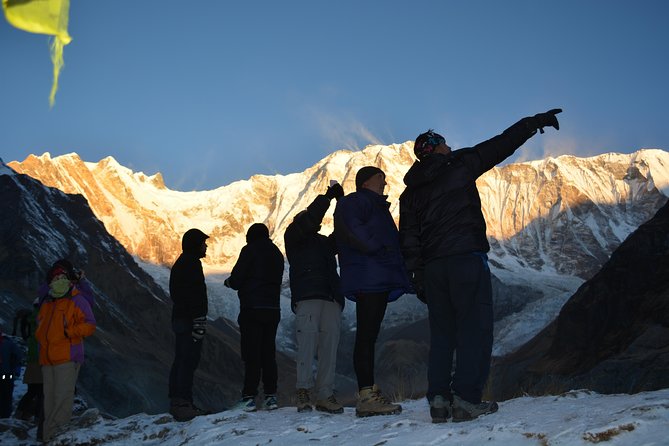
The next section takes you toward Chhomrong. One part of the climb rises for about an hour to Kimrungdanda, where you can see Annapurna South, Hiunchuli, Machhapuchhre, and Gangapurna. These are the first major mountain views that make the hard walking feel worthwhile.
The day takes about six hours, so pacing matters. You may feel fine on the first uphill stretch and less cheerful later, especially if you are not used to walking for several hours on uneven ground. Your guide can help set a rhythm, but you still need to speak up if you need a break.
Chhomrong is an important point on the route and a good place to notice how the trek changes. From here, the path becomes a repeated pattern of descents, climbs, forest sections, and stone stairs. The scenery remains impressive, but the route is not a smooth uphill line.
Several people who have taken trips with this operator describe guides such as Sandip, Resham GC, Nitesh, and Raju as caring, helpful, and good at keeping the journey organized. Guide assignments can change, so you should not assume a particular person will lead your departure. If you have a preference, ask when booking.
The Chhomrong steps are a real test
Day four is one of the most physically awkward parts of the trek. You descend from Chhomrong by roughly 2,500 stone steps, cross the Chhomrong Khola on a suspension bridge, and then climb again toward Sinuwa.
After Sinuwa, the route passes through forest toward Kuldighar and Bamboo. The walk takes about five hours, but the number of steps can make it feel tougher than the time suggests. Downhill walking is not always easier, particularly if your knees are less happy than your lungs.
I like this section because it gives you a clear sense of the route’s shape. You are moving through thick forest, crossing water, and gaining height in stages rather than simply marching along an exposed road. The tradeoff is that the views are less constant than they are around the higher ridges.
A private guide is useful here. You can stop to adjust your pack, drink water, or take a breather without worrying about holding up a large group. You will still need moderate fitness. The operator specifically recommends this experience for people with a moderate fitness level, and that is a sensible minimum.
Same city, a completely different sort of day:
- Everest Base Camp Trek – 14 Days
★ 5.0 · 1,499 reviews - Private Kathmandu Sightseeing Tour | UNESCO World Heritage sites
★ 5.0 · 756 reviews - Everest Base Camp Helicopter Tour landing at Everest View Hotel
★ 5.0 · 668 reviews - Half day cooking class in Thamel kathmandu
★ 5.0 · 607 reviews
Bamboo and Deurali mark the colder, higher stretch
From Bamboo, the path continues through damp, cool bamboo forest toward Deurali, at about 3,230 meters, or 10,595 feet. The day takes around four to five hours and climbs steadily, with fewer very steep sections than the earlier staircase route.
The forest can feel cold and shaded, especially when compared with the warmer lower villages. After Himalaya Hotel, the route opens into a more rugged mountain setting. This change is one of the best features of the trek: the scenery develops gradually, so you have time to notice the shift from cultivated village slopes to a high valley.
Deurali is also a useful point to take the altitude seriously. The trip is described as a high-altitude trek, and this is where you should pay attention to how you feel. Walk steadily, drink regularly, and tell your guide about any problem rather than trying to hide it.
Accommodation remains in teahouses. Meals are included in the package, but the exact facilities are basic. Breakfast is included for all ten days, along with seven dinners and eight lunches. Since the meal count does not cover every meal in an identical way, check the final inclusions with the operator before departure.
Machhapuchhre Base Camp leads to Annapurna Base Camp
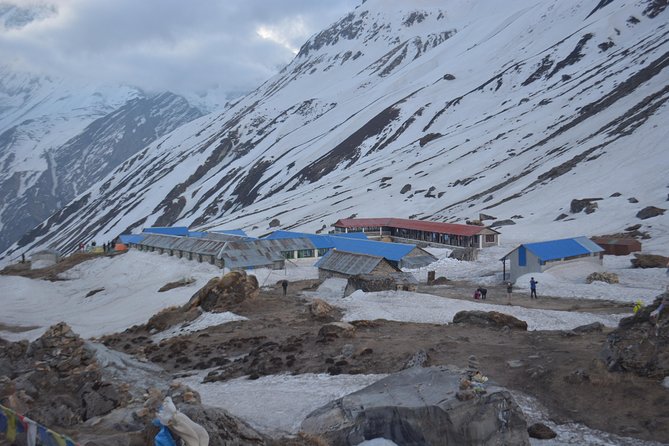
Day six is the main mountain day. The trail climbs through a riverbed and then follows a steep path along the mountainside toward Machhapuchhre Base Camp. This section is described as strenuous, particularly between Bagar and Machhapuchhre Base Camp.
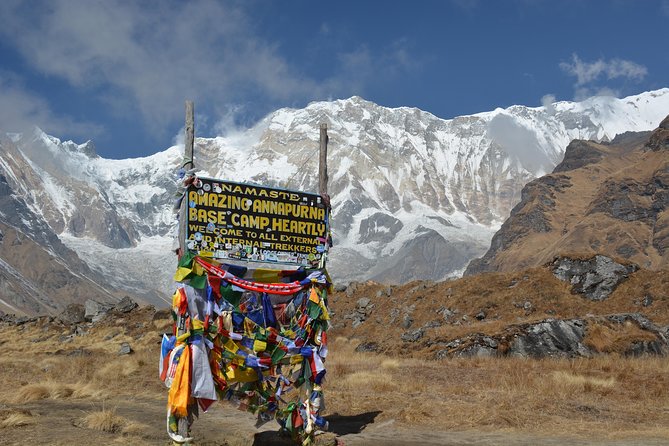
From Machhapuchhre Base Camp, the route continues toward Annapurna Base Camp. The reward is the enclosed mountain setting of the Annapurna Sanctuary, with huge peaks rising around the valley. You are walking to the foot of one of the world’s tallest mountains, but the experience feels less like a single dramatic finish and more like the result of several days of steady effort.
The walking time is around six hours, though the altitude and terrain can make the day feel longer. A private trek does not remove the hard work. It does give you a better chance to move at a pace that matches your group and to pause when the route demands it.
The sanctuary also has spiritual and environmental importance, which the guide is expected to explain along the way. That makes the experience more meaningful than simply reaching a sign or taking a photograph. Ask questions as you go. The setting deserves more than a quick stop.
The return is easier on paper than in your legs
From Annapurna Base Camp, you retrace the route toward Bamboo. The listed walking time is about eight hours, making this the longest day in the plan.
Although the trail is mostly downhill, do not assume it will be easy. Downhill steps can be tiring, especially after the main summit day. Your knees, feet, and shoulders may feel the strain more than they did on the climb up.
The scenery helps. You now know the route, so you can recognize the bridges, forests, and valley sections from a different angle. The private setup is valuable again because the group can settle into a pace that works for everyone instead of racing to a fixed finish.
This is also a good day to use any spare snacks you have carried. The tour includes meals, but a long day at altitude can leave you wanting something between scheduled breakfast, lunch, and dinner.
Jhinu Danda offers a gentler end to the trail
Day eight takes you from Bamboo back toward Chhomrong, then down to Jhinu Danda. The route first climbs to Kuldighar, descends to the Chhomrong Khola, and climbs the stone steps to Chhomrong before dropping again toward Jhinu.
That repeated up-and-down pattern is typical of the Annapurna route. It is not the most efficient line on a map, but it gives you varied views and connects several settlements. The total walking time is about six hours.
Jhinu Danda is the final overnight trekking stop in the plan. The stop gives you a chance to slow down before the road journey, though your legs will still have worked hard. Keep your expectations practical: this is a teahouse trek, not a resort stay.
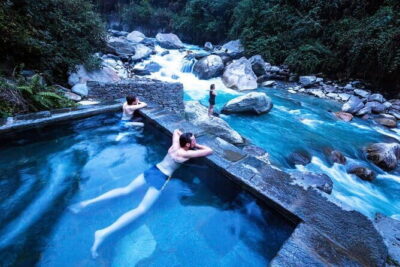
The tour does not state that a hot spring visit is included, so do not book this experience expecting that activity as part of the plan. Ask the operator if it is available as an optional addition.
Siwai closes the hiking section
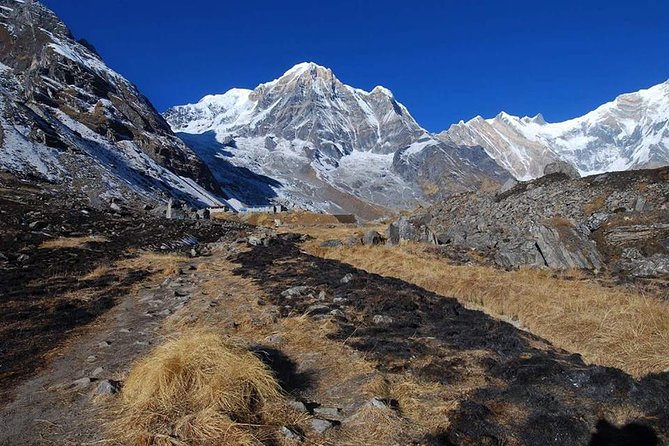
On day nine, you walk from Jhinu Danda toward Siwai, with about six hours on foot. The route includes views of the hills of western Nepal and a striking wild bee hive beneath a cliff.
That detail gives the final hiking day a local, close-to-the-ground quality. You are still surrounded by impressive mountains, but you are also noticing the working countryside and small natural details that can be missed on a faster trip.
At Siwai, the trek ends and you board the vehicle to Pokhara. The plan does not give a precise driving time for this part, so expect the day to feel longer than the walking hours alone suggest.
You spend the night in Pokhara before returning to Kathmandu. The combination of trail and road transport is practical, but it also means the final two days are not simply relaxed sightseeing days.
The final road day returns you to Kathmandu
After breakfast on day ten, you drive back to Kathmandu, a journey of about seven hours. You can look around shops and buy souvenirs before resting.
This final day is useful if you want a little time in Kathmandu after the trek, but it is not the ideal arrangement if you need to catch an international flight immediately. Confirm your onward schedule carefully. The operator says a flight can be arranged for an additional $100, which may be worth considering if you want to avoid another long bus ride.
The listed package includes accommodation in hotels and teahouses. The exact split is not specified, so ask where each night will be spent and whether the Kathmandu and Pokhara hotels are included at the standard price.
Is $848 a fair price for ten days?
At $848 per person, the package offers solid value for a private, ten-day mountain trek. Transport, accommodation, breakfast each day, seven dinners, eight lunches, and guiding are part of the package. That removes several major costs you would otherwise have to arrange separately.
The price is not all-inclusive in the luxury sense. Hot water, hot showers, Wi-Fi, and battery charging during the trek are excluded. Tipping for the crew is also not included, so budget for that separately.
The best value here comes from the private structure and the organization. You have road transport between Kathmandu, Pokhara, and the trailhead, teahouse bookings, meals, and support on a route where arranging each part yourself can take time.
I would compare the exact hotel category, porter arrangements, and meal coverage before paying. The supplied details confirm a guide and crew, but they do not spell out every service level. A few direct questions can prevent confusion.
Who should book this trek?
You should consider it if you want a serious but relatively compact Himalayan trek and prefer a private group. The 10-day length suits someone who wants Annapurna Base Camp without committing to a much longer expedition.
You should also be comfortable with:
- Three to eight hours of walking on most trekking days
- Steep stone steps and repeated uphill sections
- Basic teahouse accommodation
- High-altitude conditions
- Extra charges for hot water, showers, Wi-Fi, and charging
- A long bus journey at both ends of the trip
This is not a good match if you want easy walks, hotel comfort every night, or a tightly scheduled sightseeing holiday. It is a better fit if you value mountain scenery, village life, and the freedom to set your group’s pace.
The operator has received a perfect five-star average from 36 ratings, with every listed recommendation positive. The praise centers on friendly guide support, smooth transport, comfortable and clean accommodation, and the way guides such as Sandip, Nitesh, and Raju look after people on the trail. Treat that as encouraging evidence, not a guarantee of one specific guide or room standard.
Should you book the Annapurna Base Camp trek?
I would book this trek if you have moderate fitness, ten days available, and a clear appetite for basic mountain living. The route offers a good balance of Gurung villages, forest paths, high valleys, and dramatic peaks, while the private format gives you more breathing room than a large group departure.
Before booking, confirm the guide, porter support, hotel details, meal schedule, and extra charges. If you understand that the $848 price covers a practical trekking package rather than every comfort, this is a sensible and well-organized way to reach Annapurna Base Camp.
The cancellation terms are forgiving: you can receive a full refund if you cancel at least 24 hours before the start time. Poor weather or failure to reach the minimum number of participants can also lead to a new date or full refund.
FAQ
Where does the Annapurna Base Camp trek begin?
The experience begins in Kathmandu, with a tourist bus journey to Pokhara on the first day.
How long is the tour?
The tour lasts approximately 10 days.
What time does the tour start?
The listed start time is 6:15 a.m.
Is this a private tour?
Yes. Only your group participates, and the trek can be customized to suit your needs.
How fit do I need to be?
You should have a moderate level of physical fitness. Walking days last about three to eight hours and include steep trails and many stone steps.
Where do I stay during the trek?
Accommodation is provided in hotels and teahouses. The exact number of nights in each type is not specified.
Which meals are included?
Breakfast is included for 10 days, dinner for seven days, and lunch for eight days.
Are hot showers, Wi-Fi, and battery charging included?
No. Hot water, hot showers, Wi-Fi, and battery charging during the trek are not included.
Can I cancel for a full refund?
Yes, if you cancel at least 24 hours before the experience start time. Cancellations made less than 24 hours in advance are not refundable.
Just added around Kathmandu
- Traditional Momo Making Class★ 5.0 · 10 reviews
- Wildlife Adventure in Chitwan Nepal★ 4.0 · 4 reviews
- Walking tour of real Kathmandu through back streets.★ 5.0 · 3 reviews
- Kathmandu 2 Nights 3 Days Chitwan Jungle Safari Tour★ 5.0 · 9 reviews
- Kathmandu Street Food Walking Tour – Eat Like a Local★ 5.0 · 3 reviews
- Private Manaslu Circuit Trek at Himalayas★ 5.0 · 3 reviews
- Walking tour of Kathmandu with awesome local guides★ 5.0 · 4 reviews
- Visit Swayambhunath and Bauddhanath Stupa with Guide★ 5.0 · 5 reviews
Annapurna Treks from Kathmandu, compared.
Kathmandu to Annapurna Base Camp (ABC) 5-Day Trek
Read our review →
Browse the lists this tour appears in