
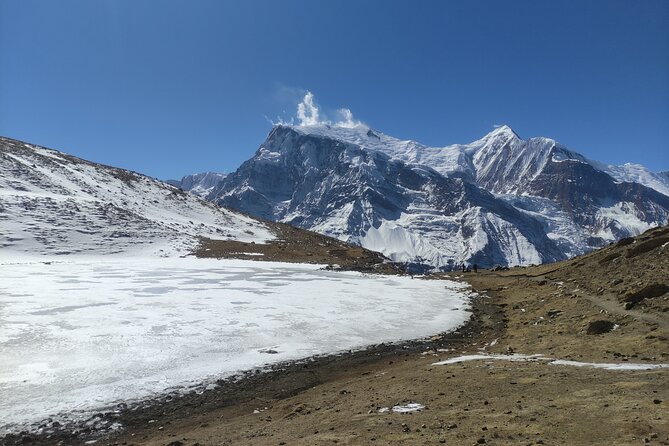
Reviewed · ANNAPURNA TREKS FROM KATHMANDU
Annapurna Base Camp Trek 10 Days
Annapurna Base Camp gives you a rare mix of big mountain views and traditional village life without requiring a long expedition. You walk from forested hills to the stark high country below Annapurna I and Machhapuchare, reaching 4,130 meters at the base camp.
I like the carefully staged route, which uses Ghandruk, Chhomrong, Himalaya, and Bamboo to break up the climb. I also like the practical package: a licensed guide, porter support, permits, meals, sleeping bag, and down jacket are included. The main catch is the walking itself. Steep stone steps, long days, and altitude demand a moderate level of fitness.
Guides Sudam and Ganesh receive repeated praise for attentive, professional support, and Sudam can speak Chinese. The group size is capped at 16, though some departures may include a larger organized group within that limit.
Key points to know before booking
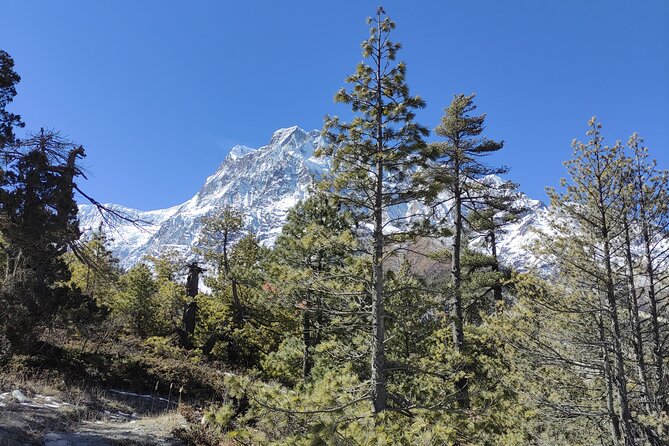
- ABC at 4,130 meters: The route finishes in a huge mountain bowl beneath Annapurna I, Machhapuchare, Hiunchuli, and neighboring peaks.
- A real village-to-mountain trek: Ghandruk and Chhomrong bring Gurung and Magar culture into the trip before the trail enters the high country.
- Long walking days: The itinerary includes days of about six to eight hours, with thousands of stone steps on some sections.
- Useful inclusions: ACAP and TIMS permits, guide, porter, meals, transport, sleeping bag, and down jacket are covered.
- Strong guide pairing: Sudam and Ganesh are specifically praised for care, humor, communication, and group management.
- A little recovery time: You have a leisure day in Pokhara before returning to Kathmandu.
Why Annapurna Base Camp makes a strong 10-day trek
I like this trek because it offers a clear sense of progress. You begin with a road journey from Kathmandu, pass through a lakeside city, walk among village terraces and forest, then reach a high mountain basin where the trees disappear.
That change happens within ten days, but the route is not a gentle stroll. The trail uses steep stone stairs and frequent uphill sections. On the way back, the same terrain becomes a different challenge, especially after the early morning at base camp.
The highest point is Annapurna Base Camp at 4,130 meters. You also pass Machhapuchare Base Camp before making the final approach. These names matter because the scenery changes sharply here: forest gives way to open mountain terrain, and the close walls of the Annapurna range become the main event.
The cultural side is just as important. Ghandruk and Chhomrong are not just overnight stops. They are working mountain villages associated with Gurung and Magar communities, giving you a chance to see how settlement patterns change as the trail rises.
At $996 per person, the price is best understood as a bundled trekking service rather than a simple guided walk. It includes transport from Kathmandu to Pokhara and back, local transfers, a licensed guide, porter service, permits, meals, equipment, and guide and porter costs. You should still check the exact transport arrangement and personal expenses before paying, but the package covers many of the costly basics.
More Annapurna treks:
- Annapurna Circuit Trek with Tilicho Lake
★ 5.0 · 368 reviews - Annapurna base camp trek 5 Days
★ 5.0 · 252 reviews - Annapurna Base Camp Trek
★ 5.0 · 111 reviews
Day 1: Kathmandu to Pokhara by tourist bus
The first day is mostly about reaching Pokhara. You leave after breakfast and spend roughly six to seven hours on a tourist bus, with the full day listed at about eight hours.
Pokhara is a useful start point because it shifts the mood from capital-city traffic to mountain travel. The city is known for its lakes and views, and you spend the night here before heading toward the trail.
The bus is included, which keeps the package simple, but you should be ready for a full road day. This is not a flight-based start. If you value speed above all else, the bus will feel slow. If you enjoy watching Nepal change outside the window, it gives you a useful first look at the countryside.
Airport pickup and transfer to your hotel are included, along with Kathmandu sightseeing by private vehicle. The provided schedule begins at 8:15 am from The Great Adventure Treks and Expedition office in Chhusya Galli, Kathmandu.
Day 2: Ghandruk and the first mountain village
After breakfast, you drive from Pokhara to Ghandruk, a journey of about three to three and a half hours. Ghandruk sits at roughly 1,940 meters and is one of the most appealing stops on the route.
This is where the walk begins to feel like a mountain trek rather than a sightseeing trip. The village setting, traditional communities, and open views give you an early taste of the Annapurna region before the trail becomes harder.
The short walking time on this day is helpful. You are gaining altitude gradually instead of racing straight into the high country. Use the afternoon to get comfortable with your boots, pack, and walking rhythm.
A private vehicle transfer from Pokhara to the trail area is included. The schedule does not list an admission charge for Ghandruk, and the trek package covers the planned transport and services.
Day 3: Ghandruk to Chhomrong via Kimrungdanda
The third day introduces the rhythm of the trek. From Ghandruk, you climb for about an hour to Kimrungdanda, where the views open toward Annapurna South, Hiunchuli, Machhapuchare, and Gangapurna.
This is one of the best early sections for mountain scenery. The trail still has a human scale, with villages and cultivated hills nearby, but the peaks begin to dominate the horizon.
You continue toward Chhomrong, with about six hours of trekking listed for the day. Chhomrong is at a higher elevation than Ghandruk and is a key settlement on the route to base camp.
Expect uphill and downhill walking rather than one steady climb. That pattern is common on this trek. You may gain height overall, but your legs still have to handle descents, steps, and repeated changes in grade.
More day hikes and treks in Kathmandu:
- Everest Base Camp Trek – 14 Days
★ 5.0 · 1,499 reviews - Everest Base Camp Trekking
★ 5.0 · 485 reviews - Nagarkot Sunrise View and Day Hiking from Kathmandu
★ 5.0 · 471 reviews - Everest Base Camp Trekking – 13 Day
★ 5.0 · 365 reviews
Day 4: Chhomrong to the Himalayan Hotel
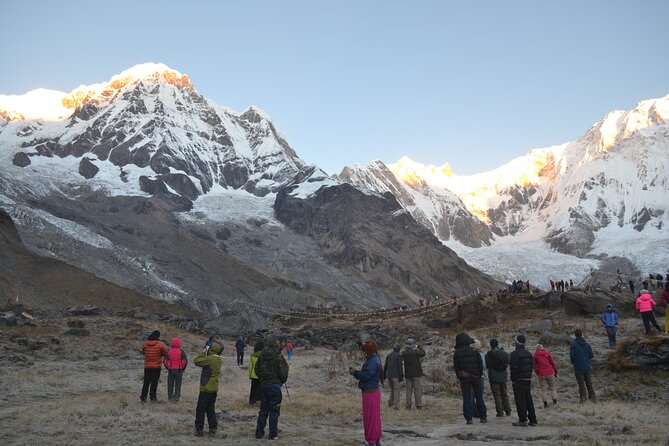
From Chhomrong, the trail first drops through thousands of steps toward the Chhomrong Khola. You cross a suspension bridge, then climb again toward Khuldighar at about 2,380 meters.
This is a demanding day because the descent does not mean an easier route. The bridge sits at the bottom of one section, and the trail then asks you to climb again. You should treat the steps as a serious physical feature, not a minor detail.
The route passes through forest and follows the Modi Khola area toward the Himalayan Hotel. The day is listed at about seven hours, so a steady pace matters more than speed.
I would keep your daypack light here. The porter arrangement allows one porter for two guests, with a maximum of 25 kilograms, so you should not rely on the porter to carry every personal item you own. Keep water, warm layers, rain protection, and basic essentials with you.
Day 5: Machhapuchare Base Camp to Annapurna Base Camp
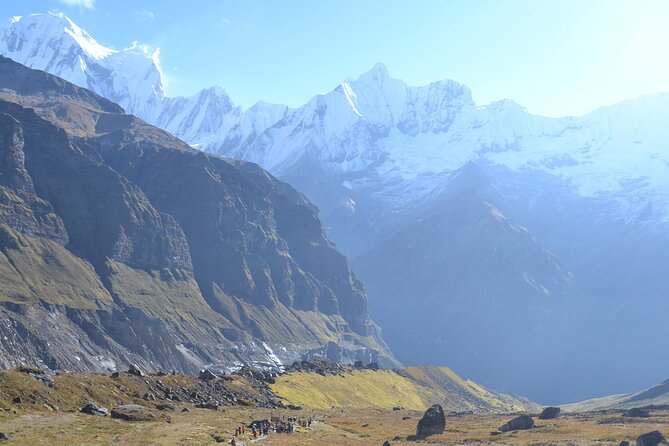
This is the main prize of the trek. From the Himalayan area, you walk toward Deurali, continue through a riverbed section, and climb a steep trail toward Bagar. The overall day is listed at about six hours, though the altitude makes the effort feel greater than the clock suggests.
From Machhapuchare Base Camp, you head toward Annapurna Base Camp. The trees thin out and then disappear, replaced by open high mountain terrain. That change gives the final section a stark, powerful character.
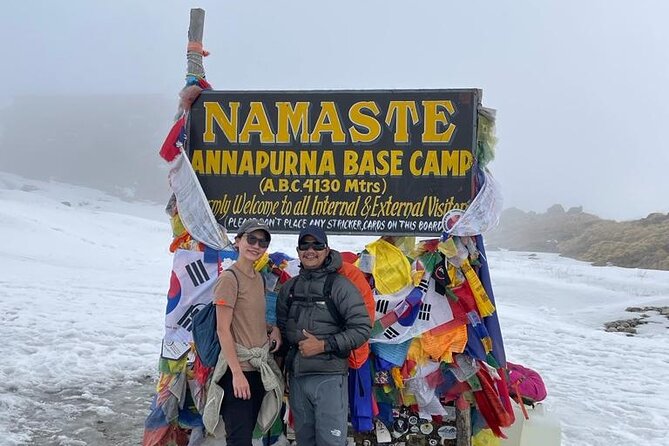
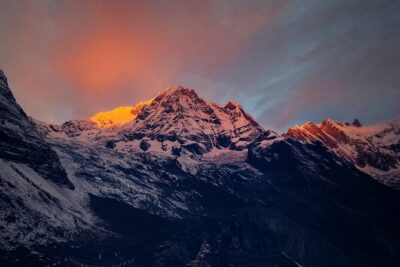
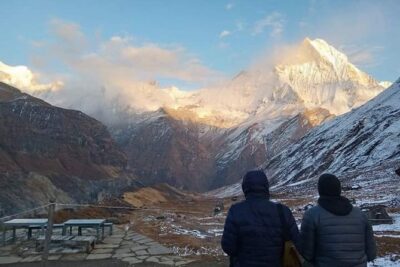
Annapurna Base Camp sits at 4,130 meters. Here you are surrounded by major peaks, including Annapurna I and Machhapuchare. The appeal is not just the height. It is the close view of enormous rock and snow walls around the basin.
You should move carefully and listen to your guide at this stage. The itinerary describes the ascent as manageable for a broad range of enthusiasts, but the altitude and steep trail still require care. A sensible pace, warm clothing, and attention to how you feel are more useful than trying to reach the destination first.
Day 6: Sunrise at ABC, then the long return to Bamboo
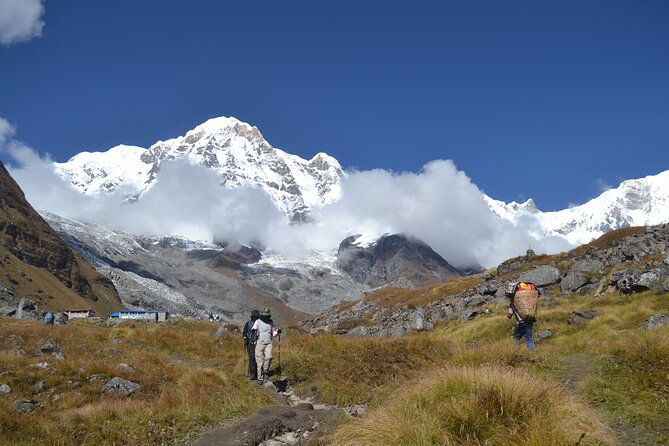
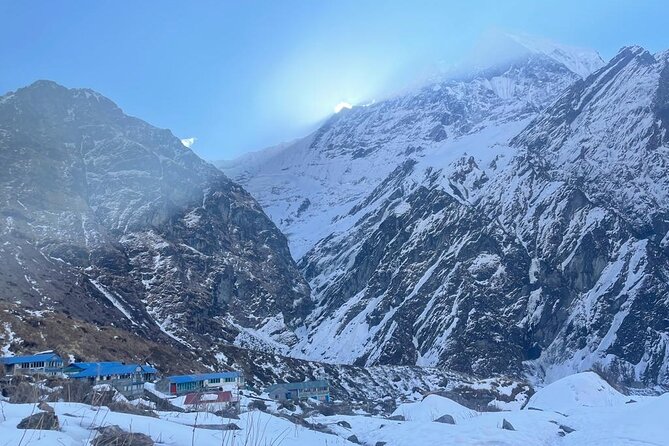
The morning at base camp is set aside for mountain views and sunrise. This is the quiet payoff after several days of walking, and you have the chance to see the peaks in changing light before beginning the descent.
You then return along the same trail toward Bamboo. The day is listed at about eight hours, making it one of the longest on the schedule. Descending can be hard on knees and feet, especially after the high point of the trek.
The return route gives you a different view of the same country. Cliffs, forests, river sections, and villages appear from new angles as you lose altitude. It is also a day when trekking poles or careful foot placement can be especially useful, though the package information does not list poles among the included equipment.
Day 7: Bamboo to Jhinu Danda
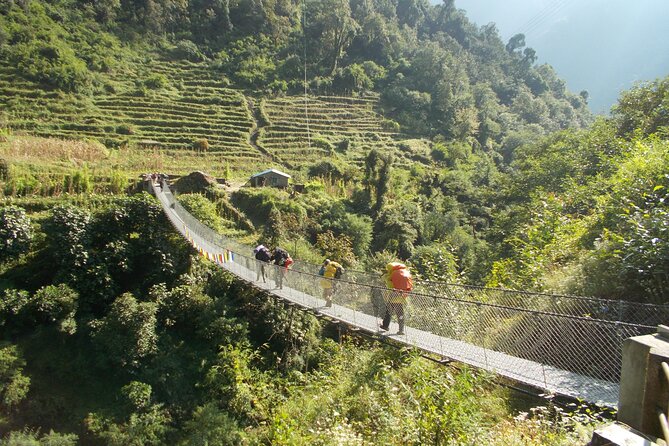
The route first climbs to Kuldighar, drops toward Chhomrong Khola, then rises again through stone steps toward Chhomrong. From there, you continue toward Jhinu Danda.
The day is estimated at six hours. It is a good example of why this trek is more physical than the distance alone suggests. You are descending overall from base camp, but the route still includes substantial uphill walking.
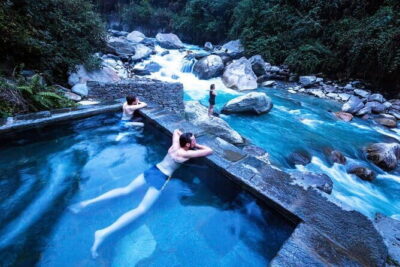
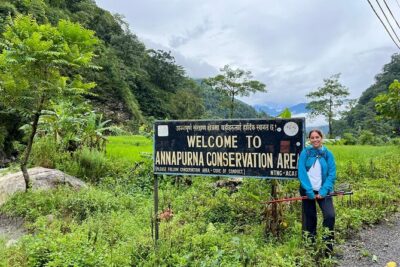
Jhinu Danda is an important overnight stop on the return. The itinerary highlights the surrounding hills and the route through the Annapurna Conservation Area. The walk is not simply a march back to the road. You continue to see the villages, forest, and river corridors that shaped the outward journey.
Day 8: Jhinu Danda to Naya Pul, then Pokhara
You follow the Modi Khola for about four to five hours, pass through Birethanti, and continue to Naya Pul. The day includes about five hours of walking, followed by an approximately one-hour drive to Pokhara.
This is a satisfying finish to the walking portion because the route gradually reconnects with roads and lower-elevation settlements. The dramatic high country is behind you, but the river and hills keep the day scenic.
The private vehicle transfer from Naya Pul to Pokhara is included. After several nights on the trail, a hotel in Pokhara gives you a welcome chance to rest, wash clothes, and enjoy a proper break.
Day 9: A free day around Pokhara
The ninth day is set aside for your own sightseeing in Pokhara. Phewa Lake and Begnas Lake are specifically suggested, and you can plan the day around the kind of recovery you need.
If your legs are tired, a slow day beside the water may be the sensible choice. If you still have energy, you can use the time to see more of Pokhara independently. The important point is that this is not another forced trekking day.
Having this pause also gives you some protection against a tiring return journey. The schedule does not pack the base camp descent and immediate Kathmandu transfer into one rushed day.
Day 10: Pokhara to Kathmandu
The final day takes you back to Kathmandu by scenic flight or tourist bus, with the day listed at about eight hours. The flight offers a last mountain view, while the bus keeps costs and transport consistent with the first day.
The included information also lists Pokhara to Kathmandu by tourist bus, so you should confirm which option applies to your departure before booking. This is a useful practical question because a flight and a bus create very different travel days.
The program ends back at the Kathmandu meeting point. Airport pickup, hotel transfer, and Kathmandu sightseeing by private vehicle are part of the wider service package.
What the $996 price covers
The package includes the main services that make an organized Himalayan trek easier to manage:
- Airport pickup and hotel transfer
- Kathmandu sightseeing by private vehicle
- Tourist bus travel between Kathmandu and Pokhara
- Private transfers between Pokhara, Naya Pul, and the trail
- Licensed trekking guide
- Porter service for two guests, with a 25 kilogram maximum
- ACAP permit and TIMS card
- Breakfast, lunch, and dinner for eight days
- Sleeping bag and down jacket
- Guide and porter transport, clothing, salary, and insurance
- First aid kit
- Government tax and service charge
The provider states that emergency rescue help is covered by your own travel insurance. That is important. You should not treat the company’s guide and porter insurance as your personal rescue or medical policy.
The package does not list every personal cost, so budget for items not specifically named. The price has good value if you want one company to handle permits, transport, food, equipment, and staff rather than arranging each part yourself.
Guide support, group size, and practical fit
The tour allows a maximum of 16 people. That is small enough for the guide to keep track of the group, but it is not a private trek for one or two people.
Sudam and Ganesh are the most frequently praised guides connected with this experience. Their strengths are described in practical terms: staying attentive, helping with needs, communicating well, and keeping the group in good spirits. Sudam also speaks Chinese, which may help Chinese-speaking participants.
One organized group included people from ages 15 to 59, showing that the trek can suit a mixed-age party when everyone has suitable fitness. That does not make the route easy. You need to be comfortable with six to eight hours of walking and repeated steep steps.
The company supplies a first aid kit, but you should still carry personal medication and tell your guide about relevant health concerns. Emergency rescue is not included as a personal benefit, so travel insurance remains essential.
Who should book this trek
I would recommend it to you if you want a classic Himalayan route with strong mountain views, village stops, and a clear ten-day structure. It is especially useful if you want permits, meals, transport, a porter, and basic cold-weather equipment arranged in one booking.
It may also suit a first Nepal trekper who wants support without signing up for a very long expedition. The guide team and moderate group limit add structure, while the free Pokhara day gives the schedule some breathing room.
I would hesitate if you dislike long bus journeys, steep stairs, shared group travel, or basic mountain trekking conditions. You should also ask for the exact accommodation details and confirm the return transport from Pokhara before booking, since those points are not fully specified.
Should you book the Annapurna Base Camp Trek?
Book this trek if the idea of reaching 4,130 meters, sleeping in mountain villages, and walking beneath Annapurna appeals to you more than a polished resort holiday. The strongest reasons are the varied route, useful inclusions, experienced guide pairing, and well-placed Pokhara rest day.
Before committing, make sure you are ready for long walking days and altitude. Confirm whether Day 10 uses a bus or flight, check what personal expenses remain, and buy suitable travel insurance. If those points work for you, the $996 package offers a practical way to experience one of Nepal’s most rewarding short treks.
FAQ
How long does the Annapurna Base Camp trek take?
The experience lasts approximately 10 days, beginning in Kathmandu and ending back at the Kathmandu meeting point.
What is the highest point of the trek?
Annapurna Base Camp is the highest named point in the itinerary, at 4,130 meters.
Are meals included?
Yes. Breakfast, lunch, and dinner are included for eight days.
Is a guide included?
Yes. A government-licensed professional trekking guide is included. Sudam and Ganesh are named guides associated with the experience.
Is porter service included?
Yes. One porter is provided for every two guests, with a maximum combined baggage weight of 25 kilograms.
What happens if I need to cancel?
You can receive a full refund if you cancel at least six full days before the experience start time. Cancellation two to six full days before the start time allows a 50 percent refund, while cancellation less than two full days before the start time is not refunded.
Just added around Kathmandu
- Traditional Momo Making Class★ 5.0 · 10 reviews
- Wildlife Adventure in Chitwan Nepal★ 4.0 · 4 reviews
- Walking tour of real Kathmandu through back streets.★ 5.0 · 3 reviews
- Kathmandu 2 Nights 3 Days Chitwan Jungle Safari Tour★ 5.0 · 9 reviews
- Kathmandu Street Food Walking Tour – Eat Like a Local★ 5.0 · 3 reviews
- Private Manaslu Circuit Trek at Himalayas★ 5.0 · 3 reviews
- Walking tour of Kathmandu with awesome local guides★ 5.0 · 4 reviews
- Visit Swayambhunath and Bauddhanath Stupa with Guide★ 5.0 · 5 reviews
Annapurna Treks from Kathmandu, compared.
Kathmandu to Annapurna Base Camp (ABC) 5-Day Trek
Read our review →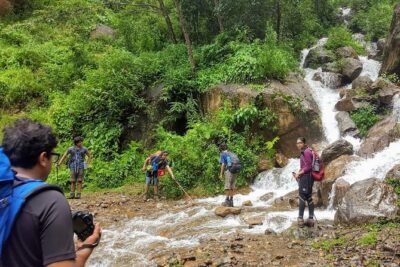
Browse the lists this tour appears in