
Reviewed · ANNAPURNA TREKS FROM KATHMANDU
Annapurna Base Camp Trek – 11 Days
Annapurna Base Camp gives you a lot in 11 days: a high Himalayan goal, a sunrise at Poon Hill, forest paths, ethnic villages, hot springs, and the slow rhythm of walking between teahouses. I especially like the Poon Hill sunrise and the chance to reach Machhapuchhre Base Camp and Annapurna Base Camp without committing to a much longer expedition.
I also like that the $986 price includes transport from Kathmandu, permits, guesthouse stays, meals, a guide, trekking gear, staff support, and basic medical equipment. The main caution is the physical demand: expect repeated stone stairs, long walking days, and a moderate fitness requirement. The itinerary also contains some repeated place names and broad timing, so ask for the exact daily walking hours before you pay.
Key points to know before you book
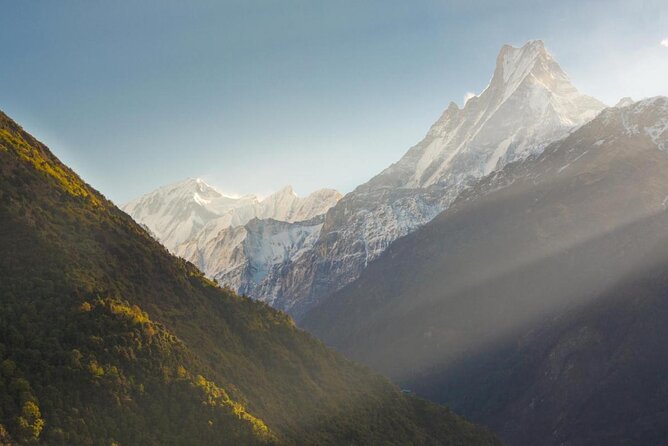
- Poon Hill comes early: The sunrise climb gives you big Annapurna and Dhaulagiri views before the route heads deeper into the mountains.
- Annapurna Base Camp reaches 4,130 meters: The schedule lists Machhapuchhre Base Camp at 3,700 meters, followed by the higher Annapurna sanctuary.
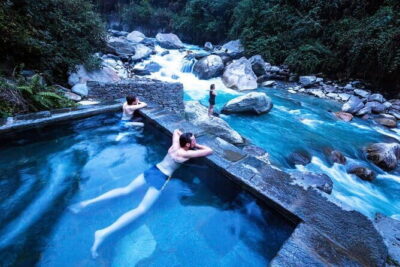
- Hot springs add a welcome pause: Jhinu Danda gives you a chance to rest in warm water after steep trail sections.
- Kathmandu and Pokhara transfers are included: Tourist buses connect the capital and Pokhara at the start and end.
- You receive useful trekking equipment: A down jacket, sleeping bag, duffel bag, map, first-aid kit, and pulse oximeter are included.
- This is a private trip: Only your own group participates, with a licensed English-speaking guide during the trek.
What the Annapurna route gives you in 11 days
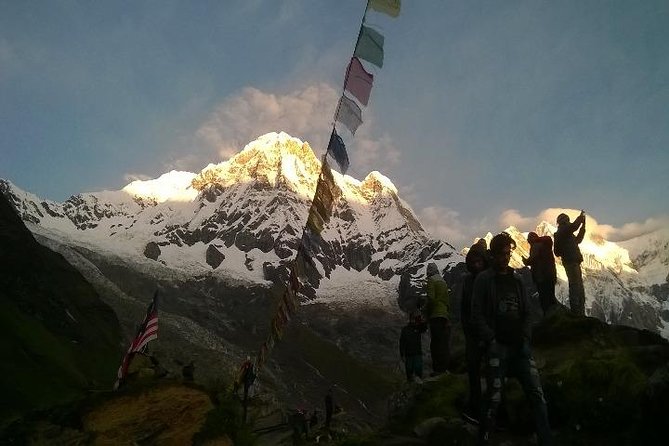
This trek is built around contrast. You begin with road travel through villages, farms, and river valleys, then trade the bus for suspension bridges, forest trails, and stairways cut into the hills. By the middle of the trip, the scenery shifts from warm lower valleys to snowy peaks, moraine paths, and the stark setting around base camp.
The route is not simply a march toward one viewpoint. Poon Hill offers one of the finest early payoffs, while the villages of Ghorepani, Chhomrong, and Jhinu Danda make the walk feel connected to local life. You sleep mainly in twin-sharing guesthouses, eat the included meals, and spend your days on foot rather than in a vehicle.
The price is fair for a private 11-day arrangement if you value support and equipment. You are not paying only for accommodation and transport. The package also covers permits, guide and trekking staff costs, staff insurance, medicine, food, and transport for the trekking team. Personal gear, insurance, drinks, laundry, tips, and international flights remain your responsibility.
More Annapurna treks:
- Annapurna Circuit Trek with Tilicho Lake
★ 5.0 · 368 reviews - Annapurna base camp trek 5 Days
★ 5.0 · 252 reviews - Annapurna Base Camp Trek
★ 5.0 · 111 reviews
Day 1: Kathmandu to Pokhara by tourist bus
The trip begins at 6:15 a.m. from Kathmandu. That early departure matters, since the drive to Pokhara takes up much of the day. You follow the Prithvi Highway beside rivers, terraced farms, villages, and small towns.
The bus ride gives you a useful first look at Nepal outside the capital, but it is not a glamorous start. You are sitting for hours after breakfast, and road conditions can affect the pace. Still, the highway scenery helps you understand how quickly Kathmandu gives way to farmland and hill country.
Pokhara is the practical base for the walking portion. The first day is mainly about getting into position, not hiking. If you dislike long road transfers, this is the part of the schedule to consider carefully.
Day 2: Nayapul, Birethanti, and the first trail
From Pokhara, you drive for roughly two hours to Nayapul. The walking begins with a suspension bridge over the Modi River, followed by the route toward Birethanti.
This opening trail introduces the pattern that will define much of the trek: river crossings, village paths, stone steps, and gradual changes in elevation. It is a good day for settling into your boots and learning the pace of the group.
The itinerary does not provide exact walking distances or hours for every day. Ask your guide for those figures at the start. Knowing the expected finish time helps you manage water, snacks, and energy, especially if this is your first multi-day trek.
Day 3: Forests and stone stairs to Ghorepani
The trail passes through thick rhododendron forest and the villages of Banthanti and Nangethanti before reaching Ghorepani. The route is described as easy in parts, but the uphill stone stairs still require steady effort.
Ghorepani is important because it sets up the early climb to Poon Hill. The forest can make this section feel sheltered, while glimpses of the mountains begin to appear between the trees. In spring, rhododendrons add color to the route, and the itinerary also refers to orchids and ferns farther along the trek.
You should not treat this as a simple walk to a village. The following morning starts early, and a calm evening in Ghorepani is more useful than staying up late.
More day hikes and treks in Kathmandu:
- Everest Base Camp Trek – 14 Days
★ 5.0 · 1,499 reviews - Everest Base Camp Trekking
★ 5.0 · 485 reviews - Nagarkot Sunrise View and Day Hiking from Kathmandu
★ 5.0 · 471 reviews - Everest Base Camp Trekking – 13 Day
★ 5.0 · 365 reviews
Day 4: Poon Hill sunrise and the road toward Tadapani
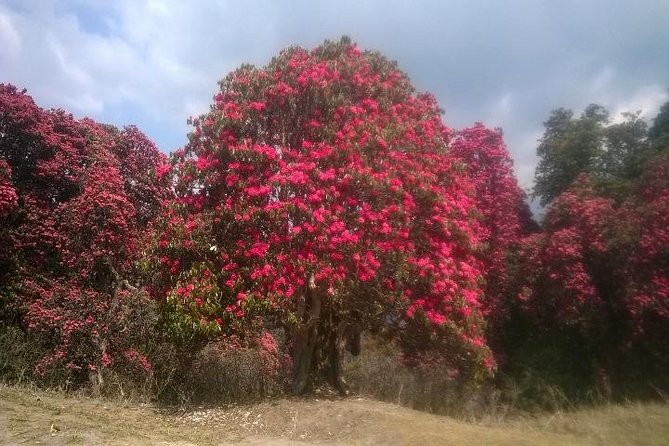
You rise early for the climb to Poon Hill. The trail may be snowy, and the uphill walk is short enough to manage but demanding enough to make the view feel earned.
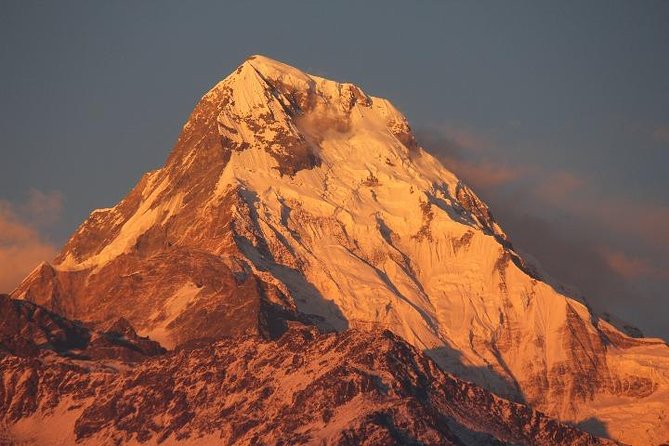
From the viewpoint, you can see sunrise over the Annapurna and Dhaulagiri ranges, along with Nilgiri at 7,061 meters and Lamjung Himal at 6,983 meters. The combination of changing light and multiple snow peaks is one of the strongest moments on this route.
After Poon Hill, you descend and continue through forest toward Tadapani. This is a full day with an early start, so keep a warm layer and headlamp close if your guide recommends one. The included down jacket is useful here, especially before sunrise.
Day 5: Toward Chhomrong and the Jhinu Danda hot springs
The route climbs and drops through forest before crossing the suspension bridge over Kimrong Khola. You then reach Jhinu Danda, where the hot springs offer a chance to soak and rest.
The hot springs are not a substitute for recovery, but they are a welcome break after stairs and uneven ground. Bring whatever personal washing items you prefer, since drinks, laundry, and personal extras are not part of the package.
The schedule describes this section as continuing toward the Chhomrong area. The itinerary has some repeated place names on later days, so confirm the exact overnight village with the company. That small clarification can make the route much easier to picture.
Day 6: Rhododendron forest, Sinuwa, and changing trail rhythm
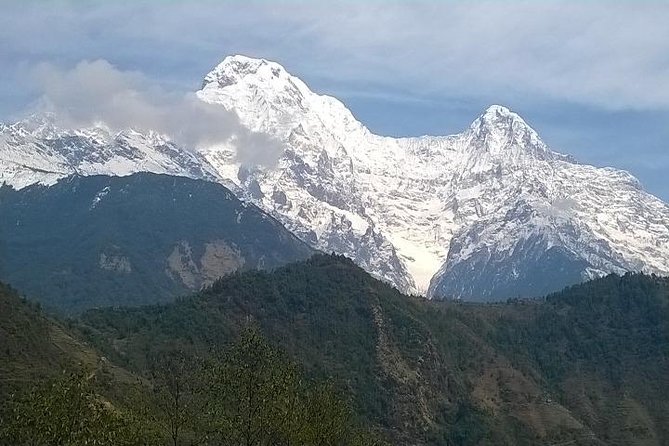
This is described as an easier walking day through rhododendron forest, with orchids and ferns along the path. You descend stone stairs, cross Chhomrong Khola, and climb toward Sinuwa before continuing through more forest.
The repeated up-and-down movement is typical of this route. An easier day does not necessarily mean flat. You still need to pace yourself and protect your knees on the descents.
This is also where the value of a private guide becomes clearer. Your guide can adjust the pace to your group rather than asking you to match strangers. The package provides a local government licensed English-speaking guide, and the group is limited to your own booking.
Day 7: Deurali, Machhapuchhre Base Camp, and the high route
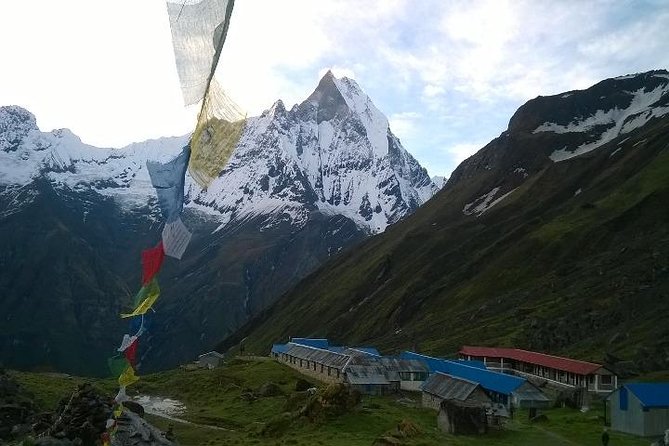
You climb to Deurali and continue along stone stairs toward a more open area with views of snow-covered peaks. From there, the route reaches Machhapuchhre Base Camp at 3,700 meters.
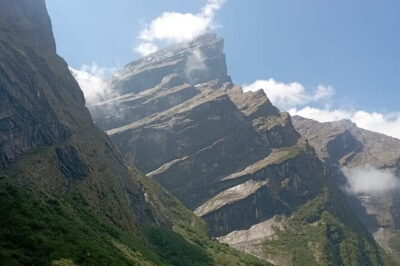
The scenery changes as you move away from the lower forests. The trail follows the moraines of the high valley, and the presence of snow peaks becomes more constant. This is the point when the trek feels distinctly alpine rather than simply hilly.
Altitude deserves attention here. The itinerary includes an oximeter for checking pulse, oxygen saturation, and heart rate, along with first-aid supplies and medicine for trekking staff. Those tools support sensible monitoring, but they do not replace travel insurance or a cautious response to symptoms.
Day 8: Annapurna Base Camp and the return through Modi Khola
The route continues along the moraine system toward Annapurna Base Camp. The listed plan then has you descend toward Machhapuchhre Base Camp and follow Modi Khola through rhododendron and fir forest.
Annapurna Base Camp is the central goal of the trip, but the setting around it is not just a single photo stop. You are surrounded by high mountain walls, open rock, snow, and the route of the river below. The contrast with the lower forests makes the arrival feel like a real change of world.
This day can be tiring because the altitude and uneven trail demand more from you. Follow your guide’s pace, drink regularly, and avoid treating the base camp arrival as a reason to rush. The itinerary does not state the exact overnight location, so confirm how far you descend that day.
Day 9: Back through Sinuwa, Chhomrong, and Jhinu Danda
You return through forest to Sinuwa, descend to Chhomrong Khola, then climb the stone stairs to upper Chhomrong. After another descent, you reach Jhinu Danda for a warm soak in the hot springs.
The route repeats some ground, but that is not a weakness here. Walking downhill gives you different views, and the return direction changes how the villages and ridges appear. The hot springs are especially well placed after this sequence of descent and ascent.
This is also a day when your knees may complain. Trekking poles, personal equipment, and other gear are not included, so bring the items you know help you walk comfortably. The company supplies a sleeping bag, down jacket, and duffel bag, but not all personal trekking equipment.
Day 10: Descending to Nayapul and returning to Pokhara
You follow the Modi Khola route down to Nayapul, taking in the farms and villages along the way. From Nayapul, a vehicle returns you to Pokhara.
After several days of hiking, the road transfer may feel easy, but do not assume the day is effortless. Descending trails can be hard on tired legs, and the final walk still requires attention. The itinerary leaves the evening open for rest or personal plans in Pokhara.
Because the trip is private, your group may have more freedom in how you use that evening. The listing does not promise specific Pokhara activities, so treat the time as free rather than as part of a guided sightseeing program.
Day 11: Pokhara to Kathmandu
The final day starts early with a tourist bus back to Kathmandu. You pass greenery, villages, and the same general highway corridor used at the beginning.
This return takes time, so it is wise not to schedule an important international flight immediately afterward. International airfare and airport departure taxes are not included, and the package ends back at the Kathmandu meeting point.
The trip begins and ends in Kathmandu, but Pokhara is the useful middle chapter. You get a taste of the road connection between Nepal’s capital and its mountain gateway without arranging separate transfers.
Food, lodging, and equipment included
The package includes breakfast on 10 days, lunch on 9 days, and dinner on 8 days. That pattern broadly matches a trip with road-transfer days at the beginning and end, but ask your provider to confirm exactly which meals are covered each day.
Accommodation is in the best available guesthouses during the trek, mainly in twin-sharing rooms. You should think of this as practical mountain lodging, not a hotel-based holiday. Room standards can vary, and the twin-sharing setup matters if you are booking alone.
The included gear is a strong part of the price:
- Down jacket
- Sleeping bag
- Duffel bag
- Annapurna Base Camp route map
- First-aid medical kits
- Pulse oximeter
- Trekking permits and entry fees
You still need personal trekking equipment and travel insurance. Alcoholic drinks, hot and cold drinks, laundry, tips, international flights, and any unlisted costs are extra.
Guides and the private-group advantage
The guide is central to the quality of a trek like this. The company assigns a local, government-licensed English-speaking guide, and the trip is private rather than a shared group departure.
Names associated with praised departures include Prakash, Shiva, Naba, and Saroj Dhakal. One solo trekker specifically described Saroj Dhakal as helpful, while several accounts praised Prakash for patience, friendliness, and organization. These names do not guarantee who will lead your departure, so request the guide’s name before you travel.
The private format suits couples, families, and friends who want one pace and one set of decisions. It can also suit a solo trekker who wants support, but the cost per person may feel higher than a large group departure.
Is $986 good value?
At $986 per person, the price is reasonable for an 11-day private trek that includes Kathmandu and Pokhara transfers, permits, meals, guesthouses, guide services, trekking staff costs, equipment loans, and basic medical supplies.
The value improves if you would otherwise need to arrange a guide, permits, porters, sleeping gear, down clothing, and transport separately. The price is less all-inclusive than it first appears because insurance, drinks, laundry, tips, personal gear, and flights are excluded.
Before booking, ask three practical questions:
- What exact guesthouses and room arrangements are expected?
- What are the walking hours and overnight locations on Days 5 through 9?
- Which guide will lead your departure, and how many porters are assigned?
Those answers will tell you more about the price than the headline number alone.
Who should book this trek?
You should consider it if you want a classic Himalayan route with a clear high point, but do not want to organize every permit, transfer, meal, and guide yourself. It suits people with moderate physical fitness who can handle repeated stairs and several consecutive walking days.
Families and private groups may appreciate the flexible format. Solo hikers may like the security of a guide and organized support, though you should clarify the single-room and porter arrangements before paying.
This is not a relaxed sightseeing tour. You spend many hours on foot, and the itinerary includes high altitude, snow-prone sections, stone stairs, moraines, and early starts. If you want only easy walks and comfortable hotels, choose a gentler Nepal program.
Cancellation is free up to 24 hours before the 6:15 a.m. start time. Poor weather can also lead to a different date or a full refund, according to the stated conditions.
Should you book it?
I would book this trek if Poon Hill, Annapurna Base Camp, village walking, and hot springs all appeal to you, and if you are comfortable with a moderate physical challenge. The strongest reasons are the variety of scenery, the private guide setup, and the amount of core trekking cost already covered.
I would pause before booking if you need exact walking times, guaranteed named guides, private rooms, or a highly polished hotel standard. Get those details in writing first. For the right walker, this is a well-priced way to experience the Annapurna route with practical support rather than a long list of separate arrangements.
FAQ
Where does the Annapurna Base Camp trek start and finish?
It starts at the meeting point in Kathmandu and ends back at that meeting point after the return from Pokhara.
What time does the trek start?
The stated start time is 6:15 a.m.
How long does the trip last?
The trip lasts approximately 11 days.
Is transportation from Kathmandu included?
Yes. Surface transport from and to Kathmandu is included, with tourist bus travel between Kathmandu and Pokhara.
Is this a private tour?
Yes. Only your own group participates in the activity.
What level of fitness do I need?
You should have a moderate level of physical fitness. The route includes uphill and downhill walking, stone stairs, suspension bridges, forest trails, and high-altitude sections.
Is a guide included?
Yes. A local government licensed English-speaking trekking guide is included during the trek.
Are meals included?
Breakfast is included for 10 days, lunch for 9 days, and dinner for 8 days.
What happens if bad weather cancels the trek?
If poor weather causes cancellation, you will be offered a different date or a full refund.
Just added around Kathmandu
- Traditional Momo Making Class★ 5.0 · 10 reviews
- Wildlife Adventure in Chitwan Nepal★ 4.0 · 4 reviews
- Walking tour of real Kathmandu through back streets.★ 5.0 · 3 reviews
- Kathmandu 2 Nights 3 Days Chitwan Jungle Safari Tour★ 5.0 · 9 reviews
- Kathmandu Street Food Walking Tour – Eat Like a Local★ 5.0 · 3 reviews
- Private Manaslu Circuit Trek at Himalayas★ 5.0 · 3 reviews
- Walking tour of Kathmandu with awesome local guides★ 5.0 · 4 reviews
- Visit Swayambhunath and Bauddhanath Stupa with Guide★ 5.0 · 5 reviews
Annapurna Treks from Kathmandu, compared.
Kathmandu to Annapurna Base Camp (ABC) 5-Day Trek
Read our review →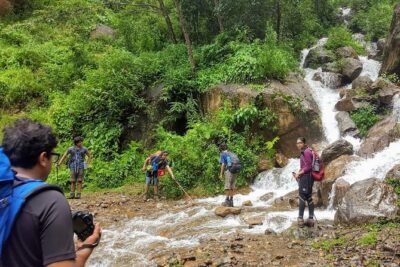
Browse the lists this tour appears in