
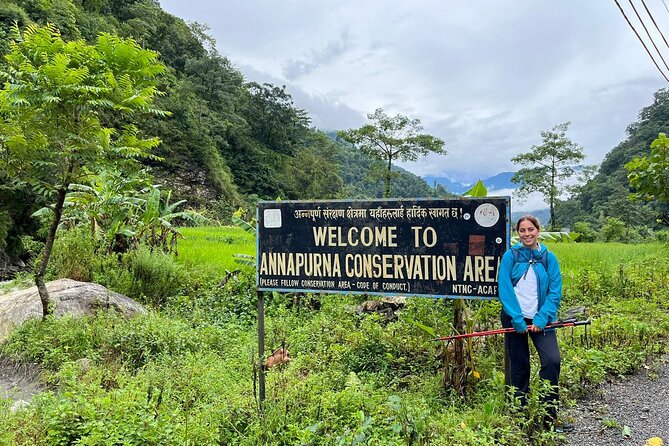
Reviewed · ANNAPURNA TREKS FROM KATHMANDU
Annapurna Base Camp Trek 12 Days
The best part of this trek is the changing view beneath your boots: rice-growing hills, stone villages, thick forest, high mountain valleys, and the snowy amphitheater around Annapurna Base Camp. I like the Poon Hill sunrise and the chance to spend time in Gurung and Magar communities, rather than treating the route as one long climb.
I also like that the price includes airport transfers, ground transport, lodges, meals on the trail, permits, and a professional guide. The main consideration is the pace. Three thousand stone steps to Ulleri, repeated uphill and downhill sections, and altitude near base camp require moderate fitness. The final day ends in Pokhara, not Kathmandu, and accommodation in Kathmandu is not included.
Key points to know before booking
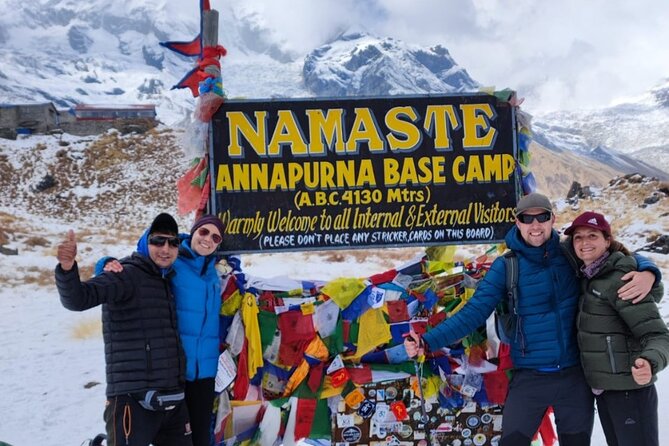
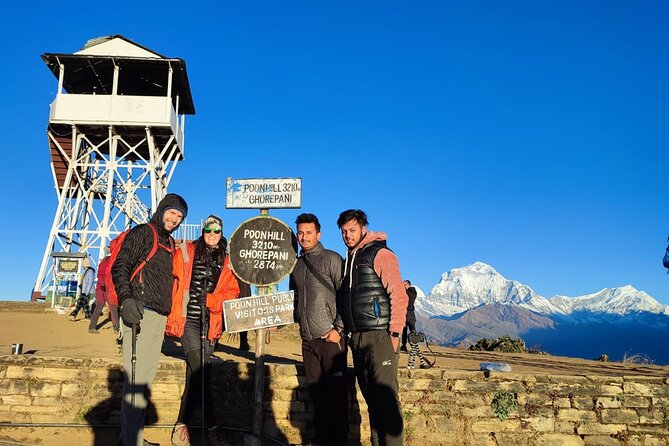
- Poon Hill sunrise: A short early climb leads to a 3,200-meter viewpoint with views of roughly 15 Himalayan peaks.
- Annapurna Base Camp finish: The route enters the Annapurna Sanctuary and reaches the base camp area after Deurali and Fishtail Base Camp.
- Cultural contact: Gurung and Magar villages give the trek a human side, especially around Chhomrong and the lower trail.
- Good trail inclusions: Lodges, three meals a day on the trek, tea or coffee, permits, transport, and a guide are included.
- Real physical effort: The Ulleri stair climb, long descents, and higher altitude make this a moderate trek, not a gentle walking holiday.
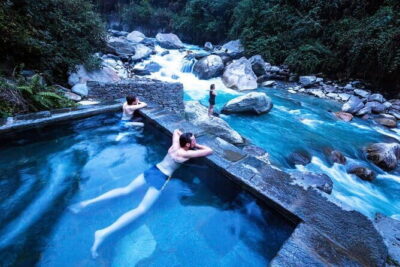
- Pokhara ending: You finish with time at Jhinu’s natural hot spring before returning to Pokhara.
Why this 12-day Annapurna trek works
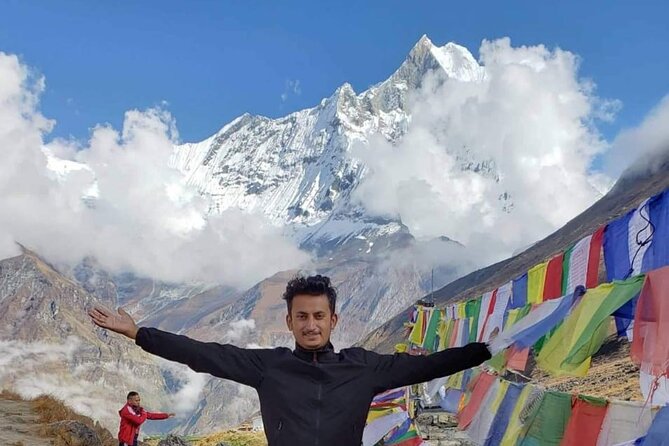
This route gives you two major rewards instead of asking you to choose between them. Poon Hill provides a classic Himalayan sunrise early in the walk, while Annapurna Base Camp gives you the feeling of entering a high mountain bowl surrounded by peaks.
The route also has a useful rhythm. You begin with airport pickup and a road journey, move through lower villages and forest, gain height slowly, reach the sanctuary, then retrace part of the trail before finishing with a hot spring visit. That return over familiar ground is not as exciting as a loop, but it makes transport and route planning simpler.
At $799 per person, the value is strongest if you want an organized private trek. The price covers lodges, three meals a day during the trekking portion, tea or coffee with meals, ground transport, airport pickup and drop-off, permits, local fees, and the guide’s expenses, insurance, and equipment.
It does not cover Kathmandu accommodation, meals in Kathmandu or Pokhara except daily breakfast, drinks, personal spending, travel insurance, or a porter. You can request a porter if needed, but that is an extra cost. Add these expenses before comparing the price with other Annapurna packages.
More Annapurna treks:
- Annapurna Circuit Trek with Tilicho Lake
★ 5.0 · 368 reviews - Annapurna base camp trek 5 Days
★ 5.0 · 252 reviews - Annapurna Base Camp Trek
★ 5.0 · 111 reviews
Days 1 and 2: Kathmandu arrival and the road to Pokhara
Your first day begins at Tribhuvan International Airport, where an Adventure Glacier representative meets you at the arrival gate. You are transferred to a hotel and given a trek briefing. This is a practical start, especially if you are arriving tired or dealing with the noise and traffic of Kathmandu for the first time.
Accommodation in Kathmandu is not included, so you need to arrange that separately. Food in Kathmandu is also outside the package, apart from the stated daily breakfast arrangement where applicable. Confirm exactly what is covered for your dates, since the inclusion list gives different meal counts for the trek.
On day two, you take a tourist bus from Kathmandu to Pokhara. Departures usually leave around 7:00 a.m., and the ride takes about six to seven hours depending on road conditions. That early start matters. You lose much of the day to transport, but reaching Pokhara by road avoids adding a separate flight cost.
Pokhara Lakeside is a pleasant staging point before the trail. You have time to rest at the hotel, though the itinerary does not promise a full sightseeing program. If you prefer a quieter start, treat this day as recovery rather than trying to pack in extra activities.
Day 3: Nayapul to Tikhedhunga
After breakfast, a private vehicle takes you from Pokhara toward Nayapul, about two hours away. Nayapul is the trailhead where the route follows the Modi River area and begins the walk toward Tikhedhunga.
This first hiking day introduces the lower Annapurna country. The route passes through countryside and settlements before reaching the overnight stop. It is a useful warm-up, but do not mistake the lower elevation for an effortless day. The road transfer and walking combine to make it a full start.
Accommodation is in a lodge, with meals included during the trekking section. Lodge stays are simple and practical. You get a place to sleep and eat along the route, not resort comfort. Bring patience, a warm layer, and a willingness to adjust to basic mountain facilities.
Day 4: The Ulleri stair climb and Ghorepani
Day four is one of the clearest tests of your legs. After breakfast, you climb about 3,000 stone steps to Ulleri, taking roughly two hours for the ascent. This is the sort of climb that looks manageable on paper and feels very real after the first several hundred steps.
From Ulleri, the trail continues toward Ghorepani. Forest, village paths, and mountain views replace the road, and the day begins to feel properly Himalayan. The effort is worthwhile, but the itinerary’s moderate fitness warning should be taken seriously here.
I would keep your pack light and your pace steady. The guide’s role matters on a day like this. Guides named in past trips include Arjun, Krishna, Sudip, and Ram, though you should confirm your own guide before departure. The company’s service is often praised for helpful, professional staff, so ask questions early if the pace feels too fast.
More day hikes and treks in Kathmandu:
- Everest Base Camp Trek – 14 Days
★ 5.0 · 1,499 reviews - Everest Base Camp Trekking
★ 5.0 · 485 reviews - Nagarkot Sunrise View and Day Hiking from Kathmandu
★ 5.0 · 471 reviews - Everest Base Camp Trekking – 13 Day
★ 5.0 · 365 reviews
Day 5: Poon Hill at sunrise and Tadapani
The early climb to Poon Hill takes about 50 minutes from the overnight area and reaches 3,200 meters. You go before sunrise for the best light, so keep warm clothing close at hand. The viewpoint is known for a broad Himalayan view, with around 15 peaks visible in clear conditions.
This is one of the best value moments in the itinerary because the effort is short compared with the view it provides. You are not yet at Annapurna Base Camp, but you get a strong introduction to the range before continuing deeper into the route.
After the sunrise, you return for breakfast and continue toward Tadapani. The day combines an early start, a viewpoint climb, and more trail walking. If clouds cover the peaks, the morning may be less dramatic, but the forest route still gives the day variety.
Day 6: Tadapani to Chhomrong
The trail descends about 900 meters toward the Gurjung River valley before climbing again to Chhomrong. That up-and-down pattern is common in the Annapurna foothills. It can be harder than a steady climb because your legs never settle into one motion for long.
Chhomrong is a large Gurung village positioned high on a ridge and located along the approach to Annapurna Sanctuary. This is an important cultural stop. The trip is not only about snow peaks. The villages, local people, and mountain farming communities give you a better sense of how life works along the route.
You should expect another lodge night and simple trail meals. The package includes breakfast, lunch, dinner, and tea or coffee during the trekking portion, but not drinks such as bottled beverages or other personal purchases. Keep some local currency available for extras.
Days 7 and 8: Into the sanctuary through Sinuwa, Dovan, and Deurali
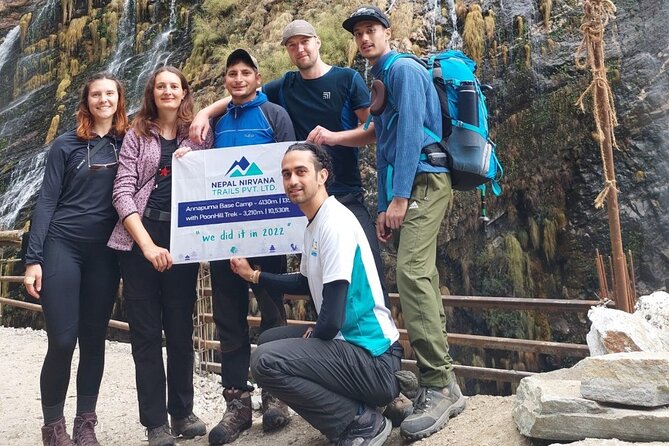
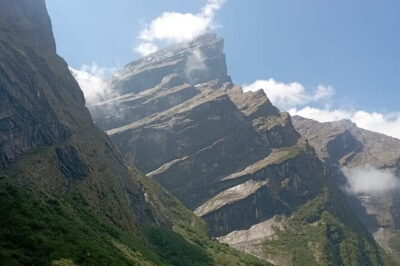
From Chhomrong, the route drops toward Chhomrong Khola and then climbs toward Sinuwa. The walk takes about three hours to reach Sinuwa, after which the trail enters a steep valley toward Annapurna Sanctuary, below Annapurna South and Machhapuchhare, also known as Fishtail.
This section is quieter and more enclosed than the earlier ridge walking. Forest, streams, waterfalls, and changing sounds make the route feel different from the open viewpoints around Poon Hill. I like this change because the trek stops being a parade of viewpoints and becomes a journey into a high valley.
Dovan is a river junction where two streams meet. From there, the trail continues toward Deurali, and the effects of altitude become more noticeable. The climb to Deurali takes about two hours through lush forest and a peaceful mountain setting.
Go slowly here. The itinerary specifically calls for a measured pace above Dovan, and that is good advice. You do not gain anything by racing into higher country. Tell your guide if you feel unwell, and make sure your travel insurance covers trekking at altitude. Personal insurance is not included.
Day 9: Fishtail Base Camp and Annapurna Base Camp
The route from Deurali toward Fishtail Base Camp includes an avalanche-prone section. The exact route may change across the Modi River depending on the season and current conditions. That flexibility is important, since mountain routes cannot always be treated like fixed city sightseeing stops.
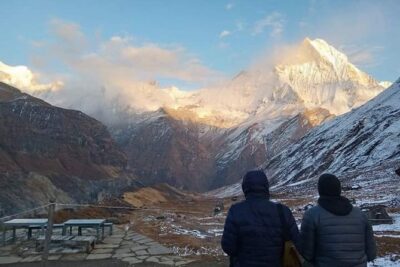
The trail takes about two hours to reach Fishtail Base Camp, then continues toward Annapurna Base Camp. You are entering the high mountain bowl where the peaks surround the route rather than appearing as distant silhouettes.
This is the physical and emotional high point of the trek. The elevation, cold, rough trail, and exposed sections can make the day demanding. Your reward is the setting itself: high peaks, open sky, and the sense that the trail has led you into the heart of the Annapurna range.
The itinerary includes accommodation and meals along the route, but do not expect luxury at base camp. The value here comes from getting you into this remote setting with permits, transport arrangements, and guide support already organized.
Day 10: Sunrise and the return to Dovan
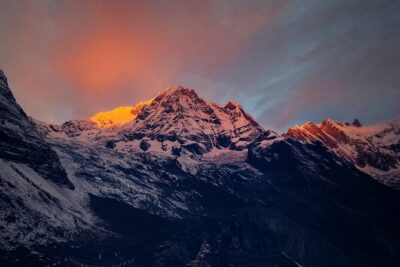
After sunrise over the Annapurnas, you begin hiking back toward Dovan. The first part of the descent can be steep, then the trail settles into more gradual downhill walking.
Do not underestimate the return. Descending can be tough on knees, especially after the previous day’s effort. Trekking poles can be useful, though the supplied information does not state that they are provided, so bring or arrange your own if you rely on them.
Dovan is again a river junction, but your experience of it changes on the way back. You are no longer climbing toward an unknown destination. The day is about steady movement, recovery, and reaching a lower elevation.
Day 11: Forest paths toward Sinuwa
The trail follows the river through peaceful forest, with waterfalls, running water, and birds along the way. You then climb gradually toward Sinuwa Hill and spend the night at a trekking lodge near Sinuwa.
This is a gentler-feeling day than the base camp approach, but it still includes uphill walking. The route gives you time to notice smaller details that can be missed when you are focused on reaching a high point.
One practical note: the listed stop refers to Hilltop Lodge and Restaurant, while the description says the overnight stay is at Sinuwa. Confirm the exact lodge and sleeping arrangements before departure. Small changes are normal on mountain routes, but it is better to know the plan each afternoon.
Day 12: Jhinu hot springs and Pokhara
The final walking section takes about two hours to Jhinu, where you can spend time at the natural hot spring. After lunch, you drive back to Pokhara, or possibly walk farther before driving, depending on the day’s arrangement.
The hot spring is a well-chosen finish. After repeated climbs and descents, soaking your legs before returning to Pokhara gives the trip a clear ending rather than simply stopping at a roadhead. The day is not a return to Kathmandu, so plan onward travel from Pokhara separately.
The package includes ground transportation, but it does not include accommodation in Pokhara or meals there beyond the stated breakfast arrangement. If you have a flight or another tour afterward, allow extra time rather than scheduling a tight connection.
Food, lodges, guides, and what the price really covers
The package includes three meals a day on the trek, with tea or coffee. That is useful because food stops are built into the route and you do not need to budget separately for every breakfast, lunch, and dinner.
The stated inclusions list gives 12 breakfasts, 10 lunches, and 10 dinners. Since Kathmandu and Pokhara meals are excluded, ask the operator to confirm the exact meal schedule for your dates. Drinks beyond tea or coffee, tips, and personal expenses are extra.
A professional guide is included, along with the guide’s insurance and equipment. A porter is not included, though you can request one. That distinction matters if you are not comfortable carrying your own pack for 12 days.
The company has been operating in tourism for about three decades, and its service is repeatedly praised for professional owners, flexible planning, and reasonable prices. Specific staff praised in past trips include Arjun, Krishna, Sudip, and Ram. The director, Dil Prasad Sapkota, has also handled customized plans and helped resolve a flight cancellation caused by weather.
Those details suggest a useful strength: personal help when plans change. Still, ask who will guide your departure, what the porter fee is, and how much luggage you should carry.
Who should book this Annapurna Base Camp trek?
I would recommend this trip to someone who wants a guided Himalayan trek with a fixed 12-day outline and strong logistical support. It suits you if you want village life, forest walking, a famous sunrise, and a high mountain destination in one trip.
It is also a good fit if you value a private tour. Only your group participates, so the pace and daily decisions may be easier to discuss than on a large group departure. The information does not promise unlimited customization, but the company has arranged customized itineraries in the past.
I would be cautious if you dislike long bus rides, basic lodges, steep stairs, or repeated descents. You also need moderate physical fitness and suitable insurance. This is not a sightseeing package with a few short walks added on.
Free cancellation is available if you cancel at least 24 hours before the experience start time. Within 24 hours, the payment is not refunded, and late changes are not accepted.
Should you book it?
Book this trek if you want the major Annapurna highlights in a compact route and prefer having transport, permits, meals, lodges, and a guide arranged together. The $799 price is attractive because it includes several costs that can add up quickly, though you must add Kathmandu lodging, personal insurance, drinks, tips, a porter, and food outside the trekking section.
Before paying, confirm your guide’s name, porter arrangements, exact meal coverage, Kathmandu hotel plan, and the final transfer from Jhinu to Pokhara. If those details suit you, this is a well-balanced route with a strong mix of mountain views, village life, and physical challenge.
FAQ
Where does the Annapurna Base Camp trek begin?
The experience begins with airport pickup at Tribhuvan International Airport in Kathmandu, Nepal.
How long does the trek last?
The listed duration is approximately 12 days.
What is included in the price?
The package includes lodges along the route, three meals a day during the trek with tea or coffee, ground transportation, a professional guide and the guide’s expenses, airport pickup and drop-off, ACAP permits, local permits, and applicable fees.
Is a porter included?
No. A trekking porter is not included, but you can request one separately.
What fitness level is needed?
A moderate level of physical fitness is recommended. The route includes about 3,000 stone steps to Ulleri, steep climbs and descents, and higher altitude near Annapurna Base Camp.
Does the trek include Poon Hill?
Yes. The itinerary includes an early walk of about 50 minutes to Poon Hill at 3,200 meters for sunrise.
Does the tour finish in Kathmandu?
No. The final day includes Jhinu hot springs and a drive back to Pokhara. Transport back to Kathmandu is not listed.
What is the cancellation policy?
You can receive a full refund by canceling at least 24 hours before the experience start time. Cancellations or changes made within 24 hours are not accepted and are not refunded.
Just added around Kathmandu
- Traditional Momo Making Class★ 5.0 · 10 reviews
- Wildlife Adventure in Chitwan Nepal★ 4.0 · 4 reviews
- Kathmandu 2 Nights 3 Days Chitwan Jungle Safari Tour★ 5.0 · 9 reviews
- Walking tour of real Kathmandu through back streets.★ 5.0 · 3 reviews
- Kathmandu Street Food Walking Tour – Eat Like a Local★ 5.0 · 3 reviews
- Private Manaslu Circuit Trek at Himalayas★ 5.0 · 3 reviews
- Walking tour of Kathmandu with awesome local guides★ 5.0 · 4 reviews
- Visit Swayambhunath and Bauddhanath Stupa with Guide★ 5.0 · 5 reviews
Annapurna Treks from Kathmandu, compared.
Kathmandu to Annapurna Base Camp (ABC) 5-Day Trek
Read our review →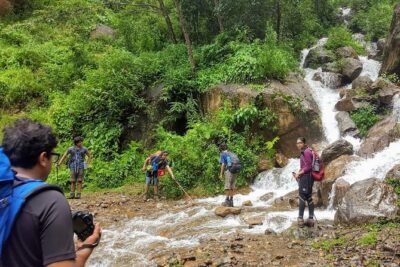
Browse the lists this tour appears in