
Reviewed · ANNAPURNA TREKS FROM KATHMANDU
Annapurna Base Camp Trek
Annapurna Base Camp gives you a big Himalayan reward without requiring a month on the trail. In 11 days, you move from Kathmandu to Pokhara, pass through Gurung villages and rhododendron forests, and reach Annapurna Base Camp at 4,130 meters beneath some of Nepal’s most famous peaks.
I like the practical package: permits, meals, porter service, airport transfers, and trekking gear are handled for you. I also like the route’s variety, from Ghandruk’s village setting to the mountain amphitheater at base camp and the lower-altitude stop at Jhinu Danda. The main caution is that the advertised price and luxury label need careful reading: the package costs $240 per person, yet accommodation is mainly standard twin-share teahouses rather than high-end mountain lodges.
Key points at a glance
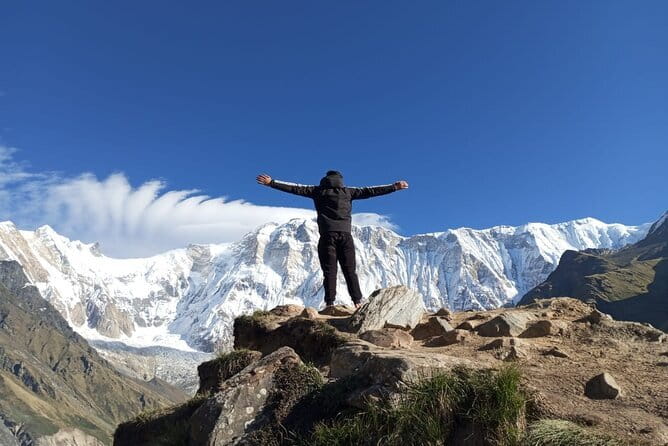
- Reach 4,130 meters at Annapurna Base Camp: The route gives you a proper high-Himalaya goal, with Machhapuchhre Base Camp along the way.
- Begin and end with long road journeys: The Kathmandu to Pokhara drive takes 7 to 8 hours each way, so road time is a real part of the trip.
- Sleep in teahouses and three-star hotels: Kathmandu and Pokhara include three-star hotel accommodation, while the trail uses the best available twin-share teahouses.
- Travel with guide and porter support: An English-speaking, government-licensed guide leads the trek, with one porter assigned for every two trekkers.
- Meals are covered on the trail: Breakfast, lunch, dinner, and tea or coffee are included during the trekking days.
- Build in room for mountain conditions: Bad weather or failure to meet the minimum group size can lead to a changed date, alternate experience, or refund.
What the $240 price really covers
At $240 per person, this is an unusually low price for an organized Annapurna Base Camp trek. The value comes from bundling several costs that can otherwise catch you by surprise: the Annapurna Conservation Area Permit, TIMS card, guide, porter, trekking accommodation, meals on the trail, airport transfers, and road transport between Kathmandu and Pokhara.
You also receive a duffel bag and sleeping bag for the trek. These must be returned at the end, but they reduce the amount of equipment you need to arrange before arriving in Nepal.
The package is best understood as a practical guided trek, not a luxury holiday in the usual hotel sense. Kathmandu and Pokhara use three-star hotels with breakfast. During the walk, you stay in twin-share teahouses, described as the best available for the route. That can still be comfortable and useful, but rooms and facilities in mountain villages are not comparable to a city hotel.
Your included trail meals are another strong point. Breakfast, lunch, dinner, tea, and coffee are covered on trekking days. You still pay for bottled water, alcoholic drinks, other beverages, hot showers, laundry, phone calls, and personal purchases. Lunch and dinner in Kathmandu and Pokhara are also extra, so keep some cash available for those city meals and small trail expenses.
The price does not include international airfare, a Nepal entry visa, travel insurance, rescue insurance, or tips for the guide, porters, and driver. Insurance deserves special attention because this route reaches 4,130 meters and includes several long days on foot.
More Annapurna treks:
- Annapurna Circuit Trek with Tilicho Lake
★ 5.0 · 368 reviews - Annapurna base camp trek 5 Days
★ 5.0 · 252 reviews - Annapurna Base Camp Trek
★ 5.0 · 111 reviews
Kathmandu to Pokhara: a slow start with a long road day
Your trip begins at Tribhuvan International Airport. A representative meets you and arranges the 30 to 45 minute transfer to your Kathmandu hotel. Breakfast is included on the first day, and the final morning also includes breakfast and an airport transfer.
The second day moves you to Pokhara by tourist bus. The distance is about 200 kilometers, but the drive takes 7 to 8 hours. That is a full day, not a quick transfer. I would treat it as part of the Nepal experience, while also understanding that it can feel tiring before the walking begins.
Pokhara sits at about 822 meters and serves as the gateway to the trek. This overnight stop gives you a lower-altitude base before the route climbs into the Annapurna region. Dinner is not included in Pokhara, so plan for that expense.
The return follows the same road on Day 10. Again, expect 7 to 8 hours in the tourist bus. The trip is therefore better for someone who values a guided, organized route and does not mind road travel. If you want to maximize time on the trail, the long bus journeys may feel like the weakest part of the schedule.
Ghandruk brings the first real mountain-village setting
On Day 3, the vehicle travels about 41 kilometers toward Nayapul, followed by a 5 kilometer trek lasting roughly 3 to 4 hours. The day ends at Ghandruk, at 1,940 meters.
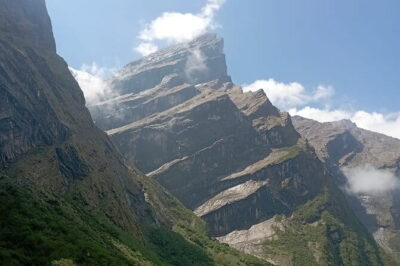
Ghandruk is an important early stop because the journey changes here from transport to walking. You are no longer simply moving toward the mountains. You begin passing through traditional Gurung village country, with forested hills and mountain views forming the setting for the first overnight trek.
Breakfast, lunch, and dinner are included from this point. A guide and porter support also begin to matter here. You carry only your day bag, while one porter serves two trekkers. That arrangement keeps the price down and still takes the heaviest load off your shoulders.
The first walking day is not the hardest, but you should not mistake it for a casual stroll. The route soon involves repeated ascents and descents, and the following days become longer.
Ghandruk to Sinuwa: 12 kilometers of proper trail work
Day 4 covers about 12 kilometers and takes 6 to 7 hours. The route descends toward the Kimrong Khola before climbing toward Sinuwa, which sits at 2,340 meters.
This is where the trek starts to test your legs. Descending first and climbing later can be more tiring than a steady uphill path, so pace yourself early. The support of a guide is useful here because the day includes changing terrain and a meaningful gain in altitude.
The trail passes through forested sections, with the route’s rhododendrons and bamboo becoming part of the experience. You are also moving farther from roads and city comforts. Teahouse rooms are shared by two people, and hot showers are not included. If a shower is available for an extra charge, you should expect to pay separately, but the package does not guarantee one.
Sinuwa makes a sensible overnight point because it breaks the climb into manageable stages. The itinerary does not include a separate acclimatization day, so a moderate pace matters.
More day hikes and treks in Kathmandu:
- Everest Base Camp Trek – 14 Days
★ 5.0 · 1,499 reviews - Everest Base Camp Trekking
★ 5.0 · 485 reviews - Nagarkot Sunrise View and Day Hiking from Kathmandu
★ 5.0 · 471 reviews - Everest Base Camp Trekking – 13 Day
★ 5.0 · 365 reviews
Bamboo forests and Deurali at 3,200 meters
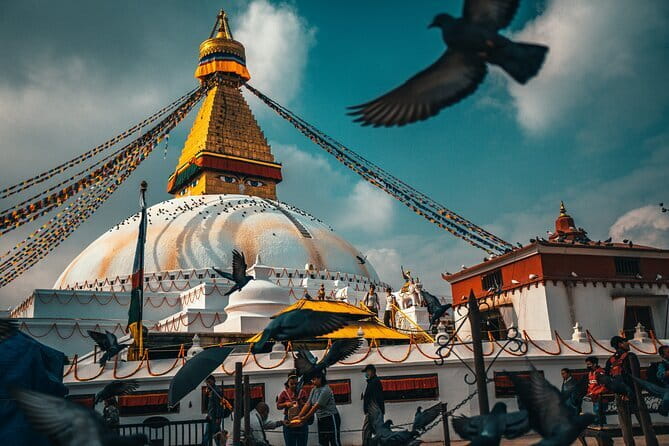
From Sinuwa, Day 5 covers about 10 kilometers in 6 to 7 hours and finishes at Deurali, at approximately 3,200 meters. The route moves through bamboo forest and continues its steady climb.
This is a scenic day, but altitude begins to change how the walking feels. You may find the same distance more demanding than it looked on paper. The itinerary calls for breakfast, lunch, and dinner, with tea or coffee included during the trekking period.
Deurali is a useful staging point before the climb to base camp. There is no luxury here in the resort sense. The comfort is practical: a bed, meals, a roof, and a guide who helps keep the day organized.
You should tell your guide promptly if you feel unwell. The tour includes a first aid medical kit, but that is not a substitute for travel and rescue insurance. The package does not include insurance, and you need to arrange it yourself.
Annapurna Base Camp is the payoff at 4,130 meters
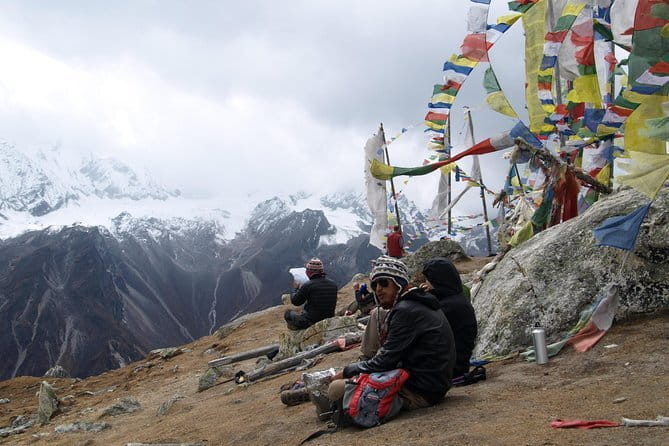
Day 6 is the high point of the trip. You walk about 9 kilometers over 6 to 7 hours and reach Annapurna Base Camp at 4,130 meters, or 13,550 feet.
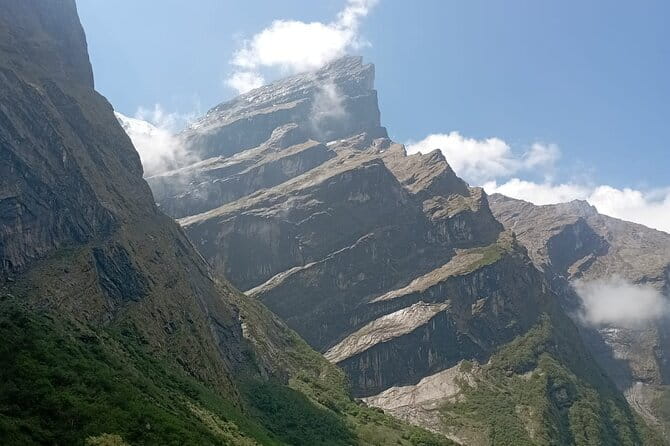
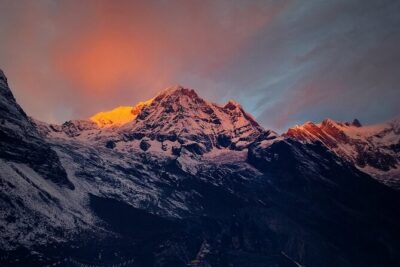
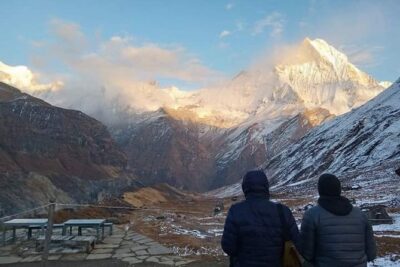
The route passes through the high mountain zone toward Machhapuchhre Base Camp before continuing to Annapurna Base Camp. Here, the views open into the dramatic mountain bowl that makes this trek so popular. Annapurna and Machhapuchhre provide the defining backdrop, and the setting feels very different from the villages and forests below.
The altitude is serious, even though this is not an expedition. Your guide’s presence is valuable for pacing and route decisions. Keep your own expectations sensible: a clear view depends on weather, and conditions can change quickly in the mountains.
The overnight at base camp is one of the trip’s special features. You get time to experience the destination rather than merely arrive, take a photograph, and turn around. Still, sleeping at 4,130 meters can be cold and less comfortable than lower stops. The supplied sleeping bag helps, but it does not turn a teahouse into a hotel.
The descent to Bamboo gives your legs a different challenge
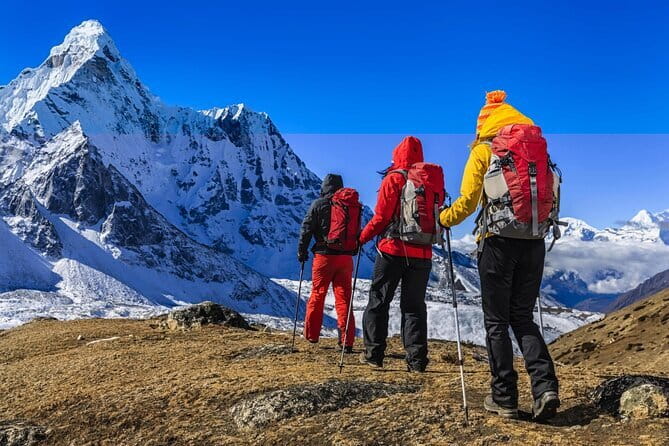
Day 7 begins with a memorable morning at Annapurna Base Camp, then reverses the route for about 13 kilometers. The day takes 6 to 7 hours and ends at Bamboo, at roughly 2,310 meters.
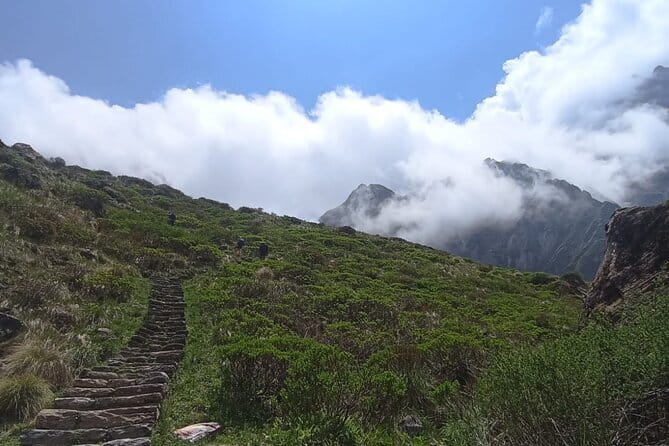
Descending more than 1,800 meters in one day is not automatically easy. Your knees may notice it, especially on steep stone steps. Trekking poles can be useful, though they are not listed among the included items, so arrange them separately if you want them.
The benefit is that you return to a lower altitude fairly quickly. Breakfast, lunch, and dinner remain included, and the guide and porter service continue. By this stage, your day bag should still be manageable, which makes the long descent more realistic.
Jhinu Danda adds a gentler finish
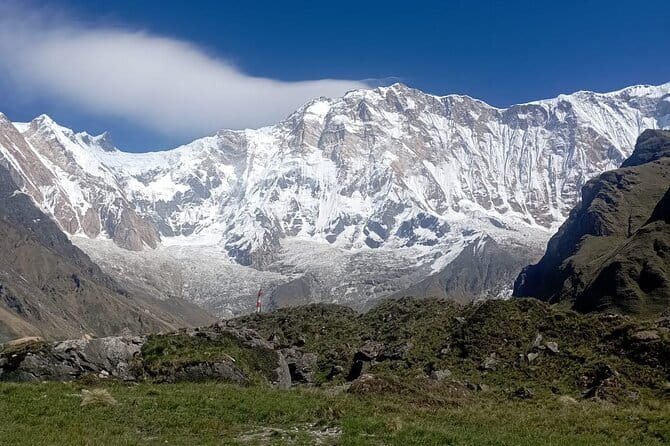
Day 8 covers about 11 kilometers in 5 to 6 hours and ends at Jhinu Danda, at 1,780 meters. The trail passes through forest and continues the gradual return to lower country.
This is one of the more pleasant days in the schedule because the altitude drops and the walking distance is slightly shorter. Jhinu Danda also gives the trek a change of mood after the exposed high point at base camp.
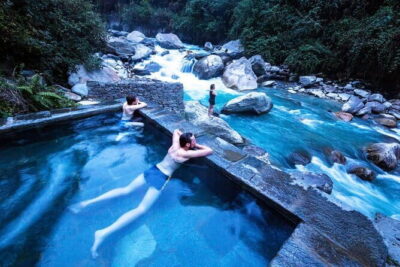
The stop is known for its hot springs in the wider Annapurna trekking area, but this package only specifically promises the Jhinu Danda stop. Hot showers during the trek are excluded, so do not assume that any bathing experience or related cost is included.
A short final trek returns you to Pokhara
On Day 9, the walk covers about 6 kilometers. You descend toward Siwa or Ghandruk Phedi, then continue by vehicle for 2 to 3 hours to Pokhara.
This short walking day is a sensible buffer after the longer mountain stages. It gives you one last taste of the trail without adding another exhausting push. The day includes breakfast and lunch, but not dinner in Pokhara.
Returning to Pokhara at 822 meters gives you a chance to rest before the long bus ride to Kathmandu. The plan is not built around extra sightseeing in Pokhara, so consider the city stay mainly a recovery stop unless your schedule allows independent time.
What the guiding and porter setup means for you
The trek includes an experienced English-speaking, government-licensed trekking guide. That is more important than it may sound. The guide helps coordinate daily starts, meals, accommodation, route decisions, and communication with teahouse staff.
The strongest praise attached to this experience focuses on organization, warm support, and the way guides and porters help when needed. That is the service you are paying for here. The available information does not provide individual guide names, so you should ask for your guide’s name and qualifications before departure if that matters to you.
One porter is provided for every two trekkers. This is a common shared arrangement and keeps the cost reasonable, but it also means you should pack thoughtfully. Carry your documents, water, camera, medication, warm layer, and other daytime needs in your own small pack.
The tour is described as private, meaning only your own group participates. That can give you more flexibility than a large fixed group, though the minimum number of participants still applies. If the minimum is not met, the operator can offer another date or experience, or a full refund.
Who will like this trek most
You are a good match if you want a guided Annapurna route with the main logistics arranged and prefer not to organize permits, porters, meals, and accommodation yourself.
The trek suits someone with a moderate level of physical fitness. The key demand is not one short burst of extreme effort. It is the repeated 5 to 7 hour walking days, stone steps, altitude gain, and long descent. You should be comfortable being active for several consecutive days.
It is less suitable if you expect five-star rooms, private bathrooms, short road transfers, or restaurant meals throughout. The word luxury here points to added support and comfort within a mountain trek, not polished resort service.
The route can also work well for someone who wants a first major Himalayan trek but prefers a clearly structured schedule. The combination of village stops, forest sections, base camp, and lower-altitude recovery days gives you a strong sense of progression.
Booking advice and cancellation terms
Pickup is offered from Tribhuvan International Airport, and mobile tickets are available. Confirmation is provided at booking, and the route is near public transportation.
You can cancel up to 24 hours before the start time for a full refund. Changes or cancellations inside that 24-hour window are not accepted or refunded. Poor weather can lead to a different date or a full refund, and the same applies if the minimum number of participants is not reached.
Should you book the Annapurna Base Camp trek?
I would book this trip if you want the main Annapurna Base Camp experience at a low headline price, with permits, food, porters, guides, road transfers, and basic trekking equipment organized in advance.
I would pause before booking if the luxury label is your main reason. The real product is a well-supported teahouse trek with three-star city hotels, not a premium lodge holiday. Add the cost of insurance, visa, city meals, drinks, hot showers, tips, and personal expenses before comparing it with other options.
For an active person who values careful organization and authentic village-to-mountain scenery, the package offers strong value. Just arrive ready for long bus rides, basic mountain accommodation, and demanding days on foot. The high point at Annapurna Base Camp is worth it, but you earn it one steady step at a time.
FAQ
How long does the Annapurna Base Camp trek take?
The scheduled experience lasts approximately 11 days, including arrival and departure days, the journey between Kathmandu and Pokhara, and the trekking section.
Where does the tour begin?
The tour begins at Tribhuvan International Airport in Kathmandu, Nepal. An airport transfer to your Kathmandu hotel is included.
How high is Annapurna Base Camp?
Annapurna Base Camp reaches approximately 4,130 meters, or 13,550 feet.
Is transportation from Kathmandu to Pokhara included?
Yes. A tourist bus transfer from Kathmandu to Pokhara and the return journey are included. Each drive is about 200 kilometers and takes approximately 7 to 8 hours.
Is accommodation included?
Yes. Three-star hotel accommodation in Kathmandu and Pokhara, including breakfast, is included. During the trek, you stay in the best available twin-share teahouse accommodation.
Are meals included?
Breakfast is included at the Kathmandu and Pokhara hotels. Breakfast, lunch, dinner, tea, and coffee are included during the trek. Lunch and dinner in Kathmandu and Pokhara are not included.
Is a guide provided?
Yes. The tour includes an experienced, English-speaking, government-licensed trekking guide.
Is porter service included?
Yes. One porter is provided for every two trekkers.
Are permits included?
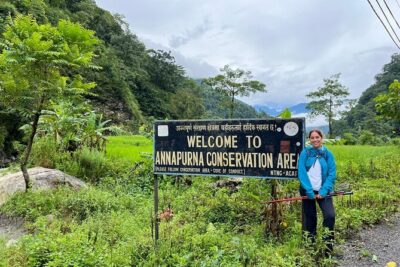
Yes. The Annapurna Conservation Area Permit and TIMS card are included.
What is not included in the price?
International airfare, the Nepal entry visa, travel and rescue insurance, personal expenses, alcoholic drinks, bottled water, other beverages, hot showers during the trek, lunch and dinner in Kathmandu and Pokhara, and tips for trekking staff and the driver are not included.
Just added around Kathmandu
- Traditional Momo Making Class★ 5.0 · 10 reviews
- Wildlife Adventure in Chitwan Nepal★ 4.0 · 4 reviews
- Walking tour of real Kathmandu through back streets.★ 5.0 · 3 reviews
- Kathmandu 2 Nights 3 Days Chitwan Jungle Safari Tour★ 5.0 · 9 reviews
- Kathmandu Street Food Walking Tour – Eat Like a Local★ 5.0 · 3 reviews
- Private Manaslu Circuit Trek at Himalayas★ 5.0 · 3 reviews
- Walking tour of Kathmandu with awesome local guides★ 5.0 · 4 reviews
- Visit Swayambhunath and Bauddhanath Stupa with Guide★ 5.0 · 5 reviews
Annapurna Treks from Kathmandu, compared.
Kathmandu to Annapurna Base Camp (ABC) 5-Day Trek
Read our review →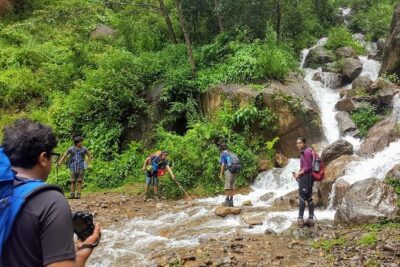
Browse the lists this tour appears in