
Reviewed · ANNAPURNA TREKS FROM KATHMANDU
Annapurna Base Camp Trekking
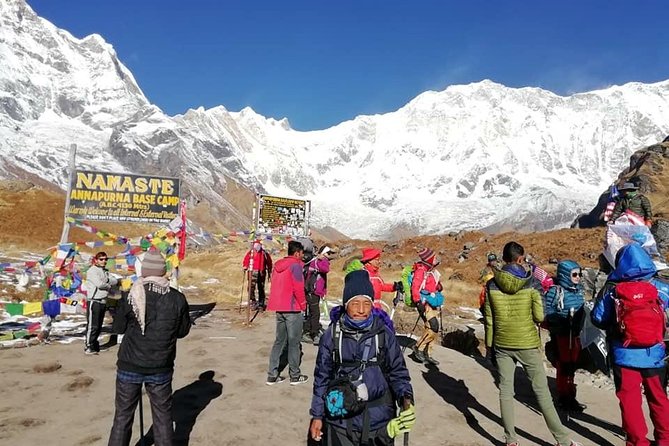
Annapurna Base Camp is the main event, but the route earns its keep long before you reach the mountains. You’ll pass through rhododendron woods, stone-step villages, suspension bridges, and the high valley beyond Dovan, with an early start for Poon Hill sunrise and a final reward at Annapurna’s base camp. I like the private guide setup and the tidy airport-to-trail logistics. The catch is that the plan calls for moderate fitness, and steep steps plus long downhill days can feel tougher than that label suggests.
I also like the human touch built into the trip. Guides connected with Himalayan Sanctuary Adventure, including Bishnu or Vishnu Bhatta and Prem dai, are praised for careful support, food attention, and adapting when weather blocks the route. You should also note the schedule mismatch: the product is priced and described as a 14-day trip, while one overview refers to 15 days.
Key points to know before booking
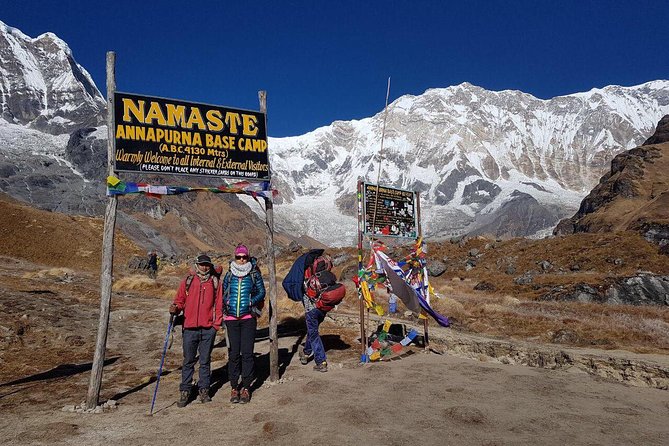
- Poon Hill adds a superb sunrise viewpoint: The early climb from Ghorepani gives you wide views toward the Annapurna and Dhaulagiri ranges before the main trek turns toward base camp.
- The route uses teahouses: Breakfast, lunch, and dinner are included during the mountain section, but drinks, bottled or boiled water, showers, charging, and hot water cost extra.
- Private guiding gives you flexibility: Only your group takes part, so the itinerary can be adjusted more easily than on a fixed large-group departure.
- Kathmandu sightseeing comes first: You visit Pashupatinath, Boudhanath, Patan Durbar Square, and Swayambhunath before heading to Pokhara.
- The return is by road: Tourist coaches connect Kathmandu and Pokhara, with the return journey taking roughly seven to nine hours.
- The price covers major trek costs: At $899 per person, the package includes permits, hotels, teahouses, meals on trek, guide, porter support, transport, and airport pickup, but not every daily expense.
What the $899 price really covers
At $899 per person, this is a fairly service-heavy trekking package rather than a bare-bones route transfer. You get airport pickup, three-star category hotels in Kathmandu and Pokhara with breakfast, tourist coach transport between the two cities, a private English-speaking guide, and porters carrying luggage.
The mountain package is also well padded. Teahouse accommodation includes breakfast, lunch, and dinner, while the company covers guide and porter salaries, insurance, equipment, food, lodging, permits, and local and government taxes. The Annapurna Conservation Area Permit and TIMS paperwork are included too, which saves you from sorting out important trek documents yourself.
The price does not cover everything. You pay for lunch and dinner in Kathmandu and Pokhara, sightseeing entrance fees, drinks, mineral water, boiled water, hot showers, hot water, phone calls, laundry, battery charging, tea, coffee, beer, and bar bills. Tips for your guide and porter are also outside the package.
That distinction matters. The headline price is attractive because the expensive logistical pieces are included, but you still need a daily cash allowance for mountain extras. The itinerary also says all accommodation and meals are included, while the detailed inclusions clarify that meals in Kathmandu and Pokhara are not included except for breakfast. Read it that way when budgeting.
There is a second detail worth clearing up before payment. The experience is shown as 14 days, but the overview calls it a 15-day tour. The day-by-day plan runs from arrival on Day 1 to the return to Kathmandu on Day 14. Ask the operator which schedule applies to your booking, especially if you are arranging international flights around it.
More Annapurna treks:
- Annapurna Circuit Trek with Tilicho Lake
★ 5.0 · 368 reviews - Annapurna base camp trek 5 Days
★ 5.0 · 252 reviews - Annapurna Base Camp Trek
★ 5.0 · 111 reviews
Kathmandu begins with four important sites
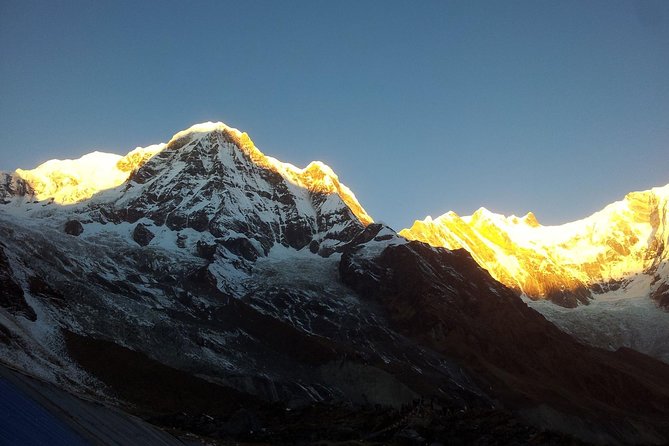
Your first day is simple: an airport representative meets you at Tribhuvan International Airport and takes you to the hotel. That pickup is useful after a long flight, particularly if Kathmandu is your first stop in Nepal.
Day 2 is a full sightseeing day and trek preparation day. You visit four World Heritage sites, each offering a different look at the Kathmandu Valley.
Pashupatinath is one of the world’s most important Hindu shrines. It sits beside the Bagmati River and includes a richly decorated pagoda temple. Boudhanath, east of central Kathmandu, is a huge Buddhist stupa with a strong Tibetan Buddhist presence and a 36-meter height noted in the tour details.
Patan Durbar Square brings palace courtyards, pagoda temples, bronze figures, and a museum into one historic center. Swayambhunath, often called the Monkey Temple, sits on a hill above the valley. It is both a Buddhist pilgrimage site and a good place to look across Kathmandu.
Entrance fees are not included, so keep that cost separate. Also, this is not a quiet day. Four major sites in one day give you a useful introduction, but the schedule may feel full before a long trek. I would treat it as orientation rather than a slow cultural study.
The road to Pokhara takes most of Day 3
Your trekking staff collects you around 6:30 in the morning and escorts you to the tourist bus station. The coach generally leaves around 7:00 or 7:30, and the drive is listed at about six hours, though road travel in Nepal can take longer.
Pokhara is a calmer base than Kathmandu, set beside Phewa Lake and surrounded by views toward Annapurna, Machhapuchare, Dhaulagiri, Lamjung Himal, and Manaslu when conditions are clear. You spend the night there before the trek begins.
This coach transfer is practical, but it is not glamorous. If you prefer flying, that is not part of this package. The road journey gives you a gradual change from city to mountain country, but it uses most of the day. Your Pokhara hotel and breakfast are included, while lunch and dinner are not.
Nayapul to Ulleri introduces the stone steps
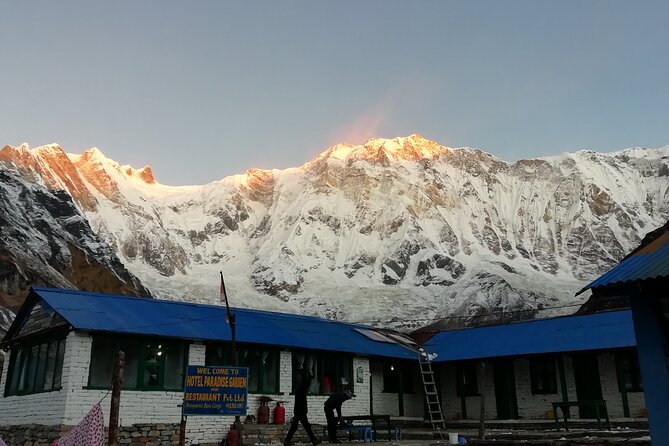
On Day 4, a private vehicle takes you from Pokhara to Nayapul. From there, you walk beside the Modi Khola for about 15 minutes before reaching Birethanti, a sizable village with shops and teahouses.
The trail follows the Bhurungdi Khola through Hille and Tikhedhunga before reaching the Ulleri area. The listed walking time is about five to seven hours, though the shorter route description calls this a relatively easy introduction.
Do not read easy as flat. The route begins gently, then sets up the more demanding steps ahead. Ulleri is a large Magar village at about 2,070 meters. The village setting and changing altitude make this a useful first mountain night, but your legs may already notice the climb.
More day hikes and treks in Kathmandu:
- Everest Base Camp Trek – 14 Days
★ 5.0 · 1,499 reviews - Everest Base Camp Trekking
★ 5.0 · 485 reviews - Nagarkot Sunrise View and Day Hiking from Kathmandu
★ 5.0 · 471 reviews - Everest Base Camp Trekking – 13 Day
★ 5.0 · 365 reviews
Ghorepani and Poon Hill are the visual high point
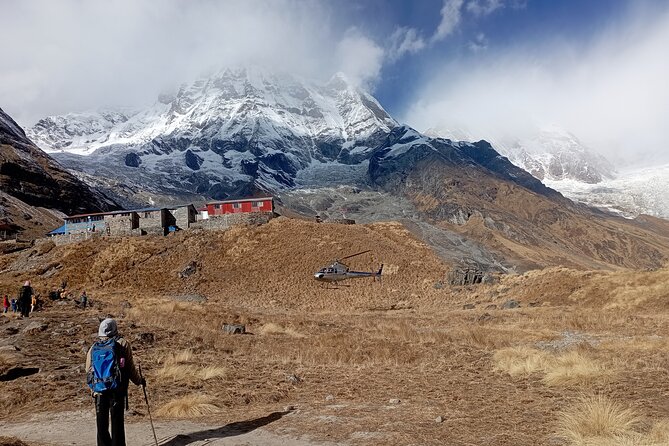
Day 5 climbs from Ulleri toward Banthanti and Nangethanti through oak and rhododendron forest. Ghorepani is the overnight stop, with the itinerary giving two different elevations, about 2,750 meters and 2,840 meters. That small inconsistency is worth confirming with the operator, though it does not change the walking plan.
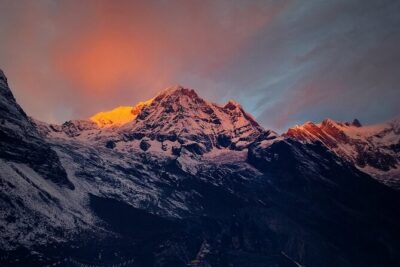
Day 6 begins early with the climb to Poon Hill at 3,210 meters. This is one of the best-known viewpoints in the region, and the timing is the reason to stay at Ghorepani. You go up before breakfast for sunrise, then return to Ghorepani for food before continuing toward Tadapani.
The view includes the Annapurna and Dhaulagiri ranges, Mustang, Pokhara, and many high peaks when the sky is clear. The route after Poon Hill drops and climbs through rhododendron woods, waterfalls, and ridges before reaching Tadapani at about 2,700 meters.
The early start is not optional in practical terms. If you want the sunrise, you need warm clothes, a headlamp if your guide recommends one, and enough energy for a second walking period after breakfast. This is one of the itinerary’s strongest features, but it also creates one of its longest and more tiring days.
Tadapani to Chhomrong changes the feel of the trail
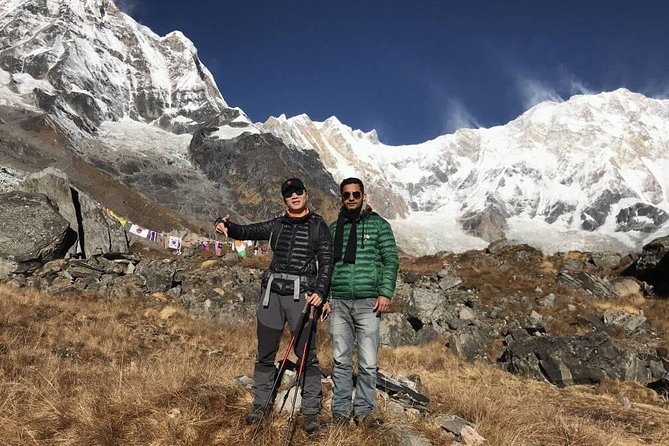
From Tadapani, the trail descends through dense rhododendron forest, then opens to terraced fields and Gurung villages. Waterfalls, a suspension bridge, and repeated uphill and downhill sections lead to Chhomrong at about 2,170 meters.
Chhomrong sits below the Annapurna range and is an important stop before the trail enters the Modi Khola valley. The descent from Tadapani may feel pleasant in the cool forest, but the later climbs and stone steps still demand steady pacing.
This is where a private guide helps. You can ask for short breaks, adjust your pace, and avoid treating the schedule as a race. The trip is private, but the guide cannot remove the physical work. A moderate level of fitness is the minimum sensible expectation.
Bamboo forests lead to Dovan and Deurali
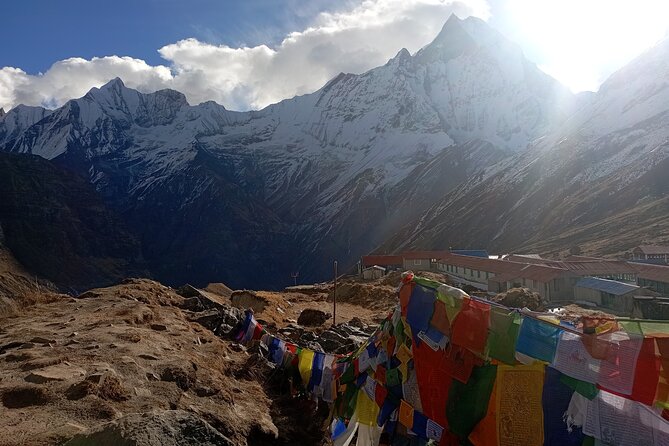
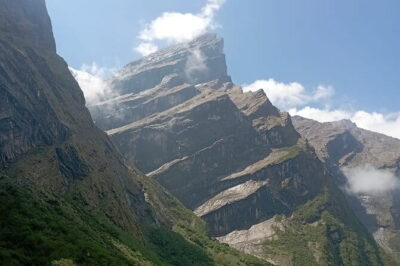
Day 8 leaves Chhomrong and passes through damp bamboo forest. The trail can be cold and shaded, with steep uphill sections toward Himalaya Hotel. After the forest opens, you get views of the glacial river below and the cliffs marked by waterfalls.
The path continues through Hinku Cave and then descends to a river before climbing again to Dovan. Vegetation becomes sparser as you move higher, and the valley begins to feel more enclosed and alpine.
Day 9 follows a steady climb toward Deurali. The trail sometimes clings to a rocky cliff and includes steep sections. It is listed at five to six hours, but the footing and altitude can make it feel slower than the clock suggests.
From Deurali, the route continues toward Machhapuchre Base Camp before the final ascent to Annapurna Base Camp. The itinerary places Deurali as a stop in one section and uses it as a transition point elsewhere, so ask your guide to confirm exactly where you sleep on each night.
Annapurna Base Camp is the payoff
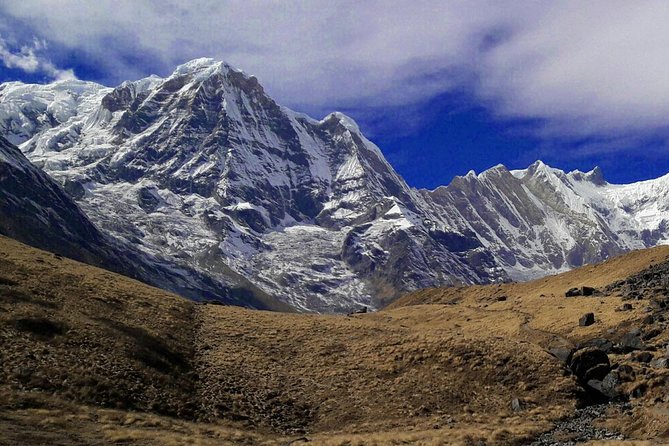
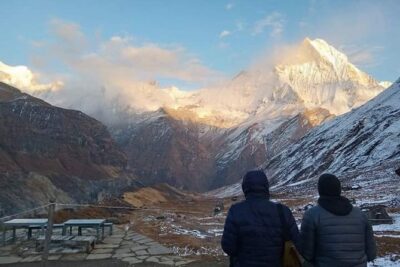
The approach to Annapurna Base Camp is the moment the trek changes from forest walking to a high mountain experience. The trail rises through the upper valley, passing Machhapuchre Base Camp before reaching Annapurna Base Camp.
The supplied plan gives five to seven hours for the base camp day. That is a serious walking day, especially after several days of climbing and descending. The reward is the close mountain setting at the base of Annapurna, described here as the world’s 10th-highest mountain.
Weather matters greatly. One guest account describes being unable to continue to base camp because of weather conditions. That is not a flaw in the operator. It is a reminder that mountain safety outranks a promised endpoint. The private format is valuable here because the guide can help judge conditions and discuss alternatives.
The following day descends rapidly through Machhapuchre Base Camp, Deurali, Himalayan Hotel, and Dovan toward Bamboo. Downhill walking may sound easy, but long descents can be hard on knees, especially on wet or uneven stone. Trekking poles would be a sensible personal addition, though they are not listed as included.
Bamboo, Jhinu Danda, and the return to Pokhara
The plan then retraces the route toward Chhomrong, where you stop for lunch. From Chhomrong, steep stone steps drop toward the Modi Khola valley before the trail continues to Jhinu Danda.
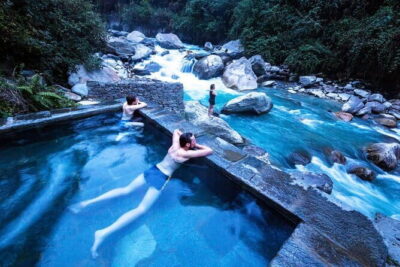
Jhinu is the relaxing note at the end of the mountain section. You can enjoy the hot spring and the surrounding hills before an overnight stay. The walk is listed at about five hours, giving you more time to enjoy the stop than on the base camp days.
The itinerary has some inconsistent labels around Days 10 through 13. One version lists Bamboo, Jhinu, and Pokhara on separate days, while the detailed schedule describes a trek to Nayapul followed by a drive to Pokhara. Your guide should confirm the actual overnight sequence before departure.
After the trek, you drive back to Pokhara, then take a tourist coach to Kathmandu after breakfast. The Kathmandu return is listed at seven to nine hours, so do not schedule a tight international departure immediately afterward. Airport pickup is included at the beginning, but extra nights caused by an early arrival, late departure, or early return are not included.
What the guiding and porter setup means
This is a private activity, so only your group participates. That gives you more control over walking pace and daily conversations than a large fixed group. It also means the quality of your experience depends heavily on the guide assigned to you.
The company describes an English-speaking trekking guide and one porter for every two trekkers. That is a useful ratio, but pack responsibly. Porters carry luggage, not every item you decide to bring. Keep your daypack light and make sure you can carry essentials yourself.
The strongest service theme is care. Accounts connected with the trip describe guides such as Bishnu as attentive and supportive, and one solo trekker felt carefully looked after with food choices aimed at avoiding stomach trouble. That is especially useful in the mountains, where simple meals, hydration, and pacing matter.
Monsoon trekking is possible, but the route becomes wetter and greener, with raindrops, lush growth, and a greater chance of cloud or blocked views. March was also used successfully for an Annapurna Base Camp trip. Still, conditions can change quickly, and the guide’s judgment should carry more weight than a rigid target.
Who should book this trek
Book it if you want a managed first Himalayan trek with airport pickup, cultural sightseeing, private guiding, porters, permits, teahouse meals, and a clear route to Annapurna Base Camp. It suits people who want support without joining a large group and who accept that road travel and basic mountain lodging are part of the deal.
It is also a good fit if Poon Hill matters to you. That sunrise stop adds a second major viewpoint rather than making Annapurna Base Camp your only scenic goal.
Think twice if you want luxury hotels throughout, private rooms guaranteed at every teahouse, included drinks, or flexible transport by air. The trip includes three-star category hotels in the cities, but mountain accommodation is in teahouses, and many small costs remain yours.
Before booking, confirm the 14-day versus 15-day duration, the exact overnight stops around Deurali and Bamboo, the Ghorepani elevation, and what happens if weather prevents the base camp approach. Free cancellation is available up to 24 hours before the experience begins, but late cancellations and late changes are not accepted.
FAQ
How long is the Annapurna Base Camp tour?
The experience is presented as a 14-day tour, and the day-by-day plan runs from Day 1 through Day 14. One overview refers to 15 days, so confirm the final schedule with Himalayan Sanctuary Adventure before booking flights.
Is airport pickup included?
Yes. A representative meets you at Tribhuvan International Airport and transfers you to your Kathmandu hotel on arrival.
Are meals included during the trek?
Breakfast, lunch, and dinner are included in teahouse accommodation during the trek. In Kathmandu and Pokhara, the package includes hotel breakfast, but lunch and dinner are not included.
Is transportation between Kathmandu and Pokhara included?
Yes. Tourist coach transportation between Kathmandu and Pokhara is included. The journey to Pokhara is listed at about six hours, and the return to Kathmandu normally takes seven to nine hours.
What fitness level is required?
A moderate level of physical fitness is required. Walking days generally last about four to seven hours, and the route includes steep climbs, stone steps, descents, forest trails, and higher-altitude sections.
Are permits and a porter included?
Yes. The package includes the Annapurna Conservation Area Permit, TIMS paperwork, government and local taxes, an experienced English-speaking guide, and porters at a stated ratio of one porter for every two trekkers.
Just added around Kathmandu
- Traditional Momo Making Class★ 5.0 · 10 reviews
- Wildlife Adventure in Chitwan Nepal★ 4.0 · 4 reviews
- Walking tour of real Kathmandu through back streets.★ 5.0 · 3 reviews
- Kathmandu 2 Nights 3 Days Chitwan Jungle Safari Tour★ 5.0 · 9 reviews
- Kathmandu Street Food Walking Tour – Eat Like a Local★ 5.0 · 3 reviews
- Private Manaslu Circuit Trek at Himalayas★ 5.0 · 3 reviews
- Walking tour of Kathmandu with awesome local guides★ 5.0 · 4 reviews
- Visit Swayambhunath and Bauddhanath Stupa with Guide★ 5.0 · 5 reviews
Annapurna Treks from Kathmandu, compared.
Kathmandu to Annapurna Base Camp (ABC) 5-Day Trek
Read our review →
Browse the lists this tour appears in