
Reviewed · ANNAPURNA TREKS FROM KATHMANDU
20 Days Annapurna Circuit Trek
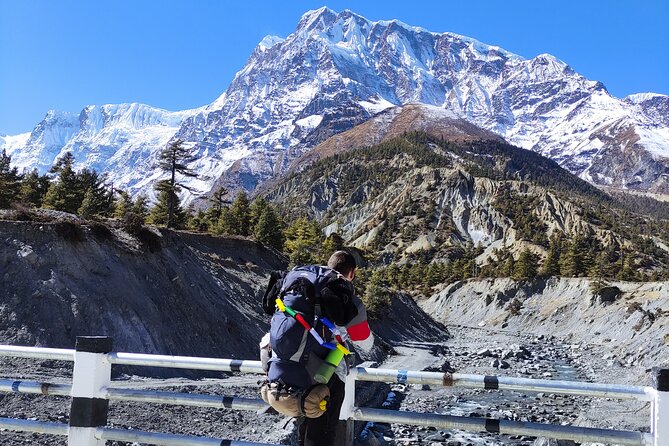
The great draw here is the sharp change in scenery. You begin among Kathmandu temples and green foothills, then walk through pine forest, dry mountain country, and the high pass of Thorong La at 5,416 meters. I especially like the built-in acclimatization day in Manang and the finish at Poon Hill, where weather permitting you can watch sunrise over Dhaulagiri, Annapurna, and Manaslu.
I also like the blend of trekking and village life. Muktinath brings religious significance, Marpha offers a slower Kali Gandaki Valley stop, and Pokhara gives you time to rest beside its lakes. The main caution is the physical demand: the long road transfer, steep climbs, thin air, and pass day require genuine preparation, not just enthusiasm.
Key points to know before booking
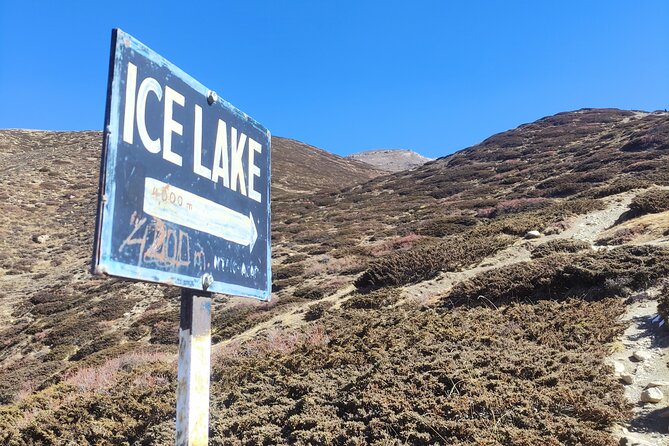
- Thorong La is the high point: The pass reaches 5,416 meters and requires an early start from high camp.
- Manang gives you time to adjust: The itinerary includes a full acclimatization day before the route climbs higher.
- The scenery changes dramatically: Expect farmland, waterfalls, pine forest, dry high-altitude valleys, and snow-capped peaks.
- It is a private group trip: Only your own group participates, with a licensed guide and porter support.
- Transport is basic in places: Kathmandu to Besisahar uses a regular bus, followed by a shared jeep to Syange.
- The price covers important basics: At $1,200 per person, permits, guide, porter, airport transfers, transport, and selected meals are included.
Why this Annapurna route remains so rewarding
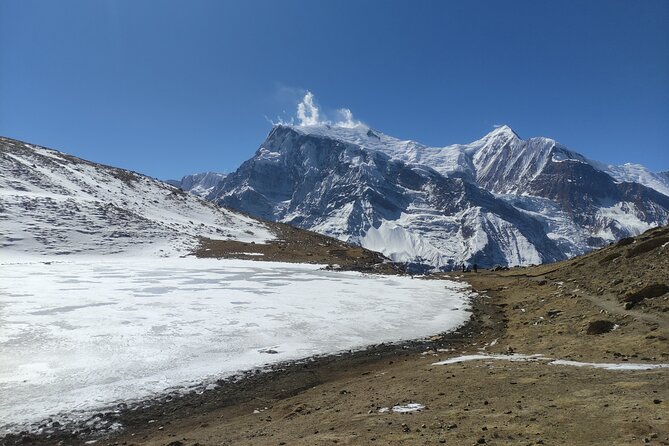
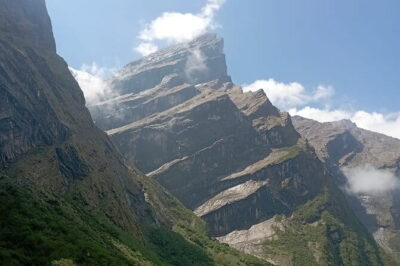
The Annapurna Circuit earns its reputation through variety. You are not walking through the same type of country for two weeks. The route moves from the busy Kathmandu Valley to river gorges, terraced fields, Tibetan-influenced villages, high mountain pasture, and the dry Kali Gandaki Valley.
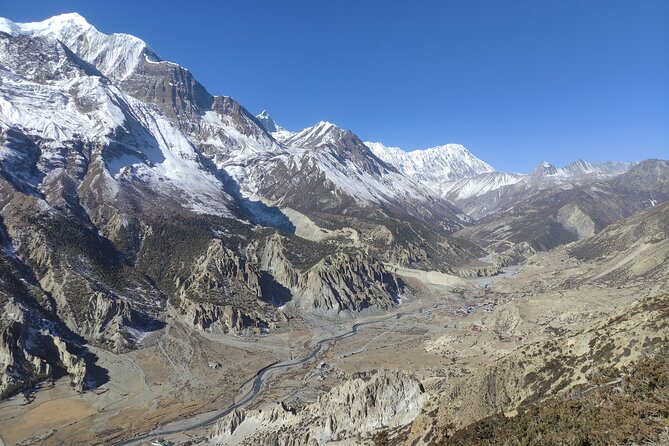
That change matters because the trek keeps giving you something new. One day may bring waterfalls and farm terraces. A few days later, you are looking across barren slopes toward Annapurna II, Gangapurna, Tilicho, and the Chuli peaks.
I also like that this is not only a mountain-view trip. The temples, monasteries, villages, teahouses, and farms give the route a human scale. Your guide can help explain what you are seeing, while the included village stays and meals keep the trip grounded in daily life rather than turning it into a series of quick photo stops.
The route covers roughly 160 to 230 kilometers, depending on the exact trail and road sections used. That is a serious walk over 20 days, even though some days are shorter and transport is included at the beginning and end.
More Annapurna treks:
- Annapurna Circuit Trek with Tilicho Lake
★ 5.0 · 368 reviews - Annapurna base camp trek 5 Days
★ 5.0 · 252 reviews - Annapurna Base Camp Trek
★ 5.0 · 111 reviews
Days 1 and 2: Kathmandu temples before the trail
Your airport pickup is arranged from Tribhuvan International Airport, followed by transfer to your hotel. This is a useful start after a long flight because you do not need to find your own transport in an unfamiliar city.
Day two gives you a proper introduction to Kathmandu. Pashupatinath Temple sits beside the Bagmati River and is one of the most important Hindu religious sites in Nepal. The visit lasts about two hours, but the entrance fee is not included. Foreign visitors pay NPR 1,000.
Boudhanath Stupa brings a very different mood. Its wide circular form and watchful painted eyes make it one of Kathmandu’s most memorable Buddhist sites. Allow about an hour, with an additional entrance fee of NPR 400 for foreign nationals or NPR 100 for SAARC and BIMSTEC nationals.
Kathmandu Durbar Square adds former royal palaces, courtyards, and carved buildings. You spend around two hours here, and the foreign visitor entrance fee is NPR 1,000. I recommend keeping some Nepalese rupees ready for these charges and for personal purchases.
The sightseeing is by car, which makes the day manageable. Kathmandu traffic can be tiring, but this introduction helps you understand the religious and cultural setting before you head into the mountains.
Day 3: A long road to Syange
The drive from Kathmandu to Syange takes about 10 hours in total. You travel toward Besisahar by regular bus, then continue from Besisahar to Syange by shared jeep.
This is not a glamorous transport day. It is long, and road conditions can make the journey feel even slower. Still, it gets you close to the walking route without adding several extra trekking days.
Syange sits at about 823 meters. The lower elevation gives you a gentle physical start before the route climbs steadily over the next week. Accommodation and meals are arranged as part of the trek, though drinks and personal expenses are not included.
Days 4 to 7: From river gorges to Manang
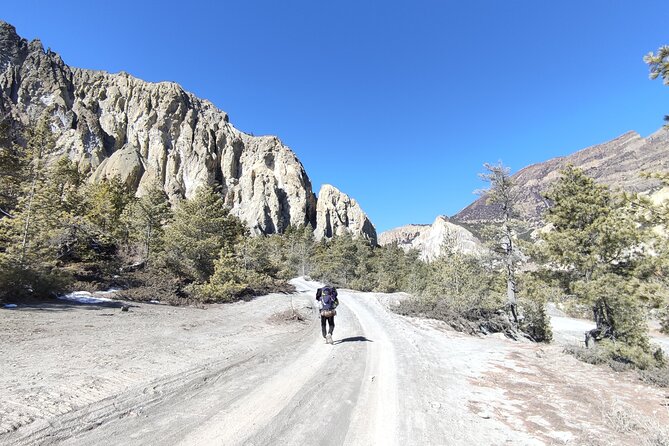
The trek begins in earnest between Syange and Dharapani. The route brings steep sections, farm terraces, waterfalls, narrow gorges, and views toward snow-capped peaks. The first half hour is described as particularly steep, so use it as a reminder to settle into a slow, steady pace.
From Dharapani to Chame, the vegetation begins to change. The air cools, the route passes through forest, and the villages begin to show more Tibetan influence. Bagarchhap is an early cultural marker, with its distinctive village character and mountain setting.
The walk from Chame to Pisang takes about five to six hours and reaches around 3,200 meters. You follow the river on its northern bank and continue through increasingly open country. This is where the mountain views begin to feel constant rather than occasional.
Pisang to Manang takes about five hours. The trail climbs steeply for a short stretch after leaving Pisang, then opens to broad views of the high peaks. Manang is one of the key stops on the whole route, with about 500 flat-roofed houses and a striking setting beneath Annapurna and Gangapurna.
I like the pacing here. You are gaining altitude, but the daily walking time remains moderate. You should still take the climb seriously. Altitude sickness can affect fit people, so your guide’s pacing and your willingness to walk slowly matter more than speed.
More day hikes and treks in Kathmandu:
- Everest Base Camp Trek – 14 Days
★ 5.0 · 1,499 reviews - Everest Base Camp Trekking
★ 5.0 · 485 reviews - Nagarkot Sunrise View and Day Hiking from Kathmandu
★ 5.0 · 471 reviews - Everest Base Camp Trekking – 13 Day
★ 5.0 · 365 reviews
Day 8: The valuable pause in Manang
The full acclimatization day in Manang is one of the best features of the program. You do not simply sit in a room. The plan allows time to explore the village and adjust before moving toward Yak Kharka and the pass.
That pause has practical value. It breaks up the long ascent and gives you a chance to see how your body responds at altitude. Keep this day easy, drink enough water, and tell your guide promptly if you feel unwell.
Manang itself is worth the time. Its flat-roofed houses, mountain setting, and transition toward high dry country make it feel very different from the green lower valleys. The village is also a useful point to check clothing, snacks, and personal gear before the route becomes more exposed.
Days 9 and 10: Yak Kharka and high camp
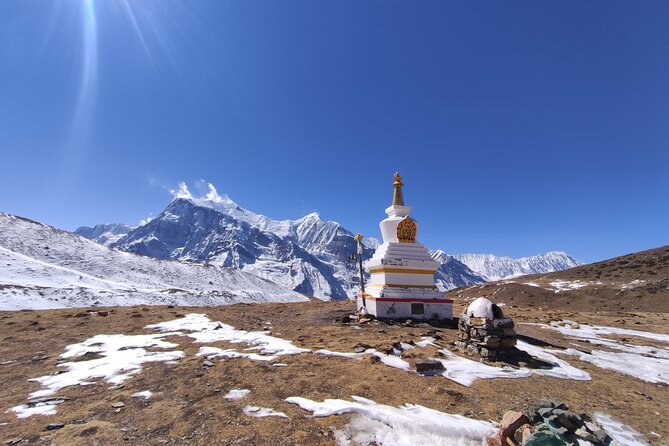
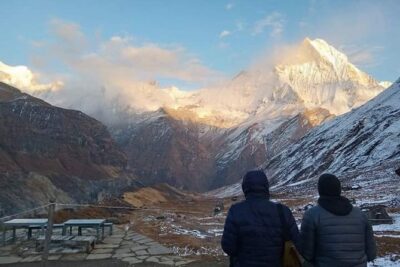
Manang to Yak Kharka takes about five hours. The trail rises gradually and brings views of Annapurna II, Gangapurna, Tilicho, and the Chuli peaks. The country becomes more barren, with less vegetation and a stronger sense that you are entering the high mountains.
The next day leads toward Thorong High Camp and takes about six hours. You pass Ledar, the last settlement on this section, then continue on a route that climbs toward the pass.
This is a demanding part of the trek because the altitude keeps increasing. The distances may not look extreme on paper, but thin air changes everything. You should expect a slower pace, colder conditions, and fewer comforts than in Kathmandu or Pokhara.
Day 11: Thorong La and Muktinath
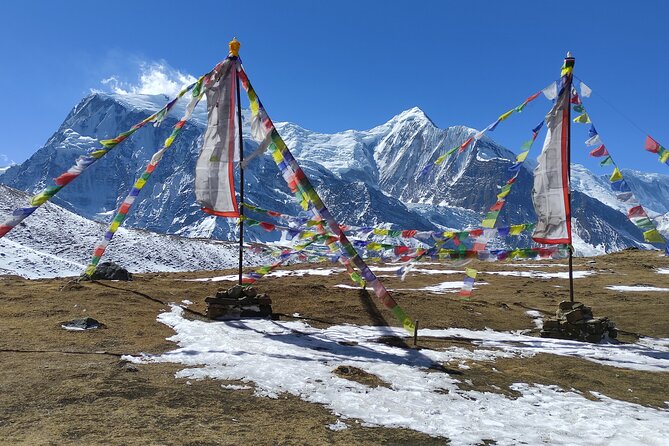
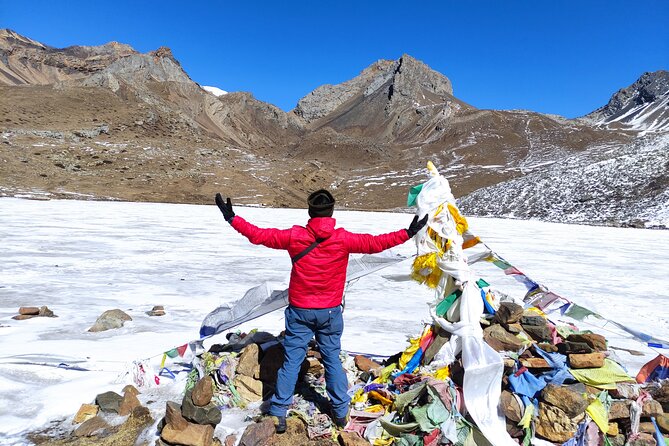
Thorong La is the defining challenge of the circuit. You start early after breakfast so you can reach the top before stronger cold winds develop. The climb is steep at first, and the total route from high camp to Muktinath is the longest trekking day in the program.
At 5,416 meters, Thorong La is not a casual viewpoint. You need warm layers, sturdy footwear, and patience. The reward is the feeling of crossing a major Himalayan pass, with high ridges and snow-capped peaks around you.
The descent leads to Muktinath at about 3,800 meters. Muktinath is sacred to both Hindus and Buddhists, making it one of the most meaningful stops on the route. After the pass, reaching the village can feel like a major release, but you will still be tired. Save energy for the long descent.
Days 12 to 14: The Kali Gandaki Valley
From Muktinath, the trek drops roughly 1,200 meters toward the Kali Gandaki River. Marpha is the main stop, reached after passing the small settlement of Ekale Bhatti, whose name refers to a lonely teahouse.
Marpha gives you a welcome change of pace. The route follows the river toward Tukuche, beneath Tukuche Peak and Dhaulagiri. The valley is drier than the lower parts of the circuit, and the open views give you a clear sense of how far you have come from the forested foothills.
The next walk to Lete takes about six hours. Here the scenery begins to change again. Pine and conifer forest return, and the route passes between Dhaulagiri and Annapurna. This constant change is one reason I would choose the full circuit over a shorter out-and-back trek.
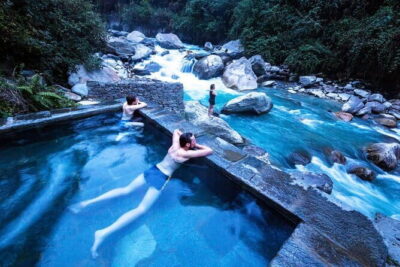
Lete to Tatopani takes about six hours. Tatopani is a lower, warmer stop after the high pass and dry valley. The route follows dramatic river country, with forests, suspension bridges, and steep mountain walls. The itinerary does not specify a separate hot spring visit, so you should not assume that bathing is included, but the name and setting make this a pleasant place to slow down.
Days 15 to 17: Ghorepani, Poon Hill, and Pokhara
Tatopani to Ghorepani takes six to seven hours and includes a suspension bridge over the Kali Gandaki. The trail climbs again through forest toward Ghorepani at 2,860 meters.
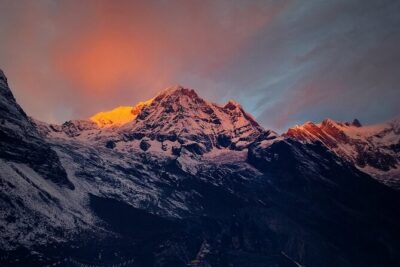
The next morning offers an optional-feeling highlight, weather permitting: a one-hour hike to Poon Hill at 3,195 meters for sunrise. From the top, you may see Dhaulagiri, Annapurna, and the Manaslu range. Sunrise conditions are never guaranteed, so treat it as a strong possibility rather than a promise.
After Poon Hill, you descend toward Tikhedhunga. The walk takes about five hours and passes through rural farm villages. The following day continues toward Pokhara, with waterfalls and countryside along the trail before transport or arrival in the lakeside city.
This section is a useful contrast to Thorong La. The pass tests endurance at high altitude. Poon Hill offers a shorter, more accessible mountain view at the end, when you may appreciate a sunrise without another major pass crossing.
Days 18 to 20: Lakeside rest and the return home
Pokhara gives you a full leisure day. You can visit Phewa Lake, Begnas Lake, and Rupa Lake, or simply rest after nearly three weeks of walking. The program identifies sightseeing options but does not include a separate guided city tour or boat activity, so check what you want to arrange yourself.
Day 19 is an approximately eight-hour drive back to Kathmandu. The road follows scenic hills and views of the Trisuli and Marsyangdi rivers. As with the first road journey, this is practical rather than luxurious, and delays are possible.
On day 20, a representative takes you to the international airport about three hours before your scheduled flight. That final transfer is included, which is helpful after a demanding trip.
What $1,200 covers, and what it does not
At $1,200 per person, the price offers solid value for a 20-day private trek. It includes airport pickup and drop-off, Kathmandu sightseeing by car, transport to the trailhead, a government-licensed guide, porter support, ACAP and TIMS permits, and 15 lunches, 18 breakfasts, and 15 dinners.
One porter is assigned for every two people and can carry up to 25 kilograms. You should confirm how that weight is divided within your group and plan to carry your own daypack.
The package does not cover international flights, a Nepal visa, drinks, personal expenses, staff tips, rescue or evacuation costs, special accommodation, or the three Kathmandu sightseeing entrance fees. Those exclusions are normal for a trek of this type, but they affect your final budget.
I would also keep money aside for extra snacks, bottled drinks, charging, laundry, tips, and any unexpected transport or medical costs. Travel insurance with high-altitude trekking and evacuation cover is especially important because rescue costs are not included.
Who should book this trek
I would recommend this route to you if you want a full Himalayan journey with major scenery, cultural stops, and a clear beginning and end. It suits people with moderate physical fitness who are prepared for repeated five to seven-hour walking days and one especially tough pass day.
The private format is useful if you prefer to walk with your own group rather than join a large departure. A licensed guide can help with pacing, route decisions, and altitude concerns. The program also received praise for helpful staff and for the owner’s ability to speak Chinese, which may matter if you prefer Chinese-language support.
I would hesitate if you want short walks, soft transport, or a highly polished hotel experience throughout. The regular bus, shared jeep, basic mountain accommodation, long road days, and high pass crossing are all part of the deal.
Cancellation is simple but strict: you can receive a full refund if you cancel at least three full days before the local start time. Cancellations inside that window are not refunded, and late changes are not accepted.
Should you book the 20-day Annapurna Circuit?
Book it if you want the complete arc: Kathmandu temples, green valleys, Manang, Thorong La, Muktinath, Marpha, Poon Hill, and a final rest in Pokhara. The itinerary’s best strength is its variety, supported by a full acclimatization day and practical inclusions.
Before paying, confirm current road conditions, the exact accommodation plan, meal coverage, porter arrangements, and what happens if weather affects the pass or Poon Hill sunrise. If you accept the physical challenge and basic trekking conditions, $1,200 is a fair starting price for a carefully supported circuit.
FAQ
How long is the Annapurna Circuit experience?
The experience lasts approximately 20 days, including arrival and departure transfers, Kathmandu sightseeing, trekking, transport days, and time in Pokhara.
Where does the tour start?
The listed meeting point is The Great Adventure Treks & Expedition office at Chhusya Galli, Kathmandu 44600, Nepal. The tour also offers airport pickup.
Is airport pickup included?
Yes. Airport pickup on arrival and airport drop-off before your departure are included.
Is the tour private?
Yes. Only your own group participates in this private activity.
How high is Thorong La Pass?
Thorong La Pass reaches 5,416 meters.
Is there an acclimatization day?
Yes. You spend a full day in Manang for acclimatization and exploration.
Are permits included?
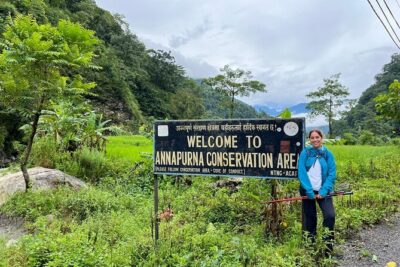
Yes. The Annapurna Conservation Area Project Permit and TIMS card are included.
Is a guide provided?
Yes. The package includes a professional trekking guide with a government license.
How is porter support arranged?
One porter is provided for every two guests, with a maximum carrying allowance of 25 kilograms.
Are Kathmandu attraction entrance fees included?
No. The entrance fees for Pashupatinath Temple, Boudhanath Stupa, and Kathmandu Durbar Square are paid separately.
Just added around Kathmandu
- Traditional Momo Making Class★ 5.0 · 10 reviews
- Wildlife Adventure in Chitwan Nepal★ 4.0 · 4 reviews
- Walking tour of real Kathmandu through back streets.★ 5.0 · 3 reviews
- Kathmandu 2 Nights 3 Days Chitwan Jungle Safari Tour★ 5.0 · 9 reviews
- Kathmandu Street Food Walking Tour – Eat Like a Local★ 5.0 · 3 reviews
- Private Manaslu Circuit Trek at Himalayas★ 5.0 · 3 reviews
- Walking tour of Kathmandu with awesome local guides★ 5.0 · 4 reviews
- Visit Swayambhunath and Bauddhanath Stupa with Guide★ 5.0 · 5 reviews
Annapurna Treks from Kathmandu, compared.
Kathmandu to Annapurna Base Camp (ABC) 5-Day Trek
Read our review →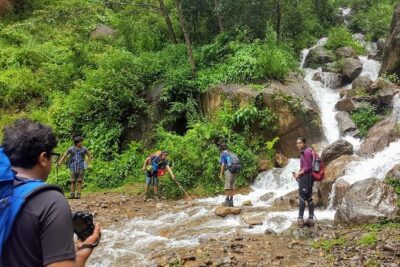
Browse the lists this tour appears in