
Reviewed · ANNAPURNA TREKS FROM KATHMANDU
Annapurna Circuit Trek
The big draw here is the chance to cross Thorong La at 5,416 meters in a compact 12-day trip. You move from Kathmandu through Besisahar, Chame, Manang, and Muktinath, with mountain views, pine forest, Buddhist prayer flags, and villages connected by rough mountain roads.
I like the fact that the $975 price includes a guide, meals, tea-house beds, permits, transport, and useful gear. I also like the rest day in Manang, plus the chance to walk to Gangapurna Lake before the highest section. Guides named in the company’s team include Shanta, Buddhi Tamang, Pawan, Anjan, Suman, and Indaco.
The catch is the pace. Several days involve long drives or long walks, and the route gains altitude quickly. Taking a Jeep all the way to Manang may shorten the walking, but it also raises the risk of altitude sickness, so this is not a casual mountain holiday.
Key points before you book
- Thorong La is the main prize: You cross the 5,416-meter pass with prayer flags and wide Himalayan views.
- The itinerary is tightly packed: The route covers major Annapurna Circuit sights in about 12 days, including airport transfers.
- Manang gets a full acclimatization day: The optional walk to Gangapurna Lake is one of the best uses of that extra time.
- The price covers a lot: Transport, a licensed guide, tea-house lodging, meals, tea, permit, sleeping bag, down jacket, and duffle bag are included.
- Road travel is part of the trip: You ride buses and Jeeps on rough mountain roads, especially between Besisahar, Chame, Muktinath, Pokhara, and Kathmandu.
- You need moderate fitness: The trip includes demanding uphill walking, high altitude, and some very long travel days.
A classic Annapurna route in a shorter package
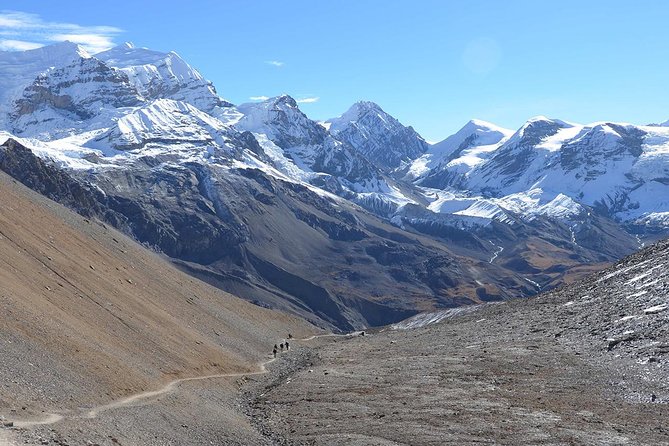
The Annapurna Circuit is famous because it changes character as you go. The lower route begins in warmer country, then climbs through pine forest and mountain villages before reaching the dry, high Manang Valley. After Thorong La, the route drops toward Muktinath and continues to Pokhara.
This version uses roads to cut down the number of walking days. That makes the trip possible for someone with limited time, but it changes the feel of the classic trek. You spend plenty of time in vehicles, and some drives are long enough to become an experience in themselves.
The schedule is listed as 12 days, though the core trek is often described as a 10-day route. That difference comes from the arrival day in Kathmandu and the final departure day. You also spend nights in Kathmandu and Pokhara, so the total package is not 12 straight days of walking.
I would think of this as a high-altitude trekking tour with substantial road travel, not a continuous foot journey. If walking every mile matters to you, a longer Annapurna itinerary would likely suit you better. If you want the pass, Manang, Muktinath, and the major mountain scenery without spending two to three weeks on the trail, this shorter plan has a clear purpose.
More Annapurna treks:
- Annapurna Circuit Trek with Tilicho Lake
★ 5.0 · 368 reviews - Annapurna base camp trek 5 Days
★ 5.0 · 252 reviews - Annapurna Base Camp Trek
★ 5.0 · 111 reviews
Day 1: Kathmandu arrival and trek briefing
You are met at Tribhuvan International Airport and transferred to your hotel. The first day is short, with about an hour set aside for arrival arrangements, check-in, and a group briefing.
This is useful time rather than filler. A good briefing lets you confirm the route, understand the altitude plan, check your equipment, and ask about the next morning’s long drive. The package includes two nights in Kathmandu with breakfast, one of them at the start and another after returning from the mountains.
Kathmandu gives you a soft landing before the road begins. The schedule does not promise a sightseeing program, so plan on using free time for your own activities rather than expecting a guided city tour.
Day 2: The long road to Besisahar
The drive from Kathmandu to Besisahar takes about 12 hours. You leave the Kathmandu Valley and travel toward the lower, warmer parts of central Nepal, with views of villages, farmland, and snowcapped peaks when conditions allow.
Besisahar is the gateway to the Annapurna region and sits in Lamjung District. The long drive is one of the practical tradeoffs of the short itinerary. You save walking days, but you spend a full day on the road.
The transport is included, and the tour uses buses and Jeeps. Still, you should expect mountain-road conditions rather than a fast highway journey. Keep water, snacks, and any medication in your day bag instead of packed away with larger luggage.
Day 3: Besisahar to Chame through changing country
The next drive leads to Chame, the administrative center of Manang District. The journey takes about 12 hours and follows an unpaved road through villages, pine country, and changing mountain scenery.
This section gives you an early sense of how quickly the region shifts. Lower valleys feel warmer and more settled, while Chame brings you closer to the higher Himalayan world. The road itself can be rough, so the trip is not ideal for anyone who dislikes long vehicle rides on uneven surfaces.
Chame is also an important practical point. The route information advises against taking a Jeep beyond Chame as a way to remove too much walking. A four-wheel-drive vehicle can reach Manang, but gaining altitude that quickly increases the chance of altitude sickness. That warning matters more than saving a day.
More day hikes and treks in Kathmandu:
- Everest Base Camp Trek – 14 Days
★ 5.0 · 1,499 reviews - Everest Base Camp Trekking
★ 5.0 · 485 reviews - Nagarkot Sunrise View and Day Hiking from Kathmandu
★ 5.0 · 471 reviews - Everest Base Camp Trekking – 13 Day
★ 5.0 · 365 reviews
Days 4 and 5: Into Manang by pine forest and river
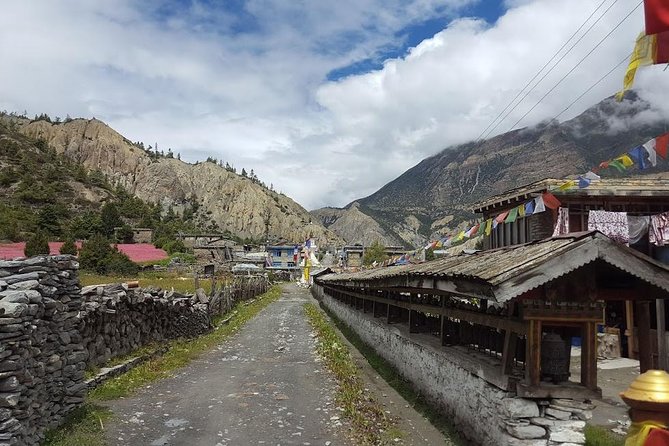
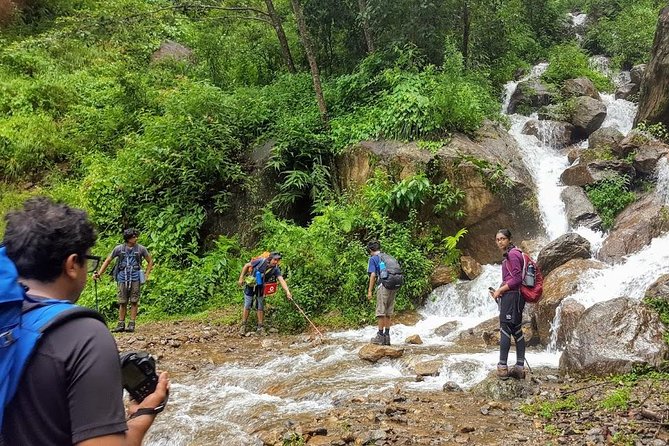
From Chame, the route moves toward Manang with a walk beside the Marsyangdi River. You pass Bhratang and continue through pine forest, with the mountains becoming more immediate as the trail climbs.
The following day includes the approach from Pisang toward Manang Valley. Pisang faces impressive views of Annapurna II and Annapurna III, and the route gains height gradually. That gradual rise is important because the air becomes thinner from here onward.
The itinerary descriptions give these days very long time estimates, about 13 hours each. That may include the full day’s transport and walking arrangements, but you should still prepare for demanding days. This is not a gentle stroll between villages. Uphill sections, altitude, uneven paths, and changing weather can make the schedule feel hard.
The reward is variety. Pine trees, river crossings, dry mountain slopes, village paths, and enormous peaks appear within a short stretch. Manang is not just a place to sleep. It is where the trip changes from a lower-valley journey into a serious high-altitude trek.
Day 6: Acclimatization in Manang and Gangapurna Lake
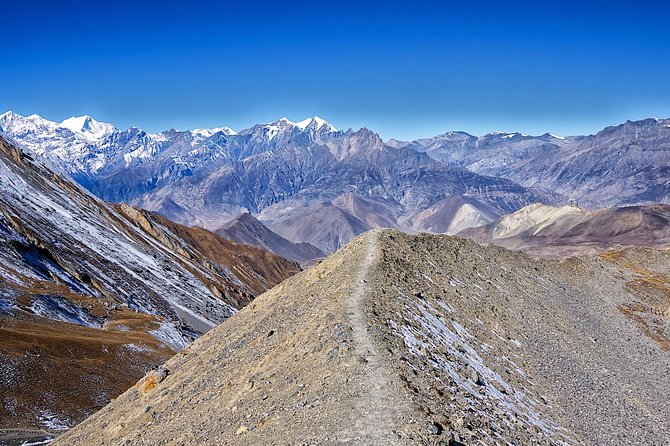
The full rest day in Manang is one of the smartest parts of the plan. You are meant to pause before heading toward Yak Kharka and Thorong La, where the altitude becomes a bigger concern.
Rest does not have to mean staying in your room. The suggested walk to Gangapurna Lake gives you a useful outing without committing to another long transfer. The lake is described as a particularly beautiful spot in Manang Valley, and the walk helps you spend time at altitude without racing higher.
Use this day to check your pace, hydration, clothing, and general condition. The aim is not to prove toughness. If you develop symptoms of altitude sickness, tell your guide at once. The route is compact, so a careful guide and honest communication are essential.
Guides named by the company include Shanta, Buddhi Tamang, Pawan, Anjan, Suman, Indaco, and Anos Tamang. Your assigned guide may be different, but the itinerary is built around having a licensed guide from Kathmandu with you throughout the trek.
Day 7: Manang to Yak Kharka
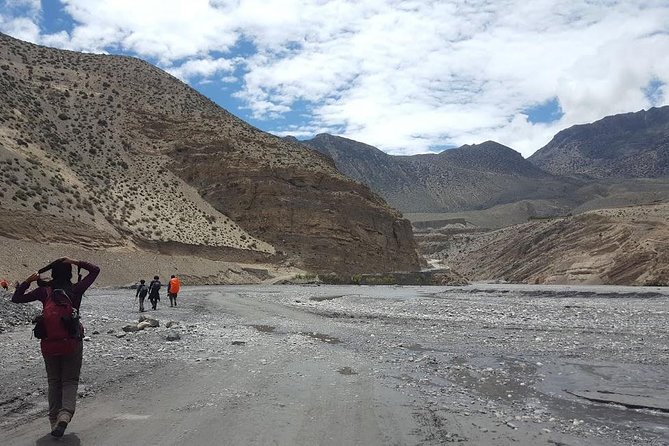
After the rest day, you walk toward Yak Kharka. This is a high-altitude section with mountain views, small streams, and open country around a small settlement.
The day is listed at about 14 hours, so the pace deserves serious attention. The route may be shorter in actual walking time depending on conditions and the exact stopping point, but the published schedule signals a long day. Start with enough water and keep warm layers easy to reach.
Yak Kharka is a staging point before Thorong La. You are not simply collecting another village name. You are positioning yourself for the pass crossing while letting your body adjust to the higher elevation.
Day 8: Toward Thorong Phedi
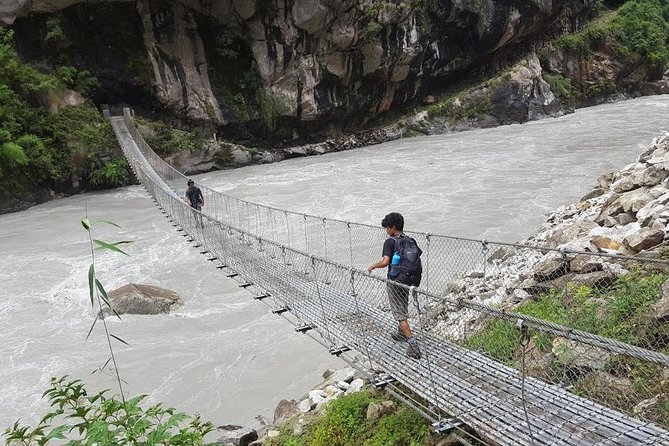
The route continues toward Thorong La, crossing a bridge and climbing beside the Jarjung River. You reach Thorong Phedi, where you stop before the final push to the pass.
This section is a useful reminder that high-altitude walking is often slow. The terrain can look close on a map but take much longer on foot. A steady pace is more useful than trying to keep up with a faster companion.
The day is listed at about 13 hours, which again makes this a demanding part of the trip. Conditions at altitude can change quickly, and the schedule may be affected by weather. The tour requires good weather, and poor conditions can lead to a different date or a full refund if the experience is canceled.
Day 9: Thorong La and the descent to Muktinath
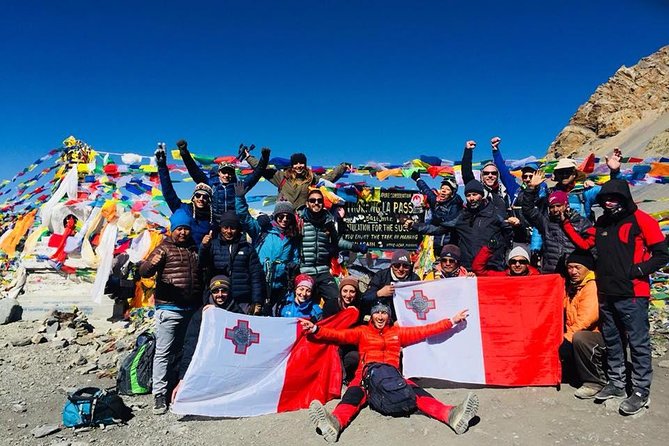
This is the defining day. You start early, climb to Thorong La at 5,416 meters, and reach the pass marked by Buddhist prayer flags. From the top, the route offers broad mountain views and a strong feeling of crossing from one side of the Annapurna region to another.
The pass is a serious physical test. You should expect thin air, cold conditions, and a steep effort before the top. The descent toward Muktinath is not automatically easy, since tired legs and loose or uneven ground can make downhill walking hard.
Muktinath is an important pilgrimage site and gives the route a strong cultural dimension after the pass. The day is listed at about 14 hours, so this is the section where an early start, careful pacing, and a guide’s judgment matter most.
Day 10: Muktinath to Pokhara by road
After Muktinath, you drive to Pokhara. The journey takes about 14 hours and offers changing views along the way, but it is another very long day.
This drive is the price of the short itinerary. You get to finish the high mountain section and reach Pokhara without several additional walking days, yet you spend most of the day seated on the road. The package includes the transport and one night in a Pokhara hotel with breakfast.
Pokhara is a useful change of pace after the pass. The schedule does not list a specific sightseeing activity, so treat the evening as free time to rest rather than expecting a planned city program.
Day 11: Return to Kathmandu
You leave Pokhara in the morning for another long overland journey to Kathmandu, with the route passing farm villages and towns. The drive is listed at about 14 hours, although the exact duration can depend on road conditions.
By this point, you may be more tired from transport than from walking. The benefit is that the tour does not require another domestic flight, and all ground transportation is included. The drawback is that two back-to-back road days leave little room for delays.
You return to Kathmandu in the afternoon according to the planned schedule, with the rest of the day free. The package includes a second Kathmandu hotel night with breakfast, giving you a place to recover before the airport transfer.
Day 12: Airport transfer and departure
On the final day, staff transfer you from the hotel to Tribhuvan International Airport according to your flight time. Airport pickup and drop-off are included.
The timing of this day is flexible around your international departure, but the trip does not include a separate sightseeing program. If you want extra time in Kathmandu before flying home, arrange it outside this package.
What the $975 price really covers
At $975 per person, the package offers good value if you would otherwise need to arrange each major part separately. Included services are:
- Airport pickup and drop-off
- All listed bus and Jeep transport
- Two Kathmandu hotel nights with breakfast
- One Pokhara hotel night with breakfast
- Breakfast, lunch, and dinner during the trek
- A government-licensed guide from Kathmandu
- Private tea-house accommodation on a twin-sharing basis
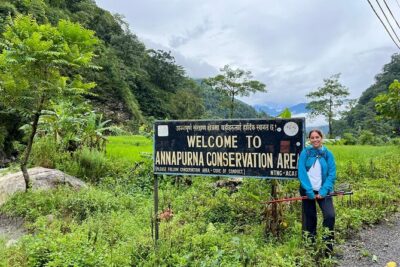
- Annapurna Conservation Area permit
- Sleeping bag, down jacket, and duffle bag
- Seasonal fruit
- Three cups of tea per day during the trek
The price does not include travel insurance, bottled water, beer, soft drinks, laundry, desserts, or tips for the trekking crew. Those extras can add up, especially during a 12-day trip, so budget for them rather than treating the advertised cost as the final amount.
Twin-sharing tea-house rooms are basic by design. You are paying for a practical bed, meals, support, and access to the route, not a luxury mountain resort. For a private trip where only your group participates, the package has a useful mix of support and independence.
Who should choose this trek?
I would recommend it to you if you have moderate physical fitness, limited time, and a clear goal of reaching Thorong La. It also suits people who prefer a private group with a guide rather than arranging every transfer, meal, and permit themselves.
The trip may work well for a solo participant too, since the company has organized solo journeys and provides a guide. Still, solo does not mean easy. You face the same altitude, long road days, and demanding pass crossing as a larger group.
I would hesitate to recommend it if you want a relaxed schedule, dislike rough roads, or have no experience with long uphill walks. The short format leaves fewer spare days if you need to slow down. It is also not wise to remove too much walking by taking a Jeep directly to Manang, since the quick altitude gain can increase health risks.
Practical details that affect your decision
Confirmation is provided at booking, and the meeting point is Tribhuvan International Airport on Ring Road in Kathmandu. The experience is private, so only your group takes part, and public transport is nearby for independent time in the city.
The cancellation terms are straightforward: cancel at least 24 hours before the local start time for a full refund. Cancellations or changes made inside 24 hours are not refunded or accepted. If bad weather or insufficient bookings force cancellation, you are offered another date or experience, or a full refund.
Bring sun protection. One guide specifically advised sunscreen, and the combination of high altitude, open ground, and strong mountain light makes that sensible. A down jacket and sleeping bag are supplied, but you still need suitable personal clothing and footwear for cold, wet, and strenuous conditions.
Should you book the Annapurna Circuit Trek?
Book it if you want the main Annapurna Circuit highlights in a tightly planned package and accept that buses and Jeeps replace part of the traditional walking route. The included permit, meals, guide, equipment, and hotels make $975 a reasonable starting price.
Think twice if the journey itself matters more than reaching the pass quickly. A longer itinerary would give you more time on foot and more room to adjust to altitude. For a fit, time-conscious hiker who wants Manang, Gangapurna Lake, Thorong La, Muktinath, and Pokhara in one organized trip, this is a practical route with real mountain rewards and very little spare time.
FAQ
Where does the Annapurna Circuit Trek start?
The trip starts with airport pickup at Tribhuvan International Airport in Kathmandu, Nepal.
How long does the experience last?
The full package lasts approximately 12 days, including arrival and departure days. The central trekking route is also described as a shorter 10-day itinerary.
What is the highest point of the trek?
The highest point is Thorong La Pass at 5,416 meters.
Is transportation included?
Yes. Airport transfers, bus journeys, and Jeep drives listed in the route are included.
Is accommodation included?
Yes. The package includes two nights in Kathmandu with breakfast, one night in Pokhara with breakfast, and private twin-sharing tea-house accommodation during the trek.
Are meals included?
Breakfast, lunch, and dinner are included during the trek. Breakfast is also included for the hotel stays in Kathmandu and Pokhara.
Is a guide provided?
Yes. A government-licensed guide from Kathmandu is included, and the activity is private for your group.
Is trekking equipment included?
A sleeping bag, down jacket, and duffle bag are included. Travel insurance and personal expenses are not included.
Can I cancel for a full refund?
You can cancel at least 24 hours before the experience start time for a full refund. Cancellations made less than 24 hours before the start time are not refunded.
Just added around Kathmandu
- Traditional Momo Making Class★ 5.0 · 10 reviews
- Wildlife Adventure in Chitwan Nepal★ 4.0 · 4 reviews
- Walking tour of real Kathmandu through back streets.★ 5.0 · 3 reviews
- Kathmandu 2 Nights 3 Days Chitwan Jungle Safari Tour★ 5.0 · 9 reviews
- Kathmandu Street Food Walking Tour – Eat Like a Local★ 5.0 · 3 reviews
- Walking tour of Kathmandu with awesome local guides★ 5.0 · 4 reviews
- Private Manaslu Circuit Trek at Himalayas★ 5.0 · 3 reviews
- Visit Swayambhunath and Bauddhanath Stupa with Guide★ 5.0 · 5 reviews
Annapurna Treks from Kathmandu, compared.
Kathmandu to Annapurna Base Camp (ABC) 5-Day Trek
Read our review →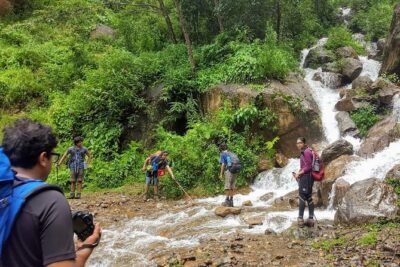
Browse the lists this tour appears in