
Reviewed · ANNAPURNA TREKS FROM KATHMANDU
15-Day Private Annapurna Circuit Trek from Kathmandu
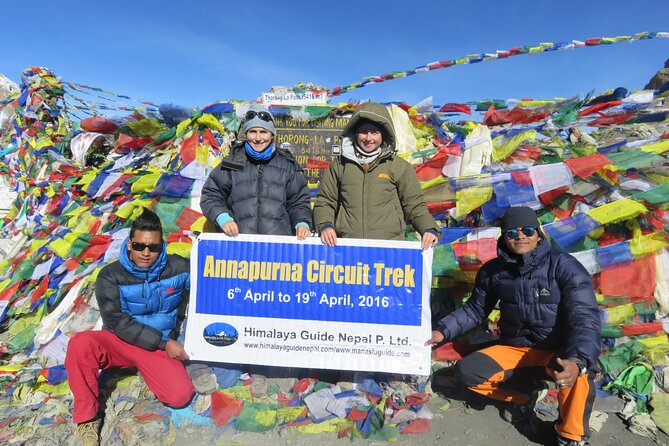
The big draw here is the full Annapurna Circuit in just 15 days, including the demanding Thorong La Pass at 5,416 meters and the sunrise walk to Poon Hill. You move from river valleys and lowland villages into pine country, high mountain settlements, dry Mustang terrain, and rhododendron forests.
I like the private format, since your group can set its own pace and receive direct help from one guide. I also like the family-run feel, including informal Nepali language lessons and a farewell meal. The main catch is the schedule: several days are listed as 12-hour trekking days, and the itinerary contains a few unclear overnight and transport details you should confirm before paying.
Key points to know before booking
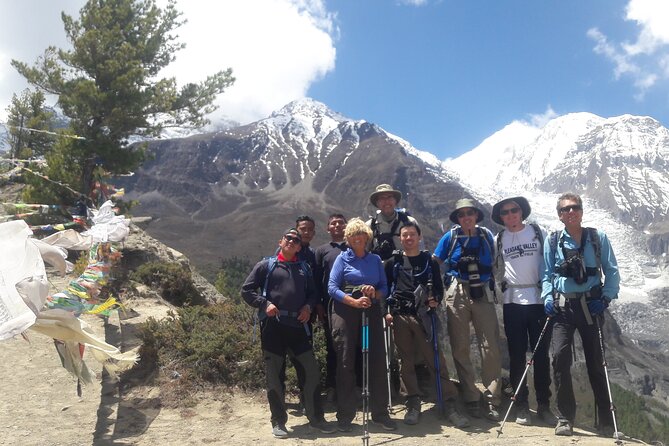
- Thorong La is the centerpiece: You cross one of the world’s highest trekking passes at 5,416 meters.
- The acclimatization day matters: Day 7 in Manang gives your body time to adjust before the high route.
- The trip includes a lot: Airport transfers, permits, guide costs, lodge stays, all listed meals, buses, and several ground transfers are covered.
- The trek ends with Poon Hill: An early sunrise walk gives you another mountain viewpoint after the circuit crossing.
- It is a private trip, not a fixed group departure: Only your party takes part, with a guide assigned by the company.
- Porter service costs extra: You need to carry your own main bag unless you arrange a porter separately.
What this 15-day Annapurna trek is really like
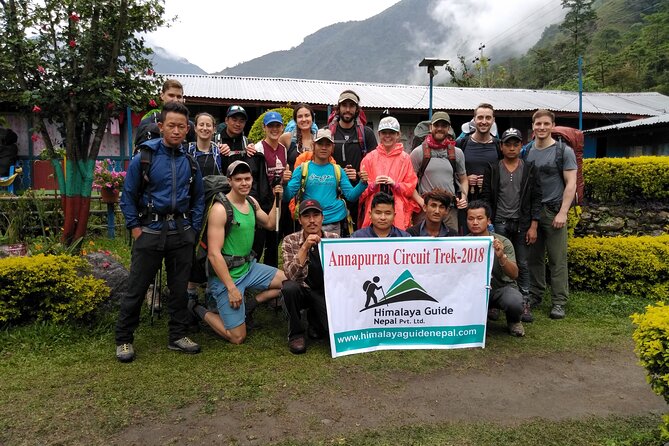
This is not a gentle sightseeing holiday with a few walks added. You will spend long days on foot, with steep climbs, rough mountain paths, suspension bridges, and a high pass where weather and altitude can change the plan.
At $995 per person, the price looks strong for what is included. You receive airport pickup and drop-off, the bus to the trailhead, lodge accommodation, a guide with food and lodging covered, ACAP and TIMS permits, all three daily meals, public transport after Muktinath, a car to Pokhara, and a tourist bus back to Kathmandu. You also avoid the hassle of arranging each permit and transfer yourself.
Still, the value depends on what you expect. A porter is not included, and drinks, showers, battery charging, laundry, phone use, insurance, and extra nights in Kathmandu or Pokhara are your responsibility. The accommodation is described as normal lodge accommodation, not a luxury hotel standard.
The company presents itself as a family-run team. That can make the trip feel personal, and the Nepali language teaching is a nice touch if you want more contact with local life than a standard guided trek offers. Guides connected with the company include Dinesh, Binute, Pratap, and Bashudev, though the person assigned to your departure is not specified.
More Annapurna treks:
- Annapurna Circuit Trek with Tilicho Lake
★ 5.0 · 368 reviews - Annapurna base camp trek 5 Days
★ 5.0 · 252 reviews - Annapurna Base Camp Trek
★ 5.0 · 111 reviews
Days 1 to 3: From Kathmandu to the Marshyangdi valley
Day 1 begins with a local bus from Kathmandu toward Besisahar and Bulbule. The drive follows the Trishuli River, crosses it at Muglin, and continues toward the Marshyangdi valley. The trip description gives the day a short stop duration, but the bus ride itself is listed as six to seven hours, so treat this as a travel day rather than a hiking day.
The local bus is practical and cheaper than a private vehicle, but it may feel basic. If you value comfort or get carsick easily, ask exactly which bus service is used and where you sleep on the first night. The wording around Lamjung, Besisahar, and Bulbule is not perfectly clear, so confirm the precise arrival point.
On Day 2, you walk through villages toward Ngadi, cross to the east side of the Marshyangdi River, and climb toward Bahun Danda, a Brahmin settlement at about 1,270 meters. The route then continues toward Ghermu. This is a good opening stage because you begin with farming villages, river views, and ordinary mountain life before the high peaks dominate the trip.
The day is listed at up to 12 hours, which is a serious start. You should be prepared for a full day of walking, not a short introductory stroll.
Day 3 takes you from Ghermu toward Syange and Chamje. You descend, cross a suspension bridge, then climb steeply along cliff-side sections. These paths provide the first real sense of Himalayan trail travel, but they also demand care, particularly if the surface is wet.
Chamje is a useful point in the route because the valley begins to feel more enclosed and mountainous. The suspension bridges and river crossings are memorable, but you should not expect a relaxed road-free walk all day. The Annapurna Circuit has changing trail conditions and, in places, road access.
Days 4 to 6: Pine forests, stone villages, and Manang
Day 4 crosses the Marshyangdi by suspension bridge and continues through Karte, Dharapani, Bagarchhap, and Danque before reaching Chame. Bagarchhap sits at about 1,960 meters, while Danque is listed at about 2,300 meters. Stone entrances, chortens, and traditional village features begin to appear more often here.
This stage brings a noticeable change in climate and scenery. The route moves from warmer river country toward cooler forest, with pine trees and narrower valleys. You should take the uphill sections steadily. The best private guide will help you avoid racing ahead and arriving tired at altitude.
Day 5 heads through dense forest and a narrow valley toward Manang. The route crosses the Marshyangdi Khola and passes a dramatic curved rock face rising roughly 1,500 meters above the river. The physical effort increases, but so does the sense that you are entering the high part of the circuit.
Manang is one of the most important stops on the trip. It is not simply another overnight village. It is your base before the higher route, so arriving with energy matters more than squeezing in extra distance.
Day 6 offers route choices around Pisang. One option follows the Marshyangdi River, while another crosses the river and later rejoins the trail at Mungji. The lower route passes through pine forest. You should ask your guide which option fits the weather, trail conditions, and your walking ability.
The itinerary lists long days repeatedly, but exact walking times can vary. This is another reason the private format helps. You can discuss pace, rest stops, and how much energy you need to save for Thorong La.
Day 7 in Manang: The rest day you should not skip
Day 7 is reserved for acclimatization in Manang. This is one of the smartest parts of the plan. You are preparing for a pass higher than 5,000 meters, and a rest day gives your body time to adjust before the trail rises sharply.
The optional activities include exploring the area and visiting a lama or monk, with a suggested donation of 100 Nepalese rupees. The details are modest, but that is part of the appeal. You are not being rushed from one major attraction to the next. You have time to walk locally, learn more about the place, and settle into the mountain rhythm.
I would use this day carefully. Keep moving a little, drink enough water, and discuss any headache, nausea, unusual tiredness, or breathing trouble with your guide. The provided information does not promise medical evacuation or insurance, so travel insurance remains essential and is not included.
More day hikes and treks in Kathmandu:
- Everest Base Camp Trek – 14 Days
★ 5.0 · 1,499 reviews - Everest Base Camp Trekking
★ 5.0 · 485 reviews - Nagarkot Sunrise View and Day Hiking from Kathmandu
★ 5.0 · 471 reviews - Everest Base Camp Trekking – 13 Day
★ 5.0 · 365 reviews
Days 8 to 10: The high route and Thorong La Pass
Day 8 climbs from Manang toward Tanki and Ghungsang before leaving the Marshyangdi valley. The trail follows the Jarsang Khola valley, with pastures and sparse scrub replacing the thicker forests below. This is a major visual change. The air feels thinner, the villages are more spread out, and the route becomes more exposed.
Day 9 is described as the final camp before Thorong La. The trail follows yak grazing ground, descends toward the Jarsang Khola, crosses it, and climbs toward Durali Tea Shop. The day is listed at 12 hours, although the exact overnight point should be confirmed because the itinerary uses Thorong La in more than one place.
Day 10 is the hard day. You start early from Thorong Phedi or the final camp and climb toward Thorong La. The pass reaches 5,416 meters, making this the physical and emotional high point of the trip.
The early start is important because the route is long and conditions can worsen later in the day. You will need warm layers, gloves, a hat, sturdy footwear, water, and a daypack that you can carry comfortably. The guide’s main job here is not just navigation. It is helping you judge pace, rest, and safety.
The pass crossing is followed by a long descent toward Muktinath. The climb may be slow, but the descent can also punish your knees. Do not measure success only by reaching the pass. Save enough energy to get safely down.
Days 11 to 12: Muktinath, Jomsom, and the Kali Gandaki route
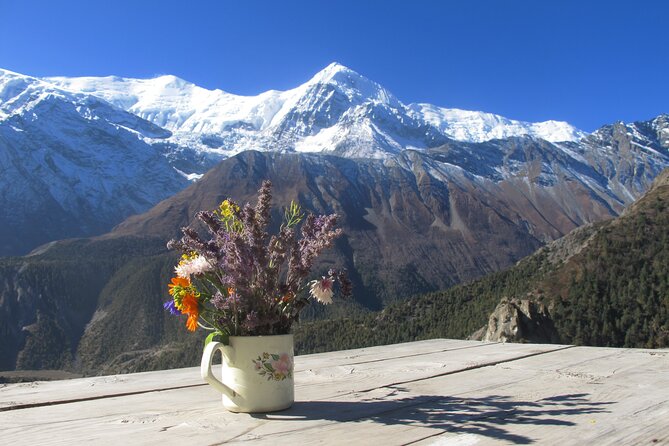
After the pass, Day 11 takes you toward Jomsom. The program allows different route choices from Muktinath, including continuing toward Tatopani and Pokhara or taking a shorter flight from Jomsom to Pokhara. The included transport specifically lists public transportation from Muktinath to Tatopani, so confirm the exact plan before departure.
Muktinath is an important stop after the pass, and the route then moves into the Kali Gandaki valley. The scenery is drier and more open than the forested lower sections. This contrast is one of the pleasures of the circuit: you do not see the same kind of country day after day.
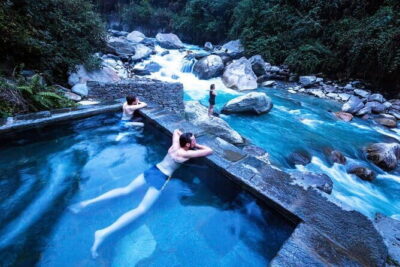
Day 12 continues from the hot spring area toward Shikha. The path crosses a suspension bridge over the Kali Gandaki River and follows the Burung Khola for a time before joining the trail toward the villages. The hot spring is a welcome break after the pass, but the schedule is still active rather than leisurely.
The public transportation portion may feel less polished than a private transfer. That is part of the trade-off for the $995 price. You save money and experience ordinary local travel, but you should expect less control over departure times and comfort.
Days 13 to 15: Rhododendron forest, Poon Hill, and Kathmandu
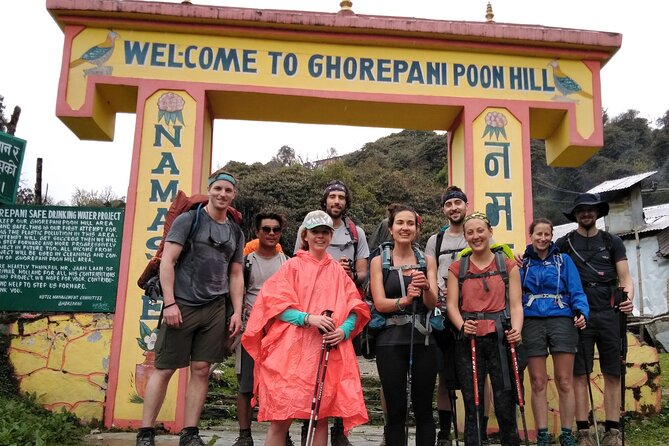
Day 13 passes through the Magar villages of Phalate and Chitre, then climbs through rhododendron and pine forest to Ghorepani. Terraced fields and village paths replace the dry high-country feel of the previous days.
The day is described as hard, and the climb can feel especially demanding after the long pass crossing. Ghorepani is important because it sets up the early morning walk to Poon Hill. Try to keep the evening quiet and prepare your clothes and water before bed.
Day 14 starts early with a 40 to 50-minute climb to Poon Hill at about 3,210 meters. From the viewpoint, you may see Dhaulagiri, Tukuche Peak, Nilgiri, Annapurna South, and Hiunchuli at sunrise. This is a strong final mountain moment because it gives you a broad view after days spent inside valleys.
The route then continues toward Pokhara Lakeside. A car transfer from Nayapul to Pokhara is included. You will likely appreciate the change from footpaths and lodges to lakeside accommodation, though any extra night in Pokhara is not included.
Day 15 returns to Kathmandu by deluxe tourist bus. The ride is listed at about 12 hours, so do not treat it as a quick airport transfer. You can choose among the transport options offered, but the itinerary specifically includes the tourist bus. A farewell lunch or dinner is provided at a suitable time.
What is included, and where the price can rise
The package covers more than the headline price first suggests:
- Airport pickup and drop-off
- Bus transport to Bulbule
- Guide wages, food, lodging, equipment, insurance, and transport
- Lodge accommodation during the trek
- ACAP permit and TIMS card
- Breakfast, lunch, and dinner for 15 days
- Public transportation from Muktinath to Tatopani
- Car transport from Nayapul to Pokhara
- Tourist bus from Pokhara to Kathmandu
- A farewell meal and a small company gift
You still pay for travel insurance, drinks, personal expenses, charging, showers, boiled water, laundry, and extra nights in Kathmandu or Pokhara. Porter service is available by request, but it is not part of the listed price.
That last point deserves attention. Carrying your own luggage for 15 days, including the high-pass section, may be too much for some people. Ask for the porter cost before booking so your true budget is clear.
Who should book this private circuit
I would recommend this trip to someone with moderate fitness who wants the classic Annapurna route without joining a large group. You should be comfortable with long walking days, simple lodges, local buses, and changing trail conditions.
The private setup suits couples, families with suitable fitness, and small groups of friends. It also helps if you want to ask questions, practice a little Nepali, or adjust the pace with one guide rather than follow a fixed group.
I would be cautious if you want short walking days, guaranteed hotel comfort, or a fully private vehicle. The 12-hour stages and public transport make this a practical trekking package, not a soft adventure holiday.
The company has received strong praise for friendly service, careful support, and guides such as Dinesh, Binute, Pratap, and Bashudev. You can also arrange details through WhatsApp, with Chandra handling arrangements on some departures. Still, ask who your guide will be, whether a porter is available, and how the Day 9 and Day 10 overnight points are handled.
Should you book it?
Book this trek if you want the full Annapurna experience, including Thorong La, Muktinath, Poon Hill, village life, local transport, and a private guide at a competitive price. The package covers the costly and confusing basics, while the family-run approach may give the trip a more personal feel.
Do not book it without clarification if you dislike long days, plan to carry heavy luggage, or expect upscale accommodation. Before confirming, get written answers about the exact first-night village, the Thorong Phedi and pass schedule, porter pricing, and the transport choice from Muktinath. If those points suit you, this is a strong-value route for a fit hiker who wants Nepal on foot rather than through a bus window.
FAQ
Is airport pickup included?
Yes. Airport pickup and drop-off between Tribhuvan International Airport and your hotel are included.
Is this a private trek?
Yes. Only your group participates in the activity, with an experienced guide assigned to your party.
Is a porter included?
No. Porter service is not included, but it can be arranged on request.
Are meals included for all 15 days?
The package lists breakfast, lunch, and dinner for 15 days.
Is travel insurance included?
No. Travel insurance is your responsibility and is specifically excluded from the price.
Can I cancel for a full refund?
Yes, if you cancel at least 24 hours before the experience start time. Cancellations made less than 24 hours ahead are not refundable, and changes within that period are not accepted.
Just added around Kathmandu
- Traditional Momo Making Class★ 5.0 · 10 reviews
- Wildlife Adventure in Chitwan Nepal★ 4.0 · 4 reviews
- Walking tour of real Kathmandu through back streets.★ 5.0 · 3 reviews
- Kathmandu 2 Nights 3 Days Chitwan Jungle Safari Tour★ 5.0 · 9 reviews
- Kathmandu Street Food Walking Tour – Eat Like a Local★ 5.0 · 3 reviews
- Private Manaslu Circuit Trek at Himalayas★ 5.0 · 3 reviews
- Walking tour of Kathmandu with awesome local guides★ 5.0 · 4 reviews
- Visit Swayambhunath and Bauddhanath Stupa with Guide★ 5.0 · 5 reviews
Annapurna Treks from Kathmandu, compared.
Kathmandu to Annapurna Base Camp (ABC) 5-Day Trek
Read our review →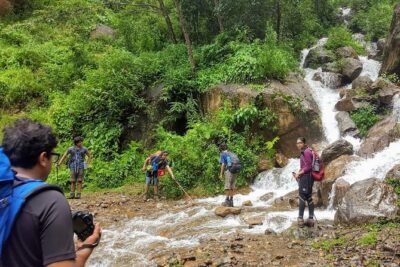
Browse the lists this tour appears in