
Reviewed · ANNAPURNA TREKS FROM KATHMANDU
Annapurna Circuit Trek
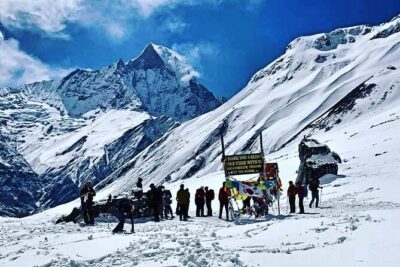
The high point is literal: Thorong La at 5,416 meters. This 14-day private trek takes you from humid river valleys and forest to dry mountain country, then down toward Jomsom, Tatopani, and Poon Hill. It is a big Himalayan journey, not a casual walk.
I like the private format, which gives your guide room to adjust the pace and help with altitude. I also like that permits, three daily meals, teahouse lodging, transport, and a first-aid kit are built in. The catch is the physical demand: cold nights can reach about -20°C, and the pass day is long and strenuous.
Key points before you book
- Thorong La is the main test: You cross the 5,416-meter pass on a seven to eight-hour day from Thorong Phedi to Muktinath.
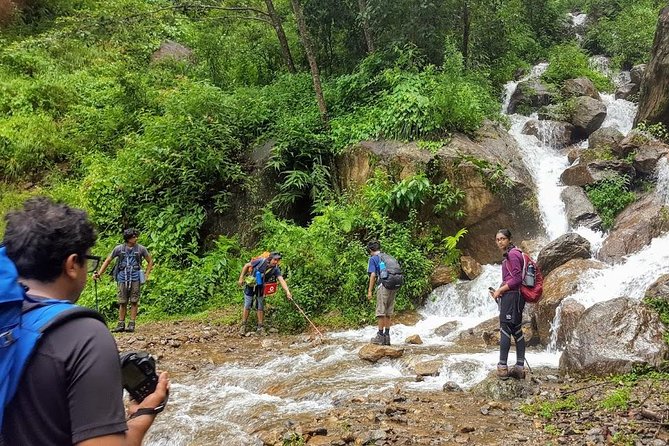
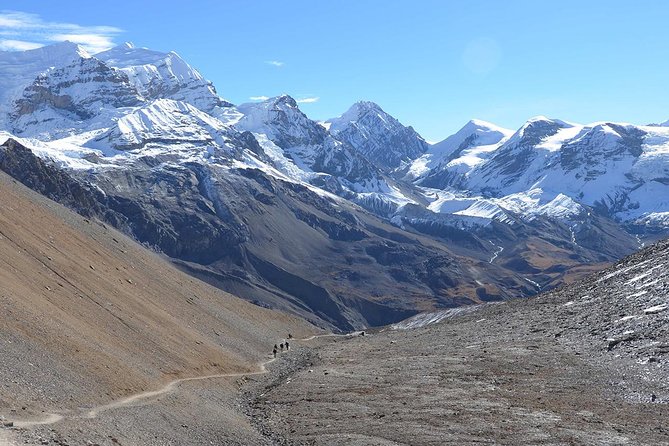
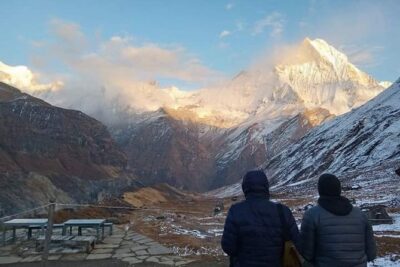
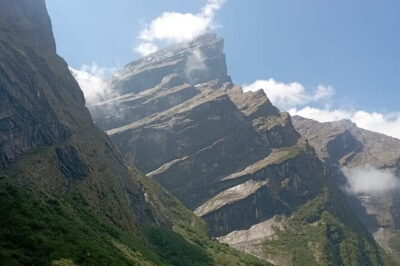
- The scenery changes sharply: Expect forests, waterfalls, high dry plains, snow peaks, and deep river valleys on one route.
- Manang gives you an acclimatization day: This rest day matters before you climb higher toward Yak Kharka and the pass.
- Your guide is central to the experience: Guides including Santosh, Ganesh, Rabin, Sandip, and Chakra have been praised for patience, route help, and clear advice.
- The price covers the practical basics: You get teahouse stays, meals, permits, licensed guiding, listed transport, a map, and taxes.
- You still need a serious personal budget: Insurance, rescue cover, drinks, showers, laundry, charging, bottled or boiled water, tips, and a porter are extra.
Why the Annapurna Circuit still earns its reputation
I like this route because it does not give you just one kind of mountain view. The first days are green and river-cut. Around Manang, the air gets thinner and the scenery turns broad, dry, and high. After Thorong La, the route shifts again toward Muktinath and the Kali Gandaki area, followed by hot springs and the sunrise walk at Poon Hill.
That variety gives the trek its real value. You are not repeating the same forest trail for two weeks. You move through several climates and communities, while your guide deals with the route, permits, timing, and daily arrangements.
This is also a private activity, so only your group takes part. That can make a major difference on a difficult route. You can ask questions, slow down when needed, and get direct help from the guide. Guides named in the experience feedback include Santosh, Ganesh, Rabin, Sandip, and Chakra, with particular praise for encouragement on the pass, help with decisions, and explanations of local customs and language.
The route is still demanding. You need moderate physical fitness, but that phrase should not make you too comfortable. Several days last five to eight hours, and the highest point is nearly 18,000 feet. Cold, wind, thin air, and uneven trails can turn a beautiful day into hard work.
More Annapurna treks:
- Annapurna Circuit Trek with Tilicho Lake
★ 5.0 · 368 reviews - Annapurna base camp trek 5 Days
★ 5.0 · 252 reviews - Annapurna Base Camp Trek
★ 5.0 · 111 reviews
Day 1: Kathmandu to Jagat by a long mountain road
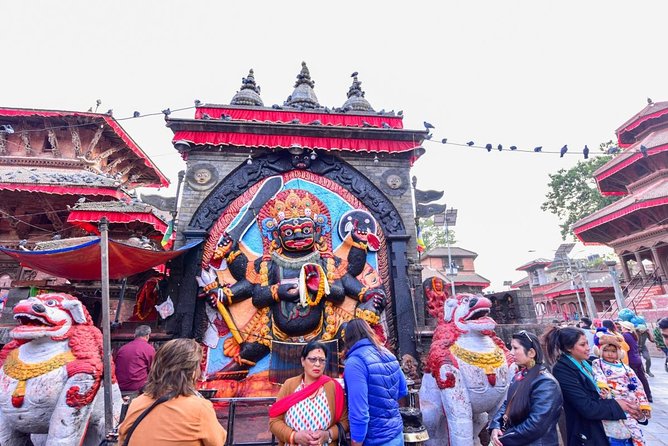
Your first day is mostly transport. You drive from Kathmandu toward Jagat, passing through Besisahar, with the trip taking about eight to nine hours.
This is useful rather than glamorous. It gets you deeper into the route and saves several walking days at lower elevation. The tradeoff is a long road day at the start, so do not expect to arrive fresh and ready for a major hike.
The listed package includes bus transport from Kathmandu to Jagat. Pickup is offered, and arrival flight details are requested when you book. Confirm the exact pickup point and timing before arrival.
Days 2 and 3: Jagat to Dharapani and Chame
From Jagat, you trek to Dharapani in about six to seven hours, climbing to 1,960 meters. The route then continues to Chame at 2,710 meters, with another five to six hours on foot.
This section introduces the rhythm of the trek: breakfast, walking, lunch on the route, arrival at a teahouse, and dinner before an early night. Three standard meals are included during the trek, which keeps the daily cost easier to control.
The scenery begins in greener country, with forests, waterfalls, and rushing water. The route also passes through local communities, giving you more than a string of mountain viewpoints. Your guide can help explain the different ethnic groups and local traditions along the way.
Chame is an important step upward. You are not yet near the highest part of the journey, but the increase from Jagat to Chame gives your body time to adjust. Do not treat these early days as a race.
Days 4 and 5: Chame to Pisang to Manang
The walk from Chame to Pisang takes about five to six hours and reaches 3,300 meters. From Pisang, you continue to Manang at 3,540 meters in about six to seven hours.
This is where the route begins to feel properly high. The trees thin out, the air gets colder, and the mountains become more immediate. Pisang is a useful overnight stop because it breaks up the climb toward Manang instead of forcing one punishing day.
Manang is one of the most important places on the trek. It is not simply another overnight village. You spend the next day there for acclimatization, giving yourself time to adjust before the route climbs above 4,000 meters.
Your guide’s role matters here. A good guide watches your pace, listens when you feel unwell, and helps you make sensible choices. Several guides associated with this trip, including Ganesh, Santosh, and Rabin, have been praised for patience and steady encouragement. That personal attention is more useful than a polished speech about the mountains.
More day hikes and treks in Kathmandu:
- Everest Base Camp Trek – 14 Days
★ 5.0 · 1,499 reviews - Everest Base Camp Trekking
★ 5.0 · 485 reviews - Nagarkot Sunrise View and Day Hiking from Kathmandu
★ 5.0 · 471 reviews - Everest Base Camp Trekking – 13 Day
★ 5.0 · 365 reviews
Day 6: Manang acclimatization
The rest day in Manang is one of the strongest parts of the schedule. You gain altitude slowly, then pause before the harder section to Yak Kharka and Thorong Phedi.
The word rest can mislead you. This is a day to recover, look around, and let your body settle. Your guide can help organize the day, but the supplied information does not specify a fixed acclimatization walk, so ask what your group will do.
You should use this day to check your layers, water, snacks, and personal gear. Charging, showers, laundry, drinks, and bottled or boiled water are personal expenses, so plan for those costs before leaving Kathmandu.
Days 7 and 8: Yak Kharka and Thorong Phedi
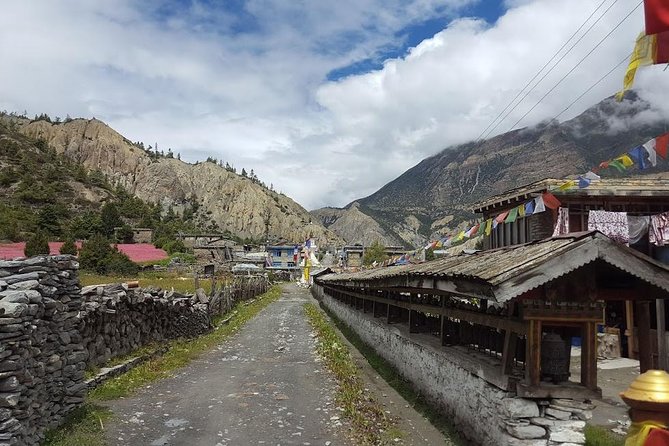
The walk from Manang to Yak Kharka takes four to five hours and reaches 4,120 meters. The following day to Thorong Phedi takes another four to five hours, reaching roughly 4,450 meters.
These are shorter walking days on paper, but the altitude changes the effort. You may cover fewer hours and still feel more tired than during the longer days below. Keep your pace steady and follow your guide’s advice.
Thorong Phedi is the staging point for the pass crossing. It is not the place to spend energy proving anything. Eat, drink, prepare your clothes, and get as much rest as the conditions allow.
Cold is a serious consideration. One account describes night temperatures dropping to -20°C, with wind around 20 kilometers per hour and water freezing in a normal bottle. That may not be your exact weather, but it tells you what kind of conditions are possible. Bring real cold-weather gear, not just a fleece and hope.
Day 9: Crossing Thorong La to Muktinath
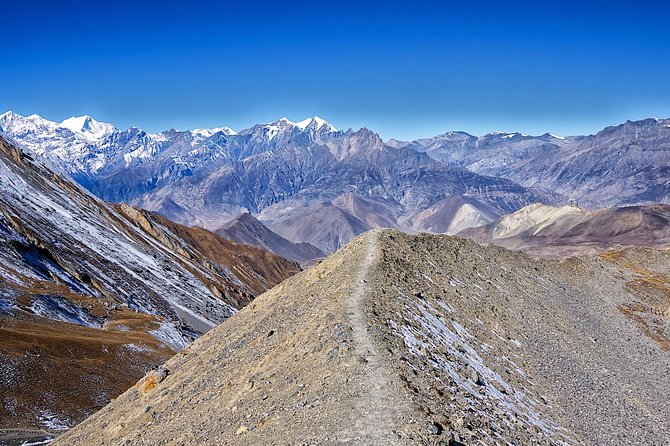
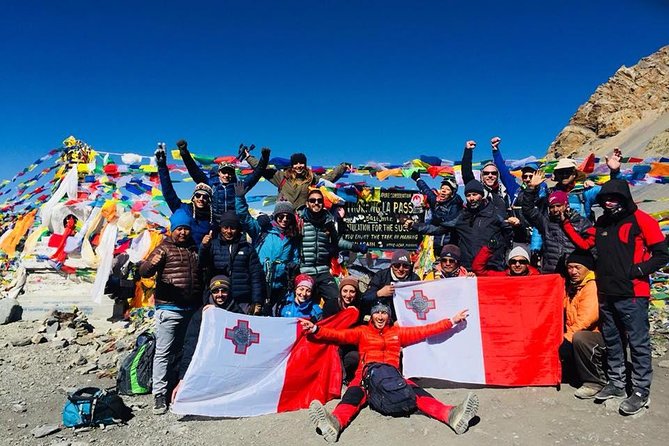
This is the headline day. You climb from Thorong Phedi over Thorong La at 5,416 meters, then descend to Muktinath at 3,802 meters. The total takes about seven to eight hours.
The pass crossing is physically hard because you gain altitude quickly and then descend for hours. The reward is a dramatic change in scenery and the satisfaction of completing the route’s toughest landmark. The descent to Muktinath also gives your lungs a welcome break as you lose elevation.
Your guide becomes especially important on this day. Ganesh, for example, received particular praise for patient encouragement during the Thorong La crossing. The value of a private guide is clear here: you have someone focused on your group rather than a large crowd.
Do not book this trek if your main goal is easy sightseeing. Thorong La is a serious high-altitude crossing, and the itinerary does not offer a shortcut around the physical challenge.
Days 10 and 11: Muktinath to Jomsom and Tatopani
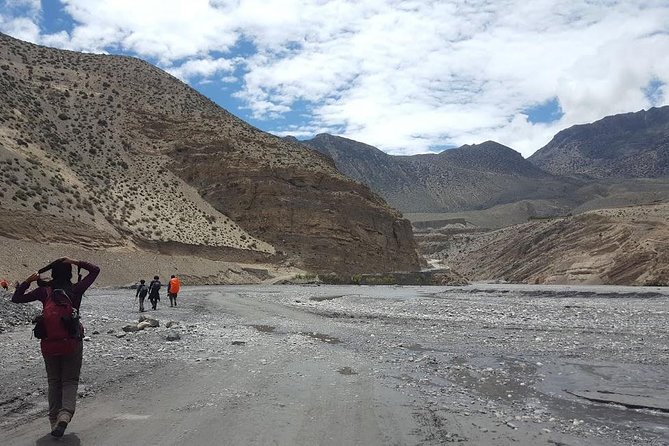
You walk from Muktinath to Jomsom in about five to six hours, descending to 2,743 meters. Muktinath is an important religious site, and the route gives you a chance to see how the mountain environment changes after the pass.
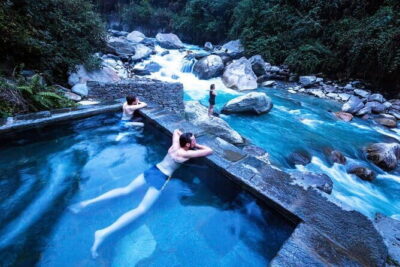
The next day uses transport from Jomsom to Tatopani, taking about four to five hours. Tatopani is known for its natural hot spring, a welcome pause after the pass and long descents.
This section shows why the Annapurna Circuit is more than a high-pass trek. You move through places with different climates, religious traditions, and daily rhythms. The bus ride also saves your legs, although road conditions can make mountain transport less relaxing than the timetable suggests.
The package specifically includes bus transport from Jomsom to Tatopani. Teahouse lodging continues, and meals are included during the trekking portion.
Days 12 and 13: Tatopani to Ghorepani and Poon Hill
From Tatopani, you climb to Ghorepani in about seven to eight hours, reaching 2,750 meters. After the hot spring and descent from the high pass, this is a real uphill return.
The next morning begins early with a hike to Poon Hill at 3,210 meters. You then walk down to Nayapul and take a taxi to Pokhara. The full day takes about seven to eight hours.
Poon Hill gives the trek a strong final viewpoint rather than ending immediately after Thorong La. The early start is tiring, but the payoff is a broad mountain panorama at sunrise. Your guide can help manage the timing, which matters when the day includes both the viewpoint and the long walk down.
The route from Ghorepani to Nayapul is not a gentle finale. Descending for hours can be tough on knees, especially after two weeks of walking. Trekking poles and careful footwear are sensible choices, though they are not listed as included equipment.
Day 14: Pokhara to Kathmandu
The final day is a drive from Pokhara, at about 822 meters, back to Kathmandu at about 1,400 meters.
This closes the route by road rather than with another mountain walk. The itinerary lists the drive, while the included transport details specifically mention Kathmandu to Jagat, Jomsom to Tatopani, and Nayapul to Pokhara. Ask the operator to confirm the exact arrangement and cost for Pokhara to Kathmandu before booking.
That small clarification is worth making. Long transfers affect both your final-day schedule and your overall value calculation.
What the $1,175 price really covers
At $1,175, the price is not just paying for a guide. It includes teahouse accommodation, three standard meals per trekking day, an experienced government-licensed guide, Annapurna Conservation Area permits, the TIMS fee, a trekking map, a first-aid medical kit, government tax, and the listed transport.
That is a useful bundle for a private Himalayan trek. You avoid arranging each teahouse, permit, meal, and transport leg yourself. You also get a guide who can help with daily decisions when the route becomes tiring or the weather shifts.
Still, you need to budget beyond the headline price. Travel and rescue insurance are not included, and you should treat rescue cover as essential for a high-altitude trek. Personal expenses include phone calls, laundry, bar bills, battery charging, showers, bottled or boiled water, and other extras. Tips for guides and porters are also separate.
A porter is not included. You can hire one if needed, but the additional cost should be agreed in advance. Pack with the porter question in mind rather than assuming it will be arranged automatically.
Guide quality and the private-group advantage
The strongest personal element is the guide. Names connected with this experience include Rabin, Laxman, Santosh, Ganesh, Sandip, Chakra, and others. You cannot assume a particular guide unless the company confirms it, but you can ask who will lead your departure.
The most useful guide qualities here are practical: answering questions, explaining local customs and language, helping with decisions, keeping you informed about the next day, and encouraging you on difficult climbs. That matters more than grand storytelling when you are cold, tired, or deciding how to handle altitude.
Because this is private, your group participates alone. It suits people who want direct attention and do not want to match the pace of a large fixed group. Solo bookers can also benefit from the chance to join a small arrangement, but confirm the final group setup before paying.
Who should book this trek?
You should consider it if you want a classic Nepal trek with major variety and are ready for long walking days. It fits people who value a guide, prefer having the main logistics arranged, and want teahouse travel rather than a luxury lodge experience.
You should think twice if you dislike cold, basic accommodation, long road transfers, or high-altitude walking. The itinerary has demanding days even though several walking times are moderate. The Thorong La crossing is the clearest dividing line: if reaching 5,416 meters does not appeal to you, this is the wrong route.
Book only after checking insurance, gear, porter needs, the guide assignment, and the final transport from Pokhara to Kathmandu. The cancellation policy allows a full refund up to six full days before the start time, with smaller or no refunds closer to departure.
Should you book the Annapurna Circuit Trek?
I would book this at $1,175 if I wanted the Annapurna Circuit without managing every permit, teahouse, meal, and transfer myself. The included services cover the core needs, and the private guide format is especially valuable on the Thorong La section.
I would not book it as a relaxed holiday. You need moderate fitness, proper cold-weather clothing, insurance with rescue cover, and patience for long walking and driving days. If you accept that bargain, this trek gives you forests, high dry country, sacred sites, hot springs, and Poon Hill in one demanding but rewarding route.
FAQ
Where does the Annapurna Circuit Trek start?
The trip begins with a drive from Kathmandu to Jagat via Besisahar. The drive takes about eight to nine hours.
How long does the trek last?
The listed duration is approximately 14 days, including the drives from Kathmandu to Jagat, Jomsom to Tatopani, Nayapul to Pokhara, and Pokhara to Kathmandu.
What is the highest point on the route?
The highest point is Thorong La, at 5,416 meters, or about 17,769 feet.
Is there an acclimatization day?
Yes. Day 6 is an acclimatization day in Manang before the route continues to Yak Kharka and Thorong Phedi.
Are meals included?
Yes. Three standard meals, breakfast, lunch, and dinner, are included during the trekking portion.
What type of accommodation is provided?
Teahouse accommodation is included during the trek.
Is transport included?
Bus transport is included from Kathmandu to Jagat and from Jomsom to Tatopani. Private transport is included from Nayapul to Pokhara. The itinerary also lists a drive from Pokhara to Kathmandu, so confirm that final transfer when booking.
Is a porter included?
No. A porter is not included, but you can arrange one if required. The cost is a personal expense.
What is excluded from the price?
Travel and rescue insurance, personal expenses, bottled or boiled water, showers, laundry, battery charging, phone calls, bar bills, tips, and any porter service are excluded.
Just added around Kathmandu
- Traditional Momo Making Class★ 5.0 · 10 reviews
- Wildlife Adventure in Chitwan Nepal★ 4.0 · 4 reviews
- Walking tour of real Kathmandu through back streets.★ 5.0 · 3 reviews
- Kathmandu 2 Nights 3 Days Chitwan Jungle Safari Tour★ 5.0 · 9 reviews
- Kathmandu Street Food Walking Tour – Eat Like a Local★ 5.0 · 3 reviews
- Private Manaslu Circuit Trek at Himalayas★ 5.0 · 3 reviews
- Walking tour of Kathmandu with awesome local guides★ 5.0 · 4 reviews
- Visit Swayambhunath and Bauddhanath Stupa with Guide★ 5.0 · 5 reviews
Annapurna Treks from Kathmandu, compared.
Kathmandu to Annapurna Base Camp (ABC) 5-Day Trek
Read our review →
11-Day Hike Tour to Annapurna Base Camp Bliss in Kathmandu
Read our review →Browse the lists this tour appears in