
Reviewed · EVEREST BASE CAMP TREKS FROM KATHMANDU
Everest Base Camp Trek 15 days | Local Guide | Flexible Itinerary
The main draw here is the classic walk from Lukla to Everest Base Camp at 5,364 meters, followed by sunrise from Kala Patthar at 5,545 meters. I like the sensible acclimatization plan, with extra nights in Namche Bazaar and Dingboche, and I like the quieter return through Phortse rather than simply retracing every step.
The price includes domestic flights, permits, a guide, porter support, tea house meals, a sleeping bag, down jacket, and hiking poles. That is a strong package for $1,890. The catch is the altitude and the long walking days. You need good fitness, travel insurance covering trekking up to 6,000 meters, and patience if poor weather delays the Lukla flight.
Key points to know before booking
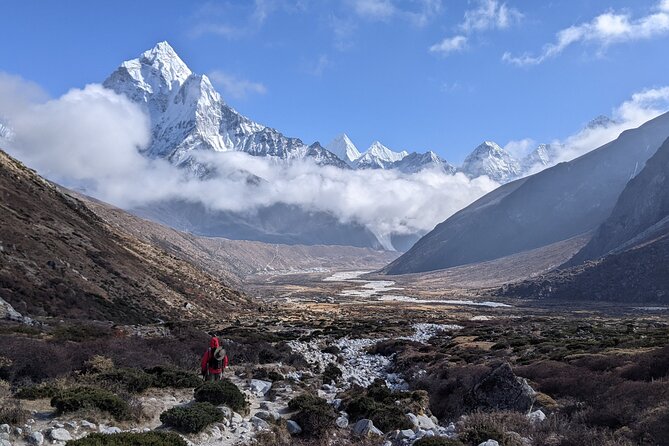
- Kala Patthar is the high point: The early climb reaches 5,545 meters and gives the trip’s best stated mountain viewpoint.
- Two acclimatization stops help: You spend an extra day in Namche at 3,440 meters and another in Dingboche.
- The return route is less repetitive: Days 11 and 12 use the Phortse and Mong Danda route, described as quieter than the main trail.
- A local support team is included: You get an English-speaking, licensed guide, one porter for every two people, and an assistant guide for groups of five or more.
- The package covers major trekking costs: Flights, permits, meals, tea house accommodation, gear, and private transport are included.
- The trip is private: Only your group takes part, with an itinerary described as flexible.
Why this 15-day route works
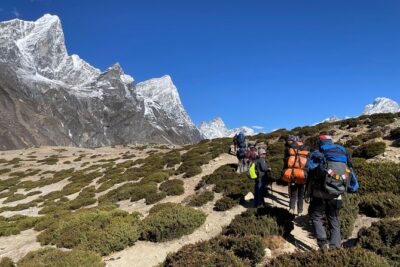
This is not a rushed dash to Base Camp. The schedule gives your body time to adjust as the trail climbs from Kathmandu to Lukla, Namche, Dingboche, Lobuche, and finally Base Camp.
That matters in the Everest region. You cannot train your way out of thin air, and the itinerary’s two acclimatization days are among its strongest features. You stay active on those days rather than simply sitting in a lodge, with side walks around Namche and Dingboche.
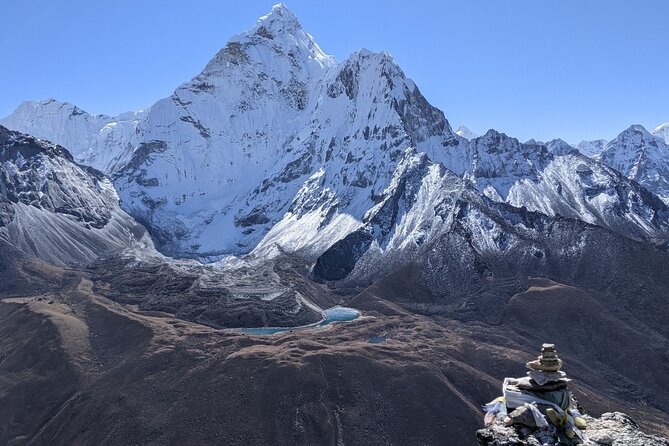
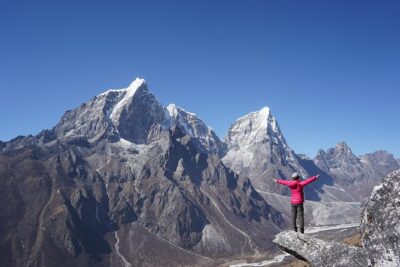
The route also gives you a proper return. After reaching Base Camp and climbing Kala Patthar, you head through Pangboche, Phortse, Phortse Thanga, and Mong Danda before returning to Lukla. That adds variety and gives you different views of Ama Dablam, Thamserku, Tengboche, and the surrounding valleys.
The trip is private, so your walking pace and daily rhythm are handled within your own group. The phrase flexible itinerary should not be taken to mean unlimited changes. High altitude, lodge availability, weather, and flight schedules still control much of the route.
More Everest Base Camp treks:
- Everest Base Camp Trek – 14 Days
★ 5.0 · 1,499 reviews - Everest Base Camp Trekking
★ 5.0 · 485 reviews - Everest Base Camp Trekking – 13 Day
★ 5.0 · 365 reviews
Day 1: Kathmandu arrival and airport pickup
Your trip begins at Tribhuvan International Airport in Kathmandu. A Life Himalaya representative meets you and transfers you to your hotel.
This is a practical first day rather than a sightseeing day. You will likely value the airport pickup after an international flight, especially if Kathmandu is your first visit to Nepal. The supplied plan does not include lunch or dinner in Kathmandu, so budget separately for city meals.
Use this time to confirm your gear, meet the guide, and check the domestic baggage limit. The flight allowance is 10 kilograms for a main bag and 5 kilograms for hand carry, 15 kilograms total per person. Porters carry 20 kilograms for two people, or 10 kilograms of each guest’s load.
Day 2: Flying to Lukla and beginning the trail
The early flight goes to Tenzing Hillary Airport in Lukla, at 2,810 meters. Lukla is the main gateway to the Everest trekking area, and the flight itself is a key part of the trip.
The schedule lists about one hour for the flight stop, but the full airport experience can be affected by weather. This is one reason the final day in Kathmandu is useful. If your Lukla flight is delayed, the whole mountain schedule can shift.
After arrival, the trek begins in the Lukla area. The first day on foot is not described in full detail, so confirm the exact walking plan with the operator before departure. You should expect a gradual change from the airport town to the classic Sherpa trail.
Day 3: Hillary Bridge and Namche Bazaar
After breakfast, you walk for about five hours toward Namche Bazaar. The route includes the Hillary Bridge and follows the Dudh Koshi valley toward the Sherpa capital.
Namche sits at 3,440 meters and is one of the most important stops on the route. It is more than a place to sleep. This is where you begin to feel the altitude, sort out your walking rhythm, and see Sherpa village life take shape.
The walk is demanding because you are gaining height after the Lukla start. Keep your pace steady and drink regularly. The bridge crossing is a memorable trail feature, but the real value of this day is arriving at Namche in time for the acclimatization schedule.
More day hikes and treks in Kathmandu:
- Nagarkot Sunrise View and Day Hiking from Kathmandu
★ 5.0 · 471 reviews - Annapurna Circuit Trek with Tilicho Lake
★ 5.0 · 368 reviews - Everest Base Camp Trek -14 Days
★ 5.0 · 321 reviews - Annapurna base camp trek 5 Days
★ 5.0 · 252 reviews
Day 4: Acclimatization around Namche
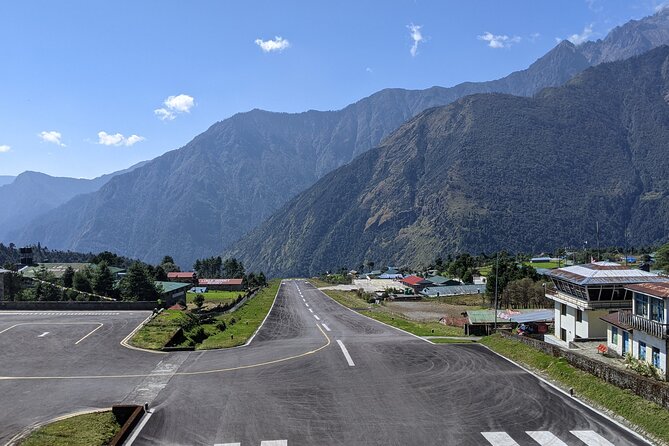
You spend an extra day in Namche, with a side excursion to Hotel Everest View listed in the plan. The stop is at roughly 3,440 meters and is intended to help your body adjust.
This is a good example of a high-altitude trekking rule: climb higher during the day, then return to sleep lower when possible. The plan keeps you active while protecting the main goal of reaching Base Camp.
You should not treat this as a lazy rest day. Walk at an easy pace, enjoy the mountain views, and save your legs for the days ahead. Admission to Hotel Everest View is not included, so carry some local currency if your guide advises a visit.
Day 5: Tengboche Gompa
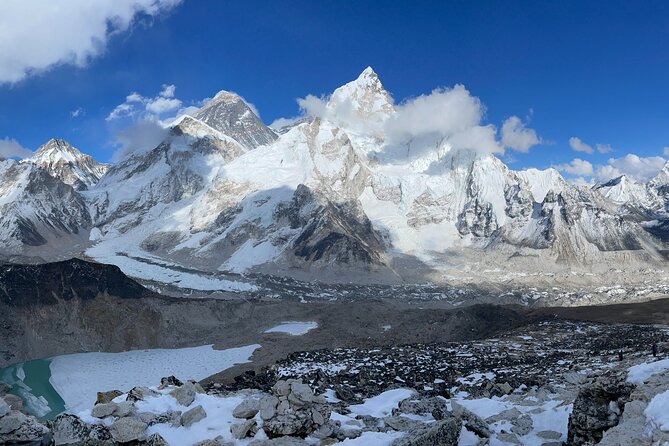
The trail climbs for around five hours from Namche to Tengboche. The day combines mountain scenery with one of the region’s major Buddhist monasteries, Tengboche Gompa.
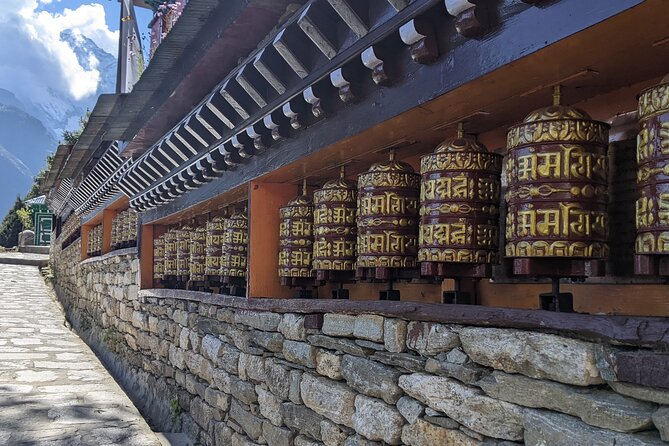
This is one of the cultural highlights of the trek. The route is not only about reaching a famous point on a map. Sherpa villages, prayer flags, monasteries, and daily life give the walk a stronger sense of place.
The climb can feel tough after Namche, with repeated uphill sections. Your guide’s role matters here. Guides named in the company’s past trips include Raj, Shiba, Sagar, Ram, Rabin, and Jal. The exact guide for your departure is not stated, so ask for the name before you travel.
Day 6: Moving on to Dingboche
The walk to Dingboche takes about four to five hours. You follow the Imja Khola, cross a bridge, and pass the point where the trail separates toward Pheriche and Dingboche.
Dingboche is an important high-altitude settlement and a sensible place for another acclimatization day. By now, the air is thinner, nights are colder, and small tasks can take more effort.
The itinerary says the trail follows the route toward Lobuche while reaching Dingboche. Exact daily stopping points can change with conditions, so listen to the guide rather than treating every printed detail as fixed.
Day 7: Acclimatization at Dingboche
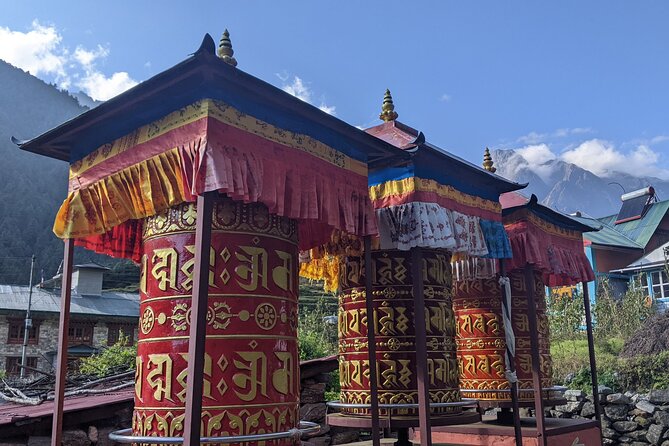
The second acclimatization day is spent in Dingboche. The plan calls for side excursions while staying active at high altitude.
This is where the itinerary shows good judgment. A quick schedule may reach Base Camp sooner, but it gives your body less time to respond to the height. The extra day also gives you a chance to notice how you are coping before the trail gets more serious.
Tell your guide about headaches, nausea, unusual tiredness, or trouble sleeping. The company places strong emphasis on safety, but you still need to report symptoms clearly. A guide cannot help with a problem you keep quiet.
Day 8: Toward Lobuche and the Thukla area
After Dingboche, the trail leads through broad mountain scenery toward Thukla. The walk is described as gentle at first, with views opening toward the high peaks.
This is a shorter-sounding day than the final approach to Base Camp, but the altitude makes every climb count. At Thukla, the trail rises toward the pass area and the route becomes more exposed and stark.
You are now close to the main goal, but do not rush. The strongest part of this trek is the steady progression. Your guide and porter team can help keep your load manageable, but you still need to walk within your own limits.
Day 9: Everest Base Camp at 5,364 meters
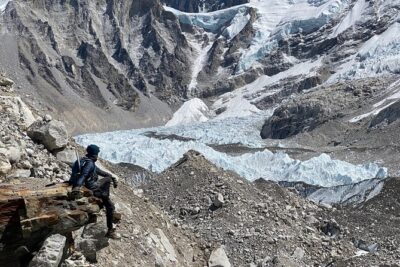
This is the main event. You walk toward Everest Base Camp, following the glacier and high trail from the Lobuche area.
Reaching Base Camp is rewarding, but it is worth setting expectations. From Base Camp, the full summit of Everest may not provide the classic viewpoint many people picture. The best broad view of Everest on this itinerary comes from Kala Patthar the next morning.
Base Camp itself is a powerful destination because of what it represents: the start point for Everest expeditions and the end of a long approach on foot. The route is physically hard, and the altitude can slow you down sharply. Plan to enjoy the arrival without expecting to linger for hours.
Day 10: Sunrise from Kala Patthar
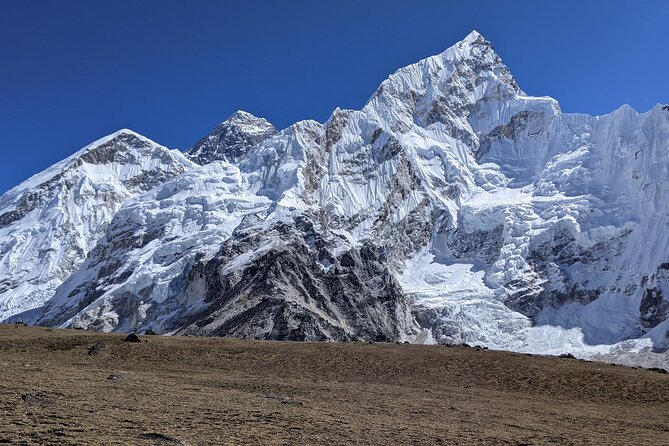
You start very early for Kala Patthar, the highest point of the trek at 5,545 meters. The climb is short in distance compared with the full trek, but it is demanding because of the altitude and early hour.
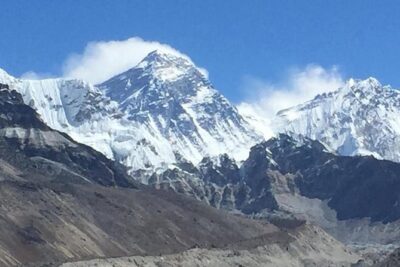
The reward is the stated panoramic view of Everest, Lhotse, Nuptse, and other Himalayan peaks. This is likely to be your strongest photo opportunity and the visual high point of the trip.
The early start means cold conditions and limited energy. Wear the supplied down jacket if it fits you, bring the proper layers, and follow the guide’s pace. After Kala Patthar, you begin descending toward Pangboche, which should feel easier on the lungs even if your legs are tired.
Day 11: Pangboche and the Phortse route
The trail descends to Pangboche, then takes a less crowded route toward Phortse. You see different angles of Ama Dablam, Thamserku, and Tengboche Monastery.
I like this choice because the return is not just a repeat of the outward route. After the busy goal of Base Camp, a quieter path gives you time to notice villages, ridges, and changing views.
Do not assume quieter means easy. A less-used trail can still include steep sections and uneven ground. Your guide will be especially useful here, since route conditions and exact stopping points can change.
Day 12: Phortse Thanga and Mong Danda
After breakfast, you descend toward the river from Gokyo Lake, connect with the Gokyo route at Phortse Thanga, and climb toward Mong Danda.
This is one of the more unusual parts of the itinerary. You do not complete the Gokyo Lakes trek, but you use part of that trail to return through a different section of the Everest region.
The route adds variety, though it may feel long after the high point of Kala Patthar. Keep your day simple: eat what you can, walk steadily, and save energy for the final approach to Lukla.
Day 13: Returning to Lukla
You retrace the lower trail through Toktok, Phakding, Ghat, and Cheplung. The final 200 meters up to Lukla are noted as a last climb before the walking portion ends.
This is a satisfying finish, but do not expect an effortless stroll. Your legs have spent nearly two weeks on rough mountain paths. The evening in Lukla gives you a chance to rest and enjoy completing the Everest Base Camp walk.
The plan includes a porter for every two people, which makes a real difference over this distance. You carry a day pack, while the porter handles the main load within the stated weight limit.
Day 14: Flying back to Kathmandu
You take the earliest possible flight from Lukla to Kathmandu, or to Ramechhap depending on the operating plan. The schedule allows about one hour for the flight stop and leaves the rest of the day free.
This buffer is useful. Lukla flights depend on weather, and a delayed flight can affect your international departure. Keep your final day in Nepal and your international ticket timing realistic. Do not plan an immediate connection with no room for disruption.
Once back in Kathmandu, hotel check-in and free time follow. The package includes private transportation, but extra accommodation is not included if delays require another night.
What the $1,890 price really covers
At $1,890 per person, the package is not just a guiding fee. It includes:
- Flights between Kathmandu or Ramechhap and Lukla
- Sagarmatha National Park, rural area, and TIMS permits
- An English-speaking, licensed guide
- One porter for every two people
- Breakfast, lunch, and dinner on the trek
- Tea house accommodation
- Private transportation
- A sleeping bag, down jacket, and hiking poles
- A trail map and achievement certificate
- Farewell dinner
- All stated fees and taxes
That is solid value for a private 15-day trek. The main exclusions are important: international flights, Nepal visa costs, insurance, tips, Kathmandu lunches and dinners, personal snacks and drinks, extra nights, hot showers, and battery charging during the trek.
Travel insurance covering altitudes up to 6,000 meters is listed at about $200 per person. Treat that as essential, not optional. Tips for guides, porters, and drivers are also extra.
Food, lodges, and daily comfort
Accommodation is in tea houses described as clean and comfortable. This is a mountain trek, not a hotel tour, so comfort is relative. The included meals come from lodge menus, with the company stating that food is selected with hygiene in mind.
Hot showers and battery charging cost extra. That means you should expect basic facilities and plan your electronics carefully. A power bank can be useful, though the supplied details do not state its availability or charging rules.
The down jacket, sleeping bag, and hiking poles are returned after the trek. Confirm sizes and condition before leaving Kathmandu, especially if you rely on the provided cold-weather gear.
Who should book this trek?
This suits you if you want the classic Everest Base Camp route with a local support team, private departures, two acclimatization stops, and a different return route. It is also a good fit if you value having permits, domestic flights, meals, porters, and basic trekking gear arranged in one price.
It is not a casual walking holiday. The company requires strong physical fitness, and the itinerary includes high-altitude walking up to 5,545 meters. If you have little trekking experience or are uncertain about altitude, discuss preparation and medical concerns with a qualified professional before booking.
The company’s past guide teams have included people such as Raj, Suren, Sonam, Ram, Phurpa, Sagar, Jal, Rabin, Ganesh, Vijay, and Teeras. Their roles and availability vary by departure, so confirm your assigned guide and porter team in advance.
Should you book the Everest Base Camp trek?
I would book this if you want a well-supported, private EBC trek and value a sensible altitude schedule over the shortest possible route. The included flights, permits, meals, porters, and equipment make the $1,890 price attractive.
I would pause if you need hotel-level comfort, dislike uncertain flight schedules, or are not ready for long days above 3,000 meters. Ask about the exact guide, current flight routing through Kathmandu or Ramechhap, lodge standards, and what happens if weather adds a night.
Cancellation is free up to 24 hours before the start time. If poor weather cancels the experience, you are offered another date or a full refund. That is useful protection, but it does not remove the need for flexible international travel plans.
FAQ
How long is the Everest Base Camp trek?
The experience lasts approximately 15 days, including arrival and departure days in Nepal.
Where does the tour begin?
It begins with pickup at Tribhuvan International Airport in Kathmandu, Nepal.
How high is Everest Base Camp?
Everest Base Camp is listed at 5,364 meters above sea level.
What is the highest point on the itinerary?
Kala Patthar is the highest point, at 5,545 meters.
Are domestic flights included?
Yes. Flights from Kathmandu or Ramechhap to Lukla and from Lukla back to Kathmandu or Ramechhap are included for the group and staff.
Is a guide included?
Yes. The package includes an English-speaking, experienced, licensed guide. Groups of five or more receive an assistant guide.
Are porters included?
Yes. One porter is provided for every two people, and each porter carries 20 kilograms total, or 10 kilograms per guest.
Are meals included?
Breakfast, lunch, and dinner are included during the trek. Lunch and dinner in Kathmandu are not included.
Is travel insurance included?
No. Insurance is not included. The stated requirement is coverage for trekking up to 6,000 meters, with an indicated cost of about $200 per person.
Can I cancel for a full refund?
You can cancel at least 24 hours before the experience start time for a full refund. Cancellations or changes made less than 24 hours before the start are not refunded.
Just added around Kathmandu
- Traditional Momo Making Class★ 5.0 · 10 reviews
- Wildlife Adventure in Chitwan Nepal★ 4.0 · 4 reviews
- Walking tour of real Kathmandu through back streets.★ 5.0 · 3 reviews
- Kathmandu 2 Nights 3 Days Chitwan Jungle Safari Tour★ 5.0 · 9 reviews
- Kathmandu Street Food Walking Tour – Eat Like a Local★ 5.0 · 3 reviews
- Private Manaslu Circuit Trek at Himalayas★ 5.0 · 3 reviews
- Walking tour of Kathmandu with awesome local guides★ 5.0 · 4 reviews
- Visit Swayambhunath and Bauddhanath Stupa with Guide★ 5.0 · 5 reviews
Everest Base Camp Treks from Kathmandu, compared.
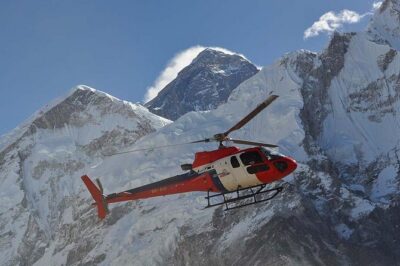
Everest Base Camp Trek with Helicopter Return from Gorakshep to Lukla
Read our review →Browse the lists this tour appears in