
Reviewed · EVEREST BASE CAMP TREKS FROM KATHMANDU
Everest Base Camp Trek
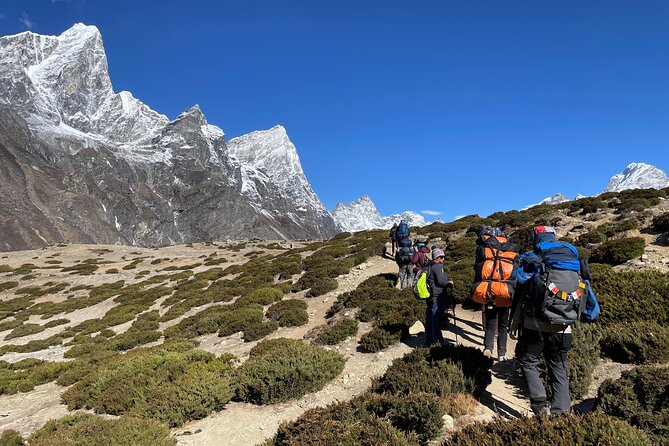
Landing at Lukla is the first great jolt of this 15-day Everest Base Camp trek. The short flight from Kathmandu ends at one of the Himalayas’ most famous airstrips, then your group starts walking through Sherpa villages, pine forests, river valleys, glaciers, and thin mountain air.
I like two things right away: porters carry your main gear, and the schedule includes two acclimatization days instead of treating altitude as an afterthought. The private small-group format also lets the guide set a sensible pace. The catch is that this remains a demanding high-altitude trek, and weather can delay the Lukla flights.
Key things to know before booking
- Lukla flights begin the adventure: The roughly 30-minute flight is scenic, weather-sensitive, and included for you and your guide.
- Two acclimatization days help: You have planned stops around Namche Bazaar and a hike toward Nagarkhang Peak at about 5,000 meters.
- Porters carry your main load: A duffle bag, sleeping bag, and down jacket are supplied, while your porters handle the bulk of your trekking gear.
- Kalapatthar is a major payoff: The early morning climb provides the trip’s signature views of Everest and the Khumbu peaks.
- Guiding is a major strength: Guides named in the supplied feedback include Lok, Khila, Lal, Hari, Ossman, and Namraj. Your assigned guide should be confirmed before departure.
- The $1,408 price covers a lot: Flights, permits, accommodation, meals, staff, transfers, and equipment are included, but not insurance, evacuation, international airfare, or personal purchases.
Why the Lukla start makes this trek special
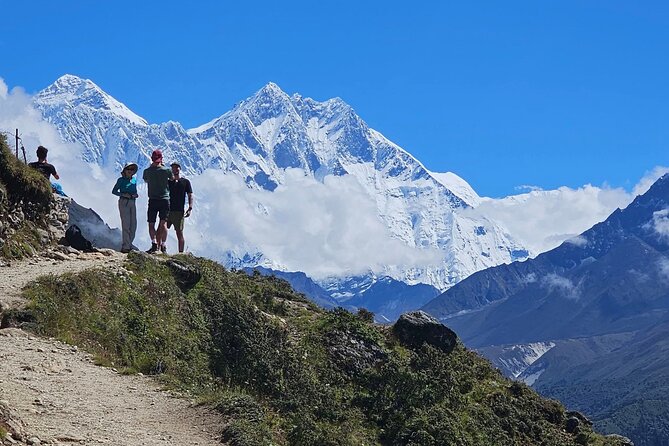
The Everest Base Camp route is famous partly because getting there is an adventure in itself. Instead of beginning with a long road journey, you fly from Kathmandu to Lukla, then walk into the Khumbu region. The flight takes about 30 minutes and provides mountain views, but it is also the least predictable part of the plan.
You should treat the Lukla flight as weather-dependent, not as a firm appointment. The itinerary wisely keeps a free day in Kathmandu near the end, giving the operator room to handle a delay or cancellation before your international flight. That extra day is useful for shopping and sightseeing, but its main job is protection against mountain weather.
On arrival, an airport representative meets you in Kathmandu with a name card and takes you to your hotel. Airport transfers before and after the trek are by private vehicle. Those small touches matter after a long international flight, when finding the right driver in an unfamiliar city is one less problem to solve.
More Everest Base Camp treks:
- Everest Base Camp Trek – 14 Days
★ 5.0 · 1,499 reviews - Everest Base Camp Trekking
★ 5.0 · 485 reviews - Everest Base Camp Trekking – 13 Day
★ 5.0 · 365 reviews
What the $1,408 price really includes
At $1,408 per person, the price is not simply paying for a guide and a walk. It bundles the main moving parts of a Himalayan trek:
- Private airport transfers before and after the trek
- Kathmandu to Lukla and return flights, including the guide’s ticket
- Everest National Park entry permit
- TIMS registration
- An English-speaking, government-licensed trekking guide
- Porters with their meals, accommodation, salary, and insurance
- An assistant guide for groups larger than six
- Accommodation and meals listed in the program
- A down jacket, four-season sleeping bag, and duffle bag
- First-aid supplies carried by the guide
- Government taxes and service charges
The included gear is especially useful if you do not own cold-weather trekking equipment. The duffle bag is borrowed and must be returned after the trip, while the sleeping bag and down jacket are practical savings for a one-time trek.
The price does not include international flights, a Nepal visa, travel or medical insurance, emergency evacuation, hot showers, laundry, telephone charges, alcoholic drinks, snacks, or other personal costs. Insurance deserves serious attention here. High altitude and remote walking are part of the trip, and emergency evacuation is specifically excluded.
The meal allowance covers breakfast on 14 days, lunch on 11 days, and dinner on 12 days. Since the detailed schedule does not spell out every overnight stop or meal, ask the operator to confirm exactly which meals and lodgings are covered on each day.
Days 1 and 2: Kathmandu to Phakding by air
Day 1 is deliberately light. After airport pickup, you transfer to your hotel in Kathmandu, meet the local team, and prepare for the trek. This is not a sightseeing day, so use it to check your clothing, ask about the walking pace, and make sure you understand what the porters will carry.
Day 2 brings the Lukla flight. From the air, you get your first Himalayan views, then begin walking toward Phakding. The listed walking time is about four hours, with the trail providing a gentle introduction rather than an immediate test of endurance.
Phakding is a good first night because you are already on the route but have not yet gained the higher altitude of Namche. Still, do not mistake the short first stage for an easy holiday walk. You are beginning a long sequence of uphill and downhill sections, and your body has not yet adjusted to the elevation.
Days 3 and 4: River crossings and acclimatization near Namche
The next stage follows pine forests and climbs toward Monjo. You stop at Jorsalle for lunch, then continue toward the Hillary Bridge. After crossing, the trail becomes steeper as it heads toward the Namche area.
This is one of the route’s memorable transition points. The forest, suspension bridge, and rising trail make it clear that you are moving into high mountain country. The walking is not technical in the climbing sense, but steep sections and altitude can make an ordinary uphill path feel much harder than expected.
Day 4 is a rest and acclimatization day. Rest does not mean lying in bed all day. Your guide may offer options such as a Khumjung and Khunde walk, the Everest View Hotel hike, a Thame hike, or a shorter walk in the national park.
I like the flexible choice here. A private small group can select a route that matches its energy and altitude response instead of forcing every person into the same outing. You should still walk slowly, drink regularly, and tell your guide early if you feel unwell. The purpose is to gain altitude gradually, not to win the day’s hike.
More day hikes and treks in Kathmandu:
- Nagarkot Sunrise View and Day Hiking from Kathmandu
★ 5.0 · 471 reviews - Annapurna Circuit Trek with Tilicho Lake
★ 5.0 · 368 reviews - Everest Base Camp Trek -14 Days
★ 5.0 · 321 reviews - Annapurna base camp trek 5 Days
★ 5.0 · 252 reviews
Days 5 and 6: From Kyanjuma to Pangboche
After Namche, the route follows the national park headquarters area toward Kyanjuma. There is a tea break before the trail descends to Phungi Thanga for lunch, then climbs again after crossing the Dudh Koshi River.
This up-and-down rhythm surprises many first-time trekkers. A day can show a modest net gain in altitude and still feel tough because you lose height only to regain it later. That is one reason a guide who watches your pace is valuable.
Day 6 follows the Imja Khola toward Pangboche, a village at about 3,930 meters. Pangboche is closely tied to famous Everest climbers and Sherpa mountaineering culture. The village gives you a stronger sense that this is not merely a scenic route. It is a lived-in mountain region, shaped by local communities and by the work of people who support expeditions.
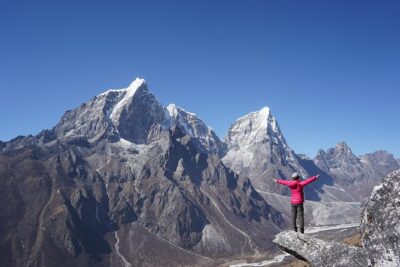
You will see spectacular Himalayan peaks from this section, but keep your attention on the trail as well. At this altitude, stopping too often for photographs can make the day drag. A steady pace is more useful than racing ahead and waiting.
Day 7: A second acclimatization hike toward 5,000 meters
The second acclimatization day includes a hike to Nagarkhang Peak, approximately 5,000 meters high. From the top, you get broad views of Himalayan peaks and a serious test of how your body handles thinner air.
This is a strong feature of the itinerary, but it is also a demanding day. The point is not to treat 5,000 meters as a casual lookout. You should expect slower walking, short breaks, and the possibility that your guide may adjust the plan if conditions or your health call for it.
The schedule also gives you an important chance to learn how your group functions. You can see whether the guide sets a pace that suits everyone, whether breaks are handled sensibly, and whether communication feels clear. Those details matter more as you approach Base Camp.
Days 8 and 9: Dughla, the glacier, and Everest Base Camp
On Day 8, the route follows the ridge above Pheriche toward Dughla. After lunch, you climb steeply to Dughla Pass, then continue into the high-altitude part of the trek.
The climb to the pass is a clear reminder that the route is getting serious. The trail is not just a long country walk now. You are dealing with steep ground, cold conditions, less oxygen, and a demanding series of walking days.
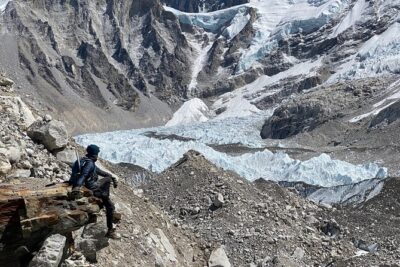
Day 9 begins fairly easily, but the glacier section makes the route harder. Uneven ground and low oxygen combine to slow you down. The glacier crossing gives you a close look at the mountain environment around Everest, but it is not a place to rush or wander away from your guide.
The arrival at Everest Base Camp is the central goal, yet it may not look like the dramatic summit scene many people imagine. It is a staging area for expeditions rather than a viewpoint that suddenly reveals everything. The journey to reach it, with glaciers, high passes, and enormous peaks around you, is the real achievement.
Day 10: The early climb to Kalapatthar
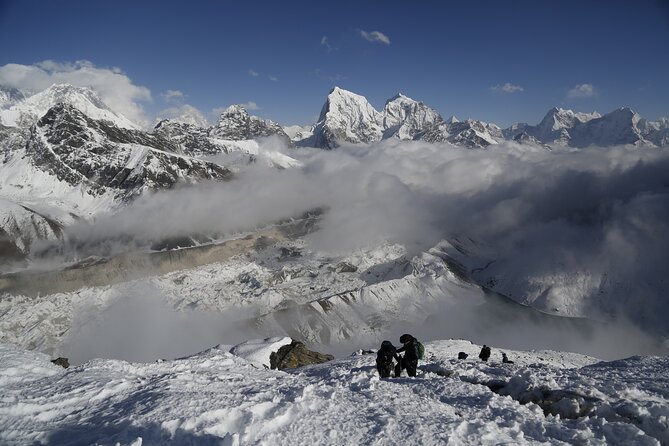
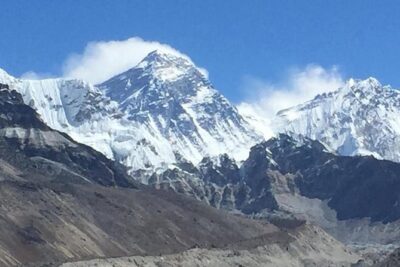
You leave early, before sunrise, for Kalapatthar. The climb is difficult, but the viewpoint is widely regarded as one of the best places on the route for views of Everest and the Khumbu peaks.
The early start is worth understanding. You are walking in cold, dark conditions and climbing after several hard days, so this is not a leisurely viewpoint stop. The reward is the changing mountain light and the chance to see the high peaks from a strong vantage point.
This is often the emotional high point of the trek, even though Base Camp is the official destination. If you need to choose where to conserve energy, follow your guide’s advice. Kalapatthar requires effort, and its value depends on reaching it safely rather than forcing the climb when your body is struggling.
Days 11 to 13: Retracing the route to Kathmandu
After Kalapatthar, the trek turns back through Debuche and Tengboche. You descend steeply to Phungi Tenga for lunch, then climb again toward Kyanjuma.
Tengboche gives the return journey a different feel. You already know the trail, but the change in direction and the lower altitude can make the walking feel more manageable. It is still not easy, particularly because tired legs handle descents poorly.
Day 12 continues down to Jorsalle and then Phakding, with the route eventually returning to Lukla. The program describes this as the end of the walking portion after 11 nights and 12 days of trekking. Some of the day-by-day descriptions are abbreviated, so confirm the exact overnight sequence before departure.
Day 13 is the return flight to Kathmandu. The right side of the aircraft is suggested for mountain views, but seating is not something you can always control. Keep your schedule flexible because weather can affect the flight in either direction.
Day 14 and the final airport transfer
Day 14 is a free day in Kathmandu. You can use it for shopping or simply recover before your international flight. Its more important role is as a weather buffer for Lukla delays and cancellations.
Day 15 includes airport transfer about three hours before your international departure. The airport has one terminal, and the private transfer removes a final piece of local logistics from your plate.
Guides, porters, and the human side of the trek
The operator assigns an English-speaking guide who is government licensed and trained by Nepal’s tourism ministry. Porters carry your main gear and receive their own meals, lodging, salary, and insurance through the package.
The names attached to this operation include Lok, Khila, Lal, Hari, Ossman, and Namraj. The strongest praise centers on guides who keep a calm pace, pay close attention to safety, adapt the walking plan, and handle the practical details without fuss. Khila is singled out for an individual approach and careful attention to safety. Lok is praised for pacing and day-to-day organization, while Lal is described as reassuring and experienced.
You should not assume you will receive a particular guide. Ask for the assigned guide’s name and background before leaving Kathmandu. Also ask how many people are in your private group. An assistant guide is included for groups larger than six, which gives you a clearer idea of how staff support changes with group size.
Who should book this trek
This trek suits you if you want a famous Himalayan route but prefer a supported trip rather than arranging every permit, flight, porter, and lodge yourself. It is also a good fit if you like a private small group, want help setting a walking pace, and do not want to purchase a sleeping bag and down jacket for one trip.
You need a moderate level of physical fitness. The high altitude, repeated climbs, glacier walking, steep descents, and long sequence of walking days make this unsuitable for anyone expecting an easy sightseeing tour.
The trip is best for someone who accepts uncertainty. Weather may interrupt flights, personal expenses add up, and the trail can be uncomfortable. In return, you get access to Sherpa villages, dramatic mountain views, acclimatization time, porters, and a guide who handles much of the daily work.
Cancellation terms allow a full refund if you cancel at least six full days before the start time. A cancellation two to six days ahead receives 50 percent, while cancellation less than two full days ahead is not refunded. If bad weather cancels the experience, you are offered another date or a full refund.
Should you book the Everest Base Camp Trek?
I would book this trip if you want a well-supported first visit to the Everest region and value having the major logistics bundled into one price. The two acclimatization days, porter support, included gear, private transfers, and return flight buffer make the plan more practical than a bare-bones trek.
I would pause if you dislike early starts, uncertain flights, cold conditions, or physically demanding trails. Before paying, confirm the exact accommodation, group size, guide assignment, meal schedule, insurance requirements, and emergency procedures.
For a fit walker who accepts the effort, this is a strong value at $1,408. You are not just buying a route to Base Camp. You are buying a structured way to reach it with local staff, cultural contact, and fewer daily details to manage yourself.
FAQ
How long does the Everest Base Camp trek take?
The full program lasts approximately 15 days, including arrival and departure days, the trek, return flights, and a free day in Kathmandu. The walking portion is described as 11 nights and 12 days.
Where does the trek begin?
The trek begins with a flight from Kathmandu to Lukla. From Lukla, you start walking toward Phakding and continue through the Everest region.
Are flights between Kathmandu and Lukla included?
Yes. The package includes domestic airline tickets between Kathmandu and Lukla for you and your guide.
Are porters included?
Yes. Experienced Sherpa helpers are included, along with their meals, accommodation, salary, and insurance. They carry your main trekking gear.
What equipment is provided?
A down jacket, four-season sleeping bag, and duffle bag are provided and must be returned after the trip. The guide also carries a first-aid medical kit.
Are meals included?
Yes. The program includes breakfast on 14 days, lunch on 11 days, and dinner on 12 days. Personal drinks, snacks, hot showers, laundry, telephone use, and similar expenses are not included.
Is this a private trek?
Yes. Only your group participates. An assistant guide is included for groups of more than six people.
What happens if bad weather cancels the experience?
If poor weather causes cancellation, you are offered a different date or a full refund. The itinerary also includes a free day in Kathmandu to help handle possible Lukla flight delays or cancellations.
Just added around Kathmandu
- Traditional Momo Making Class★ 5.0 · 10 reviews
- Wildlife Adventure in Chitwan Nepal★ 4.0 · 4 reviews
- Walking tour of real Kathmandu through back streets.★ 5.0 · 3 reviews
- Kathmandu 2 Nights 3 Days Chitwan Jungle Safari Tour★ 5.0 · 9 reviews
- Kathmandu Street Food Walking Tour – Eat Like a Local★ 5.0 · 3 reviews
- Walking tour of Kathmandu with awesome local guides★ 5.0 · 4 reviews
- Private Manaslu Circuit Trek at Himalayas★ 5.0 · 3 reviews
- Visit Swayambhunath and Bauddhanath Stupa with Guide★ 5.0 · 5 reviews
Everest Base Camp Treks from Kathmandu, compared.
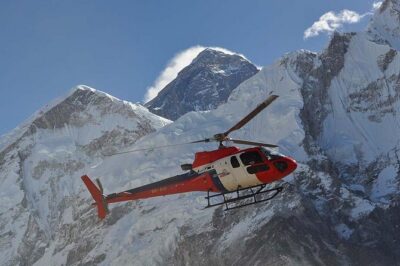
Everest Base Camp Trek with Helicopter Return from Gorakshep to Lukla
Read our review →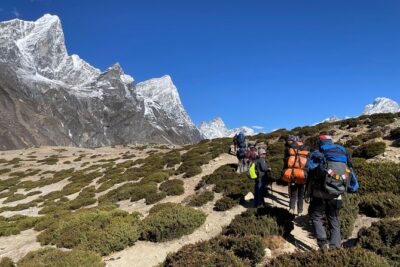
Browse the lists this tour appears in