
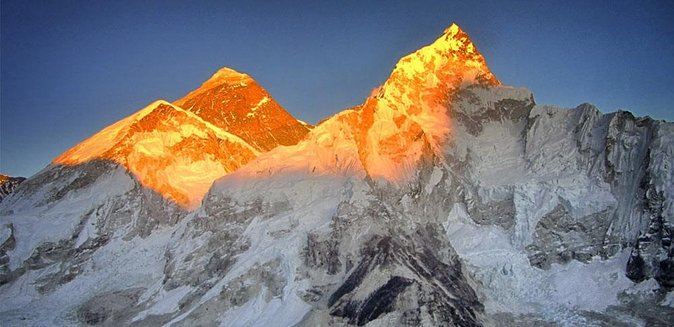
Reviewed · EVEREST BASE CAMP TREKS FROM KATHMANDU
Everest Base Camp Trek – 14 Days
Everest Base Camp is not a quick photo stop. It is a serious 14-day walk through Sherpa villages, Buddhist monasteries, suspension bridges, glacial valleys, and thin mountain air. The smart part of this trip is its pacing: two acclimatization days give you time to adjust before the hardest miles.
I like the practical setup. Porters carry your main bag, while a first-aid-trained guide handles the route, permits, flights, and emergency planning. I also like the small-group limit of 14, with recent groups often smaller. The main drawback is simple: this is physically demanding, and flights to Lukla can be disrupted by weather or shifted to Manthali Airport during busy seasons.
Key points before you book
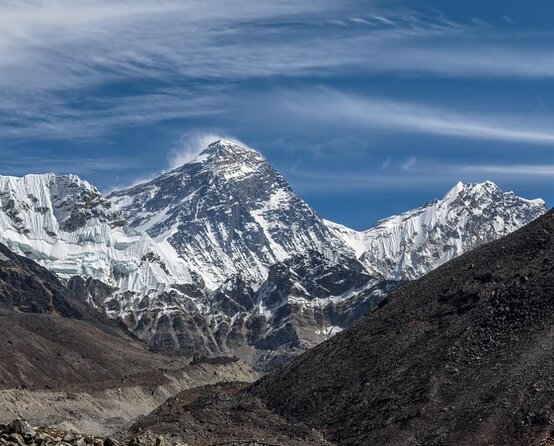
- Two acclimatization stops: You spend a full day in Namche Bazaar and another in Dingboche, with short hikes to help your body adjust.
- Everest Base Camp at 5,365 meters: The approach follows the Khumbu Glacier and passes memorials to climbers who died on nearby peaks.
- Kala Patthar at 5,555 meters: This is the trip’s hardest climb and the best scheduled high viewpoint.
- Porter support included: One porter is provided for every two people, with a 15-kilogram domestic flight luggage allowance.
- Small-group format: The maximum group size is 14, useful on narrow trails and during health or altitude problems.
- Strong guide support: Recent departures have included guides named Kishor, Chris, Maddy, and Rajendra, along with porters such as Saman and Sher.
What the $1,800 price really covers
At $1,800 per person, this trek is not a bare-bones walking package. The price includes airport and hotel transfers, two nights in a 3-star twin-share hotel in Kathmandu, domestic flights between Kathmandu and Lukla, trail lodging, all standard meals, permits, a licensed English-speaking guide, porters, staff insurance, and staff equipment.
You also receive a duffel bag, trekking map, sun hat, trip completion certificate, filtered water on the trail, seasonal fruit, and a first-aid kit. Emergency medical evacuation arrangements are included, but your own travel insurance with high-altitude rescue and evacuation cover is not. That insurance is essential for a trek of this kind.
The value comes from having the hard logistics bundled together. You are not arranging a separate Lukla flight, finding porters in Nepal, or negotiating permits at several points. You still pay for lunch and dinner in Kathmandu, drinks, personal equipment, tips, international flights, and a Nepal visa.
The advertised price is based on two people booking. It can still apply to a solo booking, but a $250 single surcharge may be added if no one shares your departure or if you request a private departure. Ask about this before you pay.
More Everest Base Camp treks:
- Everest Base Camp Trekking
★ 5.0 · 485 reviews - Everest Base Camp Trekking – 13 Day
★ 5.0 · 365 reviews - Everest Base Camp Trek -14 Days
★ 5.0 · 321 reviews
Kathmandu arrival and the Lukla flight
Day one is deliberately light. An Ace the Himalaya representative meets you outside Tribhuvan International Airport and transfers you to your hotel. This is useful after a long international flight, especially because the next few days require your full attention.
The itinerary gives you two nights in Kathmandu, with breakfast included. Lunch and dinner are your responsibility, giving you room to choose your own food and budget. The tour does not list a full sightseeing program in Kathmandu, so think of this stop mainly as arrival, rest, preparation, and a meeting point for the trek.
On day two, you fly toward Tenzing-Hillary Airport in Lukla. The flight is short, scenic, and important because it puts you close to the trailhead. During the busiest trekking months, flights may operate from Manthali Airport in Ramechhap instead of Kathmandu because of airport congestion. That can mean an early road transfer, so confirm the departure airport before your trek begins.
The flight carries a 15-kilogram luggage allowance. Your porter takes the heavier duffel, but you need a daypack with water, layers, medication, documents, and anything you need during the day. Do not pack as if you are checking a full suitcase.
Namche Bazaar and the first acclimatization day
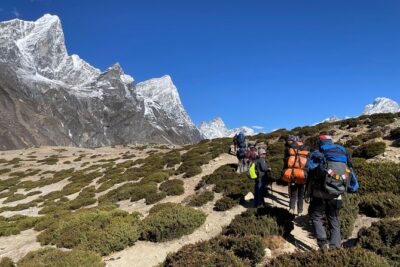
From Lukla, the trail follows the Dudh Koshi River toward Namche Bazaar. You cross suspension bridges strung with prayer flags and enter Sagarmatha National Park. The first days are not merely a warm-up. They introduce you to steep paths, uneven footing, long walking hours, and a steady rise in altitude.
Namche is one of the most memorable stops because it feels like a true mountain town rather than a simple overnight camp. You spend a full acclimatization day here, walking to the Sherpa Museum and taking a shorter hike above town. The aim is not to rack up distance. It is to give your body time to adjust while keeping you active.
I like this pause because it reduces the temptation to race uphill. Altitude sickness can affect fit people, and a sensible guide should watch how you are sleeping, walking, and responding to the thinner air. The full day also gives you a better look at Sherpa customs, mountaineering history, and Buddhist traditions.
Tengboche Gompa and the Sherpa villages
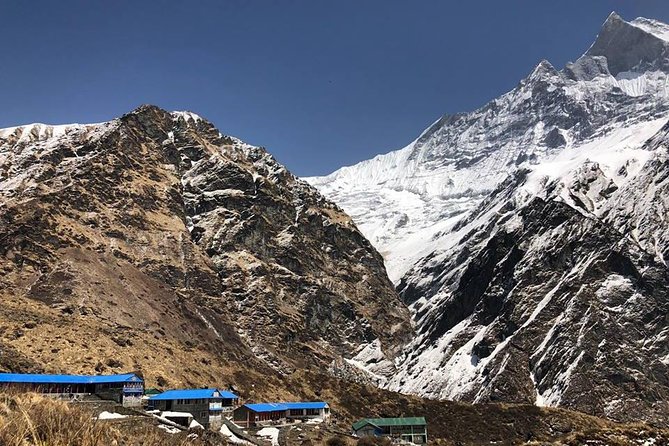
The trail continues beside the Dudh Koshi, with mountain views opening as you gain height. You reach Tengboche at about 3,860 meters, home to Tengboche Gompa, one of the major Buddhist monasteries along this route.
The monastery is more than a scenic stop. Inside are religious images and artwork, and the setting helps explain how Buddhist practice shapes life in the Khumbu region. Prayer flags, mani stones, and carved walls appear along the path, so you should take care not to treat them as ordinary trail decoration.
From Tengboche, the route drops toward Debuche, crosses the Imja Khola, and climbs through Pangboche. You will see thousands of mani stones along the way. These sections mix forest, river crossings, stone walls, and increasingly open mountain views, but they also bring more climbing and less oxygen.
The trail lodges are practical rather than luxurious. Twin-sharing accommodation with attached toilets is specifically included in Lukla, Phakding, and Namche. Elsewhere, facilities can be more basic, so pack with comfort and simplicity in mind.
More day hikes and treks in Kathmandu:
- Nagarkot Sunrise View and Day Hiking from Kathmandu
★ 5.0 · 471 reviews - Annapurna Circuit Trek with Tilicho Lake
★ 5.0 · 368 reviews - Annapurna base camp trek 5 Days
★ 5.0 · 252 reviews - Everest Base Camp Trekking – 2025/2026
★ 5.0 · 199 reviews
Dingboche and the second acclimatization day
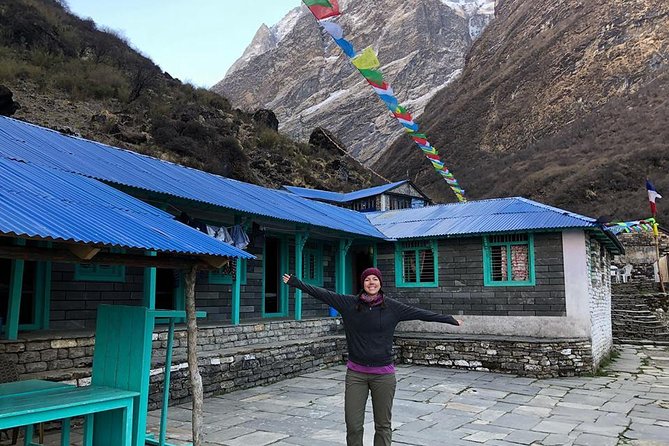
Dingboche is another key adjustment point. The route reaches the village after climbing through Pangboche, and the next day is reserved for acclimatization rather than forward progress.
You hike toward Nangkartshang Peak above Dingboche. This short high hike gives you a view from above the village and lets you gain altitude during the day before sleeping lower down. That pattern is useful on a high trek, though the climb can still feel tough.
This is also a good place to listen closely to your guide. If you feel unwell, do not treat the schedule as a test of willpower. The guide is trained in first aid and carries a comprehensive kit, but you should have suitable insurance for evacuation and be honest about symptoms.
The trek’s safety structure is one of its strongest features. Staff wages, food, accommodation, insurance, equipment, and medicine for the local team are included. That does not remove every risk, but it means the group is supported by people who work in this region and know the route.
Lobuche, memorials, and the Khumbu Glacier
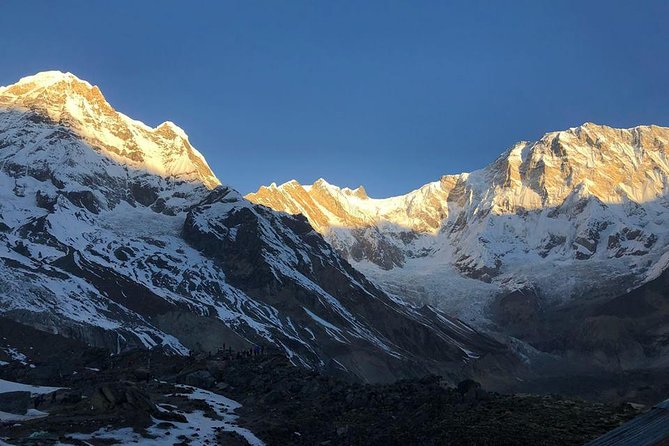
After Dingboche, the trail leads toward Lobuche along the lateral moraine of the Khumbu Glacier. This is a more severe section, with fewer comfortable pauses and a stronger sense that you are entering a high mountain zone.
Stone memorials honor climbers who died on nearby summits. They are a quiet reminder that Everest is not simply a sightseeing goal. The mountain has a long record of courage, loss, and difficult decisions. Take time here. The memorials deserve more than a quick photograph.
Lobuche is an overnight stop before the major Base Camp day. The schedule is carefully built around the need for rest, but you should still expect cold, fatigue, and a much slower pace than you might manage at home. The point is to arrive at the next day with enough energy for the route to Base Camp and back.
Everest Base Camp at 5,365 meters
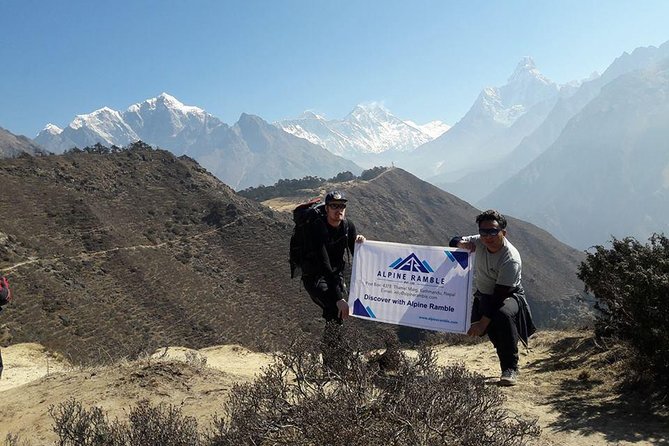
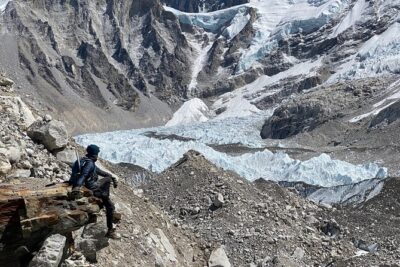
The walk to Everest Base Camp is one of the hardest days. You follow the Khumbu Glacier and climb to 5,365 meters, the highest point on the standard route to Base Camp without mountaineering equipment.
The destination itself is seasonal. During spring, climbing activity may be visible at the camp, while at other times it may feel quieter. You should not expect a grand building or a museum. Base Camp is a working mountaineering site on glacial ground, and its appearance changes with the season.
I like that the route does not treat Base Camp as the only goal. The approach through the glacier, memorial stones, high valleys, and mountain villages gives the achievement its meaning. The day is listed as a short stop at Base Camp, but the walking time and altitude make it a major physical effort.
Your guide’s job matters most here. The route over glacial terrain can be tiring and confusing, and you need someone who can judge pace, weather, and your condition. Guides named Maddy, Kishor, Chris, and Rajendra have led recent departures, with personal care and safety often forming a central part of the experience. Staffing can change, so do not assume a particular guide unless your booking confirms it.
Kala Patthar and the best mountain viewpoint
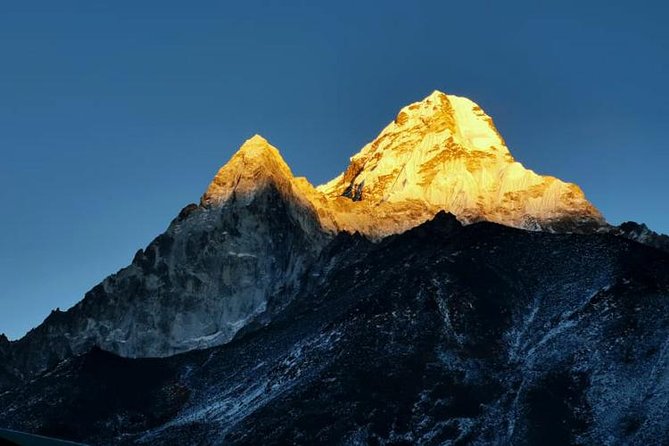
The following day brings the climb to Kala Patthar at 5,555 meters. This is often the hardest morning of the trek because you gain height quickly after already reaching Base Camp.
The reward is the scheduled high viewpoint with some of the strongest mountain views on the route. You climb a small peak rather than simply walking to a marked destination, so the final section can feel slow and demanding. If the altitude has affected you, your guide may need to adjust the pace or decide that turning back is wiser.
For many people, Kala Patthar is more visually satisfying than Base Camp. Base Camp connects you with Everest expeditions, while Kala Patthar gives you the high outlook. You get both experiences in this itinerary, which is a major advantage over shorter routes that stop at Base Camp and return immediately.
The long descent through Namche and Lukla
After Base Camp and Kala Patthar, the route returns through Pangboche and Tengboche to Namche Bazaar. Descending is easier on the lungs, but it can be hard on knees and tired legs. Do not assume the trek is finished simply because the altitude is dropping.
You spend the next stage returning to Lukla, where the trip began. This final trekking day gives the group time to reflect on the full route and the physical work behind it. Porters continue to handle the main luggage, but you should still carry water, rain protection, and a warm layer in your daypack.
The next morning, you fly back toward Kathmandu. The scenic flight is listed as about 35 minutes, though mountain flights depend on weather and air traffic. If your international departure is soon after the return flight, leave a generous buffer. A delayed Lukla flight can affect the rest of your plans.
Food, water, equipment, and group size
Breakfast, lunch, and dinner are included during the trek, along with filtered water using a Katadyn Pocket Water Filter and seasonal fruit. Alcohol and hot and cold drinks cost extra, as do personal snacks and special purchases.
A porter is assigned for every two people. This is a useful middle ground: you do not haul your full luggage, but you still need to pack lightly and share the porter load fairly. Tipping is not included and is expected, so budget for it separately.
The group can reach 14 people, but some recent departures had groups of about eight. A smaller group makes it easier to keep a steady pace and speak with your guide, though you should not book this expecting a private trek. The group size and the possible $250 single surcharge are both worth confirming before departure.
Who should choose this trek?
This trip suits you if you want Everest Base Camp with the major logistics arranged and do not want to carry your main bag uphill. It is also a good fit if you value acclimatization days, a licensed guide, porter support, and a clear route rather than improvising each night.
You need a moderate level of fitness and a willingness to walk for many days at high altitude. The itinerary is not suitable for someone seeking a gentle mountain holiday. You should also be comfortable with basic trail lodging, variable flight plans, cold conditions, and the possibility that your body may not respond well to altitude.
The strong ratings attached to this experience make sense in practical terms: the organization covers the essentials, the staff structure is clear, and names such as Maddy, Kishor, Chris, and Rajendra appear in recent accounts of well-run departures. Still, no company can control mountain weather, Lukla flights, altitude reactions, or trail conditions.
Should you book the Everest Base Camp trek?
I would choose this trek if you want a supported, well-paced route to Base Camp and value the safety net of guides, porters, permits, meals, and emergency planning. The two acclimatization days, Kala Patthar climb, and small-group limit add real value to the $1,800 price.
I would pause before booking if you dislike basic accommodation, cannot commit to travel insurance with high-altitude evacuation, or need a fixed flight schedule. Bring realistic expectations, pack within the 15-kilogram flight limit, and confirm the departure airport, single supplement, and guide arrangements. For a prepared walker who wants the classic route without carrying every item uphill, this is a strong choice.
FAQ
Where does the Everest Base Camp trek begin and end?
The trek begins with pickup at Tribhuvan International Airport in Kathmandu. After the Lukla to Kathmandu flight on day 13, the tour ends with airport transfer back to Tribhuvan International Airport on day 14.
How long is the experience?
The full program lasts approximately 14 days. It includes Kathmandu arrival and departure, domestic flights, the trek from Lukla to Everest Base Camp, the Kala Patthar climb, and the return to Lukla.
Are flights between Kathmandu and Lukla included?
Yes. Airfare for the Kathmandu to Lukla and Lukla to Kathmandu sectors, including airport departure tax, is included. During peak trekking months, flights may operate from Manthali Airport in Ramechhap instead of Kathmandu.
How much luggage can I take on the domestic flight?
The domestic flight luggage allowance is 15 kilograms. Porter service is included for 11 days, with one porter provided for every two people.
Are meals included?
Standard breakfast, lunch, and dinner are included during the trek. Breakfast is included during the Kathmandu hotel stay. Lunch and dinner in Kathmandu, alcoholic drinks, and hot and cold drinks are not included.
Is travel insurance included?
Staff insurance and emergency medical evacuation arrangements are included for the trekking team. Your own travel insurance covering high-altitude emergency rescue and evacuation is not included and must be arranged separately.
What happens if I book alone?
The listed price can apply to a single booking, but a $250 single surcharge may apply if there is no existing group for your date or if you request a solo departure. The surcharge is payable upon arrival in Nepal.
Just added around Kathmandu
- Traditional Momo Making Class★ 5.0 · 10 reviews
- Wildlife Adventure in Chitwan Nepal★ 4.0 · 4 reviews
- Walking tour of real Kathmandu through back streets.★ 5.0 · 3 reviews
- Kathmandu 2 Nights 3 Days Chitwan Jungle Safari Tour★ 5.0 · 9 reviews
- Kathmandu Street Food Walking Tour – Eat Like a Local★ 5.0 · 3 reviews
- Private Manaslu Circuit Trek at Himalayas★ 5.0 · 3 reviews
- Walking tour of Kathmandu with awesome local guides★ 5.0 · 4 reviews
- Visit Swayambhunath and Bauddhanath Stupa with Guide★ 5.0 · 5 reviews
Everest Base Camp Treks from Kathmandu, compared.
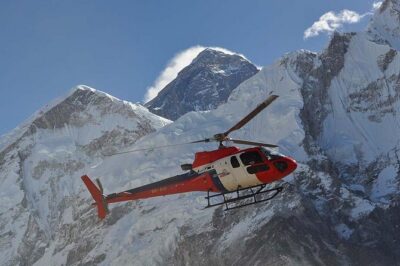
Everest Base Camp Trek with Helicopter Return from Gorakshep to Lukla
Read our review →Browse the lists this tour appears in